



Quizartinib dihydrochloride
Based on 49 publication(s) in Google Scholar
Quizartinib (AC220) dihydrochloride is an orally active, potent and selective FLT3 inhibitor. Quizartinib dihydrochloride inhibits kinase activity of mutant-FLT3, -PDGFRA and -KIT isoforms and inhibits autophosphorylation. Quizartinib dihydrochloride inhibits cellular proliferation, induces apoptosis in cancer cells. Quizartinib dihydrochloride can be used for the research of cancer.
For research use only. We do not sell to patients.
- Purity : 99.81%
- CAS No.: 1132827-21-4
- Formula: C29H34Cl2N6O4S
- Molecular Weight:633.59
-
Storage:
4°C, sealed storage, away from moisture
* In solvent : -80°C, 6 months; -20°C, 1 month (sealed storage, away from moisture)


To place orders, for customer services and technical support, please contact: MedChemExpress USA
Tel: 609-228-6898 E-mail: [email protected] [email protected]


-
 Biological Activity
-
Chemical Information
-
Solvent & Solubility
- Protocols
- Purity & Documentation
- References
-
 Help & FAQs


-
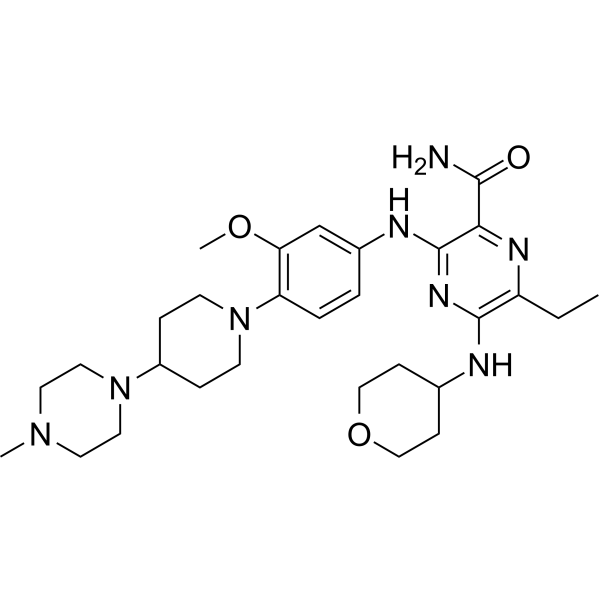
HY-12432
GilteritinibFLT3/AXL Inhibitor -
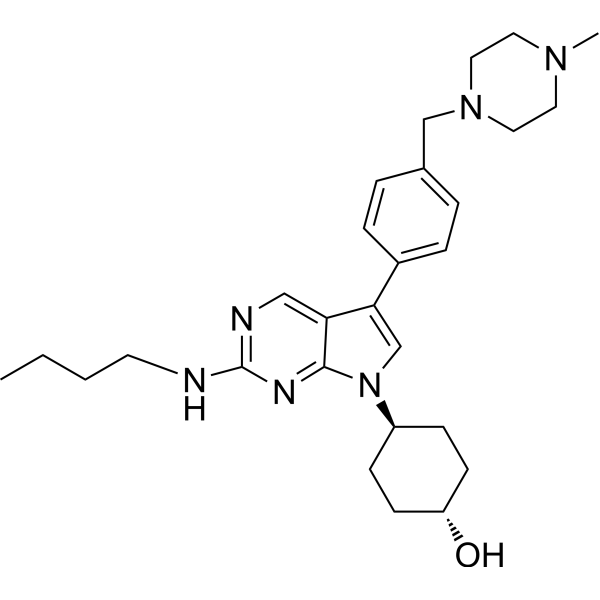
HY-12344
UNC2025MER/FLT3 Inhibitor -
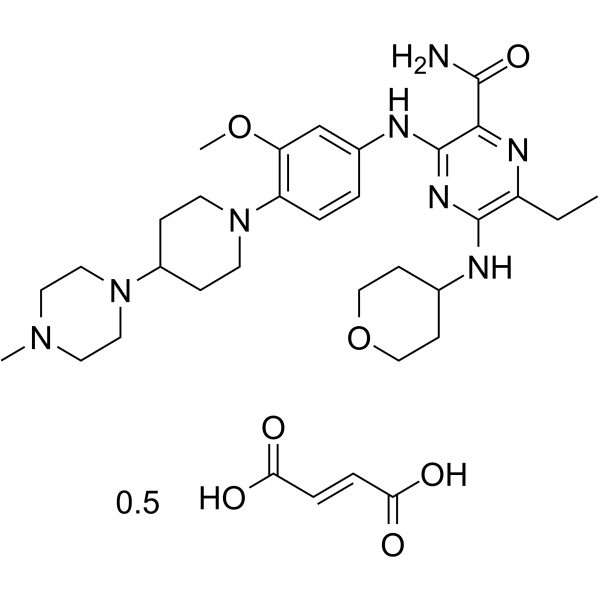
HY-12432A
Gilteritinib hemifumarateFLT3/AXL Inhibitor -
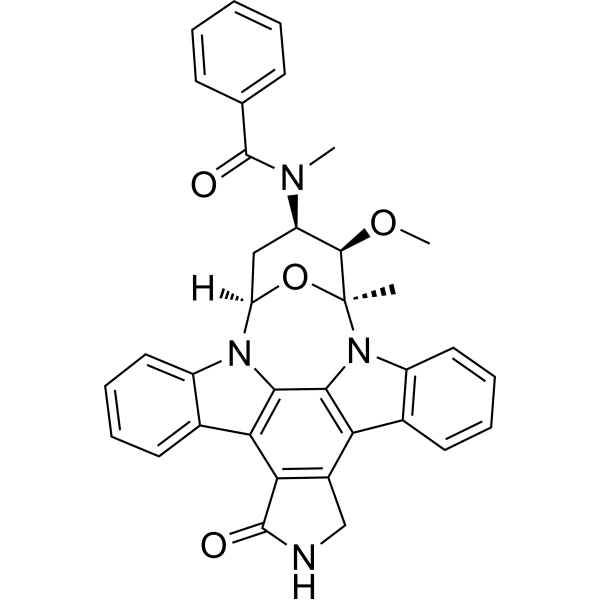
HY-10230
MidostaurinMulti-targeted Protein Kinase Inhibitor -

HY-12432R
Gilteritinib (Standard)FLT3/AXL Inhibitor -
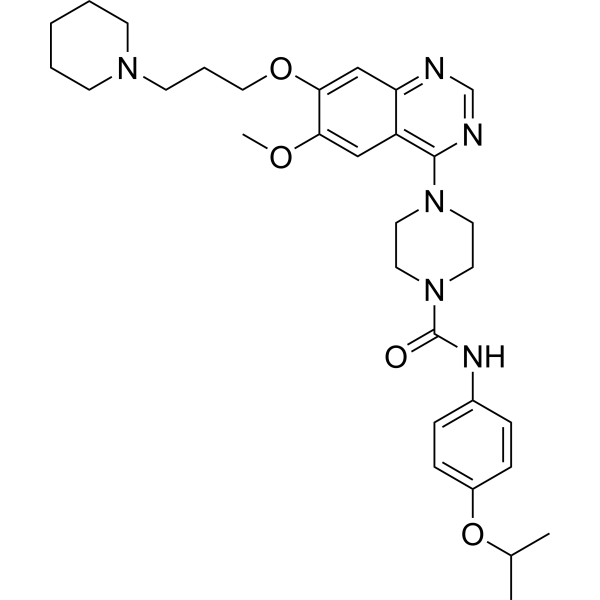
HY-10202
TandutinibFLT3 Inhibitor -
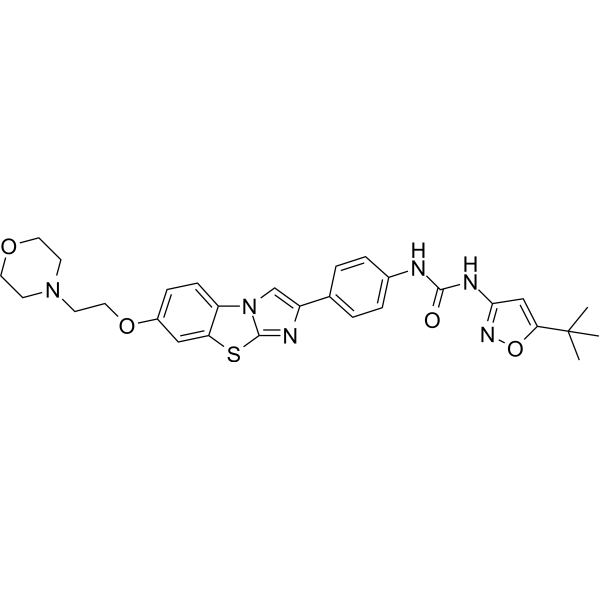
HY-13001
QuizartinibFLT3 Inhibitor -
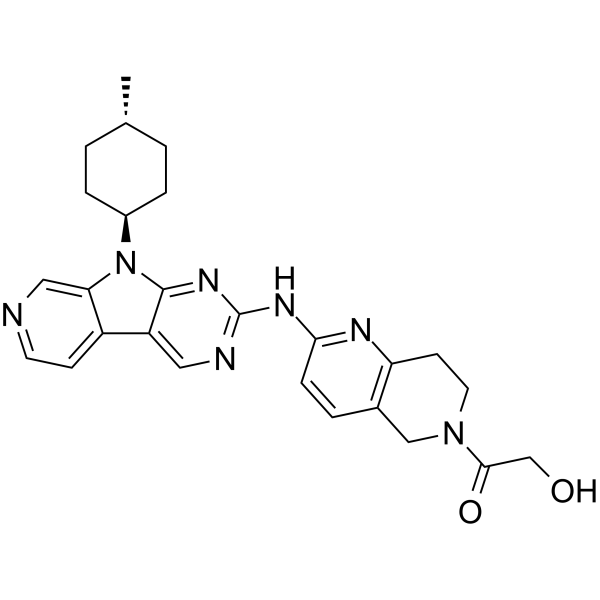
HY-15889
AMG 925FLT3/CDK4 Inhibitor -
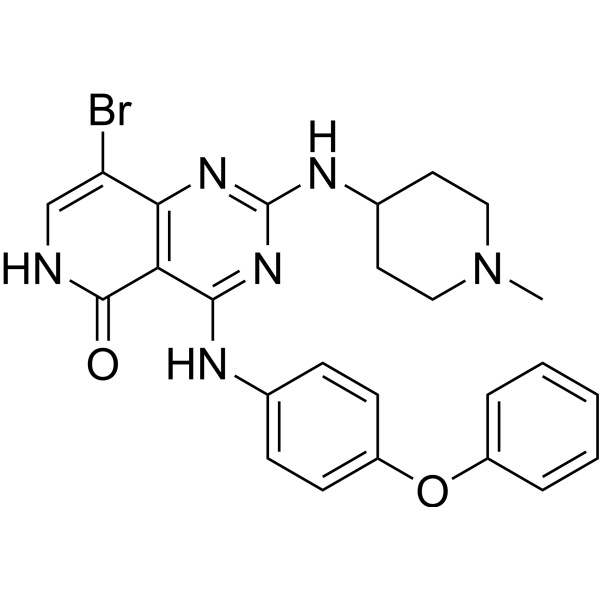
HY-12333
DenfivontinibFLT3 Inhibitor -
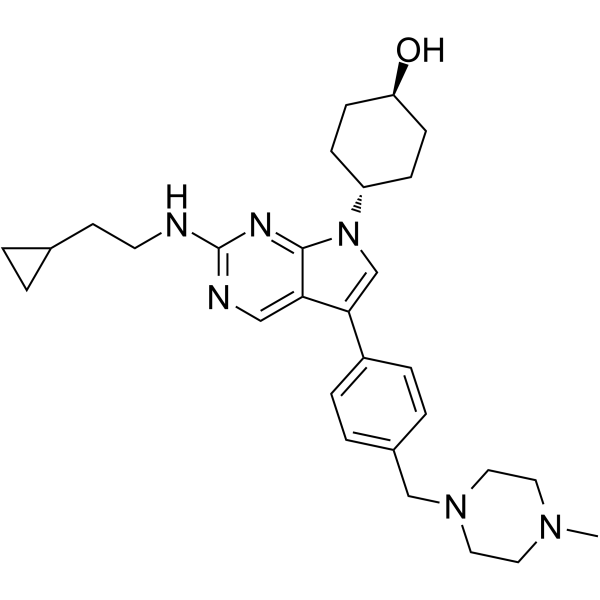
HY-101549
MRX-2843MERTK/FLT3 Inhibitor -
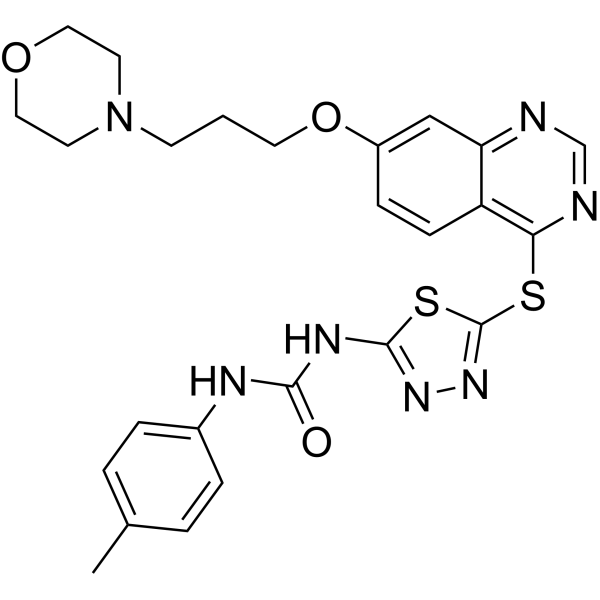
HY-12960
SKLB4771Flt3 Inhibitor -
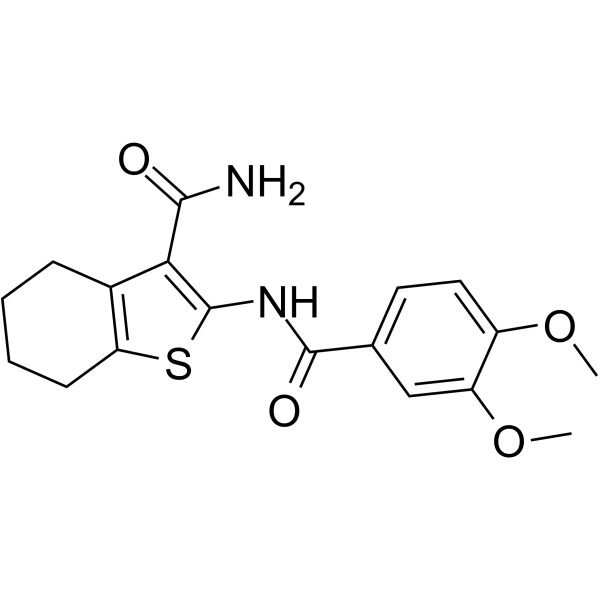
HY-13907
TCS 359FLT3 Inhibitor
Publications Citing Use of MedChemExpress (MCE) Quizartinib dihydrochloride
More- Cancer Cell. 2018 Oct 8;34(4):674-689.e8. [Abstract]
- Cancer Cell. 2014 Feb 10;25(2):226-42. [Abstract]
- Immunity. 2026 May 29:S1074-7613(26)00180-9. [Abstract]
- Cancer Discov. 2023 Jul 7;13(7):1720-1747. [Abstract]
- Nat Cancer. 2024 Jul;5(7):1082-1101. [Abstract]
- Cancer Res. 2025 Nov 21:10.1158/0008-5472.CAN-24-3753. [Abstract]
- Autophagy. 2025 Oct;21(10):2091-2110. [Abstract]
- Nat Commun. 2026 Feb 12;17(1):1214. [Abstract]
- Nat Commun. 2018 Jan 24;9(1):358. [Abstract]
- Exp Hematol Oncol. 2025 Feb 15;14(1):15. [Abstract]
- Sci Transl Med. 2018 Jul 18;10(450):eaaq1093. [Abstract]
- Acta Pharm Sin B. 2021 Dec;11(12):3966-3982. [Abstract]
- Blood Cancer J. 2025 Mar 15;15(1):40. [Abstract]
- Cell Death Dis. 2025 Dec 23. [Abstract]
- Cell Death Dis. 2025 Apr 22;16(1):327. [Abstract]
- Cell Commun Signal. 2024 Aug 7;22(1):391. [Abstract]
- Cell Commun Signal. 2023 Sep 30;21(1):268. [Abstract]
- Phytomedicine. 2024 Apr:126:155434. [Abstract]
- Acta Pharmacol Sin. 2025 May;46(5):1390-1403. [Abstract]
- Oncogene. 2023 Apr;42(16):1272-1281. [Abstract]
- Leukemia. 2012 Oct;26(10):2233-44. [Abstract]
- EMBO J. 2024 Jun;43(12):2337-2367. [Abstract]
- Haematologica. 2018 Nov;103(11):1862-1872. [Abstract]
- Br J Cancer. 2025 Apr 11. [Abstract]
- Cell Rep. 2025 Jan 28;44(1):115151. [Abstract]
- J Med Chem. 2021 Aug 12;64(15):10981-10996. [Abstract]
- J Med Chem. 2017 Oct 26;60(20):8407-8424. [Abstract]
- Mol Cancer Ther. 2015 Oct;14(10):2249-59. [Abstract]
- J Ethnopharmacol. 2026 Nov 15:370:121985. [Abstract]
- Mol Syst Biol. 2024 Jan;20(1):28-55. [Abstract]
- Ecotoxicol Environ Saf. 2025 Oct 15:305:119206. [Abstract]
- Mol Cancer Res. 2022 Feb;20(2):293-304. [Abstract]
- Eur J Pharmacol. 2026 May 10:1023:178877. [Abstract]
- Int Immunopharmacol. 2024 Aug 20:137:112289. [Abstract]
- FASEB J. 2022 Dec;36(12):e22672. [Abstract]
- Microb Pathog. 2026 Apr:213:108349. [Abstract]
- Br J Haematol. 2019 Nov;187(4):488-501. [Abstract]
- Vaccines. 2021 Nov 8;9(11):1294. [Abstract]
- PLoS One. 2013;8(2):e56473. [Abstract]
- bioRxiv. 2026 Jul 22:2026.07.21.736123.
- bioRxiv. 2025 Sep 21.
- SSRN. 2025 Feb 13.
- bioRxiv. 2024 October 25.
- Patent. US20240277715A1.
- Comput Biol Med. 2024 Feb:169:107889. [Abstract]
- Univerzita Karlova v Praz. 2021 Jul.
- Oncotarget. 2017 Jun 28;8(40):67639-67650. [Abstract]
- Oncotarget. 2016 Jul 26;7(30):47018-47032. [Abstract]
- Leiden University. 2019 Mar.
 Customer Validation & Images

-
WB
-
WB
-
WB


Biological Activity
Description
Cellular Effect
|
Cell Line

|
Type | Value | Description | References |
|---|---|---|---|---|
| K562 | GI50 |
>20 μM
Compound: 1, AC220
|
Cytotoxicity against human FLT3-negative K562 cells harboring wild type BCR/ABL after 72 hrs by MTS assay
Cytotoxicity against human FLT3-negative K562 cells harboring wild type BCR/ABL after 72 hrs by MTS assay
|
[PMID: 23618709] |
| MOLM-13 | GI50 |
0.004 μM
Compound: 1, AC220
|
Cytotoxicity against human MOLM13 cells harboring mutant FLT3 after 72 hrs by MTS assay
Cytotoxicity against human MOLM13 cells harboring mutant FLT3 after 72 hrs by MTS assay
|
[PMID: 23618709] |
| MV4-11 | GI50 |
0.003 μM
Compound: 1, AC220
|
Cytotoxicity against human MV4-11 cells harboring FLT3/ITD mutant after 72 hrs by MTS assay
Cytotoxicity against human MV4-11 cells harboring FLT3/ITD mutant after 72 hrs by MTS assay
|
[PMID: 23618709] |
| RS4-11 | GI50 |
2.2 μM
Compound: 1, AC220
|
Cytotoxicity against human RS4:11 cells harboring wild type FLT3 after 72 hrs by MTS assay
Cytotoxicity against human RS4:11 cells harboring wild type FLT3 after 72 hrs by MTS assay
|
[PMID: 23618709] |
| Sf9 | IC50 |
>10 μM
Compound: 1, AC220
|
Inhibition of recombinant GST tagged Aurora A kinase (123 to 401) (unknown origin) transfected in insect sf9 cells after 90 mins by wallac counting analysis
Inhibition of recombinant GST tagged Aurora A kinase (123 to 401) (unknown origin) transfected in insect sf9 cells after 90 mins by wallac counting analysis
|
[PMID: 23618709] |
| Sf9 | IC50 |
0.069 μM
Compound: 1, AC220
|
Inhibition of wild type GST tagged FLT3 kinase (567 to 993) (unknown origin) transfected in insect sf9 cells after 4 hrs by wallac counting analysis
Inhibition of wild type GST tagged FLT3 kinase (567 to 993) (unknown origin) transfected in insect sf9 cells after 4 hrs by wallac counting analysis
|
[PMID: 23618709] |
| Sf9 | IC50 |
0.43 μM
Compound: 1, AC220
|
Inhibition of recombinant GST tagged VEGFR2 (789 to 1356) (unknown origin) transfected in insect sf9 cells after 120 mins by wallac counting analysis
Inhibition of recombinant GST tagged VEGFR2 (789 to 1356) (unknown origin) transfected in insect sf9 cells after 120 mins by wallac counting analysis
|
[PMID: 23618709] |
| U-937 | GI50 |
>20 μM
Compound: 1, AC220
|
Cytotoxicity against human FLT3 negative U937 cells after 72 hrs by MTS assay
Cytotoxicity against human FLT3 negative U937 cells after 72 hrs by MTS assay
|
[PMID: 23618709] |
In Vitro
Quizartinib (0-10,000 nM; 48 h) dihydrochloride potently inhibits proliferation of leukemia cell lines dependent on FLT3ITD, FIP1L1-PDGFRA, or select KIT mutations (V560G, N822K, D814Y) with IC50 values ranging from <1 nM to 77 nM[1].
Quizartinib (0-10,000 nM; 48 h) dihydrochloride potently inhibits proliferation and induces apoptosis in isogenic Ba/F3 cells expressing FLT3WT, FLT3ITD, FLT3K663Q, FLT3D835Y, KITWT, or KITD816Y with IC50 values ranging from <1 nM to 474 nM[1].
Quizartinib (0-1000 nM; 90 min) dihydrochloride selectively inhibits autophosphorylation of mutant KITD816Y, KIT and FLT3ITD, FLT3D835Y isoforms in isogenic Ba/F3 cells, while KITD816V and FLT3D835V are largely resistant to dephosphorylation[1].
Quizartinib (0-5000 nM; 48 h) dihydrochloride inhibits proliferation of native AML blasts with wild-type KIT, FLT3 amplification, or select FLT3 ITD mutations, while FLT3 ITD-beta1-positive blasts are insensitive[1].
MedChemExpress (MCE) has not independently confirmed the accuracy of these methods. They are for reference only. Further protocols information, click here.
-
Cell Line:isogenic Ba/F3 cells stably transfected with mutant KIT (D816V, D816Y, D816F) or FLT3 (ITD, D835V, D835Y)
-
Concentration:0, 10, 100, 1000 nM
-
Incubation Time:90 min
-
Result:Inhibited autophosphorylation of KITD816Y and KITD816F in the nanomolar range.
Caused dephosphorylation of both glycosylated and intracellular isoforms of KITD816Y, while dephosphorylation of KITD816F was restricted to the glycosylated isoform.
Showed no significant reduction in phosphorylation of KITD816V.
Inhibited autophosphorylation of FLT3 ITD and FLT3D835Y.
Caused minimal inhibition of FLT3D835V phosphorylation.


Chemical Information
-
CAS No. 1132827-21-4
-
Appearance Solid
-
Molecular Weight 633.59
-
Formula C29H34Cl2N6O4S
-
Color White to off-white
-
SMILES
O=C(NC1=CC=C(C2=CN3C(SC4=CC(OCCN5CCOCC5)=CC=C34)=N2)C=C1)NC6=NOC(C(C)(C)C)=C6.Cl.Cl
-
Synonyms
AC220 dihydrochloride
-
Shipping
Room temperature in continental US; may vary elsewhere.
-
Storage
4°C, sealed storage, away from moisture
* In solvent : -80°C, 6 months; -20°C, 1 month (sealed storage, away from moisture)


Publications (49)
-
Journal Impact Factor
-
Most Recent
-
Cancer Cell
Prospective Isolation and Characterization of Genetically and Functionally Distinct AML Subclones. [Abstract]2018 Oct 8;34(4):674-689.e8. PMID: 30245083 -
Cancer Cell
2014 Feb 10;25(2):226-42. PMID: 24525236
Quizartinib dihydrochloride purchased from MedChemExpress. Usage Cited in: Cancer Cell. 2014 Feb 10;25(2):226-42. [Abstract]
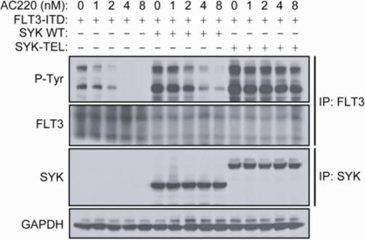
Western blot for indicated proteins on lysates from FLT3-ITD-positive primary murine cells expressing either wild-type (WT) or constitutive active (SYK-TEL) SYK and treated for eight hours with indicated doses of AC220.
-
Immunity
Activating an interleukin 4-FLT3-STAT6 axis in multipotent progenitors restores lymphopoiesis in inflammation and aging. [Abstract]2026 May 29:S1074-7613(26)00180-9. PMID: 42214327 -
Cancer Discov
C/EBPa confers dependence to fatty acid anabolic pathways and vulnerability to lipid oxidative stress-induced ferroptosis in FLT3-mutant leukemia. [Abstract]2023 Jul 7;13(7):1720-1747. PMID: 37012202 -
Nat Cancer
Targeting a lineage-specific PI3Kɣ-Akt signaling module in acute myeloid leukemia using a heterobifunctional degrader molecule. [Abstract]2024 Jul;5(7):1082-1101. PMID: 38816660 -
Cancer Res
Single-Cell Lineage Tracing Uncovers Resistance Signatures and Sensitizing Strategies to FLT3 Inhibitors in Acute Myeloid Leukemia. [Abstract]2025 Nov 21:10.1158/0008-5472.CAN-24-3753. PMID: 41270153 -
Autophagy
2025 Oct;21(10):2091-2110. PMID: 40160153 -
Nat Commun
Human iPSC-based Modeling of Pulmonary Fibrosis Reveals p300/CBP Inhibition Suppresses Alveolar Transitional Cell State. [Abstract]2026 Feb 12;17(1):1214. PMID: 41680175 -
Nat Commun
Combined chemical genetics and data-driven bioinformatics approach identifies receptor tyrosine kinase inhibitors as host-directed antimicrobials. [Abstract]2018 Jan 24;9(1):358. PMID: 29367740 -
Exp Hematol Oncol
IHCH9033, a novel class I HDAC inhibitor, synergizes with FLT3 inhibitor and rescues quizartinib resistance in FLT3-ITD AML via enhancing DNA damage response. [Abstract]2025 Feb 15;14(1):15. PMID: 39955584 -
Sci Transl Med
PP2A inhibition is a druggable MEK inhibitor resistance mechanism in KRAS-mutant lung cancer cells. [Abstract]2018 Jul 18;10(450):eaaq1093. PMID: 30021885 -
Acta Pharm Sin B
Synergistic effects of autophagy/mitophagy inhibitors and magnolol promote apoptosis and antitumor efficacy. [Abstract]2021 Dec;11(12):3966-3982. PMID: 35024319 -
Blood Cancer J
Superior preclinical efficacy of co-treatment with BRG1/BRM and FLT3 inhibitor against AML cells with FLT3 mutations. [Abstract]2025 Mar 15;15(1):40. PMID: 40089460 -
Cell Death Dis
Simultaneous targeting of KRAS and CDK4 synergistically induces durable growth arrest in pancreatic cancer cells. [Abstract]2025 Dec 23. PMID: 41436723 -
Cell Death Dis
Targeting oncogenic activation of FLT3/SREBP/FASN promotes the therapeutic effect of quizartinib involving disruption of mitochondrial phospholipids. [Abstract]2025 Apr 22;16(1):327. PMID: 40263296 -
Cell Commun Signal
Concomitant targeting of FLT3 and SPHK1 exerts synergistic cytotoxicity in FLT3-ITD+ acute myeloid leukemia by inhibiting β-catenin activity via the PP2A-GSK3β axis. [Abstract]2024 Aug 7;22(1):391. PMID: 39113090 -
Cell Commun Signal
Identification of novel SCD1 inhibitor alleviates nonalcoholic fatty liver disease: critical role of liver-adipose axis. [Abstract]2023 Sep 30;21(1):268. PMID: 37777801 -
Phytomedicine
Regulatory mechanism of perinatal nonylphenol exposure on cardiac mitochondrial autophagy and the PINK1/Parkin signaling pathway in male offspring rats. [Abstract]2024 Apr:126:155434. PMID: 38367424 -
Acta Pharmacol Sin
Concurrent inhibition of p300/CBP and FLT3 enhances cytotoxicity and overcomes resistance in acute myeloid leukemia. [Abstract]2025 May;46(5):1390-1403. PMID: 39885312 -
Oncogene
Transgenic IDH2R172K and IDH2R140Q zebrafish models recapitulated features of human acute myeloid leukemia. [Abstract]2023 Apr;42(16):1272-1281. PMID: 36739363 -
Leukemia
Using combination therapy to override stromal-mediated chemoresistance in mutant FLT3-positive AML: synergism between FLT3 inhibitors, dasatinib/multi-targeted inhibitors and JAK inhibitors. [Abstract]2012 Oct;26(10):2233-44. PMID: 22469781 -
EMBO J
SUCLG1 restricts POLRMT succinylation to enhance mitochondrial biogenesis and leukemia progression. [Abstract]2024 Jun;43(12):2337-2367. PMID: 38649537 -
Haematologica
MDM2- and FLT3-inhibitors in the treatment of FLT3-ITD acute myeloid leukemia, specificity and efficacy of NVP-HDM201 and midostaurin. [Abstract]2018 Nov;103(11):1862-1872. PMID: 29976747 -
Br J Cancer
Repurposing chlorpromazine for the treatment of triple-negative breast cancer growth and metastasis based on modulation of mitochondria-mediated apoptosis and autophagy/mitophagy. [Abstract]2025 Apr 11. PMID: 40217096 -
Cell Rep
Bone marrow mesenchymal stromal cells support translation in refractory acute myeloid leukemia. [Abstract]2025 Jan 28;44(1):115151. PMID: 39932190 -
J Med Chem
3 H-Pyrazolo[4,3- f]quinoline-Based Kinase Inhibitors Inhibit the Proliferation of Acute Myeloid Leukemia Cells In Vivo. [Abstract]2021 Aug 12;64(15):10981-10996. PMID: 34288692 -
J Med Chem
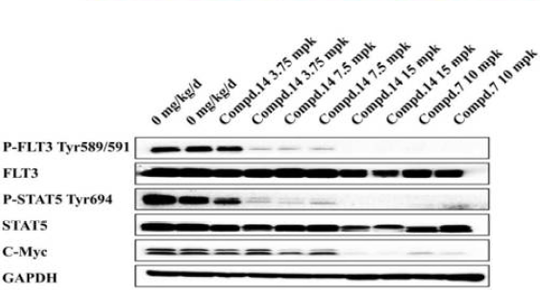
Discovery of 1-(4-(4-Amino-3-(4-(2-morpholinoethoxy)phenyl)-1H-pyrazolo[3,4-d]pyrimidin-1-yl)phenyl)-3-(5-(tert-butyl)isoxazol-3-yl)urea (CHMFL-FLT3-213) as a Highly Potent Type II FLT3 Kinase Inhibitor Capable of Overcoming a Variety of FLT3 Kinase Mutants in FLT3-ITD Positive AML. [Abstract]2017 Oct 26;60(20):8407-8424. PMID: 28956923
Quizartinib dihydrochloride purchased from MedChemExpress. Usage Cited in: J Med Chem. 2017 Oct 26;60(20):8407-8424. [Abstract]
Doseresponsive immunoblotting of the signaling pathway with the cells extracted from tumor tissues of the experimental animal after the 14 and 7 (AC220) treatments.
-
Mol Cancer Ther
Inhibition of Wild-Type p53-Expressing AML by the Novel Small Molecule HDM2 Inhibitor CGM097. [Abstract]2015 Oct;14(10):2249-59. PMID: 26206331 -
J Ethnopharmacol
Rexiao Kuining decoction ameliorates ulcerative colitis by restoring immune homeostasis via the protein kinase C alpha-FMS-like tyrosine kinase 3 ligand axis: multi-omics evidence. [Abstract]2026 Nov 15:370:121985. PMID: 42264446 -
Mol Syst Biol
Illuminating phenotypic drug responses of sarcoma cells to kinase inhibitors by phosphoproteomics. [Abstract]2024 Jan;20(1):28-55. PMID: 38177929 -
Ecotoxicol Environ Saf
Mechanistic study on nonylphenol-induced liver fibrosis via Pink1/Parkin-mediated mitophagy and lipid droplet degradation in hepatic stellate cells. [Abstract]2025 Oct 15:305:119206. PMID: 41106202 -
Mol Cancer Res
GATM-Mediated Creatine Biosynthesis Enables Maintenance of FLT3-ITD-Mutant Acute Myeloid Leukemia. [Abstract]2022 Feb;20(2):293-304. PMID: 34635505 -
Eur J Pharmacol
Quizartinib-induced resistance drives clonal emergence of MV4-11 cells with molecular alterations enabling multidrug antileukemic escape. [Abstract]2026 May 10:1023:178877. PMID: 41997407 -
Int Immunopharmacol
2024 Aug 20:137:112289. PMID: 38889505 -
FASEB J
Activation of FMS-like tyrosine kinase 3 protects against isoprenaline-induced cardiac hypertrophy by improving autophagy and mitochondrial dynamics. [Abstract]2022 Dec;36(12):e22672. PMID: 36440960 -
Microb Pathog
mTORC2-dependent autophagy inhibition regulates the replication of HSV-1 and adenovirus in viral keratitis & conjunctivitis. [Abstract]2026 Apr:213:108349. PMID: 41628839 -
Br J Haematol
Comparison of effects of midostaurin, crenolanib, quizartinib, gilteritinib, sorafenib and BLU-285 on oncogenic mutants of KIT, CBL and FLT3 in haematological malignancies. [Abstract]2019 Nov;187(4):488-501. PMID: 31309543 -
Vaccines
Small Molecule Inhibitors of MERTK and FLT3 Induce Cell Cycle Arrest in Human CD8+ T Cells. [Abstract]2021 Nov 8;9(11):1294. PMID: 34835225 -
PLoS One
Selective Akt inhibitors synergize with tyrosine kinase inhibitors and effectively override stroma-associated cytoprotection of mutant FLT3-positive AML cells. [Abstract]2013;8(2):e56473. PMID: 23437141 -
-
-
-
-
-
Comput Biol Med
2024 Feb:169:107889. PMID: 38199214 -
-
Oncotarget
Acute myeloid leukemia cells require 6-phosphogluconate dehydrogenase for cell growth and NADPH-dependent metabolic reprogramming. [Abstract]2017 Jun 28;8(40):67639-67650. PMID: 28978059 -
Oncotarget
Co-expression of wild-type FLT3 attenuates the inhibitory effect of FLT3 inhibitor on FLT3 mutated leukemia cells. [Abstract]2016 Jul 26;7(30):47018-47032. PMID: 27331411
Quizartinib dihydrochloride purchased from MedChemExpress. Usage Cited in: Oncotarget. 2016 Jul 26;7(30):47018-47032. [Abstract]
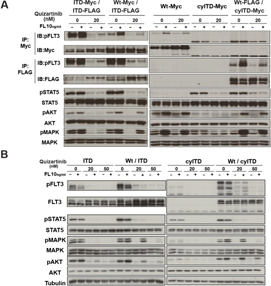
A. The established 32D cells are treated with Quizartinib for 2h, followed by 10 ng/mL FL stimulation for 10 minutes. Wt-FLT3 and mutant FLT3 are immunoprecipitated by each tag as indicated and subjected to Western blot. Phosphorylation levels of FLT3, STAT5, AKT and MAPK are examined. B. 32D cells are treated with Quizartinib at the indicated concentrations in the presence or absence of 10 ng/mL FL for 2 hours. Phosphorylation levels of FLT3, STAT5, AKT and MAPK are detected by Western blot.
-


Solvent & Solubility
In Vitro:
DMSO : 33.33 mg/mL (52.60 mM; ultrasonic and adjust pH to 12 with 1 M NaOH; Hygroscopic DMSO has a significant impact on the solubility of product, please use newly opened DMSO)
Please refer to the solubility information to select the appropriate solvent. Once prepared, please aliquot and store the solution to prevent product inactivation from repeated freeze-thaw cycles.
Storage method and period of stock solution: -80°C, 6 months; -20°C, 1 month (sealed storage, away from moisture). When stored at -80°C, please use it within 6 months. When stored at -20°C, please use it within 1 month.
Please refer to the solubility information to select the appropriate solvent. Once prepared, please aliquot and store the solution to prevent product inactivation from repeated freeze-thaw cycles.
Storage method and period of stock solution: -80°C, 6 months; -20°C, 1 month (sealed storage, away from moisture). When stored at -80°C, please use it within 6 months. When stored at -20°C, please use it within 1 month.
Concentration (start) × Volume (start) = Concentration (final) × Volume (final)

Protocols
-
Kinase activity and phosphorylation assays
Kinase activity assays measure the ability of kinases to transfer phosphate groups from ATP to specific substrates, while phosphorylation assays detect the presence and levels of phosphorylated proteins. Common methods include radiolabeled ATP incorporation (e. g. ,), ADP release detection via bioluminescence (e. g. ,[3]), enzyme-linked immunosorbent assays (ELISA) for phospho-specific epitopes (e. g. ,[6]), and microtiter-based formats for high-throughput screening (e. g. ,[8]). The ADP-Glo assay quantifies kinase activity by measuring ADP produced during phosphorylation using a luciferase-based system. Radiometric assays involve autoradiography or scintillation counting after incorporation of 32P-labeled ATP into substrate proteins. ELISA-based approaches rely on phospho-specific antibodies to detect activated kinases in cell lysates or purified samples.
-
Apoptosis
Apoptosis, also called programmed cell death, is generally characterized by distinct morphological characteristics.
-
TUNEL staining for apoptotic DNA fragmentation
TUNEL staining detects DNA strand breaks by using terminal deoxynucleotidyl transferase to add labeled nucleotides to exposed 3′-OH DNA termini, generating either microscopic staining in fixed cells or tissue sections, or fluorescence/cytometric signal in cell suspensions. TUNEL positivity reflects DNA fragmentation but should not be interpreted alone as definitive apoptosis, because TUNEL can also label necrotic, autolytic, mechanically damaged, or DNA-repair-associated DNA breaks.
-
Annexin V plus membrane-impermeant dye apoptosis staining
Annexin V-based apoptosis assays rely on the detection of phosphatidylserine (PS) externalization from the inner leaflet of the plasma membrane to the outer leaflet, an early biochemical hallmark of apoptosis. Fluorescently labeled Annexin V binds PS in a calcium-dependent manner, enabling identification of early apoptotic cells by flow cytometry or fluorescence microscopy. When combined with a membrane-impermeant DNA-binding dye (e. g. , propidium iodide), this approach allows discrimination between viable (Annexin V−/dye−), early apoptotic (Annexin V+/dye−), and late apoptotic or necrotic (Annexin V+/dye+) cell populations by assessing membrane integrity and PS exposure.
-
Apoptosis Solutions
Apoptosis is a regulated, generally non-lytic cell-death pathway that removes unwanted, damaged, infected, or abnormal cells through coordinated morphological changes, caspase activation, DNA fragmentation, and membrane remodeling. The intrinsic apoptosis pathway is controlled mainly by mitochondrial outer membrane permeabilization, BCL-2 family proteins, cytochrome c release, apoptosome formation, caspase-9 activation, and downstream executioner caspase-3/7 activation. The extrinsic apoptosis pathway is initiated by death receptors such as Fas, TNFR, and TRAIL receptors, which recruit adaptor proteins and activate caspase-8 before engaging executioner caspases or mitochondrial amplification through BID cleavage. Apoptosis is linked to many phenotypes, including cancer cell killing, tissue homeostasis, immune regulation, neurodegeneration, infection response, and treatment-induced cytotoxicity; unresolved questions include how apoptosis interacts with necroptosis, pyroptosis, ferroptos
-
Protocol for Kinase activity and phosphorylation assays
Kinase activity assays measure transfer of phosphate from ATP to a protein or peptide substrate, generating phosphorylated substrate, ADP, or incorporated radiolabeled phosphate as the readout; phosphorylation assays measure site-specific phosphorylation in cells or tissues as a proxy for kinase-pathway activation, inhibition, or substrate regulation. Phosphorylation can be detected by phospho-specific Western blot, immunoprecipitation kinase assay, phospho-immunofluorescence, phospho-flow cytometry, luminescent ADP detection, radiolabeled ATP incorporation, or reporter-based pathway assays, and these readouts can be applied to cancer cells, primary neurons, mouse tumors, organoids, inflammatory macrophages, ferroptosis studies, and mitophagy studies when the kinase target is biologically relevant.
-
Cell Viability Determination by MTT Colorimetric Assay
The following protocol uses the MTT colorimetric assay as a classic literature-established method for assessing cell viability/metabolic activity in cultured mammalian cells. MTT[3-(4,5-dimethylthiazol-2-yl)-2,5-diphenyltetrazolium bromide] is reduced by metabolically active cells to a colored formazan product; the amount of formazan is quantified spectrophotometrically and provides an indirect measure of metabolically active viable cells. Importantly, MTT reduction reflects cellular oxidoreductase/metabolic activity rather than an absolute direct count of living cells, so changes in cellular metabolism can alter the signal independently of cell number.


Purity & Documentation
-
Data Sheet (274 KB)
-
SDS (393 KB)
- English - EN (393 KB)
- Français - FR (393 KB)
- Deutsch - DE (393 KB)
- Norwegian - NO (393 KB)
- Español - ES (393 KB)
- Swedish - SV (393 KB)
- Italian - IT (393 KB)
- Korean - KR (393 KB)
- Portuguese - PT (393 KB)
-
Handling Instructions (2659 KB)
References
[1]. Kampa-Schittenhelm KM, et al. Quizartinib (AC220) is a potent second generation class III tyrosine kinase inhibitor that displays a distinct inhibition profile against mutant-FLT3, -PDGFRA and -KIT isoforms. Mol Cancer. 2013;12:19. Published 2013 Mar 7. [Content Brief]
[2]. Cortes J, et al. Quizartinib, an FLT3 inhibitor, as monotherapy in patients with relapsed or refractory acute myeloid leukaemia: an open-label, multicentre, single-arm, phase 2 trial. Lancet Oncol. 2018;19(7):889-903. [Content Brief]


Complete Stock Solution Preparation Table
Please refer to the solubility information to select the appropriate solvent. Once prepared, please aliquot and store the solution to prevent product inactivation from repeated freeze-thaw cycles.
Storage method and period of stock solution: -80°C, 6 months; -20°C, 1 month (sealed storage, away from moisture). When stored at -80°C, please use it within 6 months. When stored at -20°C, please use it within 1 month.
| Optional Solvent | Concentration Solvent Mass | 1 mg | 5 mg | 10 mg | 25 mg |
|---|---|---|---|---|---|
| DMSO | 1 mM | 1.5783 mL | 7.8915 mL | 15.7831 mL | 39.4577 mL |
| 5 mM | 0.3157 mL | 1.5783 mL | 3.1566 mL | 7.8915 mL | |
| 10 mM | 0.1578 mL | 0.7892 mL | 1.5783 mL | 3.9458 mL | |
| 15 mM | 0.1052 mL | 0.5261 mL | 1.0522 mL | 2.6305 mL | |
| 20 mM | 0.0789 mL | 0.3946 mL | 0.7892 mL | 1.9729 mL | |
| 25 mM | 0.0631 mL | 0.3157 mL | 0.6313 mL | 1.5783 mL | |
| 30 mM | 0.0526 mL | 0.2631 mL | 0.5261 mL | 1.3153 mL | |
| 40 mM | 0.0395 mL | 0.1973 mL | 0.3946 mL | 0.9864 mL | |
| 50 mM | 0.0316 mL | 0.1578 mL | 0.3157 mL | 0.7892 mL |


Quizartinib dihydrochloride Related Classifications
HY-14217 Related Classifications
 Powered by Bioz