1. Search Result
Search Result
Results for "

α-galactosidase

" in MedChemExpress (MCE) Product Catalog:

27

Inhibitors & Agonists

5

Biochemical Assay Reagents

1

Natural
Products

3

Recombinant Proteins

2

Isotope-Labeled Compounds

Cat. No. Product Name Target Research Areas Chemical Structure
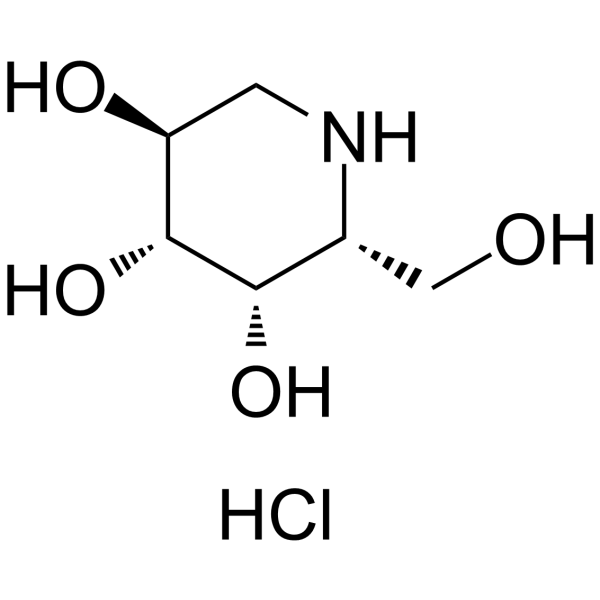
  • HY-14929A
    Migalastat hydrochloride
    1 Publications Verification

    GR181413A

    Glycosidase Others
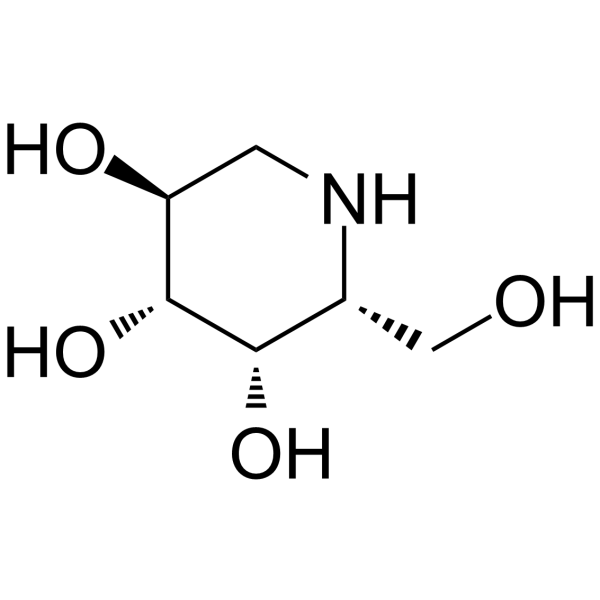
    Migalastat (GR181413A free base) hydrochloride is an orally active α-galactosidase A molecular chaperone, with an IC50 value of 0.04 μM for human α-Gal A. Migalastat binds to the active site of certain unstable mutant forms of α-galactosidase A, facilitating their transport to the lysosome. After dissociation in the acidic environment, Migalastat enables the mutant α-galactosidase A to exhibit biological activity .
    Migalastat hydrochloride
  • HY-118135

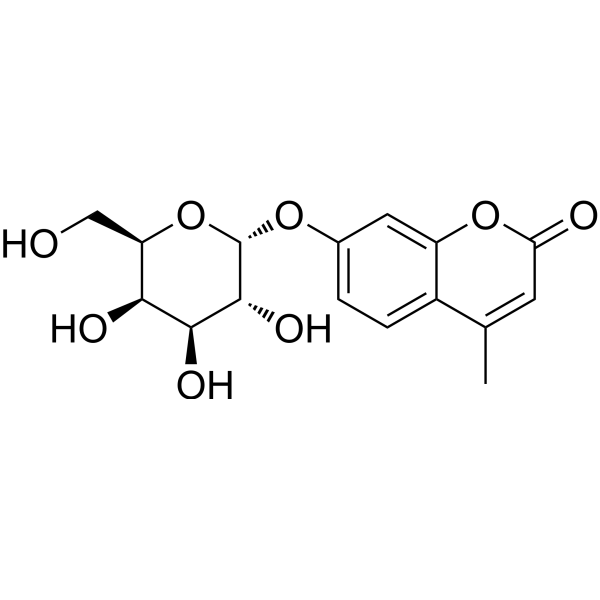
    4MU-α-Gal

    Fluorescent Dye Others
    4-Methylumbelliferyl-α-D-galactopyranoside (4MU-α-Gal), a substrate for α-galactosidase A (GLA), is a blue pro-fluorogenic substrate. 4-Methylumbelliferyl-α-D-galactopyranoside forms two products, galactose and fluorescent 4MU, upon cleavage by GLA .
    4-Methylumbelliferyl-α-D-galactopyranoside
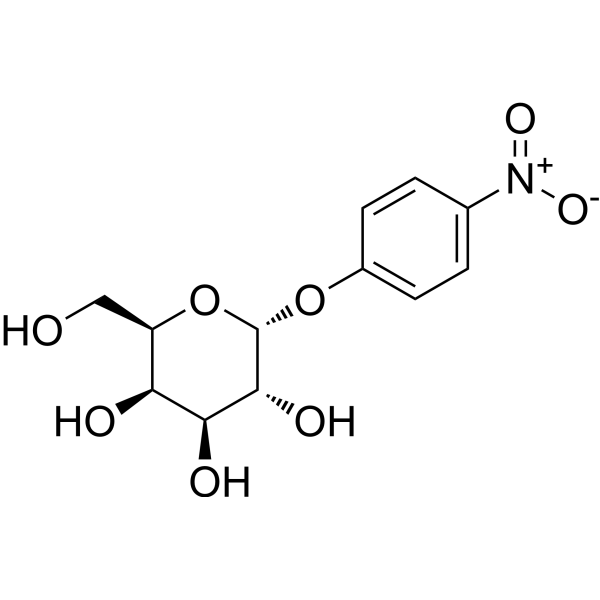
  • HY-W039911

    PNP-alpha-D-Gal; PNP-α-D-Gal

    Biochemical Assay Reagents Others
    4-Nitrophenyl α-D-galactopyranoside (PNP-alpha-D-Gal) is an artificial substrate of 4-nitrophenyl (pNP) glycopyranoside for detecting α-galactosidase activity. The amount of released pNP is significantly increased when 4-Nitrophenyl α-D-galactopyranoside is used as substrates .
    4-Nitrophenyl α-D-galactopyranoside
  • HY-114522

    Biochemical Assay Reagents Others
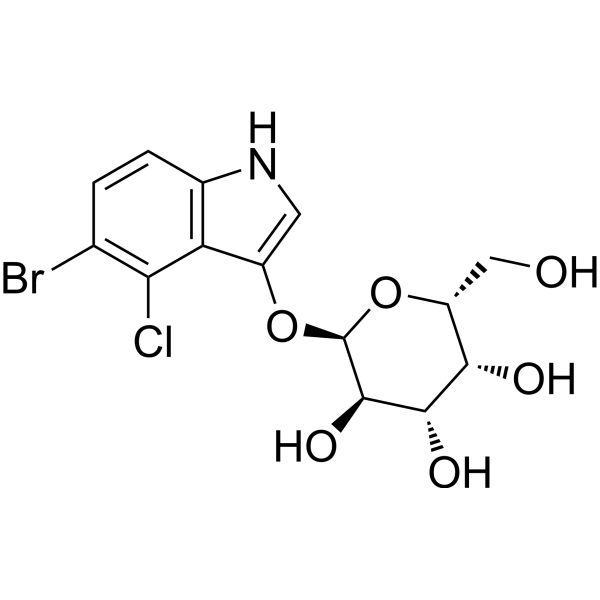
    X-alpha-Gal is a chromogenic substrate that is used to screen colonies with high activity of β-galactopyranoside. X-alpha-Gal also detects α-galactosidase activity. X-alpha-Gal can be used in yeast two hybrid screening for MEL1 gene activation. X-alpha-Gal can be used with Matchmaker GAL4-based products to confirm protein interactions .
    X-alpha-Gal
  • HY-P2871

    EC 3.2.1.22

    Endogenous Metabolite Others
    α-Galactosidase, Aspergillus niger (EC 3.2.1.22), that is, α-galactosidase, is a glycoside hydrolase that widely exists in animals, plants and microorganisms, and is often used in biochemical research. α-Galactosidase catalyzes the hydrolysis of α-1,6-linked terminal galactose residues, including galactooligosaccharides, galactomannans, and galactolipids. Catalyzes many catabolic processes including cleavage of glycoproteins, glycolipids and polysaccharides .
    α-Galactosidase, Aspergillus niger
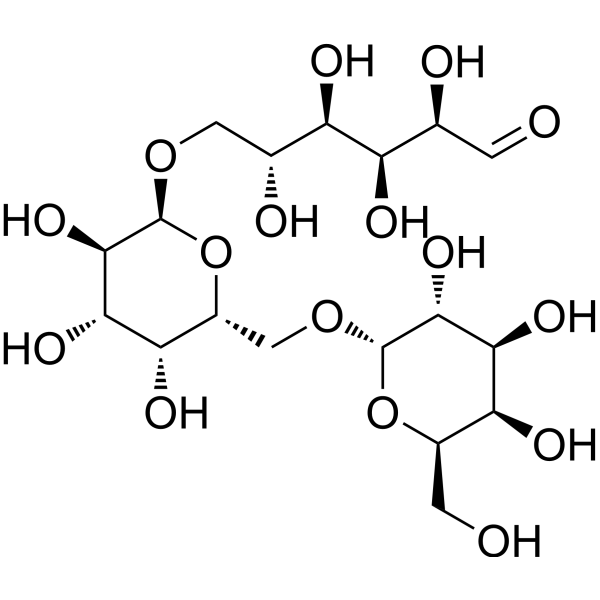
  • HY-N0913
    Manninotriose
    1 Publications Verification

    Antifolate Thymidylate Synthase Cancer
    Manninotriose is a binder of dihydrofolate reductase and thymidylate synthase. Manninotriose binds to dihydrofolate reductase via hydrogen bond formation with Arg28. Manninotriose binds to thymidylate synthase via hydrogen bond formation with Arg50. Manninotriose acts as a membrane protectant and helps improve stress tolerance. Manninotriose can be used in research related to acute lymphoblastic leukemia .
    Manninotriose
  • HY-W039915

    Glycosidase Others
    Allyl α-D-galactopyranoside is an α-galactoside and acceptor/donor substrate for transgalactosylation reactions. Allyl α-D-galactopyranoside acts as an acceptor substrate in α-galactosidase-catalyzed transgalactosylation, and serves as a donor substrate to form longer α-galactosyl-containing oligosaccharides. Allyl α-D-galactopyranoside serves as a model compound for investigating the catalytic mechanism and substrate specificity of glycoside hydrolases and glycosyltransferases .
    Allyl α-D-galactopyranoside
  • HY-14929

    GR181413A free base; 1-Deoxygalactonojirimycin

    Glycosidase Others
    Migalastat (GR181413A free base) is an orally active α-galactosidase A molecular chaperone, with an IC50 value of 0.04 μM for human α-Gal A. Migalastat binds to the active site of certain unstable mutant forms of α-galactosidase A, facilitating their transport to the lysosome. After dissociation in the acidic environment, Migalastat enables the mutant α-galactosidase A to exhibit biological activity .
    Migalastat
  • HY-123000

    Biochemical Assay Reagents
    4-Methylumbelliferyl 2-acetamido-2-deoxy-α-D-galactopyranoside is a fluorogenic substrate for studying the enzymatic activity of α-galactosidase. 4-Methylumbelliferyl 2-acetamido-2-deoxy-α-D-galactopyranoside is used to analyze enzyme activity in various biological samples, helping scientists gain insight into the function of the enzyme in vivo. 4-Methylumbelliferyl 2-acetamido-2-deoxy-α-D-galactopyranoside can also be used to screen potential compounds to inhibit or activate this enzyme.
    4-Methylumbelliferyl 2-acetamido-2-deoxy-α-D-galactopyranoside
  • HY-E71229A

    Biochemical Assay Reagents Others
    α-Galactosidase 110A, Bacteroides thetaiotaomicron (EC 3.2.1.-) is a glycoside hydrolase enzyme that hydrolyses the terminal alpha-galactosyl moieties from glycolipids and glycoproteins. It is encoded by the GLA gene. Two recombinant forms of alpha-galactosidase are called agalsidase alfa (INN) and agalsidase beta (INN) .
    α-Galactosidase 110A, Bacteroides thetaiotaomicron
  • HY-E71229

    Biochemical Assay Reagents Others
    α-Galactosidase 110A, Bacteroides fragilis (EC 3.2.1.-) is a glycoside hydrolase enzyme that hydrolyses the terminal alpha-galactosyl moieties from glycolipids and glycoproteins. It is encoded by the GLA gene. Two recombinant forms of alpha-galactosidase are called agalsidase alfa (INN) and agalsidase beta (INN) .
    α-Galactosidase 110A, Bacteroides fragilis
  • HY-E71231

    Biochemical Assay Reagents Others
    α-Galactosidase 4A, Bacillus halodurans (EC 3.2.1.22) is a glycoside hydrolase enzyme that hydrolyses the terminal alpha-galactosyl moieties from glycolipids and glycoproteins. It is encoded by the GLA gene. Two recombinant forms of alpha-galactosidase are called agalsidase alfa (INN) and agalsidase beta (INN) .
    α-Galactosidase 4A, Bacillus halodurans
  • HY-E71230

    Biochemical Assay Reagents Others
    α-Galactosidase 27A, Clostridium cellulolyticum (EC 3.2.1.22) is a glycoside hydrolase enzyme that hydrolyses the terminal alpha-galactosyl moieties from glycolipids and glycoproteins. It is encoded by the GLA gene. Two recombinant forms of alpha-galactosidase are called agalsidase alfa (INN) and agalsidase beta (INN) .
    α-Galactosidase 27A, Clostridium cellulolyticum
  • HY-E71233

    Biochemical Assay Reagents Others
    α-Galactosidase 97A, Bacteroides thetaiotaomicron (EC 3.2.1.22) is a glycoside hydrolase enzyme that hydrolyses the terminal alpha-galactosyl moieties from glycolipids and glycoproteins. It is encoded by the GLA gene. Two recombinant forms of alpha-galactosidase are called agalsidase alfa (INN) and agalsidase beta (INN) .
    α-Galactosidase 97A, Bacteroides thetaiotaomicron
  • HY-E71232

    Biochemical Assay Reagents Others
    α-Galactosidase 95A, Bacteroides ovatus (EC 3.2.1.22) is a glycoside hydrolase enzyme that hydrolyses the terminal alpha-galactosyl moieties from glycolipids and glycoproteins. It is encoded by the GLA gene. Two recombinant forms of alpha-galactosidase are called agalsidase alfa (INN) and agalsidase beta (INN) .
    α-Galactosidase 95A, Bacteroides ovatus
  • HY-E71234

    Biochemical Assay Reagents Others
    α-Galactosidase 97B, Bacteroides thetaiotaomicron (EC 3.2.1.22) is a glycoside hydrolase enzyme that hydrolyses the terminal alpha-galactosyl moieties from glycolipids and glycoproteins. It is encoded by the GLA gene. Two recombinant forms of alpha-galactosidase are called agalsidase alfa (INN) and agalsidase beta (INN) .
    α-Galactosidase 97B, Bacteroides thetaiotaomicron
  • HY-P2871E

    Endogenous Metabolite Metabolic Disease
    α-Galactosidase, Cellvibrio mixtus (EC 3.2.1.22) is a glycoside hydrolase enzyme that hydrolyses the terminal alpha-galactosyl moieties from glycolipids and glycoproteins. Two recombinant forms of α-Galactosidase are called agalsidase alfa (INN) and agalsidase beta (INN).
    α-Galactosidase, Cellvibrio mixtus
  • HY-P2871D

    Endogenous Metabolite Metabolic Disease
    α-Galactosidase, Clostridium cellulolyticum (EC 3.2.1.22) is a glycoside hydrolase enzyme that hydrolyses the terminal alpha-galactosyl moieties from glycolipids and glycoproteins. Two recombinant forms of α-Galactosidase are called agalsidase alfa (INN) and agalsidase beta (INN).
    α-Galactosidase, Clostridium cellulolyticum
  • HY-P2871H

    Endogenous Metabolite Metabolic Disease
    α-Galactosidase, Thermus brockianus (EC 3.2.1.22) is a glycoside hydrolase enzyme that hydrolyses the terminal alpha-galactosyl moieties from glycolipids and glycoproteins. Two recombinant forms of α-Galactosidase are called agalsidase alfa (INN) and agalsidase beta (INN).
    α-Galactosidase, Thermus brockianus
  • HY-P2871C

    Endogenous Metabolite Metabolic Disease
    α-Galactosidase, positionally specific, Escherichia coli (EC 3.2.1.22) is a glycoside hydrolase enzyme that hydrolyses the terminal alpha-galactosyl moieties from glycolipids and glycoproteins. Two recombinant forms of α-Galactosidase are called agalsidase alfa (INN) and agalsidase beta (INN).
    α-Galactosidase, positionally specific, Escherichia coli
  • HY-P2871I

    Biochemical Assay Reagents Metabolic Disease
    α-Galactosidase, Green coffee beans (EC 3.2.1.22) is a glycoside hydrolase enzyme that hydrolyses the terminal alpha-galactosyl moieties from glycolipids and glycoproteins.
    α-Galactosidase, Green coffee beans
  • HY-W740650

    GR181413A-15N

    Isotope-Labeled Compounds Glycosidase Others
    Migalastat hydrochloride- 15N (GR181413A- 15N) is the 15N-labeled Migalastat hydrochloride (HY-14929A). Migalastat (GR181413A free base) hydrochloride is an orally active α-galactosidase A molecular chaperone, with an IC50 value of 0.04 μM for human α-Gal A. Migalastat binds to the active site of certain unstable mutant forms of α-galactosidase A, facilitating their transport to the lysosome. After dissociation in the acidic environment, Migalastat enables the mutant α-galactosidase A to exhibit biological activity .
    Migalastat hydrochloride-15N
  • HY-W728096

    GR181413A-d5 free base

    Isotope-Labeled Compounds Glycosidase Others
    Migalastat-d5 (GR181413A-d5 (free base)) is deuterium labeled Migalastat. Migalastat (GR181413A free base) is an orally active α-galactosidase A molecular chaperone, with an IC50 value of 0.04 μM for human α-Gal A. Migalastat binds to the active site of certain unstable mutant forms of α-galactosidase A, facilitating their transport to the lysosome. After dissociation in the acidic environment, Migalastat enables the mutant α-galactosidase A to exhibit biological activity .
    Migalastat-d5
  • HY-E70591

    Biochemical Assay Reagents Others
    exo-α-Galactosidase, Bacteroides thetaiotaomicron (EC.3.2.1.22) is a glycoside hydrolase .
    exo-α-Galactosidase, Bacteroides thetaiotaomicron
  • HY-E70588

    Biochemical Assay Reagents Others
    exo-α-Galactosidase Isoenzyme,Bacteroides thetaiotaomicron (EC.3.2.1.22) is a glycoside hydrolase .
    exo-α-Galactosidase 1, Bacteroides thetaiotaomicron
  • HY-W089785

    Biochemical Assay Reagents Others
    Methyl α-D-galactopyranoside monohydrate is an alpha-D-galactoside having a methyl substituent at the anomeric position. Methyl α-D-galactopyranoside inhibits debaryomyces hansenii UFV-1 extracellular and intracellular α-galactosidases with Ki values of 0.82 and 1.12 mM, respectively .
    Methyl α-D-galactopyranoside monohydrate
  • HY-175076

    Endogenous Metabolite Metabolic Disease Inflammation/Immunology
    Globotriaosylceramide (non-hydroxy) (porcine RBC) is a glycosphingolipid found in the cell membranes of mammals. Globotriaosylceramide (non-hydroxy) (porcine RBC) is the core pathogenic molecule of Fabry disease, and its level can be downregulated by supplementing α-galactosidase A. Globotriaosylceramide (non-hydroxy) (porcine RBC) amplifies B-cell receptor signals by regulating the localization of co-receptor CD19, and can be used as a vaccine adjuvant, capable of guiding the generation of broad-spectrum and cross-protective antibody responses. Globotriaosylceramide (non-hydroxy) (porcine RBC) promotes wound healing and reduces scar formation by regulating fibroblast heterogeneity .
    Globotriaosylceramide (non-hydroxy) (porcine RBC)

Inquiry Online

Your information is safe with us. * Required Fields.

Salutation


Country or Region *

Applicant Name *


Organization Name *

Department *


Email Address *


Product Name *

Cat. No.


Requested quantity *

Phone Number *


Remarks

Inquiry Online

Inquiry Information

Product Name:
Cat. No.:
Quantity:
MCE Japan Authorized Agent:

