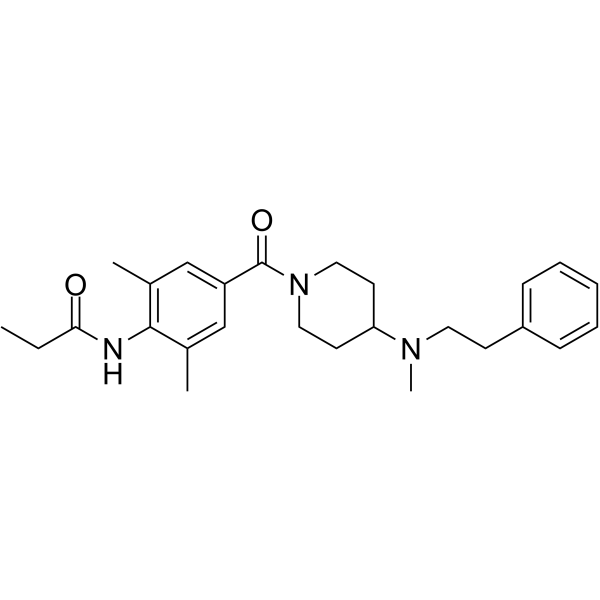
1. Search Result
Search Result
Results for "

α2A-adrenoceptors

" in MedChemExpress (MCE) Product Catalog:

32

Inhibitors & Agonists

2

Natural
Products

2

Isotope-Labeled Compounds

Cat. No. Product Name Target Research Areas Chemical Structure
  • HY-103213
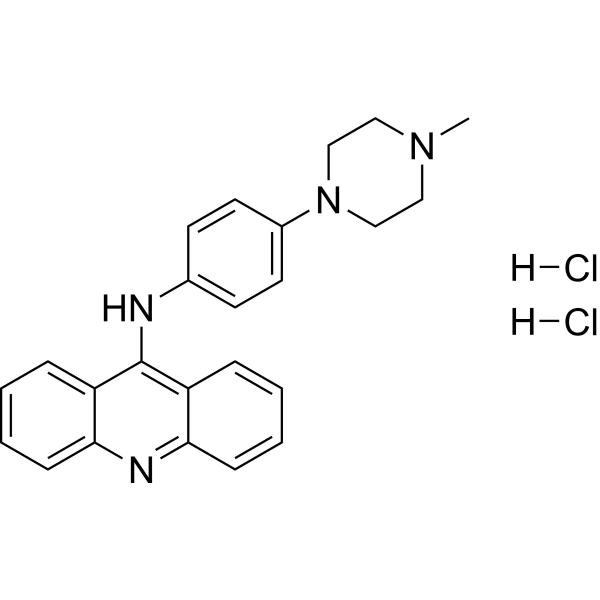
    JP1302 dihydrochloride
    2 Publications Verification

    Adrenergic Receptor Neurological Disease Endocrinology
    JP1302 dihydrochloride is a potent, selective, high affinity antagonist of the α2C-adrenoceptor, with a Kb of 16 nM and a Ki of 28 nM for the human α2C-receptor. JP1302 dihydrochloride shows antidepressant and antipsychotic-like effects. JP1302 dihydrochloride can be used for neuropsychiatric disorders and renal dysfunction research [2] .
    JP1302 dihydrochloride
  • HY-100490

    Imidazoline Receptor Adrenergic Receptor Apoptosis Autophagy Cardiovascular Disease Cancer
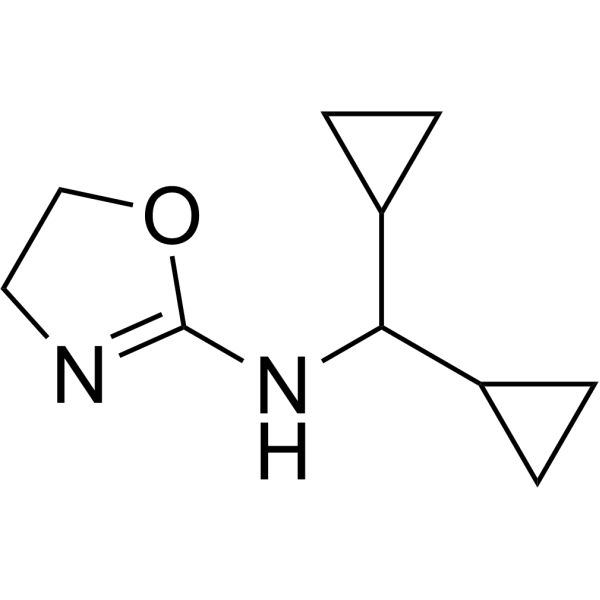
    Rilmenidine, an innovative antihypertensive agent, is an orally active, selective I1 imidazoline receptor agonist. Rilmenidine is an alpha 2-adrenoceptor agonist. Rilmenidine induces autophagy. Rilmenidine acts both centrally by reducing sympathetic overactivity and in the kidney by inhibiting the Na +/H + antiport. Rilmenidine modulates proliferation and stimulates the proapoptotic protein Bax thus inducing the perturbation of the mitochondrial pathway and apoptosis in human leukemic K562 cells [2] .
    Rilmenidine
  • HY-109075A

    Adrenergic Receptor Neurological Disease
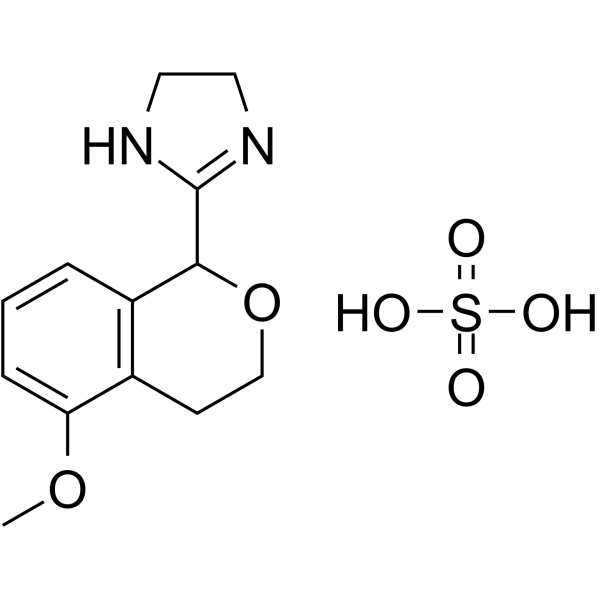
    Tasipimidine sulfate is an orally active and selective α2A-adrenoceptor agonist with a pEC50 of 7.57 for human α2A-adrenoceptors and an EC50 of 5.7 nM for rat α2-adrenoceptor. Tasipimidine sulfate can be utilized in research related to situational anxiety and fear [2].
    Tasipimidine sulfate
  • HY-100490B

    Imidazoline Receptor Adrenergic Receptor Apoptosis Autophagy Cardiovascular Disease Cancer
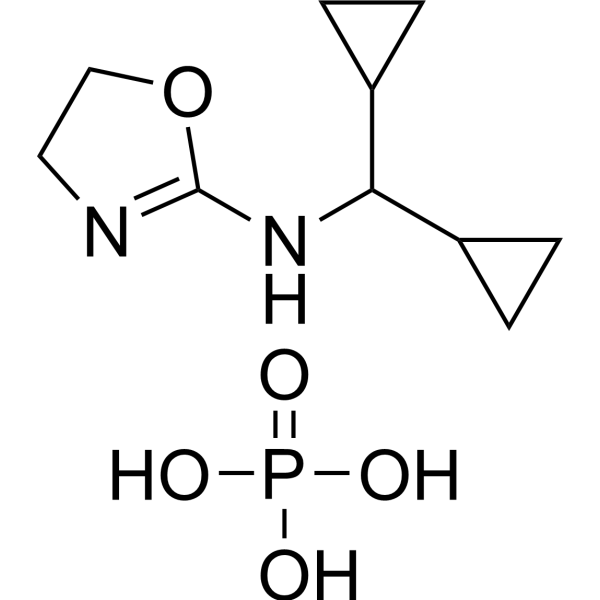
    Rilmenidine phosphate, an innovative antihypertensive agent, is an orally active, selective I1 imidazoline receptor agonist. Rilmenidine phosphate is an alpha 2-adrenoceptor agonist. Rilmenidine phosphate induces autophagy. Rilmenidine phosphate acts both centrally by reducing sympathetic overactivity and in the kidney by inhibiting the Na +/H + antiport. Rilmenidine phosphate modulates proliferation and stimulates the proapoptotic protein Bax thus inducing the perturbation of the mitochondrial pathway and apoptosis in human leukemic K562 cells [2] .
    Rilmenidine phosphate
  • HY-203894

    Defekton

    Dopamine Receptor Adrenergic Receptor 5-HT Receptor Neurological Disease
    Carpipramine (Defekton) is an antipsychotic agent that belongs to the iminodibenzyl class. Carpipramine is a potent dopamine antagonist which blocks alpha 1- and alpha 2-adrenoceptors. Carpipramine also has antagonist properties with respect to serotonin (5-ΗΤ2) receptors. Carpipramine exhibits antipsychotic and anti-depressant effects. Carpipramine can be used for the research of neurological disease, such as post-traumatic stress disorder (PTSD) and depression .
    Carpipramine
  • HY-100490A

    Imidazoline Receptor Adrenergic Receptor Apoptosis Autophagy Cardiovascular Disease Cancer
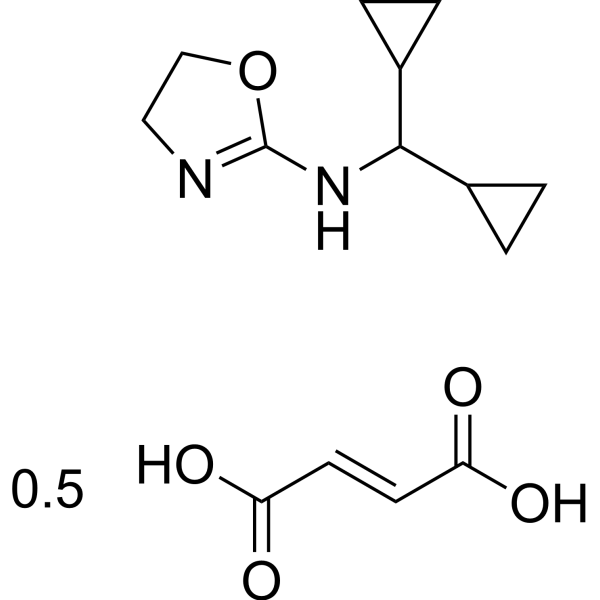
    Rilmenidine hemifumarate, an innovative antihypertensive agent, is an orally active, selective I1 imidazoline receptor agonist. Rilmenidine hemifumarate is an alpha 2-adrenoceptor agonist. Rilmenidine hemifumarate induces autophagy. Rilmenidine hemifumarate acts both centrally by reducing sympathetic overactivity and in the kidney by inhibiting the Na +/H + antiport. Rilmenidine hemifumarate modulates proliferation and stimulates the proapoptotic protein Bax thus inducing the perturbation of the mitochondrial pathway and apoptosis in human leukemic K562 cells [2] .
    Rilmenidine hemifumarate
  • HY-101198

    Histamine Receptor Apoptosis Neurological Disease Cancer
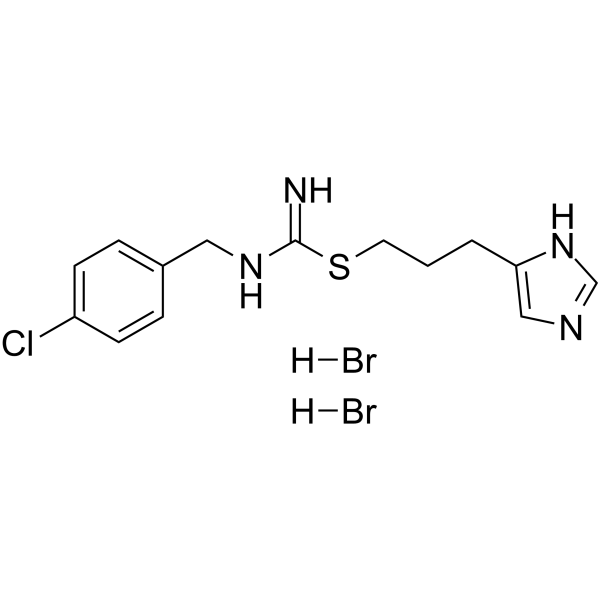
    Clobenpropit dihydrobromide is a potent histamine H3R antagonist/inverse agonist with a pEC50 of 8.07 for histamine H3LR . Clobenpropit dihydrobromide acts as partial agonist at histamine H4 receptors (Ki 13 nM). Clobenpropit dihydrobromide also binds to serotonin 5-HT3 receptors (Ki 7.4 nM) and α2A/α2C adrenoceptors (Ki 17.4/7.8 nM) [2]. Clobenpropit dihydrobromide increases apoptosis .
    Clobenpropit dihydrobromide
  • HY-103197

    RX821002 hydrochloride

    Adrenergic Receptor Neurological Disease
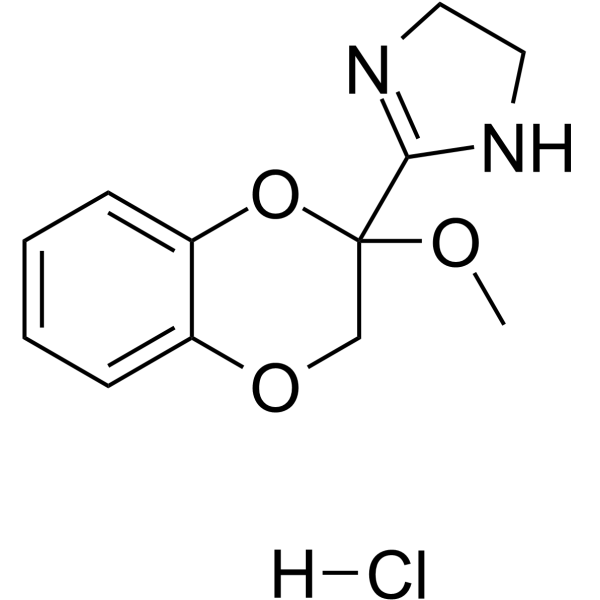
    2-Methoxyidazoxan monohydrochloride (RX821002 hydrochloride) is a highly selective alpha 2-adrenoceptor antagonist with little or no imidazoline antagonist effect. RX 821002 has markedly higher affinity for (guinea-pig) alpha 2D-adrenoceptors (pKd 9.7) than for (rabbit) alpha 2A-adrenoceptors (pKd 8.2) [2].
    2-Methoxyidazoxan monohydrochloride
  • HY-103213A
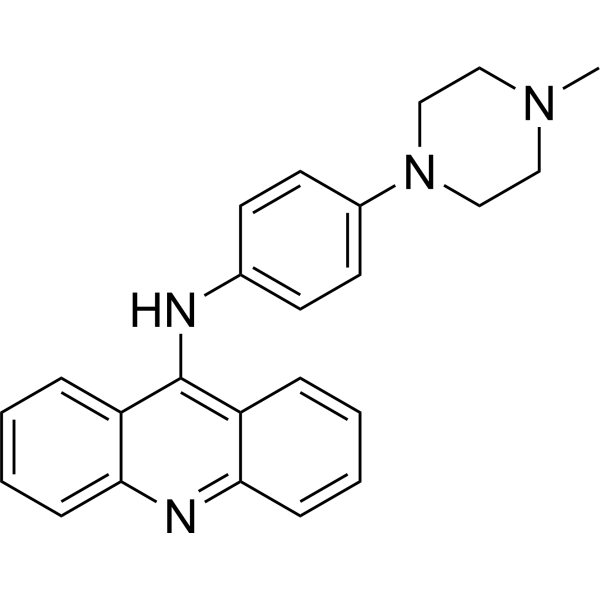
    JP1302
    2 Publications Verification

    Adrenergic Receptor Neurological Disease
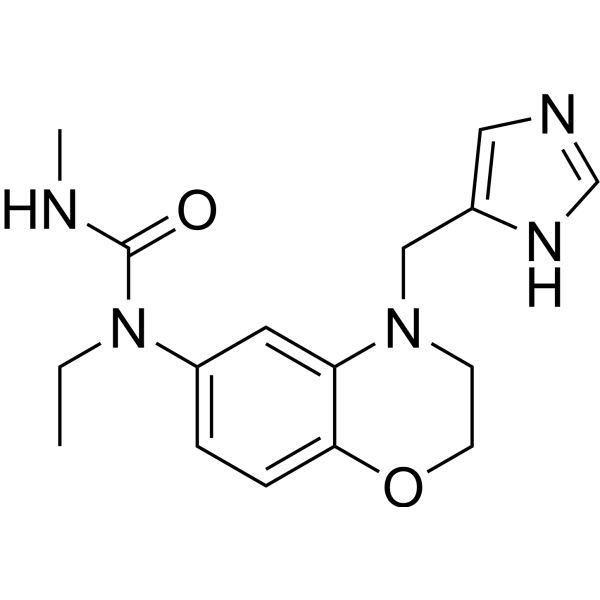
    JP1302 is a potent, selective, high affinity antagonist of the α2C-adrenoceptor, with a Kb of 16 nM and a Ki of 28 nM for the human α2C-receptor. JP1302 shows antidepressant and antipsychotic-like effects. JP1302 can be used for neuropsychiatric disorders and renal dysfunction research [2] .
    JP1302
  • HY-106769

    GR50360

    Adrenergic Receptor Neurological Disease
    Fluparoxan is an orally active, selective and competitive alpha 2-adrenoceptor antagonist. Fluparoxan is an anti-depressant agent [2].
    Fluparoxan
  • HY-103212A

    B-HT 933 hydrochloride; Oxazoloazepin hydrochloride

    Adrenergic Receptor Cardiovascular Disease
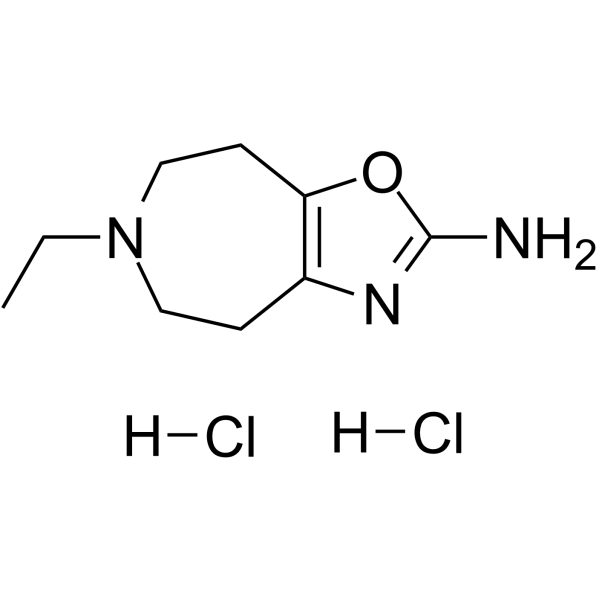
    Azepexole hydrochloride (B-HT 933 dihydrochloride; Oxazoloazepin dihydrochloride) is a selective agonist for α 2-adrenoceptor, with pKi of 8.3, 7.6, and 7.5 for α2A-, α2B- and α2C-adrenoceptor subtypes, resepctively. Azepexole dihydrochloride causes concentration-dependent inhibition of peristaltic contractions with IC50 of 78.72 nM. Azepexole hydrochloride exhibits antitussive and analgesic efficacy [2].
    Azepexole hydrochloride
  • HY-101610

    Adrenergic Receptor Cardiovascular Disease Endocrinology
    OPC-28326 is a selective peripheral vasodilator and an angatonist of α2-adrenergic receptor, with Ki of 2040, 285, and 55 nM for α2A-, α2B- and α2C-adrenoceptors, respectively.
    OPC-28326
  • HY-N3298

    Adrenergic Receptor Cardiovascular Disease Neurological Disease
    Meranzin is an absorbed bioactive compound from the Traditional Chinese Medicine (TCM) Chaihu-Shugan-San (CSS). Meranzin, isolated from leaves of Murraya exotica L., regulates the shared alpha 2-adrenoceptor and involves the AMPA-ERK1/2–BDNF signaling pathway. Meranzin has the potential for the prevention of the comorbidity of atherosclerosis and depression [2].
    Meranzin
  • HY-B0371D

    Adrenergic Receptor Endocrinology
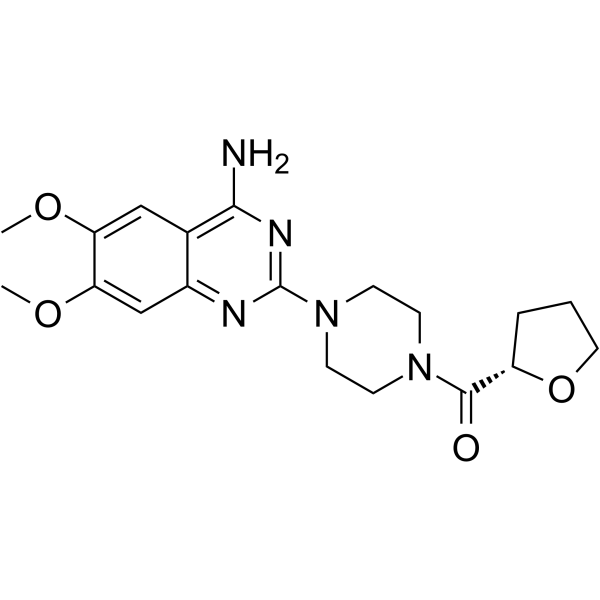
    (S)-Terazosin is an active S-enantiomer of Terazosin. (S)-Terazosin is a potent and high-affinity α-adrenoceptor antagonist with Ki values of 3.91 nM, 0.79 nM and 1.16 nM for α1a, α1b and α1d-adrenoceptor, respectively. (S)-Terazosin also has high-affinity for α2a, α2B and α2c-adrenoceptor with Ki values of 729 nM, 3.5 nM and 46.4 nM, respectively .
    (S)-Terazosin
  • HY-U00123A

    Hydroxyguanabenz hydrochloride

    Adrenergic Receptor Neurological Disease
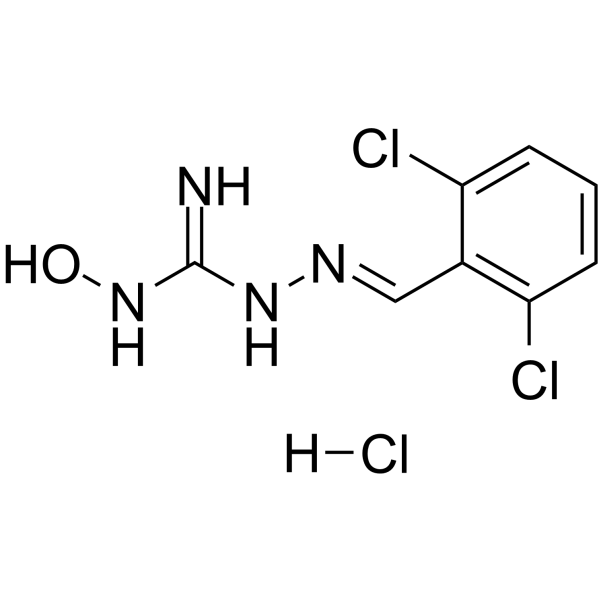
    Guanoxabenz (Hydroxyguanabenz) hydrochloride is an α2 adrenergic receptor agonist, with a Ki of 4000 nM and the fully activated form 40 nM for an α2A adrenoceptor [2] .
    Guanoxabenz hydrochloride
  • HY-109075

    Adrenergic Receptor Neurological Disease
    Tasipimidine is an orally active and selective α2A-adrenoceptor agonist with a pEC50 of 7.57 for human α2A-adrenoceptors and an EC50 of 5.7 nM for rat α2-adrenoceptor. Tasipimidine can be utilized in research related to situational anxiety and fear [2].
    Tasipimidine
  • HY-123514

    Adrenergic Receptor Dopamine Receptor 5-HT Receptor Others
    SNAP8719 free base is a selective α1D-adrenoceptor antagonist (pKi = 8.89). SNAP8719 free base shows affinity for the dopamine D2-, 5-HT1A-, and the human clonal α2a-adrenoceptor, with pKi values of 5.98, 6.47, and <5.0, respectively. SNAP8719 free base causes a concentration-dependent increase in the twitch response .
    SNAP8719 free base
  • HY-158194

    Adrenergic Receptor Cancer
    α2C adrenoceptor agonist 1 (Compound A) is an orally active, highly selective, and non-central nervous system penetrating agonist for the α2C-adrenoceptor, with EC50 and Ki values of 108 nM and 12 nM, respectively. α2C adrenoceptor agonist 1 can be used in the study of nasal congestion .
    α2C adrenoceptor agonist 1
  • HY-17416S

    Isotope-Labeled Compounds Adrenergic Receptor Cardiovascular Disease Endocrinology
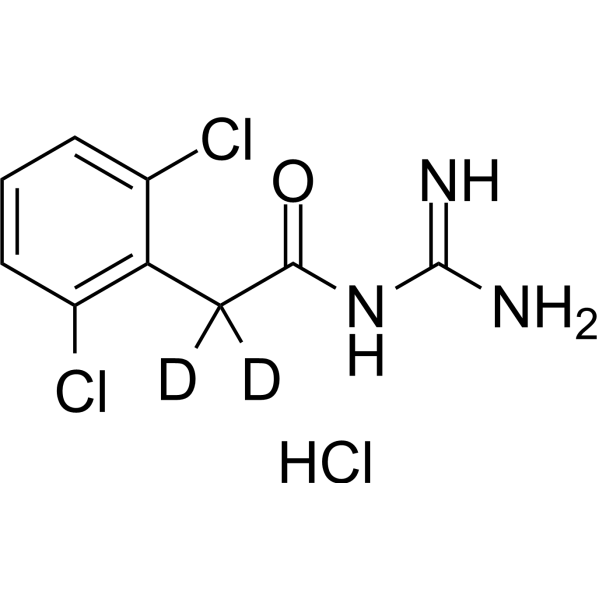
    Guanfacine-d2 (hydrochloride) is the deuterium labeled Guanfacine hydrochloride. Guanfacine hydrochloride, an anti-hypertensive agent, is a selective α2A-adrenoceptor agonist with Kd of 31 nM and displays 60-fold selectivity over α2B-adrenoceptors [2].
    Guanfacine-d2 hydrochloride
  • HY-103212

    B-HT 933 dihydrochloride; Oxazoloazepin dihydrochloride

    Adrenergic Receptor Cardiovascular Disease Endocrinology
    Azepexole (B-HT 933) dihydrochloride is a potent and selective alpha 2-adrenoceptor agonist with pKis of 8.3, 7.6, and 7.5 for α2A-, α2B- and α2C-adrenoceptor subtypes, resepctively . Azepexole dihydrochloride causes concentration-dependent inhibition of peristaltic contractions (IC50= 78.72 nM) [2].
    Azepexole dihydrochloride
  • HY-106769C

    GR50360 hydrochloride

    Adrenergic Receptor Neurological Disease
    Fluparoxan hydrochloride is an orally active, selective and competitive alpha 2-adrenoceptor antagonist. Fluparoxan hydrochloride is an anti-depressant agent [2].
    Fluparoxan hydrochloride
  • HY-U00123

    Hydroxyguanabenz

    Adrenergic Receptor Cardiovascular Disease Endocrinology
    Guanoxabenz is an α2 adrenergic receptor agonist, with a Ki of 4000 nM and the fully activated form 40 nM for an α2A adrenoceptor [2] .
    Guanoxabenz
  • HY-103216

    Adrenergic Receptor Neurological Disease
    RWJ52353 is a selective, orally active ligand for α2D adrenoceptor, which binds α2D, α2A, α2B and α1 receptors, with Kis of 1.5, 254, 621 and 443 nM. RWJ52353 exhibits analgesic efficacy in mouse abdominal irritation test (MAIT), with an ED50 of 15.1 mg/kg .
    RWJ52353
  • HY-N3298R

    Reference Standards Adrenergic Receptor Cardiovascular Disease Neurological Disease
    Meranzin (Standard) is the analytical standard of Meranzin. This product is intended for research and analytical applications. Meranzin is an absorbed bioactive compound from the Traditional Chinese Medicine (TCM) Chaihu-Shugan-San (CSS). Meranzin, isolated from leaves of Murraya exotica L., regulates the shared alpha 2-adrenoceptor and involves the AMPA-ERK1/2–BDNF signaling pathway. Meranzin has the potential for the prevention of the comorbidity of atherosclerosis and depression [2].
    Meranzin (Standard)
  • HY-103213R

    Reference Standards Adrenergic Receptor Neurological Disease Endocrinology
    JP1302 dihydrochloride (Standard) is the analytical standard of JP1302 dihydrochloride. This product is intended for research and analytical applications. JP1302 dihydrochloride is a potent, selective, high affinity antagonist of the α2C-adrenoceptor, with a Kb of 16 nM and a Ki of 28 nM for the human α2C-receptor. JP1302 dihydrochloride shows antidepressant and antipsychotic-like effects. JP1302 dihydrochloride can be used for neuropsychiatric disorders and renal dysfunction research [2] .
    JP1302 dihydrochloride (Standard)
  • HY-100490S

    Isotope-Labeled Compounds Imidazoline Receptor Adrenergic Receptor Apoptosis Autophagy Cardiovascular Disease Cancer
    Rilmenidine-d4 is the deuterium labeled Rilmenidine. Rilmenidine, an innovative antihypertensive agent, is an orally active, selective I1 imidazoline receptor agonist. Rilmenidine is an alpha 2-adrenoceptor agonist. Rilmenidine induces autophagy. Rilmenidine acts both centrally by reducing sympathetic overactivity and in the kidney by inhibiting the Na+/H+ antiport. Rilmenidine modulates proliferation and stimulates the proapoptotic protein Bax thus inducing the perturbation of the mitochondrial pathway and apoptosis in human leukemic K562 cells [2] .
    Rilmenidine-d4
  • HY-103197R

    RX821002 hydrochloride (Standard)

    Reference Standards Adrenergic Receptor Neurological Disease
    2-Methoxyidazoxan (monohydrochloride) (Standard) is the analytical standard of 2-Methoxyidazoxan (monohydrochloride). This product is intended for research and analytical applications. 2-Methoxyidazoxan monohydrochloride (RX821002 hydrochloride) is a highly selective alpha 2-adrenoceptor antagonist with little or no imidazoline antagonist effect. RX 821002 has markedly higher affinity for (guinea-pig) alpha 2D-adrenoceptors (pKd 9.7) than for (rabbit) alpha 2A-adrenoceptors (pKd 8.2) [2].
    2-Methoxyidazoxan monohydrochloride (Standard)
  • HY-136498AR

    Reference Standards Drug Metabolite Infection
    Rilmenidine (phosphate) (Standard) is the analytical standard of Rilmenidine (phosphate). This product is intended for research and analytical applications. Rilmenidine phosphate, an innovative antihypertensive agent, is an orally active, selective I1 imidazoline receptor agonist. Rilmenidine phosphate is an alpha 2-adrenoceptor agonist. Rilmenidine phosphate induces autophagy. Rilmenidine phosphate acts both centrally by reducing sympathetic overactivity and in the kidney by inhibiting the Na+/H+ antiport. Rilmenidine phosphate modulates proliferation and stimulates the proapoptotic protein Bax thus inducing the perturbation of the mitochondrial pathway and apoptosis in human leukemic K562 cells [2] .
    T-705RMP ammonium (Standard)
  • HY-100490BR

    Reference Standards Imidazoline Receptor Adrenergic Receptor Apoptosis Autophagy Cardiovascular Disease Cancer
    Rilmenidine (phosphate) (Standard) is the analytical standard of Rilmenidine (phosphate). This product is intended for research and analytical applications. Rilmenidine phosphate, an innovative antihypertensive agent, is an orally active, selective I1 imidazoline receptor agonist. Rilmenidine phosphate is an alpha 2-adrenoceptor agonist. Rilmenidine phosphate induces autophagy. Rilmenidine phosphate acts both centrally by reducing sympathetic overactivity and in the kidney by inhibiting the Na+/H+ antiport. Rilmenidine phosphate modulates proliferation and stimulates the proapoptotic protein Bax thus inducing the perturbation of the mitochondrial pathway and apoptosis in human leukemic K562 cells [2] .
    Rilmenidine phosphate (Standard)
  • HY-100490R

    Reference Standards Imidazoline Receptor Adrenergic Receptor Apoptosis Autophagy Cardiovascular Disease Cancer
    Rilmenidine (Standard) is the analytical standard of Rilmenidine. This product is intended for research and analytical applications. Rilmenidine, an innovative antihypertensive agent, is an orally active, selective I1 imidazoline receptor agonist. Rilmenidine is an alpha 2-adrenoceptor agonist. Rilmenidine induces autophagy. Rilmenidine acts both centrally by reducing sympathetic overactivity and in the kidney by inhibiting the Na+/H+ antiport. Rilmenidine modulates proliferation and stimulates the proapoptotic protein Bax thus inducing the perturbation of the mitochondrial pathway and apoptosis in human leukemic K562 cells [2] .
    Rilmenidine (Standard)
  • HY-100490AR

    Reference Standards Imidazoline Receptor Adrenergic Receptor Apoptosis Autophagy Cardiovascular Disease Cancer
    Rilmenidine (hemifumarate) (Standard) is the analytical standard of Rilmenidine (hemifumarate). This product is intended for research and analytical applications. Rilmenidine hemifumarate, an innovative antihypertensive agent, is an orally active, selective I1 imidazoline receptor agonist. Rilmenidine hemifumarate is an alpha 2-adrenoceptor agonist. Rilmenidine hemifumarate induces autophagy. Rilmenidine hemifumarate acts both centrally by reducing sympathetic overactivity and in the kidney by inhibiting the Na+/H+ antiport. Rilmenidine hemifumarate modulates proliferation and stimulates the proapoptotic protein Bax thus inducing the perturbation of the mitochondrial pathway and apoptosis in human leukemic K562 cells [2] .
    Rilmenidine hemifumarate (Standard)
  • HY-182296

    Histamine Receptor Inflammation/Immunology
    SCH 79687 is an orally active histamine H3 receptor antagonist, with a Ki of 1.9 nM in rats and 13 nM in guinea pigs. SCH 79687 acts as a competitive antagonist against (R)-α-methylhistamine. SCH 79687 attenuates the inhibitory effect of (R)-α-methylhistamine-induced sympathetic hypertensive responses in guinea pigs. When used in combination with H1 antagonists, SCH 79687 inhibits Compound 48/80 (HY-115768)-induced nasal congestion in cats. SCH 79687 can be used for the research of allergic rhinitis .
    SCH 79687

Inquiry Online

Your information is safe with us. * Required Fields.

Salutation


Country or Region *

Applicant Name *


Organization Name *

Department *


Email Address *


Product Name *

Cat. No.


Requested quantity *

Phone Number *


Remarks

Inquiry Online

Inquiry Information

Product Name:
Cat. No.:
Quantity:
MCE Japan Authorized Agent:

