Search Result
Results for "
Manage
" in MedChemExpress (MCE) Product Catalog:
2
Isotope-Labeled Compounds
| Cat. No. |
Product Name |
Target |
Research Areas |
Chemical Structure |
-
- HY-B0463
-
|
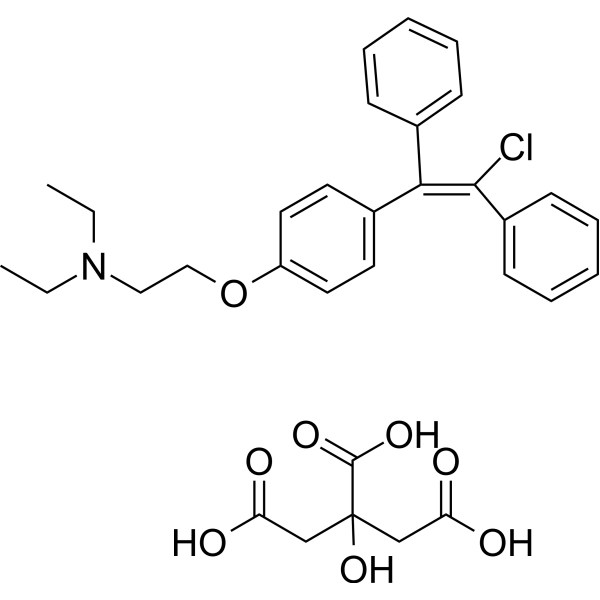
Clomifene citrate
|
Estrogen Receptor/ERR
|
Neurological Disease
Endocrinology
Cancer
|
|
Clomiphene citrate (Clomifene citrate) is an orally active estrogen-receptor modulator. Clomiphene citrate has anti-cancer actixity, induces perturbations during meiotic maturation and cytogenetic abnormalities and ameliorates in managing psychiatric and cognitive impairment .
|
-
-
- HY-B0372A
-
|
|
SARS-CoV
Autophagy
HIV
|
Metabolic Disease
|
|
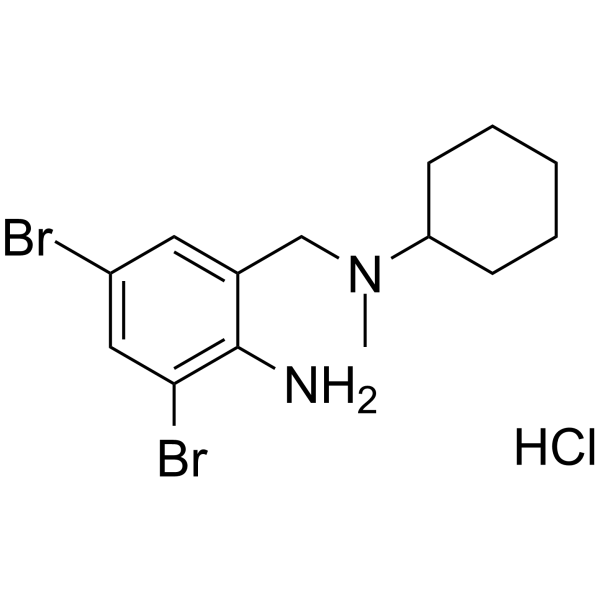
Bromhexine hydrochloride is a potent and specific TMPRSS2 protease inhibitor with an IC50 of 0.75 μM. Bromhexine hydrochloride can prevent and manage SARS-CoV-2 infection. Bromhexine hydrochloride is an autophagy agonist. Bromhexine hydrochloride is a mucolytic cough suppressant and has the potential for a range of respiratory conditions .
|
-
-
- HY-127029A
-
|
|
NO Synthase
Lipoxygenase
|
Neurological Disease
Inflammation/Immunology
Cancer
|
|
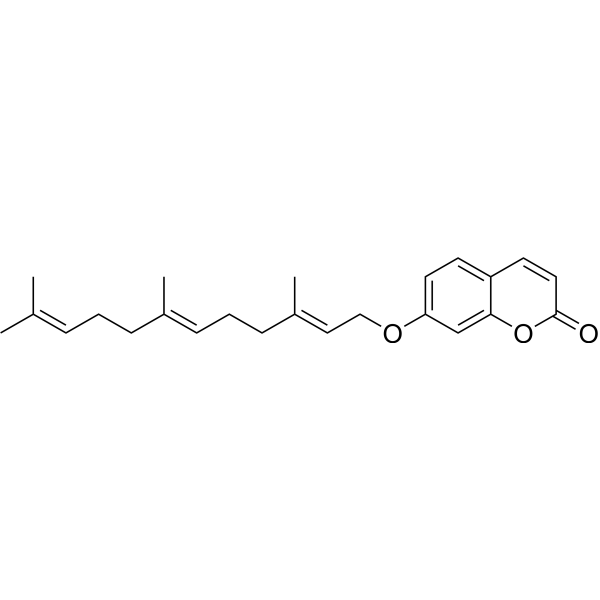
Umbelliprenin, a prenylated coumarin, is an antioxidant with anticancer, anti-inflammatory and immunomodulatory effects. Umbelliprenin inhibits lipoxygenase managing the inflammation pathways. In inflammatory macrophages, Umbelliprenin suppresses nitric oxide production as well as inducible nitric oxide synthase (NO synthase) .
|
-
-
- HY-124484
-
|
|
Notch
|
Cancer
|
|
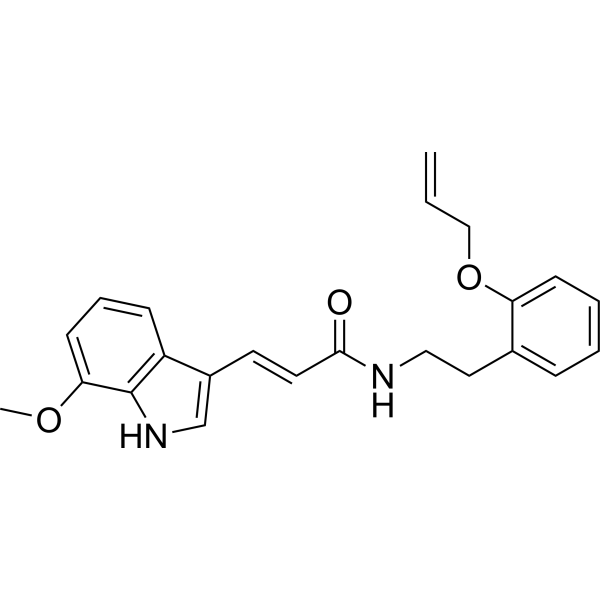
JI130 (JI051 derivative ) is a stabilizer for the Hes1-PHB2 interaction. JI130 inhibits the ability of Hes1 to repress transcription. JI130 significantly reduces the tumor growth in a murine pancreatic tumor model and has the potential for managing pancreatic cancer .
|
-
-
- HY-B0463R
-
|
Clomifene citrate (Standard)
|
Reference Standards
Estrogen Receptor/ERR
|
Neurological Disease
Endocrinology
Cancer
|
|
Clomiphene (citrate) (Standard) is the analytical standard of Clomiphene (citrate). This product is intended for research and analytical applications. Clomiphene citrate (Clomifene citrate) is an orally active estrogen-receptor modulator. Clomiphene citrate has anti-cancer actixity, induces perturbations during meiotic maturation and cytogenetic abnormalities and ameliorates in managing psychiatric and cognitive impairment .
|
-
-
- HY-B1850
-
-
-
- HY-B1882
-
|
|
Endogenous Metabolite
|
Others
|
|
Propazine is a triazine herbicide that effectively manages broad-leaved weeds and annual grasses in sweet sorghum cultivation.
|
-
-
- HY-B0372AS
-
|
|
Isotope-Labeled Compounds
SARS-CoV
Autophagy
HIV
|
Metabolic Disease
|
|
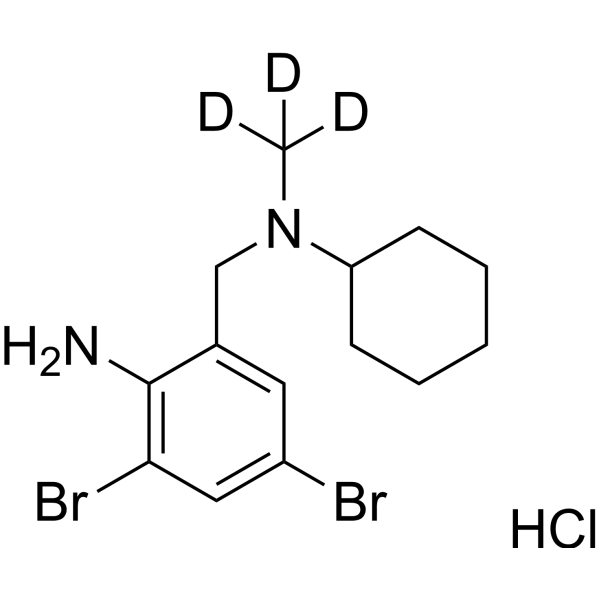
Bromhexine-d3 (hydrochloride) is deuterium labeled Bromhexine (hydrochloride). Bromhexine hydrochloride is a potent and specific TMPRSS2 protease inhibitor with an IC50 of 0.75 μM. Bromhexine hydrochloride can prevent and manage SARS-CoV-2 infection. Bromhexine hydrochloride is an autophagy agonist. Bromhexine hydrochloride is a mucolytic cough suppressant and has the potential for a range of respiratory conditions .
|
-
-
- HY-B0372AR
-
|
|
Reference Standards
SARS-CoV
Autophagy
HIV
|
Metabolic Disease
|
|
Bromhexine (hydrochloride) (Standard) is the analytical standard of Bromhexine (hydrochloride). This product is intended for research and analytical applications. Bromhexine hydrochloride is a potent and specific TMPRSS2 protease inhibitor with an IC50 of 0.75 μM. Bromhexine hydrochloride can prevent and manage SARS-CoV-2 infection. Bromhexine hydrochloride is an autophagy agonist. Bromhexine hydrochloride is a mucolytic cough suppressant and has the potential for a range of respiratory conditions .
|
-
-
- HY-155297
-
|
FLA-136
|
Histamine Receptor
|
Cardiovascular Disease
|
|
Nebidrazine is a centrally-acting hypotensive agent compared to clonidine, demonstrating weaker cardiovascular effects in rats. It induces dose-dependent hypotension and bradycardia when administered intracerebroventricularly (i.c.v.), with significantly lower sedative potential than clonidine in conscious rats. Yohimbine attenuates the cardiovascular effects of both Nebidrazine and clonidine, suggesting involvement of central alpha-autoreceptors sensitive to yohimbine. Unlike clonidine, Nebidrazine does not affect peripheral alpha-adrenoceptors in pithed rats, indicating a selective central mechanism. Chemical sympathectomy reduces Nebidrazine's cardiovascular effects more than clonidine's, and metiamide diminishes responses to both drugs, implicating central histamine receptors. These findings highlight Nebidrazine's distinct pharmacological profile and potential therapeutic application in managing hypertension through central alpha-autoreceptor stimulation .
|
-
-
- HY-115139
-
-
-
- HY-121362R
-
-
-
- HY-B1882R
-
|
|
Endogenous Metabolite
Reference Standards
|
Others
|
|
Propazine (Standard) is the analytical standard of Propazine. This product is intended for research and analytical applications. Propazine is a triazine herbicide that effectively manages broad-leaved weeds and annual grasses in sweet sorghum cultivation.
|
-
-
- HY-114501
-
|
|
Parasite
|
Endocrinology
|
|
Z3-Dodecenyl E2-butenoate is a female sex pheromone produced by the sweet potato weevil, C. formicarius. It has been used to bait and trap male sweet potato weevils to manage population counts in agriculture fields with reduced use of insecticides.
|
-
-
- HY-W040286
-
|
|
Herbicide
Endogenous Metabolite
|
|
|
Cinosulfuron is a selective herbicide with excellent inhibitory activity against a variety of broadleaf weeds and is widely used in crop fields to protect the growth of crops. Cinosulfuron can effectively manage weed problems by inhibiting specific enzyme activity. Cinosulfuron is used in agriculture to increase crop yield and quality and ensure efficient use of farmland.
|
-
-
- HY-P2419
-
|
|
GnRH Receptor
|
Endocrinology
|
|
[Ala6]-LHRH is a synthetic luteinizing hormone-releasing hormone agonist, demonstrating effective stimulation of pituitary luteinizing hormone secretion. [Ala6]-LHRH enhances reproductive hormone regulation, contributing to fertility treatments. [Ala6]-LHRH plays a crucial role in managing conditions related to hormone imbalances.
|
-
-
- HY-123400A
-
|
iso-DTTX30; iso-DT-TX 30 SE
|
Prostaglandin Receptor
|
Cardiovascular Disease
|
|
Iso-Samixogrel (iso-DTTX30) is a combined thromboxane A2 receptor blocker and thromboxane synthetase inhibitor that exhibits potent antithrombotic activity. Iso-Samixogrel effectively eliminates recurrent arterial thrombus formation and inhibits collagen-induced platelet aggregation ex vivo. Iso-Samixogrel also prolongs sublingual bleeding time, demonstrating its biological efficacy in managing thrombosis.
|
-
-
- HY-N7241
-
|
|
Others
|
Endocrinology
|
|
Saudin, derived from Clutia lanceolata, is a hypoglycemic compound that significantly enhances glucose-triggered insulin release from murine pancreatic islets. It belongs to a group of new diterpenoids with a distinct tetracyclic core, suggesting potential as a therapeutic agent for diabetes treatment. Proposed biosynthetic pathways outline alternative cyclization routes from a common precursor, with Lanceolide P (16) identified as a promising lead compound for further development in managing diabetes .
|
-
-
- HY-175190
-
|
|
GABA Receptor
|
Others
|
|
GABA receptor antagonist 2 (Compound IId) is a GABA receptor antagonist with a LC50 of 0.0735 μg/mL for Plutella xylostella (P. xylostella). GABA receptor antagonist 2 has significant insecticidal activities against P. xylostella and its resistant strain, and Spodoptera frugiperda, and Chilo suppressalis. GABA receptor antagonist 2 binds the GABA receptor at the site of Drosophila Rdl G335. GABA receptor antagonist 2 can be used to manage resistant pest populations .
|
-
-
- HY-16183A
-
|
Echothiophate chloride
|
Cholinesterase (ChE)
|
Cardiovascular Disease
|
|
Echothiophate (Echothiophate) chloride is a highly effective, long-lasting cholinesterase inhibitor employed as a miotic for managing glaucoma. Echothiopate chloride forms a covalent bond with the serine residue at the active site of cholinesterase through its phosphate group, rendering the enzyme permanently inactive and necessitating the synthesis of new enzymes by the cell. Given its irreversible binding to cholinesterase and the extremely slow rate of hydrolysis, the effects of echothiophate can persist for a week or longer. Echothiopate chloride is utilized as an ocular antihypertensive agent in the treatment of chronic glaucoma and, in certain cases, accommodative esotropia.
|
-
-
- HY-111011
-
|
JNJ 38488502 acetate; FE 200665 acetate
|
Opioid Receptor
|
Neurological Disease
|
|
CR 665 (JNJ 38488502) acetate is a kappa-opioid agonist that may effectively treat visceral pain by activating receptors on afferent nerves within the gut. CR 665 acetate exhibits peripheral selectivity, differentiating its pharmacokinetic profile from that of non-selective opioids like oxycodone. CR 665 acetate has demonstrated a beneficial effect on visceral pain tolerance thresholds without the delayed analgesic response characteristic of opioids that penetrate the brain. CR 665 acetate is proposed for use in managing postoperative pain due to its pain-relieving properties.
|
-
-
- HY-122010
-
|
|
VEGFR
|
Others
|
|
NVP-AAD777 is a specific inhibitor of VEGFR-2, demonstrated in vivo by its effective suppression of phospho-VEGFR-2 (Tyr1175) signaling in rat lung tissues. Unlike the nonspecific VEGFR inhibitor SUG-5416, NVP-AAD777 did not induce emphysematous changes in the lungs after three weeks of treatment, even when combined with exposure to cigarette smoke. Additionally, there were no alterations observed in vascular density compared to control animals. This indicates NVP-AAD777's targeted action in inhibiting VEGFR-2 without adverse pulmonary effects, highlighting its potential therapeutic utility in managing conditions associated with aberrant VEGFR-2 signaling .
|
-
-
- HY-15026
-
|
|
Endogenous Metabolite
|
Inflammation/Immunology
|
|
ATB-429, a novel H2S-releasing derivative of mesalamine, demonstrates significant anti-nociceptive and anti-inflammatory effects in models of irritable bowel syndrome (IBS). By releasing hydrogen sulfide (H2S), ATB-429 modulates colorectal distension-induced hypersensitivity in both healthy and postcolitic rats. It attenuates abdominal withdrawal responses and suppresses spinal c-Fos mRNA expression, indicating its potential to alleviate pain associated with gastrointestinal inflammation. Moreover, ATB-429 down-regulates colonic cyclooxygenase-2 and interleukin-1β mRNA expression, effects not observed with mesalamine alone. The mechanism involves ATP-sensitive K+ (KATP) channels, as evidenced by reversal of ATB-429's effects with glibenclamide. These findings suggest ATB-429 could offer therapeutic benefits for managing painful intestinal disorders linked to inflammation .
|
-
-
- HY-B1850R
-
|
Inpool (Standard); MON 12000 (Standard); Manage (Standard)
|
Herbicide
Reference Standards
|
Others
|
|
Halosulfuron-methyl (Standard) is the analytical standard of Halosulfuron-methyl. This product is intended for research and analytical applications. Halosulfuron-methyl is a pyrazole sulfonylurea herbicide .
|
-
-
- HY-30318
-
|
HCG 004
|
Herbicide
|
Others
|
|
Clofop (HCG 004), a once-utilized post-emergence herbicide, was employed to manage annual grasses in various crop fields.
|
-
-
- HY-185451
-
|
|
Herbicide
|
Others
|
|
Herbicidal agent 15 is a uracilpyridine herbicide. Herbicidal agent 15 controls harmful plants and acts on plants, their seeds, and their habitat to manage unwanted vegetation .
|
-
-
- HY-B1850S
-
|
Inpool-d6; MON 12000-d6; Manage-d6
|
Isotope-Labeled Compounds
Herbicide
|
Others
|
|
Halosulfuron-methyl-d6 (Inpool-d6) is deuterium labeled Halosulfuron-methyl. Halosulfuron-methyl is a pyrazole sulfonylurea herbicide .
|
-
-
- HY-W040286R
-
|
|
Endogenous Metabolite
Reference Standards
|
|
|
Cinosulfuron (Standard) is the analytical standard of Cinosulfuron. This product is intended for research and analytical applications. Cinosulfuron is a selective herbicide with excellent inhibitory activity against a variety of broadleaf weeds and is widely used in crop fields to protect the growth of crops. Cinosulfuron can effectively manage weed problems by inhibiting specific enzyme activity. Cinosulfuron is used in agriculture to increase crop yield and quality and ensure efficient use of farmland.
|
-
-
- HY-162898
-
|
|
Bacterial
|
Infection
|
|
Anti-virulence factor-IN-1 (Compound 4S) is a bacterial virulence factor inhibitor by interfering with the bacterial infection process. Anti-virulence factor-IN-1 exhibits an antibacterial activity against Xoo in vitro with an EC50 value of 0.28 µg/mL. Anti-virulence factor-IN-1 can be used to effectively manage rice bacterial leaf blight in vivo. Anti-virulence factor-IN-1 is promising for research of plant bacterial disease .
|
-
-
- HY-N19069
-
|
|
Bacterial
|
Infection
Metabolic Disease
Inflammation/Immunology
|
|
Eugenia jambolana extract, commonly known as jamun or black plum, is derived from the fruit of the Eugenia jambolana tree, native to South Asia. The active compounds in jamun extract include anthocyanins, flavonoids, alkaloids, and tannins, which contribute to its antioxidant, anti-inflammatory, and antimicrobial properties. Jamun extract is most known for its blood sugar-lowering effects, making it popular in traditional medicine for managing diabetes. It is commonly used in supplements, traditional remedies, and skincare products due to its wide range of health benefits.
|
-
-
- HY-13777C
-
|
CGP 42446 disodium; CGP42446A disodium; ZOL 446 disodium
|
Apoptosis
|
Cancer
|
|
Zoledronate (CGP 42446) disodium is a potent bisphosphonate that effectively inhibits osteoclastogenesis, reducing bone turnover and stabilizing the bone matrix. Zoledronate disodium has demonstrated notable effectiveness in managing Paget's disease of bone by suppressing metabolic activity and alleviating bone pain. Zoledronate disodium is being investigated in the ongoing ZiPP trial for its potential to prevent disease progression in patients with Paget's disease. Zoledronate disodium also exhibits diverse anti-tumor effects in osteosarcoma, further highlighting its multifunctional therapeutic applications.
|
-
-
- HY-N18750
-
|
|
Bacterial
|
Cardiovascular Disease
Infection
Inflammation/Immunology
|
|
Celery Extract, derived from celery seeds (Apium graveolens), is a natural extract rich in bioactive compounds such as flavonoids, phenolic acids, and volatile oils. It is known for its antihypertensive, anti-inflammatory, antimicrobial, and antioxidant properties. This extract has been used in traditional medicine to manage hypertension and inflammation, and modern research supports its potential health benefits. In addition to its medicinal uses, Celery Extract is also utilized in the food industry for flavor enhancement and in cosmetics for its skin-protecting and soothing effects. While generally safe, a patch test is recommended to avoid potential allergic reactions.
|
-
-
- HY-N19083
-
|
|
Bacterial
|
Inflammation/Immunology
|
|
Tecomella undulata Extract, also known as Rohida extract, is a valuable botanical extract derived from the bark and leaves of the Tecomella undulata plant native to the Indian Thar Desert and is rich in bioactive compounds such as flavonoids, quinones, triterpenoids, and other phytochemicals that contribute to its diverse therapeutic properties. This extract is widely recognized for its hepatoprotective effects demonstrated through its ability to protect against liver damage induced by toxins such as paracetamol and carbon tetrachloride by normalizing elevated liver enzyme levels reducing oxidative stress and improving liver function. Additionally, it exhibits significant anti-inflammatory activity comparable to standard drugs like indomethacin and has been used to treat conditions like ascites and hepatosplenomegaly while also showing immunomodulatory effects by enhancing both humoral and cell-mediated immune responses and possessing antimicrobial properties that make it effective against various pathogens. Recent research suggests that Tecomella undulata may have potential in managing nonalcoholic steatohepatitis (NASH) by reducing body weight insulin resistance and improving liver function markers making it a versatile natural remedy with significant applications in hepatoprotection anti-inflammation and immune support.
|
-
| Cat. No. |
Product Name |
Target |
Research Area |
-
- HY-P2419
-
|
|
GnRH Receptor
|
Endocrinology
|
|
[Ala6]-LHRH is a synthetic luteinizing hormone-releasing hormone agonist, demonstrating effective stimulation of pituitary luteinizing hormone secretion. [Ala6]-LHRH enhances reproductive hormone regulation, contributing to fertility treatments. [Ala6]-LHRH plays a crucial role in managing conditions related to hormone imbalances.
|
| Cat. No. |
Product Name |
Category |
Target |
Chemical Structure |
-
- HY-127029A
-
-
-
- HY-121362R
-
-
-
- HY-N7241
-
|
|
Clutia lanceolata Forssk.
Other Monoterpenes
Terpenoids
Euphorbiaceae
Plants
Source Classification
|
Others
|
|
Saudin, derived from Clutia lanceolata, is a hypoglycemic compound that significantly enhances glucose-triggered insulin release from murine pancreatic islets. It belongs to a group of new diterpenoids with a distinct tetracyclic core, suggesting potential as a therapeutic agent for diabetes treatment. Proposed biosynthetic pathways outline alternative cyclization routes from a common precursor, with Lanceolide P (16) identified as a promising lead compound for further development in managing diabetes .
|
-
-
- HY-N19069
-
|
|
Structural Classification
Extract
|
Bacterial
|
|
Eugenia jambolana extract, commonly known as jamun or black plum, is derived from the fruit of the Eugenia jambolana tree, native to South Asia. The active compounds in jamun extract include anthocyanins, flavonoids, alkaloids, and tannins, which contribute to its antioxidant, anti-inflammatory, and antimicrobial properties. Jamun extract is most known for its blood sugar-lowering effects, making it popular in traditional medicine for managing diabetes. It is commonly used in supplements, traditional remedies, and skincare products due to its wide range of health benefits.
|
-
-
- HY-N18750
-
|
|
Structural Classification
Extract
|
Bacterial
|
|
Celery Extract, derived from celery seeds (Apium graveolens), is a natural extract rich in bioactive compounds such as flavonoids, phenolic acids, and volatile oils. It is known for its antihypertensive, anti-inflammatory, antimicrobial, and antioxidant properties. This extract has been used in traditional medicine to manage hypertension and inflammation, and modern research supports its potential health benefits. In addition to its medicinal uses, Celery Extract is also utilized in the food industry for flavor enhancement and in cosmetics for its skin-protecting and soothing effects. While generally safe, a patch test is recommended to avoid potential allergic reactions.
|
-
-
- HY-N19083
-
|
|
Structural Classification
Extract
|
Bacterial
|
|
Tecomella undulata Extract, also known as Rohida extract, is a valuable botanical extract derived from the bark and leaves of the Tecomella undulata plant native to the Indian Thar Desert and is rich in bioactive compounds such as flavonoids, quinones, triterpenoids, and other phytochemicals that contribute to its diverse therapeutic properties. This extract is widely recognized for its hepatoprotective effects demonstrated through its ability to protect against liver damage induced by toxins such as paracetamol and carbon tetrachloride by normalizing elevated liver enzyme levels reducing oxidative stress and improving liver function. Additionally, it exhibits significant anti-inflammatory activity comparable to standard drugs like indomethacin and has been used to treat conditions like ascites and hepatosplenomegaly while also showing immunomodulatory effects by enhancing both humoral and cell-mediated immune responses and possessing antimicrobial properties that make it effective against various pathogens. Recent research suggests that Tecomella undulata may have potential in managing nonalcoholic steatohepatitis (NASH) by reducing body weight insulin resistance and improving liver function markers making it a versatile natural remedy with significant applications in hepatoprotection anti-inflammation and immune support.
|
-
| Cat. No. |
Product Name |
Chemical Structure |
-
- HY-B0372AS
-
|
|
|
Bromhexine-d3 (hydrochloride) is deuterium labeled Bromhexine (hydrochloride). Bromhexine hydrochloride is a potent and specific TMPRSS2 protease inhibitor with an IC50 of 0.75 μM. Bromhexine hydrochloride can prevent and manage SARS-CoV-2 infection. Bromhexine hydrochloride is an autophagy agonist. Bromhexine hydrochloride is a mucolytic cough suppressant and has the potential for a range of respiratory conditions .
|
-
-
- HY-B1850S
-
|
|
|
Halosulfuron-methyl-d6 (Inpool-d6) is deuterium labeled Halosulfuron-methyl. Halosulfuron-methyl is a pyrazole sulfonylurea herbicide .
|
-
Your information is safe with us. * Required Fields.
Inquiry Information
- Product Name:
- Cat. No.:
- Quantity:
- MCE Japan Authorized Agent:

