Search Result
Results for "
14:0-14:0(COOH) PC
" in MedChemExpress (MCE) Product Catalog:
45
Biochemical Assay Reagents
| Cat. No. |
Product Name |
Target |
Research Areas |
Chemical Structure |
-
- HY-157080
-
|
DBM-C5-COOH
|
ADC Linker
|
Cancer
|
|
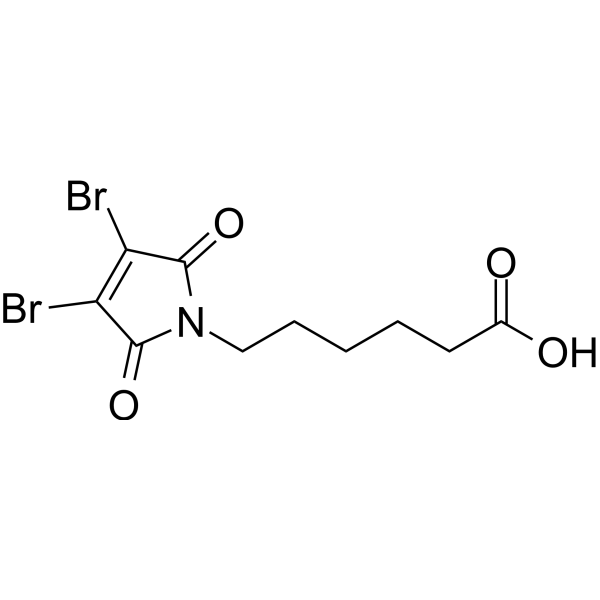
Dibromomaleimide-C5-COOH (DBM-C5-COOH) is a bifunctional dibromomaleimide (DBM) linker. Dibromomaleimide-C5-COOH can be used to connect MMAF and to synthesize ADC .
|
-
-
- HY-139539
-
|
|
Ligands for E3 Ligase
Autophagy
Apoptosis
|
Cancer
|
|
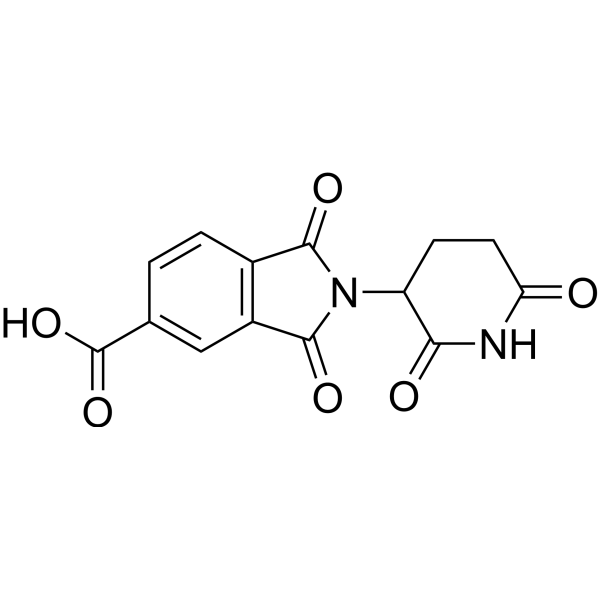
Thalidomide-5-COOH is the Thalidomide-based cereblon ligand used in the recruitment of CRBN protein. Thalidomide-5-COOH can be connected to the ligand for protein by a linker to form PROTACs .
|
-
-
- HY-133799
-
|
|
E3 Ligase Ligand-Linker Conjugates
|
Cancer
|
|
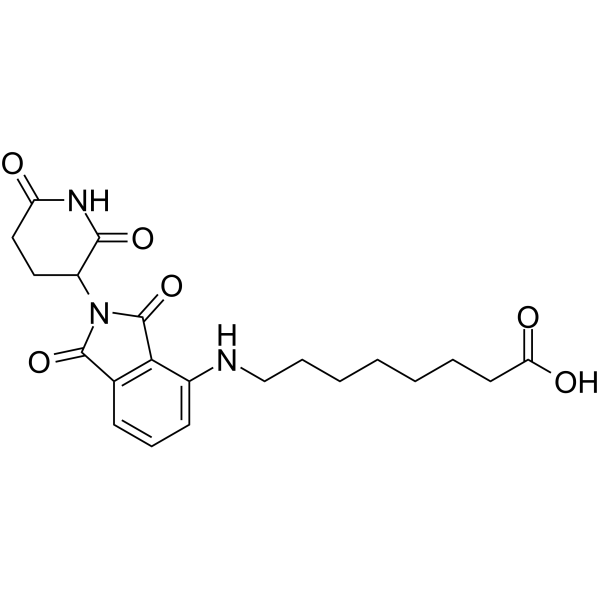
Pomalidomide-C7-COOH is a synthesized E3 ligase cereblon ligand-linker conjugate. Pomalidomide-C7-COOH is an intermediate for the synthesis of PROTAC BCL-XL degraders .
|
-
-
- HY-W034599
-
|
|
ADC Linker
PROTAC Linkers
|
Cancer
|
|
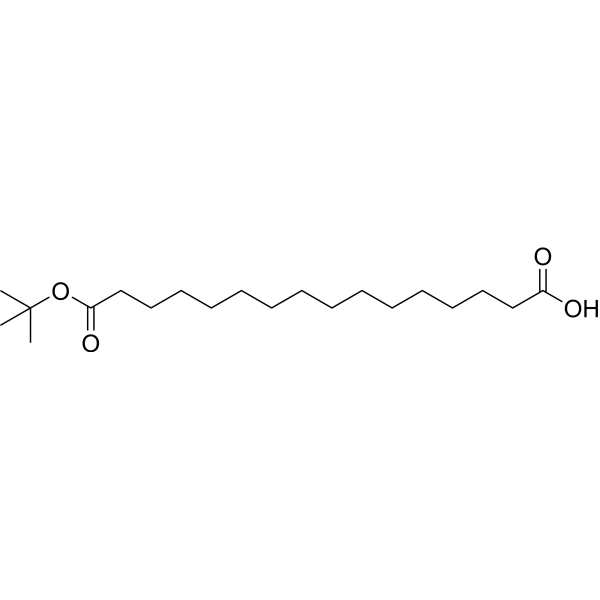
Boc-C14-COOH is a non-cleavable ADC linker used in the synthesis of antibody-drug conjugates (ADCs). Boc-C14-COOH is also a alkyl chain-based PROTAC linker that can be used in the synthesis of PROTACs.
|
-
-
- HY-133699
-
|
|
E3 Ligase Ligand-Linker Conjugates
|
Cancer
|
|
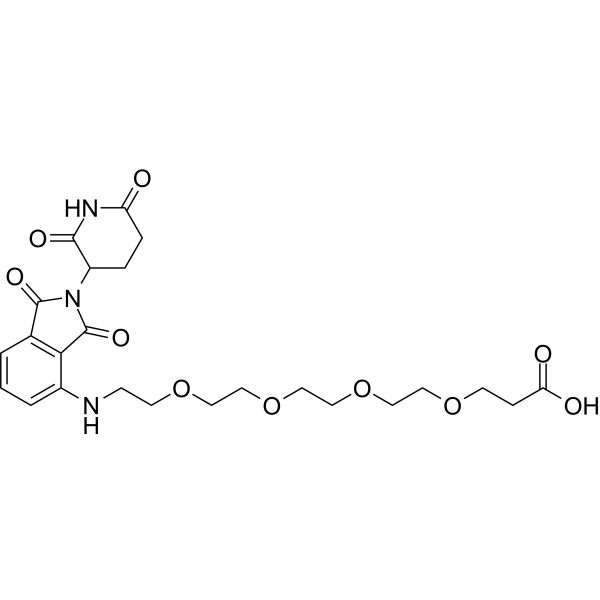
Pomalidomide-PEG4-COOH is a E3 ligase ligand-linker conjugate. Pomalidomide-PEG4-COOH contains the Pomalidomide based cereblon ligand and 4-unit PEG linker used in PROTAC technology .
|
-
-
- HY-170706
-
|
|
Liposome
|
Cancer
|
|
DSPE-PEG (2000)-COOH is a pegylated derivative of 1,2-Distearoyl-sn-glycero-3-phosphorylethanolamine (HY-112530) . DSPE-PEG2000-COOH can form micelles for targeted drug delivery .
|
-

-
- HY-160429
-
|
Ac-PSAR18-COOH
|
Amino Acid Derivatives
ADC Linker
|
Others
|
|
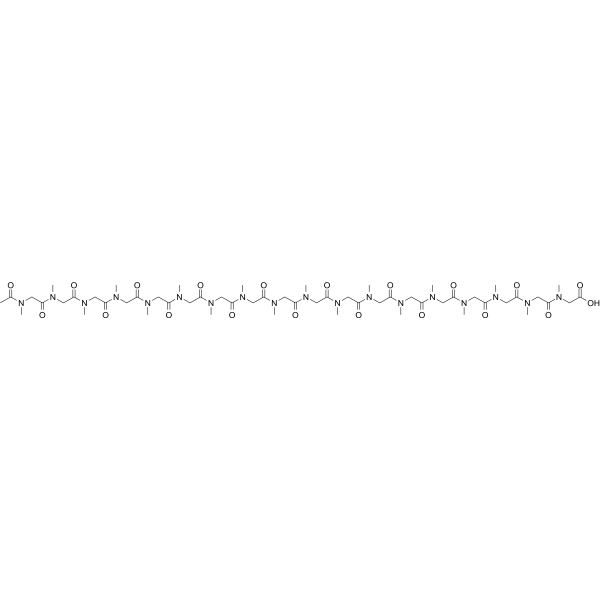
PSAR18-COOH (Ac-PSAR18-COOH) is a polysarcosine PSAR derivative. PSAR is a biodegradable, non-immunogenic polymer that has been used in a variety of compounds or diagnostic delivery systems. PSAR18 can be used as a component of ADC linkers .
|
-
-
- HY-W045598
-
|
|
ADC Linker
PROTAC Linkers
|
Cancer
|
|
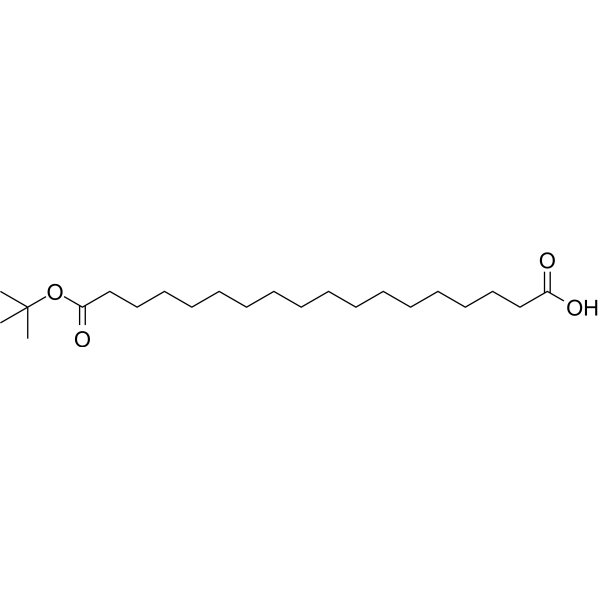
Boc-C16-COOH is a non-cleavable ADC linker used in the synthesis of antibody-drug conjugates (ADCs). Boc-C16-COOH is also a alkyl chain-based PROTAC linker that can be used in the synthesis of PROTACs
|
-
-
- HY-D2795
-
|
|
Fluorescent Dye
|
Others
|
|
FITC-PEG400-COOH is a fluorescent dye composed of polyethylene glycol (PEG), FITC (HY-66019) and a COOH. FITC-PEG400-COOH can be used for fluorescent labeling and imaging .
|
-

-
- HY-P1170
-
|
Ac-L-Tyr-Gly-Gly-L-Phe-D-Leu-COOH
|
Opioid Receptor
|
Neurological Disease
|
|
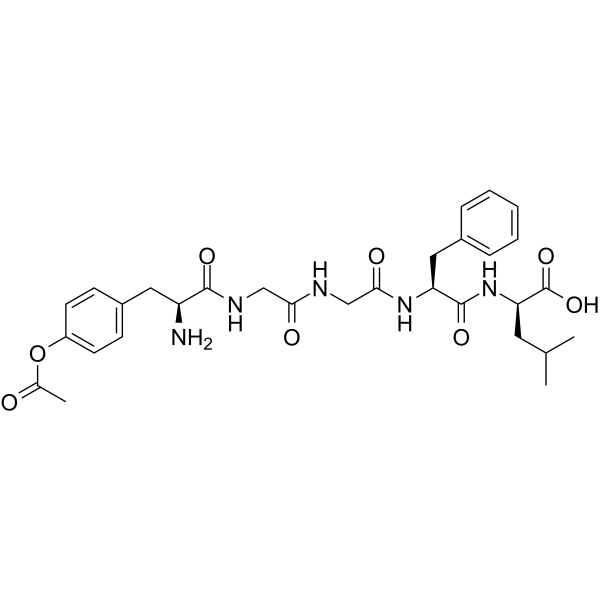
N-terminally acetylated Leu-enkephalin is the N-terminally acetylated form of Leu-enkephalin. Leu-enkephalin is a five amino acid endogenous peptide that acts as an agonist at opioid receptors.
|
-
-
- HY-122696
-
|
|
PROTAC Linkers
|
Cancer
|
|
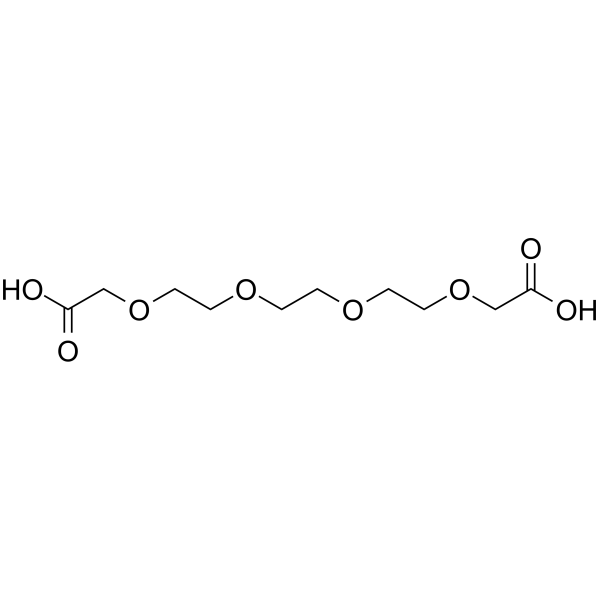
CH2COOH-PEG3-CH2COOH is a PEG-based PROTAC linker that can be used in the synthesis of PROTACs .
|
-
-
- HY-W440827
-
|
|
Liposome
|
Others
|
|
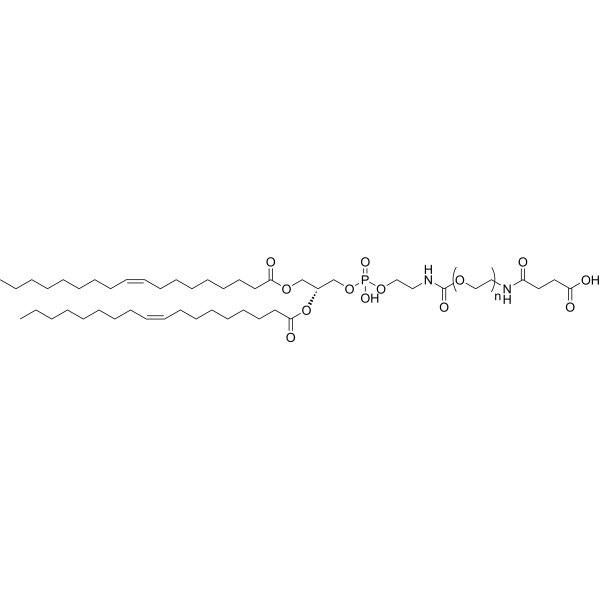
DOPE-PEG2000-COOH is a PEG polymer containing unsaturated DOPE phospholipids and carboxylic acids. DOPE-PEG2000-COOH can be used to prepare liposomes or other nanoparticles for drug delivery .
|
-
-
- HY-135045
-
|
VH032-C4-COOH
|
E3 Ligase Ligand-Linker Conjugates
|
Cancer
|
|
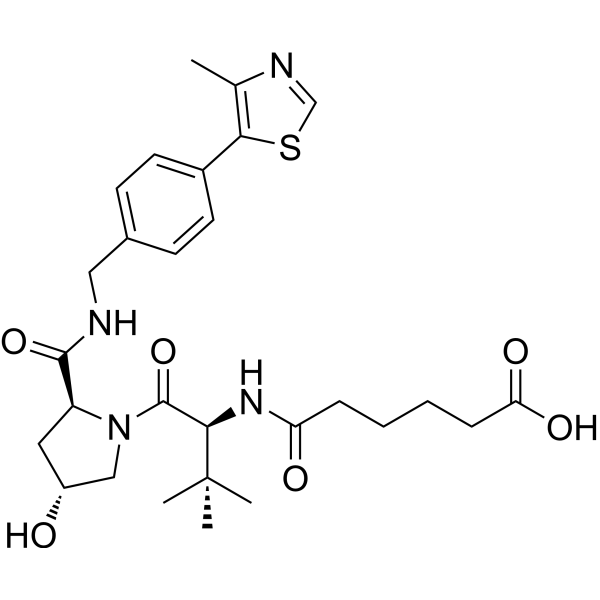
(S,R,S)-AHPC-C4-COOH (VH032-C4-COOH) (linker 45) is a synthesized E3 ligase ligand-linker conjugate that incorporates the (S,R,S)-AHPC based VHL ligand and a linker used for EED-targeted PROTAC .
|
-
-
- HY-166968
-
|
|
Biochemical Assay Reagents
|
Others
|
|
DSPE-PEG5000-COOH is a PEG lipid that can improve the delivery efficiency and tissue specificity of poorly soluble drugs. DSPE-PEG5000-COOH can be used in drug delivery research .
|
-

-
- HY-W586326
-
|
|
Ligands for E3 Ligase
|
Cancer
|
|
Desamino lenalidomide-4-COOH is an E3 ubiquitin ligase cereblon (CRBN) ligand used to recruit the cereblon protein. Desamino lenalidomide-4-COOH can be linked to a target protein ligand via a linker to form a PROTAC.
|
-

-
- HY-P10964
-
|
|
GHSR
|
Endocrinology
|
|
Tezusomant is a growth hormone receptor antagonist. Tezusomant is promising for research on diseases caused by excessive growth hormone secretion, such as acromegaly .
|
-

-
- HY-W096106
-
|
|
PROTAC Linkers
|
Cancer
|
|
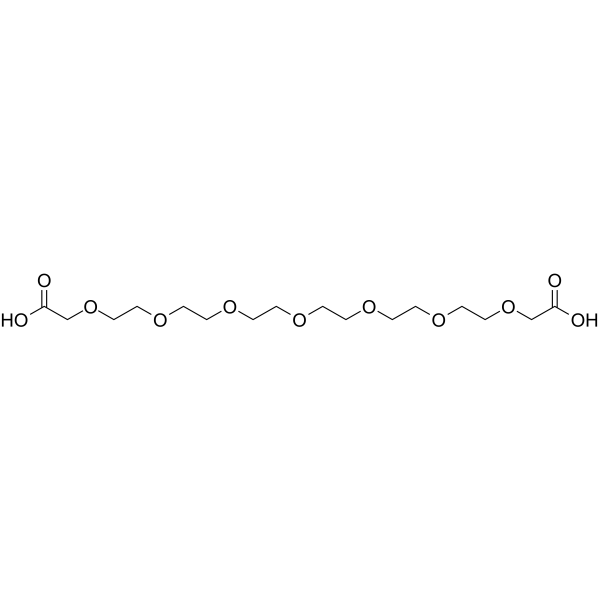
CH2COOH-PEG6-CH2COOH is a PEG-based PROTAC linker that can be used in the synthesis of PROTACs .
|
-
-
- HY-145013
-
|
|
LYTACs
|
Others
|
|
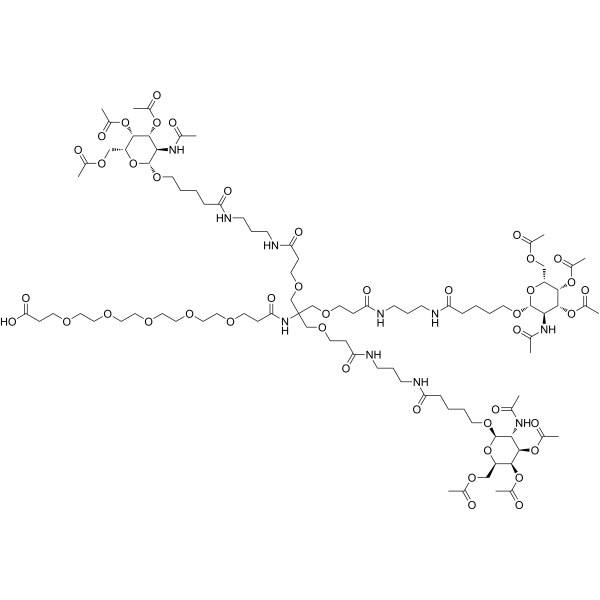
tri-GalNAc-COOH acetylation is the acetylated and modified form of tri-GalNAc-COOH. tri-GalNAc-COOH acetylation can be used for the synthesis of LYTAC.
|
-
-
- HY-145790
-
|
|
Biochemical Assay Reagents
|
Cancer
|
|
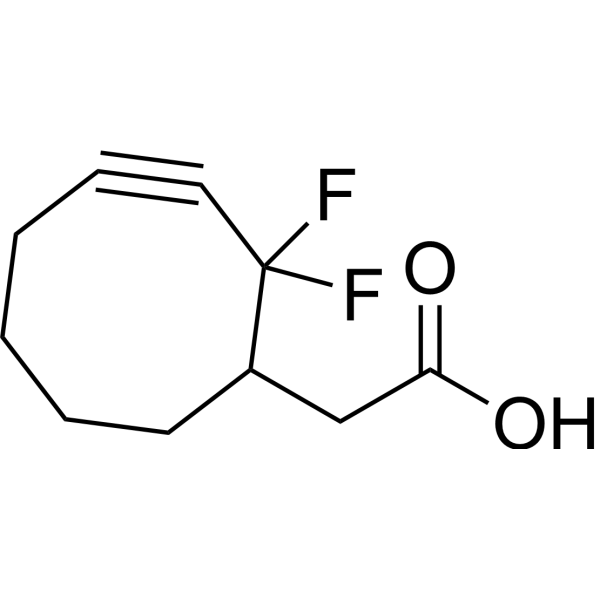
Difluorocyclooctyne-CH2-COOH is a difluorinated cyclooctyne (DIFO) analog that can be used for imaging glycans on live cells. Difluorocyclooctyne-CH2-COOH reacts rapidly with azides in live cells without copper catalysis .
|
-
-
- HY-W093472
-
|
|
Ligands for E3 Ligase
|
Cancer
|
|
Desamino lenalidomide-6-COOH is an E3 ubiquitin ligase cereblon (CRBN) ligand used to recruit the cereblon protein. Desamino lenalidomide-6-COOH can be linked to a target protein ligand via a linker to form a PROTAC.
|
-

-
- HY-W1048542
-
|
|
Biochemical Assay Reagents
|
Others
|
|
Fmoc-NH-PEG1000-COOH is a PEG product containing two Fmoc-protected amines and a carboxylic acid. Fmoc-NH-PEG1000-COOH is an important cross-linking agent with PEG chains .
|
-

-
- HY-D1883
-
|
|
Fluorescent Dye
|
Others
|
|
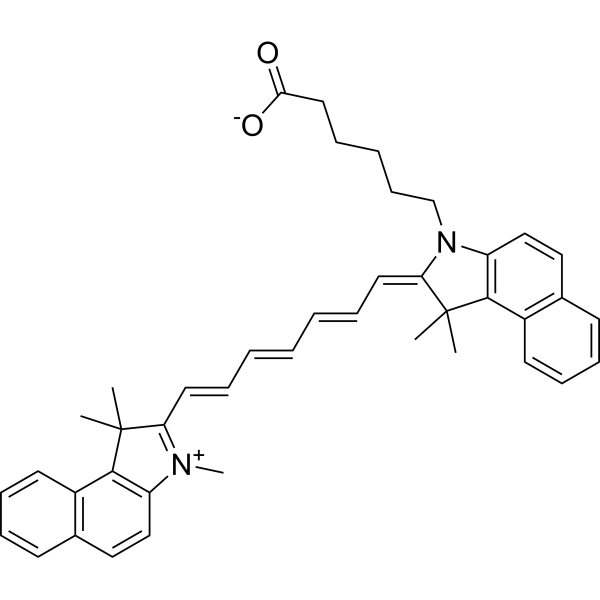
Cy7.5-COOH (compound 8f), a cyanine dye, is a highly fluorescent compound (Abs/Em = 781/808 nm). Cy7.5-COOH can be used as a fluorescent probe in a wide-range of applications such as DNA sequencing, flow cytometry and in vivo imaging .
|
-
-
- HY-N15997
-
-

-
- HY-D2795A
-
|
|
Fluorescent Dye
|
Others
|
|
FITC-PEG1000-COOH is a fluorescent dye composed of polyethylene glycol (PEG), FITC (HY-66019) and a COOH. FITC-PEG1000-COOH can be used for fluorescent labeling and imaging .
|
-

-
- HY-168940E
-
|
|
Biochemical Assay Reagents
|
Cancer
|
|
NH2-PEG600-COOH consists of an NH2 group, PEG units and a carboxyl group (-COOH). NH2-PEG600-COOH helps improve the biocompatibility of the resulting nanocomplexes in cancer cells. NH2-PEG600-COOH can be used in cancer-related research .
|
-

-
- HY-W586325
-
|
|
Ligands for E3 Ligase
|
Cancer
|
|
Desamino lenalidomide-5-COOH is an E3 ubiquitin ligase cereblon (CRBN) ligand used to recruit the cereblon protein. Desamino lenalidomide-5-COOH can be linked to a target protein ligand via a linker to form a PROTAC.
|
-

-
- HY-W092036
-
-

-
- HY-W088194
-
-

-
- HY-174358D
-
|
|
Biochemical Assay Reagents
|
Others
|
|
HOOC-PEG10000-COOH has two active carboxyl groups at both ends, which can selectively react with the amino groups in peptide coupling agents. HOOC-PEG10000-COOH is a good cross-linking agent for PEGylation of proteins and peptides, nanoparticles and surface modification .
|
-

-
- HY-163758
-
|
|
PROTAC Linkers
|
Cancer
|
|
COOH-C3-COGN-C7-COOH is a PEG based linker for PROTAC. COOH-C3-COGN-C7-COOH can be used for synthesis of PROTAC Degrader ARM165 (HY-163677) .
|
-

-
- HY-P5568
-
|
RP 71955
|
HIV
|
Infection
|
|
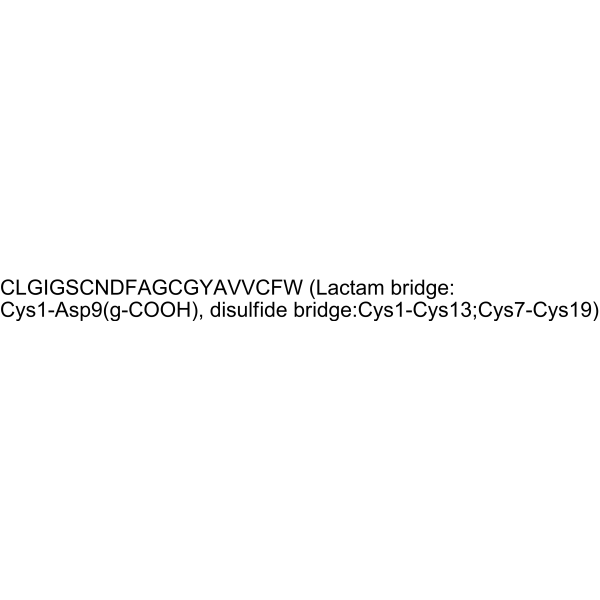
RP 71955 is an antimicrobial peptide against HIV-1 .
|
-
-
- HY-D2881H
-
|
Rhodamine B-PEG10000-COOH
|
Fluorescent Dye
|
Others
|
|
RB-PEG10000-COOH (Rhodamine B-PEG10000-COOH) is a fluorescent dye composed of Rhodamine B (HY-Y0016), PEG and a COOH. RRB-PEG10000-COOH can be used for fluorescent labeling and imaging (Ex/Em=546/610 nm) .
|
-

-
- HY-D2881A
-
|
Rhodamine B-PEG600-COOH
|
Fluorescent Dye
|
Others
|
|
RB-PEG600-COOH (Rhodamine B-PEG600-COOH) is a fluorescent dye composed of Rhodamine B (HY-Y0016), PEG and a COOH. RRB-PEG600-COOH can be used for fluorescent labeling and imaging (Ex/Em=546/610 nm) .
|
-

-
- HY-169236
-
|
|
PROTAC Linkers
|
Cancer
|
|
COOH-C-PEG2-NHCO-C2-COOH is a PROTAC linker that is used to synthesize PCC16 chloride (HY-169232) .
|
-

-
- HY-138514
-
|
|
PROTAC Linkers
|
Cancer
|
|
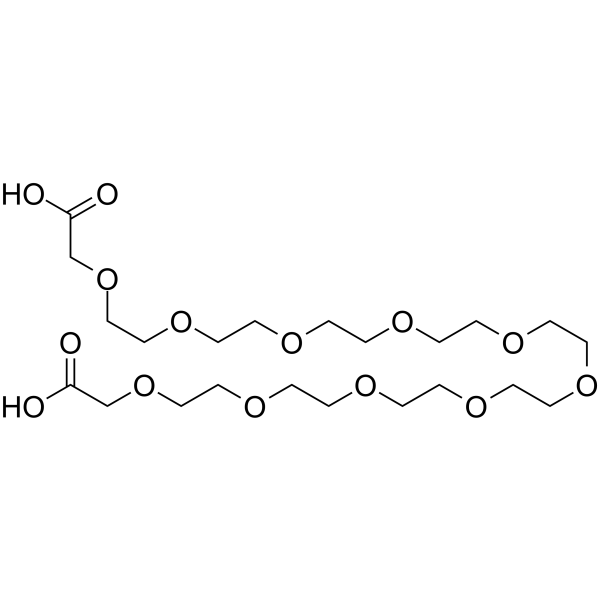
CH2COOH-PEG9-CH2COOH is a PEG-based PROTAC linker that can be used in the synthesis of PROTACs .
|
-
-
- HY-132113
-
|
|
PROTAC Linkers
|
Cancer
|
|
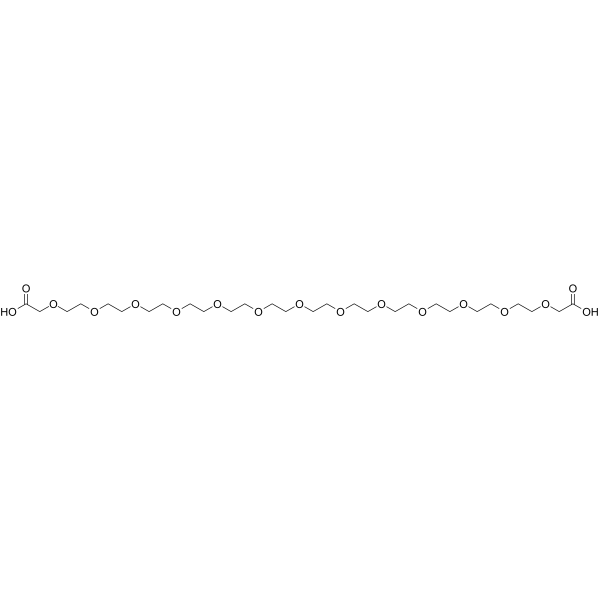
CH2COOH-PEG12-CH2COOH is a PEG-based PROTAC linker that can be used in the synthesis of PROTACs .
|
-
-
- HY-W888710D
-
|
Folate-PEG2000-COOH
|
Biochemical Assay Reagents
|
Others
|
|
FA-PEG2000-COOH (Folate-PEG2000-COOH) is a Folic acid (HY-16637)-modified PEG derivative containing a carboxyl group (-COOH). The carboxyl group can easily form a stable amide bond with an amino group, or an ester bond with a hydroxyl group. Folic acid (-FA) has a high affinity for the folate receptor and can be used to target cell membrane receptors for drug delivery .
|
-

-
- HY-W888710E
-
|
Folate-PEG3400-COOH
|
Biochemical Assay Reagents
|
Others
|
|
FA-PEG3400-COOH (Folate-PEG3400-COOH) is a Folic acid (HY-16637)-modified PEG derivative containing a carboxyl group (-COOH). The carboxyl group can easily form a stable amide bond with an amino group, or an ester bond with a hydroxyl group. Folic acid (-FA) has a high affinity for the folate receptor and can be used to target cell membrane receptors for drug delivery .
|
-

-
- HY-D2795C
-
|
|
Fluorescent Dye
|
Others
|
|
FITC-PEG10000-COOH is a fluorescent dye composed of polyethylene glycol (PEG), FITC (HY-66019) and a COOH. FITC-PEG10000-COOH can be used for fluorescent labeling and imaging .
|
-

-
- HY-D2795B
-
|
|
Fluorescent Dye
|
Others
|
|
FITC-PEG5000-COOH is a fluorescent dye composed of polyethylene glycol (PEG), FITC (HY-66019) and a COOH. FITC-PEG5000-COOH can be used for fluorescent labeling and imaging .
|
-

-
- HY-156388
-
|
|
PROTAC Linkers
|
Cancer
|
|
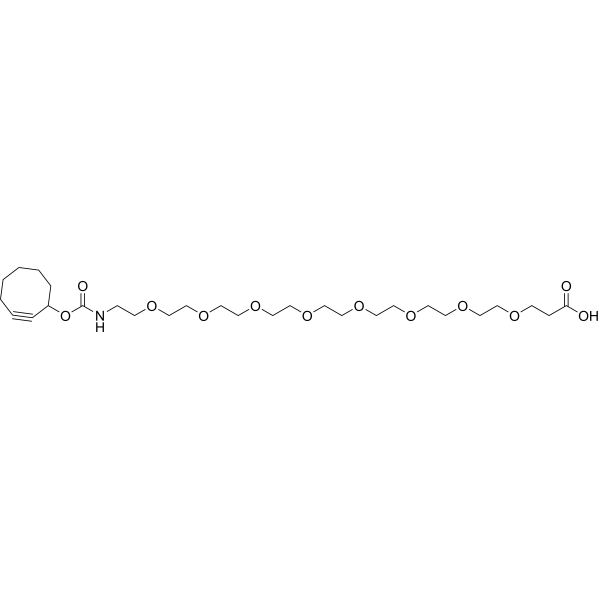
SCO-PEG8-COOH is a PROTAC linker and belongs to the PEG class. SCO-PEG8-COOH contains SCO and COOH that can be covalently combined with amino groups, respectively. SCO is often used to react with amino acid residues of proteins or peptides, particularly lysine.
|
-
-
- HY-156387
-
|
|
PROTAC Linkers
|
Cancer
|
|
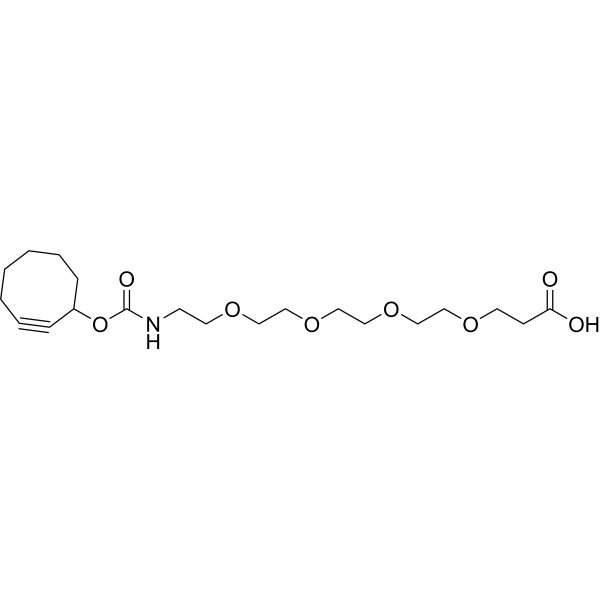
SCO-PEG4-COOH is a PROTAC linker and belongs to the PEG class. SCO-PEG4-COOH contains SCO and COOH that can be covalently combined with amino groups, respectively. SCO is often used to react with amino acid residues of proteins or peptides, particularly lysine.
|
-
-
- HY-156386
-
|
|
PROTAC Linkers
|
Cancer
|
|
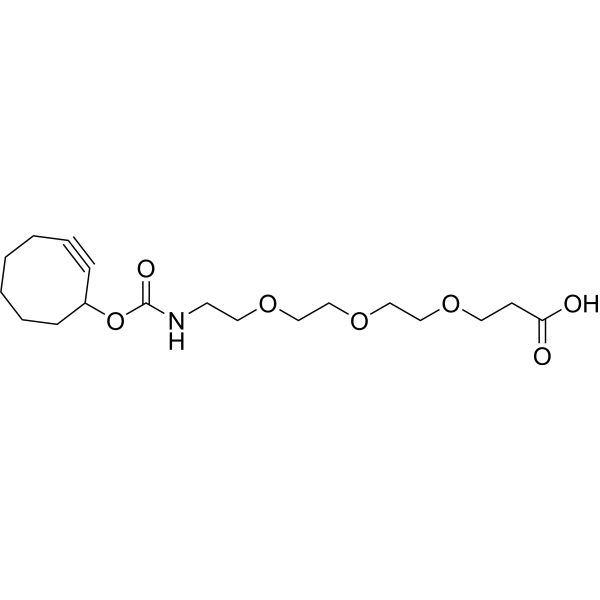
SCO-PEG3-COOH is a PROTAC linker and belongs to the PEG class. SCO-PEG3-COOH contains SCO and COOH that can be covalently combined with amino groups respectively. SCO is often used to react with amino acid residues of proteins or peptides, particularly lysine.
|
-
-
- HY-149750
-
-
-
- HY-D2110
-
|
|
Fluorescent Dye
|
Others
|
|
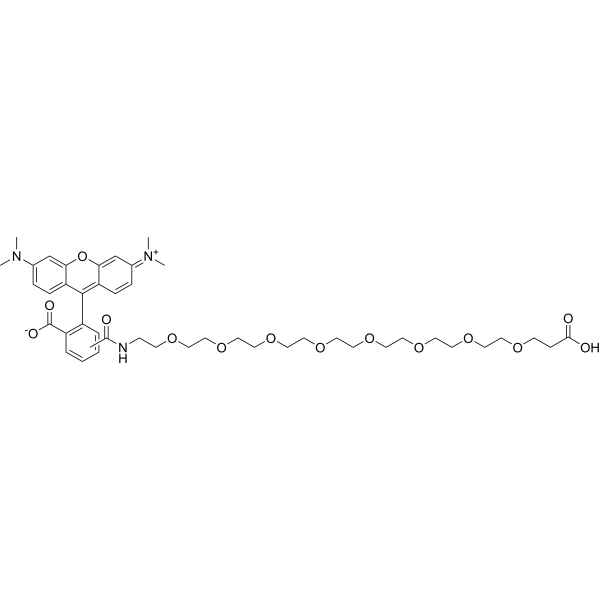
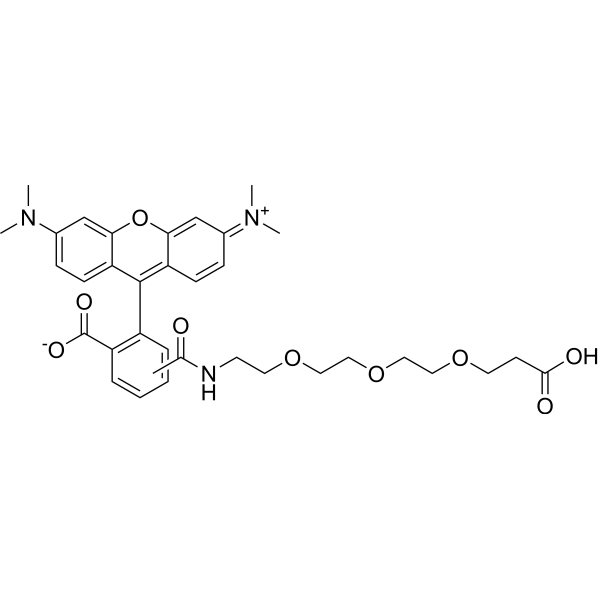
TAMRA-PEG8-COOH is a dye derivative of TAMRA (HY-135640) containing 8 PEG units. TAMRA-PEG8-COOH contains carboxyl groups, which can condense ammonia to form covalent bonds.
|
-
-
- HY-D2109
-
|
|
Fluorescent Dye
|
Others
|
|
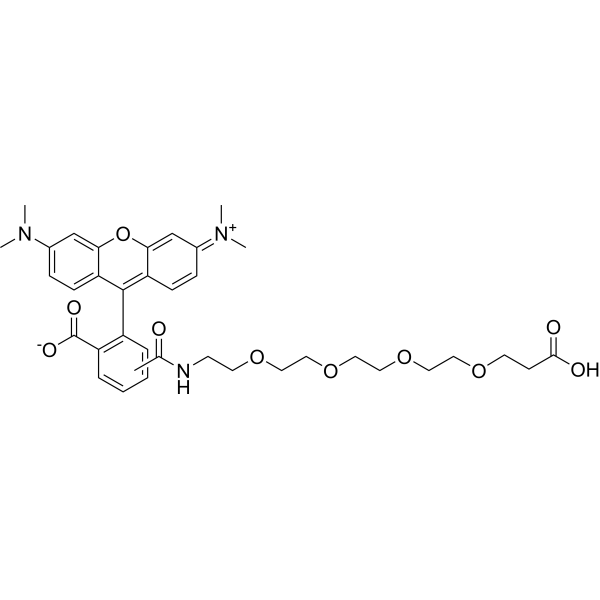
TAMRA-PEG4-COOH is a dye derivative of TAMRA (HY-135640) containing 4 PEG units. TAMRA-PEG4-COOH contains carboxyl groups, which can condense ammonia to form covalent bonds.
|
-
-
- HY-D2108
-
|
|
Fluorescent Dye
|
Others
|
|
TAMRA-PEG3-COOH is a dye derivative of TAMRA (HY-135640) containing 3 PEG units. TAMRA-PEG3-COOH contains carboxyl groups, which can condense ammonia to form covalent bonds.
|
-
-
- HY-149751
-
|
|
Biochemical Assay Reagents
|
Others
|
|
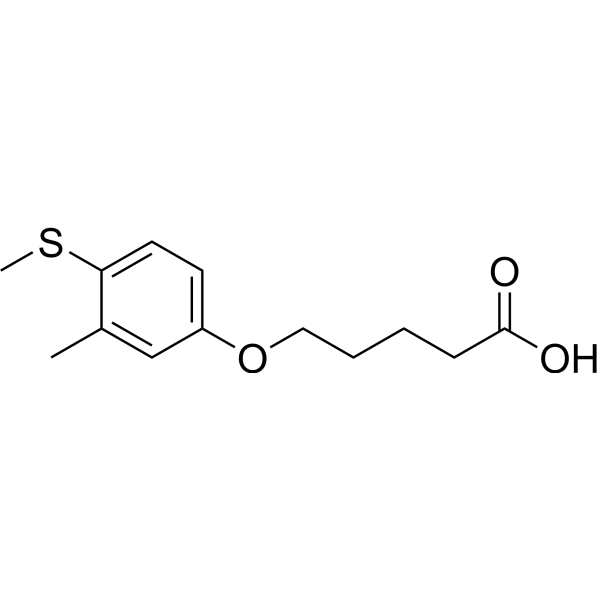
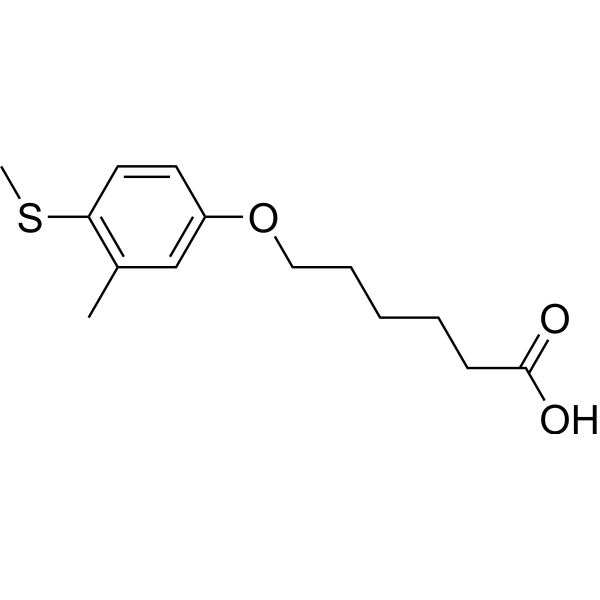
Methylthiomcresol-C5-COOH (Compound F4) is a hapten that can be conjugated to carrier proteins for antigen design. Methylthiomcresol-C5-COOH designed antigen can be applied in ELISA to detect the residual amount of fenthion in white wine samples .
|
-
-
- HY-149749
-
|
|
Biochemical Assay Reagents
|
Others
|
|
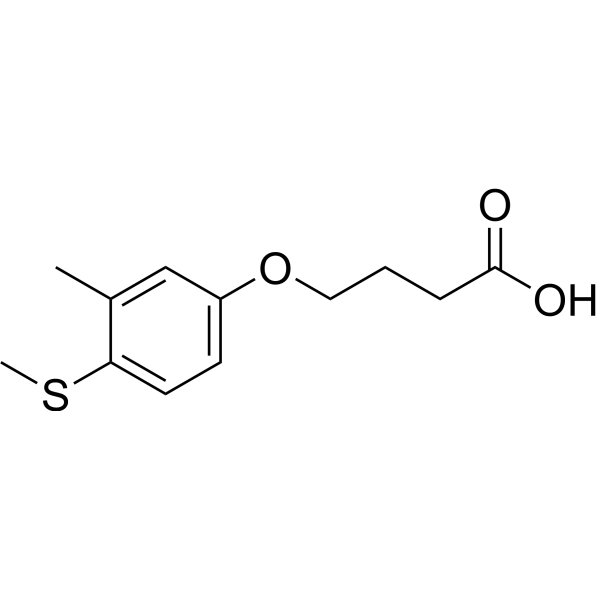
Methylthiomcresol-C3-COOH (Compound F2) is a hapten that can be conjugated to carrier proteins for antigen design. Methylthiomcresol-C3-COOH designed antigen can be applied in ELISA to detect the residual amount of fenthion in white wine samples .
|
-
-
- HY-168662
-
|
|
Ligands for Target Protein for PROTAC
|
Cancer
|
|
Palbociclib-CH2COOH is a Ligands for Target Protein for PROTACs. Palbociclib-CH2COOH can serve as an active control for the target protein ligand of CPD-39 (HY-168664) and CPD-10 (HY-168660) .
|
-

- HY-W109044
-
-

- HY-W108995
-
-

- HY-174358A
-
|
|
Biochemical Assay Reagents
|
Others
|
|
HOOC-PEG2000-COOH has two active carboxyl groups at both ends, which can selectively react with the amino groups in peptide coupling agents. HOOC-PEG2000-COOH is a good cross-linking agent for PEGylation of proteins and peptides, nanoparticles and surface modification .
|
-

- HY-174358E
-
|
|
Biochemical Assay Reagents
|
Others
|
|
HOOC-PEG20000-COOH has two active carboxyl groups at both ends, which can selectively react with the amino groups in peptide coupling agents. HOOC-PEG20000-COOH is a good cross-linking agent for PEGylation of proteins and peptides, nanoparticles and surface modification .
|
-

- HY-D2881
-
|
Rhodamine B-PEG400-COOH
|
Fluorescent Dye
|
Others
|
|
RB-PEG400-COOH (Rhodamine B-PEG400-COOH) is a fluorescent dye composed of Rhodamine B (HY-Y0016), PEG and a COOH. RRB-PEG400-COOH can be used for fluorescent labeling and imaging (Ex/Em=546/610 nm) .
|
-

- HY-D2881C
-
|
Rhodamine B-PEG2000-COOH
|
Fluorescent Dye
|
Others
|
|
RB-PEG2000-COOH (Rhodamine B-PEG2000-COOH) is a fluorescent dye composed of Rhodamine B (HY-Y0016), PEG and a COOH. RRB-PEG2000-COOH can be used for fluorescent labeling and imaging (Ex/Em=546/610 nm) .
|
-

- HY-D2881D
-
|
Rhodamine B-PEG3400-COOH
|
Fluorescent Dye
|
Others
|
|
RB-PEG3400-COOH (Rhodamine B-PEG3400-COOH) is a fluorescent dye composed of Rhodamine B (HY-Y0016), PEG and a COOH. RRB-PEG3400-COOH can be used for fluorescent labeling and imaging (Ex/Em=546/610 nm) .
|
-

- HY-D2881E
-
|
Rhodamine B-PEG5000-COOH
|
Fluorescent Dye
|
Others
|
|
RB-PEG5000-COOH (Rhodamine B-PEG5000-COOH) is a fluorescent dye composed of Rhodamine B (HY-Y0016), PEG and a COOH. RRB-PEG5000-COOH can be used for fluorescent labeling and imaging (Ex/Em=546/610 nm) .
|
-

- HY-W888710C
-
|
Folate-PEG1000-COOH
|
Biochemical Assay Reagents
|
Others
|
|
FA-PEG1000-COOH (Folate-PEG1000-COOH) is a Folic acid (HY-16637)-modified PEG derivative containing a carboxyl group (-COOH). The carboxyl group can easily form a stable amide bond with an amino group, or an ester bond with a hydroxyl group. Folic acid (-FA) has a high affinity for the folate receptor and can be used to target cell membrane receptors for drug delivery .
|
-

- HY-W888710A
-
|
Folate-PEG400-COOH
|
Biochemical Assay Reagents
|
Others
|
|
FA-PEG400-COOH (Folate-PEG400-COOH) is a Folic acid (HY-16637)-modified PEG derivative containing a carboxyl group (-COOH). The carboxyl group can easily form a stable amide bond with an amino group, or an ester bond with a hydroxyl group. Folic acid (-FA) has a high affinity for the folate receptor and can be used to target cell membrane receptors for drug delivery .
|
-

- HY-W888710B
-
|
Folate-PEG600-COOH
|
Biochemical Assay Reagents
|
Others
|
|
FA-PEG600-COOH (Folate-PEG600-COOH) is a Folic acid (HY-16637)-modified PEG derivative containing a carboxyl group (-COOH). The carboxyl group can easily form a stable amide bond with an amino group, or an ester bond with a hydroxyl group. Folic acid (-FA) has a high affinity for the folate receptor and can be used to target cell membrane receptors for drug delivery .
|
-

- HY-W888710H
-
|
Folate-PEG5000-COOH
|
Biochemical Assay Reagents
|
Others
|
|
FA-PEG5000-COOH (Folate-PEG5000-COOH) is a Folic acid (HY-16637)-modified PEG derivative containing a carboxyl group (-COOH). The carboxyl group can easily form a stable amide bond with an amino group, or an ester bond with a hydroxyl group. Folic acid (-FA) has a high affinity for the folate receptor and can be used to target cell membrane receptors for drug delivery .
|
-

- HY-W888710I
-
|
Folate-PEG10000-COOH
|
Biochemical Assay Reagents
|
Others
|
|
FA-PEG10000-COOH (Folate-PEG10000-COOH) is a Folic acid (HY-16637)-modified PEG derivative containing a carboxyl group (-COOH). The carboxyl group can easily form a stable amide bond with an amino group, or an ester bond with a hydroxyl group. Folic acid (-FA) has a high affinity for the folate receptor and can be used to target cell membrane receptors for drug delivery .
|
-

- HY-200288B
-
|
|
Biochemical Assay Reagents
|
Others
|
|
DMG-PEG3400-COOH is a conjugate composed of DMG, a PEG chain, and a terminal carboxyl group (-COOH). The carboxyl group in DMG-PEG3400-COOH can form an amide bond with a primary amine via EDC/NHS activation, enabling targeted modification of liposomes/nanoparticles.
|
-

- HY-W1052117A
-
|
|
Biochemical Assay Reagents
|
Others
|
|
DMPE-PEG3400-COOH is a conjugate composed of DMPE, a PEG chain, and a terminal carboxyl group (-COOH). The carboxyl group in DMPE-PEG3400-COOH can form an amide bond with a primary amine via EDC/NHS activation, enabling targeted modification of liposomes/nanoparticles.
|
-

- HY-W1052873C
-
|
|
Biochemical Assay Reagents
|
Others
|
|
DPPE-PEG1000-COOH is a conjugate composed of DPPE, a PEG chain, and a terminal carboxyl group (-COOH). The carboxyl group in DPPE-PEG1000-COOH can form an amide bond with a primary amine via EDC/NHS activation, enabling targeted modification of liposomes/nanoparticles.
|
-

- HY-W1052117
-
|
|
Biochemical Assay Reagents
|
Others
|
|
DMPE-PEG2000-COOH is a conjugate composed of DMPE, a PEG chain, and a terminal carboxyl group (-COOH). The carboxyl group in DMPE-PEG2000-COOH can form an amide bond with a primary amine via EDC/NHS activation, enabling targeted modification of liposomes/nanoparticles.
|
-

- HY-183173D
-
|
|
Biochemical Assay Reagents
|
Others
|
|
DSG-PEG10000-COOH is a conjugate composed of DSG, a PEG chain, and a terminal carboxyl group (-COOH). The carboxyl group in DSG-PEG10000-COOH can form an amide bond with a primary amine via EDC/NHS activation, enabling targeted modification of liposomes/nanoparticles.
|
-

- HY-200288D
-
|
|
Biochemical Assay Reagents
|
Others
|
|
DMG-PEG10000-COOH is a conjugate composed of DMG, a PEG chain, and a terminal carboxyl group (-COOH). The carboxyl group in DMG-PEG10000-COOH can form an amide bond with a primary amine via EDC/NHS activation, enabling targeted modification of liposomes/nanoparticles.
|
-

- HY-W1052873B
-
|
|
Biochemical Assay Reagents
|
Others
|
|
DPPE-PEG5000-COOH is a conjugate composed of DPPE, a PEG chain, and a terminal carboxyl group (-COOH). The carboxyl group in DPPE-PEG5000-COOH can form an amide bond with a primary amine via EDC/NHS activation, enabling targeted modification of liposomes/nanoparticles.
|
-

- HY-W1052873A
-
|
|
Biochemical Assay Reagents
|
Others
|
|
DPPE-PEG3400-COOH is a conjugate composed of DPPE, a PEG chain, and a terminal carboxyl group (-COOH). The carboxyl group in DPPE-PEG3400-COOH can form an amide bond with a primary amine via EDC/NHS activation, enabling targeted modification of liposomes/nanoparticles.
|
-

- HY-W1052117C
-
|
|
Biochemical Assay Reagents
|
Others
|
|
DMPE-PEG1000-COOH is a conjugate composed of DMPE, a PEG chain, and a terminal carboxyl group (-COOH). The carboxyl group in DMPE-PEG1000-COOH can form an amide bond with a primary amine via EDC/NHS activation, enabling targeted modification of liposomes/nanoparticles.
|
-

- HY-183173C
-
|
|
Biochemical Assay Reagents
|
Others
|
|
DSG-PEG5000-COOH is a conjugate composed of DSG, a PEG chain, and a terminal carboxyl group (-COOH). The carboxyl group in DSG-PEG5000-COOH can form an amide bond with a primary amine via EDC/NHS activation, enabling targeted modification of liposomes/nanoparticles.
|
-

- HY-183173B
-
|
|
Biochemical Assay Reagents
|
Others
|
|
DSG-PEG3400-COOH is a conjugate composed of DSG, a PEG chain, and a terminal carboxyl group (-COOH). The carboxyl group in DSG-PEG3400-COOH can form an amide bond with a primary amine via EDC/NHS activation, enabling targeted modification of liposomes/nanoparticles.
|
-

- HY-183173
-
|
|
Biochemical Assay Reagents
|
Others
|
|
DSG-PEG1000-COOH is a conjugate composed of DSG, a PEG chain, and a terminal carboxyl group (-COOH). The carboxyl group in DSG-PEG1000-COOH can form an amide bond with a primary amine via EDC/NHS activation, enabling targeted modification of liposomes/nanoparticles.
|
-

- HY-W1052873D
-
|
|
Biochemical Assay Reagents
|
Others
|
|
DPPE-PEG10000-COOH is a conjugate composed of DPPE, a PEG chain, and a terminal carboxyl group (-COOH). The carboxyl group in DPPE-PEG10000-COOH can form an amide bond with a primary amine via EDC/NHS activation, enabling targeted modification of liposomes/nanoparticles.
|
-

- HY-200288
-
|
|
Biochemical Assay Reagents
|
Others
|
|
DMG-PEG2000-COOH is a conjugate composed of DMG, a PEG chain, and a terminal carboxyl group (-COOH). The carboxyl group in DMG-PEG2000-COOH can form an amide bond with a primary amine via EDC/NHS activation, enabling targeted modification of liposomes/nanoparticles.
|
-

- HY-183173A
-
|
|
Biochemical Assay Reagents
|
Others
|
|
DSG-PEG2000-COOH is a conjugate composed of DSG, a PEG chain, and a terminal carboxyl group (-COOH). The carboxyl group in DSG-PEG2000-COOH can form an amide bond with a primary amine via EDC/NHS activation, enabling targeted modification of liposomes/nanoparticles.
|
-

- HY-200288A
-
|
|
Biochemical Assay Reagents
|
Others
|
|
DMG-PEG1000-COOH is a conjugate composed of DMG, a PEG chain, and a terminal carboxyl group (-COOH). The carboxyl group in DMG-PEG1000-COOH can form an amide bond with a primary amine via EDC/NHS activation, enabling targeted modification of liposomes/nanoparticles.
|
-

- HY-W1052873
-
|
|
Biochemical Assay Reagents
|
Others
|
|
DPPE-PEG2000-COOH is a conjugate composed of DPPE, a PEG chain, and a terminal carboxyl group (-COOH). The carboxyl group in DPPE-PEG2000-COOH can form an amide bond with a primary amine via EDC/NHS activation, enabling targeted modification of liposomes/nanoparticles.
|
-

- HY-W1052117D
-
|
|
Biochemical Assay Reagents
|
Others
|
|
DMPE-PEG1000-COOH is a conjugate composed of DMPE, a PEG chain, and a terminal carboxyl group (-COOH). The carboxyl group in DMPE-PEG1000-COOH can form an amide bond with a primary amine via EDC/NHS activation, enabling targeted modification of liposomes/nanoparticles.
|
-

- HY-200288C
-
|
|
Biochemical Assay Reagents
|
Others
|
|
DMG-PEG5000-COOH is a conjugate composed of DMG, a PEG chain, and a terminal carboxyl group (-COOH). The carboxyl group in DMG-PEG5000-COOH can form an amide bond with a primary amine via EDC/NHS activation, enabling targeted modification of liposomes/nanoparticles.
|
-

- HY-W1052117B
-
|
|
Biochemical Assay Reagents
|
Others
|
|
DMPE-PEG5000-COOH is a conjugate composed of DMPE, a PEG chain, and a terminal carboxyl group (-COOH). The carboxyl group in DMPE-PEG5000-COOH can form an amide bond with a primary amine via EDC/NHS activation, enabling targeted modification of liposomes/nanoparticles.
|
-

- HY-W440825
-
|
|
Biochemical Assay Reagents
|
Others
|
|
DSPE-PEG1000-COOH is a PEG lipid that can improve the delivery efficiency and tissue specificity of poorly soluble drugs. DSPE-PEG1000-COOH can be used in drug delivery research .
|
-

- HY-W440830
-
|
|
Biochemical Assay Reagents
|
Others
|
|
DSPE-PEG3400-COOH is a PEG lipid that can improve the delivery efficiency and tissue specificity of poorly soluble drugs. DSPE-PEG3400-COOH can be used in drug delivery research .
|
-

- HY-183163D
-
|
|
Biochemical Assay Reagents
|
Others
|
|
Glucose-PEG10000-COOH is a conjugate composed of glucose, PEG chains, and carboxyl groups (COOH). Glucose-PEG10000-COOH combines the targeting recognition ability of glucose with the carboxyl groups capable of condensation or esterification reactions with amino and hydroxyl groups, making it suitable for applications such as targeted drug delivery systems and nanoparticle modification.
|
-

- HY-183163B
-
|
|
Biochemical Assay Reagents
|
Others
|
|
Glucose-PEG3400-COOH is a conjugate composed of glucose, PEG chains, and carboxyl groups (COOH). Glucose-PEG3400-COOH combines the targeting recognition ability of glucose with the carboxyl groups capable of condensation or esterification reactions with amino and hydroxyl groups, making it suitable for applications such as targeted drug delivery systems and nanoparticle modification.
|
-

- HY-183163
-
|
|
Biochemical Assay Reagents
|
Others
|
|
Glucose-PEG1000-COOH is a conjugate composed of glucose, PEG chains, and carboxyl groups (COOH). Glucose-PEG1000-COOH combines the targeting recognition ability of glucose with the carboxyl groups capable of condensation or esterification reactions with amino and hydroxyl groups, making it suitable for applications such as targeted drug delivery systems and nanoparticle modification.
|
-

- HY-183163C
-
|
|
Biochemical Assay Reagents
|
Others
|
|
Glucose-PEG5000-COOH is a conjugate composed of glucose, PEG chains, and carboxyl groups (COOH). Glucose-PEG5000-COOH combines the targeting recognition ability of glucose with the carboxyl groups capable of condensation or esterification reactions with amino and hydroxyl groups, making it suitable for applications such as targeted drug delivery systems and nanoparticle modification.
|
-

- HY-183163A
-
|
|
Biochemical Assay Reagents
|
Others
|
|
Glucose-PEG2000-COOH is a conjugate composed of glucose, PEG chains, and carboxyl groups (COOH). Glucose-PEG2000-COOH combines the targeting recognition ability of glucose with the carboxyl groups capable of condensation or esterification reactions with amino and hydroxyl groups, making it suitable for applications such as targeted drug delivery systems and nanoparticle modification.
|
-

- HY-D2881B
-
|
Rhodamine B-PEG-COOH (MW 1000)
|
Fluorescent Dye
|
Others
|
|
RB-PEG-COOH (MW 1000) (Rhodamine B-PEG-COOH (MW 1000)) is a fluorescent dye composed of Rhodamine B (HY-Y0016), PEG and a COOH. RRB-PEG-COOH (MW 1000) can be used for fluorescent labeling and imaging (Ex/Em = 546/610 nm) .
|
-

- HY-183817
-
-

- HY-W249584
-
|
|
MOFs
|
Others
|
|
UiO-66-(COOH)2 is a metal-organic framework (MOF).
|
-

- HY-180153
-
|
|
PROTAC Linkers
|
Cancer
|
|
Piperidine-CO-C8-COOH is a PROTAC linker. Piperidine-CO-C8-COOH can be used to synthesize PROTAC BRD4 Degrader-42 (HY-180150) .
|
-

- HY-W335398
-
|
|
PROTAC Linkers
|
Cancer
|
|
BnO-PEG3-COOH is a PROTAC linker that can be used in the synthesis of PROTACs.
|
-

- HY-W614958
-
|
|
PROTAC Linkers
|
Cancer
|
|
TBS-PEG4-COOH is a PROTAC linker that can be used in the synthesis of PROTACs.
|
-

- HY-174358C
-
|
|
Biochemical Assay Reagents
|
Others
|
|
HOOC-PEG5000-COOH has two active carboxyl groups at both ends, which can selectively react with the amino groups in peptide coupling agents. HOOC-PEG5000-COOH is a good cross-linking agent for PEGylation of proteins and peptides, nanoparticles and surface modification .
|
-

- HY-174358
-
|
|
Biochemical Assay Reagents
|
Others
|
|
HOOC-PEG1000-COOH has two active carboxyl groups at both ends, which can selectively react with the amino groups in peptide coupling agents. HOOC-PEG1000-COOH is a good cross-linking agent for PEGylation of proteins and peptides, nanoparticles and surface modification .
|
-

- HY-174358H
-
|
|
Biochemical Assay Reagents
|
Others
|
|
HOOC-PEG40000-COOH has two active carboxyl groups at both ends, which can selectively react with the amino groups in peptide coupling agents. HOOC-PEG40000-COOH is a good cross-linking agent for PEGylation of proteins and peptides, nanoparticles and surface modification .
|
-

- HY-174358B
-
|
|
Biochemical Assay Reagents
|
Others
|
|
HOOC-PEG3400-COOH has two active carboxyl groups at both ends, which can selectively react with the amino groups in peptide coupling agents. HOOC-PEG3400-COOH is a good cross-linking agent for PEGylation of proteins and peptides, nanoparticles and surface modification .
|
-

| Cat. No. |
Product Name |
Type |
-
- HY-D2795
-
|
|
Fluorescent Dyes
|
|
FITC-PEG400-COOH is a fluorescent dye composed of polyethylene glycol (PEG), FITC (HY-66019) and a COOH. FITC-PEG400-COOH can be used for fluorescent labeling and imaging .
|
-
- HY-D1883
-
|
|
Fluorescent Dyes
|
|
Cy7.5-COOH (compound 8f), a cyanine dye, is a highly fluorescent compound (Abs/Em = 781/808 nm). Cy7.5-COOH can be used as a fluorescent probe in a wide-range of applications such as DNA sequencing, flow cytometry and in vivo imaging .
|
-
- HY-D2795A
-
|
|
Fluorescent Dyes
|
|
FITC-PEG1000-COOH is a fluorescent dye composed of polyethylene glycol (PEG), FITC (HY-66019) and a COOH. FITC-PEG1000-COOH can be used for fluorescent labeling and imaging .
|
-
- HY-D2881H
-
|
Rhodamine B-PEG10000-COOH
|
Fluorescent Dyes
|
|
RB-PEG10000-COOH (Rhodamine B-PEG10000-COOH) is a fluorescent dye composed of Rhodamine B (HY-Y0016), PEG and a COOH. RRB-PEG10000-COOH can be used for fluorescent labeling and imaging (Ex/Em=546/610 nm) .
|
-
- HY-D2881A
-
|
Rhodamine B-PEG600-COOH
|
Fluorescent Dyes
|
|
RB-PEG600-COOH (Rhodamine B-PEG600-COOH) is a fluorescent dye composed of Rhodamine B (HY-Y0016), PEG and a COOH. RRB-PEG600-COOH can be used for fluorescent labeling and imaging (Ex/Em=546/610 nm) .
|
-
- HY-D2795C
-
|
|
Fluorescent Dyes
|
|
FITC-PEG10000-COOH is a fluorescent dye composed of polyethylene glycol (PEG), FITC (HY-66019) and a COOH. FITC-PEG10000-COOH can be used for fluorescent labeling and imaging .
|
-
- HY-D2795B
-
|
|
Fluorescent Dyes
|
|
FITC-PEG5000-COOH is a fluorescent dye composed of polyethylene glycol (PEG), FITC (HY-66019) and a COOH. FITC-PEG5000-COOH can be used for fluorescent labeling and imaging .
|
-
- HY-D2110
-
|
|
Fluorescent Dyes
|
|
TAMRA-PEG8-COOH is a dye derivative of TAMRA (HY-135640) containing 8 PEG units. TAMRA-PEG8-COOH contains carboxyl groups, which can condense ammonia to form covalent bonds.
|
-
- HY-D2109
-
|
|
Fluorescent Dyes
|
|
TAMRA-PEG4-COOH is a dye derivative of TAMRA (HY-135640) containing 4 PEG units. TAMRA-PEG4-COOH contains carboxyl groups, which can condense ammonia to form covalent bonds.
|
-
- HY-D2108
-
|
|
Fluorescent Dyes
|
|
TAMRA-PEG3-COOH is a dye derivative of TAMRA (HY-135640) containing 3 PEG units. TAMRA-PEG3-COOH contains carboxyl groups, which can condense ammonia to form covalent bonds.
|
-
- HY-D2881
-
|
Rhodamine B-PEG400-COOH
|
Fluorescent Dyes
|
|
RB-PEG400-COOH (Rhodamine B-PEG400-COOH) is a fluorescent dye composed of Rhodamine B (HY-Y0016), PEG and a COOH. RRB-PEG400-COOH can be used for fluorescent labeling and imaging (Ex/Em=546/610 nm) .
|
-
- HY-D2881C
-
|
Rhodamine B-PEG2000-COOH
|
Fluorescent Dyes
|
|
RB-PEG2000-COOH (Rhodamine B-PEG2000-COOH) is a fluorescent dye composed of Rhodamine B (HY-Y0016), PEG and a COOH. RRB-PEG2000-COOH can be used for fluorescent labeling and imaging (Ex/Em=546/610 nm) .
|
-
- HY-D2881D
-
|
Rhodamine B-PEG3400-COOH
|
Fluorescent Dyes
|
|
RB-PEG3400-COOH (Rhodamine B-PEG3400-COOH) is a fluorescent dye composed of Rhodamine B (HY-Y0016), PEG and a COOH. RRB-PEG3400-COOH can be used for fluorescent labeling and imaging (Ex/Em=546/610 nm) .
|
-
- HY-D2881E
-
|
Rhodamine B-PEG5000-COOH
|
Fluorescent Dyes
|
|
RB-PEG5000-COOH (Rhodamine B-PEG5000-COOH) is a fluorescent dye composed of Rhodamine B (HY-Y0016), PEG and a COOH. RRB-PEG5000-COOH can be used for fluorescent labeling and imaging (Ex/Em=546/610 nm) .
|
-
- HY-D2881B
-
|
Rhodamine B-PEG-COOH (MW 1000)
|
Fluorescent Dyes
|
|
RB-PEG-COOH (MW 1000) (Rhodamine B-PEG-COOH (MW 1000)) is a fluorescent dye composed of Rhodamine B (HY-Y0016), PEG and a COOH. RRB-PEG-COOH (MW 1000) can be used for fluorescent labeling and imaging (Ex/Em = 546/610 nm) .
|
| Cat. No. |
Product Name |
Type |
-
- HY-166968
-
|
|
Biochemical Assay Reagents
|
|
DSPE-PEG5000-COOH is a PEG lipid that can improve the delivery efficiency and tissue specificity of poorly soluble drugs. DSPE-PEG5000-COOH can be used in drug delivery research .
|
-
- HY-145790
-
|
|
Biochemical Assay Reagents
|
|
Difluorocyclooctyne-CH2-COOH is a difluorinated cyclooctyne (DIFO) analog that can be used for imaging glycans on live cells. Difluorocyclooctyne-CH2-COOH reacts rapidly with azides in live cells without copper catalysis .
|
-
- HY-W1048542
-
|
|
Biochemical Assay Reagents
|
|
Fmoc-NH-PEG1000-COOH is a PEG product containing two Fmoc-protected amines and a carboxylic acid. Fmoc-NH-PEG1000-COOH is an important cross-linking agent with PEG chains .
|
-
- HY-168940E
-
|
|
Biochemical Assay Reagents
|
|
NH2-PEG600-COOH consists of an NH2 group, PEG units and a carboxyl group (-COOH). NH2-PEG600-COOH helps improve the biocompatibility of the resulting nanocomplexes in cancer cells. NH2-PEG600-COOH can be used in cancer-related research .
|
-
- HY-174358D
-
|
|
Biochemical Assay Reagents
|
|
HOOC-PEG10000-COOH has two active carboxyl groups at both ends, which can selectively react with the amino groups in peptide coupling agents. HOOC-PEG10000-COOH is a good cross-linking agent for PEGylation of proteins and peptides, nanoparticles and surface modification .
|
-
- HY-W888710D
-
|
Folate-PEG2000-COOH
|
Biochemical Assay Reagents
|
|
FA-PEG2000-COOH (Folate-PEG2000-COOH) is a Folic acid (HY-16637)-modified PEG derivative containing a carboxyl group (-COOH). The carboxyl group can easily form a stable amide bond with an amino group, or an ester bond with a hydroxyl group. Folic acid (-FA) has a high affinity for the folate receptor and can be used to target cell membrane receptors for drug delivery .
|
-
- HY-W888710E
-
|
Folate-PEG3400-COOH
|
Biochemical Assay Reagents
|
|
FA-PEG3400-COOH (Folate-PEG3400-COOH) is a Folic acid (HY-16637)-modified PEG derivative containing a carboxyl group (-COOH). The carboxyl group can easily form a stable amide bond with an amino group, or an ester bond with a hydroxyl group. Folic acid (-FA) has a high affinity for the folate receptor and can be used to target cell membrane receptors for drug delivery .
|
-
- HY-174358A
-
|
|
Biochemical Assay Reagents
|
|
HOOC-PEG2000-COOH has two active carboxyl groups at both ends, which can selectively react with the amino groups in peptide coupling agents. HOOC-PEG2000-COOH is a good cross-linking agent for PEGylation of proteins and peptides, nanoparticles and surface modification .
|
-
- HY-174358E
-
|
|
Biochemical Assay Reagents
|
|
HOOC-PEG20000-COOH has two active carboxyl groups at both ends, which can selectively react with the amino groups in peptide coupling agents. HOOC-PEG20000-COOH is a good cross-linking agent for PEGylation of proteins and peptides, nanoparticles and surface modification .
|
-
- HY-W888710C
-
|
Folate-PEG1000-COOH
|
Biochemical Assay Reagents
|
|
FA-PEG1000-COOH (Folate-PEG1000-COOH) is a Folic acid (HY-16637)-modified PEG derivative containing a carboxyl group (-COOH). The carboxyl group can easily form a stable amide bond with an amino group, or an ester bond with a hydroxyl group. Folic acid (-FA) has a high affinity for the folate receptor and can be used to target cell membrane receptors for drug delivery .
|
-
- HY-W888710A
-
|
Folate-PEG400-COOH
|
Biochemical Assay Reagents
|
|
FA-PEG400-COOH (Folate-PEG400-COOH) is a Folic acid (HY-16637)-modified PEG derivative containing a carboxyl group (-COOH). The carboxyl group can easily form a stable amide bond with an amino group, or an ester bond with a hydroxyl group. Folic acid (-FA) has a high affinity for the folate receptor and can be used to target cell membrane receptors for drug delivery .
|
-
- HY-W888710B
-
|
Folate-PEG600-COOH
|
Biochemical Assay Reagents
|
|
FA-PEG600-COOH (Folate-PEG600-COOH) is a Folic acid (HY-16637)-modified PEG derivative containing a carboxyl group (-COOH). The carboxyl group can easily form a stable amide bond with an amino group, or an ester bond with a hydroxyl group. Folic acid (-FA) has a high affinity for the folate receptor and can be used to target cell membrane receptors for drug delivery .
|
-
- HY-W888710H
-
|
Folate-PEG5000-COOH
|
Biochemical Assay Reagents
|
|
FA-PEG5000-COOH (Folate-PEG5000-COOH) is a Folic acid (HY-16637)-modified PEG derivative containing a carboxyl group (-COOH). The carboxyl group can easily form a stable amide bond with an amino group, or an ester bond with a hydroxyl group. Folic acid (-FA) has a high affinity for the folate receptor and can be used to target cell membrane receptors for drug delivery .
|
-
- HY-W888710I
-
|
Folate-PEG10000-COOH
|
Biochemical Assay Reagents
|
|
FA-PEG10000-COOH (Folate-PEG10000-COOH) is a Folic acid (HY-16637)-modified PEG derivative containing a carboxyl group (-COOH). The carboxyl group can easily form a stable amide bond with an amino group, or an ester bond with a hydroxyl group. Folic acid (-FA) has a high affinity for the folate receptor and can be used to target cell membrane receptors for drug delivery .
|
-
- HY-200288B
-
|
|
Biochemical Assay Reagents
|
|
DMG-PEG3400-COOH is a conjugate composed of DMG, a PEG chain, and a terminal carboxyl group (-COOH). The carboxyl group in DMG-PEG3400-COOH can form an amide bond with a primary amine via EDC/NHS activation, enabling targeted modification of liposomes/nanoparticles.
|
-
- HY-W1052117A
-
|
|
Biochemical Assay Reagents
|
|
DMPE-PEG3400-COOH is a conjugate composed of DMPE, a PEG chain, and a terminal carboxyl group (-COOH). The carboxyl group in DMPE-PEG3400-COOH can form an amide bond with a primary amine via EDC/NHS activation, enabling targeted modification of liposomes/nanoparticles.
|
-
- HY-W1052873C
-
|
|
Biochemical Assay Reagents
|
|
DPPE-PEG1000-COOH is a conjugate composed of DPPE, a PEG chain, and a terminal carboxyl group (-COOH). The carboxyl group in DPPE-PEG1000-COOH can form an amide bond with a primary amine via EDC/NHS activation, enabling targeted modification of liposomes/nanoparticles.
|
-
- HY-W1052117
-
|
|
Biochemical Assay Reagents
|
|
DMPE-PEG2000-COOH is a conjugate composed of DMPE, a PEG chain, and a terminal carboxyl group (-COOH). The carboxyl group in DMPE-PEG2000-COOH can form an amide bond with a primary amine via EDC/NHS activation, enabling targeted modification of liposomes/nanoparticles.
|
-
- HY-183173D
-
|
|
Biochemical Assay Reagents
|
|
DSG-PEG10000-COOH is a conjugate composed of DSG, a PEG chain, and a terminal carboxyl group (-COOH). The carboxyl group in DSG-PEG10000-COOH can form an amide bond with a primary amine via EDC/NHS activation, enabling targeted modification of liposomes/nanoparticles.
|
-
- HY-200288D
-
|
|
Biochemical Assay Reagents
|
|
DMG-PEG10000-COOH is a conjugate composed of DMG, a PEG chain, and a terminal carboxyl group (-COOH). The carboxyl group in DMG-PEG10000-COOH can form an amide bond with a primary amine via EDC/NHS activation, enabling targeted modification of liposomes/nanoparticles.
|
-
- HY-W1052873B
-
|
|
Biochemical Assay Reagents
|
|
DPPE-PEG5000-COOH is a conjugate composed of DPPE, a PEG chain, and a terminal carboxyl group (-COOH). The carboxyl group in DPPE-PEG5000-COOH can form an amide bond with a primary amine via EDC/NHS activation, enabling targeted modification of liposomes/nanoparticles.
|
-
- HY-W1052873A
-
|
|
Biochemical Assay Reagents
|
|
DPPE-PEG3400-COOH is a conjugate composed of DPPE, a PEG chain, and a terminal carboxyl group (-COOH). The carboxyl group in DPPE-PEG3400-COOH can form an amide bond with a primary amine via EDC/NHS activation, enabling targeted modification of liposomes/nanoparticles.
|
-
- HY-W1052117C
-
|
|
Biochemical Assay Reagents
|
|
DMPE-PEG1000-COOH is a conjugate composed of DMPE, a PEG chain, and a terminal carboxyl group (-COOH). The carboxyl group in DMPE-PEG1000-COOH can form an amide bond with a primary amine via EDC/NHS activation, enabling targeted modification of liposomes/nanoparticles.
|
-
- HY-183173C
-
|
|
Biochemical Assay Reagents
|
|
DSG-PEG5000-COOH is a conjugate composed of DSG, a PEG chain, and a terminal carboxyl group (-COOH). The carboxyl group in DSG-PEG5000-COOH can form an amide bond with a primary amine via EDC/NHS activation, enabling targeted modification of liposomes/nanoparticles.
|
-
- HY-183173B
-
|
|
Biochemical Assay Reagents
|
|
DSG-PEG3400-COOH is a conjugate composed of DSG, a PEG chain, and a terminal carboxyl group (-COOH). The carboxyl group in DSG-PEG3400-COOH can form an amide bond with a primary amine via EDC/NHS activation, enabling targeted modification of liposomes/nanoparticles.
|
-
- HY-183173
-
|
|
Biochemical Assay Reagents
|
|
DSG-PEG1000-COOH is a conjugate composed of DSG, a PEG chain, and a terminal carboxyl group (-COOH). The carboxyl group in DSG-PEG1000-COOH can form an amide bond with a primary amine via EDC/NHS activation, enabling targeted modification of liposomes/nanoparticles.
|
-
- HY-W1052873D
-
|
|
Biochemical Assay Reagents
|
|
DPPE-PEG10000-COOH is a conjugate composed of DPPE, a PEG chain, and a terminal carboxyl group (-COOH). The carboxyl group in DPPE-PEG10000-COOH can form an amide bond with a primary amine via EDC/NHS activation, enabling targeted modification of liposomes/nanoparticles.
|
-
- HY-200288
-
|
|
Biochemical Assay Reagents
|
|
DMG-PEG2000-COOH is a conjugate composed of DMG, a PEG chain, and a terminal carboxyl group (-COOH). The carboxyl group in DMG-PEG2000-COOH can form an amide bond with a primary amine via EDC/NHS activation, enabling targeted modification of liposomes/nanoparticles.
|
-
- HY-183173A
-
|
|
Biochemical Assay Reagents
|
|
DSG-PEG2000-COOH is a conjugate composed of DSG, a PEG chain, and a terminal carboxyl group (-COOH). The carboxyl group in DSG-PEG2000-COOH can form an amide bond with a primary amine via EDC/NHS activation, enabling targeted modification of liposomes/nanoparticles.
|
-
- HY-200288A
-
|
|
Biochemical Assay Reagents
|
|
DMG-PEG1000-COOH is a conjugate composed of DMG, a PEG chain, and a terminal carboxyl group (-COOH). The carboxyl group in DMG-PEG1000-COOH can form an amide bond with a primary amine via EDC/NHS activation, enabling targeted modification of liposomes/nanoparticles.
|
-
- HY-W1052873
-
|
|
Biochemical Assay Reagents
|
|
DPPE-PEG2000-COOH is a conjugate composed of DPPE, a PEG chain, and a terminal carboxyl group (-COOH). The carboxyl group in DPPE-PEG2000-COOH can form an amide bond with a primary amine via EDC/NHS activation, enabling targeted modification of liposomes/nanoparticles.
|
-
- HY-W1052117D
-
|
|
Biochemical Assay Reagents
|
|
DMPE-PEG1000-COOH is a conjugate composed of DMPE, a PEG chain, and a terminal carboxyl group (-COOH). The carboxyl group in DMPE-PEG1000-COOH can form an amide bond with a primary amine via EDC/NHS activation, enabling targeted modification of liposomes/nanoparticles.
|
-
- HY-200288C
-
|
|
Biochemical Assay Reagents
|
|
DMG-PEG5000-COOH is a conjugate composed of DMG, a PEG chain, and a terminal carboxyl group (-COOH). The carboxyl group in DMG-PEG5000-COOH can form an amide bond with a primary amine via EDC/NHS activation, enabling targeted modification of liposomes/nanoparticles.
|
-
- HY-W1052117B
-
|
|
Biochemical Assay Reagents
|
|
DMPE-PEG5000-COOH is a conjugate composed of DMPE, a PEG chain, and a terminal carboxyl group (-COOH). The carboxyl group in DMPE-PEG5000-COOH can form an amide bond with a primary amine via EDC/NHS activation, enabling targeted modification of liposomes/nanoparticles.
|
-
- HY-W440825
-
|
|
Biochemical Assay Reagents
|
|
DSPE-PEG1000-COOH is a PEG lipid that can improve the delivery efficiency and tissue specificity of poorly soluble drugs. DSPE-PEG1000-COOH can be used in drug delivery research .
|
-
- HY-W440830
-
|
|
Biochemical Assay Reagents
|
|
DSPE-PEG3400-COOH is a PEG lipid that can improve the delivery efficiency and tissue specificity of poorly soluble drugs. DSPE-PEG3400-COOH can be used in drug delivery research .
|
-
- HY-183163D
-
|
|
Biochemical Assay Reagents
|
|
Glucose-PEG10000-COOH is a conjugate composed of glucose, PEG chains, and carboxyl groups (COOH). Glucose-PEG10000-COOH combines the targeting recognition ability of glucose with the carboxyl groups capable of condensation or esterification reactions with amino and hydroxyl groups, making it suitable for applications such as targeted drug delivery systems and nanoparticle modification.
|
-
- HY-183163B
-
|
|
Biochemical Assay Reagents
|
|
Glucose-PEG3400-COOH is a conjugate composed of glucose, PEG chains, and carboxyl groups (COOH). Glucose-PEG3400-COOH combines the targeting recognition ability of glucose with the carboxyl groups capable of condensation or esterification reactions with amino and hydroxyl groups, making it suitable for applications such as targeted drug delivery systems and nanoparticle modification.
|
-
- HY-183163
-
|
|
Biochemical Assay Reagents
|
|
Glucose-PEG1000-COOH is a conjugate composed of glucose, PEG chains, and carboxyl groups (COOH). Glucose-PEG1000-COOH combines the targeting recognition ability of glucose with the carboxyl groups capable of condensation or esterification reactions with amino and hydroxyl groups, making it suitable for applications such as targeted drug delivery systems and nanoparticle modification.
|
-
- HY-183163C
-
|
|
Biochemical Assay Reagents
|
|
Glucose-PEG5000-COOH is a conjugate composed of glucose, PEG chains, and carboxyl groups (COOH). Glucose-PEG5000-COOH combines the targeting recognition ability of glucose with the carboxyl groups capable of condensation or esterification reactions with amino and hydroxyl groups, making it suitable for applications such as targeted drug delivery systems and nanoparticle modification.
|
-
- HY-183163A
-
|
|
Biochemical Assay Reagents
|
|
Glucose-PEG2000-COOH is a conjugate composed of glucose, PEG chains, and carboxyl groups (COOH). Glucose-PEG2000-COOH combines the targeting recognition ability of glucose with the carboxyl groups capable of condensation or esterification reactions with amino and hydroxyl groups, making it suitable for applications such as targeted drug delivery systems and nanoparticle modification.
|
-
- HY-174358C
-
|
|
Biochemical Assay Reagents
|
|
HOOC-PEG5000-COOH has two active carboxyl groups at both ends, which can selectively react with the amino groups in peptide coupling agents. HOOC-PEG5000-COOH is a good cross-linking agent for PEGylation of proteins and peptides, nanoparticles and surface modification .
|
-
- HY-174358
-
|
|
Biochemical Assay Reagents
|
|
HOOC-PEG1000-COOH has two active carboxyl groups at both ends, which can selectively react with the amino groups in peptide coupling agents. HOOC-PEG1000-COOH is a good cross-linking agent for PEGylation of proteins and peptides, nanoparticles and surface modification .
|
-
- HY-174358H
-
|
|
Biochemical Assay Reagents
|
|
HOOC-PEG40000-COOH has two active carboxyl groups at both ends, which can selectively react with the amino groups in peptide coupling agents. HOOC-PEG40000-COOH is a good cross-linking agent for PEGylation of proteins and peptides, nanoparticles and surface modification .
|
-
- HY-174358B
-
|
|
Biochemical Assay Reagents
|
|
HOOC-PEG3400-COOH has two active carboxyl groups at both ends, which can selectively react with the amino groups in peptide coupling agents. HOOC-PEG3400-COOH is a good cross-linking agent for PEGylation of proteins and peptides, nanoparticles and surface modification .
|
| Cat. No. |
Product Name |
Target |
Research Area |
-
- HY-160429
-
|
Ac-PSAR18-COOH
|
Amino Acid Derivatives
ADC Linker
|
Others
|
|
PSAR18-COOH (Ac-PSAR18-COOH) is a polysarcosine PSAR derivative. PSAR is a biodegradable, non-immunogenic polymer that has been used in a variety of compounds or diagnostic delivery systems. PSAR18 can be used as a component of ADC linkers .
|
-
- HY-P1170
-
|
Ac-L-Tyr-Gly-Gly-L-Phe-D-Leu-COOH
|
Opioid Receptor
|
Neurological Disease
|
|
N-terminally acetylated Leu-enkephalin is the N-terminally acetylated form of Leu-enkephalin. Leu-enkephalin is a five amino acid endogenous peptide that acts as an agonist at opioid receptors.
|
-
- HY-P10964
-
|
|
GHSR
|
Endocrinology
|
|
Tezusomant is a growth hormone receptor antagonist. Tezusomant is promising for research on diseases caused by excessive growth hormone secretion, such as acromegaly .
|
-
- HY-P5568
-
|
RP 71955
|
HIV
|
Infection
|
|
RP 71955 is an antimicrobial peptide against HIV-1 .
|
| Cat. No. |
Product Name |
Category |
Target |
Chemical Structure |
| Cat. No. |
Product Name |
|
Classification |
-
- HY-W440827
-
|
|
|
Pegylated Lipids
|
|
DOPE-PEG2000-COOH is a PEG polymer containing unsaturated DOPE phospholipids and carboxylic acids. DOPE-PEG2000-COOH can be used to prepare liposomes or other nanoparticles for drug delivery .
|
Your information is safe with us. * Required Fields.
Inquiry Information
- Product Name:
- Cat. No.:
- Quantity:
- MCE Japan Authorized Agent:








