



LYTACs
Lysosome-targeting chimeras
Lysosome targeting chimera (LYTAC) degrades target proteins via lysosomal pathway rather than common proteasome pathway. LYTAC degrades target proteins by binding to asialoglycoprotein receptor on lysosomal through its asialoglycoprotein receptor ligand. Another side of LYTAC is usually an antibody so it can bind to target protein for degradation.
All Product Categories
-
LYTACs Verwandte Produkte (24)
Verwandte Produkte (24)

-
Antibodies (1)
- 1
- 2
-
Tri-GalNAc-DBCO
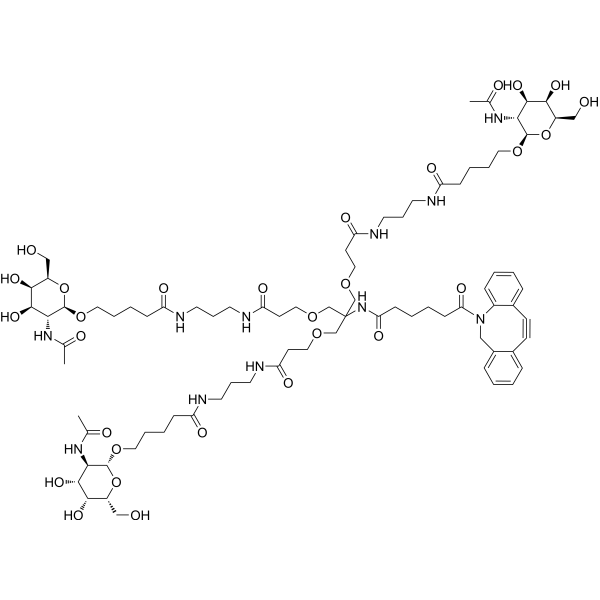 0 ImagesTri-GalNAc-DBCO is a synthetic ligand composed of three GalNAc units connected to DBCO. Tri-GalNAc-DBCO can act as a ligand for the sialic acid-degrading protein receptor (ASGPR), and can be coupled with targeting proteins or small molecules to form GalNAc-LYTACs. Tri-GalNAc-DBCO specifically binds to ASGPR and, through receptor-mediated endocytosis, guides the coupled molecules to lysosomes for degradation.
-
tri-GalNAc biotin
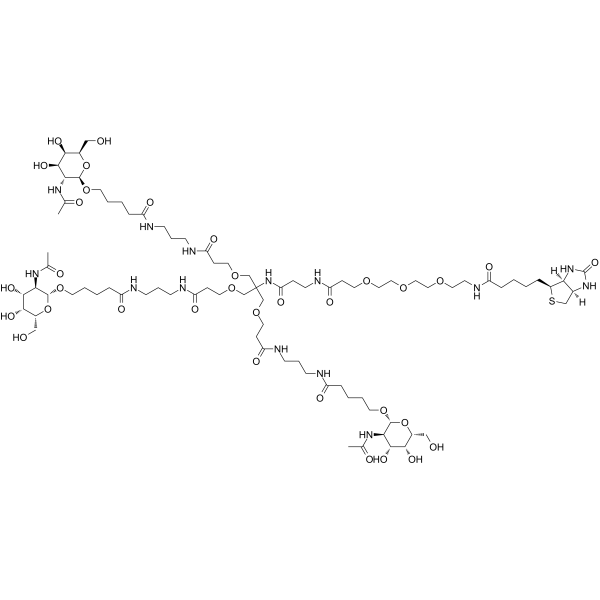 0 Imagestri-GalNAc biotin is a biotinylated ASGPR (Asialoglycoprotein receptor) ligand. tri-GalNAc biotin promotes cellular uptake of neutravidin (NA) via ASGPR. tri-GalNAc biotin delivers neutravidin to lysosomes for degradation. tri-GalNAc biotin can be used for research of LYsosome TArgeting Chimera (LYTAC).
-
GalNac-siRNA negative control (21nt)
 0 ImagesArt. -Nr.: HY-150151AReinheit: 99.09%GalNac-siRNA negative control (21nt) is the negative control form of GalNac-siRNA. GalNac-siRNA is an Asialoglycoprotein receptor (ASGPR)-targeted inhibitor conjugate. GalNac-siRNA is promising for research of hereditary transthyretin amyloidosis, acute hepatic porphyria, hemophilia and hypercholesterolemia.
-
tri-GalNAc-COOH
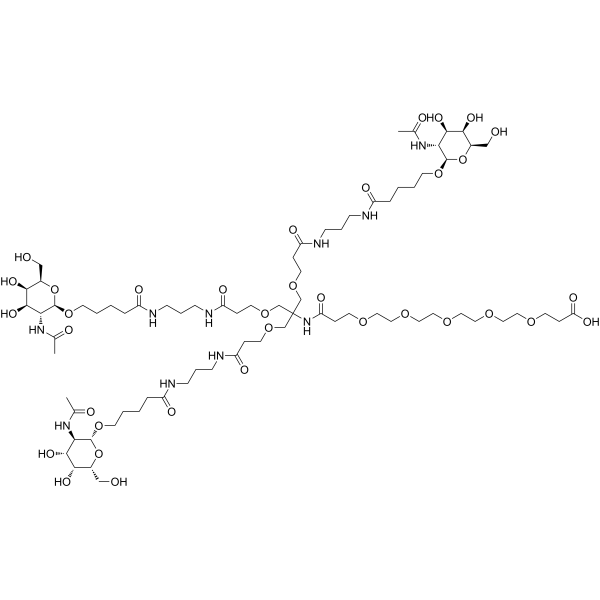 0 Imagestri-GalNAc-COOH is an asialoglycoprotein receptor (ASGPR) ligand that can be used for LYsosome TArgeting Chimera (LYTAC) research.
-
Tri-GalNAc(OAc)3-Perfluorophenyl
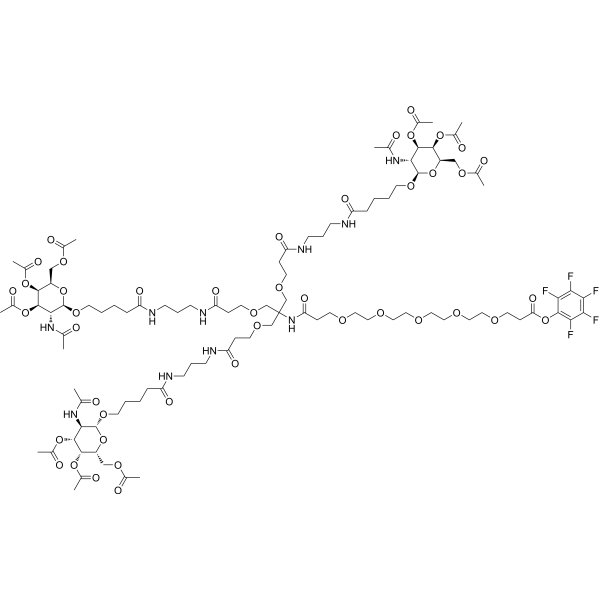 0 ImagesArt. -Nr.: HY-145368BTri-GalNAc(OAc)3-Perfluorophenyl is a pentafluorophenyl modified Tri-GalNAc(OAc)3 (HY-148118), a tri-GalNAc ligand that can be used for the synthesis of GalNAc-LYTAC. GalNAc-LYTAC engages the asialoglycoprotein receptor for targeted protein degradation.Tri-GalNAc(OAc)3-Perfluorophenyl can be used for the study of liver metabolism.
-
Mal-C2-amide-C10-tri-GalNAc
 0 ImagesMal-C2-amide-C10-tri-GalNAc is an asialoglycoprotein receptor (ASGPR) binding ligand fragment and a component of lysosome-targeted bifunctional molecules. Mal-C2-amide-C10-tri-GalNAc is used in the research of autoimmune diseases.
-
MrTAC-8
 0 ImagesArt. -Nr.: HY-183061MrTAC-8, methylarginine-targeting chimera (MrTAC), is a BRD4 degrader with DC50 values of 46 nM in HeLa cells. MrTAC-8 recruits PRMT1, PRMT3, PRMT4, PRMT5, and PRMT7 to target proteins, inducing arginine methylation that triggers lysosomal degradation. MrTAC-8 degrades proteins across diverse subcellular localizations and independent of native proteolytic routes. MrTAC-8 can be used for the research of cervical cancer, glioblastoma.
-
Hsp70TAC PD-1 Degrader-2
 0 ImagesArt. -Nr.: HY-182959Hsp70TAC PD-1 Degrader-2 is a PD-L1 Hsp70TAC (Hsp70-targeting Chimeras) degrader with Kd values of 0.36 μM. Hsp70TAC PD-1 Degrader-2 forms a ternary complex with Hsp70 and PD-L1 to drive PD-L1 degradation. Hsp70TAC PD-1 Degrader-2 induces degradation of mature membrane-bound PD-L1 in an Hsp70-dependent manner and via caveolin-mediated endocytosis and lysosomal trafficking. Hsp70TAC PD-1 Degrader-2 accumulates preferentially in tumor cells with elevated Hsp70 expression for tumor-selective PD-L1 degradation. Hsp70TAC PD-1 Degrader-2 can be used for the research of cancer, such as breast invasive carcinoma, glioblastoma multiforme, diffuse large b-cell lymphoma. (Pink: PD-1/PD-L1 ligand (HY-19745A); Blue: Hsp70 ligand (HY-182979); Black: linker (HY-182982)).
-
Tri-GalNAc(OAc)3 TFA
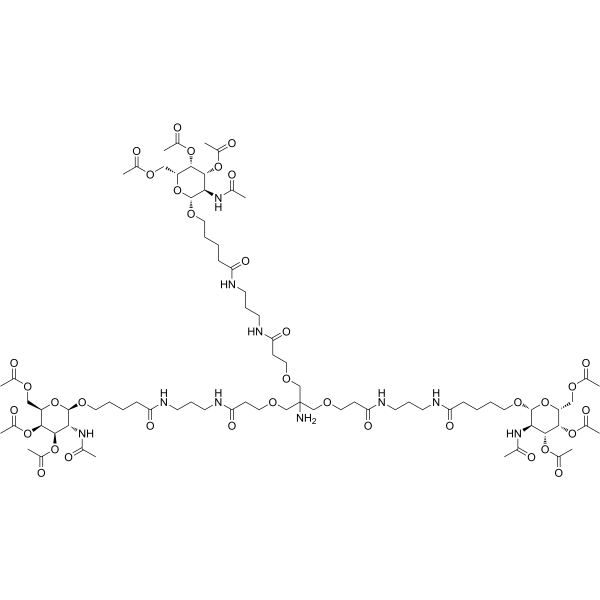
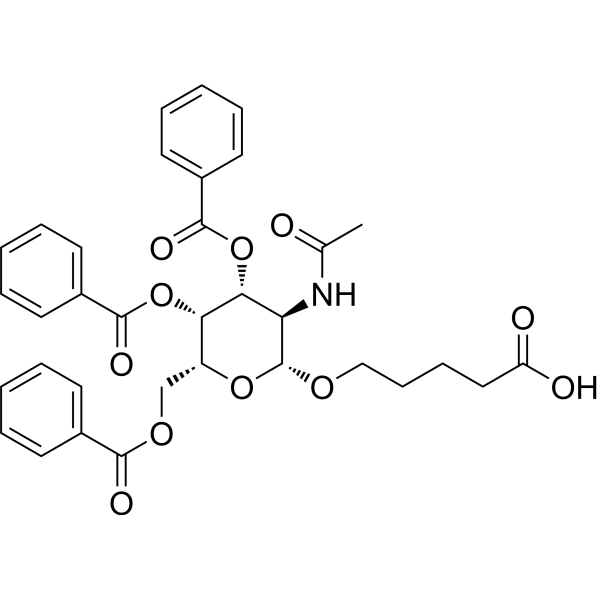
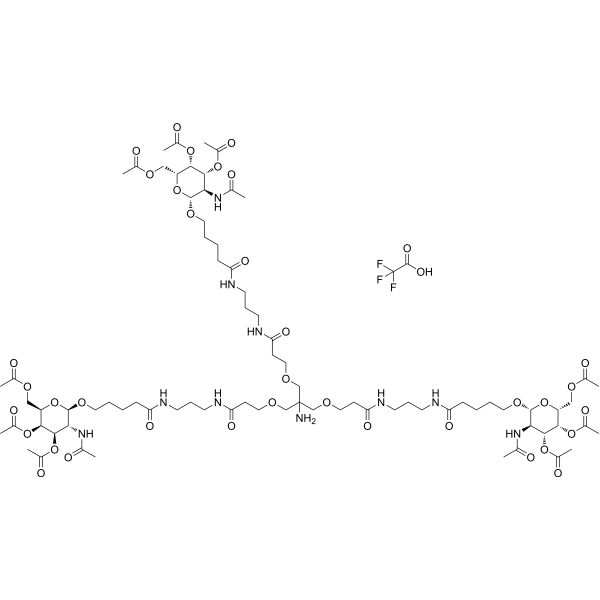 0 ImagesTri-GalNAc(OAc)3 TFA is a trivalent N-acetylgalactosamine (GalNAc) derivative that can be used to synthesize GalNAc-LYTAC. Tri-GalNAc is a specific ligand targeting the asialoglycoprotein receptor (ASGPR), mediating the endocytosis and transport of cell surface proteins (such as EGFR, HER2) to lysosomes for degradation by lysosomal targeting chimeras (LYTACs). Tri-GalNAc significantly reduces the level of target proteins and inhibits downstream signaling pathways (such as EGFR-mediated Akt and MAPK signals). Tri-GalNAc(OAc)3 TFA can be used for hepatocyte targeting studies, and can degrade carcinogenic membrane proteins and inhibit tumor cell proliferation in liver cancer cell models.
-
tri(GalNAc-PEG2)-PEG4-cyclo(Ac-DCAW-{Arg(3F-Ph)-PEG2}-LGELVWCT) (Cys2-Cys12)
 0 Imagestri(GalNAc-PEG2)-PEG4-cyclo(Ac-DCAW-{Arg(3F-Ph)-PEG2}-LGELVWCT) (Cys2-Cys12) is an asialoglycoprotein receptor (ASGPR) ligand that can be used for LYsosome TArgeting Chimera (LYTAC) research.
-
ASGPR ligand-2
 0 ImagesArt. -Nr.: HY-179737CAS. Nr.: 3062599-51-0ASGPR ligand-2 (Compound 366) is an asialoglycoprotein receptor (ASGPR) binder. ASGPR ligand-2 can be coupled with recognition elements of target proteins (such as antibodies or antigen-binding fragments), and through the endocytosis mediated by ASGPR, the target protein is delivered to the lysosomes of liver cells, promoting the degradation of the target protein. ASGPR ligand-2 can be used for the research of metabolic disease.
-
KRAS degrader-1
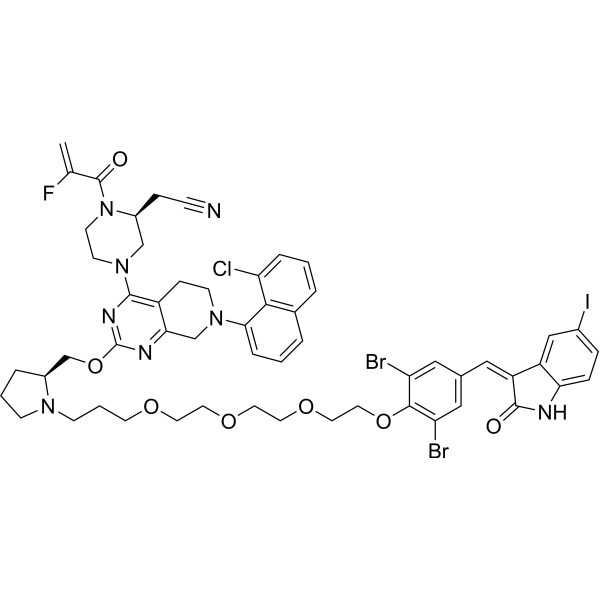 0 ImagesArt. -Nr.: HY-153880CAS. Nr.: 2795275-59-9KRAS degrader-1 is a potent KRAS degrader. KRAS degrader-1 targets specific proteins for degradation via the autophagy-lysosomal degradation pathway. KRAS degrader-1 is suitable for use in cancer research. (Blue: KRAS G12C-IN-72 (HY-128414); Black: Linker (HY-175587); Pink: 5-Iodoindolin-2-one (HY-76986); Blue + Black: KRAS ligand-Linker Conjugate 7 (HY-175586)).
-
M-MoDE-A (2)
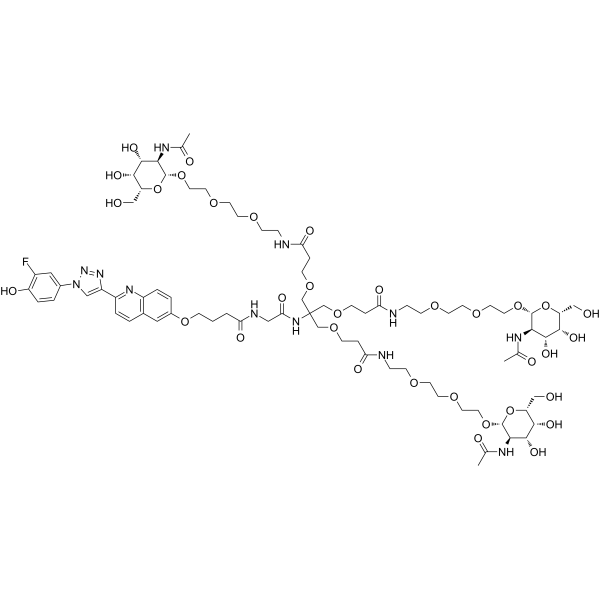 0 ImagesArt. -Nr.: HY-142885CAS. Nr.: 2378837-56-8M-MoDE-A (2) is a bifunctional small molecule that mediates the degradation of extracellular proteins through the asialoglycoprotein receptor (ASGPR).
-
D-MoDE-A (1)
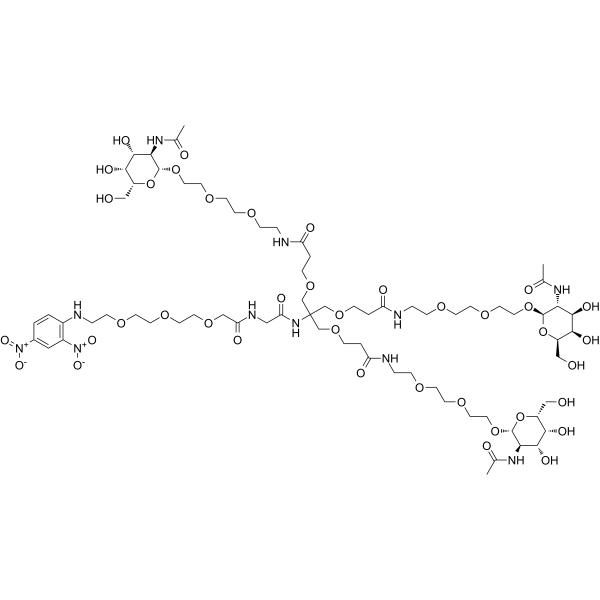 0 ImagesArt. -Nr.: HY-142881CAS. Nr.: 2378837-67-1D-MoDE-A (1) is a bifunctional small molecule that mediates the degradation of extracellular proteins through the asialoglycoprotein receptor (ASGPR).
-
PEG9MA10-PAB10-GalMA10
 0 ImagesArt. -Nr.: HY-184926PEG9MA10-PAB10-GalMA10 is a CD147 LYTAC degrader. PEG9MA10-PAB10-GalMA10 binds to the asialoglycoprotein receptor (ASGPR) via its galactose methacrylate domain, mediating its uptake by hepatoma cells. PEG9MA10-PAB10-GalMA10 induces lysosome-dependent degradation of CD147, resulting in concurrent loss of associated MCT1 and MCT4. PEG9MA10-PAB10-GalMA10 reduces extracellular lactate levels, increases intracellular lactate accumulation, inhibits glycolytic activity, and enhances mitochondrial respiratory capacity. PEG9MA10-PAB10-GalMA10 decreases the secretion of MMP-2 and MMP-9, and upregulates the expression of E-cadherin. PEG9MA10-PAB10-GalMA10 exhibits anti-tumor efficacy in hepatoma models. PEG9MA10-PAB10-GalMA10 can be used for research on liver cancer (hepatocellular carcinoma).
-
Allyl-mannose-6-phosphonate
 0 ImagesArt. -Nr.: HY-164396CAS. Nr.: 3030990-46-3Allyl-mannose-6-phosphonate is a stable analog of mannose-6-phosphate (M6P). Allyl-mannose-6-phosphonate can be used to synthesize M6Pn-polypeptide conjugates and construct lysosome-targeting chimeras (LYTAC). Allyl-mannose-6-phosphonate is applicable for tumor research.
-
Ctx-L3
 0 ImagesArt. -Nr.: HY-181829Ctx-L3 is a selective EGFR PTAC (PSMA-targeted chimera) degrader (DC50: 4.3 pM in LNCaP cells) and LYTAC. Ctx-L3 recruits prostate-specific membrane antigen (PSMA) and mediates lysosomal degradation of EGFR in PSMA-positive prostate cancer cells. Ctx-L3 exhibits degrading activity against EGFR in prostate cancer cells. Ctx-L3 is applicable to related research on prostate cancer.
-
STING Degrader-3
 0 ImagesArt. -Nr.: HY-168554STING Degrader-3 is a PROTAC-like STING degrader with a DC50 of 2.58 μM in THP-1 cells. STING Degrader-3 degrades STING protein via the lysosomal pathway. STING Degrader-3 functions as a non-degradative inhibitor in macrophages. STING Degrader-3 reduces the phosphorylation levels of TBK1 and IRF3, and downregulates the expression of IFN-β, CXCL10, IL-6, TNFα, IL-1β, ISG15 and ISG56. STING Degrader-3 exhibits renoprotective properties in a cisplatin-induced acute kidney injury model. STING Degrader-3 can be used in studies related to acute kidney injury. ((Pink: STING ligand (HY-168676); Blue: CRBN ligand (HY-126457); Black: linker (HY-W123015); CRBN ligand + linker: (HY-168677)).
- 1
- 2




