Search Result
Results for "
Anticonvulsant agent-1
" in MedChemExpress (MCE) Product Catalog:
2
Biochemical Assay Reagents
2
Isotope-Labeled Compounds
| Cat. No. |
Product Name |
Target |
Research Areas |
Chemical Structure |
-
- HY-B0339
-
-
-
- HY-B0246S
-
-
-
- HY-115366
-
-
-
- HY-152358
-
|
|
Nucleoside Antimetabolite/Analog
|
Others
|
|
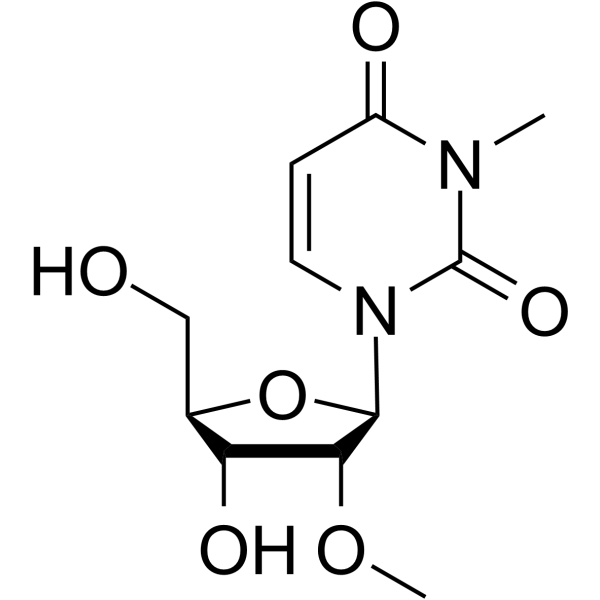
N3-Methyl-2’-O-methyluridine is a uridine analogue. Uridine has potential antiepileptic effects, and its analogs can be used to study anticonvulsant and anxiolytic activities, as well as to develop new antihypertensive agents .
|
-
-
- HY-B0339R
-
-
-
- HY-134337
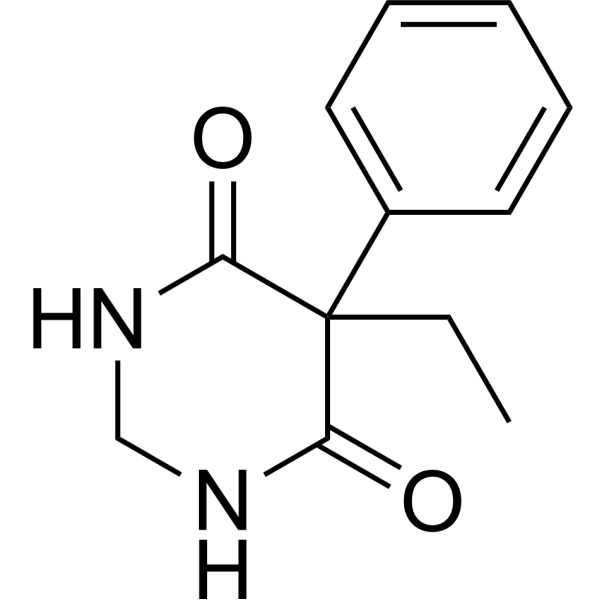
-
|
|
Nucleoside Antimetabolite/Analog
Phosphoramidites
|
Cancer
|
|
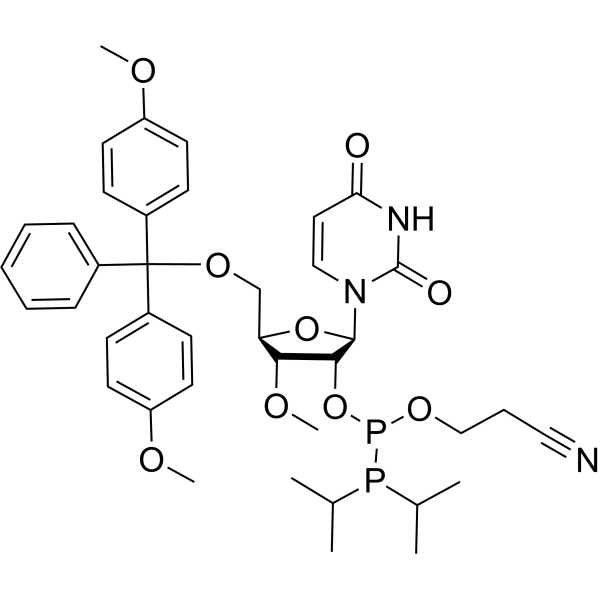
5'-O-DMTr-3'-O-methyl uridine-3'-CED-phosphoramidite is a uridine analog. Uridine has potential antiepileptic effects, and its analogs can be used to study anticonvulsant and anxiolytic activities, as well as to develop new antihypertensive agents .
|
-
-
- HY-133486
-
-
-
- HY-152732
-
|
|
Nucleoside Antimetabolite/Analog
|
Others
|
|
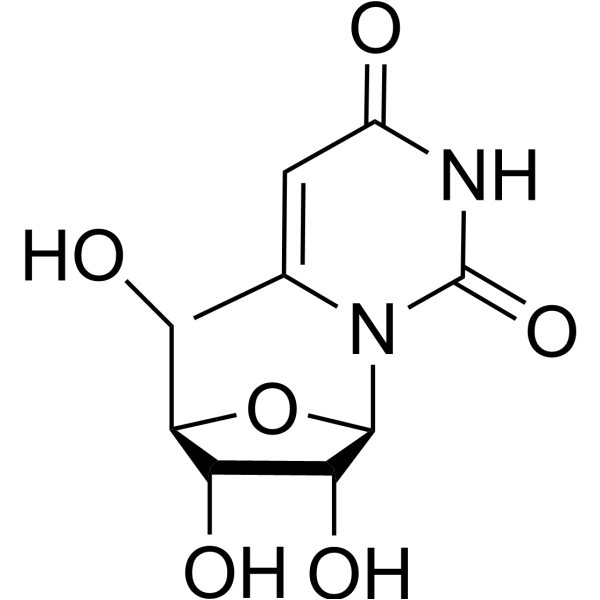
6-Methyluridine is a uridine analogue. Uridine has potential antiepileptic effects, and its analogs can be used to study anticonvulsant and anxiolytic activities, as well as to develop new antihypertensive agents .
|
-
-
- HY-154285
-
|
|
Nucleoside Antimetabolite/Analog
|
Cancer
|
|
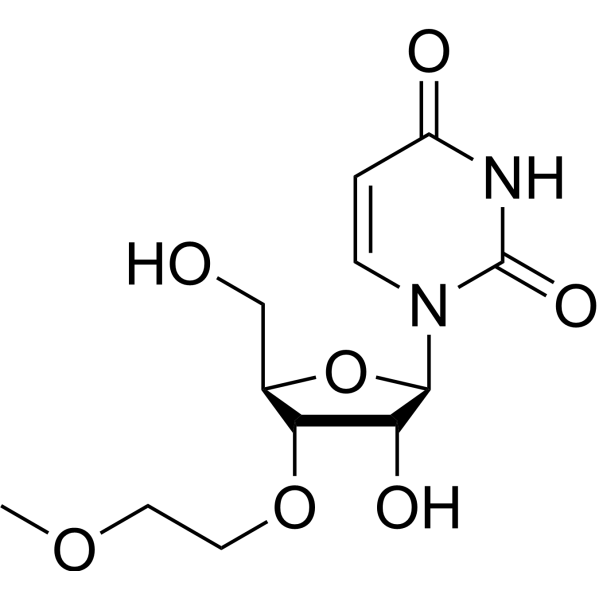
3’-O-(2-Methoxyethyl) uridine is a uridine analog. Uridine has potential antiepileptic effects, and its analogs can be used to study anticonvulsant and anxiolytic activities, as well as to develop new antihypertensive agents .
|
-
-
- HY-154466
-
|
|
Nucleoside Antimetabolite/Analog
|
Cancer
|
|
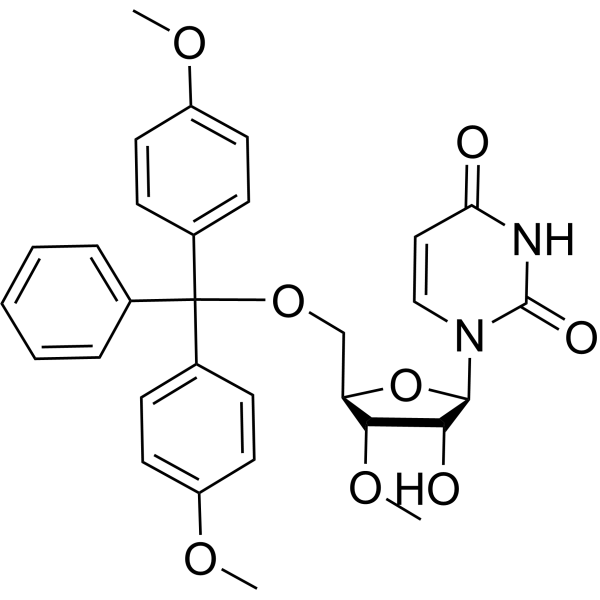
5’-O-(4,4’-Dimethoxytrityl)-3’-O-methyluridine is a uridine analog. Uridine has potential antiepileptic effects, and its analogs can be used to study anticonvulsant and anxiolytic activities, as well as to develop new antihypertensive agents .
|
-
-
- HY-48973
-
|
|
Nucleoside Antimetabolite/Analog
Phosphoramidites
|
Others
|
|
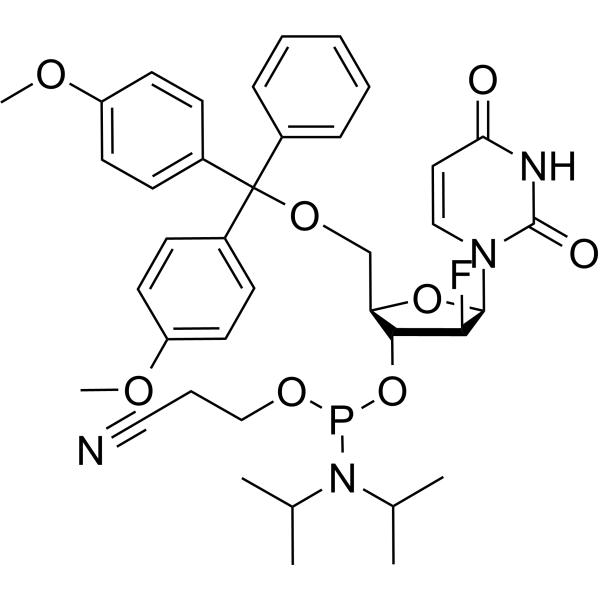
2'-Fluoro-2'-deoxy-ara-U-3'-phosphoramidite is a uridine analog. Uridine has potential antiepileptic effects, and its analogs can be used to study anticonvulsant and anxiolytic activities, as well as to develop new antihypertensive agents .
|
-
-
- HY-W094475D
-
|
Epsom salts, meets analytical specification of Ph. Eur. BP USP FCC
|
Drug Derivative
|
Neurological Disease
Metabolic Disease
|
|
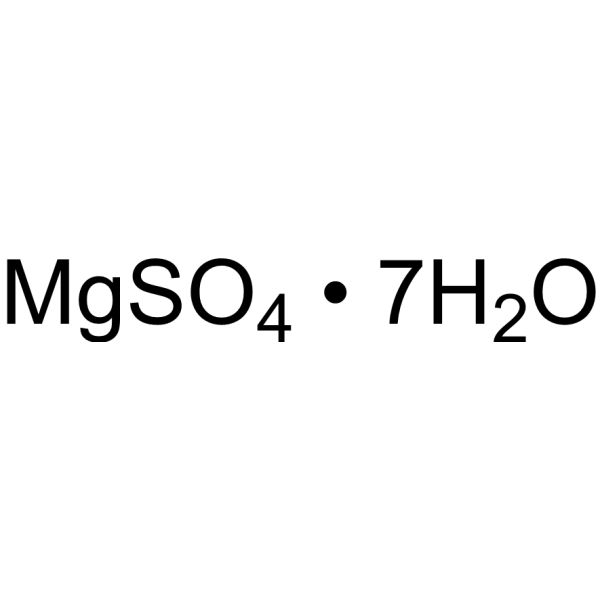
Magnesium sulfate heptahydrate, meets analytical specification of Ph. Eur. BP USP FCC (Epsom salts, meets analytical specification of Ph. Eur. BP USP FCC) is currently the anticonvulsant of choice for the prevention and control of eclamptic fits and is also widely used as a tocolytic agent .
|
-
-
- HY-154358
-
|
|
Nucleoside Antimetabolite/Analog
|
Cancer
|
|
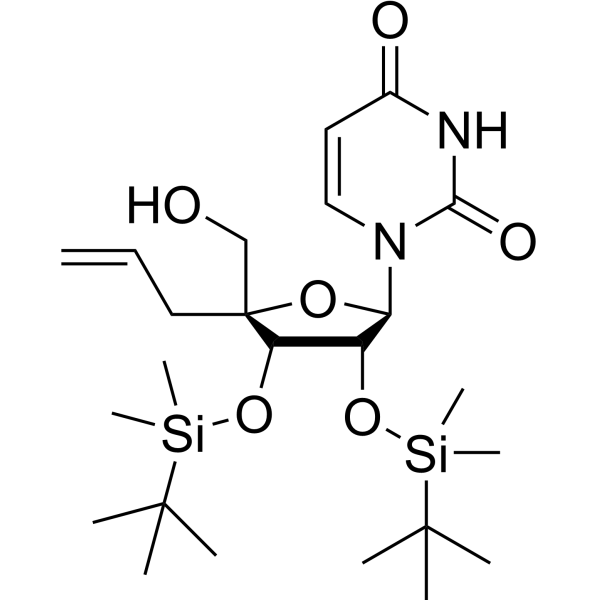
4’-alpha-C-Allyl-2’,3’-bis(O-t-butyldimethylsilyl) uridine is a uridine analog. Uridine has potential antiepileptic effects, and its analogs can be used to study anticonvulsant and anxiolytic activities, as well as to develop new antihypertensive agents .
|
-
-
- HY-154492
-
|
|
Nucleoside Antimetabolite/Analog
|
Cancer
|
|
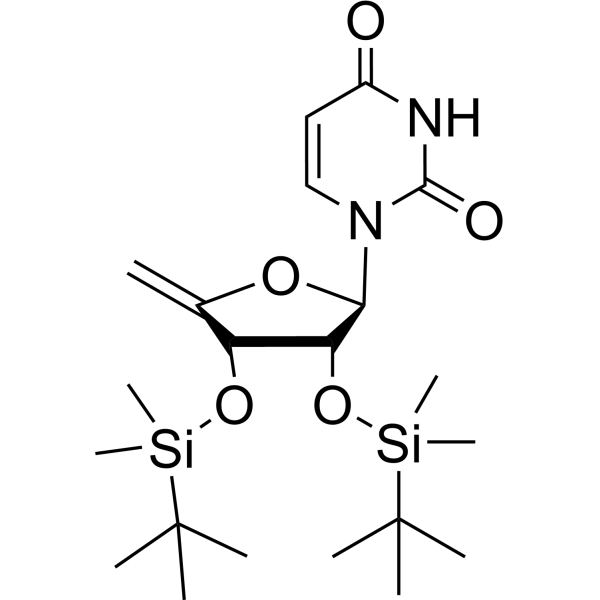
2’,3’-Bis(O-t-butyldimethylsilyl)-4’,5’-didehydro-5’-deoxyuridine is a uridine analog. Uridine has potential antiepileptic effects, and its analogs can be used to study anticonvulsant and anxiolytic activities, as well as to develop new antihypertensive agents .
|
-
-
- HY-154582
-
|
|
Nucleoside Antimetabolite/Analog
|
Others
|
|
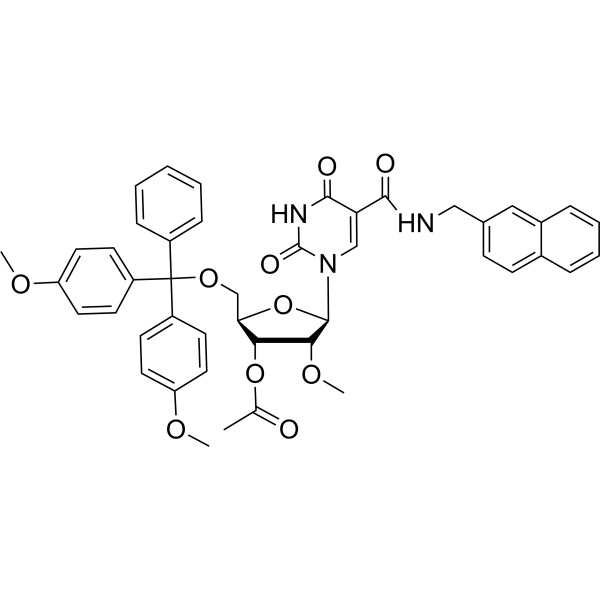
5-Naphthyl-beta-methylaminocarbony-3’-O-acetyl-2’-O-methyl-5’-O-DMTr-uridine is a uridine analog. Uridine has potential antiepileptic effects, and its analogs can be used to study anticonvulsant and anxiolytic activities, as well as to develop new antihypertensive agents .
|
-
-
- HY-152782
-
|
|
Nucleoside Antimetabolite/Analog
|
Others
|
|
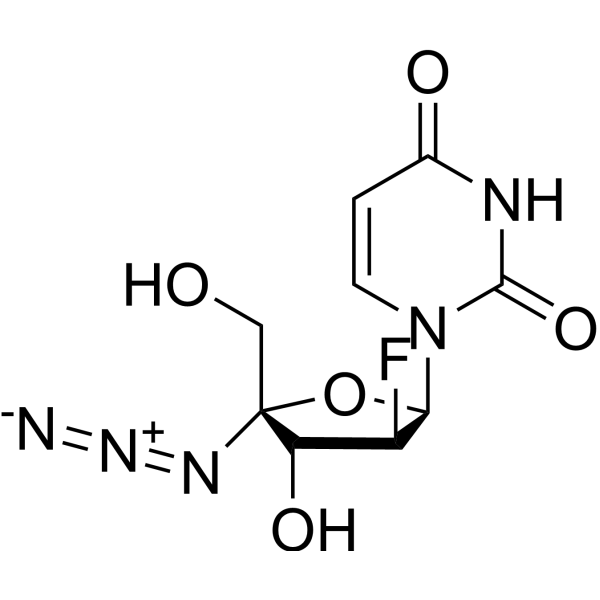
4’-Azido-2’-deoxy-2’-fluoro-beta-D-arabinouridine is a uridine analogue. Uridine has potential antiepileptic effects, and its analogs can be used to study anticonvulsant and anxiolytic activities, as well as to develop new antihypertensive agents . 4’-Azido-2’-deoxy-2’-fluoro-beta-D-arabinouridine is a click chemistry reagent, it contains an Azide group and can undergo copper-catalyzed azide-alkyne cycloaddition reaction (CuAAc) with molecules containing Alkyne groups. It can also undergo strain-promoted alkyne-azide cycloaddition (SPAAC) reactions with molecules containing DBCO or BCN groups.
|
-
-
- HY-U00348
-
|
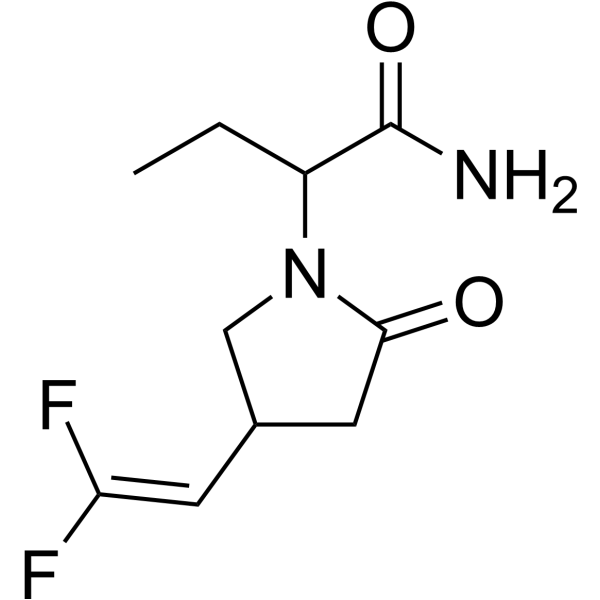
4-(2,2-Difluoroethenyl)-α-ethyl-2-oxo-1-pyrrolidineacetamide
|
Others
|
Neurological Disease
|
|
Anticonvulsant agent 1 is an anticonvulsant agent extracted from patent WO2001062726A2, Compound 156.
|
-
-
- HY-114692
-
-

-
- HY-100377
-
|
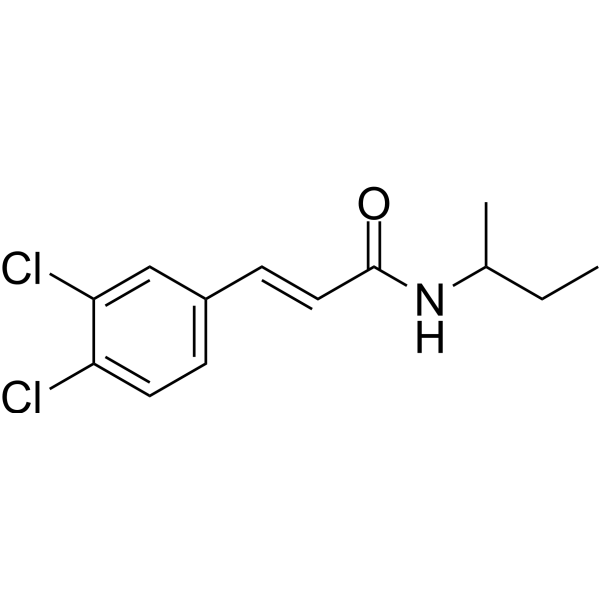
Anticonvulsant 7903
|
Others
|
Neurological Disease
|
|
Lvguidingan is a potent anticonvulsant agent. Lvguidingan also has sedative-hypnotic, tranquilizing, and muscle-relaxing actions. Lvguidingan can be used as antiepileptic agent .
|
-
-
- HY-W020098
-
|
|
Nucleoside Antimetabolite/Analog
|
Cancer
|
|
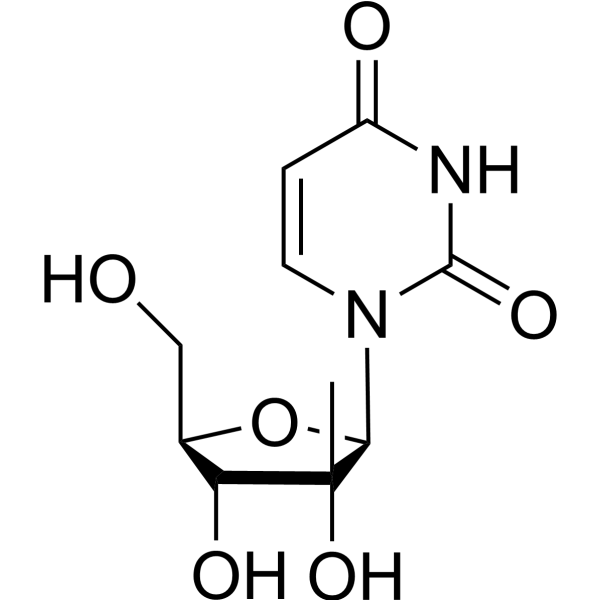
2'-C-methyluridine is a uridine analog. Uridine has potential antiepileptic effects, and its analogs can be used to study anticonvulsant and anxiolytic activities, as well as to develop new antihypertensive agents .
|
-
-
- HY-W094475E
-
|
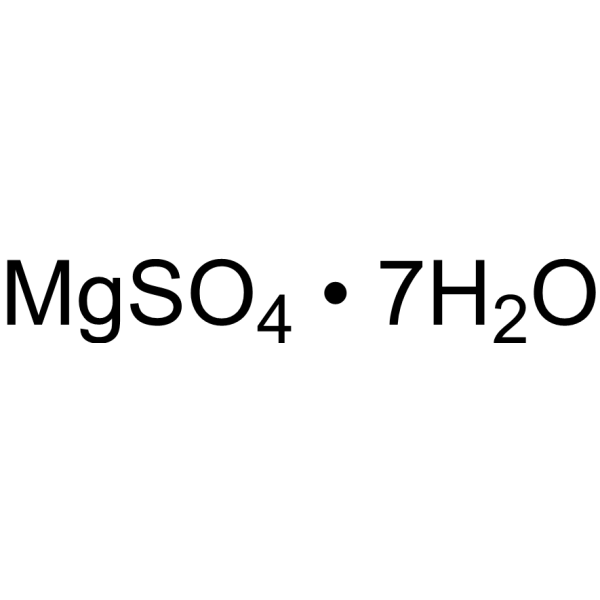
Epsom salts (Pharmaceutical primary standard, USP)
|
Drug Derivative
|
Neurological Disease
Metabolic Disease
|
|
Magnesium sulfate heptahydrate, United States Pharmacopeia (USP) Reference Standard (Epsom salts (Pharmaceutical primary standard, USP)) is currently the anticonvulsant of choice for the prevention and control of eclamptic fits and is also widely used as a tocolytic agent .
|
-
-
- HY-154488
-
|
|
Nucleoside Antimetabolite/Analog
|
Cancer
|
|
3′-O-[(1,1-Dimethylethyl)dimethylsilyl]-2′-O-methyluridine is a uridine analog. Uridine has potential antiepileptic effects, and its analogs can be used to study anticonvulsant and anxiolytic activities, as well as to develop new antihypertensive agents .
|
-
![3′-O-[(1,1-Dimethylethyl)dimethylsilyl]-2′-O-methyluridine](//file.medchemexpress.com/product_pic/hy-154488.gif)
-
- HY-154517
-
|
|
Nucleoside Antimetabolite/Analog
|
Cancer
|
|
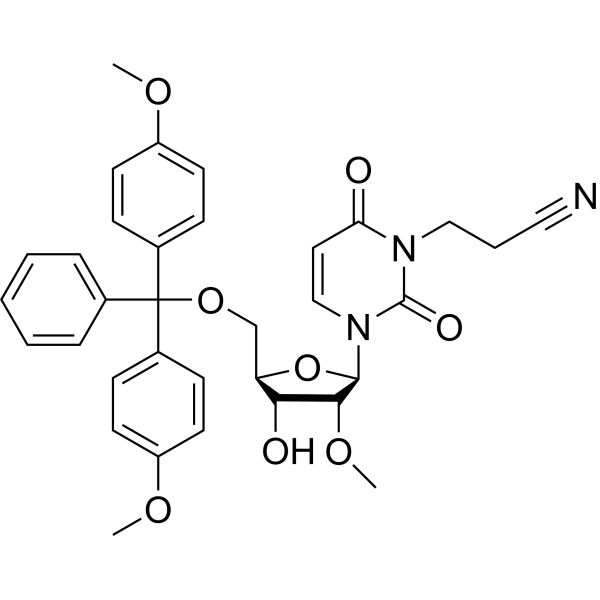
N3-Cyanoethyl-5’-O-(4,4’-dimethoxytrityl)-2’-O-methyluridine is a uridine analog. Uridine has potential antiepileptic effects, and its analogs can be used to study anticonvulsant and anxiolytic activities, as well as to develop new antihypertensive agents .
|
-
-
- HY-119950
-
-
-
- HY-126043
-
-
-
- HY-152755
-
|
|
Nucleoside Antimetabolite/Analog
|
Others
|
|
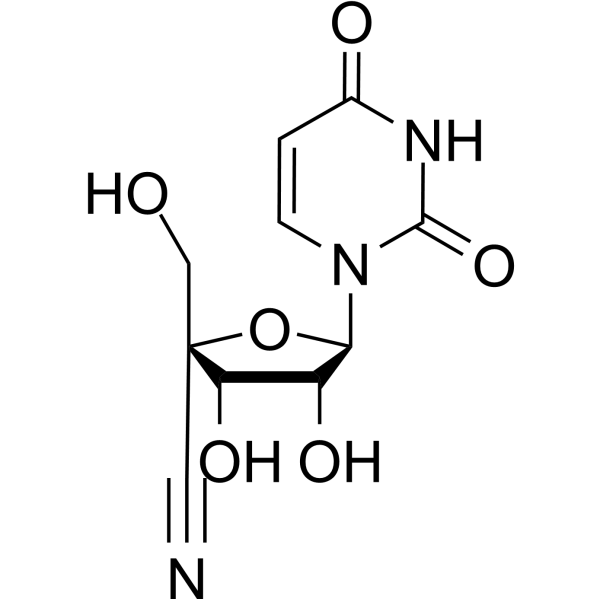
4’-Cyanouridine is a uridine analogue. Uridine has potential antiepileptic effects, and its analogs can be used to study anticonvulsant and anxiolytic activities, as well as to develop new antihypertensive agents .
|
-
-
- HY-152764
-
|
|
Nucleoside Antimetabolite/Analog
|
Others
|
|
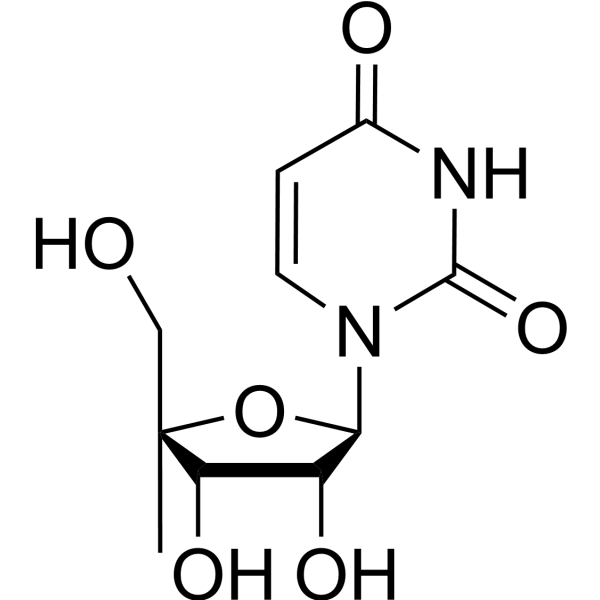
4’-α-C-Methyluridine is a uridine analogue. Uridine has potential antiepileptic effects, and its analogs can be used to study anticonvulsant and anxiolytic activities, as well as to develop new antihypertensive agents .
|
-
-
- HY-152777
-
|
|
Nucleoside Antimetabolite/Analog
|
Others
|
|
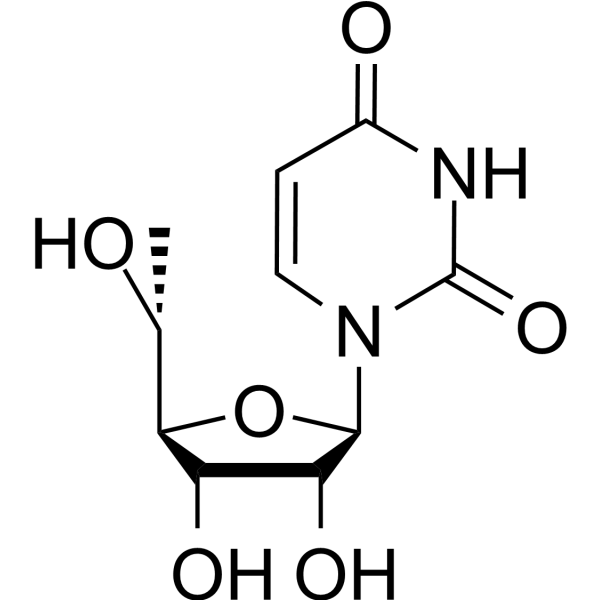
5’(R)-C-Methyluridine is a uridine analogue. Uridine has potential antiepileptic effects, and its analogs can be used to study anticonvulsant and anxiolytic activities, as well as to develop new antihypertensive agents .
|
-
-
- HY-152299
-
|
|
Nucleoside Antimetabolite/Analog
|
Others
|
|
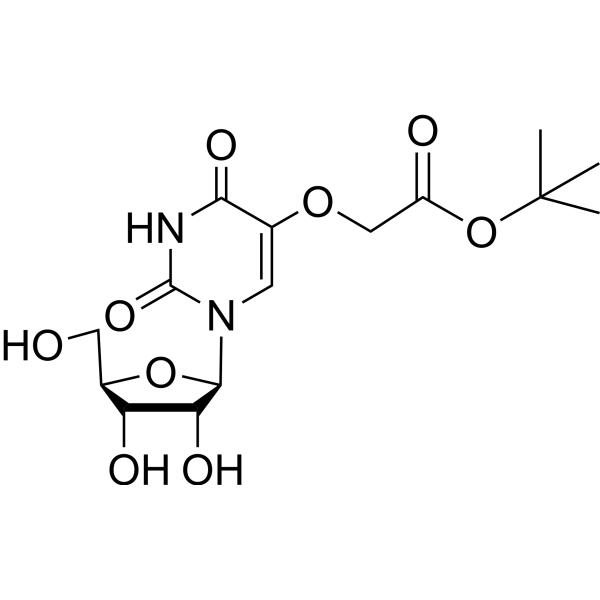
5-(t-Butyloxycarbonylmethoxy)uridine is a uridine analogue. Uridine has potential antiepileptic effects, and its analogs can be used to study anticonvulsant and anxiolytic activities, as well as to develop new antihypertensive agents .
|
-
-
- HY-154735
-
|
|
Nucleoside Antimetabolite/Analog
|
Cancer
|
|
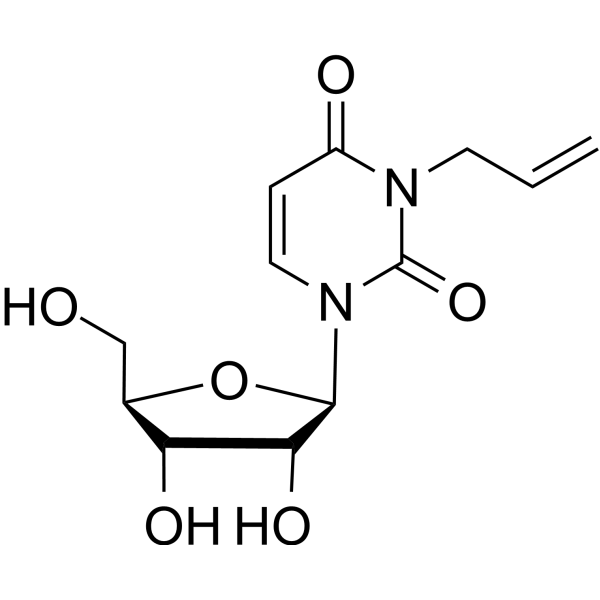
N3-Allyluridine is a uridine analog. Uridine has potential antiepileptic effects, and its analogs can be used to study anticonvulsant and anxiolytic activities, as well as to develop new antihypertensive agents .
|
-
-
- HY-152388
-
|
|
Nucleoside Antimetabolite/Analog
|
Others
|
|
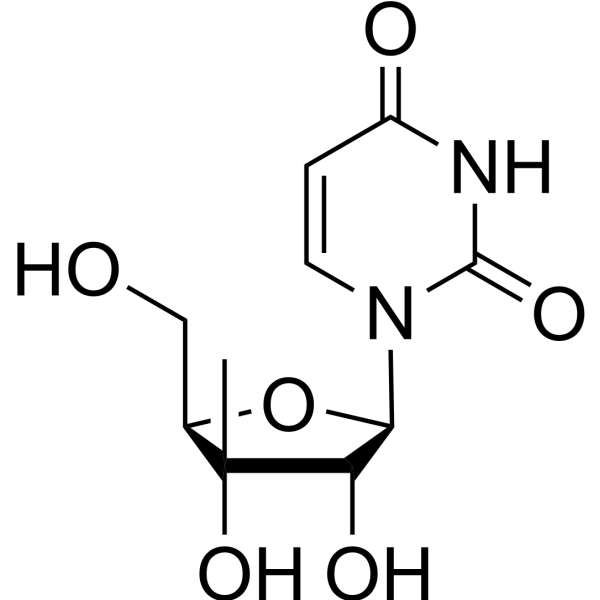
3’-beta-C-Methyluridine is a uridine analogue. Uridine has potential antiepileptic effects, and its analogs can be used to study anticonvulsant and anxiolytic activities, as well as to develop new antihypertensive agents .
|
-
-
- HY-152665
-
|
|
Nucleoside Antimetabolite/Analog
|
Cancer
|
|
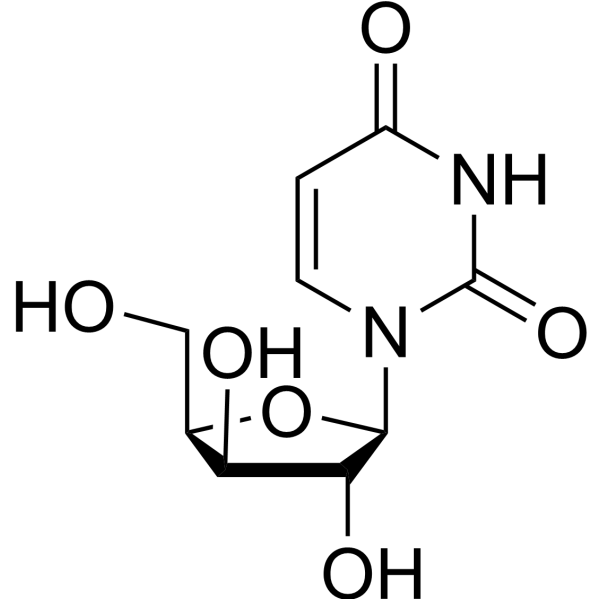
1-(β-D-Xylofuranosyl)uracil is a uridine analog. Uridine has potential antiepileptic effects, and its analogs can be used to study anticonvulsant and anxiolytic activities, as well as to develop new antihypertensive agents .
|
-
-
- HY-152970
-
|
|
Nucleoside Antimetabolite/Analog
Phosphoramidites
|
Others
|
|
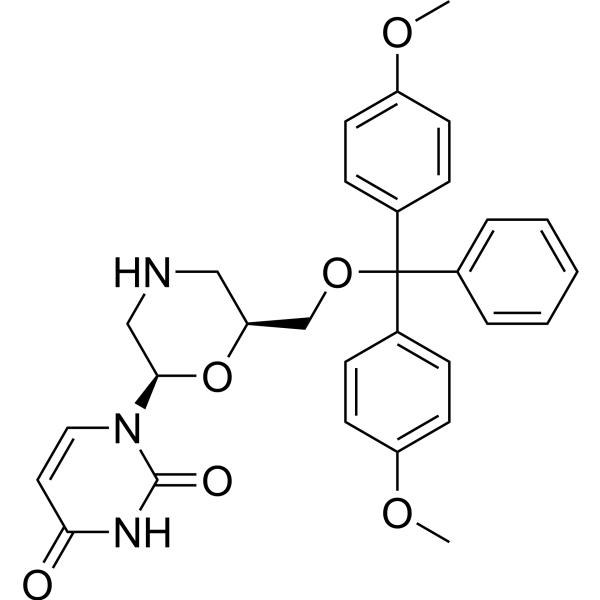
7'-O-DMT-morpholino uracil is a uridine analog. Uridine has potential antiepileptic effects, and its analogs can be used to study anticonvulsant and anxiolytic activities, as well as to develop new antihypertensive agents .
|
-
-
- HY-149077
-
|
|
Others
|
Others
|
|
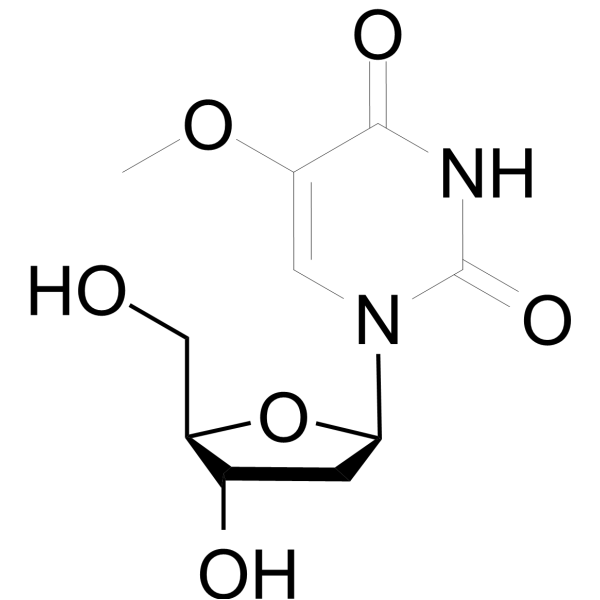
2′-Deoxy-5-methoxyuridine is a uridine analogue. Uridine has potential antiepileptic effects, and its analogs can be used to study anticonvulsant and anxiolytic activities, as well as to develop new antihypertensive agents .
|
-
-
- HY-154734
-
|
|
Nucleoside Antimetabolite/Analog
|
Cancer
|
|
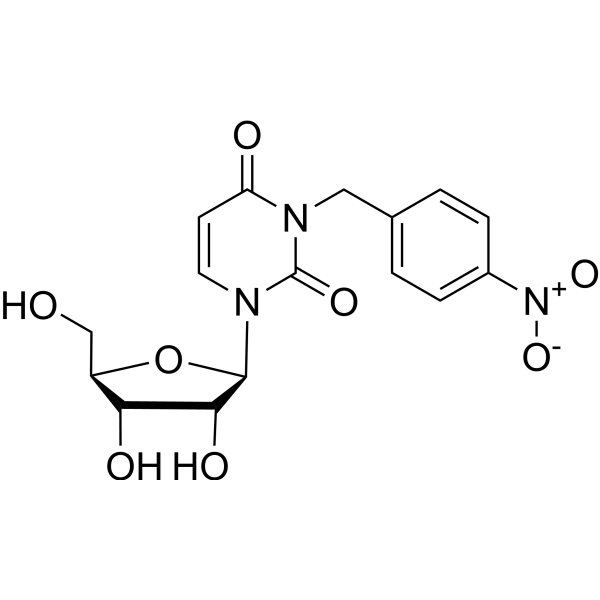
N3-(4-Nitrobenzyl)uridine is a uridine analog. Uridine has potential antiepileptic effects, and its analogs can be used to study anticonvulsant and anxiolytic activities, as well as to develop new antihypertensive agents .
|
-
-
- HY-W557556
-
|
|
Nucleoside Antimetabolite/Analog
|
Cancer
|
|
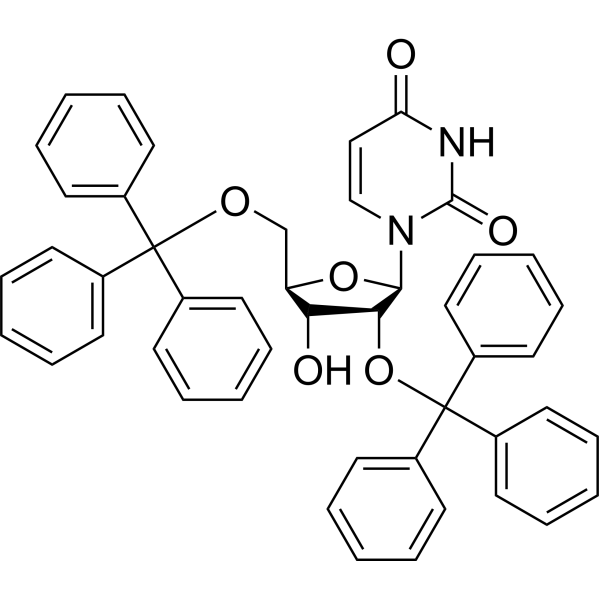
2',5'-Bis-O-(triphenylMethyl)uridine is a uridine analog. Uridine has potential antiepileptic effects, and its analogs can be used to study anticonvulsant and anxiolytic activities, as well as to develop new antihypertensive agents .
|
-
-
- HY-152677
-
|
|
Nucleoside Antimetabolite/Analog
|
Others
|
|
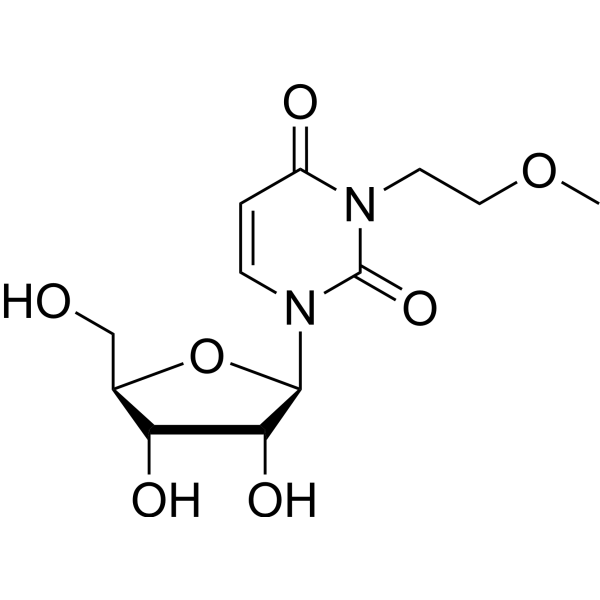
N3-(2-Methoxy)ethyluridine is a uridine analogue. Uridine has potential antiepileptic effects, and its analogs can be used to study anticonvulsant and anxiolytic activities, as well as to develop new antihypertensive agents .
|
-
-
- HY-154217
-
|
|
Nucleoside Antimetabolite/Analog
|
Cancer
|
|
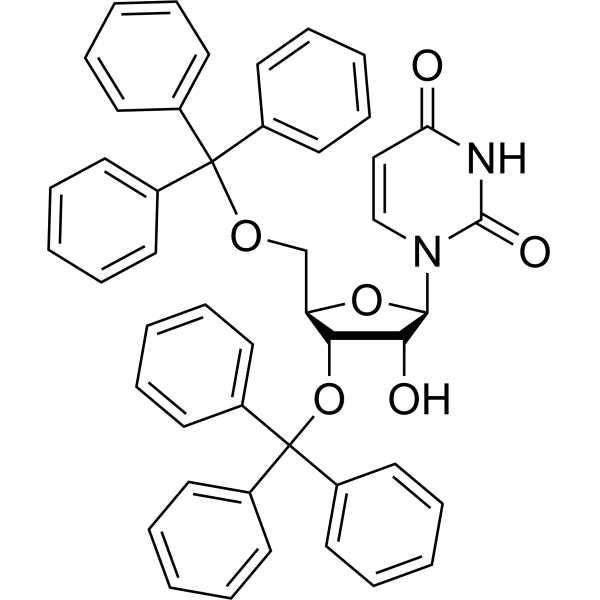
3′,5′-Bis-O-(triphenylmethyl)uridine is a uridine analog. Uridine has potential antiepileptic effects, and its analogs can be used to study anticonvulsant and anxiolytic activities, as well as to develop new antihypertensive agents .
|
-
-
- HY-152529
-
|
|
Nucleoside Antimetabolite/Analog
|
Others
|
|
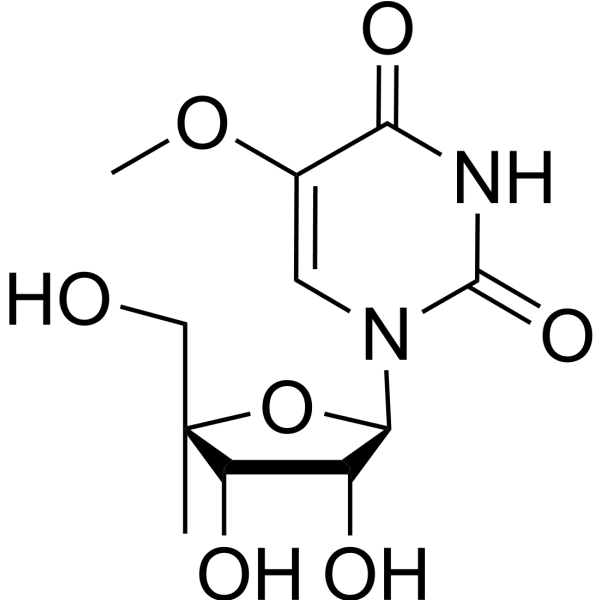
4’-C-Methyl-5-methoxyuridine is a uridine analogue. Uridine has potential antiepileptic effects, and its analogs can be used to study anticonvulsant and anxiolytic activities, as well as to develop new antihypertensive agents .
|
-
-
- HY-152522
-
|
|
Nucleoside Antimetabolite/Analog
|
Others
|
|
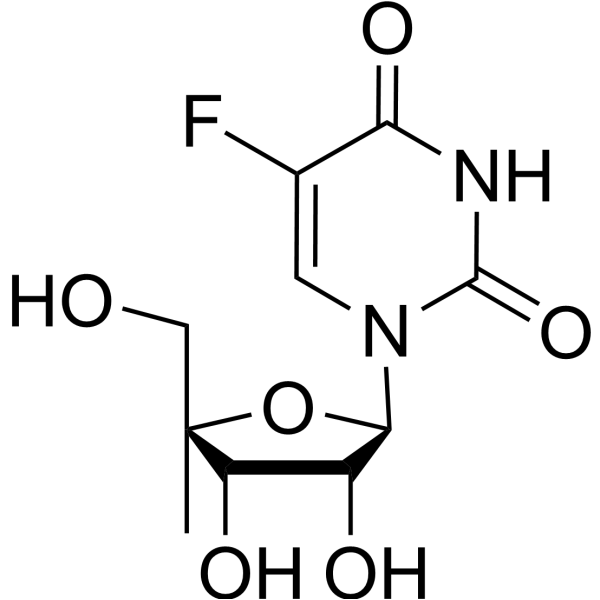
5-Fluoro-4’-C-methyluridine is a uridine analogue. Uridine has potential antiepileptic effects, and its analogs can be used to study anticonvulsant and anxiolytic activities, as well as to develop new antihypertensive agents .
|
-
-
- HY-154738
-
|
|
Nucleoside Antimetabolite/Analog
|
Cancer
|
|
N3-[3-(tert-Butoxycarbonyl)amino]propyluridine is a uridine analog. Uridine has potential antiepileptic effects, and its analogs can be used to study anticonvulsant and anxiolytic activities, as well as to develop new antihypertensive agents .
|
-
![N3-[3-(tert-Butoxycarbonyl)amino]propyluridine](//file.medchemexpress.com/product_pic/hy-154738.gif)
-
- HY-152783
-
|
|
Nucleoside Antimetabolite/Analog
|
Others
|
|
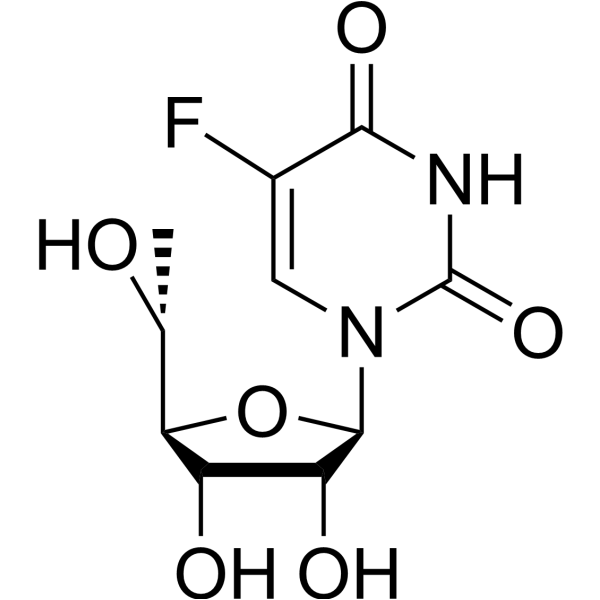
5’(R)-C-Methyl-5-fluorouridine is a uridine analogue. Uridine has potential antiepileptic effects, and its analogs can be used to study anticonvulsant and anxiolytic activities, as well as to develop new antihypertensive agents .
|
-
-
- HY-152969
-
|
|
Nucleoside Antimetabolite/Analog
|
Others
|
|
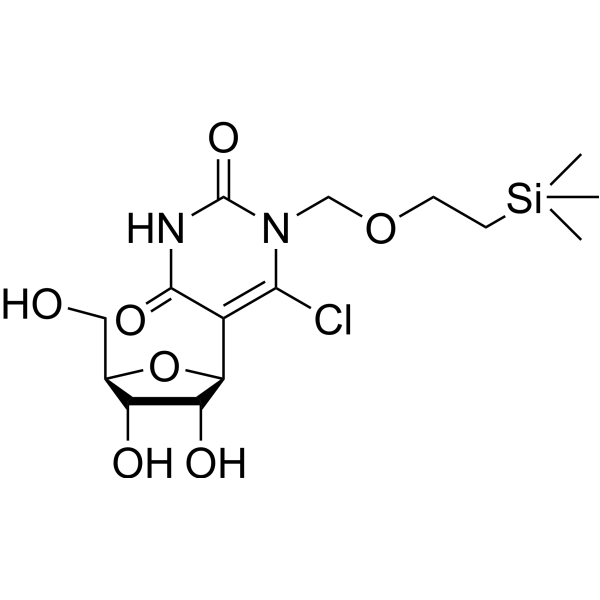
6-Chloro-N1-(trimethylsilylethoxymethyl)pseudouridine is a uridine analog. Uridine has potential antiepileptic effects, and its analogs can be used to study anticonvulsant and anxiolytic activities, as well as to develop new antihypertensive agents .
|
-
-
- HY-152779
-
|
|
Nucleoside Antimetabolite/Analog
|
Others
|
|
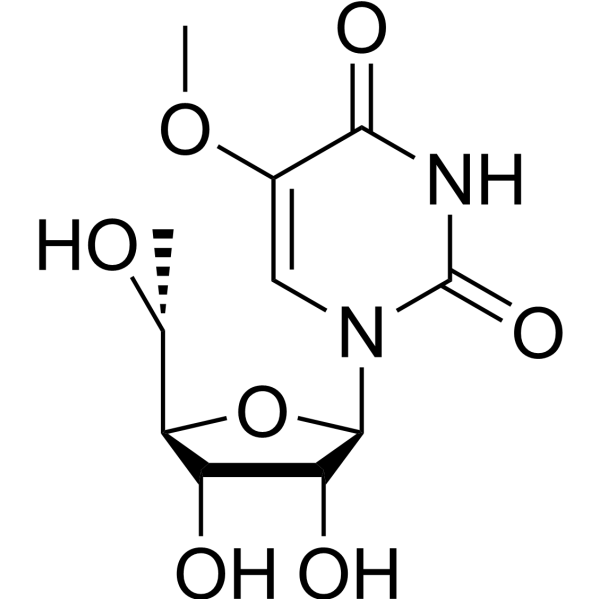
5-Methoxy-5’(R)-C-methyluridine is a uridine analogue. Uridine has potential antiepileptic effects, and its analogs can be used to study anticonvulsant and anxiolytic activities, as well as to develop new antihypertensive agents .
|
-
-
- HY-152798
-
|
|
Nucleoside Antimetabolite/Analog
|
Others
|
|
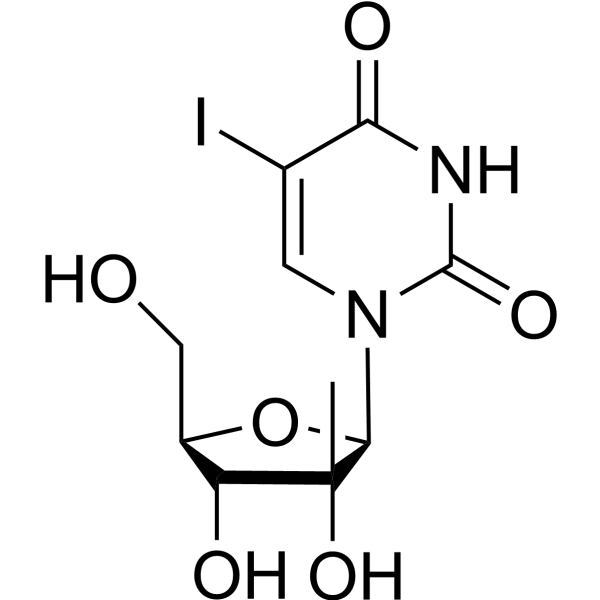
5-Iodo-2’-β-C-methyl uridine is a uridine analogue. Uridine has potential antiepileptic effects, and its analogs can be used to study anticonvulsant and anxiolytic activities, as well as to develop new antihypertensive agents .
|
-
-
- HY-154737
-
|
|
Nucleoside Antimetabolite/Analog
|
Cancer
|
|
N3-[(Pyrid-4-yl)methyl]uridine is a uridine analog. Uridine has potential antiepileptic effects, and its analogs can be used to study anticonvulsant and anxiolytic activities, as well as to develop new antihypertensive agents .
|
-
![N3-[(Pyrid-4-yl)methyl]uridine](//file.medchemexpress.com/product_pic/hy-154737.gif)
-
- HY-152681
-
|
|
Nucleoside Antimetabolite/Analog
|
Others
|
|
N3-[(Tetrahydro-2-furanyl)methyl]uridine is a uridine analogue. Uridine has potential antiepileptic effects, and its analogs can be used to study anticonvulsant and anxiolytic activities, as well as to develop new antihypertensive agents .
|
-
![N3-[(Tetrahydro-2-furanyl)methyl]uridine](//file.medchemexpress.com/product_pic/hy-152681.gif)
-
- HY-152463
-
|
|
Nucleoside Antimetabolite/Analog
|
Cancer
|
|
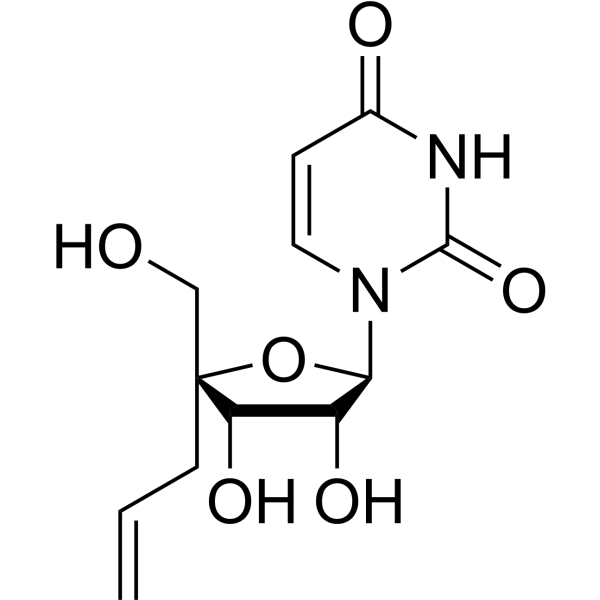
4′-C-2-Propen-1-yluridine is a uridine analog. Uridine has potential antiepileptic effects, and its analogs can be used to study anticonvulsant and anxiolytic activities, as well as to develop new antihypertensive agents .
|
-
-
- HY-152683
-
|
|
Nucleoside Antimetabolite/Analog
|
Others
|
|
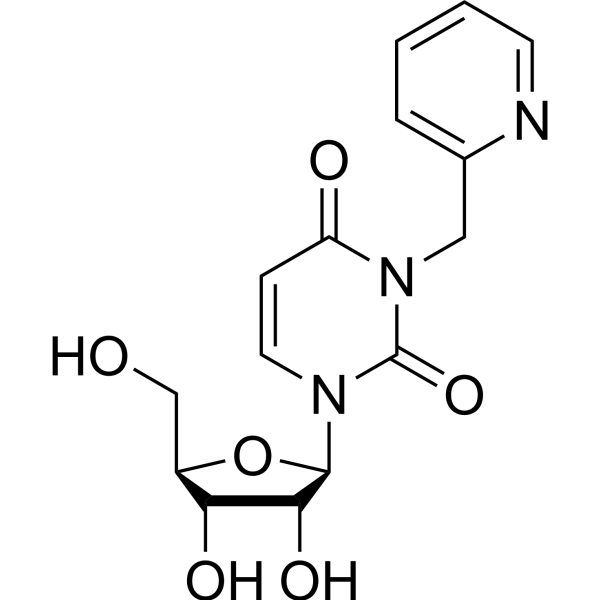
N3-[(Pyrid-2-yl)methyl]uridine is a uridine analogue. Uridine has potential antiepileptic effects, and its analogs can be used to study anticonvulsant and anxiolytic activities, as well as to develop new antihypertensive agents .
|
-
-
- HY-152574
-
|
|
Nucleoside Antimetabolite/Analog
|
Others
|
|
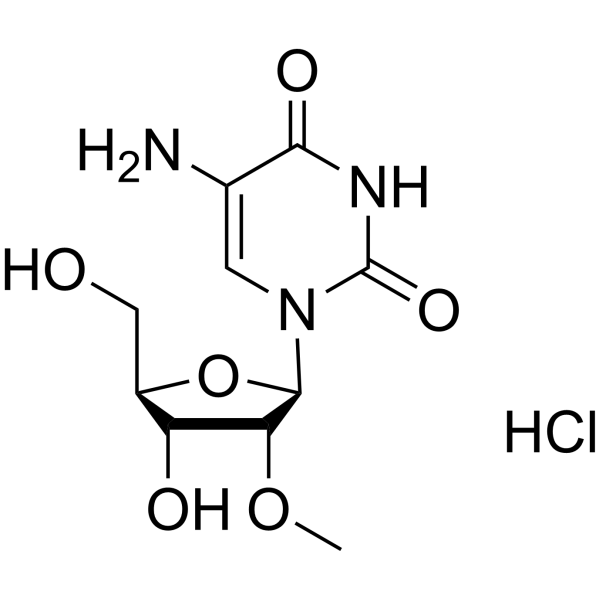
5-Amino-2’-deoxy-2’-O-methyluridine hydrochloride is a uridine analogue. Uridine has potential antiepileptic effects, and its analogs can be used to study anticonvulsant and anxiolytic activities, as well as to develop new antihypertensive agents .
|
-
- HY-152674
-
|
|
Nucleoside Antimetabolite/Analog
|
Others
|
|
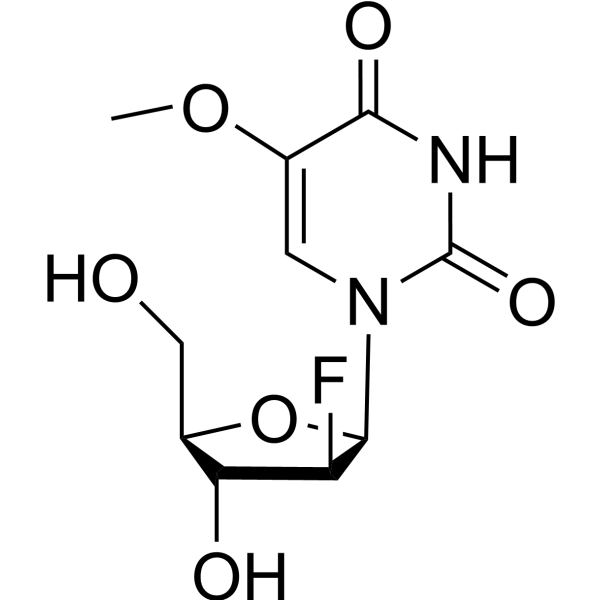
2′-Deoxy-2′-fluoro-5-methoxy-arabinouridine is a uridine analogue. Uridine has potential antiepileptic effects, and its analogs can be used to study anticonvulsant and anxiolytic activities, as well as to develop new antihypertensive agents .
|
-
- HY-154560
-
|
|
Nucleoside Antimetabolite/Analog
|
Cancer
|
|
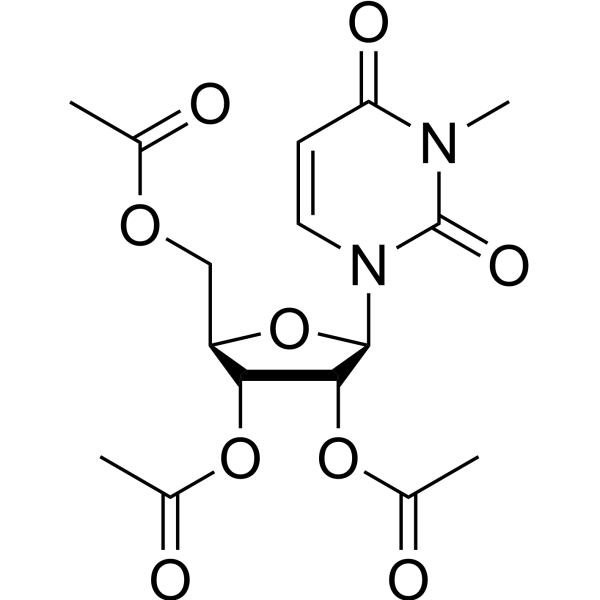
2’,3’,5’-Tri-O-acetyl-N3-methyluridine is a uridine analog. Uridine has potential antiepileptic effects, and its analogs can be used to study anticonvulsant and anxiolytic activities, as well as to develop new antihypertensive agents .
|
-
- HY-B0339S
-
-
- HY-152363
-
|
|
Nucleoside Antimetabolite/Analog
|
Others
|
|
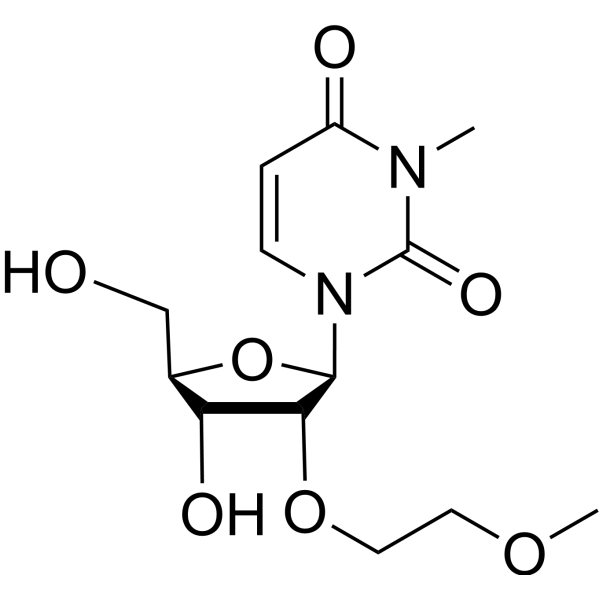
N3-Methyl-2’-O-(2-methoxyethyl)uridine is a uridine analogue. Uridine has potential antiepileptic effects, and its analogs can be used to study anticonvulsant and anxiolytic activities, as well as to develop new antihypertensive agents .
|
-
- HY-154173
-
|
|
Nucleoside Antimetabolite/Analog
|
Cancer
|
|
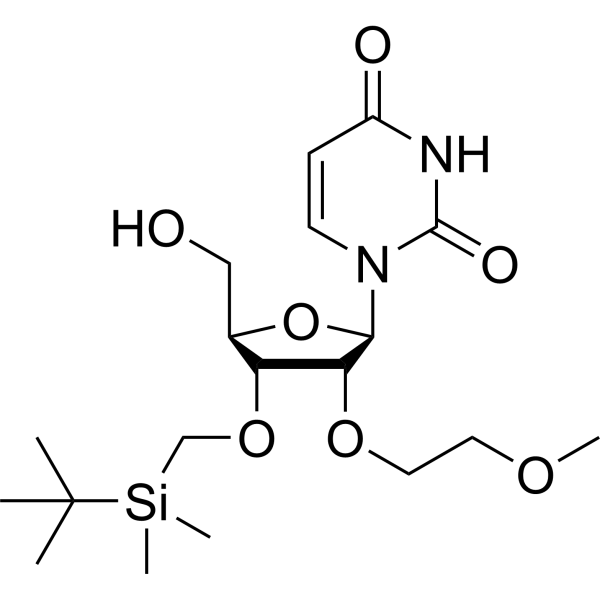
3’-O-(t-Butyldimethylsilyl)-2’-O-(2-methoxyethyl) uridine is a uridine analog. Uridine has potential antiepileptic effects, and its analogs can be used to study anticonvulsant and anxiolytic activities, as well as to develop new antihypertensive agents .
|
-
- HY-154813
-
|
|
Nucleoside Antimetabolite/Analog
|
Others
|
|
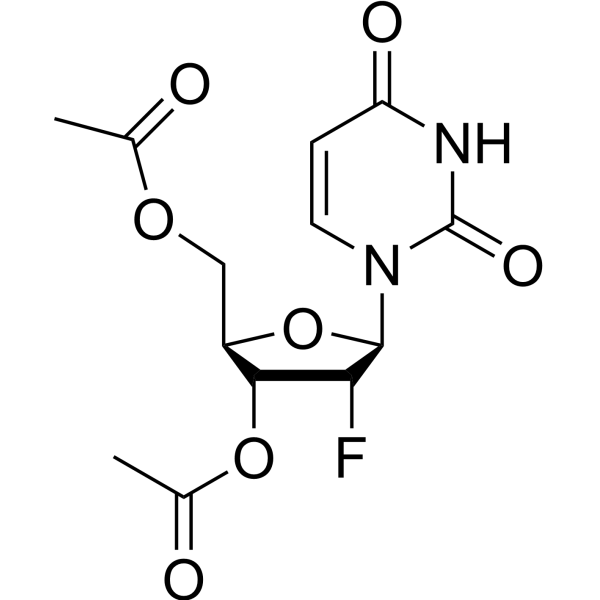
3′,5′-Di-O-acetyl-2′-deoxy-2′-fluorouridine is a uridine analog. Uridine has potential antiepileptic effects, and its analogs can be used to study anticonvulsant and anxiolytic activities, as well as to develop new antihypertensive agents .
|
-
- HY-49199
-
|
|
Nucleoside Antimetabolite/Analog
|
Cancer
|
|
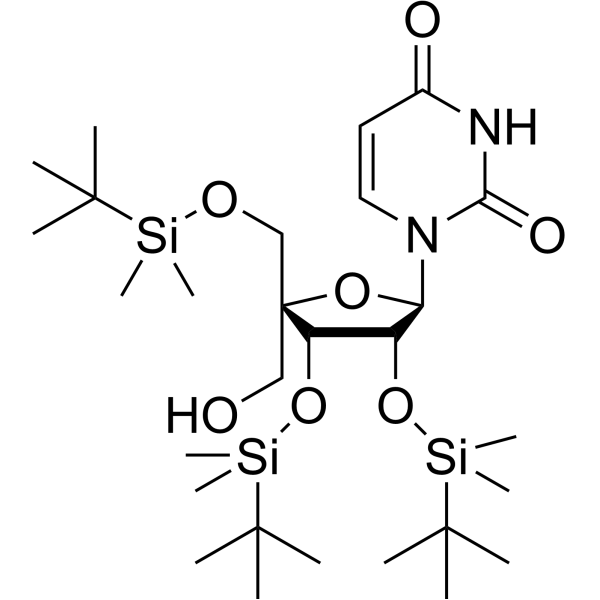
2',3',5'-Tri-O-(t-butyldimethylsilyl)-4'-C-hydroxymethyl uridine is a uridine analog. Uridine has potential antiepileptic effects, and its analogs can be used to study anticonvulsant and anxiolytic activities, as well as to develop new antihypertensive agents .
|
-
- HY-154410
-
|
|
Nucleoside Antimetabolite/Analog
Phosphoramidites
|
Cancer
|
|
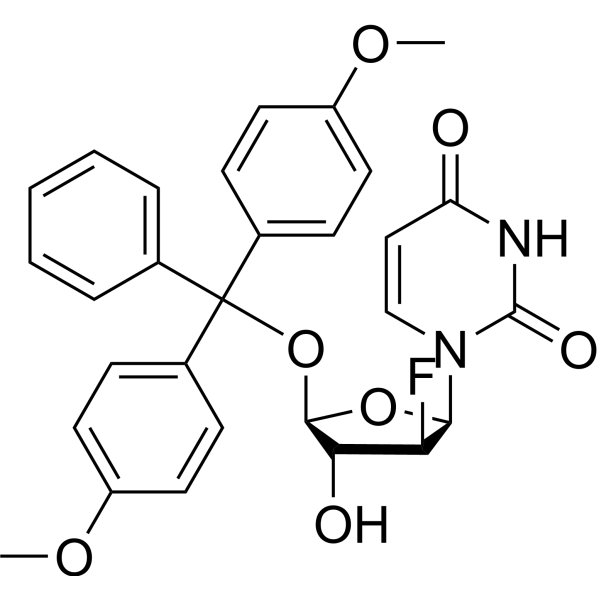
5’-O-DMT-2’-deoxy-2’-fluoro-β-D-arabinouridine is a uridine analog. Uridine has potential antiepileptic effects, and its analogs can be used to study anticonvulsant and anxiolytic activities, as well as to develop new antihypertensive agents .
|
-
- HY-152691
-
|
|
Nucleoside Antimetabolite/Analog
|
Others
|
|
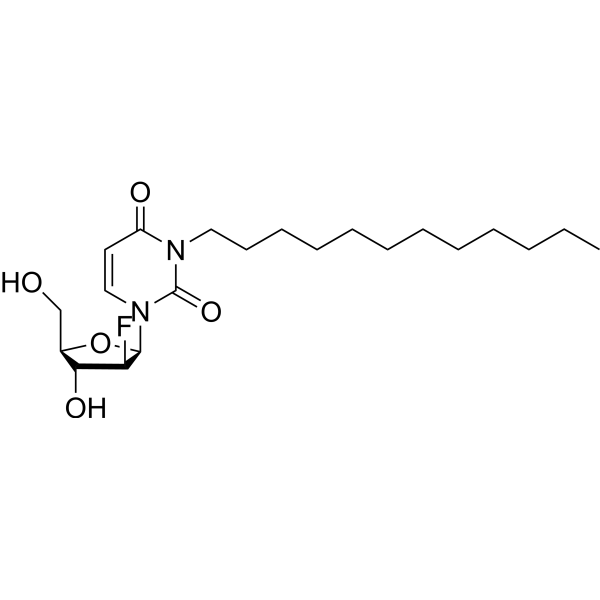
2’-Deoxy-2’-fluoro-N3-(n-dodecyl)-beta-D-arabinouridine is a uridine analogue. Uridine has potential antiepileptic effects, and its analogs can be used to study anticonvulsant and anxiolytic activities, as well as to develop new antihypertensive agents .
|
-
- HY-154175
-
|
|
Nucleoside Antimetabolite/Analog
|
Others
|
|
1-[6-(Diethoxyphosphinyl)-2-O-(2-methoxyethyl)-β-D-ribo-hexofuranosyl]uracil is a uridine analog. Uridine has potential antiepileptic effects, and its analogs can be used to study anticonvulsant and anxiolytic activities, as well as to develop new antihypertensive agents .
|
-
![1-[6-(Diethoxyphosphinyl)-2-O-(2-methoxyethyl)-β-D-ribo-hexofuranosyl]uracil](//file.medchemexpress.com/product_pic/hy-154175.gif)
- HY-152792
-
|
|
Nucleoside Antimetabolite/Analog
|
Others
|
|
2’-Deoxy-2’-fluoro-N3-[(pyrid-2-yl)methyl]uridine is a uridine analogue. Uridine has potential antiepileptic effects, and its analogs can be used to study anticonvulsant and anxiolytic activities, as well as to develop new antihypertensive agents .
|
-
![2’-Deoxy-2’-fluoro-N3-[(pyrid-2-yl)methyl]uridine](//file.medchemexpress.com/product_pic/hy-152792.gif)
- HY-154552
-
|
|
Nucleoside Antimetabolite/Analog
|
Cancer
|
|
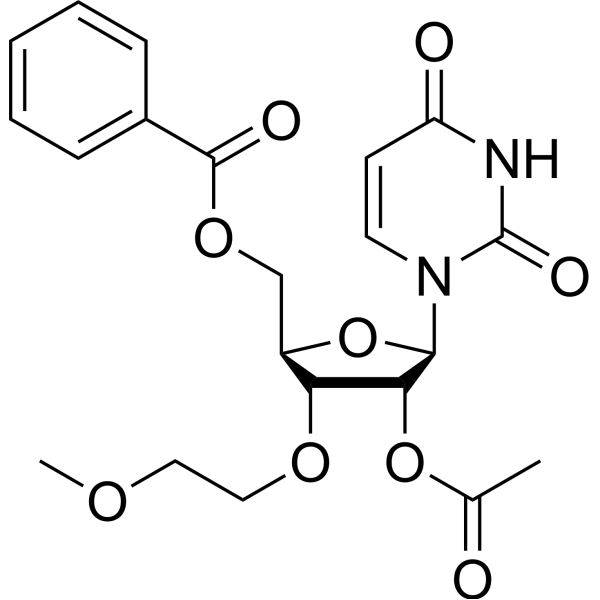
2’-O-Acetyl-5’-O-benzoyl-3’-O-(2-methoxyethyl) uridine is a uridine analog. Uridine has potential antiepileptic effects, and its analogs can be used to study anticonvulsant and anxiolytic activities, as well as to develop new antihypertensive agents .
|
-
- HY-154647
-
|
|
Nucleoside Antimetabolite/Analog
|
Cancer
|
|
N3-(2S)-[2-(tert-Butoxycarbonyl)amino-3-(tert-butoxy carbonyl)]propyluridine is a uridine analog. Uridine has potential antiepileptic effects, and its analogs can be used to study anticonvulsant and anxiolytic activities, as well as to develop new antihypertensive agents .
|
-
![N3-(2S)-[2-(tert-Butoxycarbonyl)amino-3-(tert-butoxy carbonyl)]propyluridine](//file.medchemexpress.com/product_pic/hy-154647.gif)
- HY-154652
-
|
|
Nucleoside Antimetabolite/Analog
|
Cancer
|
|
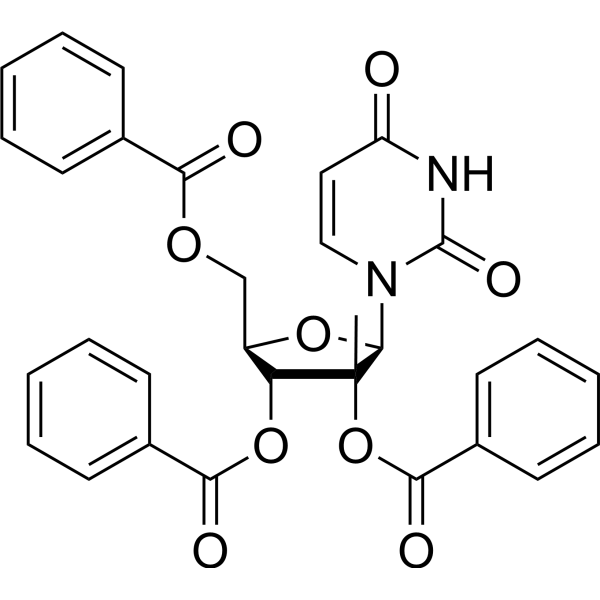
1-(2,3,5-Tri-O-benzoyl-2-C-methyl-β-D-ribofuranosyl)-2,4(1H,3H)-pyrimidinedione is a uridine analog. Uridine has potential antiepileptic effects, and its analogs can be used to study anticonvulsant and anxiolytic activities, as well as to develop new antihypertensive agents .
|
-
- HY-152476
-
|
|
Nucleoside Antimetabolite/Analog
|
Cancer
|
|
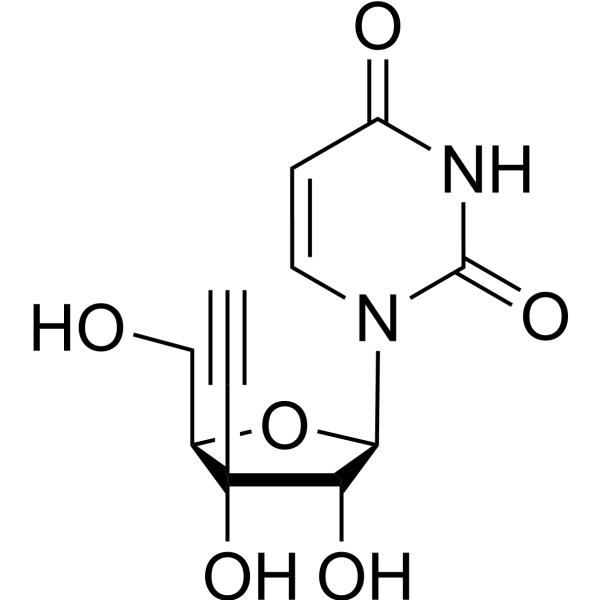
3’-β-C-Ethynyluridine is a uridine analog. Uridine has potential antiepileptic effects, and its analogs can be used to study anticonvulsant and anxiolytic activities, as well as to develop new antihypertensive agents . 3’-β-C-Ethynyluridine is a click chemistry reagent, it contains an Alkyne group and can undergo copper-catalyzed azide-alkyne cycloaddition (CuAAc) with molecules containing Azide groups.
|
-
- HY-154736
-
|
|
Nucleoside Antimetabolite/Analog
|
Cancer
|
|
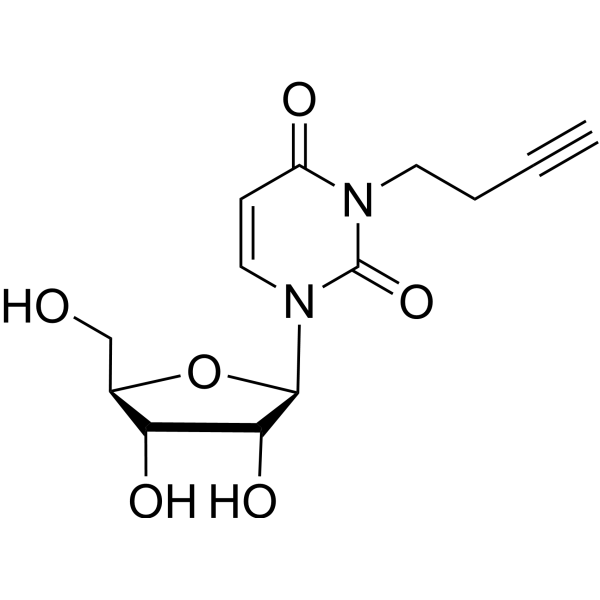
N3-(Butyn-3-yl)uridine is a uridine analog. Uridine has potential antiepileptic effects, and its analogs can be used to study anticonvulsant and anxiolytic activities, as well as to develop new antihypertensive agents . N3-(Butyn-3-yl)uridine is a click chemistry reagent, it contains an Alkyne group and can undergo copper-catalyzed azide-alkyne cycloaddition (CuAAc) with molecules containing Azide groups.
|
-
- HY-77650
-
|
4'-Azidouridine
|
Nucleoside Antimetabolite/Analog
|
Others
|
|
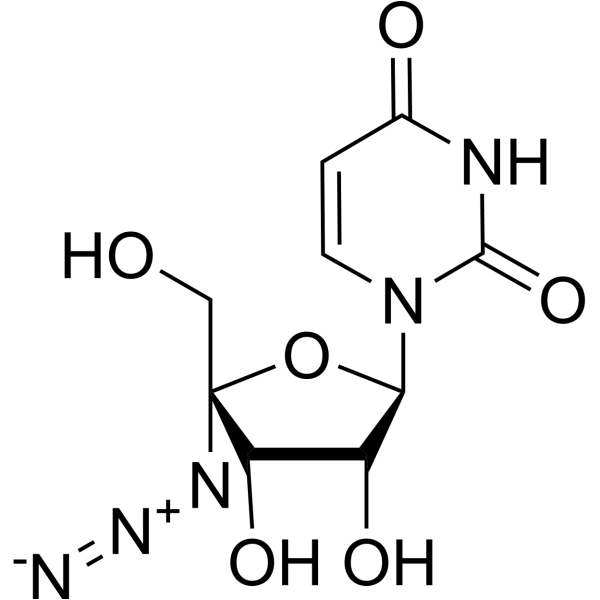
4'-C-azidouridine (4'-Azidouridine) is a uridine analogue. Uridine has potential antiepileptic effects, and its analogs can be used to study anticonvulsant and anxiolytic activities, as well as to develop new antihypertensive agents . 4'-C-Azidouridine is a click chemistry reagent, it contains an Azide group and can undergo copper-catalyzed azide-alkyne cycloaddition reaction (CuAAc) with molecules containing Alkyne groups. It can also undergo strain-promoted alkyne-azide cycloaddition (SPAAC) reactions with molecules containing DBCO or BCN groups.
|
-
- HY-152985
-
|
|
Nucleoside Antimetabolite/Analog
|
Others
|
|
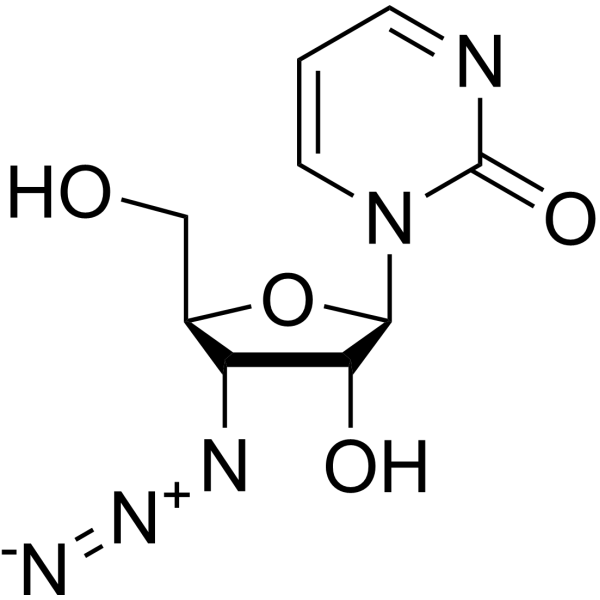
6-Chloro-N1-(trimethylsilylethoxymethyl)pseudouridine is a uridine analog. Uridine has potential antiepileptic effects, and its analogs can be used to study anticonvulsant and anxiolytic activities, as well as to develop new antihypertensive agents . 3’-Azido-3’-deoxy-4-deoxyuridine is a click chemistry reagent, it contains an Azide group and can undergo copper-catalyzed azide-alkyne cycloaddition reaction (CuAAc) with molecules containing Alkyne groups. It can also undergo strain-promoted alkyne-azide cycloaddition (SPAAC) reactions with molecules containing DBCO or BCN groups.
|
-
- HY-154590
-
|
|
Nucleoside Antimetabolite/Analog
|
Cancer
|
|
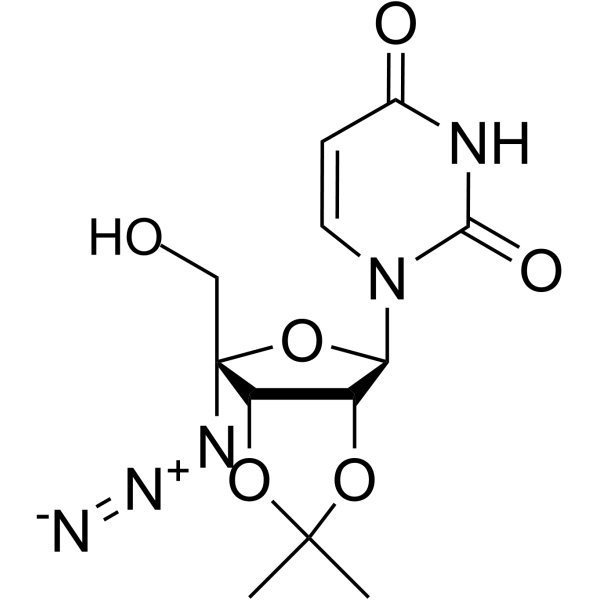
2’,3’-Di-O-isopropylidene-4’-alpha-C-azidouridine is a uridine analog. Uridine has potential antiepileptic effects, and its analogs can be used to study anticonvulsant and anxiolytic activities, as well as to develop new antihypertensive agents . 2’,3’-Di-O-isopropylidene-4’-alpha-C-azidouridine is a click chemistry reagent, it contains an Azide group and can undergo copper-catalyzed azide-alkyne cycloaddition reaction (CuAAc) with molecules containing Alkyne groups. It can also undergo strain-promoted alkyne-azide cycloaddition (SPAAC) reactions with molecules containing DBCO or BCN groups.
|
-
- HY-W377455
-
|
|
Nucleoside Antimetabolite/Analog
|
Others
|
|
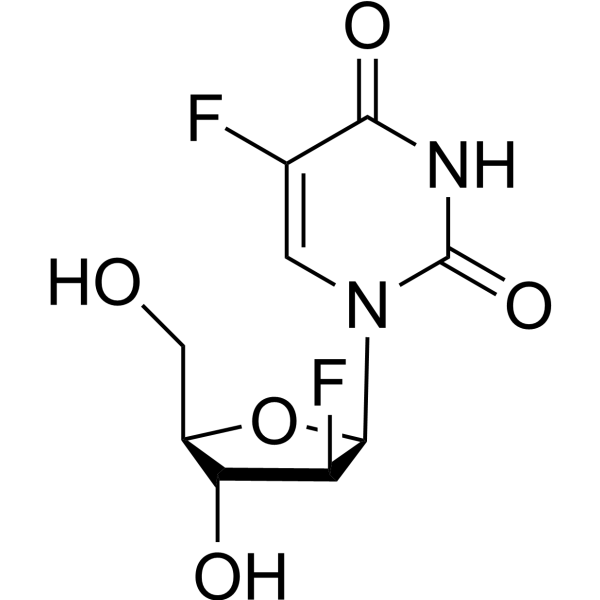
5-Fluoro-1-((2R,3S,4R,5R)-3-fluoro-4-hydroxy-5-(hydroxymethyl)tetrahydrofuran-2-yl)pyrimidine-2,4(1H,3H)-dione (2',5-difluoro-2'-deoxy-1-arabinosyluracil) is a uridine analogue. Uridine has potential antiepileptic effects, and its analogs can be used to study anticonvulsant and anxiolytic activities, as well as to develop new antihypertensive agents .
|
-
- HY-154357
-
|
|
Nucleoside Antimetabolite/Analog
|
Cancer
|
|
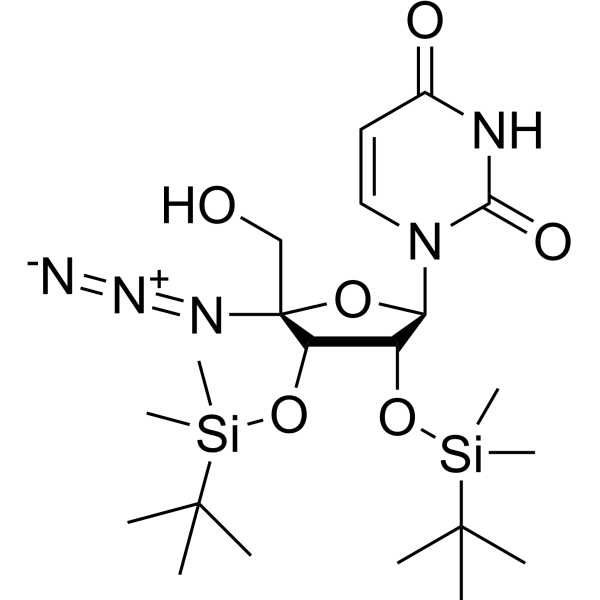
4’-alpha-C-Azido-2’,3’-bis(O-t-butyldimethylsilyl)uridine is a uridine analog. Uridine has potential antiepileptic effects, and its analogs can be used to study anticonvulsant and anxiolytic activities, as well as to develop new antihypertensive agents . 4’-alpha-C-Azido-2’,3’-bis(O-t-butyldimethylsilyl)uridine is a click chemistry reagent, it contains an Azide group and can undergo copper-catalyzed azide-alkyne cycloaddition reaction (CuAAc) with molecules containing Alkyne groups. It can also undergo strain-promoted alkyne-azide cycloaddition (SPAAC) reactions with molecules containing DBCO or BCN groups.
|
-
- HY-105340
-
|
|
iGluR
|
Neurological Disease
|
|
MDL 27266 is an orally active NMDA receptor antagonist with neuroprotective effect. MDL 27266 is a broad-spectrum anticonvulsant agent .
|
-

- HY-169651
-
|
|
GABA Receptor
|
Neurological Disease
|
|
GABA-IN-4 (Compound 17) is a N-(indol-3-ylglyoxylyl)benzylamine derivative. GABA-IN-4 exhibits high affinity for the benzodiazepine receptor (BzR) (binding site in GABAA receptor complex) with Ki value of 67 nM. Benzodiazepines are widely used as antianxiety, sedative-hypnotic and anticonvulsant agents .
|
-

- HY-103504R
-
|
|
Reference Standards
GABA Receptor
|
Neurological Disease
|
|
(S)-SNAP5114 (Standard) is the analytical standard of (S)-SNAP5114 (HY-103504). This product is intended for research and analytical applications. (S)-SNAP5114 is a selective GABA transport inhibitor, with IC50 values of 5 μM and 21 μM for hGAT-3 and rGAT-2, respectively. (S)-SNAP5114 is an anticonvulsant agent .
|
-

- HY-W550494
-
|
|
Others
|
Neurological Disease
|
|
1-(Pyridin-4-yl)heptan-1-one (Compound R=n-C₆H₁₃) is an anticonvulsant agent. 1-(Pyridin-4-yl)heptan-1-one can protect mice from electroshock-induced convulsions. 1-(Pyridin-4-yl)heptan-1-one is promising for research of convulsion-related diseases such as epilepsy .
|
-

| Cat. No. |
Product Name |
Type |
-
- HY-W094475D
-
|
Epsom salts, meets analytical specification of Ph. Eur. BP USP FCC
|
Biochemical Assay Reagents
|
|
Magnesium sulfate heptahydrate, meets analytical specification of Ph. Eur. BP USP FCC (Epsom salts, meets analytical specification of Ph. Eur. BP USP FCC) is currently the anticonvulsant of choice for the prevention and control of eclamptic fits and is also widely used as a tocolytic agent .
|
-
- HY-W094475E
-
|
Epsom salts (Pharmaceutical primary standard, USP)
|
Biochemical Assay Reagents
|
|
Magnesium sulfate heptahydrate, United States Pharmacopeia (USP) Reference Standard (Epsom salts (Pharmaceutical primary standard, USP)) is currently the anticonvulsant of choice for the prevention and control of eclamptic fits and is also widely used as a tocolytic agent .
|
| Cat. No. |
Product Name |
Chemical Structure |
-
- HY-B0246S
-
|
|
|
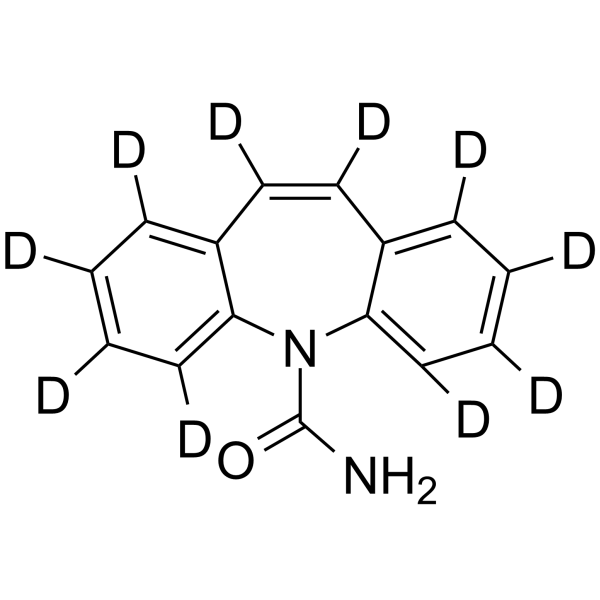
Carbamazepine-d10 is the deuterium labeled Carbamazepine. Carbamazepine (CBZ), a sodium channel blocker, is an anticonvulsant agent .
|
-
-
- HY-B0339S
-
|
|
|
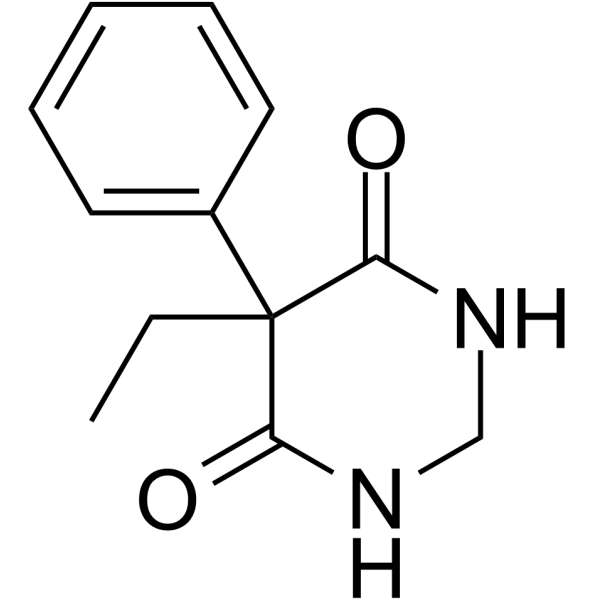
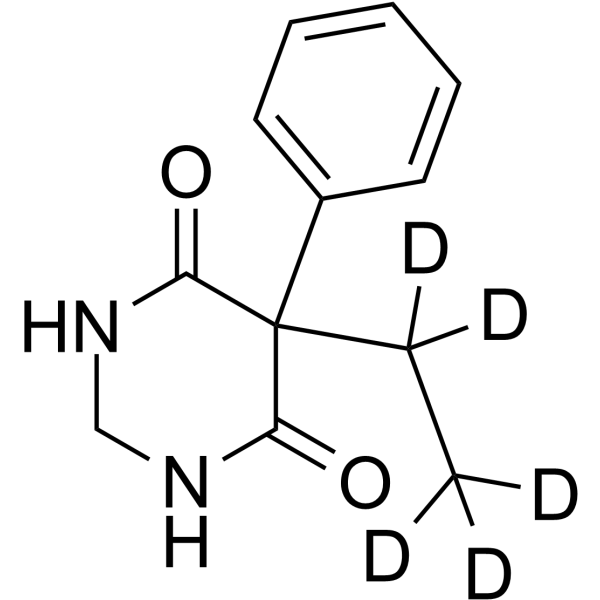
Primidone-d5 is the deuterium labeled Primidone. Primidone is the orally active inhibitor for TRPM3 (IC50 = 0.6 μM), RIP kinase and voltage-gated sodium channel, and the antagonist for GABA receptor. Primidone can be used as the analgesic and anticonvulsant agent .
|
-
| Cat. No. |
Product Name |
|
Classification |
-
- HY-152782
-
|
|
|
Azide
|
|
4’-Azido-2’-deoxy-2’-fluoro-beta-D-arabinouridine is a uridine analogue. Uridine has potential antiepileptic effects, and its analogs can be used to study anticonvulsant and anxiolytic activities, as well as to develop new antihypertensive agents . 4’-Azido-2’-deoxy-2’-fluoro-beta-D-arabinouridine is a click chemistry reagent, it contains an Azide group and can undergo copper-catalyzed azide-alkyne cycloaddition reaction (CuAAc) with molecules containing Alkyne groups. It can also undergo strain-promoted alkyne-azide cycloaddition (SPAAC) reactions with molecules containing DBCO or BCN groups.
|
-
- HY-152476
-
|
|
|
Alkynes
|
|
3’-β-C-Ethynyluridine is a uridine analog. Uridine has potential antiepileptic effects, and its analogs can be used to study anticonvulsant and anxiolytic activities, as well as to develop new antihypertensive agents . 3’-β-C-Ethynyluridine is a click chemistry reagent, it contains an Alkyne group and can undergo copper-catalyzed azide-alkyne cycloaddition (CuAAc) with molecules containing Azide groups.
|
-
- HY-154736
-
|
|
|
Alkynes
|
|
N3-(Butyn-3-yl)uridine is a uridine analog. Uridine has potential antiepileptic effects, and its analogs can be used to study anticonvulsant and anxiolytic activities, as well as to develop new antihypertensive agents . N3-(Butyn-3-yl)uridine is a click chemistry reagent, it contains an Alkyne group and can undergo copper-catalyzed azide-alkyne cycloaddition (CuAAc) with molecules containing Azide groups.
|
-
- HY-152985
-
|
|
|
Azide
|
|
6-Chloro-N1-(trimethylsilylethoxymethyl)pseudouridine is a uridine analog. Uridine has potential antiepileptic effects, and its analogs can be used to study anticonvulsant and anxiolytic activities, as well as to develop new antihypertensive agents . 3’-Azido-3’-deoxy-4-deoxyuridine is a click chemistry reagent, it contains an Azide group and can undergo copper-catalyzed azide-alkyne cycloaddition reaction (CuAAc) with molecules containing Alkyne groups. It can also undergo strain-promoted alkyne-azide cycloaddition (SPAAC) reactions with molecules containing DBCO or BCN groups.
|
-
- HY-154590
-
|
|
|
Azide
|
|
2’,3’-Di-O-isopropylidene-4’-alpha-C-azidouridine is a uridine analog. Uridine has potential antiepileptic effects, and its analogs can be used to study anticonvulsant and anxiolytic activities, as well as to develop new antihypertensive agents . 2’,3’-Di-O-isopropylidene-4’-alpha-C-azidouridine is a click chemistry reagent, it contains an Azide group and can undergo copper-catalyzed azide-alkyne cycloaddition reaction (CuAAc) with molecules containing Alkyne groups. It can also undergo strain-promoted alkyne-azide cycloaddition (SPAAC) reactions with molecules containing DBCO or BCN groups.
|
-
- HY-154357
-
|
|
|
Azide
|
|
4’-alpha-C-Azido-2’,3’-bis(O-t-butyldimethylsilyl)uridine is a uridine analog. Uridine has potential antiepileptic effects, and its analogs can be used to study anticonvulsant and anxiolytic activities, as well as to develop new antihypertensive agents . 4’-alpha-C-Azido-2’,3’-bis(O-t-butyldimethylsilyl)uridine is a click chemistry reagent, it contains an Azide group and can undergo copper-catalyzed azide-alkyne cycloaddition reaction (CuAAc) with molecules containing Alkyne groups. It can also undergo strain-promoted alkyne-azide cycloaddition (SPAAC) reactions with molecules containing DBCO or BCN groups.
|
| Cat. No. |
Product Name |
|
Classification |
-
- HY-152358
-
|
|
|
Nucleoside Analogs
Uridine
|
|
N3-Methyl-2’-O-methyluridine is a uridine analogue. Uridine has potential antiepileptic effects, and its analogs can be used to study anticonvulsant and anxiolytic activities, as well as to develop new antihypertensive agents .
|
-
- HY-134337
-
|
|
|
Phosphoramidites
Uracil
|
|
5'-O-DMTr-3'-O-methyl uridine-3'-CED-phosphoramidite is a uridine analog. Uridine has potential antiepileptic effects, and its analogs can be used to study anticonvulsant and anxiolytic activities, as well as to develop new antihypertensive agents .
|
-
- HY-152732
-
|
|
|
Nucleoside Analogs
Uridine
|
|
6-Methyluridine is a uridine analogue. Uridine has potential antiepileptic effects, and its analogs can be used to study anticonvulsant and anxiolytic activities, as well as to develop new antihypertensive agents .
|
-
- HY-154285
-
|
|
|
Nucleoside Analogs
Uridine
|
|
3’-O-(2-Methoxyethyl) uridine is a uridine analog. Uridine has potential antiepileptic effects, and its analogs can be used to study anticonvulsant and anxiolytic activities, as well as to develop new antihypertensive agents .
|
-
- HY-154466
-
|
|
|
Nucleoside Analogs
Uridine
|
|
5’-O-(4,4’-Dimethoxytrityl)-3’-O-methyluridine is a uridine analog. Uridine has potential antiepileptic effects, and its analogs can be used to study anticonvulsant and anxiolytic activities, as well as to develop new antihypertensive agents .
|
-
- HY-48973
-
|
|
|
Phosphoramidites
Uracil
|
|
2'-Fluoro-2'-deoxy-ara-U-3'-phosphoramidite is a uridine analog. Uridine has potential antiepileptic effects, and its analogs can be used to study anticonvulsant and anxiolytic activities, as well as to develop new antihypertensive agents .
|
-
- HY-154358
-
|
|
|
Nucleoside Analogs
Uridine
|
|
4’-alpha-C-Allyl-2’,3’-bis(O-t-butyldimethylsilyl) uridine is a uridine analog. Uridine has potential antiepileptic effects, and its analogs can be used to study anticonvulsant and anxiolytic activities, as well as to develop new antihypertensive agents .
|
-
- HY-154492
-
|
|
|
Nucleoside Analogs
Uridine
|
|
2’,3’-Bis(O-t-butyldimethylsilyl)-4’,5’-didehydro-5’-deoxyuridine is a uridine analog. Uridine has potential antiepileptic effects, and its analogs can be used to study anticonvulsant and anxiolytic activities, as well as to develop new antihypertensive agents .
|
-
- HY-154582
-
|
|
|
Nucleoside Analogs
Uridine
|
|
5-Naphthyl-beta-methylaminocarbony-3’-O-acetyl-2’-O-methyl-5’-O-DMTr-uridine is a uridine analog. Uridine has potential antiepileptic effects, and its analogs can be used to study anticonvulsant and anxiolytic activities, as well as to develop new antihypertensive agents .
|
-
- HY-152782
-
|
|
|
Nucleoside Analogs
Uridine
|
|
4’-Azido-2’-deoxy-2’-fluoro-beta-D-arabinouridine is a uridine analogue. Uridine has potential antiepileptic effects, and its analogs can be used to study anticonvulsant and anxiolytic activities, as well as to develop new antihypertensive agents . 4’-Azido-2’-deoxy-2’-fluoro-beta-D-arabinouridine is a click chemistry reagent, it contains an Azide group and can undergo copper-catalyzed azide-alkyne cycloaddition reaction (CuAAc) with molecules containing Alkyne groups. It can also undergo strain-promoted alkyne-azide cycloaddition (SPAAC) reactions with molecules containing DBCO or BCN groups.
|
-
- HY-W020098
-
|
|
|
Nucleoside Analogs
Uridine
|
|
2'-C-methyluridine is a uridine analog. Uridine has potential antiepileptic effects, and its analogs can be used to study anticonvulsant and anxiolytic activities, as well as to develop new antihypertensive agents .
|
-
- HY-154488
-
|
|
|
Nucleoside Analogs
Uridine
|
|
3′-O-[(1,1-Dimethylethyl)dimethylsilyl]-2′-O-methyluridine is a uridine analog. Uridine has potential antiepileptic effects, and its analogs can be used to study anticonvulsant and anxiolytic activities, as well as to develop new antihypertensive agents .
|
-
- HY-154517
-
|
|
|
Nucleoside Analogs
Uridine
|
|
N3-Cyanoethyl-5’-O-(4,4’-dimethoxytrityl)-2’-O-methyluridine is a uridine analog. Uridine has potential antiepileptic effects, and its analogs can be used to study anticonvulsant and anxiolytic activities, as well as to develop new antihypertensive agents .
|
-
- HY-152755
-
|
|
|
Nucleoside Analogs
Uridine
|
|
4’-Cyanouridine is a uridine analogue. Uridine has potential antiepileptic effects, and its analogs can be used to study anticonvulsant and anxiolytic activities, as well as to develop new antihypertensive agents .
|
-
- HY-152764
-
|
|
|
Nucleoside Analogs
Uridine
|
|
4’-α-C-Methyluridine is a uridine analogue. Uridine has potential antiepileptic effects, and its analogs can be used to study anticonvulsant and anxiolytic activities, as well as to develop new antihypertensive agents .
|
-
- HY-152777
-
|
|
|
Nucleoside Analogs
Uridine
|
|
5’(R)-C-Methyluridine is a uridine analogue. Uridine has potential antiepileptic effects, and its analogs can be used to study anticonvulsant and anxiolytic activities, as well as to develop new antihypertensive agents .
|
-
- HY-152299
-
|
|
|
Nucleoside Analogs
Uridine
|
|
5-(t-Butyloxycarbonylmethoxy)uridine is a uridine analogue. Uridine has potential antiepileptic effects, and its analogs can be used to study anticonvulsant and anxiolytic activities, as well as to develop new antihypertensive agents .
|
-
- HY-154735
-
|
|
|
Nucleoside Analogs
Uridine
|
|
N3-Allyluridine is a uridine analog. Uridine has potential antiepileptic effects, and its analogs can be used to study anticonvulsant and anxiolytic activities, as well as to develop new antihypertensive agents .
|
-
- HY-152388
-
|
|
|
Nucleoside Analogs
Uridine
|
|
3’-beta-C-Methyluridine is a uridine analogue. Uridine has potential antiepileptic effects, and its analogs can be used to study anticonvulsant and anxiolytic activities, as well as to develop new antihypertensive agents .
|
-
- HY-152665
-
|
|
|
Nucleoside Analogs
Uridine
|
|
1-(β-D-Xylofuranosyl)uracil is a uridine analog. Uridine has potential antiepileptic effects, and its analogs can be used to study anticonvulsant and anxiolytic activities, as well as to develop new antihypertensive agents .
|
-
- HY-152970
-
|
|
|
Phosphoramidites
Uracil
|
|
7'-O-DMT-morpholino uracil is a uridine analog. Uridine has potential antiepileptic effects, and its analogs can be used to study anticonvulsant and anxiolytic activities, as well as to develop new antihypertensive agents .
|
-
- HY-154734
-
|
|
|
Nucleoside Analogs
Uridine
|
|
N3-(4-Nitrobenzyl)uridine is a uridine analog. Uridine has potential antiepileptic effects, and its analogs can be used to study anticonvulsant and anxiolytic activities, as well as to develop new antihypertensive agents .
|
-
- HY-W557556
-
|
|
|
Nucleoside Analogs
Uridine
|
|
2',5'-Bis-O-(triphenylMethyl)uridine is a uridine analog. Uridine has potential antiepileptic effects, and its analogs can be used to study anticonvulsant and anxiolytic activities, as well as to develop new antihypertensive agents .
|
-
- HY-152677
-
|
|
|
Nucleoside Analogs
Uridine
|
|
N3-(2-Methoxy)ethyluridine is a uridine analogue. Uridine has potential antiepileptic effects, and its analogs can be used to study anticonvulsant and anxiolytic activities, as well as to develop new antihypertensive agents .
|
-
- HY-154217
-
|
|
|
Nucleoside Analogs
Uridine
|
|
3′,5′-Bis-O-(triphenylmethyl)uridine is a uridine analog. Uridine has potential antiepileptic effects, and its analogs can be used to study anticonvulsant and anxiolytic activities, as well as to develop new antihypertensive agents .
|
-
- HY-152529
-
|
|
|
Nucleoside Analogs
Uridine
|
|
4’-C-Methyl-5-methoxyuridine is a uridine analogue. Uridine has potential antiepileptic effects, and its analogs can be used to study anticonvulsant and anxiolytic activities, as well as to develop new antihypertensive agents .
|
-
- HY-152522
-
|
|
|
Nucleoside Analogs
Uridine
|
|
5-Fluoro-4’-C-methyluridine is a uridine analogue. Uridine has potential antiepileptic effects, and its analogs can be used to study anticonvulsant and anxiolytic activities, as well as to develop new antihypertensive agents .
|
-
- HY-154738
-
|
|
|
Nucleoside Analogs
Uridine
|
|
N3-[3-(tert-Butoxycarbonyl)amino]propyluridine is a uridine analog. Uridine has potential antiepileptic effects, and its analogs can be used to study anticonvulsant and anxiolytic activities, as well as to develop new antihypertensive agents .
|
-
- HY-152783
-
|
|
|
Nucleoside Analogs
Uridine
|
|
5’(R)-C-Methyl-5-fluorouridine is a uridine analogue. Uridine has potential antiepileptic effects, and its analogs can be used to study anticonvulsant and anxiolytic activities, as well as to develop new antihypertensive agents .
|
-
- HY-152969
-
|
|
|
Nucleoside Analogs
Uridine
|
|
6-Chloro-N1-(trimethylsilylethoxymethyl)pseudouridine is a uridine analog. Uridine has potential antiepileptic effects, and its analogs can be used to study anticonvulsant and anxiolytic activities, as well as to develop new antihypertensive agents .
|
-
- HY-152779
-
|
|
|
Nucleoside Analogs
Uridine
|
|
5-Methoxy-5’(R)-C-methyluridine is a uridine analogue. Uridine has potential antiepileptic effects, and its analogs can be used to study anticonvulsant and anxiolytic activities, as well as to develop new antihypertensive agents .
|
-
- HY-152798
-
|
|
|
Nucleoside Analogs
Uridine
|
|
5-Iodo-2’-β-C-methyl uridine is a uridine analogue. Uridine has potential antiepileptic effects, and its analogs can be used to study anticonvulsant and anxiolytic activities, as well as to develop new antihypertensive agents .
|
-
- HY-154737
-
|
|
|
Nucleoside Analogs
Uridine
|
|
N3-[(Pyrid-4-yl)methyl]uridine is a uridine analog. Uridine has potential antiepileptic effects, and its analogs can be used to study anticonvulsant and anxiolytic activities, as well as to develop new antihypertensive agents .
|
-
- HY-152681
-
|
|
|
Nucleoside Analogs
Uridine
|
|
N3-[(Tetrahydro-2-furanyl)methyl]uridine is a uridine analogue. Uridine has potential antiepileptic effects, and its analogs can be used to study anticonvulsant and anxiolytic activities, as well as to develop new antihypertensive agents .
|
-
- HY-152463
-
|
|
|
Nucleoside Analogs
Uridine
|
|
4′-C-2-Propen-1-yluridine is a uridine analog. Uridine has potential antiepileptic effects, and its analogs can be used to study anticonvulsant and anxiolytic activities, as well as to develop new antihypertensive agents .
|
-
- HY-152683
-
|
|
|
Nucleoside Analogs
Uridine
|
|
N3-[(Pyrid-2-yl)methyl]uridine is a uridine analogue. Uridine has potential antiepileptic effects, and its analogs can be used to study anticonvulsant and anxiolytic activities, as well as to develop new antihypertensive agents .
|
-
- HY-152574
-
|
|
|
Nucleoside Analogs
Uridine
|
|
5-Amino-2’-deoxy-2’-O-methyluridine hydrochloride is a uridine analogue. Uridine has potential antiepileptic effects, and its analogs can be used to study anticonvulsant and anxiolytic activities, as well as to develop new antihypertensive agents .
|
-
- HY-152674
-
|
|
|
Nucleoside Analogs
Uridine
|
|
2′-Deoxy-2′-fluoro-5-methoxy-arabinouridine is a uridine analogue. Uridine has potential antiepileptic effects, and its analogs can be used to study anticonvulsant and anxiolytic activities, as well as to develop new antihypertensive agents .
|
-
- HY-154560
-
|
|
|
Nucleoside Analogs
Uridine
|
|
2’,3’,5’-Tri-O-acetyl-N3-methyluridine is a uridine analog. Uridine has potential antiepileptic effects, and its analogs can be used to study anticonvulsant and anxiolytic activities, as well as to develop new antihypertensive agents .
|
-
- HY-152363
-
|
|
|
Nucleoside Analogs
Uridine
|
|
N3-Methyl-2’-O-(2-methoxyethyl)uridine is a uridine analogue. Uridine has potential antiepileptic effects, and its analogs can be used to study anticonvulsant and anxiolytic activities, as well as to develop new antihypertensive agents .
|
-
- HY-154173
-
|
|
|
Nucleoside Analogs
Uridine
|
|
3’-O-(t-Butyldimethylsilyl)-2’-O-(2-methoxyethyl) uridine is a uridine analog. Uridine has potential antiepileptic effects, and its analogs can be used to study anticonvulsant and anxiolytic activities, as well as to develop new antihypertensive agents .
|
-
- HY-154813
-
|
|
|
Nucleoside Analogs
Uridine
|
|
3′,5′-Di-O-acetyl-2′-deoxy-2′-fluorouridine is a uridine analog. Uridine has potential antiepileptic effects, and its analogs can be used to study anticonvulsant and anxiolytic activities, as well as to develop new antihypertensive agents .
|
-
- HY-49199
-
|
|
|
Nucleoside Analogs
Uridine
|
|
2',3',5'-Tri-O-(t-butyldimethylsilyl)-4'-C-hydroxymethyl uridine is a uridine analog. Uridine has potential antiepileptic effects, and its analogs can be used to study anticonvulsant and anxiolytic activities, as well as to develop new antihypertensive agents .
|
-
- HY-154410
-
|
|
|
Phosphoramidites
Uracil
|
|
5’-O-DMT-2’-deoxy-2’-fluoro-β-D-arabinouridine is a uridine analog. Uridine has potential antiepileptic effects, and its analogs can be used to study anticonvulsant and anxiolytic activities, as well as to develop new antihypertensive agents .
|
-
- HY-152691
-
|
|
|
Nucleoside Analogs
Uridine
|
|
2’-Deoxy-2’-fluoro-N3-(n-dodecyl)-beta-D-arabinouridine is a uridine analogue. Uridine has potential antiepileptic effects, and its analogs can be used to study anticonvulsant and anxiolytic activities, as well as to develop new antihypertensive agents .
|
-
- HY-154175
-
|
|
|
Nucleoside Analogs
Uridine
|
|
1-[6-(Diethoxyphosphinyl)-2-O-(2-methoxyethyl)-β-D-ribo-hexofuranosyl]uracil is a uridine analog. Uridine has potential antiepileptic effects, and its analogs can be used to study anticonvulsant and anxiolytic activities, as well as to develop new antihypertensive agents .
|
-
- HY-152792
-
|
|
|
Nucleoside Analogs
Uridine
|
|
2’-Deoxy-2’-fluoro-N3-[(pyrid-2-yl)methyl]uridine is a uridine analogue. Uridine has potential antiepileptic effects, and its analogs can be used to study anticonvulsant and anxiolytic activities, as well as to develop new antihypertensive agents .
|
-
- HY-154552
-
|
|
|
Nucleoside Analogs
Uridine
|
|
2’-O-Acetyl-5’-O-benzoyl-3’-O-(2-methoxyethyl) uridine is a uridine analog. Uridine has potential antiepileptic effects, and its analogs can be used to study anticonvulsant and anxiolytic activities, as well as to develop new antihypertensive agents .
|
-
- HY-154647
-
|
|
|
Nucleoside Analogs
Uridine
|
|
N3-(2S)-[2-(tert-Butoxycarbonyl)amino-3-(tert-butoxy carbonyl)]propyluridine is a uridine analog. Uridine has potential antiepileptic effects, and its analogs can be used to study anticonvulsant and anxiolytic activities, as well as to develop new antihypertensive agents .
|
-
- HY-154652
-
|
|
|
Nucleoside Analogs
|
|
1-(2,3,5-Tri-O-benzoyl-2-C-methyl-β-D-ribofuranosyl)-2,4(1H,3H)-pyrimidinedione is a uridine analog. Uridine has potential antiepileptic effects, and its analogs can be used to study anticonvulsant and anxiolytic activities, as well as to develop new antihypertensive agents .
|
- HY-152476
-
|
|
|
Nucleoside Analogs
Uridine
|
|
3’-β-C-Ethynyluridine is a uridine analog. Uridine has potential antiepileptic effects, and its analogs can be used to study anticonvulsant and anxiolytic activities, as well as to develop new antihypertensive agents . 3’-β-C-Ethynyluridine is a click chemistry reagent, it contains an Alkyne group and can undergo copper-catalyzed azide-alkyne cycloaddition (CuAAc) with molecules containing Azide groups.
|
- HY-154736
-
|
|
|
Nucleoside Analogs
Uridine
|
|
N3-(Butyn-3-yl)uridine is a uridine analog. Uridine has potential antiepileptic effects, and its analogs can be used to study anticonvulsant and anxiolytic activities, as well as to develop new antihypertensive agents . N3-(Butyn-3-yl)uridine is a click chemistry reagent, it contains an Alkyne group and can undergo copper-catalyzed azide-alkyne cycloaddition (CuAAc) with molecules containing Azide groups.
|
- HY-77650
-
|
4'-Azidouridine
|
|
Nucleoside Analogs
Uridine
|
|
4'-C-azidouridine (4'-Azidouridine) is a uridine analogue. Uridine has potential antiepileptic effects, and its analogs can be used to study anticonvulsant and anxiolytic activities, as well as to develop new antihypertensive agents . 4'-C-Azidouridine is a click chemistry reagent, it contains an Azide group and can undergo copper-catalyzed azide-alkyne cycloaddition reaction (CuAAc) with molecules containing Alkyne groups. It can also undergo strain-promoted alkyne-azide cycloaddition (SPAAC) reactions with molecules containing DBCO or BCN groups.
|
- HY-152985
-
|
|
|
Nucleoside Analogs
Uridine
|
|
6-Chloro-N1-(trimethylsilylethoxymethyl)pseudouridine is a uridine analog. Uridine has potential antiepileptic effects, and its analogs can be used to study anticonvulsant and anxiolytic activities, as well as to develop new antihypertensive agents . 3’-Azido-3’-deoxy-4-deoxyuridine is a click chemistry reagent, it contains an Azide group and can undergo copper-catalyzed azide-alkyne cycloaddition reaction (CuAAc) with molecules containing Alkyne groups. It can also undergo strain-promoted alkyne-azide cycloaddition (SPAAC) reactions with molecules containing DBCO or BCN groups.
|
- HY-154590
-
|
|
|
Nucleoside Analogs
Uridine
|
|
2’,3’-Di-O-isopropylidene-4’-alpha-C-azidouridine is a uridine analog. Uridine has potential antiepileptic effects, and its analogs can be used to study anticonvulsant and anxiolytic activities, as well as to develop new antihypertensive agents . 2’,3’-Di-O-isopropylidene-4’-alpha-C-azidouridine is a click chemistry reagent, it contains an Azide group and can undergo copper-catalyzed azide-alkyne cycloaddition reaction (CuAAc) with molecules containing Alkyne groups. It can also undergo strain-promoted alkyne-azide cycloaddition (SPAAC) reactions with molecules containing DBCO or BCN groups.
|
- HY-154357
-
|
|
|
Nucleoside Analogs
Uridine
|
|
4’-alpha-C-Azido-2’,3’-bis(O-t-butyldimethylsilyl)uridine is a uridine analog. Uridine has potential antiepileptic effects, and its analogs can be used to study anticonvulsant and anxiolytic activities, as well as to develop new antihypertensive agents . 4’-alpha-C-Azido-2’,3’-bis(O-t-butyldimethylsilyl)uridine is a click chemistry reagent, it contains an Azide group and can undergo copper-catalyzed azide-alkyne cycloaddition reaction (CuAAc) with molecules containing Alkyne groups. It can also undergo strain-promoted alkyne-azide cycloaddition (SPAAC) reactions with molecules containing DBCO or BCN groups.
|
Your information is safe with us. * Required Fields.
Inquiry Information
- Product Name:
- Cat. No.:
- Quantity:
- MCE Japan Authorized Agent:





![3′-O-[(1,1-Dimethylethyl)dimethylsilyl]-2′-O-methyluridine](http://file.medchemexpress.com/product_pic/hy-154488.gif)
![N3-[3-(tert-Butoxycarbonyl)amino]propyluridine](http://file.medchemexpress.com/product_pic/hy-154738.gif)
![N3-[(Pyrid-4-yl)methyl]uridine](http://file.medchemexpress.com/product_pic/hy-154737.gif)
![N3-[(Tetrahydro-2-furanyl)methyl]uridine](http://file.medchemexpress.com/product_pic/hy-152681.gif)
![1-[6-(Diethoxyphosphinyl)-2-O-(2-methoxyethyl)-β-D-ribo-hexofuranosyl]uracil](http://file.medchemexpress.com/product_pic/hy-154175.gif)
![2’-Deoxy-2’-fluoro-N3-[(pyrid-2-yl)methyl]uridine](http://file.medchemexpress.com/product_pic/hy-152792.gif)
![N3-(2S)-[2-(tert-Butoxycarbonyl)amino-3-(tert-butoxy carbonyl)]propyluridine](http://file.medchemexpress.com/product_pic/hy-154647.gif)





