1. Search Result
Search Result
Results for "

B0671

" in MedChemExpress (MCE) Product Catalog:

28

Inhibitors & Agonists

3

Peptides

1

Inhibitory Antibodies

11

Natural
Products

1

Isotope-Labeled Compounds

Cat. No. Product Name Target Research Areas Chemical Structure
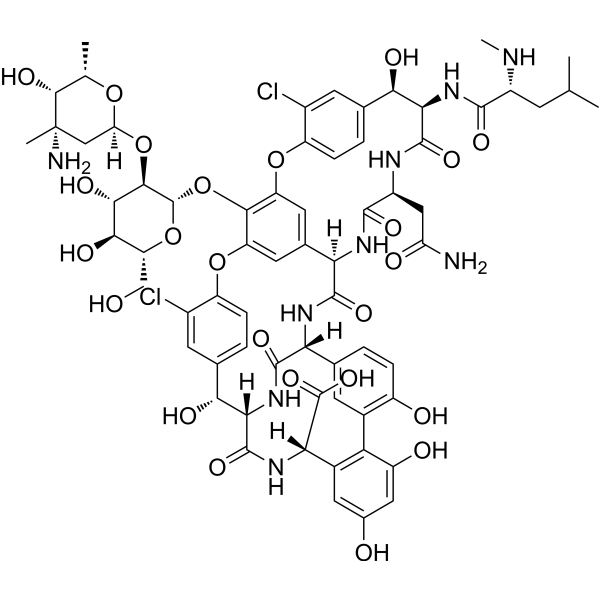
  • HY-B0671
    Vancomycin
    90+ Cited Publications

    Bacterial Autophagy Antibiotic Infection Cancer
    Vancomycin is an antibiotic for the treatment of bacterial infections.
    Vancomycin
  • HY-B0671S

    Isotope-Labeled Compounds Antibiotic Autophagy Bacterial Infection Cancer
    Vancomycin-d12 TFA is a deuterium labeled Vancomycin (HY-B0671). Vancomycin is an antibiotic for the treatment of bacterial infections. It acts by inhibiting the second stage of cell wall synthesis of susceptible bacteria. Vancomycin also alters the permeability of the cell membrane and selectively inhibits ribonucleic acid synthesis .
    Vancomycin-d12 TFA
  • HY-B0671R

    Reference Standards Bacterial Autophagy Antibiotic Infection Cancer
    Vancomycin (Standard) is the analytical standard of Vancomycin. This product is intended for research and analytical applications. Vancomycin is an antibiotic for the treatment of bacterial infections.
    Vancomycin (Standard)
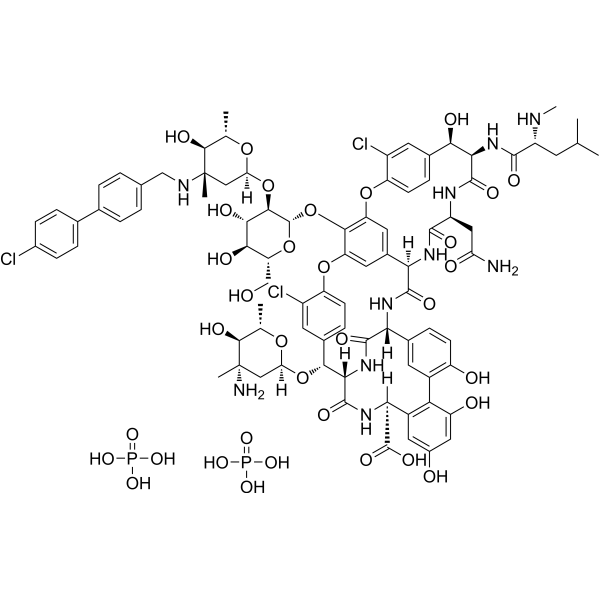
  • HY-B1831A
    Oritavancin diphosphate
    2 Publications Verification

    LY333328 diphosphate

    Bacterial Antibiotic Infection Inflammation/Immunology
    Oritavancin diphosphate (LY333328 diphosphate), a semisynthetic derivative of Vancomycin (HY-B0671), is an orally active glycopeptide antibiotic with bactericidal activity against gram-positive organisms. Oritavancin diphosphate shows antibacterial effect against B. anthracis, such as Ames strain with a MIC value of 0.015 g/mL. Oritavancin diphosphate inhibits cell wall synthesis and disrupts the membrane potential. Oritavancin diphosphate inhibits ArlS kinase activity thereby interfering the signal transduction. Oritavancin diphosphate enters cells by adsorptive endocytosis, which drives it to lysosomes, where it exerts antibiotic activity .
    Oritavancin diphosphate
  • HY-P99583

    MEDI4893

    Bacterial Infection Inflammation/Immunology
    Suvratoxumab (MEDI4893) is a long-acting, high-affinity human anti-α-toxin monoclonal antibody (IgG1κ type). Suvratoxumab potently neutralizes α-toxin, a key S. aureus virulence factor. Suvratoxumab improves survival and reduces lung injury in an immunocompromised mice model of pneumonia. Suvratoxumab also enhances the antibacterial activity of Vancomycin (HY-B0671) or Linezolid (HY-10394) .
    Suvratoxumab
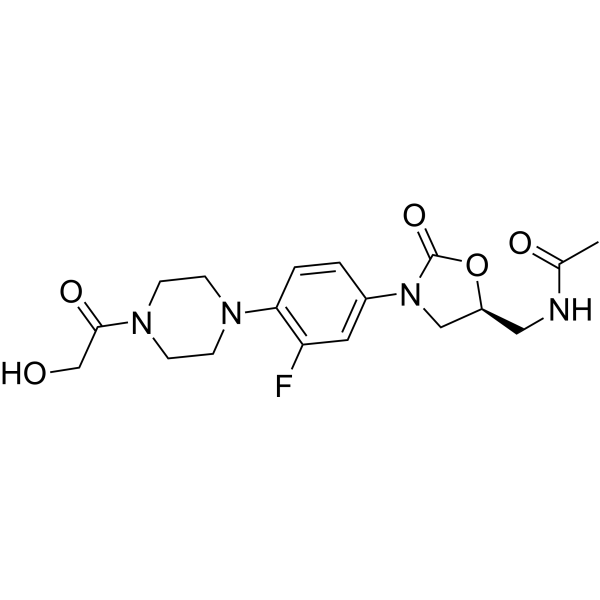
  • HY-10393

    PNU-100592

    Bacterial Antibiotic Infection
    Eperezolid (PNU-100592) is an orally active protein synthesis inhibitor that targets the bacterial 50S ribosomal subunit. Eperezolid competitively binds to a specific site on the ribosomal 50S subunit (overlapping with the binding sites of chloramphenicol (HY-B0239) and lincomycin (HY-117660)) to inhibit the translation initiation stage and exert antibacterial activity. Eperezolid can induce host cell autophagy to enhance the clearance of intracellular mycobacteria, and its MIC90 for Staphylococcus aureus and Enterococcus is 1-4 μg/mL. Eperezolid is mainly used for antibacterial research on infections with Gram-positive bacteria such as methicillin-resistant (HY-121544) Staphylococci and vancomycin-resistant (HY-B0671) Enterococci, as well as infections with intracellular bacteria such as Mycobacterium tuberculosis .
    Eperezolid
  • HY-105282

    MM 45289; A 82846A

    Antibiotic Bacterial Infection
    Eremomycin (MM 45289) is a potent glycopeptide antibiotic closely related to Vancomycin (HY-B0671). Eremomycin shows antibacterial activity in Staphylococcus spp. and Bacillus subtilis ATCC6633, with the MIC values of 0.03-1.6 μg/mL .
    Eremomycin
  • HY-14849

    Razupenem; SM 216601; SMP 601

    Antibiotic Bacterial Others
    PTZ601 (SMP 601) is an antibiotic, which inhibits the gram-positive bacteria, including the Vancomycin (HY-B0671)-resistant Enterococcus faecium (VREF) and Methicillin (HY-121544)-resistant Staphylococcus aureus (MRSA). PTZ601 exhibits antimicrobial activity in infected mouse models .
    PTZ601
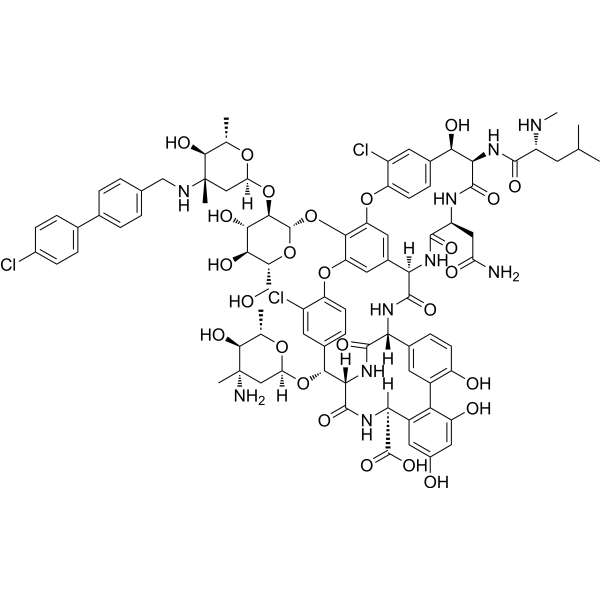
  • HY-B1831

    LY 333328; Orbactiv

    Antibiotic Bacterial Infection Inflammation/Immunology
    Oritavancin (LY 333328), a semisynthetic derivative of Vancomycin (HY-B0671), is an orally active glycopeptide antibiotic with bactericidal activity against gram-positive organisms. Oritavancin shows antibacterial effect against B. anthracis, such as Ames strain with a MIC value of 0.015 g/mL. Oritavancin inhibits cell wall synthesis and disrupts the membrane potential. Oritavancin inhibits ArlS kinase activity thereby interfering the signal transduction. Oritavancin enters cells by adsorptive endocytosis, which drives it to lysosomes, where it exerts antibiotic activity .
    Oritavancin
  • HY-W033728

    Bacterial Infection
    Platinum(COD)dichloride (Compound Pt1) is an Antibacterial agent. Platinum(COD)dichloride shows antibacterial activity against a panel of gram-positive bacteria including Vancomycin (HY-B0671) and Methicillin (HY-121544) resistant Staphylococcus aureus .
    Platinum(COD)dichloride
  • HY-121000

    Ingramycin

    Antibiotic Bacterial Infection
    Albocycline (Ingramycin) is a macrolide antibiotic, which exhibits antibacterial activities against methicillin-resistant Staphylococcus aureus (MRSA), Vancomycin (HY-B0671)-intermediate (VISA), and Vancomycin (HY-B0671)-resistant S. aureus (VRSA) strains with MICs ranging from 0.5 to 1.0 μg/mL. Albocycline exhibits no toxicity to human cells at concentration of ≤64 μg/mL .
    Albocycline
  • HY-N14706

    Bacterial Infection
    Kibdelin A is resistant to Gram-positive bacteria and has similar effects against Staphylococcus aureus (including methicillin-resistant strains) as Vancomycin (HY-B0671) .
    Kibdelin A
  • HY-N14707

    Bacterial Infection
    Kibdelin B is resistant to Gram-positive bacteria and has similar effects against Staphylococcus aureus (including methicillin-resistant strains) as Vancomycin (HY-B0671) .
    Kibdelin B
  • HY-N14710

    Bacterial Infection
    Kibdelin D is resistant to Gram-positive bacteria and has similar effects against Staphylococcus aureus (including methicillin-resistant strains) as Vancomycin (HY-B0671) .
    Kibdelin D
  • HY-P5204

    K1-EJ hybrid

    Bacterial Infection
    Enterocin Hybrid 1 is a antibacterial agent, a antibacterial composition. Enterocin Hybrid 1 inhibits Vancomycin (HY-B0671)-resistant E. faecium, Staphylococcus haemoliticus .
    Enterocin Hybrid 1
  • HY-N14709

    Bacterial Infection
    Kibdelin C2 is resistant to Gram-positive bacteria and has similar effects against Staphylococcus aureus (including methicillin-resistant strains) as Vancomycin (HY-B0671) .
    Kibdelin C2
  • HY-N14708

    Bacterial Infection
    Kibdelin C1 is resistant to Gram-positive bacteria and has similar effects against Staphylococcus aureus (including methicillin-resistant strains) as Vancomycin (HY-B0671) .
    Kibdelin C1
  • HY-176750

    Bacterial Infection
    HMRZ-62 is an antibacterial agent. HMRZ-62 exhibits antibacterial activity against Methicillin (HY-121544)-resistant Staphylococcus aureus (MRSA) and Vancomycin (HY-B0671)-resistant Enterococcus faecalis (VRE) .
    HMRZ-62
  • HY-163399

    Bacterial Infection
    Antibacterial agent 197 (compound 1-deAA) is a termination inhibitor of non-classical anhydroglycosyl receptors and anhydrowall peptide-type peptidoglycan (PG) in bacterial TGase, with activity against Staphylococcus aureus. Antibacterial agent 197 synergizes with Vancomycin (HY-B0671) and is its antibacterial adjuvant .
    Antibacterial agent 197
  • HY-167841

    Bacterial Antibiotic Infection
    Anti-MRSA agent 19 (Compound 1) is an antibiotic that exhibits activity against S. aureus. Anti-MRSA agent 19 is a active (median MIC=4 μg/mL) against 40 CDC isolates of different bacterial species containing various resistance factors,including Vancomycin (HY-B0671),aminoglycoside/Tetracycline (HY-A0107),and oxazolidinone resistance .
    Anti-MRSA agent 19
  • HY-N13196

    Bacterial Infection
    Arcopilin A (compound Arcopilin A(1))is an antibacterial agent. Arcopilin A has weak inhibitory effects on fungal pathogens and Gram-positive bacteria, with IC50 values of 8.9 μg/mL and 14 μg/mL for cells KB-3-1 and L929, but it can effectively destroy preformed biofilms of Staphylococcus aureus. Arcopilin A can enhance the activities of gentamicin (GM; HY-K1050) and vancomycin (Vac; HY-B0671) by 115 and 31 times, respectively .
    Arcopilin A
  • HY-172813

    Bacterial Antibiotic Autophagy Infection Cancer
    Vancomycin prodrug (compound 13c) is a Vancomycin (HY-B0671) prodrug. Vancomycin prodrug shows antibacterial effect with MICs of 0.78 μM, 0.78 μM, 1.56 μM for S. aureus 330041, MRSA USA 300 and MRSA 3390, respectively. Vancomycin prodrug has the ability to quickly bind to Cys-34 residue of plasma. Vancomycin prodrug exhibits a good therapeutic effect on MRSA USA300 infected mice similar to Vancomycin. Vancomycin prodrug, an albumin-binding acid-sensitive prodrug, effectively reduces Vancomycin’s nephrotoxicity while maintaining its efficacy for Gram-positive bacterial infections .
    Vancomycin prodrug
  • HY-B1831AR

    LY333328 diphosphate (Standard)

    Reference Standards Bacterial Antibiotic Infection Inflammation/Immunology
    Oritavancin (diphosphate) (Standard) is the analytical standard of Oritavancin (diphosphate). Oritavancin diphosphate (Standard), a semisynthetic derivative of Vancomycin (HY-B0671), is an orally active glycopeptide antibiotic with bactericidal activity against gram-positive organisms. Oritavancin diphosphate (Standard) shows antibacterial effect against B. anthracis, such as Ames strain with a MIC value of 0.015 g/mL. Oritavancin diphosphate (Standard) inhibits cell wall synthesis and disrupts the membrane potential. Oritavancin diphosphate (Standard) inhibits ArlS kinase activity thereby interfering the signal transduction. Oritavancin diphosphate (Standard) enters cells by adsorptive endocytosis, which drives it to lysosomes, where it exerts antibiotic activity .
    Oritavancin diphosphate (Standard)
  • HY-12770R

    Mebeverine metabolite Mebeverine alcohol (Standard)

    Reference Standards Drug Metabolite Neurological Disease
    Mebeverine alcohol (Standard) is an analytical standard for Mebeverine alcohol. This product is intended for research and analytical applications. Eperezolid (PNU-100592) is an orally active protein synthesis inhibitor that targets the bacterial 50S ribosomal subunit. Eperezolid competitively binds to a specific site on the ribosomal 50S subunit (overlapping with the binding sites of Chloramphenicol (HY-B0239) and Lincomycin (HY-117660)) to inhibit the translation initiation stage and exert antibacterial activity. Eperezolid can induce host cell autophagy to enhance the clearance of intracellular mycobacteria, and its MIC90 for Staphylococcus aureus and Enterococcus is 1-4 μg/mL. Eperezolid is mainly used for antibacterial research on infections with Gram-positive bacteria such as methicillin-resistant (HY-121544) Staphylococci and vancomycin-resistant (HY-B0671) Enterococci, as well as infections with intracellular bacteria such as Mycobacterium tuberculosis .
    Mebeverine alcohol (Standard)
  • HY-162775

    Bacterial Antibiotic Infection
    TST1N-224 is a potent response regulator VraRC inhibitor. TST1N-224 can disrupt VraRC-DNA complex formation (IC50=60.2 μM). TST1N-224 exhibits interference with VraRC binding to its cognate DNA through a fast-on-fast-off binding mechanism (KD=23.4 μM). TST1N-224 predominantly interacts with the α9- and α10-helixes of the DNA-binding domain of VraR. TST1N-224 inhibits the growths of S. aureus (SA; MIC>126 μM), Methicillin-resistant S. aureus (MRSA; MIC>126 μM), and Vancomycin-intermediate S. aureus (VISA; MIC=63 μM). TST1N-224, an antimicrobial agent, evidently enhances the susceptibility of VISA to both Vancomycin (HY-B0671) and Methicillin (HY-B0974) .
    TST1N-224
  • HY-N15435

    Bacterial Infection
    Conimine is a steroidal alkaloid, antibacterial agent and potentiator. Conimine is isolated from the seeds of Holarrhena antidysenteriaca Wall.ex A.DC. Conimine exhibits intrinsic antibacterial activity against methicillin-sensitive Staphylococcus aureus and methicillin-resistant Staphylococcus aureus. When combined with Penicillin, Conimine shows synergistic antibacterial effects against methicillin-resistant Staphylococcus aureus; when combined with Vancomycin (HY-B0671), it exerts synergistic antibacterial effects against both methicillin-sensitive and methicillin-resistant Staphylococcus aureus .
    Conimine
  • HY-116880

    Bacterial DNA/RNA Synthesis Infection
    DS-2969b is an orally active GyrB inhibitor with antibacterial activity. DS-2969b is is active against Clostridium difficile infection (MIC90: 0.06 μg/mL), which is 2-, 16-, and 32-fold lower than those of Fidaxomicin (HY-17580), Metronidazole (HY-B0318), and Vancomycin (HY-B0671), respectively. DS-2969b inhibits the supercoiling activity of C. difficile DNA gyrase. DS-2969b also exhibits activity against other Gram-positive anaerobes, including strict and facultative anaerobes. DS-2969b is safe and well tolerated in preclinical toxicology studies .
    DS-2969b
  • HY-P11615

    Bacterial Infection
    FuK is a WK2-analog antimicrobial peptide modified with fluorinated unnatural amino acids. FuK has an LD50 of 72.34 mg/kg in mice, shows no hemolytic activity, with high stability against trypsin, chymotrypsin, and saline environments. FuK exerts bactericidal effects by enhancing the permeability of bacterial outer membranes, inducing depolarization of cytoplasmic membranes, and disrupting membrane potential balance against bacterias such as Staphylococcus aureus, Escherichia coli, Klebsiella pneumoniae, and MRSA. FuK exhibits synergistic antimicrobial activity with polymyxin B (HY-149179), vancomycin (HY-B0671), and ciprofloxacin (HY-B0356), and also inhibits Ciprofloxacin-induced bacterial drug resistance. FuK has in vivo safety, effectively reduces bacterial load and inflammatory cell infiltration in a mouse MRSA model, and promotes collagen fiber formation in skin wounds .
    FuK

Inquiry Online

Your information is safe with us. * Required Fields.

Salutation


Country or Region *

Applicant Name *


Organization Name *

Department *


Email Address *


Product Name *

Cat. No.


Requested quantity *

Phone Number *


Remarks

Inquiry Online

Inquiry Information

Product Name:
Cat. No.:
Quantity:
MCE Japan Authorized Agent: