Search Result
Results for "
Chemical cross-linking
" in MedChemExpress (MCE) Product Catalog:
25
Biochemical Assay Reagents
1
Isotope-Labeled Compounds
| Cat. No. |
상품명 |
Target |
연구분야 |
Chemical Structure |
-
- HY-Y0623
-
|
HOSu; 1-Hydroxy-2,5-pyrrolidinedione
|
Biochemical Assay Reagents
|
Others
|
|
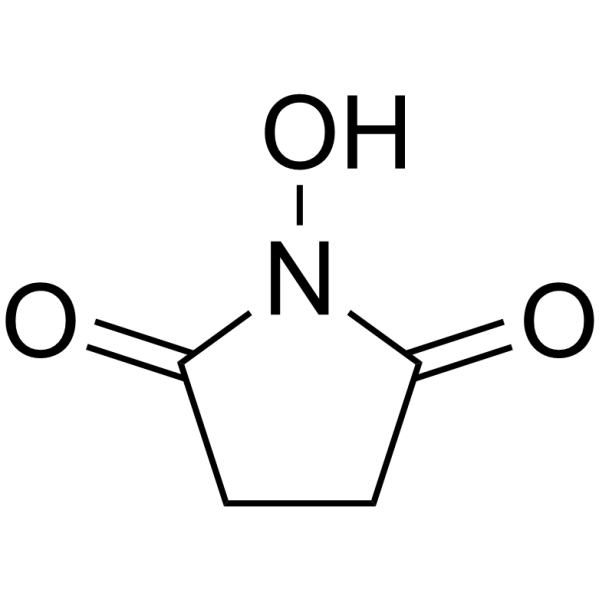
N-Hydroxysuccinimide (HOSu; 1-Hydroxy-2,5-pyrrolidinedione) is a covalent crosslinker commonly used in bioconjugation technology with a primary amine group. N-Hydroxysuccinimide reacts with amino groups (-NH2) to form a stable amide bond, which can modify amino-containing biomolecules. N-Hydroxysuccinimide can be used, for example, for protein labeling with fluorescent dyes and enzymes, surface activation of chromatography supports, microbeads, nanoparticles and microarray slides, and chemical synthesis of peptides. N-Hydroxysuccinimide has a wide range of applications in biomaterial synthesis (such as collagen, chitosan crosslinking), drug delivery systems (such as hydrogel preparation) and tissue engineering .
|
-
-
- HY-Y0850U6
-
|
Polyvinyl alcohol (Mw 205000); Poly(Ethenol) (Mw 205000)
|
Biochemical Assay Reagents
|
Infection
Inflammation/Immunology
|
|
PVA (Polyvinyl alcohol) (Mw 205000) is a polyvinyl alcohol with a molecular weight of 205000, which is used as a biological additive. PVA (Mw 205000) can be cross-linked through physical or chemical methods to form hydrogels, and is widely applied in fields such as biomedicine, food packaging, textiles, papermaking, sensing, and electronic devices. After PVA enema, it has an improving effect on acute colitis induced by DSS (HY-116282C) in mice .
|
-

-
- HY-48999A
-
|
|
EGFR
|
Cancer
|
|
FSK hydrochloride is fluorosulfonyloxybenzoyl-L-lysine, which features a long, flexible aryl fluorosulfate-containing side chain that can reach protein sites inaccessible to covalent conjugation. FSK hydrochloride modifies nanomolecules to target epidermal growth factor receptor (EGFR), resulting in irreversibly bound covalent interactions. Through genetically encoded chemical crosslinking, FSK hydrochloride captures unknown enzyme-substrate interactions in living cells, targets residues other than Cys, and mediates crosslinking at the binding periphery. FSK hydrochloride enables the construction of a bioreactive SuFEx system for generating covalent bonds in various proteins both in vitro and in vivo .
|
-

-
- HY-W115727B
-
|
PAM,Anion,Mw 18 million
|
Biochemical Assay Reagents
|
Others
|
|
Polyacrylamide,Anion,Mw 18 million (PAM,Anion,Mw 18 million) is a multifunctional high molecular weight anionic polyacrylamide copolymer. The anionic properties of Polyacrylamide,Anion,Mw 18 million enable it to be used as a flocculant to achieve charge neutralization and aggregation, while its high molecular weight properties provide viscoelastic properties for fluid applications. Polyacrylamide series materials can maintain enzyme activity in enzyme immobilization, act as drug carriers to achieve controlled release, serve as smart materials responding to temperature/pH stimuli, and be used for in vitro toxin adsorption and soft tissue filling through mechanisms such as physical entrapment, covalent binding or chemical crosslinking. Polyacrylamide finds applications in biomedical engineering, environmental management and industrial applications .
|
-

-
- HY-W041994
-
-
-
- HY-W115727A
-
|
PAM,Anion,Mw 14-16 million
|
Biochemical Assay Reagents
|
Others
|
|
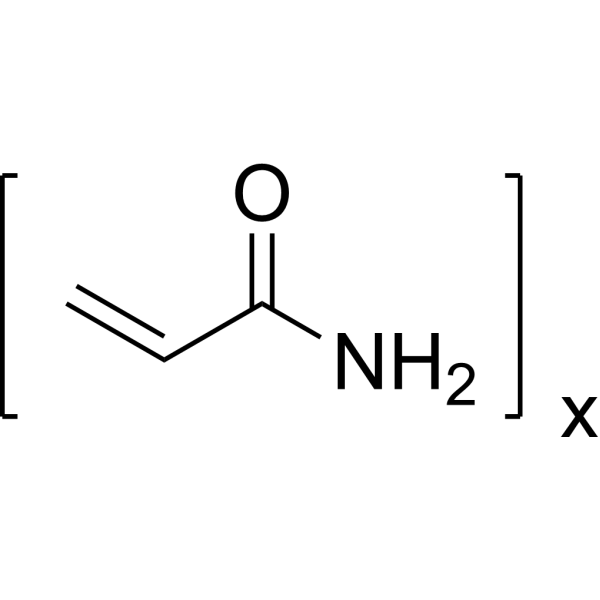
Polyacrylamide, Anion, Mw 14-16 million is a multifunctional high molecular weight anionic polyacrylamide copolymer. The anionic properties of Polyacrylamide, Anion, Mw 14-16 million enable it to be used as a flocculant to achieve charge neutralization and aggregation, while its high molecular weight properties provide viscoelastic properties for fluid applications. Polyacrylamide series materials can maintain enzyme activity in enzyme immobilization, achieve controlled release as a drug carrier, respond to temperature/pH stimulation as a smart material, and can also be used for in vitro toxin adsorption and soft tissue filling through mechanisms such as physical embedding, covalent bonding or chemical cross-linking. Polyacrylamide can be used in biomedical engineering, environmental management and industrial applications .
|
-
-
- HY-145149
-
|
|
ADC Payload
|
Cancer
|
|
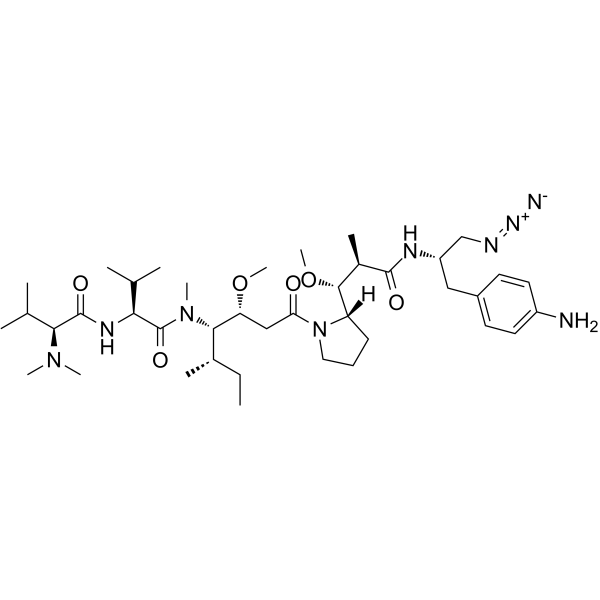
Duostatin 5 is a ADC Cytotoxin designed based on MMAF (HY-15579) and can be used to synthesize ADCs. The preparation of Duostatin 5 has the advantages of fewer synthetic steps, simple operation, less difficulty in quality control, and more stable chemical synthesis process. Duostatin 5 can be linked to the antibody targeting 5T4 (ZV05) by cross-linking with interchain cysteines through a disubstituted C-Lock linker. Duostatin 5 is a click chemistry reagent. It contains an azide group and can undergo copper-catalyzed azide-alkyne cycloaddition (CuAAc) with molecules containing alkyne groups. It can also undergo ring strain-driven alkyne-azide cycloaddition (SPAAC) with molecules containing DBCO or BCN groups[1][2].
|
-
-
- HY-W115727E
-
|
PAM,average Mn 150000
|
Biochemical Assay Reagents
|
Others
|
|
Polyacrylamide, average Mn 150000 (PAM, average Mn 150000) is a versatile, high-molecular-weight polyacrylamide copolymer. Polyacrylamide series materials can maintain enzyme activity in enzyme immobilization, act as drug carriers to achieve controlled release, serve as smart materials responding to temperature/pH stimuli, and be used for in vitro toxin adsorption and soft tissue filling through mechanisms such as physical entrapment, covalent binding or chemical crosslinking. Polyacrylamide finds applications in biomedical engineering, environmental management and industrial applications .
|
-

-
- HY-107783
-
|
|
Biochemical Assay Reagents
|
Others
|
|
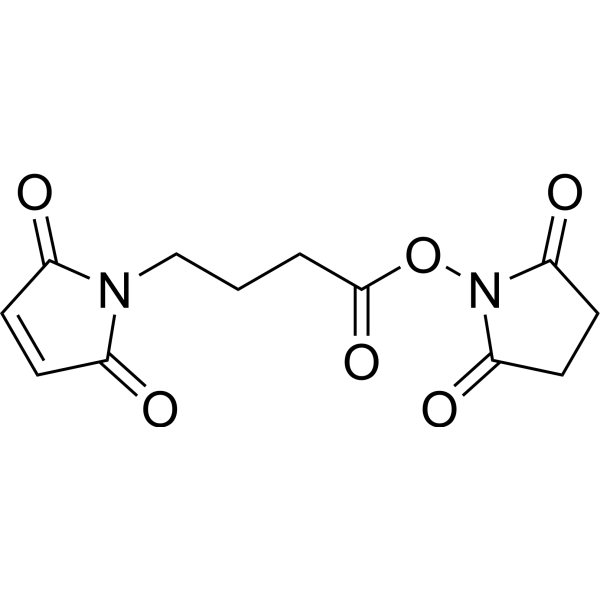
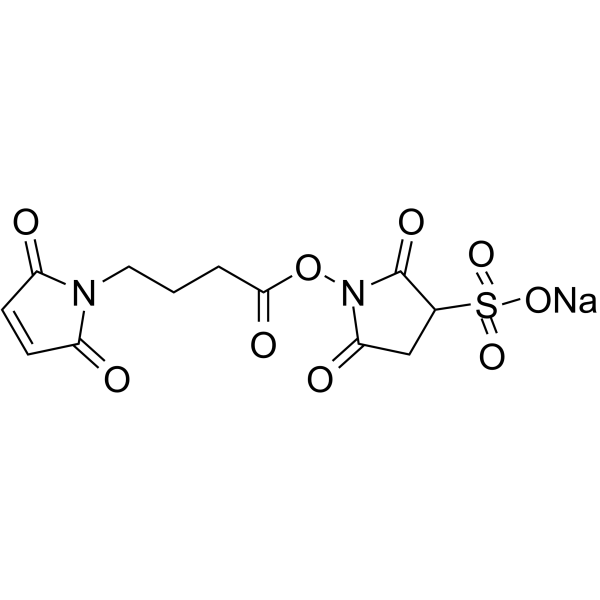
Sulfo-GMBS is a crosslinker widely used in chemical modification and coupling reactions of proteins and peptides. Among amine-thiol crosslinkers, Sulfo-GMBS generates the largest number of crosslinks and covers most of the crosslinks identified by AMAS and GMBS .
|
-
-
- HY-W250309
-
|
|
Biochemical Assay Reagents
|
Others
|
|
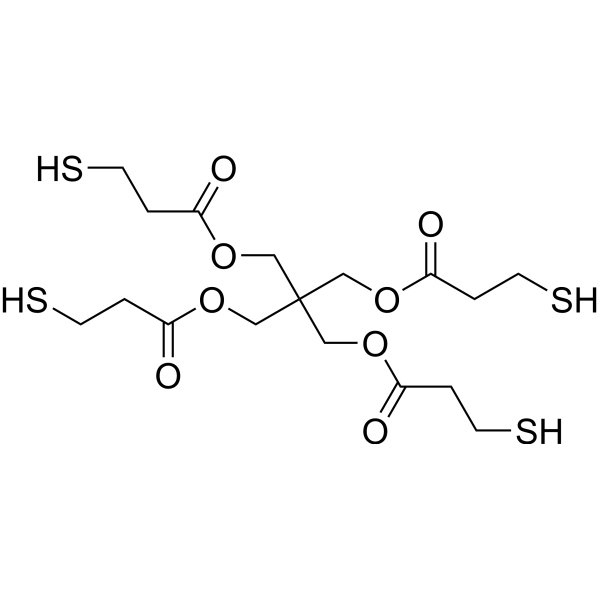
Pentaerythritol tetra(3-mercaptopropionate)It is a class of organic compounds containing both pentaerythritol and mercaptopropionate groups. It is commonly used as a stabilizer and crosslinking agent in various chemical and industrial applications. Pentaerythritol tetra(3-mercaptopropionate)Has a variety of properties that make it suitable for these applications, including the ability to increase the mechanical strength, thermal stability and weatherability of polymers and coatings. Additionally, it can be used as a feedstock for the production of other specialty chemicals and materials.
|
-
-
- HY-W006886
-
|
|
Amino Acid Derivatives
|
Others
|
Fmoc-(R)-2-(7-octenyl) Ala-OH is an unnatural Fmoc-protected amino acid and modification module. Fmoc-(R)-2-(7-octenyl) Ala-OH serves as a key building block for all-hydrocarbon cross-linking modification of antimicrobial peptides, and facilitates the generation of stapled peptide derivatives. When introduced into specific sites of the parent peptide, Fmoc-(R)-2-(7-octenyl) Ala-OH effectively increases the α-helix content of the peptide chain, thereby significantly enhancing its antimicrobial activity and proteolytic stability. Fmoc-(R)-2-(7-octenyl) Ala-OH is widely used in research on bacterial infections and the development of related antimicrobial agents . Stapled peptide is a specially chemically modified polypeptide. It locks the peptide chain into a stable α-helical structure by introducing a "staple"-like chemical bridge (usually an all-carbon backbone) at specific positions of the peptide chain.
|
-

-
- HY-W115727D
-
|
PAM,average Mn 40000
|
Biochemical Assay Reagents
|
Others
|
|
Polyacrylamide (PAM), average Mn 40000 is a versatile, high-molecular-weight polyacrylamide copolymer. Polyacrylamide series materials can maintain enzyme activity in enzyme immobilization, act as drug carriers to achieve controlled release, serve as smart materials responding to temperature/pH stimuli, and be used for in vitro toxin adsorption and soft tissue filling through mechanisms such as physical entrapment, covalent binding or chemical crosslinking. Polyacrylamide finds applications in biomedical engineering, environmental management and industrial applications .
|
-

-
- HY-W115727C
-
|
Acrylamide polymer,Nonionic,Mw 5-6 million
|
Biochemical Assay Reagents
|
Others
|
|
Polyacrylamide (Acrylamide polymer),Nonionic,Mw 5-6 million is a multifunctional, high-molecular-weight nonionic polyacrylamide copolymer. Polyacrylamide-based materials can maintain enzyme activity in enzyme immobilization, act as drug carriers for controlled release, function as smart materials responsive to temperature/pH stimuli, and be applied in in vitro toxin adsorption and soft tissue filling, through action mechanisms such as physical entrapment, covalent binding or chemical crosslinking. Polyacrylamide finds applications in biomedical engineering, environmental management and industrial applications .
|
-

-
- HY-W341499
-
|
|
Endogenous Metabolite
|
Others
|
|
5-Formyl-2'-deoxyuridine is a product formed when the 5-methyl group of thymine in DNA undergoes oxidation due to exposure to gamma radiation or certain chemical agents. Serving as a biomarker of oxidative DNA damage, 5-formyl-2'-deoxyuridine is employed in investigations of DNA damage and repair mechanisms. Additionally, 5-Formyl-2'-deoxyuridine can be used in studies involving chemically crosslinking with peptides derived from the RecA protein .
|
-

-
- HY-W017588
-
-

-
- HY-W1048572D
-
|
Azide-PEG3400-Amine
|
PROTAC Linkers
|
Others
|
|
N3-PEG3400-NH2 (Azide-PEG3400-Amine) is a hetero-bifunctional PEG product with an azide and an amine group at the PEG terminus. N3-PEG3400-NH2 is an important cross-linker with PEG chains. The azide can be used for molecular conjugation through chemical reactions, and the amine can react with carboxylic acid or NHS ester .
|
-

-
- HY-129655
-
|
|
ADC Linker
|
Cancer
|
|
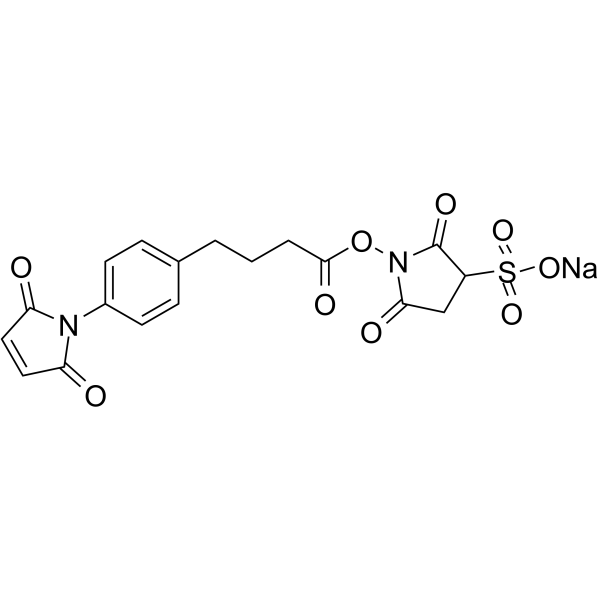
Sulfo-SMPB sodium is a non-cleavable, heterobifunctional chemical cross-linking reagent which contains N-hydroxysuccinimide (NHS) ester and maleimide groups, allowing covalent conjugation of amine- and sulfhydryl-containing molecules .
|
-
-
- HY-W127344
-
|
|
Biochemical Assay Reagents
|
Others
|
|
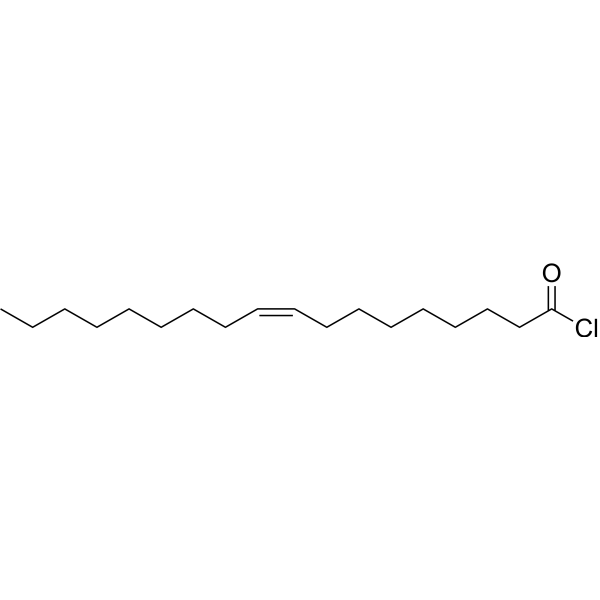
Oleoyl chloride A pungent-smelling liquid commonly used as a reagent in organic synthesis, especially for the production of a variety of organic compounds, including pharmaceuticals and agrochemicals. In addition, it can also be used as a cross-linking agent or surfactant in polymer chemistry. Its unique chemical properties make it an important ingredient in a variety of industrial processes, including petrochemical refining and materials science.
|
-
-
- HY-W142308
-
|
|
Biochemical Assay Reagents
|
|
|
Diammonium dithiodiglycolate is a film-forming polymer used as a crosslinking agent, with the activity of promoting crosslinking of materials and enhancing their stability. Diammonium dithiodiglycolate plays a key role in biomedical applications, especially in the preparation of biocompatible materials. The unique chemical properties of Diammonium dithiodiglycolate make it an ideal choice to achieve high-performance polymer properties.
|
-

-
- HY-W1048572C
-
|
Azide-PEG1000-Amine
|
Biochemical Assay Reagents
|
Others
|
|
N3-PEG1000-NH2 (Azide-PEG1000-Amine) is a hetero-bifunctional PEG product with an azide and an amine group at the PEG terminus. N3-PEG1000-NH2 is an important cross-linker with PEG chains. The azide can be used for molecular conjugation through chemical reactions, and the amine can react with carboxylic acid or NHS ester .
|
-

-
- HY-W1049071D
-
|
|
Biochemical Assay Reagents
|
Others
|
|
HO-PEG40000-SCM is a hetero-bifunctional hydroxy PEG succinimidyl carboxymethyl ester product, which is commonly used as a cross-linker or spacer between two different chemical entities.
|
-

-
- HY-W1048572A
-
|
|
PROTAC Linkers
|
Others
|
|
N3-PEG2000-NH2 is a hetero-bifunctional PEG product with an azide and an amine group at the PEG terminus. N3-PEG2000-NH2 is an important cross-linker with PEG chains. The azide can be used for molecular conjugation through chemical reactions, and the amine can react with carboxylic acid or NHS ester .
|
-

-
- HY-W1048572H
-
|
Azide-PEG10000-Amine
|
PROTAC Linkers
|
Others
|
|
N3-PEG10000-NH2 (Azide-PEG10000-Amine) is a hetero-bifunctional PEG product with an azide and an amine group at the PEG terminus. N3-PEG10000-NH2 is an important cross-linker with PEG chains. The azide can be used for molecular conjugation through chemical reactions, and the amine can react with carboxylic acid or NHS ester .
|
-

-
- HY-W1048572I
-
|
Azide-PEG20000-Amine
|
PROTAC Linkers
|
Others
|
|
N3-PEG20000-NH2 (Azide-PEG20000-Amine) is a hetero-bifunctional PEG product with an azide and an amine group at the PEG terminus. N3-PEG20000-NH2 is an important cross-linker with PEG chains. The azide can be used for molecular conjugation through chemical reactions, and the amine can react with carboxylic acid or NHS ester .
|
-

-
- HY-W1049071H
-
|
|
Biochemical Assay Reagents
|
Others
|
|
HO-PEG2000-SCM is a hetero-bifunctional hydroxy PEG succinimidyl carboxymethyl ester product, which is commonly used as a cross-linker or spacer between two different chemical entities.
|
-

-
- HY-W1049071C
-
|
|
Biochemical Assay Reagents
|
Others
|
|
HO-PEG20000-SCM is a hetero-bifunctional hydroxy PEG succinimidyl carboxymethyl ester product, which is commonly used as a cross-linker or spacer between two different chemical entities.
|
-

-
- HY-W1049071A
-
|
|
Biochemical Assay Reagents
|
Others
|
|
HO-PEG5000-SCM is a hetero-bifunctional hydroxy PEG succinimidyl carboxymethyl ester product, which is commonly used as a cross-linker or spacer between two different chemical entities.
|
-

-
- HY-W1049071I
-
|
|
Biochemical Assay Reagents
|
Others
|
|
HO-PEG3400-SCM is a hetero-bifunctional hydroxy PEG succinimidyl carboxymethyl ester product, which is commonly used as a cross-linker or spacer between two different chemical entities.
|
-

-
- HY-W1049071B
-
|
|
Biochemical Assay Reagents
|
Others
|
|
HO-PEG10000-SCM is a hetero-bifunctional hydroxy PEG succinimidyl carboxymethyl ester product, which is commonly used as a cross-linker or spacer between two different chemical entities.
|
-

-
- HY-W1049071E
-
|
|
Biochemical Assay Reagents
|
Others
|
|
HO-PEG1000-SCM is a hetero-bifunctional hydroxy PEG succinimidyl carboxymethyl ester product, which is commonly used as a cross-linker or spacer between two different chemical entities.
|
-

-
- HY-D2981
-
|
|
Biochemical Assay Reagents
|
Others
|
|
CoDi1 is an effective chemical crosslinking agent. CoDi1 can achieve covalent and irreversible dimerization of AGT/SNAP tag fusion proteins in living cells .
|
-

-
- HY-145149S
-
|
|
Isotope-Labeled Compounds
ADC Payload
|
Cancer
|
|
Duostatin 5- 13C,d3 is the 13C-labeled Duostatin 5 (HY-145149). Duostatin 5 is a ADC Cytotoxin designed based on MMAF (HY-15579) and can be used to synthesize ADCs. The preparation of Duostatin 5 has the advantages of fewer synthetic steps, simple operation, less difficulty in quality control, and more stable chemical synthesis process. Duostatin 5 can be linked to the antibody targeting 5T4 (ZV05) by cross-linking with interchain cysteines through a disubstituted C-Lock linker. Duostatin 5 is a click chemistry reagent. It contains an azide group and can undergo copper-catalyzed azide-alkyne cycloaddition (CuAAc) with molecules containing alkyne groups. It can also undergo ring strain-driven alkyne-azide cycloaddition (SPAAC) with molecules containing DBCO or BCN groups[1][2].
|
-

-
- HY-W1048572E
-
|
|
PROTAC Linkers
|
Others
|
|
N3-PEG5000-NH2 is a hetero-bifunctional PEG product with an azide and an amine group at the PEG terminus. N3-PEG5000-NH2 is an important cross-linker with PEG chains. The azide can be used for molecular conjugation through chemical reactions, and the amine can react with carboxylic acid or NHS ester .
|
-

-
- HY-W1048572J
-
|
Azide-PEG40000-Amine
|
PROTAC Linkers
|
Others
|
|
N3-PEG40000-NH2 (Azide-PEG40000-Amine) is a hetero-bifunctional PEG product with an azide and an amine group at the PEG terminus. N3-PEG40000-NH2 is an important cross-linker with PEG chains. The azide can be used for molecular conjugation through chemical reactions, and the amine can react with carboxylic acid or NHS ester .
|
-

-
-
HY-LD005
-
|
|
1.2 billion compounds
|
|
Cyclic peptide library have advantages such as high affinity, high selectivity, and suitability for targeting protein–protein interactions. Through DEL synthesis technology, the library size can achieve hundreds of millions. DEL cyclic peptide library have advantages like low cost andhigh screeing efficiency, making them valuable for discovering lead compounds against challenging drug targets.
This cyclic peptide library is constructed with unnatural amino acids as building block, synthesized through DNA-compatible chemical reactions. Each cyclic peptide consist of six amino acids and constrained conformations such as side-chain cross-linking, disulfide bonds, and macrocyclization. These cyclic peptides exhibit significantly improved stability and druggability compared with linear peptides, filling the gap between small molecules and macromolecular biologics. Each cyclic peptide is uniquely conjugated to a DNA barcode sequence for molecular identification and sequencing decoding.
MCE’s cyclic peptide library has8 independent sub-libraries, with a total molecular diversity of 1.2 billion. It is constructed via multi-round combinatorial assembly of building blocks and diverse cyclization strategies, facilitating the discovery of cyclic peptide leads for undruggable targets.
|
-
- HY-D2981
-
|
|
Fluorescent Dyes
|
|
CoDi1 is an effective chemical crosslinking agent. CoDi1 can achieve covalent and irreversible dimerization of AGT/SNAP tag fusion proteins in living cells .
|
-
- HY-Y0623
-
|
HOSu; 1-Hydroxy-2,5-pyrrolidinedione
|
Biochemical Assay Reagents
|
|
N-Hydroxysuccinimide (HOSu; 1-Hydroxy-2,5-pyrrolidinedione) is a covalent crosslinker commonly used in bioconjugation technology with a primary amine group. N-Hydroxysuccinimide reacts with amino groups (-NH2) to form a stable amide bond, which can modify amino-containing biomolecules. N-Hydroxysuccinimide can be used, for example, for protein labeling with fluorescent dyes and enzymes, surface activation of chromatography supports, microbeads, nanoparticles and microarray slides, and chemical synthesis of peptides. N-Hydroxysuccinimide has a wide range of applications in biomaterial synthesis (such as collagen, chitosan crosslinking), drug delivery systems (such as hydrogel preparation) and tissue engineering .
|
-
- HY-Y0850U6
-
|
Polyvinyl alcohol (Mw 205000); Poly(Ethenol) (Mw 205000)
|
Biochemical Assay Reagents
|
|
PVA (Polyvinyl alcohol) (Mw 205000) is a polyvinyl alcohol with a molecular weight of 205000, which is used as a biological additive. PVA (Mw 205000) can be cross-linked through physical or chemical methods to form hydrogels, and is widely applied in fields such as biomedicine, food packaging, textiles, papermaking, sensing, and electronic devices. After PVA enema, it has an improving effect on acute colitis induced by DSS (HY-116282C) in mice .
|
-
- HY-W115727B
-
|
PAM,Anion,Mw 18 million
|
Biochemical Assay Reagents
|
|
Polyacrylamide,Anion,Mw 18 million (PAM,Anion,Mw 18 million) is a multifunctional high molecular weight anionic polyacrylamide copolymer. The anionic properties of Polyacrylamide,Anion,Mw 18 million enable it to be used as a flocculant to achieve charge neutralization and aggregation, while its high molecular weight properties provide viscoelastic properties for fluid applications. Polyacrylamide series materials can maintain enzyme activity in enzyme immobilization, act as drug carriers to achieve controlled release, serve as smart materials responding to temperature/pH stimuli, and be used for in vitro toxin adsorption and soft tissue filling through mechanisms such as physical entrapment, covalent binding or chemical crosslinking. Polyacrylamide finds applications in biomedical engineering, environmental management and industrial applications .
|
-
- HY-W115727A
-
|
PAM,Anion,Mw 14-16 million
|
Biochemical Assay Reagents
|
|
Polyacrylamide, Anion, Mw 14-16 million is a multifunctional high molecular weight anionic polyacrylamide copolymer. The anionic properties of Polyacrylamide, Anion, Mw 14-16 million enable it to be used as a flocculant to achieve charge neutralization and aggregation, while its high molecular weight properties provide viscoelastic properties for fluid applications. Polyacrylamide series materials can maintain enzyme activity in enzyme immobilization, achieve controlled release as a drug carrier, respond to temperature/pH stimulation as a smart material, and can also be used for in vitro toxin adsorption and soft tissue filling through mechanisms such as physical embedding, covalent bonding or chemical cross-linking. Polyacrylamide can be used in biomedical engineering, environmental management and industrial applications .
|
-
- HY-W115727E
-
|
PAM,average Mn 150000
|
Biochemical Assay Reagents
|
|
Polyacrylamide, average Mn 150000 (PAM, average Mn 150000) is a versatile, high-molecular-weight polyacrylamide copolymer. Polyacrylamide series materials can maintain enzyme activity in enzyme immobilization, act as drug carriers to achieve controlled release, serve as smart materials responding to temperature/pH stimuli, and be used for in vitro toxin adsorption and soft tissue filling through mechanisms such as physical entrapment, covalent binding or chemical crosslinking. Polyacrylamide finds applications in biomedical engineering, environmental management and industrial applications .
|
-
- HY-W250309
-
|
|
Biochemical Assay Reagents
|
|
Pentaerythritol tetra(3-mercaptopropionate)It is a class of organic compounds containing both pentaerythritol and mercaptopropionate groups. It is commonly used as a stabilizer and crosslinking agent in various chemical and industrial applications. Pentaerythritol tetra(3-mercaptopropionate)Has a variety of properties that make it suitable for these applications, including the ability to increase the mechanical strength, thermal stability and weatherability of polymers and coatings. Additionally, it can be used as a feedstock for the production of other specialty chemicals and materials.
|
-
- HY-W115727D
-
|
PAM,average Mn 40000
|
Biochemical Assay Reagents
|
|
Polyacrylamide (PAM), average Mn 40000 is a versatile, high-molecular-weight polyacrylamide copolymer. Polyacrylamide series materials can maintain enzyme activity in enzyme immobilization, act as drug carriers to achieve controlled release, serve as smart materials responding to temperature/pH stimuli, and be used for in vitro toxin adsorption and soft tissue filling through mechanisms such as physical entrapment, covalent binding or chemical crosslinking. Polyacrylamide finds applications in biomedical engineering, environmental management and industrial applications .
|
-
- HY-W115727C
-
|
Acrylamide polymer,Nonionic,Mw 5-6 million
|
Biochemical Assay Reagents
|
|
Polyacrylamide (Acrylamide polymer),Nonionic,Mw 5-6 million is a multifunctional, high-molecular-weight nonionic polyacrylamide copolymer. Polyacrylamide-based materials can maintain enzyme activity in enzyme immobilization, act as drug carriers for controlled release, function as smart materials responsive to temperature/pH stimuli, and be applied in in vitro toxin adsorption and soft tissue filling, through action mechanisms such as physical entrapment, covalent binding or chemical crosslinking. Polyacrylamide finds applications in biomedical engineering, environmental management and industrial applications .
|
-
- HY-W017588
-
|
|
Biochemical Assay Reagents
|
|
N-(2-Hydroxyethyl)maleimide is a cross-linker. N-(2-Hydroxyethyl)maleimide is used for chemical synthesis .
|
-
- HY-W1048572D
-
|
Azide-PEG3400-Amine
|
Biochemical Assay Reagents
|
|
N3-PEG3400-NH2 (Azide-PEG3400-Amine) is a hetero-bifunctional PEG product with an azide and an amine group at the PEG terminus. N3-PEG3400-NH2 is an important cross-linker with PEG chains. The azide can be used for molecular conjugation through chemical reactions, and the amine can react with carboxylic acid or NHS ester .
|
-
- HY-W127344
-
|
|
Biochemical Assay Reagents
|
|
Oleoyl chloride A pungent-smelling liquid commonly used as a reagent in organic synthesis, especially for the production of a variety of organic compounds, including pharmaceuticals and agrochemicals. In addition, it can also be used as a cross-linking agent or surfactant in polymer chemistry. Its unique chemical properties make it an important ingredient in a variety of industrial processes, including petrochemical refining and materials science.
|
-
- HY-W142308
-
|
|
Biochemical Assay Reagents
|
|
Diammonium dithiodiglycolate is a film-forming polymer used as a crosslinking agent, with the activity of promoting crosslinking of materials and enhancing their stability. Diammonium dithiodiglycolate plays a key role in biomedical applications, especially in the preparation of biocompatible materials. The unique chemical properties of Diammonium dithiodiglycolate make it an ideal choice to achieve high-performance polymer properties.
|
-
- HY-W1048572C
-
|
Azide-PEG1000-Amine
|
Biochemical Assay Reagents
|
|
N3-PEG1000-NH2 (Azide-PEG1000-Amine) is a hetero-bifunctional PEG product with an azide and an amine group at the PEG terminus. N3-PEG1000-NH2 is an important cross-linker with PEG chains. The azide can be used for molecular conjugation through chemical reactions, and the amine can react with carboxylic acid or NHS ester .
|
-
- HY-W1049071D
-
|
|
Biochemical Assay Reagents
|
|
HO-PEG40000-SCM is a hetero-bifunctional hydroxy PEG succinimidyl carboxymethyl ester product, which is commonly used as a cross-linker or spacer between two different chemical entities.
|
-
- HY-W1048572A
-
|
|
Biochemical Assay Reagents
|
|
N3-PEG2000-NH2 is a hetero-bifunctional PEG product with an azide and an amine group at the PEG terminus. N3-PEG2000-NH2 is an important cross-linker with PEG chains. The azide can be used for molecular conjugation through chemical reactions, and the amine can react with carboxylic acid or NHS ester .
|
-
- HY-W1048572H
-
|
Azide-PEG10000-Amine
|
Biochemical Assay Reagents
|
|
N3-PEG10000-NH2 (Azide-PEG10000-Amine) is a hetero-bifunctional PEG product with an azide and an amine group at the PEG terminus. N3-PEG10000-NH2 is an important cross-linker with PEG chains. The azide can be used for molecular conjugation through chemical reactions, and the amine can react with carboxylic acid or NHS ester .
|
-
- HY-W1048572I
-
|
Azide-PEG20000-Amine
|
Biochemical Assay Reagents
|
|
N3-PEG20000-NH2 (Azide-PEG20000-Amine) is a hetero-bifunctional PEG product with an azide and an amine group at the PEG terminus. N3-PEG20000-NH2 is an important cross-linker with PEG chains. The azide can be used for molecular conjugation through chemical reactions, and the amine can react with carboxylic acid or NHS ester .
|
-
- HY-W1049071H
-
|
|
Biochemical Assay Reagents
|
|
HO-PEG2000-SCM is a hetero-bifunctional hydroxy PEG succinimidyl carboxymethyl ester product, which is commonly used as a cross-linker or spacer between two different chemical entities.
|
-
- HY-W1049071C
-
|
|
Biochemical Assay Reagents
|
|
HO-PEG20000-SCM is a hetero-bifunctional hydroxy PEG succinimidyl carboxymethyl ester product, which is commonly used as a cross-linker or spacer between two different chemical entities.
|
-
- HY-W1049071A
-
|
|
Biochemical Assay Reagents
|
|
HO-PEG5000-SCM is a hetero-bifunctional hydroxy PEG succinimidyl carboxymethyl ester product, which is commonly used as a cross-linker or spacer between two different chemical entities.
|
-
- HY-W1049071I
-
|
|
Biochemical Assay Reagents
|
|
HO-PEG3400-SCM is a hetero-bifunctional hydroxy PEG succinimidyl carboxymethyl ester product, which is commonly used as a cross-linker or spacer between two different chemical entities.
|
-
- HY-W1049071B
-
|
|
Biochemical Assay Reagents
|
|
HO-PEG10000-SCM is a hetero-bifunctional hydroxy PEG succinimidyl carboxymethyl ester product, which is commonly used as a cross-linker or spacer between two different chemical entities.
|
-
- HY-W1049071E
-
|
|
Biochemical Assay Reagents
|
|
HO-PEG1000-SCM is a hetero-bifunctional hydroxy PEG succinimidyl carboxymethyl ester product, which is commonly used as a cross-linker or spacer between two different chemical entities.
|
-
- HY-W1048572E
-
|
|
Biochemical Assay Reagents
|
|
N3-PEG5000-NH2 is a hetero-bifunctional PEG product with an azide and an amine group at the PEG terminus. N3-PEG5000-NH2 is an important cross-linker with PEG chains. The azide can be used for molecular conjugation through chemical reactions, and the amine can react with carboxylic acid or NHS ester .
|
-
- HY-W1048572J
-
|
Azide-PEG40000-Amine
|
Biochemical Assay Reagents
|
|
N3-PEG40000-NH2 (Azide-PEG40000-Amine) is a hetero-bifunctional PEG product with an azide and an amine group at the PEG terminus. N3-PEG40000-NH2 is an important cross-linker with PEG chains. The azide can be used for molecular conjugation through chemical reactions, and the amine can react with carboxylic acid or NHS ester .
|
| Cat. No. |
상품명 |
Target |
Research Area |
-
- HY-W006886
-
|
|
Amino Acid Derivatives
|
Others
|
Fmoc-(R)-2-(7-octenyl) Ala-OH is an unnatural Fmoc-protected amino acid and modification module. Fmoc-(R)-2-(7-octenyl) Ala-OH serves as a key building block for all-hydrocarbon cross-linking modification of antimicrobial peptides, and facilitates the generation of stapled peptide derivatives. When introduced into specific sites of the parent peptide, Fmoc-(R)-2-(7-octenyl) Ala-OH effectively increases the α-helix content of the peptide chain, thereby significantly enhancing its antimicrobial activity and proteolytic stability. Fmoc-(R)-2-(7-octenyl) Ala-OH is widely used in research on bacterial infections and the development of related antimicrobial agents . Stapled peptide is a specially chemically modified polypeptide. It locks the peptide chain into a stable α-helical structure by introducing a "staple"-like chemical bridge (usually an all-carbon backbone) at specific positions of the peptide chain.
|
| Cat. No. |
상품명 |
Chemical Structure |
-
- HY-145149S
-
|
|
|
Duostatin 5- 13C,d3 is the 13C-labeled Duostatin 5 (HY-145149). Duostatin 5 is a ADC Cytotoxin designed based on MMAF (HY-15579) and can be used to synthesize ADCs. The preparation of Duostatin 5 has the advantages of fewer synthetic steps, simple operation, less difficulty in quality control, and more stable chemical synthesis process. Duostatin 5 can be linked to the antibody targeting 5T4 (ZV05) by cross-linking with interchain cysteines through a disubstituted C-Lock linker. Duostatin 5 is a click chemistry reagent. It contains an azide group and can undergo copper-catalyzed azide-alkyne cycloaddition (CuAAc) with molecules containing alkyne groups. It can also undergo ring strain-driven alkyne-azide cycloaddition (SPAAC) with molecules containing DBCO or BCN groups[1][2].
|
-
| Cat. No. |
상품명 |
|
Classification |
-
- HY-145149
-
|
|
|
Azide
ADC Synthesis
|
|
Duostatin 5 is a ADC Cytotoxin designed based on MMAF (HY-15579) and can be used to synthesize ADCs. The preparation of Duostatin 5 has the advantages of fewer synthetic steps, simple operation, less difficulty in quality control, and more stable chemical synthesis process. Duostatin 5 can be linked to the antibody targeting 5T4 (ZV05) by cross-linking with interchain cysteines through a disubstituted C-Lock linker. Duostatin 5 is a click chemistry reagent. It contains an azide group and can undergo copper-catalyzed azide-alkyne cycloaddition (CuAAc) with molecules containing alkyne groups. It can also undergo ring strain-driven alkyne-azide cycloaddition (SPAAC) with molecules containing DBCO or BCN groups[1][2].
|
| Cat. No. |
상품명 |
|
Classification |
-
- HY-W341499
-
|
|
|
Nucleoside Analogs
Uridine
|
|
5-Formyl-2'-deoxyuridine is a product formed when the 5-methyl group of thymine in DNA undergoes oxidation due to exposure to gamma radiation or certain chemical agents. Serving as a biomarker of oxidative DNA damage, 5-formyl-2'-deoxyuridine is employed in investigations of DNA damage and repair mechanisms. Additionally, 5-Formyl-2'-deoxyuridine can be used in studies involving chemically crosslinking with peptides derived from the RecA protein .
|
Your information is safe with us. * Required Fields.
Inquiry Information
- 상품명:
- Cat. No.:
- 수량:
- MCE Japan Authorized Agent:








