Search Result
Results for "
Chol-5-en-24-al-3β-ol
" in MedChemExpress (MCE) Product Catalog:
7
Biochemical Assay Reagents
1
Isotope-Labeled Compounds
| Cat. No. |
상품명 |
Target |
연구분야 |
Chemical Structure |
-
- HY-137131
-
|
DC-Cholesterol hydrochloride
|
Amyloid-β
Liposome
IFNAR
Interleukin Related
|
Neurological Disease
Inflammation/Immunology
|
|
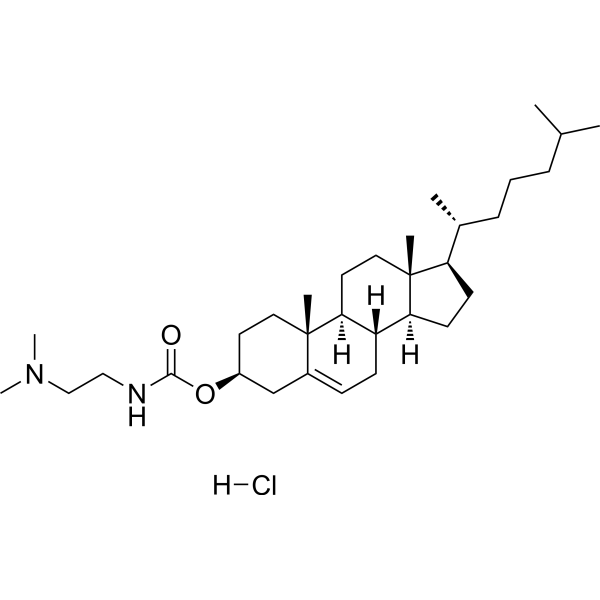
DC-Chol hydrochloride is a cationic lipid. DC-Chol hydrochloride could inhibit Aβ40 fibril formation under appropriate experimental conditions. DC-Chol hydrochloride strongly inhibits amyloidogenesis of oxidized hCT in a dose-dependent manner. DC-Chol hydrochloride induces the production of Th1 (IL-2 and IFN-γ) and Th2 (IL-5) cytokines. DC-Chol hydrochloride can enhance the body's immune response to antigens. DC-Chol hydrochloride is used as a gene delivery vector. DC-Chol hydrochloride can be used in research in areas such as hepatitis B vaccines to improve vaccine immunity .
|
-
-
- HY-144007
-
|
|
Liposome
|
Others
|
|
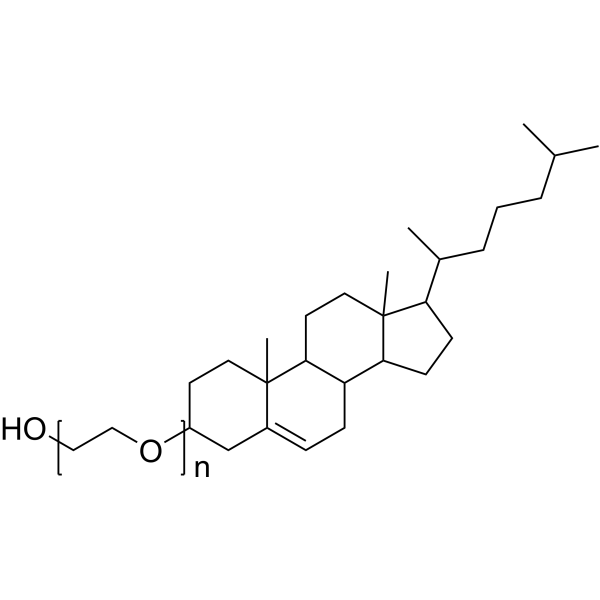
Chol-PEG is a nonionic surfactant vesicles and can be used for a blood-persistent drug delivery system .
|
-
-
- HY-144768
-
|
|
Liposome
|
Others
|
|
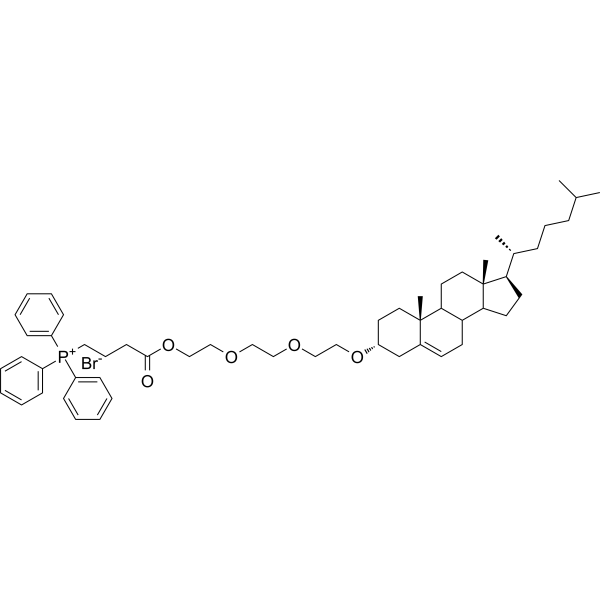
(R)-Chol-TPP a mitochondria targeting liposome ligand could be used in pH-redox responsive .
|
-
-
- HY-W322225
-
|
DLPE; 1,2-Dilauroyl-sn-glycero-3-PE
|
Liposome
|
Others
|
|
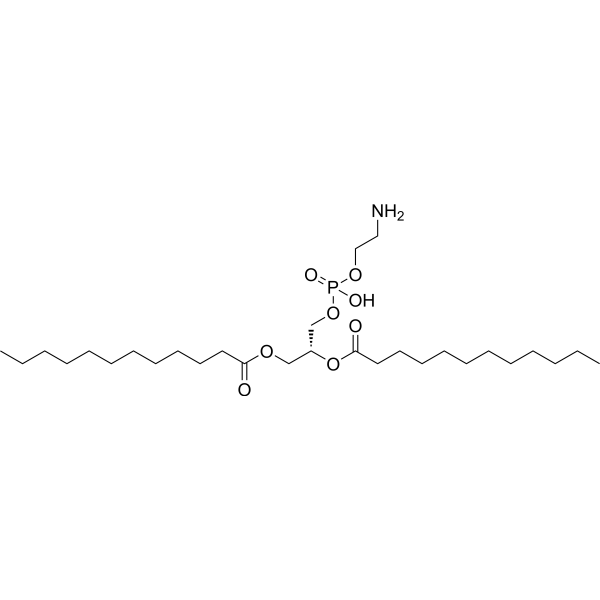
1,2-Dilauroyl-sn-glycero-3-phosphoethanolamine (DLPE) is a derivative of phosphatidylethanolamine with lauric acid (12:0) acyl chains. 1,2-Dilauroyl-sn-glycero-3-phosphoethanolamine can be used to synthesize liposomes .
|
-
-
- HY-131682
-
|
3-Hexanoyl-NBD-Cholesterol
|
Fluorescent Dye
|
Others
|
|
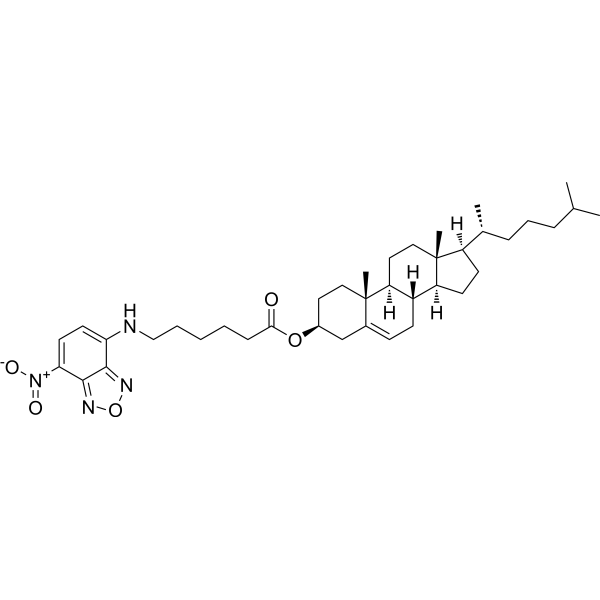
3-C6-NBD-cholesterol is a fluorescent analog of Chol that can be used to measure the kinetics of membrane and intracellular trafficking .
|
-
-
- HY-132604A
-
|
ARO-AAT sodium
|
Small Interfering RNA (siRNA)
|
Metabolic Disease
|
|
Fazirsiran sodium is a second-generation RNAi agent. Fazirsiran sodium consistes of a cholesterol-conjugated RNAi trigger (chol-RNAi) to selectively degrade Alpha1-antitrypsin (AAT) mRNA by RNAi and a melittin-derived peptide conjugated to N-acetylgalactosamine (NAG) formulated as the excipient EX1 to promote endosomal escape of the chol-RNAi in hepatocytes . Fazirsiran sodium can be used in the study of Alpha-1 Antitrypsin Deficiency (AATD) liver disease. AATD is caused by mutations in the alpha-1 antitrypsin (SERPINA1) gene.
|
-
-
- HY-N16290
-
|
|
Biochemical Assay Reagents
|
Others
|
|
Chol-PEG2000-maleimide is a PEG derivative composed of Cholesterol, PEG units and Maleimide (HY-W007324). Maleimide forms a stable thioether bond with sulfhydryl (-SH) groups .
|
-

-
- HY-152901
-
|
|
Fluorescent Dye
|
Others
|
|
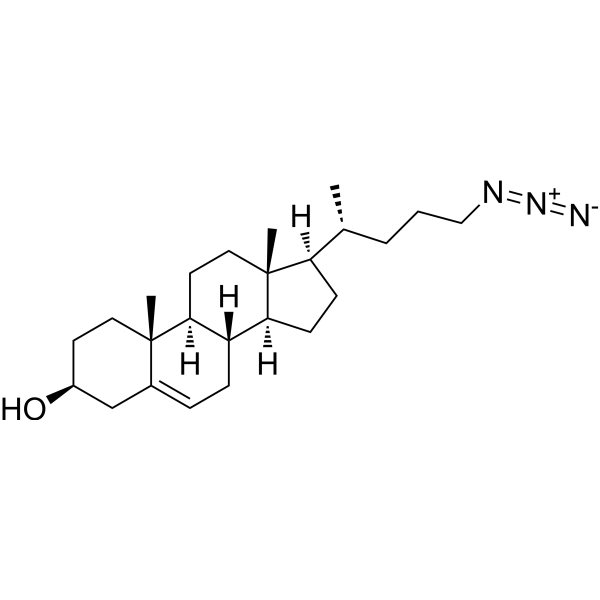
Chol-N3 is a bioorthogonal-based chol probe. Chol-N3 can combine with super-resolution fluorescence microscopy (SRM), providing direct visualization of nanoscale lipid heterogeneity in the cell surface of resting living cells . Chol-N3 is a click chemistry reagent, it contains an Azide group and can undergo copper-catalyzed azide-alkyne cycloaddition reaction (CuAAc) with molecules containing Alkyne groups. It can also undergo strain-promoted alkyne-azide cycloaddition (SPAAC) reactions with molecules containing DBCO or BCN groups.
|
-
-
- HY-132604
-
|
ARO-AAT
|
Small Interfering RNA (siRNA)
|
Metabolic Disease
|
|
Fazirsiran (ARO-AAT) is a second-generation RNAi agent. Fazirsiran consistes of a cholesterol-conjugated RNAi trigger (chol-RNAi) to selectively reduce Alpha1-antitrypsin (AAT) synthesis and a melittin-derived peptide conjugated to N-acetylgalactosamine (NAG) formulated as the excipient EX1 to promote endosomal escape of the chol-RNAi in hepatocytes . Fazirsiran can be used in the study of Alpha-1 Antitrypsin Deficiency (AATD) liver disease. Alpha-1 antitrypsin deficiency (AATD) is caused by mutations in the alpha-1 antitrypsin (SERPINA1) gene.
|
-

-
- HY-159859
-
|
|
Liposome
|
Others
|
|
IZ-Chol (IZ-Cholesterol) is an ionizable cationic lipid containing cholesterol. IZ-Chol-LNPs is highly potential to effectively complex with DNA, and endosome escape mechanisms mediated by proton sponge effect .
|
-

-
- HY-149664
-
|
DC-Chol
|
Liposome
|
Cancer
|
|
3β-[N-(N′,N′-Dimethylaminoethyl)carbamoyl]cholesterol, a lipid, has been investigated in cancer gene therapy and vaccine delivery system .
|
-
![3β-[N-(N′,N′-Dimethylaminoethyl)carbamoyl]cholesterol](//file.medchemexpress.com/product_pic/hy-149664.gif)
-
- HY-125529
-
|
Chol-T
|
Liposome
|
Others
|
|
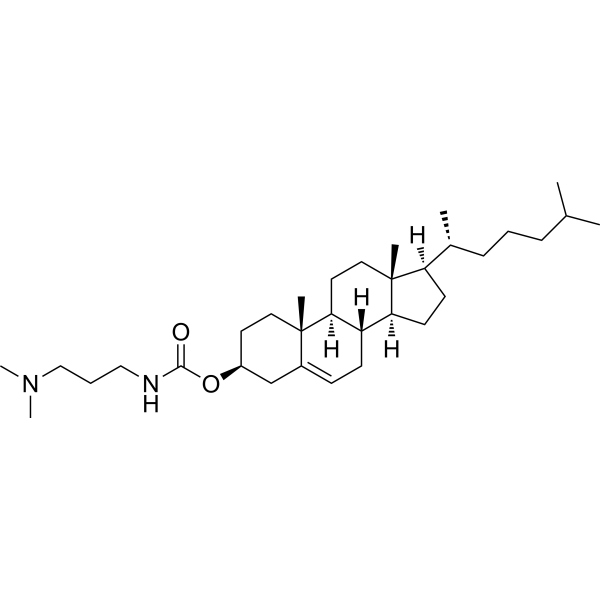
DMPAC-Chol (Chol-T) is used for liposome formation. DMPAC-Chol (Chol-T) liposomes exhibits great transfection effciencies .
|
-
-
- HY-112752
-
|
|
Liposome
|
Others
|
|
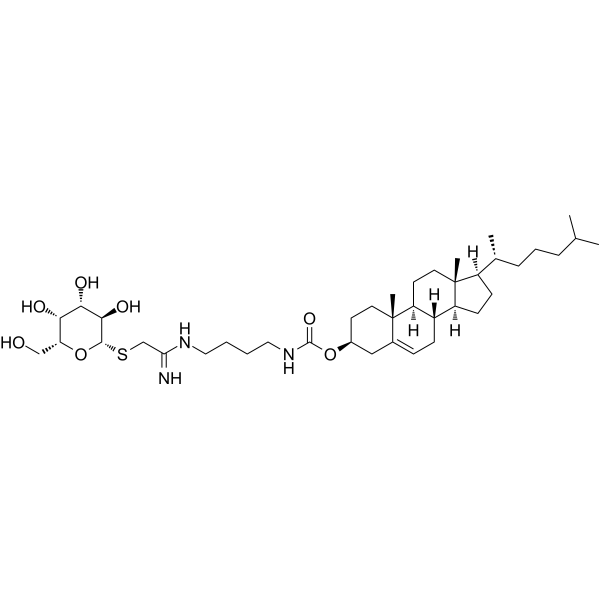
Gal-C4-Chol is a glycosylated cholesterol derivative. Gal-C4-Chol can be used as a ligand for asialoglycoprotein receptors (ASGPR) to prepare Galactosylated (Gal) liposomes. Gal-C4-Chol can be used to prepare simple lipid-based nanoparticles .
|
-
-
- HY-145523
-
|
|
Liposome
|
Others
|
|
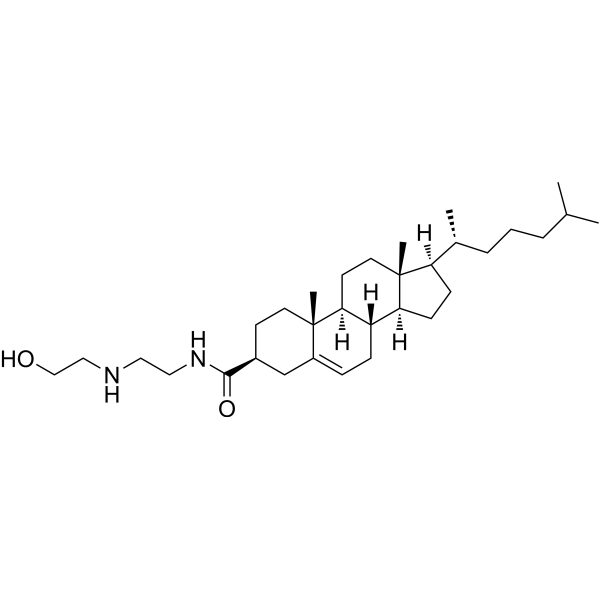
OH-Chol is a cationic cholesterol derivative. OH-Chol can be used for siRNA delivery and gene silencing .
|
-
-
- HY-136869
-
|
|
Liposome
|
Others
|
|
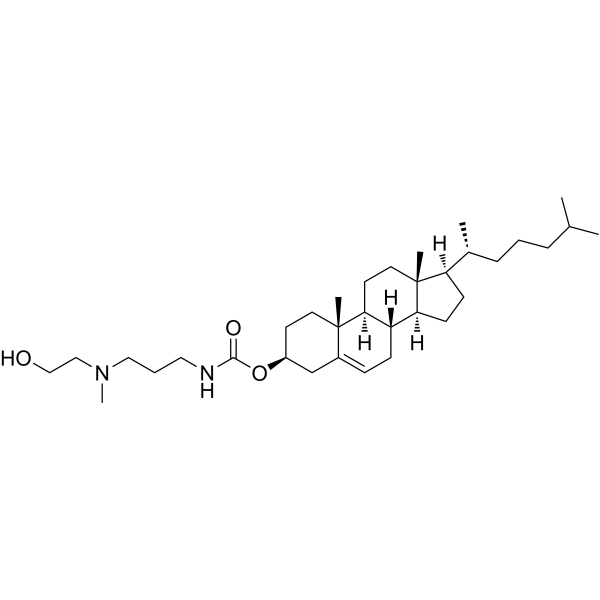
MHAPC-Chol, a cationic cholesterol, results in a high gene silencing effect via high cellular association. MHAPC-Chol delivers siRNA to the liver .
|
-
-
- HY-D2851B
-
|
|
Fluorescent Dye
|
Others
|
|
FITC-PEG5000-CHOL is a fluorescent dye composed of FITC (HY-66019), PEG and cholesterol. FITC-PEG5000-CHOL is widely used in cell membrane-related studies, liposome and nanoparticle modification, and biomolecule labeling (Ex/Em=488/525 nm) .
|
-

-
- HY-D2851
-
|
|
Fluorescent Dye
|
Others
|
|
FITC-PEG2000-CHOL is a fluorescent dye composed of FITC (HY-66019), PEG and cholesterol. FITC-PEG2000-CHOL is widely used in cell membrane-related studies, liposome and nanoparticle modification, and biomolecule labeling (Ex/Em=488/525 nm) .
|
-

-
- HY-125734
-
|
|
Liposome
|
Others
|
|
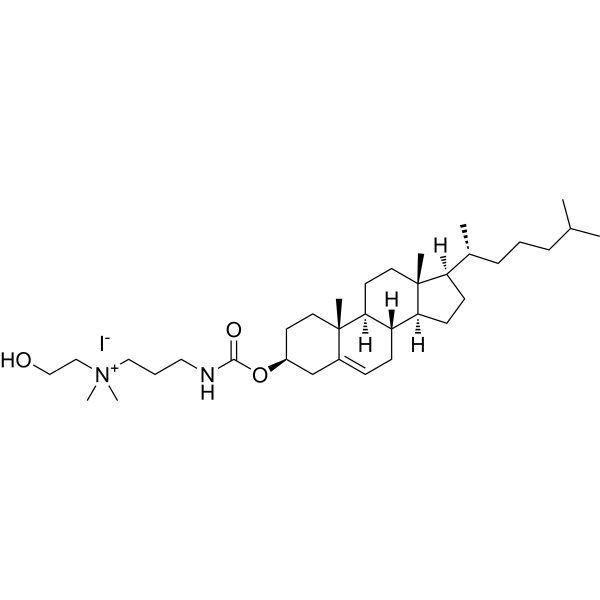
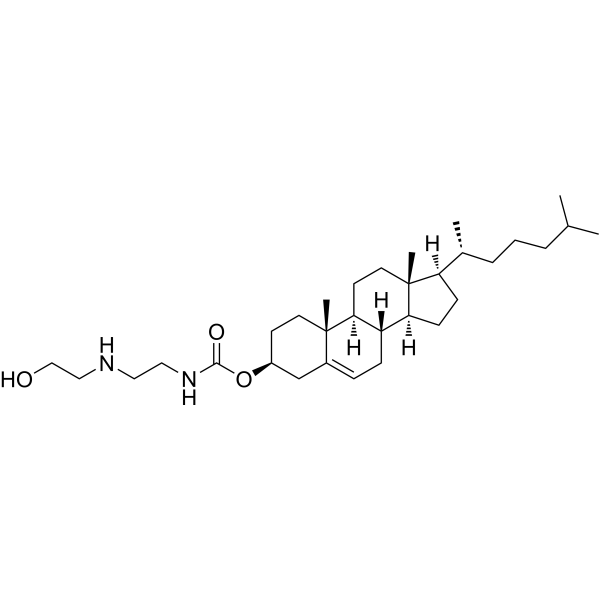
DMHAPC-Chol, a cationic lipid, contains a biodegradable carbamoyl linker and a hydroxyethyl group in the polar amino head moiety. DMHAPC-Chol can be used in both transfection experiments concerning plasmids or siRNA .
|
-
-
- HY-160581
-
|
|
Liposome
|
Others
|
|
OH-C-Chol is a cationic liposome that serves as a siRNA delivery vehicle. OH-C-Chol (LP-C) and OH-NC-Chol (LP-NC)/siRNA complexes (lipoplexes) showed better performance than NP-C and NP-NC/siRNA complexes (nanocomplexes), respectively. ) greater gene silencing effect .
|
-
-
- HY-146822S
-
-
-
- HY-144825
-
|
|
Apoptosis
Reactive Oxygen Species (ROS)
|
Cancer
|
|
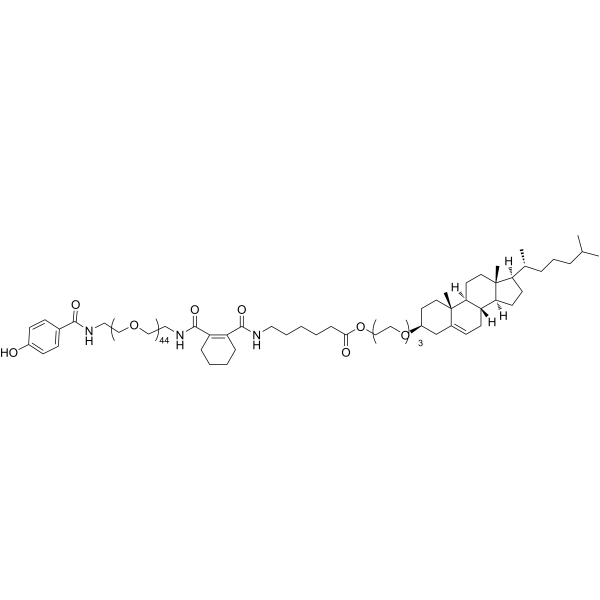
Chol-CTPP is a ligand with dual targeting effect on blood-brain barrier (BBB) and glioma cells. Lip-CTPP can be gained by Chol-CTPP and another mitochondria targeting ligand (Chol-TPP). Lip-CTPP is a promising potential carrier to exert the anti-glioma effect of doxorubicin (DOX) and lonidamine (LND) collaboratively. Lip-CTPP elevates the inhibition rate of tumor cell proliferation, migration and invasion, promote apoptosis and necrosis, and interfere with mitochondrial function .
|
-
-
- HY-W590538
-
|
|
Liposome
|
Cancer
|
|
HAPC-Chol is a cationic cholesterol that can be used as a component of lipoplexes complexes.
|
-

-
- HY-W590538A
-
|
|
Liposome
|
Others
|
|
HAPC-Chol is a cationic cholesterol that can be used as a component of lipoplexes complexes .
|
-

-
- HY-N16234
-
|
|
Fluorescent Dye
|
Others
|
|
Chol-PEG1000 fluorescein is a fluorescent lipid that consists of a cholesterol-PEG1000 unit conjugated to fluorescein. Chol-PEG1000 fluorescein can be used to prepare lipid nanoparticles for drug delivery research (Ex/Em = 480/520 nm).
|
-

-
- HY-170221
-
-

-
- HY-N16237
-
|
|
Biochemical Assay Reagents
|
Others
|
|
Chol-PEG1000-maleimide is a PEG derivative composed of Cholesterol, PEG units and Maleimide (HY-W007324). Maleimide forms a stable thioether bond with sulfhydryl (-SH) groups .
|
-

-
- HY-U00424
-
|
Vitamin D3 derivative
|
VD/VDR
|
Metabolic Disease
|
|
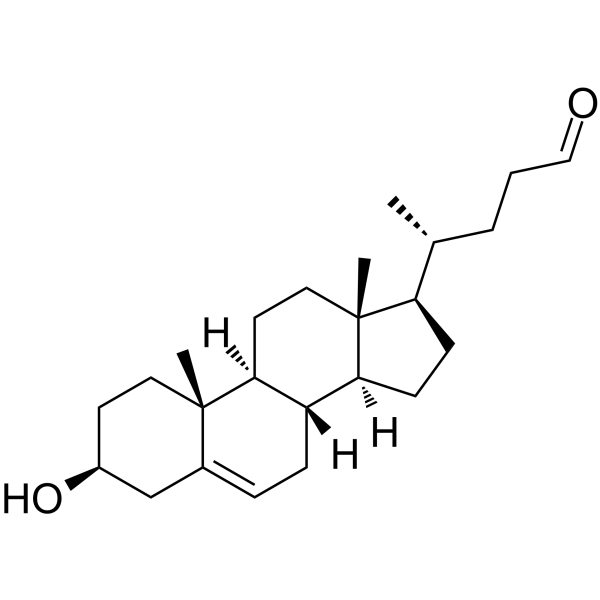
Chol-5-en-24-al-3β-ol is a steroid compound (Vitamin D3 derivative) extracted from patent US 4354972 A, Compound IX.
|
-
-
- HY-W127619
-
|
P6Chol
|
Biochemical Assay Reagents
|
Others
|
|
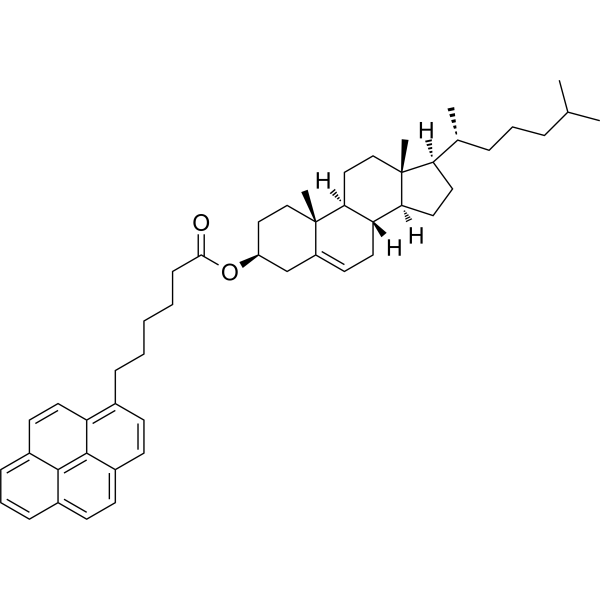
Cholesteryl (pyren-1-yl)hexanoate is a biochemical reagent that can be used as a biological material or organic compound for life science related research.
|
-
-
- HY-N16292
-
|
|
Biochemical Assay Reagents
|
Others
|
|
Chol-PEG2000 carboxylic acid is a PEG lipid that consists of a cholesterol and a carboxylic acid. Chol-PEG2000 carboxylic acid can be used to prepare lipid nanoparticles for drug delivery.
|
-

-
- HY-P11766
-
|
GALA-Cholesterol
|
Biochemical Assay Reagents
|
Cancer
|
|
GALA-chol is a cholesterol-conjugated pH-responsive fusion peptide that can serve as a delivery adjuvant. GALA-chol enhances the endocytosis of siRNA RET/PTC1-SQ nanoparticles, inhibits cell viability, and undergoes pH-responsive charge conversion in the acidic lysosomal environment, thereby promoting lysosomal escape of small extracellular vesicle (sEV) cargo. GALA-chol anchors to the sEV membrane and maintains the structural integrity and intrinsic homing activity of sEVs. GALA-chol can be used in studies related to adjuvant delivery .
|
-

-
- HY-N16233
-
|
|
Fluorescent Dye
|
Others
|
|
Chol-PEG2000 fluorescein is a fluorescent lipid that consists of a cholesterol-PEG2000 unit conjugated to fluorescein. Chol-PEG2000 fluorescein can be used to prepare lipid nanoparticles for drug delivery research (Ex/Em = 480/520 nm).
|
-

-
- HY-N16312
-
-

-
- HY-N15843
-
|
|
Liposome
|
Others
|
|
Chol-mPEG2000 is a PEG lipid containing cholesterol and can be used to prepare lipid nanoparticles for drug delivery.
|
-

-
- HY-D2851A
-
|
|
Fluorescent Dye
|
Others
|
|
FITC-PEG-CHOL (MW 3400) is a fluorescent dye composed of FITC (HY-66019), PEG and cholesterol. FITC-PEG-CHOL (MW 5000) is widely used in cell membrane-related studies, liposome and nanoparticle modification, and biomolecule labeling (Ex/Em = 488/525 nm) .
|
-

-
- HY-D2851B
-
|
|
Fluorescent Dyes
|
|
FITC-PEG5000-CHOL is a fluorescent dye composed of FITC (HY-66019), PEG and cholesterol. FITC-PEG5000-CHOL is widely used in cell membrane-related studies, liposome and nanoparticle modification, and biomolecule labeling (Ex/Em=488/525 nm) .
|
-
- HY-D2851
-
|
|
Fluorescent Dyes
|
|
FITC-PEG2000-CHOL is a fluorescent dye composed of FITC (HY-66019), PEG and cholesterol. FITC-PEG2000-CHOL is widely used in cell membrane-related studies, liposome and nanoparticle modification, and biomolecule labeling (Ex/Em=488/525 nm) .
|
-
- HY-D2851A
-
|
|
Fluorescent Dyes
|
|
FITC-PEG-CHOL (MW 3400) is a fluorescent dye composed of FITC (HY-66019), PEG and cholesterol. FITC-PEG-CHOL (MW 5000) is widely used in cell membrane-related studies, liposome and nanoparticle modification, and biomolecule labeling (Ex/Em = 488/525 nm) .
|
-
- HY-137131
-
|
DC-Cholesterol hydrochloride
|
Biochemical Assay Reagents
|
|
DC-Chol hydrochloride is a cationic lipid. DC-Chol hydrochloride could inhibit Aβ40 fibril formation under appropriate experimental conditions. DC-Chol hydrochloride strongly inhibits amyloidogenesis of oxidized hCT in a dose-dependent manner. DC-Chol hydrochloride induces the production of Th1 (IL-2 and IFN-γ) and Th2 (IL-5) cytokines. DC-Chol hydrochloride can enhance the body's immune response to antigens. DC-Chol hydrochloride is used as a gene delivery vector. DC-Chol hydrochloride can be used in research in areas such as hepatitis B vaccines to improve vaccine immunity .
|
-
- HY-144007
-
|
|
Biochemical Assay Reagents
|
|
Chol-PEG is a nonionic surfactant vesicles and can be used for a blood-persistent drug delivery system .
|
-
- HY-144768
-
-
- HY-149664
-
|
DC-Chol
|
Biochemical Assay Reagents
|
|
3β-[N-(N′,N′-Dimethylaminoethyl)carbamoyl]cholesterol, a lipid, has been investigated in cancer gene therapy and vaccine delivery system .
|
-
- HY-112752
-
|
|
Biochemical Assay Reagents
|
|
Gal-C4-Chol is a glycosylated cholesterol derivative. Gal-C4-Chol can be used as a ligand for asialoglycoprotein receptors (ASGPR) to prepare Galactosylated (Gal) liposomes. Gal-C4-Chol can be used to prepare simple lipid-based nanoparticles .
|
-
- HY-170221
-
|
|
Biochemical Assay Reagents
|
|
Chol-C10-PC is a cholesterol phosphorylation choline with a hydrophobic region and a large polar head group.
|
-
- HY-W127619
-
|
P6Chol
|
Biochemical Assay Reagents
|
|
Cholesteryl (pyren-1-yl)hexanoate is a biochemical reagent that can be used as a biological material or organic compound for life science related research.
|
| Cat. No. |
상품명 |
Target |
Research Area |
-
- HY-P11766
-
|
GALA-Cholesterol
|
Biochemical Assay Reagents
|
Cancer
|
|
GALA-chol is a cholesterol-conjugated pH-responsive fusion peptide that can serve as a delivery adjuvant. GALA-chol enhances the endocytosis of siRNA RET/PTC1-SQ nanoparticles, inhibits cell viability, and undergoes pH-responsive charge conversion in the acidic lysosomal environment, thereby promoting lysosomal escape of small extracellular vesicle (sEV) cargo. GALA-chol anchors to the sEV membrane and maintains the structural integrity and intrinsic homing activity of sEVs. GALA-chol can be used in studies related to adjuvant delivery .
|
| Cat. No. |
상품명 |
Category |
Target |
Chemical Structure |
-
- HY-N16290
-
|
|
Lipid
|
Biochemical Assay Reagents
|
|
Chol-PEG2000-maleimide is a PEG derivative composed of Cholesterol, PEG units and Maleimide (HY-W007324). Maleimide forms a stable thioether bond with sulfhydryl (-SH) groups .
|
-
-
- HY-N16234
-
|
|
Lipid
|
Fluorescent Dye
|
|
Chol-PEG1000 fluorescein is a fluorescent lipid that consists of a cholesterol-PEG1000 unit conjugated to fluorescein. Chol-PEG1000 fluorescein can be used to prepare lipid nanoparticles for drug delivery research (Ex/Em = 480/520 nm).
|
-
-
- HY-N16237
-
|
|
Lipid
|
Biochemical Assay Reagents
|
|
Chol-PEG1000-maleimide is a PEG derivative composed of Cholesterol, PEG units and Maleimide (HY-W007324). Maleimide forms a stable thioether bond with sulfhydryl (-SH) groups .
|
-
-
- HY-N16292
-
|
|
Lipid
|
Biochemical Assay Reagents
|
|
Chol-PEG2000 carboxylic acid is a PEG lipid that consists of a cholesterol and a carboxylic acid. Chol-PEG2000 carboxylic acid can be used to prepare lipid nanoparticles for drug delivery.
|
-
-
- HY-N16233
-
|
|
Lipid
|
Fluorescent Dye
|
|
Chol-PEG2000 fluorescein is a fluorescent lipid that consists of a cholesterol-PEG2000 unit conjugated to fluorescein. Chol-PEG2000 fluorescein can be used to prepare lipid nanoparticles for drug delivery research (Ex/Em = 480/520 nm).
|
-
-
- HY-N16312
-
-
-
- HY-N15843
-
-
| Cat. No. |
상품명 |
Chemical Structure |
-
- HY-146822S
-
|
|
|
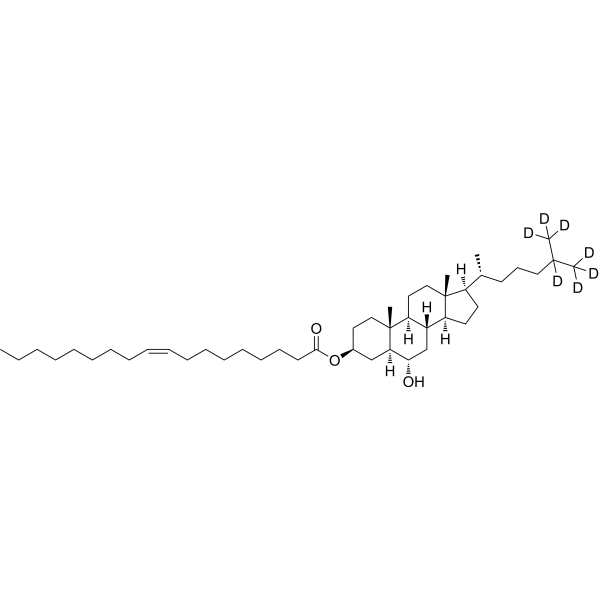
6αOH Chol ester-d7 is deuterium labeled 6αOH Chol ester.
|
-
| Cat. No. |
상품명 |
|
Classification |
-
- HY-152901
-
|
|
|
Azide
Labeling and Fluorescence Imaging
|
|
Chol-N3 is a bioorthogonal-based chol probe. Chol-N3 can combine with super-resolution fluorescence microscopy (SRM), providing direct visualization of nanoscale lipid heterogeneity in the cell surface of resting living cells . Chol-N3 is a click chemistry reagent, it contains an Azide group and can undergo copper-catalyzed azide-alkyne cycloaddition reaction (CuAAc) with molecules containing Alkyne groups. It can also undergo strain-promoted alkyne-azide cycloaddition (SPAAC) reactions with molecules containing DBCO or BCN groups.
|
| Cat. No. |
상품명 |
|
Classification |
-
- HY-137131
-
|
DC-Cholesterol hydrochloride
|
|
Cholesterol
|
|
DC-Chol hydrochloride is a cationic lipid. DC-Chol hydrochloride could inhibit Aβ40 fibril formation under appropriate experimental conditions. DC-Chol hydrochloride strongly inhibits amyloidogenesis of oxidized hCT in a dose-dependent manner. DC-Chol hydrochloride induces the production of Th1 (IL-2 and IFN-γ) and Th2 (IL-5) cytokines. DC-Chol hydrochloride can enhance the body's immune response to antigens. DC-Chol hydrochloride is used as a gene delivery vector. DC-Chol hydrochloride can be used in research in areas such as hepatitis B vaccines to improve vaccine immunity .
|
-
- HY-144007
-
|
|
|
Cholesterol
|
|
Chol-PEG is a nonionic surfactant vesicles and can be used for a blood-persistent drug delivery system .
|
-
- HY-144768
-
|
|
|
Cholesterol
|
|
(R)-Chol-TPP a mitochondria targeting liposome ligand could be used in pH-redox responsive .
|
-
- HY-W322225
-
|
DLPE; 1,2-Dilauroyl-sn-glycero-3-PE
|
|
Phospholipids
|
|
1,2-Dilauroyl-sn-glycero-3-phosphoethanolamine (DLPE) is a derivative of phosphatidylethanolamine with lauric acid (12:0) acyl chains. 1,2-Dilauroyl-sn-glycero-3-phosphoethanolamine can be used to synthesize liposomes .
|
-
- HY-132604A
-
|
ARO-AAT sodium
|
|
siRNAs
siRNA drugs
|
|
Fazirsiran sodium is a second-generation RNAi agent. Fazirsiran sodium consistes of a cholesterol-conjugated RNAi trigger (chol-RNAi) to selectively degrade Alpha1-antitrypsin (AAT) mRNA by RNAi and a melittin-derived peptide conjugated to N-acetylgalactosamine (NAG) formulated as the excipient EX1 to promote endosomal escape of the chol-RNAi in hepatocytes . Fazirsiran sodium can be used in the study of Alpha-1 Antitrypsin Deficiency (AATD) liver disease. AATD is caused by mutations in the alpha-1 antitrypsin (SERPINA1) gene.
|
-
- HY-132604
-
|
ARO-AAT
|
|
siRNAs
siRNA drugs
|
|
Fazirsiran (ARO-AAT) is a second-generation RNAi agent. Fazirsiran consistes of a cholesterol-conjugated RNAi trigger (chol-RNAi) to selectively reduce Alpha1-antitrypsin (AAT) synthesis and a melittin-derived peptide conjugated to N-acetylgalactosamine (NAG) formulated as the excipient EX1 to promote endosomal escape of the chol-RNAi in hepatocytes . Fazirsiran can be used in the study of Alpha-1 Antitrypsin Deficiency (AATD) liver disease. Alpha-1 antitrypsin deficiency (AATD) is caused by mutations in the alpha-1 antitrypsin (SERPINA1) gene.
|
-
- HY-159859
-
|
|
|
Cationic Lipids
|
|
IZ-Chol (IZ-Cholesterol) is an ionizable cationic lipid containing cholesterol. IZ-Chol-LNPs is highly potential to effectively complex with DNA, and endosome escape mechanisms mediated by proton sponge effect .
|
-
- HY-149664
-
|
DC-Chol
|
|
Cholesterol
|
|
3β-[N-(N′,N′-Dimethylaminoethyl)carbamoyl]cholesterol, a lipid, has been investigated in cancer gene therapy and vaccine delivery system .
|
-
- HY-125529
-
|
Chol-T
|
|
Cationic Lipids
|
|
DMPAC-Chol (Chol-T) is used for liposome formation. DMPAC-Chol (Chol-T) liposomes exhibits great transfection effciencies .
|
-
- HY-112752
-
|
|
|
Cholesterol
|
|
Gal-C4-Chol is a glycosylated cholesterol derivative. Gal-C4-Chol can be used as a ligand for asialoglycoprotein receptors (ASGPR) to prepare Galactosylated (Gal) liposomes. Gal-C4-Chol can be used to prepare simple lipid-based nanoparticles .
|
-
- HY-145523
-
|
|
|
Cationic Lipids
|
|
OH-Chol is a cationic cholesterol derivative. OH-Chol can be used for siRNA delivery and gene silencing .
|
-
- HY-136869
-
|
|
|
Cationic Lipids
|
|
MHAPC-Chol, a cationic cholesterol, results in a high gene silencing effect via high cellular association. MHAPC-Chol delivers siRNA to the liver .
|
-
- HY-125734
-
|
|
|
Cationic Lipids
Cholesterol
|
|
DMHAPC-Chol, a cationic lipid, contains a biodegradable carbamoyl linker and a hydroxyethyl group in the polar amino head moiety. DMHAPC-Chol can be used in both transfection experiments concerning plasmids or siRNA .
|
-
- HY-160581
-
|
|
|
Cationic Lipids
|
|
OH-C-Chol is a cationic liposome that serves as a siRNA delivery vehicle. OH-C-Chol (LP-C) and OH-NC-Chol (LP-NC)/siRNA complexes (lipoplexes) showed better performance than NP-C and NP-NC/siRNA complexes (nanocomplexes), respectively. ) greater gene silencing effect .
|
-
- HY-W590538
-
|
|
|
Cholesterol
|
|
HAPC-Chol is a cationic cholesterol that can be used as a component of lipoplexes complexes.
|
-
- HY-W590538A
-
|
|
|
Cationic Lipids
|
|
HAPC-Chol is a cationic cholesterol that can be used as a component of lipoplexes complexes .
|
-
- HY-N15843
-
|
|
|
Pegylated Lipids
|
|
Chol-mPEG2000 is a PEG lipid containing cholesterol and can be used to prepare lipid nanoparticles for drug delivery.
|
Your information is safe with us. * Required Fields.
Inquiry Information
- 상품명:
- Cat. No.:
- 수량:
- MCE Japan Authorized Agent:





![3β-[N-(N′,N′-Dimethylaminoethyl)carbamoyl]cholesterol](http://file.medchemexpress.com/product_pic/hy-149664.gif)





