



DC-Chol hydrochloride

Based on 1 Customer Validation
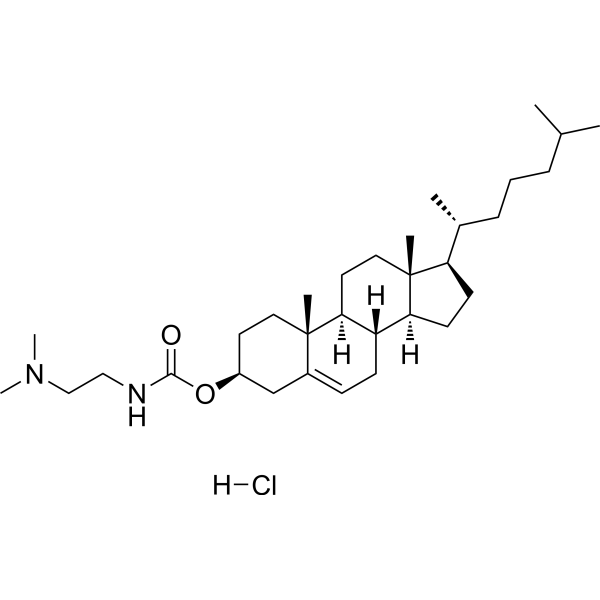
DC-Chol hydrochloride is a cationic lipid. DC-Chol hydrochloride could inhibit Aβ40 fibril formation under appropriate experimental conditions. DC-Chol hydrochloride strongly inhibits amyloidogenesis of oxidized hCT in a dose-dependent manner. DC-Chol hydrochloride induces the production of Th1 (IL-2 and IFN-γ) and Th2 (IL-5) cytokines. DC-Chol hydrochloride can enhance the body's immune response to antigens. DC-Chol hydrochloride is used as a gene delivery vector. DC-Chol hydrochloride can be used in research in areas such as hepatitis B vaccines to improve vaccine immunity.
Para uso exclusivo en investigación. No vendemos a pacientes.
- Pureza : 99.95%
- No. CAS: 166023-21-8
- Fòrmula: C32H57ClN2O2
- Peso molecular:537.26
-
Almacenamiento:
4°C, sealed storage, away from moisture
* In solvent : -80°C, 6 months; -20°C, 1 month (sealed storage, away from moisture)

To place orders, for customer services and technical support, please contact: MedChemExpress USA
Tel: 609-228-6898 E-mail: [email protected] [email protected]


-
 Actividad biológica
-
Chemical Information
-
Solvente y solubilidad
- Protocolo
- Pureza y Documentación
- Referencias
-
 Help & FAQs


-
HY-112005
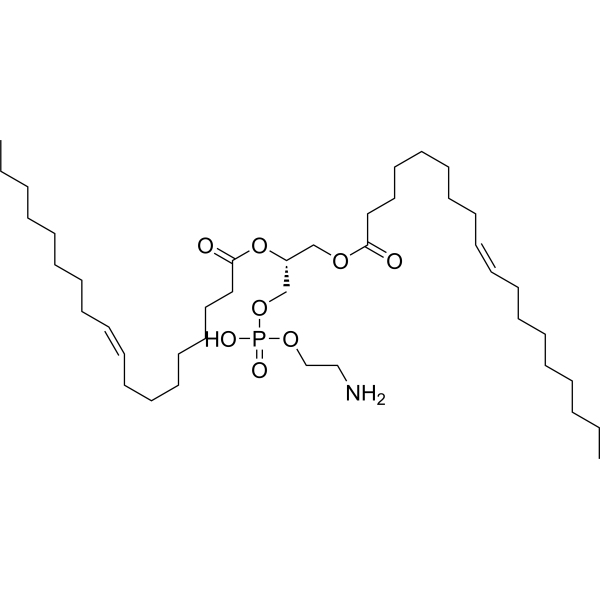
DOPEFerroptosis Inhibitor -
HY-112251
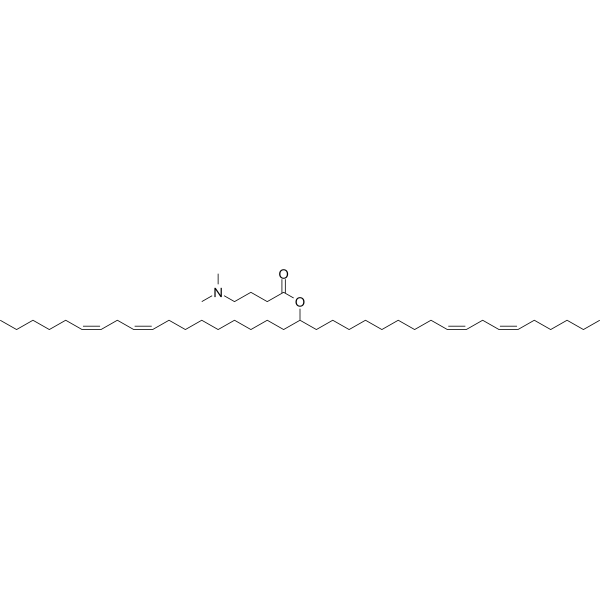
D-Lin-MC3-DMAsiRNA Delivery Vehicle -
HY-N0322
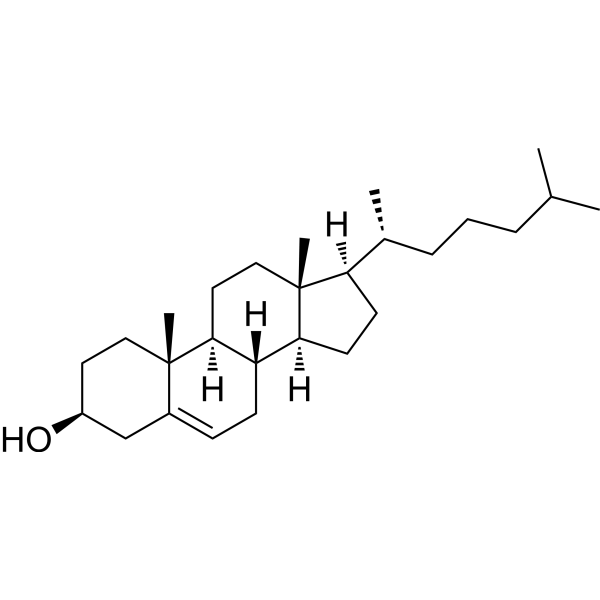
Cholesterol (from animal)ERRα Agonist -
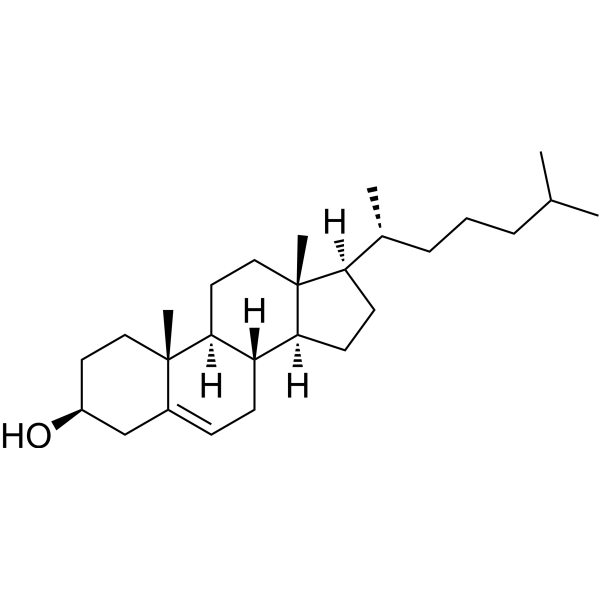
HY-N0322R
Cholesterol (Standard) -
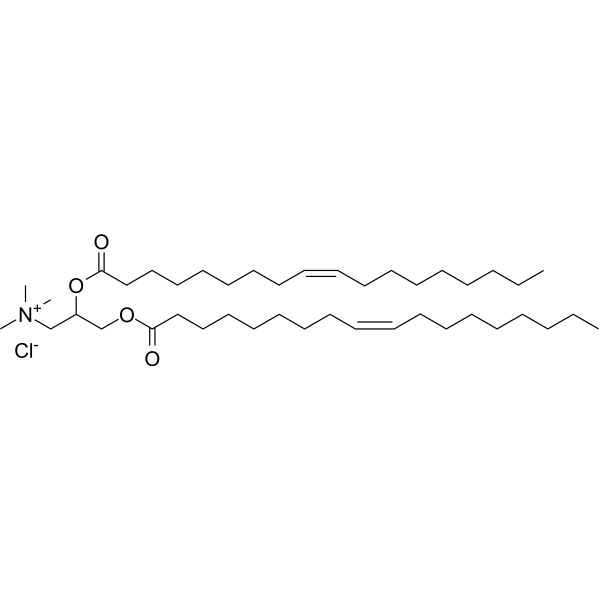
HY-112754A
DOTAP chlorideCationic Lipid -
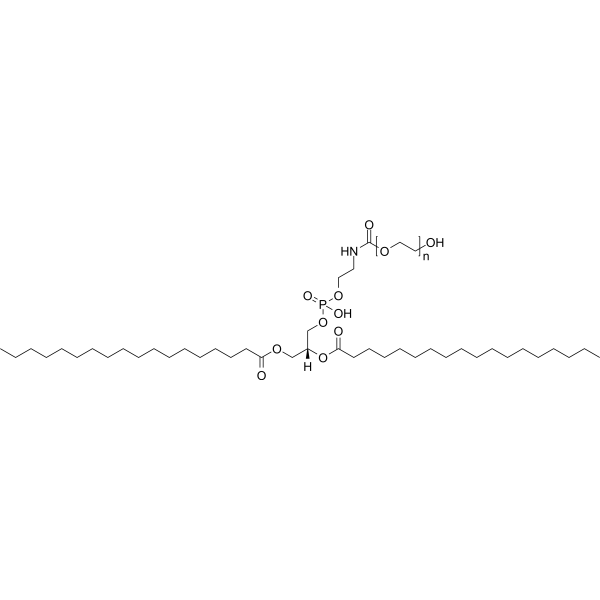
HY-142979
DSPE-PEG 2000PEG Lipid -

HY-N0322E
Cholesterol (synthetic)ERRα Agonist -
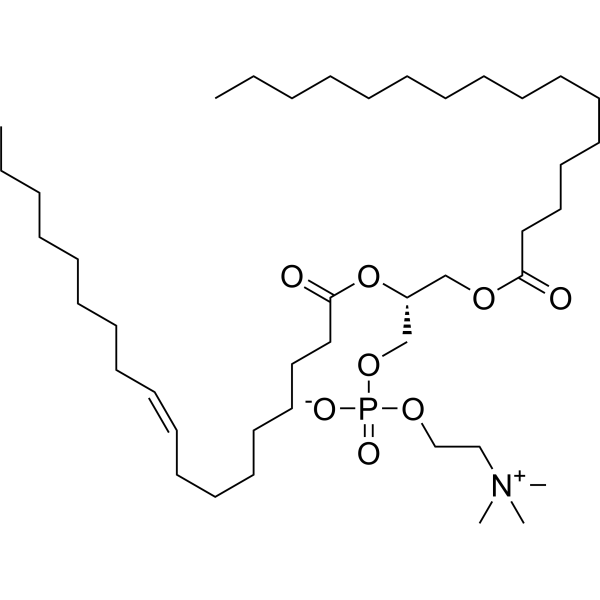
HY-130462
1-Palmitoyl-2-oleoyl-sn-glycero-3-PCSaturated Monobasic Alcohol -

HY-139200
DOTMADOTA Analogue -
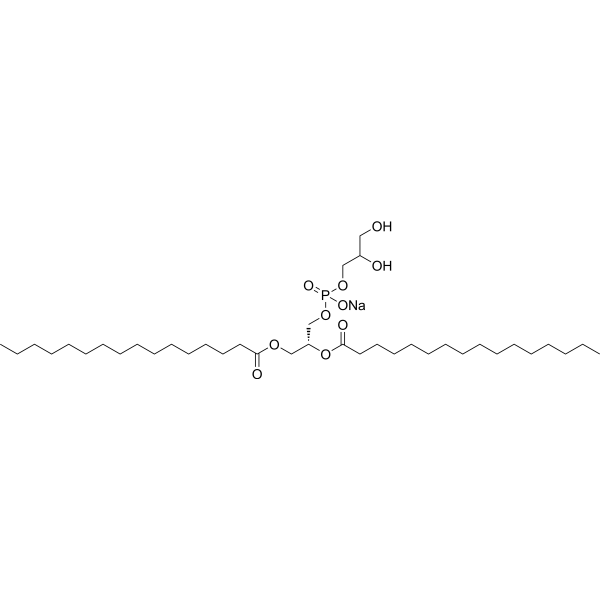
HY-125940
DPPGBiological Reagent -

HY-N0322GL
Cholesterol (GMP Like, synthetic)GMP Like Cholesterol -

HY-130462R
1-Palmitoyl-2-oleoyl-sn-glycero-3-PC (Standard)Saturated Monobasic Alcohol


Actividad biológica
Descripciòn
In Vitro
DC-Chol (hydrochloride) enhances the in vitro proliferative response of lymphocytes from mice immunized with HBsAg and induces the production of Th1 (IL-2 and IFN-γ) and Th2 (IL-5) cytokines[3].
MedChemExpress (MCE) has not independently confirmed the accuracy of these methods. They are for reference only.
In Vivo
MedChemExpress (MCE) has not independently confirmed the accuracy of these methods. They are for reference only.
-
Animal Model:BALB/c mice (female, 6-8-week-old), OF1 mice (female, 6-8-week-old), B10.M mice (female, 6-8-week-old); mouse models for studying immune response to HBsAg vaccine[3]
-
Dosage:0.5 mg DC-Chol in Tris/HCl 20 mM, NaCl 150 mM, pH 6.8 for all mouse models
-
Administration:Subcutaneous injection, twice, with a 3-week interval between injections for all mouse models
-
Result:Increased anti-HBsAg IgG antibody titres, induced higher levels of both IgG1 and IgG2a antibodies, and enhanced cellular immune responses in BALB/c mice.
Induced a higher seroconversion rate and higher antibody titres compared to alum-adjuvanted vaccine in OF1 mice.
Induced a seroconversion rate of 63% in B10.M mice (non-responders to HBsAg).
Ensayo clínico
| NCT Number | Sponsor | Condition | Start Date |
Phase

|
|---|---|---|---|---|
| NCT01329991 | 2011-05 | PHASE1 |


Chemical Information
-
No. CAS 166023-21-8
-
Appearance Solid
-
Peso molecular 537.26
-
Fòrmula C32H57ClN2O2
-
Color White to light yellow
-
SMILES
CC(C)CCC[C@@H](C)[C@H]1CC[C@@]2([H])[C@]3([H])CC=C4C[C@@H](OC(NCCN(C)C)=O)CC[C@]4(C)[C@@]3([H])CC[C@]12C.[H]Cl
-
Synonyms
DC-Cholesterol hydrochloride
-
Envío
Room temperature in continental US; may vary elsewhere.
-
Almacenamiento
4°C, sealed storage, away from moisture
* In solvent : -80°C, 6 months; -20°C, 1 month (sealed storage, away from moisture)


Solvente y solubilidad
In Vitro:
Ethanol : 12.5 mg/mL (23.27 mM; Need ultrasonic)
Please refer to the solubility information to select the appropriate solvent. Once prepared, please aliquot and store the solution to prevent product inactivation from repeated freeze-thaw cycles.
Storage method and period of stock solution: -80°C, 6 months; -20°C, 1 month (sealed storage, away from moisture). When stored at -80°C, please use it within 6 months. When stored at -20°C, please use it within 1 month.
Please refer to the solubility information to select the appropriate solvent. Once prepared, please aliquot and store the solution to prevent product inactivation from repeated freeze-thaw cycles.
Storage method and period of stock solution: -80°C, 6 months; -20°C, 1 month (sealed storage, away from moisture). When stored at -80°C, please use it within 6 months. When stored at -20°C, please use it within 1 month.
Concentration (start) × Volume (start) = Concentration (final) × Volume (final)
In Vivo:
Select the appropriate dissolution method based on your experimental animal and administration route.
- For the following dissolution methods, please ensure to first prepare a clear stock solution using an In Vitro approach and then sequentially add co-solvents:
- To ensure reliable experimental results, the clarified stock solution can be appropriately stored based on storage conditions. As for the working solution for In Vivo experiments, it is recommended to prepare freshly and use it on the same day.
- The percentages shown for the solvents indicate their volumetric ratio in the final prepared solution. If precipitation or phase separation occurs during preparation, heat and/or sonication can be used to aid dissolution.
Add each solvent one by one: 10% EtOH 40% PEG300 5% Tween-80 45% Saline
Solubility: ≥ 1.25 mg/mL (2.33 mM); Clear solution
This protocol yields a clear solution of ≥ 1.25 mg/mL (saturation unknown).
Taking 1 mL working solution as an example, add 100 μL EtOH stock solution (12.5 mg/mL) to 400 μL PEG300, and mix evenly; then add 50 μL Tween-80 and mix evenly; then add 450 μL Saline to adjust the volume to 1 mL.
Preparation of Saline: Dissolve 0.9 g sodium chloride in ddH₂O and dilute to 100 mL to obtain a clear Saline solution.
Add each solvent one by one: 10% EtOH 90% (20% SBE-β-CD in Saline)
Solubility: ≥ 1.25 mg/mL (2.33 mM); Clear solution
This protocol yields a clear solution of ≥ 1.25 mg/mL (saturation unknown).
Taking 1 mL working solution as an example, add 100 μL EtOH stock solution (12.5 mg/mL) to 900 μL 20% SBE-β-CD in Saline, and mix evenly.
Preparation of 20% SBE-β-CD in Saline (4°C, storage for one week): 2 g SBE-β-CD powder is dissolved in 10 mL Saline, completely dissolve until clear.
Add each solvent one by one: 10% EtOH 90% Corn Oil
Solubility: ≥ 1.25 mg/mL (2.33 mM); Clear solution
This protocol yields a clear solution of ≥ 1.25 mg/mL (saturation unknown). If the continuous dosing period exceeds half a month, please choose this protocol carefully.
Taking 1 mL working solution as an example, add 100 μL EtOH stock solution (12.5 mg/mL) to 900 μL Corn oil, and mix evenly.
In Vivo Dissolution Calculator
Please enter the basic information of animal experiments:
-
-
-
-
Recommended: Prepare an additional quantity of animals to account for potential losses during experiments.
Working solution concentration: 0.22 mg/mL


Pureza y Documentación
-
Ficha de datos (282 KB)
-
SDS (252 KB)
- English - EN (252 KB)
- Français - FR (252 KB)
- Deutsch - DE (252 KB)
- Norwegian - NO (252 KB)
- Español - ES (252 KB)
- Swedish - SV (252 KB)
- Italian - IT (252 KB)
- Korean - KR (252 KB)
- Portuguese - PT (252 KB)
-
Instrucciones de manejo (2659 KB)
Referencias
[1]. Esmail A Elbassal, et al. Effects of Charged Cholesterol Derivatives on Aβ40 Amyloid Formation. J Phys Chem B. 2016 Jan 14;120(1):59-68. [Content Brief]
[2]. Richard Lantz, et al. Effects of disulfide bond and cholesterol derivatives on human calcitonin amyloid formation. Biopolymers. 2020 May;111(5):e23343. [Content Brief]
[3]. Brunel F, et al. Cationic lipid DC-Chol induces an improved and balanced immunity able to overcome the unresponsiveness to the hepatitis B vaccine. Vaccine. 1999 Apr 23;17(17):2192-203. [Content Brief]


Complete Stock Solution Preparation Table
Please refer to the solubility information to select the appropriate solvent. Once prepared, please aliquot and store the solution to prevent product inactivation from repeated freeze-thaw cycles.
Storage method and period of stock solution: -80°C, 6 months; -20°C, 1 month (sealed storage, away from moisture). When stored at -80°C, please use it within 6 months. When stored at -20°C, please use it within 1 month.
| Optional Solvent | Concentration Solvent Mass | 1 mg | 5 mg | 10 mg | 25 mg |
|---|---|---|---|---|---|
| Ethanol | 1 mM | 1.8613 mL | 9.3065 mL | 18.6130 mL | 46.5324 mL |
| 5 mM | 0.3723 mL | 1.8613 mL | 3.7226 mL | 9.3065 mL | |
| 10 mM | 0.1861 mL | 0.9306 mL | 1.8613 mL | 4.6532 mL | |
| 15 mM | 0.1241 mL | 0.6204 mL | 1.2409 mL | 3.1022 mL | |
| 20 mM | 0.0931 mL | 0.4653 mL | 0.9306 mL | 2.3266 mL |


DC-Chol hydrochloride Related Classifications
HY-137131 Related Classifications
 Powered by Bioz