Search Result
Results for "
Cyanine5.5
" in MedChemExpress (MCE) Product Catalog:
-
- HY-D0924
-
Cy5.5
Maximum Cited Publications
63 Publications Verification
Sulfo-Cyanine5.5
|
Fluorescent Dye
|
Cardiovascular Disease
Neurological Disease
Metabolic Disease
Inflammation/Immunology
Cancer
|
|
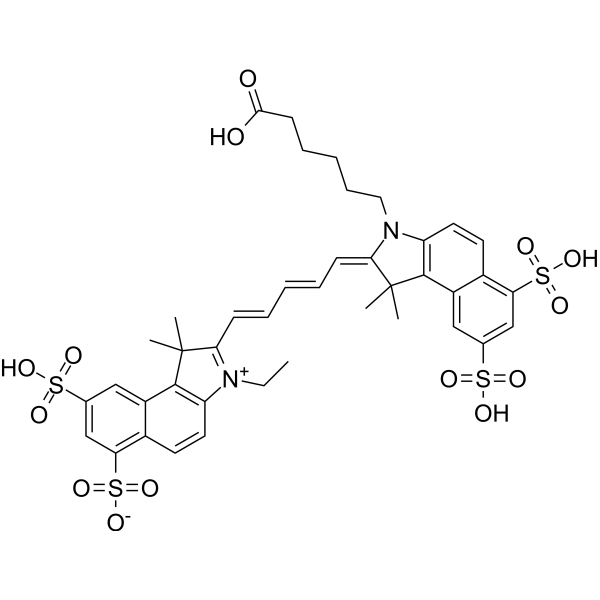
Cy5.5 is a CY dye. CY, short for Cyanine, is a compound consisting of two nitrogen atoms connected by an odd number of methyl units. Cyanine compounds have the characteristics of long wavelength, adjustable absorption and emission, high extinction coefficient, good water solubility and relatively simple synthesis . CY dyes are of en used for the labeling of proteins, antibodies and small molecular compounds. For the labeling of protein antibodies, the combination can be completed through a simple mixing reaction. Below, we introduce the labeling method of protein antibody labeling, which has certain reference significance .
|
-
-
- HY-D1540
-
|
Cy 5.5 amine; Lumiprobe Cy 5.5 amine
|
Fluorescent Dye
|
Others
|
|
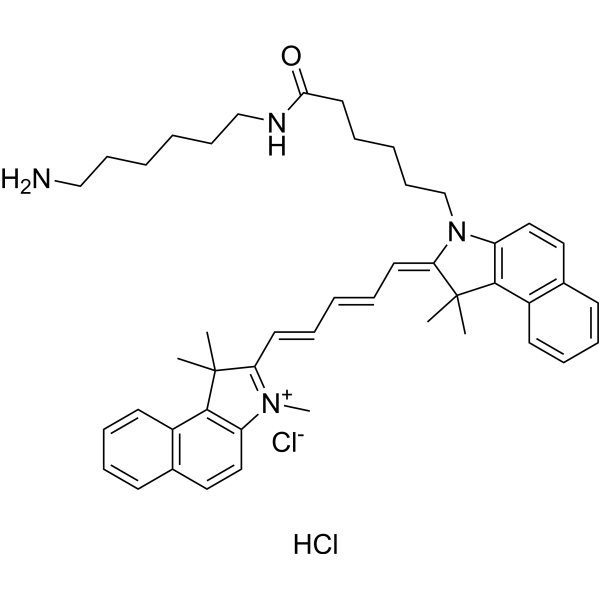
Cyanine5.5 amine (Cy 5.5 amine), a Cy5.5 Analogue, is a near-infrared (NIR) fluorescent dye (Ex=648 nm, Em=710 nm). Cyanine5.5 amine can be used in the preparation of Cy5.5-labeled nanoparticles, which can be tracked and imaged with low fluorescence background using confocal microscopy .
|
-
-
- HY-D0925
-
|
Cyanine5.5 NHS ester
|
Biochemical Assay Reagents
|
Others
|
|
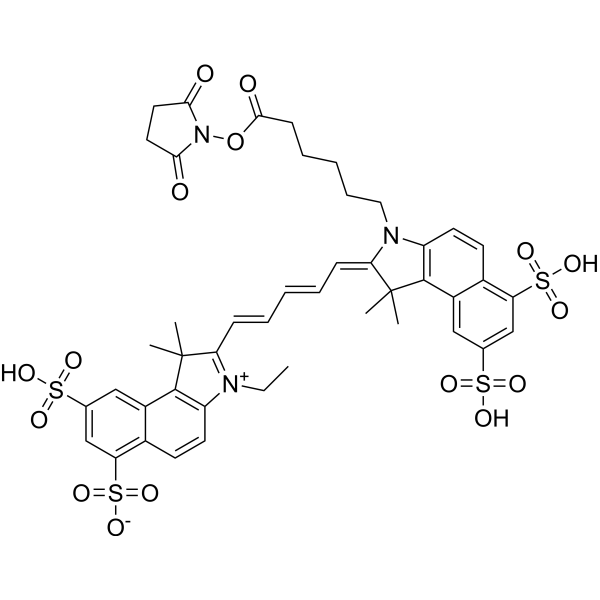
Cy5.5-SE (Cyanine5.5 NHS ester) is a CY dye. CY, short for Cyanine, is a compound consisting of two nitrogen atoms connected by an odd number of methyl units. Cyanine compounds have the characteristics of long wavelength, adjustable absorption and emission, high extinction coefficient, good water solubility and relatively simple synthesis . CY dyes are of en used for the labeling of proteins, antibodies and small molecular compounds. For the labeling of protein antibodies, the combination can be completed through a simple mixing reaction. Below, we introduce the labeling method of protein antibody labeling, which has certain reference significance . Storage: protect from light.
|
-
-
- HY-D1389
-
|
Sulfo-Cyanine5.5 NHS ester tripotassium
|
Fluorescent Dye
|
Others
|
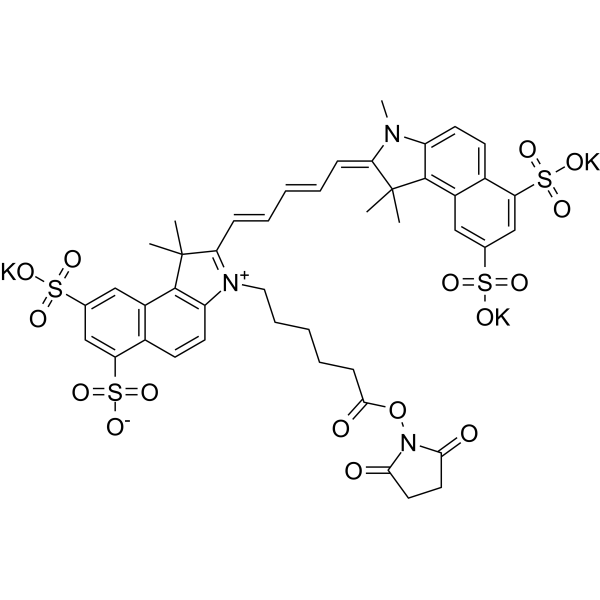
Sulfo-CY-5.5 NHS ester (Sulfo-Cyanine5.5 NHS ester) tripotassium is an amine-reactive ester of sulfonated far-red Cyanine5.5 fluorophore, which can be used to label antibodies, proteins, etc., as well as for in vivo NIR imaging .
|
-
-
- HY-135415
-
|
|
Fluorescent Dye
|
Others
|
|
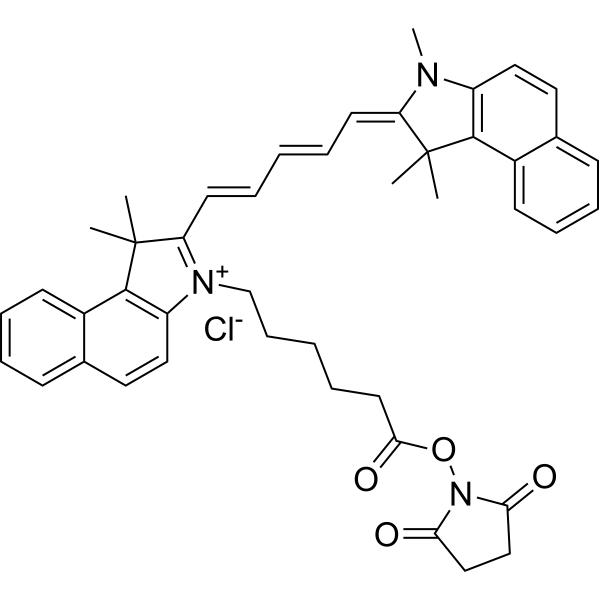
Cyanine5.5 NHS ester chloride is a reactive dye for the labeling of proteins, and antibodies and small molecular compounds .
|
-
-
- HY-D1040
-
|
Cyanine 5.5 carboxylic acid
|
Fluorescent Dye
|
Others
|
|
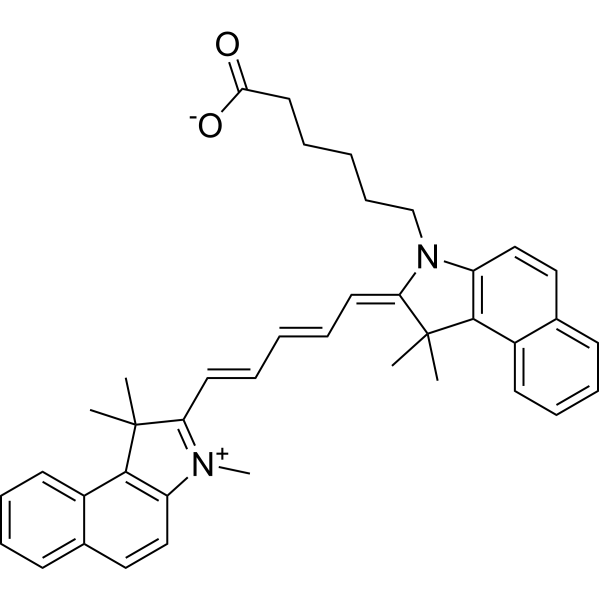
Cy5.5-COOH (Cyanine 5.5 carboxylic acid) is a fluorescent dye that emits fluorescence at 710 nm upon excitation at 650 nm. Cy5.5-COOH possesses excellent spectral properties, including a narrow absorption spectrum, high sensitivity, and stability. Cy5.5-COOH can be used for bioimaging and disease diagnosis .
|
-
-
- HY-D1322
-
|
|
Fluorescent Dye
|
Others
|
|
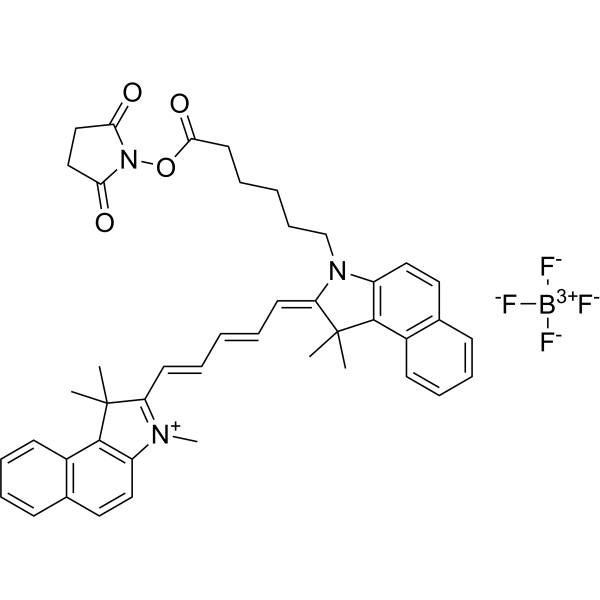
Cyanine5.5 NHS ester tetrafluoroborate belongs to the cyanine dye series and is a common fluorescent marker for biomolecules that can interact with biomolecules. Cyanine dyes may also bind to double-helical DNA through intercalation and exhibit enhanced fluorescence upon binding.
|
-
-
- HY-D1323
-
|
Cy5.5 maleimide chloride
|
Fluorescent Dye
|
Others
|
|
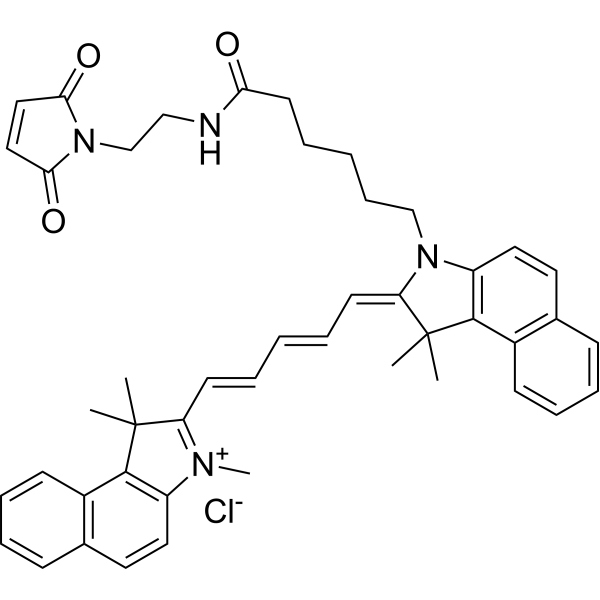
Cyanine5.5 maleimide chloride is a CY dye. CY, short for Cyanine, is a compound consisting of two nitrogen atoms connected by an odd number of methyl units. Cyanine compounds have the characteristics of long wavelength, adjustable absorption and emission, high extinction coefficient, good water solubility and relatively simple synthesis . CY dyes are of en used for the labeling of proteins, antibodies and small molecular compounds. For the labeling of protein antibodies, the combination can be completed through a simple mixing reaction. Below, we introduce the labeling method of protein antibody labeling, which has certain reference significance .
|
-
-
- HY-D1557
-
|
|
Fluorescent Dye
|
Others
|
|
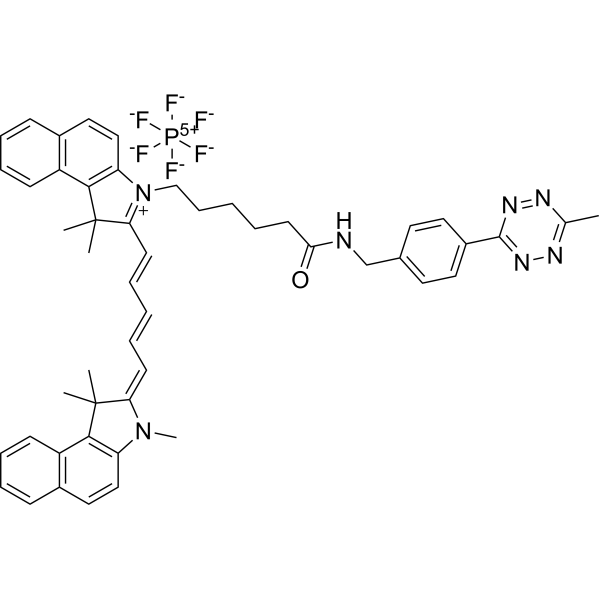
Cyanine5.5 tetrazine is a far-infrared luminescent dye. Cyanine5.5 tetrazine is a Cyanine5.5 (HY-D0925A) derivative contains a tetrazine moiety. Cyanine5.5 tetrazine can be used for in vivo imaging and low background applications. Cyanine5.5 tetrazine is a click chemistry reagent, it contains a Tetrazine group that can undergo an inverse electron demand Diels-Alder reaction (iEDDA) with molecules containing TCO groups.
|
-
-
- HY-151720
-
|
|
ADC Linker
|
Others
|
|
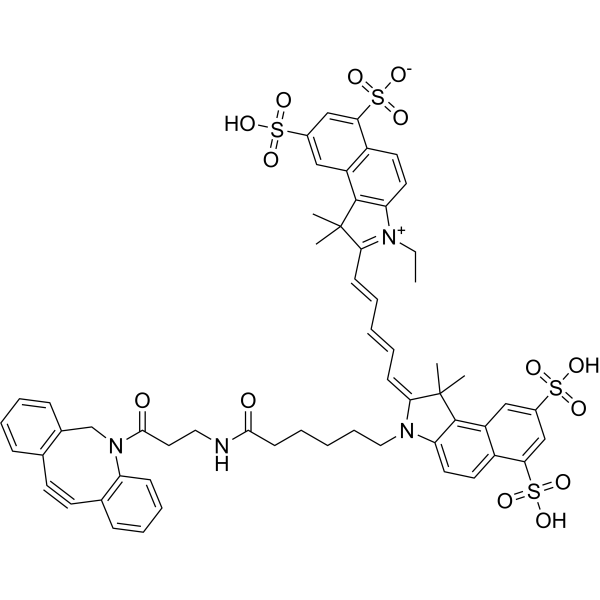
Cy5.5 DBCO is a click chemistry reagent containing an cycloalkynes group. Cy5.5 DBCO is a linker of Cyanine5.5 fluorophore. DBCO group enables copper free biocompatible click chemistry with fast reaction kinetics and good stability .
|
-
-
- HY-D0925B
-
|
Cyanine5.5 NHS ester TEA
|
Fluorescent Dye
|
Others
|
|
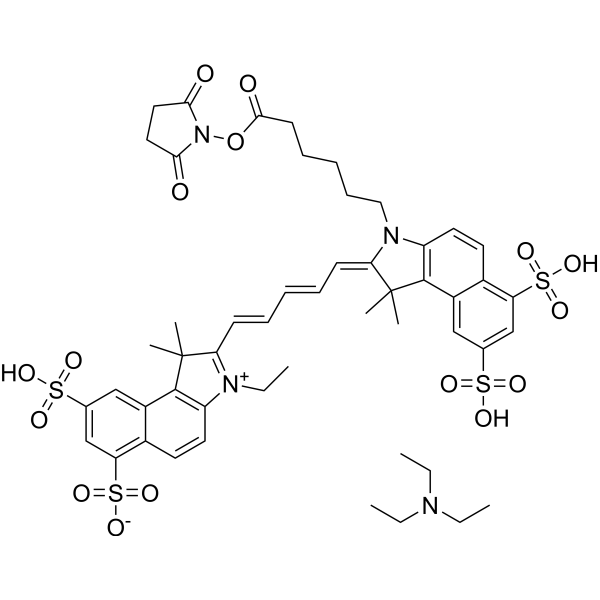
Cy5.5-SE TEA (Cyanine5.5 NHS ester TEA) is a CY dye. CY, short for Cyanine, is a compound consisting of two nitrogen atoms connected by an odd number of methyl units. Cyanine compounds have the characteristics of long wavelength, adjustable absorption and emission, high extinction coefficient, good water solubility and relatively simple synthesis . CY dyes are of en used for the labeling of proteins, antibodies and small molecular compounds. For the labeling of protein antibodies, the combination can be completed through a simple mixing reaction. Below, we introduce the labeling method of protein antibody labeling, which has certain reference significance . Storage: protect from light.
|
-
-
- HY-D1539
-
|
CY 5.5 azide; Lumiprobe CY 5.5 azide
|
Fluorescent Dye
|
Others
|
|
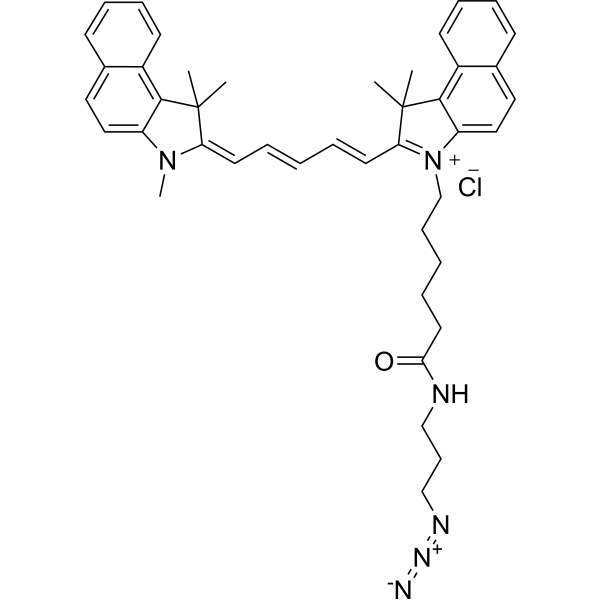
Cyanine 5.5 azide (CY 5.5 azide) is a potent fluorescent dye. Cyanine 5.5 azide can label DNA. Cyanine 5.5 azide can be used for NIR live organism imaging. (λex=684 nm, λem=710 nm) . Cyanine 5.5 azide is a click chemistry reagent, it contains an Azide group and can undergo copper-catalyzed azide-alkyne cycloaddition reaction (CuAAc) with molecules containing Alkyne groups. It can also undergo strain-promoted alkyne-azide cycloaddition (SPAAC) reactions with molecules containing DBCO or BCN groups.
|
-
-
- HY-D1537
-
|
DBCO-Cy5.5; Cyanine5.5 DBCO
|
Fluorescent Dye
|
Others
|
|
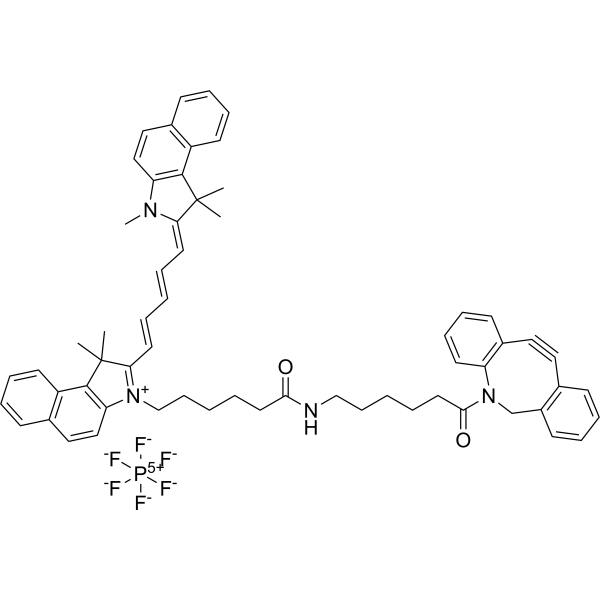
Dibenzocyclooctyne-Cy5.5 (DBCO-Cy5.5) is a fluorescent dye. Dibenzocyclooctyne-Cy5.5 can be used to syntheses calcium-binding near-infrared fluorescent nanoprobe for bone tissue imaging .
|
-
-
- HY-D1541
-
|
|
Fluorescent Dye
|
Others
|
|
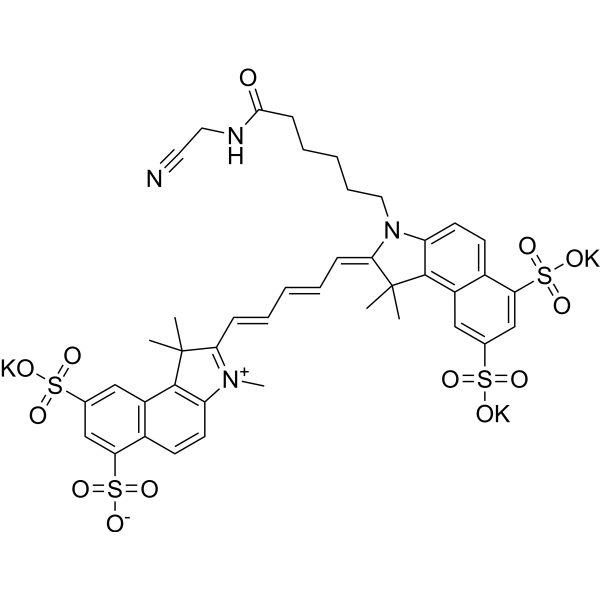
Sulfo-Cyanine5.5 alkyne, a near-infrared (NIR) fluorescent dye, is an alkyne modified Sulfo-Cyanine5.5 (Ex=67 8nm, Em=694 nm). Sulfo-Cyanine5.5 alkyne can react with azides for Click Chemistry labeling.
|
-
-
- HY-149380
-
|
|
Raf
|
Cancer
|
|
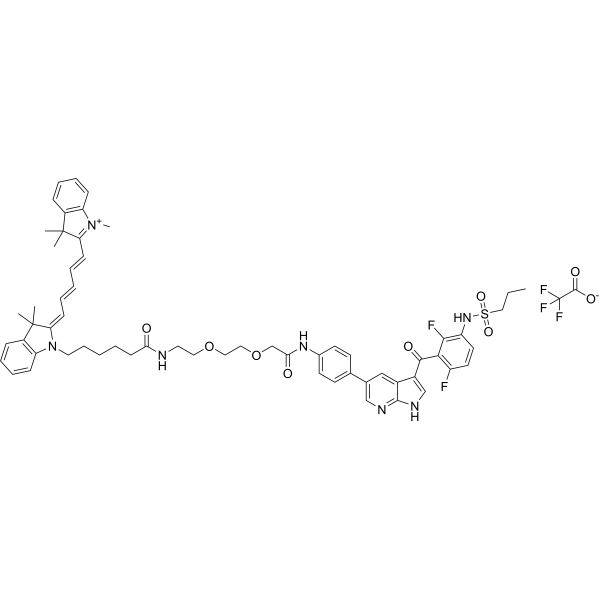
Vem-L-Cy5 (compound 3),modified with the NIR fluorophore cyanine-5 (Cy5),is a Vemurafenib (HY-12057)-based inhibitor of BRAF. Vem-L-Cy5 targets to BRAF V600E,and also inhibits MEK phosphorylation. Vem-L-Cy5 has cell permeability,and inhibits cell growth of many types of cancer .
|
-
-
- HY-D1376
-
|
|
Fluorescent Dye
|
|
|
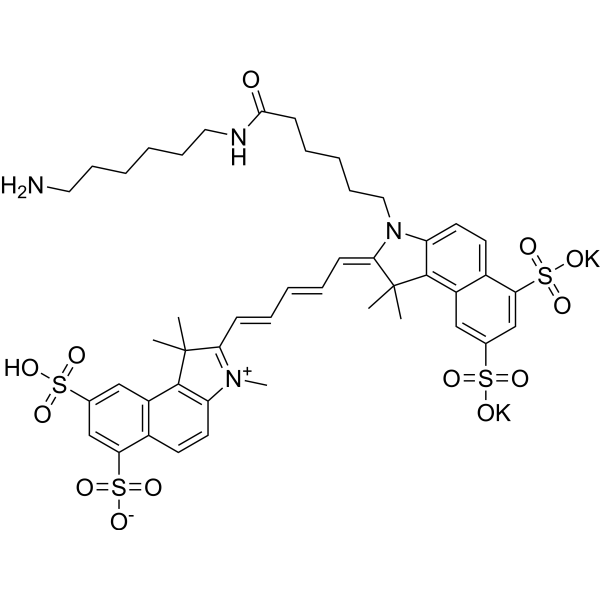
Sulfo-Cyanine5.5 amine potassium is a water-soluble cyanine dye suitable for far-red/near-infrared applications such as in vivo imaging. The dye has four sulfonate groups, making it highly hydrophilic and water-soluble. Like other cyanines, sulfo-Cyanine5.5 has an excellent extinction coefficient, making it a bright fluorescent marker in the far-red region. This is an amine-containing fluorescent dye. The amine group is separated from the fluorophore by a relatively long linker that facilitates conjugation. Aliphatic primary amine groups can be coupled with various electrophiles (activated esters, epoxides, etc.) and can also be used for enzymatic transamination labeling.
|
-
-
- HY-D2489
-
|
|
Fluorescent Dye
|
Others
|
|
Cy5-tetrazine is a fluorescent dye. Cy5-tetrazine is a CY5 (HY-D0821) derivative contains a tetrazine moiety. Cyanine5.5 tetrazine can be used for in vivo imaging and low background applications. Cy5-tetrazine is a click chemistry reagent, it contains a Tetrazine group that can undergo an inverse electron demand Diels-Alder reaction (iEDDA) with molecules containing TCO groups .
|
-

-
- HY-D1324
-
|
|
Fluorescent Dye
|
Others
|
|
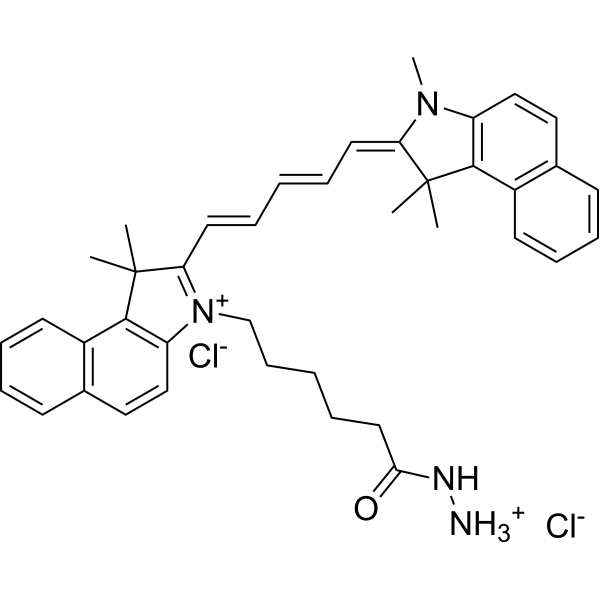
Cyanine5.5 hydrazide, an analog of Cyanine5.5 fluorophore, is a near-infrared (NIR) fluorescent dye. Cyanine5.5 hydrazide is used for labeling of biomolecules through the condensation between the hydrazide groups and the carbonyl groups. (λex=684 nm, λem=710 nm) .
|
-
-
- HY-D1325
-
|
|
Fluorescent Dye
|
Others
|
|
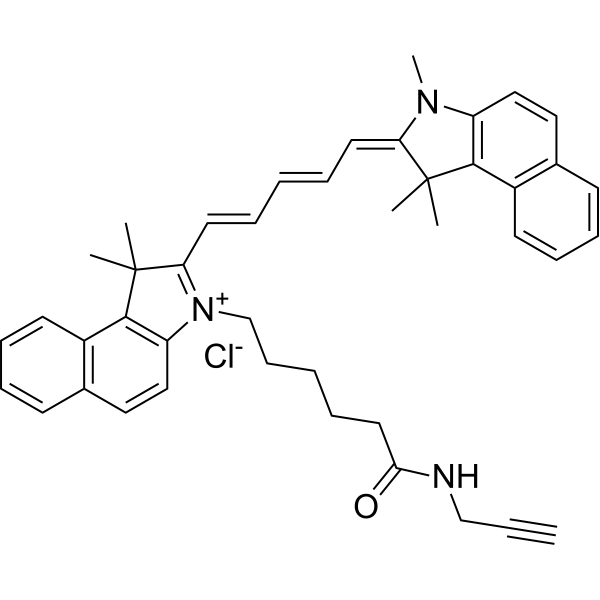
Cyanine5.5 alkyne chloride is an alkynyl-modified near-infrared (NIR) fluorescent dye (Ex=678 nm, Em=694 nm). Cyanine5.5 alkyne chloride can react with azides for click chemistry labeling .
|
-
-
- HY-D1376A
-
|
|
Fluorescent Dye
|
Others
|
|
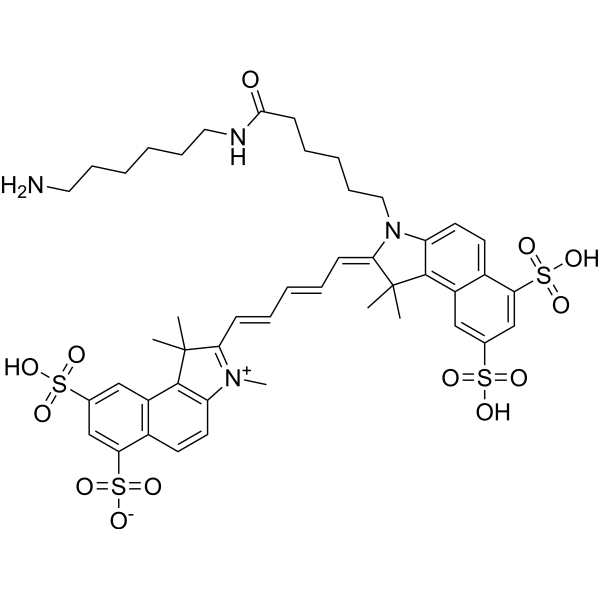
Sulfo-Cyanine5.5 amine consists of four sulfonate groups and has highly hydrophilic. Sulfo-Cyanine5.5 amine is an amine-containing fluorescent dye, the aliphatic primary amine group can be coupled with various electrophiles (activated esters, epoxides, etc). Sulfo-Cyanine5.5 amine can be used for the research of far red/NIR applications (such as in vivo imaging) and also can be used for enzymatic transamination labeling .
|
-
-
- HY-N16302
-
|
|
Fluorescent Dye
|
Others
|
|
Cyanine 5.5 DBCO chloride is a click chemistry reagent containing an cycloalkynes group. Cyanine 5.5 DBCO chloride is a linker of Cyanine5.5 fluorophore. DBCO group enables copper free biocompatible click chemistry with fast reaction kinetics and good stability (Ex/Em = 680/715 nm) .
|
-

-
- HY-173308
-
|
|
Fluorescent Dye
|
Others
|
|
QSY-21 is a fluorescence quencher. QSY-21 possesses broad absorption in far red and NIR range, and can quench fluorescence of dyes that emit in this region. This is a carboxylic acid derivative. QSY-21 has intense absorption maximum at 661 nm, making it useful as an acceptor in fluorescence resonance energy transfer (FRET) applications. It is a common quencher for Cyanine5, Cyanine5.5, AF 647, or other spectrally similar fluorescent dyes.
|
-

-
- HY-D1366
-
|
|
Fluorescent Dye
|
|
|
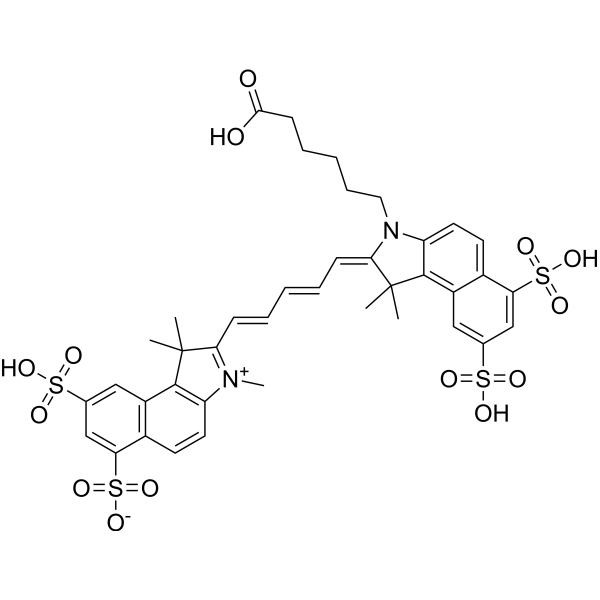
Sulfo-Cyanine5.5 carboxylic acidCI Pigment violet 32 is a water-soluble, far-red emitting fluorophore. Due to its four sulfo groups, this dye has a negative charge at neutral pH and is very hydrophilic. As a cyanine dye, sulfo-Cyanine5.5 shows a very low dependence of fluorescence on pH and a very high extinction coefficient.
|
-
-
- HY-D1351
-
|
Sulfo-Cy5.5 maleimide potassium
|
Fluorescent Dye
|
Others
|
|
Sulfo-Cyanine5.5 maleimide (Sulfo-Cy5.5 maleimide) potassium is a fluorescent dye. Sulfo-Cyanine5.5 is a nearinfrared (NIR) fluorophore with excitation maximum 675 nm and emission maximum 694 nm. Sulfo-Cyanine5.5 maleimide potassium can be used for the labeling of sensitive proteins, nanoparticles, and highly hydrophylic biopolymers .
|
-

-
- HY-135415A
-
|
|
Fluorescent Dye
|
Others
|
|
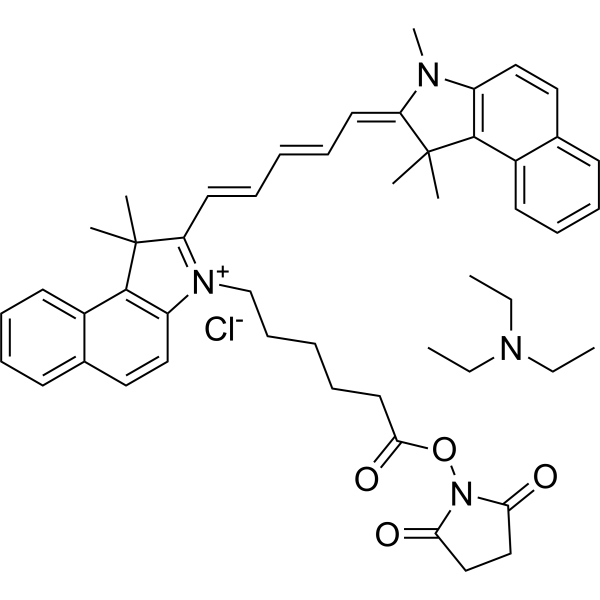
Cyanine5.5 NHS ester chloride TEA is a reactive dye for the labeling of proteins, and antibodies and small molecular compounds .
|
-
-
- HY-N15909
-
|
|
Fluorescent Dye
|
Others
|
|
DSPE PEG(2000)-N-Cyanine 5.5 is a phospholipid. Phospholipids have good biocompatibility and significant amphiphilic characteristics, making them the main and suitable dosage form or excipient in drug formulations, thereby achieving better therapeutic effects. DSPE PEG(2000)-N-Cyanine 5.5 can be used in drug delivery research.
|
-

-
- HY-D1308
-
|
|
Fluorescent Dye
|
Others
|
|
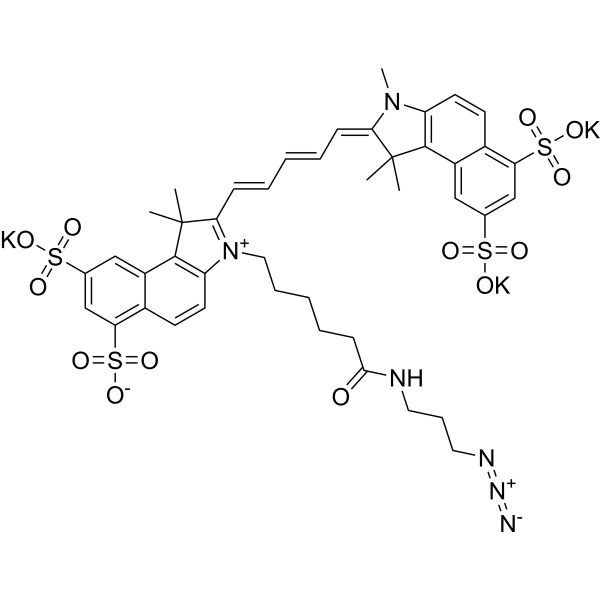
Sulfo-Cyanine5.5 azide tripotassium, a near-infrared (NIR) fluorescent dye, is an azide-functionalized Sulfo-Cyanine5.5 (Ex=678 nm, Em=694 nm). Sulfo-Cyanine5.5 azide tripotassium can react with alkynes for Click Chemistry labeling . It contains an azide group and can undergo copper-catalyzed azide-alkyne cycloaddition (CuAAc) with molecules containing alkyne groups. It can also undergo ring strain-promoted alkyne-azide cycloaddition (SPAAC) with molecules containing DBCO or BCN groups.
|
-
-
- HY-D2224
-
|
|
Fluorescent Dye
|
Others
|
|
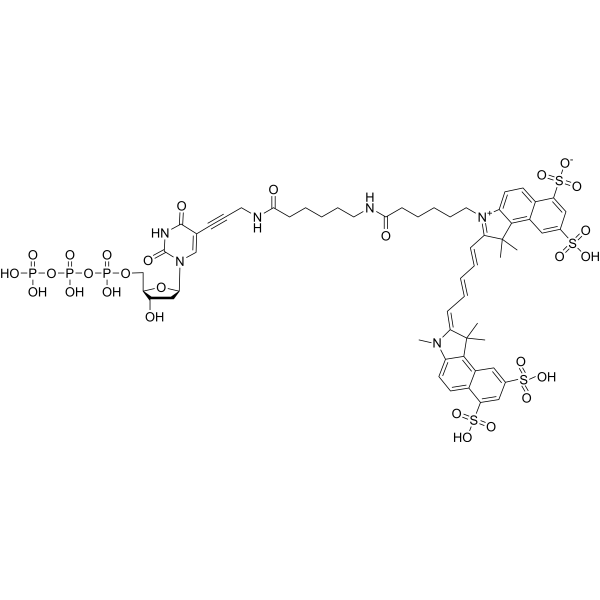
Sulfo-Cy5.5 dUTP is a dUTP far-infrared fluorescent dye containing sulfonated Cyanine5.5 group .
|
-
-
- HY-D1366A
-
|
|
Fluorescent Dye
|
Others
|
|
Sulfo-Cyanine5.5 carboxylic acid potassium is a fluorescent dye with excitation/emission wavelengths at 673/707 nm. The introduction of the sulfite group enhances the hydrophilic properties of the compound. The terminal carboxylic acid can react with primary amine groups in the presence of activators such as EDC and HATU, to form stable amide bonds.
|
-

-
- HY-D1040A
-
|
Cyanine 5.5 carboxylic acid chloride
|
Fluorescent Dye
|
Others
|
|
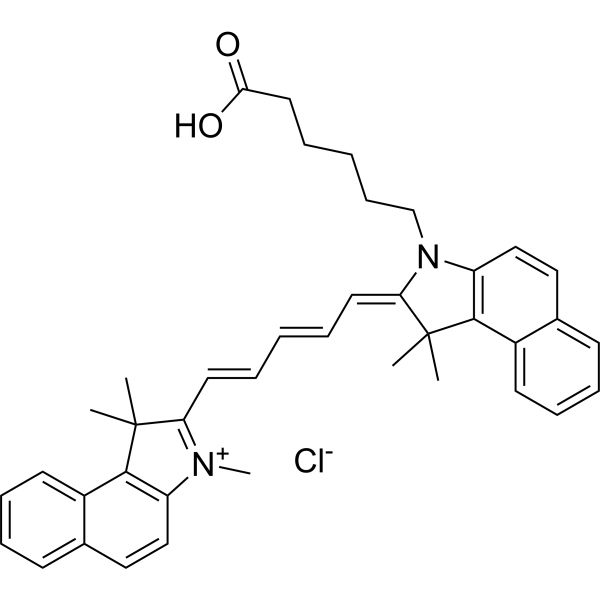
Cy5.5-COOH (Cyanine 5.5 carboxylic acid) chloride is a fluorescent dye that emits fluorescence at 710 nm upon excitation at 650 nm. Cy5.5-COOH chloride possesses excellent spectral properties, including a narrow absorption spectrum, high sensitivity, and stability. Cy5.5-COOH chloride can be used for bioimaging and disease diagnosis .
|
-
-
- HY-N16310
-
|
|
Fluorescent Dye
|
Others
|
|
Cyanine 3 DBCO chloride is a click chemistry reagent containing an cycloalkynes group. Cyanine 3 DBCO chloride is a linker of Cyanine5.5 fluorophore. DBCO group enables copper free biocompatible click chemistry with fast reaction kinetics and good stability (Ex/Em = 550/570 nm).
|
-

-
- HY-D0924A
-
|
Sulfo-Cyanine5.5 acetate
|
Fluorescent Dye
|
Cardiovascular Disease
Neurological Disease
Metabolic Disease
Inflammation/Immunology
Cancer
|
|
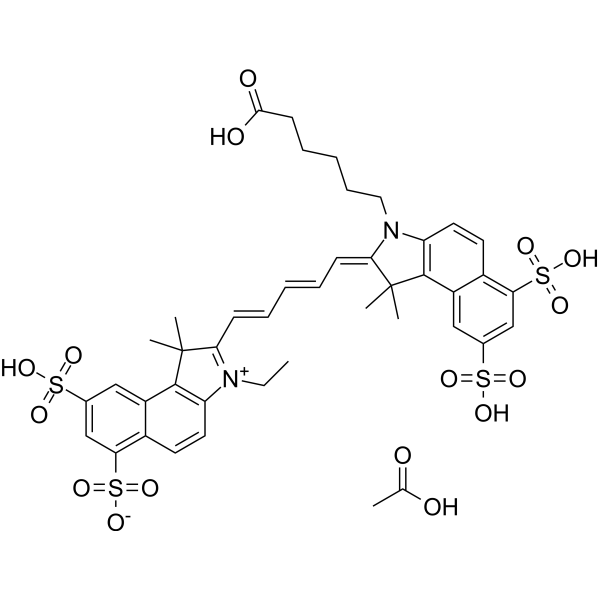
Cy5.5 acetate is a CY dye. CY, short for Cyanine, is a compound consisting of two nitrogen atoms connected by an odd number of methyl units. Cyanine compounds have the characteristics of long wavelength, adjustable absorption and emission, high extinction coefficient, good water solubility and relatively simple synthesis . CY dyes are of en used for the labeling of proteins, antibodies and small molecular compounds. For the labeling of protein antibodies, the combination can be completed through a simple mixing reaction. Below, we introduce the labeling method of protein antibody labeling, which has certain reference significance .
|
-
-
- HY-D0924B
-
|
Sulfo-Cyanine5.5 TEA
|
Fluorescent Dye
|
Cardiovascular Disease
Neurological Disease
Metabolic Disease
Inflammation/Immunology
Cancer
|
|
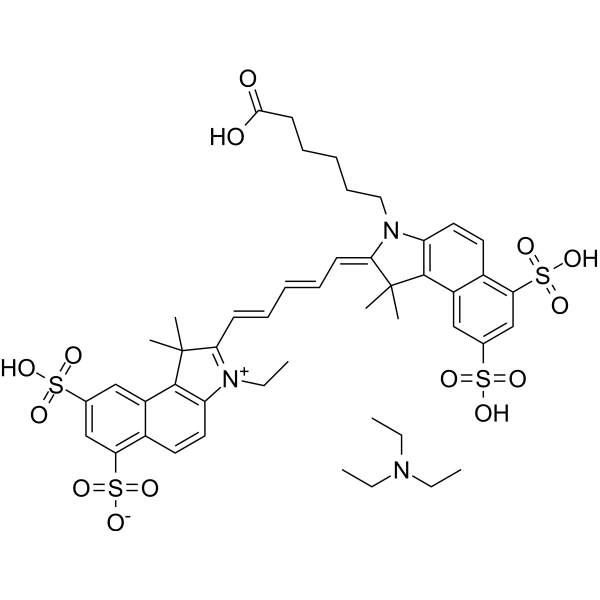
Cy5.5 TEA is a CY dye. CY, short for Cyanine, is a compound consisting of two nitrogen atoms connected by an odd number of methyl units. Cyanine compounds have the characteristics of long wavelength, adjustable absorption and emission, high extinction coefficient, good water solubility and relatively simple synthesis . CY dyes are of en used for the labeling of proteins, antibodies and small molecular compounds. For the labeling of protein antibodies, the combination can be completed through a simple mixing reaction. Below, we introduce the labeling method of protein antibody labeling, which has certain reference significance .
|
-
-
- HY-182187
-
-

-
- HY-N16305
-
|
|
Fluorescent Dye
|
Others
|
|
Cyanine 7 DBCO chloride is a click chemistry reagent containing an cycloalkynes group. Cyanine 7 DBCO chloride is a linker of Cyanine5.5 fluorophore. DBCO group enables copper free biocompatible click chemistry with fast reaction kinetics and good stability (Ex/Em = 745/785 nm) .
|
-

-
- HY-N16324
-
|
|
Fluorescent Dye
|
Others
|
|
Cyanine 7.5 DBCO chloride is a click chemistry reagent containing an cycloalkynes group. Cyanine 7.5 DBCO chloride is a linker of Cyanine5.5 fluorophore. DBCO group enables copper free biocompatible click chemistry with fast reaction kinetics and good stability (Ex/Em = 780/820 nm) .
|
-

-
- HY-D0924
-
Cy5.5
Maximum Cited Publications
63 Publications Verification
Sulfo-Cyanine5.5
|
蛍光色素
|
|
Cy5.5 is a CY dye. CY, short for Cyanine, is a compound consisting of two nitrogen atoms connected by an odd number of methyl units. Cyanine compounds have the characteristics of long wavelength, adjustable absorption and emission, high extinction coefficient, good water solubility and relatively simple synthesis . CY dyes are of en used for the labeling of proteins, antibodies and small molecular compounds. For the labeling of protein antibodies, the combination can be completed through a simple mixing reaction. Below, we introduce the labeling method of protein antibody labeling, which has certain reference significance .
|
-
- HY-D1540
-
|
Cy 5.5 amine; Lumiprobe Cy 5.5 amine
|
蛍光色素
|
|
Cyanine5.5 amine (Cy 5.5 amine), a Cy5.5 Analogue, is a near-infrared (NIR) fluorescent dye (Ex=648 nm, Em=710 nm). Cyanine5.5 amine can be used in the preparation of Cy5.5-labeled nanoparticles, which can be tracked and imaged with low fluorescence background using confocal microscopy .
|
-
- HY-D0925
-
|
Cyanine5.5 NHS ester
|
蛍光色素
|
|
Cy5.5-SE (Cyanine5.5 NHS ester) is a CY dye. CY, short for Cyanine, is a compound consisting of two nitrogen atoms connected by an odd number of methyl units. Cyanine compounds have the characteristics of long wavelength, adjustable absorption and emission, high extinction coefficient, good water solubility and relatively simple synthesis . CY dyes are of en used for the labeling of proteins, antibodies and small molecular compounds. For the labeling of protein antibodies, the combination can be completed through a simple mixing reaction. Below, we introduce the labeling method of protein antibody labeling, which has certain reference significance . Storage: protect from light.
|
-
- HY-D1389
-
|
Sulfo-Cyanine5.5 NHS ester tripotassium
|
蛍光色素
|
Sulfo-CY-5.5 NHS ester (Sulfo-Cyanine5.5 NHS ester) tripotassium is an amine-reactive ester of sulfonated far-red Cyanine5.5 fluorophore, which can be used to label antibodies, proteins, etc., as well as for in vivo NIR imaging .
|
-
- HY-135415
-
|
|
蛍光色素
|
|
Cyanine5.5 NHS ester chloride is a reactive dye for the labeling of proteins, and antibodies and small molecular compounds .
|
-
- HY-D1040
-
|
Cyanine 5.5 carboxylic acid
|
蛍光色素
|
|
Cy5.5-COOH (Cyanine 5.5 carboxylic acid) is a fluorescent dye that emits fluorescence at 710 nm upon excitation at 650 nm. Cy5.5-COOH possesses excellent spectral properties, including a narrow absorption spectrum, high sensitivity, and stability. Cy5.5-COOH can be used for bioimaging and disease diagnosis .
|
-
- HY-D1322
-
|
|
蛍光色素
|
|
Cyanine5.5 NHS ester tetrafluoroborate belongs to the cyanine dye series and is a common fluorescent marker for biomolecules that can interact with biomolecules. Cyanine dyes may also bind to double-helical DNA through intercalation and exhibit enhanced fluorescence upon binding.
|
-
- HY-D1323
-
|
Cy5.5 maleimide chloride
|
蛍光色素
|
|
Cyanine5.5 maleimide chloride is a CY dye. CY, short for Cyanine, is a compound consisting of two nitrogen atoms connected by an odd number of methyl units. Cyanine compounds have the characteristics of long wavelength, adjustable absorption and emission, high extinction coefficient, good water solubility and relatively simple synthesis . CY dyes are of en used for the labeling of proteins, antibodies and small molecular compounds. For the labeling of protein antibodies, the combination can be completed through a simple mixing reaction. Below, we introduce the labeling method of protein antibody labeling, which has certain reference significance .
|
-
- HY-D1557
-
|
|
蛍光色素
|
|
Cyanine5.5 tetrazine is a far-infrared luminescent dye. Cyanine5.5 tetrazine is a Cyanine5.5 (HY-D0925A) derivative contains a tetrazine moiety. Cyanine5.5 tetrazine can be used for in vivo imaging and low background applications. Cyanine5.5 tetrazine is a click chemistry reagent, it contains a Tetrazine group that can undergo an inverse electron demand Diels-Alder reaction (iEDDA) with molecules containing TCO groups.
|
-
- HY-D0925B
-
|
Cyanine5.5 NHS ester TEA
|
蛍光色素
|
|
Cy5.5-SE TEA (Cyanine5.5 NHS ester TEA) is a CY dye. CY, short for Cyanine, is a compound consisting of two nitrogen atoms connected by an odd number of methyl units. Cyanine compounds have the characteristics of long wavelength, adjustable absorption and emission, high extinction coefficient, good water solubility and relatively simple synthesis . CY dyes are of en used for the labeling of proteins, antibodies and small molecular compounds. For the labeling of protein antibodies, the combination can be completed through a simple mixing reaction. Below, we introduce the labeling method of protein antibody labeling, which has certain reference significance . Storage: protect from light.
|
-
- HY-D1539
-
|
CY 5.5 azide; Lumiprobe CY 5.5 azide
|
蛍光色素
|
|
Cyanine 5.5 azide (CY 5.5 azide) is a potent fluorescent dye. Cyanine 5.5 azide can label DNA. Cyanine 5.5 azide can be used for NIR live organism imaging. (λex=684 nm, λem=710 nm) . Cyanine 5.5 azide is a click chemistry reagent, it contains an Azide group and can undergo copper-catalyzed azide-alkyne cycloaddition reaction (CuAAc) with molecules containing Alkyne groups. It can also undergo strain-promoted alkyne-azide cycloaddition (SPAAC) reactions with molecules containing DBCO or BCN groups.
|
-
- HY-D1537
-
|
DBCO-Cy5.5; Cyanine5.5 DBCO
|
蛍光色素
|
|
Dibenzocyclooctyne-Cy5.5 (DBCO-Cy5.5) is a fluorescent dye. Dibenzocyclooctyne-Cy5.5 can be used to syntheses calcium-binding near-infrared fluorescent nanoprobe for bone tissue imaging .
|
-
- HY-D1541
-
|
|
蛍光色素
|
|
Sulfo-Cyanine5.5 alkyne, a near-infrared (NIR) fluorescent dye, is an alkyne modified Sulfo-Cyanine5.5 (Ex=67 8nm, Em=694 nm). Sulfo-Cyanine5.5 alkyne can react with azides for Click Chemistry labeling.
|
-
- HY-D1376
-
|
|
蛍光色素
|
|
Sulfo-Cyanine5.5 amine potassium is a water-soluble cyanine dye suitable for far-red/near-infrared applications such as in vivo imaging. The dye has four sulfonate groups, making it highly hydrophilic and water-soluble. Like other cyanines, sulfo-Cyanine5.5 has an excellent extinction coefficient, making it a bright fluorescent marker in the far-red region. This is an amine-containing fluorescent dye. The amine group is separated from the fluorophore by a relatively long linker that facilitates conjugation. Aliphatic primary amine groups can be coupled with various electrophiles (activated esters, epoxides, etc.) and can also be used for enzymatic transamination labeling.
|
-
- HY-D2489
-
|
|
蛍光色素
|
|
Cy5-tetrazine is a fluorescent dye. Cy5-tetrazine is a CY5 (HY-D0821) derivative contains a tetrazine moiety. Cyanine5.5 tetrazine can be used for in vivo imaging and low background applications. Cy5-tetrazine is a click chemistry reagent, it contains a Tetrazine group that can undergo an inverse electron demand Diels-Alder reaction (iEDDA) with molecules containing TCO groups .
|
-
- HY-D1324
-
|
|
蛍光色素
|
|
Cyanine5.5 hydrazide, an analog of Cyanine5.5 fluorophore, is a near-infrared (NIR) fluorescent dye. Cyanine5.5 hydrazide is used for labeling of biomolecules through the condensation between the hydrazide groups and the carbonyl groups. (λex=684 nm, λem=710 nm) .
|
-
- HY-D1325
-
|
|
蛍光色素
|
|
Cyanine5.5 alkyne chloride is an alkynyl-modified near-infrared (NIR) fluorescent dye (Ex=678 nm, Em=694 nm). Cyanine5.5 alkyne chloride can react with azides for click chemistry labeling .
|
-
- HY-D1376A
-
|
|
蛍光色素
|
|
Sulfo-Cyanine5.5 amine consists of four sulfonate groups and has highly hydrophilic. Sulfo-Cyanine5.5 amine is an amine-containing fluorescent dye, the aliphatic primary amine group can be coupled with various electrophiles (activated esters, epoxides, etc). Sulfo-Cyanine5.5 amine can be used for the research of far red/NIR applications (such as in vivo imaging) and also can be used for enzymatic transamination labeling .
|
-
- HY-173308
-
|
|
蛍光色素
|
|
QSY-21 is a fluorescence quencher. QSY-21 possesses broad absorption in far red and NIR range, and can quench fluorescence of dyes that emit in this region. This is a carboxylic acid derivative. QSY-21 has intense absorption maximum at 661 nm, making it useful as an acceptor in fluorescence resonance energy transfer (FRET) applications. It is a common quencher for Cyanine5, Cyanine5.5, AF 647, or other spectrally similar fluorescent dyes.
|
-
- HY-D1366
-
|
|
蛍光色素
|
|
Sulfo-Cyanine5.5 carboxylic acidCI Pigment violet 32 is a water-soluble, far-red emitting fluorophore. Due to its four sulfo groups, this dye has a negative charge at neutral pH and is very hydrophilic. As a cyanine dye, sulfo-Cyanine5.5 shows a very low dependence of fluorescence on pH and a very high extinction coefficient.
|
-
- HY-D1351
-
|
Sulfo-Cy5.5 maleimide potassium
|
蛍光色素
|
|
Sulfo-Cyanine5.5 maleimide (Sulfo-Cy5.5 maleimide) potassium is a fluorescent dye. Sulfo-Cyanine5.5 is a nearinfrared (NIR) fluorophore with excitation maximum 675 nm and emission maximum 694 nm. Sulfo-Cyanine5.5 maleimide potassium can be used for the labeling of sensitive proteins, nanoparticles, and highly hydrophylic biopolymers .
|
-
- HY-135415A
-
|
|
蛍光色素
|
|
Cyanine5.5 NHS ester chloride TEA is a reactive dye for the labeling of proteins, and antibodies and small molecular compounds .
|
-
- HY-D1308
-
|
|
蛍光色素
|
|
Sulfo-Cyanine5.5 azide tripotassium, a near-infrared (NIR) fluorescent dye, is an azide-functionalized Sulfo-Cyanine5.5 (Ex=678 nm, Em=694 nm). Sulfo-Cyanine5.5 azide tripotassium can react with alkynes for Click Chemistry labeling . It contains an azide group and can undergo copper-catalyzed azide-alkyne cycloaddition (CuAAc) with molecules containing alkyne groups. It can also undergo ring strain-promoted alkyne-azide cycloaddition (SPAAC) with molecules containing DBCO or BCN groups.
|
-
- HY-D2224
-
|
|
蛍光色素
|
|
Sulfo-Cy5.5 dUTP is a dUTP far-infrared fluorescent dye containing sulfonated Cyanine5.5 group .
|
-
- HY-D1366A
-
|
|
蛍光色素
|
|
Sulfo-Cyanine5.5 carboxylic acid potassium is a fluorescent dye with excitation/emission wavelengths at 673/707 nm. The introduction of the sulfite group enhances the hydrophilic properties of the compound. The terminal carboxylic acid can react with primary amine groups in the presence of activators such as EDC and HATU, to form stable amide bonds.
|
-
- HY-D1040A
-
|
Cyanine 5.5 carboxylic acid chloride
|
蛍光色素
|
|
Cy5.5-COOH (Cyanine 5.5 carboxylic acid) chloride is a fluorescent dye that emits fluorescence at 710 nm upon excitation at 650 nm. Cy5.5-COOH chloride possesses excellent spectral properties, including a narrow absorption spectrum, high sensitivity, and stability. Cy5.5-COOH chloride can be used for bioimaging and disease diagnosis .
|
-
- HY-D0924A
-
|
Sulfo-Cyanine5.5 acetate
|
蛍光色素
|
|
Cy5.5 acetate is a CY dye. CY, short for Cyanine, is a compound consisting of two nitrogen atoms connected by an odd number of methyl units. Cyanine compounds have the characteristics of long wavelength, adjustable absorption and emission, high extinction coefficient, good water solubility and relatively simple synthesis . CY dyes are of en used for the labeling of proteins, antibodies and small molecular compounds. For the labeling of protein antibodies, the combination can be completed through a simple mixing reaction. Below, we introduce the labeling method of protein antibody labeling, which has certain reference significance .
|
-
- HY-D0924B
-
|
Sulfo-Cyanine5.5 TEA
|
蛍光色素
|
|
Cy5.5 TEA is a CY dye. CY, short for Cyanine, is a compound consisting of two nitrogen atoms connected by an odd number of methyl units. Cyanine compounds have the characteristics of long wavelength, adjustable absorption and emission, high extinction coefficient, good water solubility and relatively simple synthesis . CY dyes are of en used for the labeling of proteins, antibodies and small molecular compounds. For the labeling of protein antibodies, the combination can be completed through a simple mixing reaction. Below, we introduce the labeling method of protein antibody labeling, which has certain reference significance .
|
| 製品番号 |
製品名 |
Category |
Target |
構造式 |
-
- HY-N16302
-
|
|
Lipid
|
Fluorescent Dye
|
|
Cyanine 5.5 DBCO chloride is a click chemistry reagent containing an cycloalkynes group. Cyanine 5.5 DBCO chloride is a linker of Cyanine5.5 fluorophore. DBCO group enables copper free biocompatible click chemistry with fast reaction kinetics and good stability (Ex/Em = 680/715 nm) .
|
-
-
- HY-N15909
-
|
|
Structural Classification
Lipid
|
Fluorescent Dye
|
|
DSPE PEG(2000)-N-Cyanine 5.5 is a phospholipid. Phospholipids have good biocompatibility and significant amphiphilic characteristics, making them the main and suitable dosage form or excipient in drug formulations, thereby achieving better therapeutic effects. DSPE PEG(2000)-N-Cyanine 5.5 can be used in drug delivery research.
|
-
-
- HY-N16310
-
|
|
Lipid
|
Fluorescent Dye
|
|
Cyanine 3 DBCO chloride is a click chemistry reagent containing an cycloalkynes group. Cyanine 3 DBCO chloride is a linker of Cyanine5.5 fluorophore. DBCO group enables copper free biocompatible click chemistry with fast reaction kinetics and good stability (Ex/Em = 550/570 nm).
|
-
-
- HY-N16305
-
|
|
Lipid
|
Fluorescent Dye
|
|
Cyanine 7 DBCO chloride is a click chemistry reagent containing an cycloalkynes group. Cyanine 7 DBCO chloride is a linker of Cyanine5.5 fluorophore. DBCO group enables copper free biocompatible click chemistry with fast reaction kinetics and good stability (Ex/Em = 745/785 nm) .
|
-
-
- HY-N16324
-
|
|
Lipid
|
Fluorescent Dye
|
|
Cyanine 7.5 DBCO chloride is a click chemistry reagent containing an cycloalkynes group. Cyanine 7.5 DBCO chloride is a linker of Cyanine5.5 fluorophore. DBCO group enables copper free biocompatible click chemistry with fast reaction kinetics and good stability (Ex/Em = 780/820 nm) .
|
-
-
- HY-D1557
-
|
|
|
Labeling and Fluorescence Imaging
Tetrazine
|
|
Cyanine5.5 tetrazine is a far-infrared luminescent dye. Cyanine5.5 tetrazine is a Cyanine5.5 (HY-D0925A) derivative contains a tetrazine moiety. Cyanine5.5 tetrazine can be used for in vivo imaging and low background applications. Cyanine5.5 tetrazine is a click chemistry reagent, it contains a Tetrazine group that can undergo an inverse electron demand Diels-Alder reaction (iEDDA) with molecules containing TCO groups.
|
-
- HY-151720
-
|
|
|
DBCO
|
|
Cy5.5 DBCO is a click chemistry reagent containing an cycloalkynes group. Cy5.5 DBCO is a linker of Cyanine5.5 fluorophore. DBCO group enables copper free biocompatible click chemistry with fast reaction kinetics and good stability .
|
-
- HY-D1539
-
|
CY 5.5 azide; Lumiprobe CY 5.5 azide
|
|
Azide
Labeling and Fluorescence Imaging
|
|
Cyanine 5.5 azide (CY 5.5 azide) is a potent fluorescent dye. Cyanine 5.5 azide can label DNA. Cyanine 5.5 azide can be used for NIR live organism imaging. (λex=684 nm, λem=710 nm) . Cyanine 5.5 azide is a click chemistry reagent, it contains an Azide group and can undergo copper-catalyzed azide-alkyne cycloaddition reaction (CuAAc) with molecules containing Alkyne groups. It can also undergo strain-promoted alkyne-azide cycloaddition (SPAAC) reactions with molecules containing DBCO or BCN groups.
|
-
- HY-D1325
-
|
|
|
Alkynes
|
|
Cyanine5.5 alkyne chloride is an alkynyl-modified near-infrared (NIR) fluorescent dye (Ex=678 nm, Em=694 nm). Cyanine5.5 alkyne chloride can react with azides for click chemistry labeling .
|
-
- HY-D1308
-
|
|
|
Azide
|
|
Sulfo-Cyanine5.5 azide tripotassium, a near-infrared (NIR) fluorescent dye, is an azide-functionalized Sulfo-Cyanine5.5 (Ex=678 nm, Em=694 nm). Sulfo-Cyanine5.5 azide tripotassium can react with alkynes for Click Chemistry labeling . It contains an azide group and can undergo copper-catalyzed azide-alkyne cycloaddition (CuAAc) with molecules containing alkyne groups. It can also undergo ring strain-promoted alkyne-azide cycloaddition (SPAAC) with molecules containing DBCO or BCN groups.
|
入力情報は安全に管理されます. ※ 必須入力項目.
Inquiry Information
- 製品名:
- 製品番号:
- 数量:
- MCE 日本正規代理店:





