



Cy5.5 acetate
Based on 78 publication(s) in Google Scholar
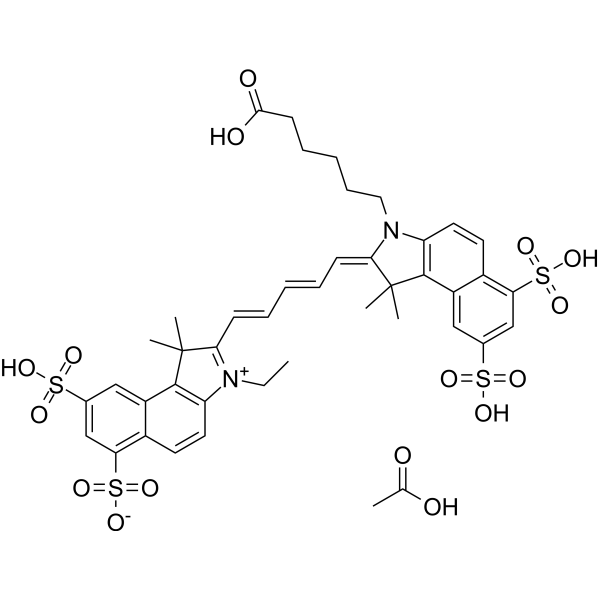
Cy5.5 acetate is a CY dye. CY, short for Cyanine, is a compound consisting of two nitrogen atoms connected by an odd number of methyl units. Cyanine compounds have the characteristics of long wavelength, adjustable absorption and emission, high extinction coefficient, good water solubility and relatively simple synthesis. CY dyes are of en used for the labeling of proteins, antibodies and small molecular compounds. For the labeling of protein antibodies, the combination can be completed through a simple mixing reaction. Below, we introduce the labeling method of protein antibody labeling, which has certain reference significance.
For research use only. We do not sell to patients.
- Formula: C43H48N2O16S4
- Molecular Weight:977.11
-
Storage:
Please store the product under the recommended conditions in the Certificate of Analysis.

To place orders, for customer services and technical support, please contact: MedChemExpress USA
Tel: 609-228-6898 E-mail: [email protected] [email protected]


-
 Biological Activity
-
Chemical Information
- Purity & Documentation
- References
-
 Help & FAQs


Publications Citing Use of MedChemExpress (MCE) Cy5.5 acetate
More- Adv Mater. 2023 Nov;35(48):e2306469. [Abstract]
- Adv Mater. 2022 Dec;34(49):e2207107. [Abstract]
- Bioact Mater. 2026 Mar 3:61:879-899. [Abstract]
- Adv Funct Mater. 2026 May 22.
- Adv Funct Mater. 2026 May 23.
- Adv Funct Mater. 2022: 2204636.
- Nat Commun. 2025 Aug 18;16(1):7672. [Abstract]
- ACS Nano. 2026 Aug 18;20(32):22391-22412.
- ACS Nano. 2025 Dec 23;19(50):42689-42704. [Abstract]
- ACS Nano. 2025 Nov 4;19(43):37758-37782. [Abstract]
- ACS Nano. 2025 Oct 14;19(40):35385-35400. [Abstract]
- ACS Nano. 2025 Feb 11;19(5):5429-5446. [Abstract]
- ACS Nano. 2024 Sep 11. [Abstract]
- ACS Nano. 2024 Aug 13;18(32):21156-21170. [Abstract]
- ACS Nano. 2024 Jan 16;18(2):1599-1610. [Abstract]
- J Nanobiotechnology. 2026 Aug 13;24(1):892.
- J Nanobiotechnology. 2026 Jul 27.
- J Nanobiotechnology. 2026 Mar 16;24(1):267. [Abstract]
- J Nanobiotechnology. 2026 Feb 11;24(1):157. [Abstract]
- J Nanobiotechnology. 2025 Apr 21;23(1):303. [Abstract]
- J Nanobiotechnology. 2024 Jun 20;22(1):353. [Abstract]
- J Nanobiotechnology. 2023 Oct 19;21(1):383. [Abstract]
- J Nanobiotechnology. 2021 May 26;19(1):156. [Abstract]
- Acta Pharm Sin B. 2026 Jul 4.
- Acta Pharm Sin B. 2026 May 15.
- Acta Pharm Sin B. 2025 Nov;15(11):6034-6051. [Abstract]
- Acta Pharm Sin B. 2025 Nov;15(11):6019-6033. [Abstract]
- Acta Pharm Sin B. 2025 Aug;15(8):4265-4284. [Abstract]
- Acta Pharm Sin B. 2025 Jun;15(6):3226-3242. [Abstract]
- Adv Sci (Weinh). 2026 Jun 9:e76004. [Abstract]
- Adv Sci (Weinh). 2026 Apr;13(20):e16488. [Abstract]
- Adv Sci (Weinh). 2025 Jul;12(27):e2504768. [Abstract]
- Adv Sci (Weinh). 2025 May;12(18):e2410629. [Abstract]
- Chem Eng J. 2026 Aug 15.
- Chem Eng J. 2025 Sep 1.
- Chem Eng J. 2024 Sep 11.
- J Control Release. 2025 Jun 10:382:113642. [Abstract]
- J Control Release. 2025 Apr 10:380:1109-1126. [Abstract]
- Small. 2022 Jul;18(30):e2202337. [Abstract]
- J Pharm Anal. 2025 Nov 7.
- Mater Today Bio. 2026 Aug 27:40:103605.
- Adv Healthc Mater. 2026 Jun;15(21):e04662. [Abstract]
- Mater Today Bio. 2026 Jun 18:39:103367. [Abstract]
- Mater Today Bio. 2026 Mar 31:38:103086. [Abstract]
- Adv Healthc Mater. 2026 Feb 21:e04967. [Abstract]
- Mater Today Bio. 2026 Feb 4:37:102865. [Abstract]
- Mater Today Bio. 2025 Dec 24.
- Mater Today Bio. 2025 Nov 17:35:102562. [Abstract]
- Mater Today Bio. 2025 Jun 27:33:102030. [Abstract]
- Mater Today Bio. 2025 Jan 13:31:101489. [Abstract]
- Adv Healthc Mater. 2025 Jan;14(2):e2401985. [Abstract]
- Adv Healthc Mater. 2024 Dec;13(30):e2401466. [Abstract]
- Acta Biomater. 2025 Apr 10:S1742-7061(25)00265-X. [Abstract]
- J Orthop Translat. 2025 Jun 9:53:99-111. [Abstract]
- Nano Res. 2023 Feb 11.
- Int J Biol Macromol. 2025 Oct 17;331(Pt 1):148308. [Abstract]
- Int J Nanomedicine. 2024 Dec 3:19:12975-12998. [Abstract]
- Int J Biol Macromol. 2023 Oct 13;253(Pt 7):127416. [Abstract]
- Drug Deliv. 2026 Dec 31;33(1):2682976. [Abstract]
- Free Radic Biol Med. 2025 Dec 23:245:201-222. [Abstract]
- Int J Pharm X. 2026 Mar 26:11:100528. [Abstract]
- ACS Appl Mater Interfaces. 2025 Oct 8;17(40):55861-55875. [Abstract]
- J Ethnopharmacol. 2025 Jul 24:351:120116. [Abstract]
- Colloid Interface Sci Commun. 2025 Mar.
- RSC Adv. 2025 Mar 27;15(12):9408-9419. [Abstract]
- Int J Pharm. 2024 May 10:656:124115. [Abstract]
- J Drug Deliv Sci Technol. 2026 Jun 2;123:108541.
- Eur J Pharm Sci. 2024 Jan 1:192:106610. [Abstract]
- Mol Pharm. 2024 Jul 1;21(7):3577-3590. [Abstract]
- Eur J Med Res. 2026 Jan 14. [Abstract]
- Cancers (Basel). 2024 Jan 13;16(2):351. [Abstract]
- FASEB J. 2026 Jan 31;40(2):e71360. [Abstract]
- Micromachines. 2024 Jul 24;15(8):944. [Abstract]
- SSRN. 2026 Apr 1.
- SSRN. 2024 Oct 18.
- Research Square Preprint. 2024 Feb 13.
- Research Square Preprint. 2023 Sep 12.
- Research Square Preprint. 2023 Aug 17.
 Customer Validation & Images

-
In Vivo Imaging
-
Histological Imaging/Staining
-
In Vivo Imaging
-
Histological Imaging/Staining
-
IF


Biological Activity
Description
In Vitro
Guide (The following is our recommended protocol. This protocol is only a guide and should be modified according to your specific needs).
1. Protein Preparation
To obtain the best labeling effect, please prepare the protein (antibody) concentration to 2 mg/mL.
1.1 The pH value of the protein solution should be 8.5 ± 0.5. If the pH is lower than 8.0, adjust it with 1 M sodium bicarbonate.
1.2 If the protein concentration is lower than 2 mg/mL, the labeling efficiency will be greatly reduced. To obtain the best labeling efficiency, it is recommended that the final protein concentration range be 2-10 mg/mL.
1.3 The protein must be in a buffer free of primary amines (such as Tris or glycine) and ammonium ions, otherwise the labeling efficiency will be affected.
2. Dye Preparation
Dilute the dye with anhydrous DMSO to prepare a clear stock solution of 10 mg/mL.
Note: Before use, it must be activated with condensation solution (500 μg/mL) (HY-D0178) before subsequent labeling experiments can be performed.
3. Calculation of Dye Amount
The amount of dye required for the reaction depends on the amount of protein to be labeled. The optimal molar ratio of dye to protein is approximately 10:1.
Example: Assuming the required labeled protein is 500 μL 2 mg/mL IgG (MW=150,000), and 1 mg of dye is dissolved in 100 μL DMSO, the required dye volume is 6.5 μL. The detailed calculation process is as follows:
1) mmol (IgG) = mg/mL (IgG) × mL (IgG)/MW (IgG) = 2 mg/mL × 0.5 mL/150,000 mg/mmol = 6.7 × 10⁻⁶ mmol
2) mmol (dye) = mmol (IgG) × 10 = 6.7 × 10⁻⁶ mmol × 10 = 6.7 × 10⁻⁵ mmol
3) μL (dye) = mmol (dye) × MW (dye)/mg/μL (dye) = 6.7 ×10⁻⁵ mmol ×977.11 mg/mmol/0.01 mg/μL = 6.5 μL (dye)
Note: We recommend using a dye:protein molar ratio of 10:1. If the concentration is too low or too high, the ratio can be adjusted to 5:1, 15:1, or 20:1.
4. Running the Coupling Reaction
1) Slowly add the calculated volume of freshly prepared 10 mg/mL dye to 0.5 mL of protein sample solution, gently shake to mix, and then briefly centrifuge to collect the sample at the bottom of the reaction tube. Avoid vigorous mixing to prevent denaturation and inactivation of the protein sample.
2) Place the reaction tube in a dark place and incubate gently with shaking for 60 minutes at room temperature. Every 10-15 minutes, gently invert the reaction tube several times to thoroughly mix the reactants and improve labeling efficiency.
5. Purification of Conjugates
The following protocol is an example of purifying dye-protein conjugates using a Labelling Kits Centrifugation-Based Rapid Desalting Column (5KD) (HY-D3014).
5.1 Prepare the desalting column according to the instructions.
5.2 Load the reaction mixture onto the top of the desalting column.
5.3 Once the sample has run below the resin surface, immediately add PBS (pH 7.2-7.4).
5.4 Add more PBS (pH 7.2-7.4) to the target sample to complete column purification. Collect the fraction containing the desired dye-protein conjugate.
MedChemExpress (MCE) has not independently confirmed the accuracy of these methods. They are for reference only.
In Vivo
MedChemExpress (MCE) has not independently confirmed the accuracy of these methods. They are for reference only.


Chemical Information
-
Molecular Weight 977.11
-
Formula C43H48N2O16S4
-
SMILES
O=S(C1=CC(S(=O)([O-])=O)=C2C(C3=C([N+](CC)=C(/C=C/C=C/C=C4N(CCCCCC(O)=O)C5=C(C6=CC(S(=O)(O)=O)=CC(S(=O)(O)=O)=C6C=C5)C/4(C)C)C3(C)C)C=C2)=C1)(O)=O.CC(O)=O
-
Synonyms
Sulfo-Cyanine5.5 acetate
-
Shipping
Room temperature in continental US; may vary elsewhere.
-
Storage
Please store the product under the recommended conditions in the Certificate of Analysis.


Publications (78)
-
Journal Impact Factor
-
Most Recent
-
Adv Mater
2023 Nov;35(48):e2306469. PMID: 37669827 -
Adv Mater
Engineered Extracellular Vesicles with SHP2 High Expression Promote Mitophagy for Alzheimer's Disease Treatment. [Abstract]2022 Dec;34(49):e2207107. PMID: 36193769 -
Bioact Mater
A foam cell-targeted lipophagy restoration strategy stabilizes vulnerable atherosclerotic plaques. [Abstract]2026 Mar 3:61:879-899. PMID: 41809094 -
-
-
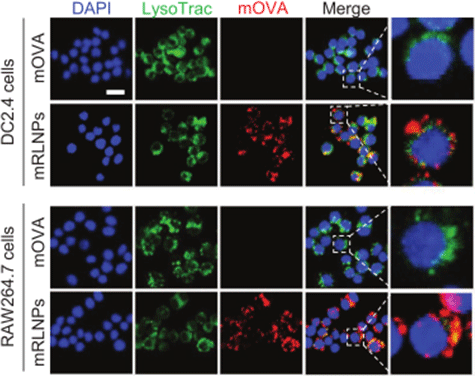
Cy5.5 acetate purchased from MedChemExpress. Usage Cited in: Adv Funct Mater. 2022: 2204636.
Representative confocal images of DC2.4 and RAW264.7 cells incubates with Cy5.5 labelled mOVA and mRLNPs for 6 h, showing cellular uptake and endo/lysosome escaping of mOVA. The endo/lysosomes are stained with LysoTracker Green (green).
-
Nat Commun
Bioengineered hybrid dual-targeting nanoparticles reprogram the tumour microenvironment for deep glioblastoma photodynamic therapy. [Abstract]2025 Aug 18;16(1):7672. PMID: 40826003
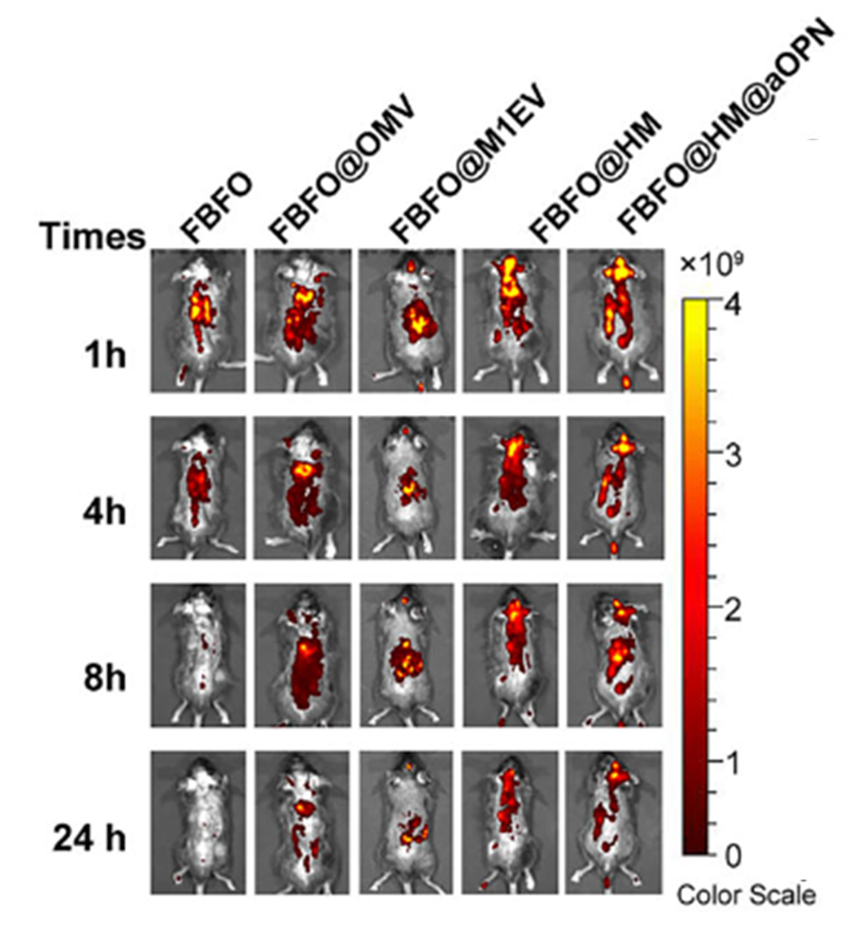
Cy5.5 acetate purchased from MedChemExpress. Usage Cited in: Nat Commun. 2025 Aug 18;16(1):7672. [Abstract]
In vivo Cy5.5 fluorescence images of CT2A-bearing mice at different time points after intravenous injection of different formulations.
-
-
ACS Nano
Senescence-Primed Ferroptosis Enabled by a Metal-Organic Framework Nanoplatform for Enhanced Cancer Therapy. [Abstract]2025 Dec 23;19(50):42689-42704. PMID: 41358603 -
ACS Nano
Oral Multi-Enzymatic Manganese-Carbon Dots Alleviate Sepsis-Associated Lung Injury via the Gut-Lung Axis. [Abstract]2025 Nov 4;19(43):37758-37782. PMID: 41128412 -
ACS Nano
Virus-Like Particle-Based Personalized Neoantigen Nano-Vaccine for Tumor Immunotherapy and Recurrence Prevention. [Abstract]2025 Oct 14;19(40):35385-35400. PMID: 41032465 -
ACS Nano
Cuproptosis-Inducing Functional Nanocomposites for Enhanced and Synergistic Cancer Radiotherapy. [Abstract]2025 Feb 11;19(5):5429-5446. PMID: 39895200 -
ACS Nano
Ototoxicity-Alleviating and Cytoprotective Allomelanin Nanomedicine for Efficient Sensorineural Hearing Loss Treatment. [Abstract]2024 Sep 11. PMID: 39259947 -
ACS Nano
Mitochondria-Targeted Multifunctional Nanoprodrugs by Inhibiting Metabolic Reprogramming for Combating Cisplatin-Resistant Lung Cancer. [Abstract]2024 Aug 13;18(32):21156-21170. PMID: 39088743 -
ACS Nano
Targeted Degradation of Signal Transduction and Activator of Transcription 3 by Chaperone-Mediated Autophagy Targeting Chimeric Nanoplatform. [Abstract]2024 Jan 16;18(2):1599-1610. PMID: 38157218 -
-
-
J Nanobiotechnology
Bifidobacterium breve inhibits colorectal cancer via extracellular vesicles containing formate acetyltransferase. [Abstract]2026 Mar 16;24(1):267. PMID: 41840625 -
J Nanobiotechnology
Coptis chinensis extracellular vesicles loaded with CA1-siRNA promote endothelial repair and stent restenosis therapy by regulating the PADI2 and NF-κB pathway. [Abstract]2026 Feb 11;24(1):157. PMID: 41673867 -
J Nanobiotechnology
PTEN as a prognostic factor for radiotherapy plus immunotherapy response in nasopharyngeal carcinoma. [Abstract]2025 Apr 21;23(1):303. PMID: 40259377 -
J Nanobiotechnology
Injectable hybrid hydrogels enable enhanced combination chemotherapy and roused anti-tumor immunity in the synergistic treatment of pancreatic ductal adenocarcinoma. [Abstract]2024 Jun 20;22(1):353. PMID: 38902759 -
J Nanobiotechnology
Combination of ferroptosis and pyroptosis dual induction by triptolide nano-MOFs for immunotherapy of Melanoma. [Abstract]2023 Oct 19;21(1):383. PMID: 37858186 -
J Nanobiotechnology
2021 May 26;19(1):156. PMID: 34039349 -
-
-
Acta Pharm Sin B
A thermo-sensitive hydrogel targeting macrophage reprogramming for sustained osteoarthritis pain relief. [Abstract]2025 Nov;15(11):6034-6051. PMID: 41311383
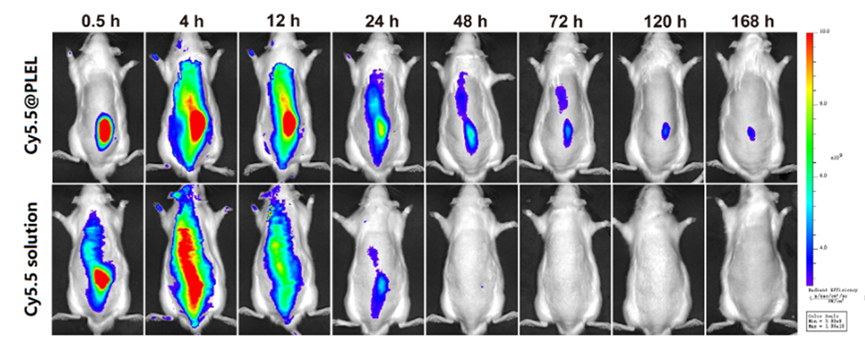
Cy5.5 acetate purchased from MedChemExpress. Usage Cited in: Acta Pharm Sin B. 2025 Nov;15(11):6034-6051. [Abstract]
Representative imaging of Cy5.5 fluorescence intensity at various time points post-injection in rats, indicative of local drug retention.
-
Acta Pharm Sin B
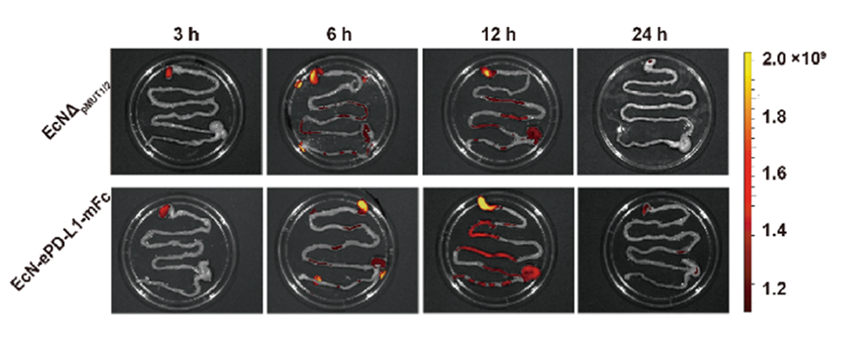
Engineered Escherichia coli Nissle 1917 targeted delivery of extracellular PD-L1-mFc fragment for treating inflammatory bowel disease. [Abstract]2025 Nov;15(11):6019-6033. PMID: 41311378
Cy5.5 acetate purchased from MedChemExpress. Usage Cited in: Acta Pharm Sin B. 2025 Nov;15(11):6019-6033. [Abstract]
Fluorescence images of Cy5.5-labeled EcNΔpMUT1/2 and EcN-ePD-L1-mFc spatiotemporally resident in the gastrointestinal tract of mice.
-
Acta Pharm Sin B
Unveiling the renoprotective mechanisms of self-assembled herbal nanoparticles from Scutellaria barbata and Scleromitrion diffusum in acute kidney injury: A nano-TCM approach. [Abstract]2025 Aug;15(8):4265-4284. PMID: 40893687 -
Acta Pharm Sin B
Targeting stem-property and vasculogenic mimicry for sensitizing paclitaxel therapy of triple-negative breast cancer by biomimetic codelivery. [Abstract]2025 Jun;15(6):3226-3242. PMID: 40654354
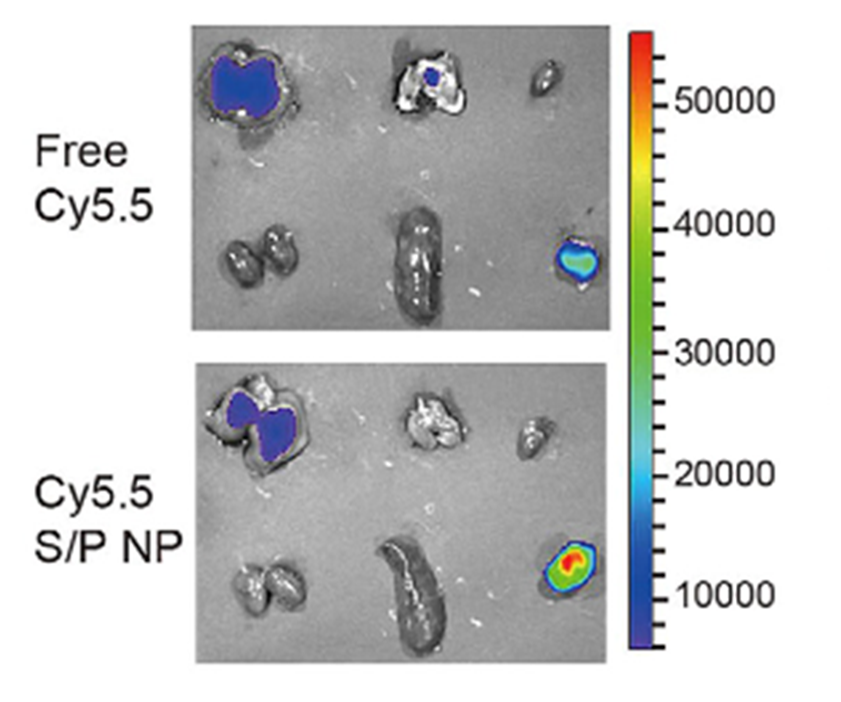
Cy5.5 acetate purchased from MedChemExpress. Usage Cited in: Acta Pharm Sin B. 2025 Jun;15(6):3226-3242. [Abstract]
Ex vivo images of the tumor tissues and major organs (heart, liver, spleen, lung and kidney).
-
Adv Sci (Weinh)
A Brain-Penetrant Nanobody Reveals GSK3β-Driven Proline-Directed Phosphorylation as a Master Regulator of Ischemic Neurodegeneration. [Abstract]2026 Jun 9:e76004. PMID: 42261803 -
Adv Sci (Weinh)
Targeting the GPX4-FUNDC1 Interaction with Magnesium Lithospermate B Attenuates Sepsis-Associated Lung Injury. [Abstract]2026 Apr;13(20):e16488. PMID: 41616122 -
Adv Sci (Weinh)
Functionalized Biomimetic Nanoparticles Targeting the IL-10/IL-10Rα/Glycolytic Axis in Synovial Macrophages Alleviate Cartilage Degeneration in Osteoarthritis. [Abstract]2025 Jul;12(27):e2504768. PMID: 40317692 -
Adv Sci (Weinh)
Antigen-Targeting Inserted Nanomicelles Guide Pre-Existing Immunity to Kill Head and Neck Cancer. [Abstract]2025 May;12(18):e2410629. PMID: 40091501 -
-
-
-
J Control Release
Quercetin liposomes conjugated with hyaluronidase: An efficient drug delivery system to block pancreatic cancer. [Abstract]2025 Jun 10:382:113642. PMID: 40127723 -
J Control Release
Archaea-inspired deoxyribonuclease I liposomes prevent multiple organ dysfunction in sepsis. [Abstract]2025 Apr 10:380:1109-1126. PMID: 39986474 -
Small
DNA Base Pairing-Inspired Supramolecular Nanodrug Camouflaged by Cancer-Cell Membrane for Osteosarcoma Treatment. [Abstract]2022 Jul;18(30):e2202337. PMID: 35780479 -
-
-
Adv Healthc Mater
Synergistic Thermochemotherapy via Injectable Polyurethane Hydrogel Co-Delivering Cisplatin and 17AAG for Peritoneal Metastasis of Colorectal Cancer. [Abstract]2026 Jun;15(21):e04662. PMID: 41937371 -
Mater Today Bio
Bionic black phosphorus nanosheets confer dual protection against nephrocalcinosis-induced kidney injury via ROS scavenging and NETosis inhibition. [Abstract]2026 Jun 18:39:103367. PMID: 42382721 -
Mater Today Bio
Mannosylated graphene oxide nanotherapeutics co-delivering docetaxel and a STING agonist reprogram myeloid cells and potentiate antitumor immunity. [Abstract]2026 Mar 31:38:103086. PMID: 42006712 -
Adv Healthc Mater
Microenvironment-Adaptive Smart Hydrogel with 2D Vanadium Nitride MXenzyme Rescues Osteoarthritis via Coordinated ROS Scavenging and Hspa5/GPX4 Axis-Mediated Ferroptosis Suppression. [Abstract]2026 Feb 21:e04967. PMID: 41721542 -
Mater Today Bio
Intelligent nanoliposome ameliorate chronic intermittent hypoxia-mediated neuronal injury via a dual regulation microglial inflammation strategy. [Abstract]2026 Feb 4:37:102865. PMID: 41716351 -
-
Mater Today Bio
Honokiol-loaded nanoparticles for targeted bacterial eradication and treatment of MRSA infection. [Abstract]2025 Nov 17:35:102562. PMID: 41356419 -
Mater Today Bio
GGT and GSH-triggered nanoplatform for efficient gambogic acid delivery and tumor penetration in triple-negative breast cancer. [Abstract]2025 Jun 27:33:102030. PMID: 40677397 -
Mater Today Bio
Cerium-based nanoplatform for severe acute pancreatitis: Achieving enhanced anti-inflammatory effects through calcium homeostasis restoration and oxidative stress mitigation. [Abstract]2025 Jan 13:31:101489. PMID: 39906206 -
Adv Healthc Mater
Macrophage Membrane-Biomimetic Multi-Layered Nanoparticles Targeting Synovial Angiogenesis for Osteoarthritis Therapy. [Abstract]2025 Jan;14(2):e2401985. PMID: 39402771 -
Adv Healthc Mater
Oral Piwi-Interacting RNA Delivery Mediated by Green Tea-Derived Exosome-Like Nanovesicles for the Treatment of Aortic Dissection. [Abstract]2024 Dec;13(30):e2401466. PMID: 39087398 -
Acta Biomater
Engineered bioorthogonal cell delivery system for in situ antimicrobial peptide recruitment during systemic bacterial infection. [Abstract]2025 Apr 10:S1742-7061(25)00265-X. PMID: 40220946 -
J Orthop Translat
2025 Jun 9:53:99-111. PMID: 40538640 -
-
Int J Biol Macromol
Truncated thrombospondin-1 polypeptide alleviates non-alcoholic fatty liver disease induced by palmitic acid and high-fat diets. [Abstract]2025 Oct 17;331(Pt 1):148308. PMID: 41109376 -
Int J Nanomedicine
A Novel Triptolide Nano-Liposome with Mitochondrial Targeting for Treatment of Hepatocellular Carcinoma. [Abstract]2024 Dec 3:19:12975-12998. PMID: 39654802 -
Int J Biol Macromol
2023 Oct 13;253(Pt 7):127416. PMID: 37838132 -
Drug Deliv
Dual-ligand-modified cantharidin nanoparticles for the treatment of hepatocellular carcinoma via the inhibition of Ephb4. [Abstract]2026 Dec 31;33(1):2682976. PMID: 42249613 -
Free Radic Biol Med
α-lipoic acid nanoparticles functionalized with RVG29 peptide attenuate seizure-induced neurotoxicity by restoring mitochondrial homeostasis via the PINK1/Parkin pathway. [Abstract]2025 Dec 23:245:201-222. PMID: 41448258 -
Int J Pharm X
Engineered M2 macrophage-derived vesicles deliver DNase I for cfDNA clearance and multi-organ protection in sepsis. [Abstract]2026 Mar 26:11:100528. PMID: 41952672 -
ACS Appl Mater Interfaces
Feedback-Amplified Drug Delivery of αPD-L1-Modified Lipoplatin for Chronological Synergy in NSCLC through PD-L1 Upregulation. [Abstract]2025 Oct 8;17(40):55861-55875. PMID: 40997865 -
J Ethnopharmacol
Anemarrhena asphodeloides fructan attenuates cigarette smoke-induced muscle atrophy by activating the Akt/mTOR pathway and inhibiting the ubiquitin-proteasome pathway. [Abstract]2025 Jul 24:351:120116. PMID: 40484257 -
-
RSC Adv
A hollow nanozyme-based multifunctional platform enhances sonodynamic-chemodynamic-induced ferroptosis for cancer therapy. [Abstract]2025 Mar 27;15(12):9408-9419. PMID: 40151533 -
Int J Pharm
A strategy for oral delivery of FGF21 for mitigating inflammation and multi-organ damage in sepsis. [Abstract]2024 May 10:656:124115. PMID: 38614430 -
-
Eur J Pharm Sci
Ultrasound-Guided Periadventitial Administration of Rapamycin-Fibrin Glue Attenuates Neointimal Hyperplasia in the Rat Carotid Artery Injury Model. [Abstract]2024 Jan 1:192:106610. PMID: 37852309 -
Mol Pharm
Platelet Membrane-Camouflaged Silver Metal-Organic Framework Biomimetic Nanoparticles for the Treatment of Triple-Negative Breast Cancer. [Abstract]2024 Jul 1;21(7):3577-3590. PMID: 38857525 -
Eur J Med Res
2026 Jan 14. PMID: 41535913 -
Cancers (Basel)
Mitochondria-Targeted Nitronyl Nitroxide Radical Nanoparticles for Protection against Radiation-Induced Damage with Antioxidant Effects. [Abstract]2024 Jan 13;16(2):351. PMID: 38254840 -
FASEB J
Molecular Therapy for Non-Alcoholic Fatty Liver Disease: Angiotensin-(1-7) Delivery via Cyclic RGD-Modified Vesicles Activates Mas Receptor to Ameliorate Fibrosis Through Autophagy and Metabolic Reprogramming. [Abstract]2026 Jan 31;40(2):e71360. PMID: 41524292 -
Micromachines
Fabrication of Cost-Effective Microchip-Based Device Using Sandblasting Technique for Real-Time Multiplex PCR Detection. [Abstract]2024 Jul 24;15(8):944. PMID: 39203595 -
-
-
-
-


Purity & Documentation
References
[1]. Zhu S, et al. Visualizing cancer and response to therapy in vivo using Cy5.5-labeled factor VIIa and anti-tissue factor antibody. J Drug Target. 2015 Apr;23(3):257-65. [Content Brief]
[2]. Ptaszek M. Rational design of fluorophores for in vivo applications. Prog Mol Biol Transl Sci. 2013;113:59-108. [Content Brief]
[4]. Jiang L, et al. pH/temperature sensitive magnetic nanogels conjugated with Cy5.5-labled lactoferrin for MR and fluorescence imaging of glioma in rats. Biomaterials. 2013 Oct;34(30):7418-28. [Content Brief]
[5]. Lim B, et al. A Unique Recombinant Fluoroprobe Targeting Activated Platelets Allows In Vivo Detection of Arterial Thrombosis and Pulmonary Embolism Using a Novel Three-Dimensional Fluorescence Emission Computed Tomography (FLECT) Technology. Theranostics. 2017 Feb 26;7(5):1047-1061. [Content Brief]

Calculators
Concentration (start) × Volume (start) = Concentration (final) × Volume (final)


Cy5.5 acetate Related Classifications
HY-D0924A Related Classifications
 Powered by Bioz