1. Search Result
Search Result
Results for "

Fe(III)

" in MedChemExpress (MCE) Product Catalog:

18

Inhibitors & Agonists

2

Biochemical Assay Reagents

5

Natural
Products

Cat. No. Product Name Target Research Areas Chemical Structure
  • HY-B0988
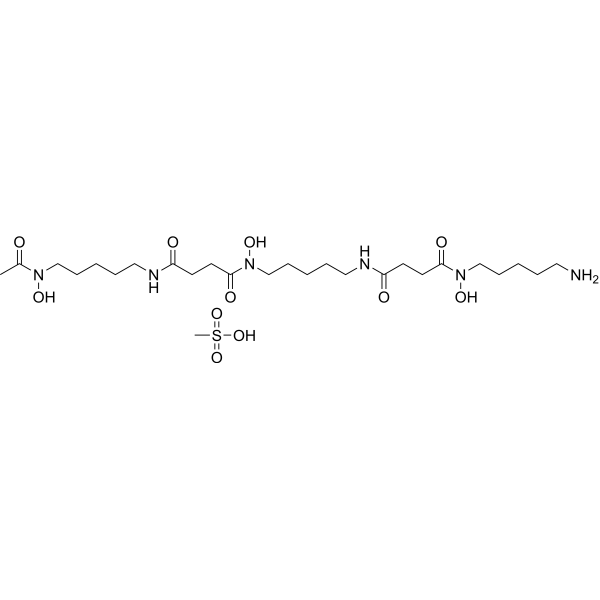
    Deferoxamine mesylate
    Maximum Cited Publications
    397 Publications Verification

    Desferrioxamine B mesylate; DFOM

    Autophagy HIF/HIF Prolyl-Hydroxylase Reactive Oxygen Species (ROS) Apoptosis Akt Infection Neurological Disease Metabolic Disease Inflammation/Immunology Cancer
    Deferoxamine mesylate (Deferoxamine B mesylate) is an iron chelator (binds to Fe(III) and many other metal cations), is widely used to reduce iron accumulation and deposition in tissues. Deferoxamine mesylate upregulates HIF-1α levels with good antioxidant activity. Deferoxamine mesylate also shows anti-proliferative activity, can induce apoptosis and autophagy in cancer cells. Deferoxamine mesylate can be used in studies of diabetes, neurodegenerative diseases as well as anti-cancer and anti-COVID-19 .
    Deferoxamine mesylate
  • HY-B1625
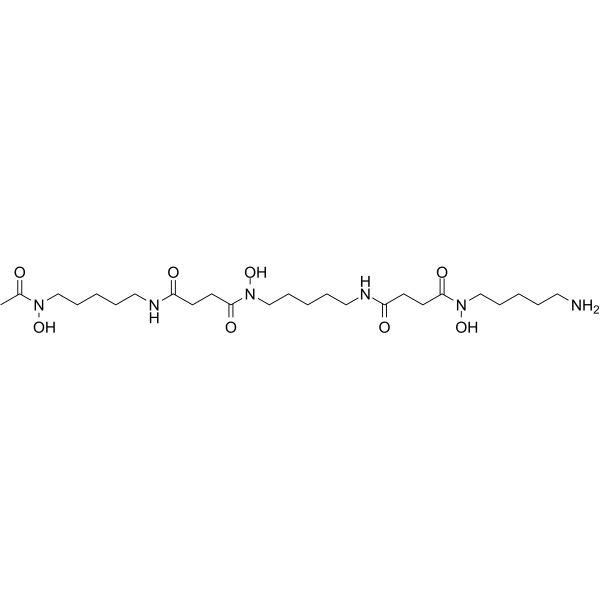
    Deferoxamine
    Maximum Cited Publications
    397 Publications Verification

    Deferoxamine B; Deferriferrioxamine B; Deferrioxamine

    HIF/HIF Prolyl-Hydroxylase Reactive Oxygen Species (ROS) Apoptosis Akt Autophagy Infection Neurological Disease Metabolic Disease Inflammation/Immunology Cancer
    Deferoxamine (Deferoxamine B) is an iron chelator (binds to Fe(III) and many other metal cations), is widely used to reduce iron accumulation and deposition in tissues. Deferoxamine upregulates HIF-1α levels with good antioxidant activity. Deferoxamine also shows anti-proliferative activity, can induce apoptosis and autophagy in cancer cells. Deferoxamine can be used in studies of diabetes, neurodegenerative diseases as well as anti-cancer and anti-COVID-19 .
    Deferoxamine
  • HY-N0928
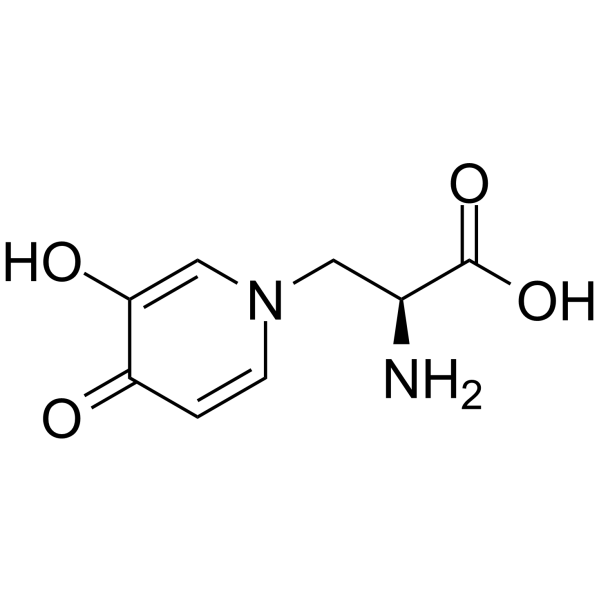
    Mimosine
    4 Publications Verification

    Apoptosis Inflammation/Immunology Cancer
    Mimosine, a tyrosine analog , can act as an antioxidant by its potent iron-binding activity . Mimosine is a known chelator of Fe(III) . Mimosine induces apoptosis through metal ion chelation, mitochondrial activation and ROS production in human leukemic cells . Anti-cancer, antiinflammation.
    Mimosine
  • HY-132989

    Biochemical Assay Reagents Bacterial Cardiovascular Disease Infection Inflammation/Immunology
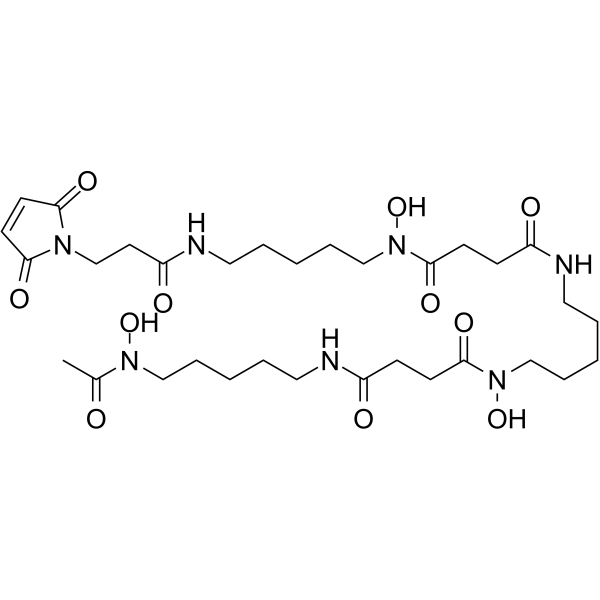
    Mal-Deferoxamine is a maleimide-functionalized trihydroxamate siderophore derivative that can be isolated from Streptomyces pilosus. Mal-Deferoxamine possesses highly specific Fe (III) chelating ability, and the stability of complexes formed between it and non-Fe (III) metal ions is significantly lower. Mal-Deferoxamine exhibits growth inhibitory effects against Gram-positive bacteria, but shows no obvious inhibitory activity against Gram-negative bacteria (MIC>50 μM). Mal-Deferoxamine is mainly suitable for scientific research in hematology and related fields .
    Mal-Deferoxamine
  • HY-B0988R

    Desferrioxamine B mesylate (Standard); DFOM (Standard)

    Reference Standards Autophagy HIF/HIF Prolyl-Hydroxylase Reactive Oxygen Species (ROS) Apoptosis Akt Infection Neurological Disease Metabolic Disease Inflammation/Immunology Cancer
    Deferoxamine (mesylate) (Standard) is the analytical standard of Deferoxamine (mesylate). This product is intended for research and analytical applications. Deferoxamine mesylate (Deferoxamine B mesylate) is an iron chelator (binds to Fe(III) and many other metal cations), is widely used to reduce iron accumulation and deposition in tissues. Deferoxamine mesylate upregulates HIF-1α levels with good antioxidant activity. Deferoxamine mesylate also shows anti-proliferative activity, can induce apoptosis and autophagy in cancer cells. Deferoxamine mesylate can be used in studies of diabetes, neurodegenerative diseases as well as anti-cancer and anti-COVID-19 .
    Deferoxamine mesylate (Standard)
  • HY-W345885

    β-glucuronidase Metabolic Disease
    Saccharic acid is a competitive and potent inhibitor of β-glucuronidase. Saccharic acid inhibits glucuronide synthesis. Saccharic acid as an efficient iron chelate to enhance photo-Fenton
    degradation of organic contaminants .
    Saccharic acid
  • HY-B1625R
    Deferoxamine (Standard)
    3 Publications Verification

    Deferoxamine B (Standard); Deferriferrioxamine B (Standard); Deferrioxamine (Standard)

    Reference Standards HIF/HIF Prolyl-Hydroxylase Reactive Oxygen Species (ROS) Apoptosis Akt Autophagy Infection Neurological Disease Metabolic Disease Inflammation/Immunology Cancer
    Deferoxamine (Standard) is the analytical standard of Deferoxamine. This product is intended for research and analytical applications. Deferoxamine (Deferoxamine B) is an iron chelator (binds to Fe(III) and many other metal cations), is widely used to reduce iron accumulation and deposition in tissues. Deferoxamine upregulates HIF-1α levels with good antioxidant activity. Deferoxamine also shows anti-proliferative activity, can induce apoptosis and autophagy in cancer cells. Deferoxamine can be used in studies of diabetes, neurodegenerative diseases as well as anti-cancer and anti-COVID-19 .
    Deferoxamine (Standard)
  • HY-W112939

    MOFs Others
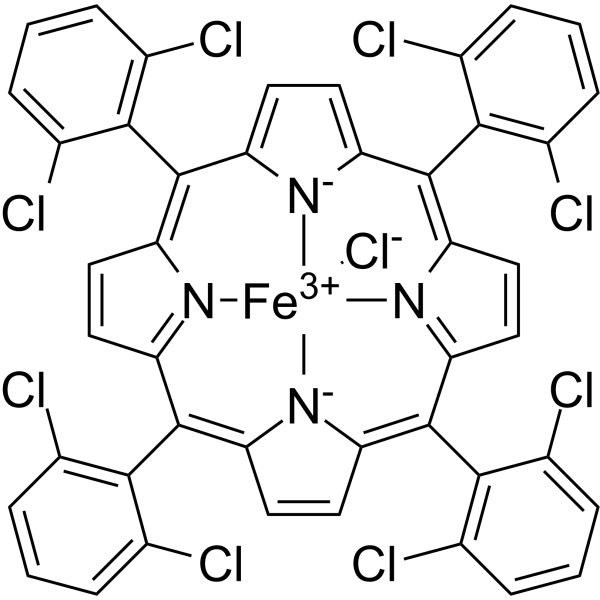
    Fe(III)(TDCPP) chloride is a biochemical reagent that can be used as a biological material or organic compound for life science related research.
    Fe(III)(TDCPP) chloride
  • HY-W107177

    meso-Tetrakis(4-chlorophenyl)porphyrin-Fe(III)chloride

    MOFs Others
    5,10,15,20-tetrakis(p-chlorophenyl)porphyrin iron(III) chloride (meso-Tetrakis(4-chlorophenyl)porphyrin-Fe(III)chloride) is a metal-organic framework (MOF).
    5,10,15,20-tetrakis(p-chlorophenyl)porphyrin iron(III) chloride
  • HY-W113011

    meso-Tetratolylporphyrin-Fe(III)chloride

    MOFs Others
    5,?10,?15,?20-?Tetra(4-?methylphenyl)?-?21H,?23H-?porphine iron(III) chloride (meso-Tetratolylporphyrin-Fe(III)chloride) is a metal-organic framework (MOF).
    5,​10,​15,​20-​Tetra(4-​methylphenyl)​-​21H,​23H-​porphine iron(III) chloride
  • HY-N0928R

    Reference Standards Apoptosis Inflammation/Immunology Cancer
    Mimosine, a tyrosine analog , can act as an antioxidant by its potent iron-binding activity . Mimosine is a known chelator of Fe(III) . Mimosine induces apoptosis through metal ion chelation, mitochondrial activation and ROS production in human leukemic cells . Anti-cancer, antiinflammation.
    Mimosine (Standard)
  • HY-W009022

    Biochemical Assay Reagents Others
    Diantipyrylmethane is a chromogenic reagent commonly used for the determination of the contents of metals such as Au (III), Ti (IV), Ir, Fe (III), molybdenum, neodymium, U (IV), iridium, platinum and rhenium via spectrophotometry and extraction photometry. Diantipyrylmethane can also form a fluorescent complex with Er (III) ions, which is applied to the determination of erbium .
    Diantipyrylmethane
  • HY-148340

    Biochemical Assay Reagents Others
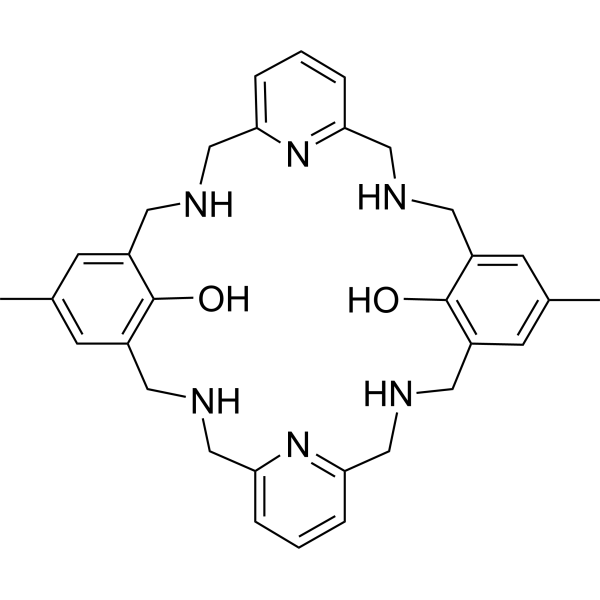
    24RBPyBC is a dinucleating macrocyclic ligand, it contains phenolate pyridine, bipyridine, and amino groups form dinuclear Fe(II) and Fe(III) complexes .
    24RBPyBC
  • HY-186106

    Bacterial Infection
    3-Deoxyanguibactin is a siderophore and Fe(III) chelator/iron delivery agent. 3-Deoxyanguibactin binds Fe(III) with 2:1 stoichiometry in liquid phase, delivers iron into Acinetobacter baumannii cells, and relies on the BauA outer membrane receptor and bau transport system for cellular entry. 3-Deoxyanguibactin can be used for the research of acinetobacter baumannii infection .
    3-Deoxyanguibactin
  • HY-138185

    SF 2738A

    Bacterial Apoptosis Cancer
    Collismycin A is a bacterial metabolite originally isolated from Streptomyces that has diverse biological activities, including antibacterial, antiproliferative, and neuroprotective properties. It is active against a variety of bacteria (MICs=6.25 and 100 μg/mL) and fungi (MICs=12.5-100 μg/mL). It inhibits proliferation of A549 lung, HCT116 colon, and HeLa cervical cancer cells (IC50s=0.3, 0.6, and 0.3 μM, respectively) and NIH373 fibroblasts (IC50=56.6 μM) but not MDA-MD-231 breast cancer cells (IC50=>100 μM). Collismycin A forms a complex with Fe(II) and Fe(III) at a 2:1 ratio, and the addition of iron ions inhibits the antiproliferative effect of collismycin A on HeLa cells, an effect that does not occur with the addition of zinc, manganese, copper, or magnesium ions.3 Collismycin A (1 μM) prevents apoptosis in the brain region of zebrafish larvae in a model of neuronal cell death induced by all-trans retinoic acid.
    Collismycin A
  • HY-N18050

    Endogenous Metabolite Bacterial Infection
    Petrobactin is a photoreactive siderophore. Petrobactin can be produced by the oil-degrading marine bacterium Marinobacter hydrocarbonoclasticus. Petrobactin can be synthesized by Bacillus anthracis str. Sterne under conditions of iron starvation. Petrobactin readily undergoes a light-mediated decarboxylation reaction when bound to Fe(III) .
    Petrobactin
  • HY-149151

    Endogenous Metabolite PKC Glycosidase TNF Receptor Reactive Oxygen Species (ROS) Infection Inflammation/Immunology
    Variegatic acid is a secondary metabolite derived from basidiomycete fungi. Variegatic acid is a PKCβ1 inhibitor with an IC₅₀ of 36.2 μM. Variegatic acid inhibits antigen- or calcium ionophore-induced β-hexosaminidase release (IC₅₀ values of 10.4 μM and 22.2 μM, respectively) and TNF-α secretion (IC₅₀ values of 16.8 μM and 20.1 μM, respectively). Variegatic acid suppresses the enzymatic activity of calcium-activated PKCβ1 and reduces Fe(III) to Fe(II) in a pH-dependent manner, enabling the generation of hydroxyl radicals (·OH) through reaction with H₂O₂, which facilitates the degradation of lignocellulose. Variegatic acid is useful for studying biological degradation and allergic responses.
    Variegatic acid
  • HY-W718262

    (Rac)-CGP 52547

    Antibiotic Fungal Bacterial Infection Cancer
    Dihydroaeruginoic acid ((Rac)-CGP 52547), an antifungal antibiotic, is a thiazoline iron chelator. Dihydroaeruginoic acid is the condensation product of salicylate and one cysteine residue. Dihydroaeruginoic acid chelates Fe(III), inhibits DNA replication via ribonucleotide reductase, induces G1/S cell cycle block, reduces leukemia cell clonogenic viability. Dihydroaeruginoic acid inhibits phytopathogenic fungi and bacteria, suppresses Candida albicans development, and inhibits Agrobacterium tumefaciens biofilm formation via extracellular iron sequestration. Dihydroaeruginoic acid can be used for the research of phytopathogenic fungal and bacterial infections, and leukemia .
    Dihydroaeruginoic acid

Inquiry Online

Your information is safe with us. * Required Fields.

Salutation


Country or Region *

Applicant Name *


Organization Name *

Department *


Email Address *


Product Name *

Cat. No.


Requested quantity *

Phone Number *


Remarks

Inquiry Online

Inquiry Information

Product Name:
Cat. No.:
Quantity:
MCE Japan Authorized Agent:

