1. Search Result
Search Result
Pathways Recommended: GPCR/G Protein
Results for "

Gαq

" in MedChemExpress (MCE) Product Catalog:

18

Inhibitors & Agonists

3

Peptides

3

Natural
Products

1

Click Chemistry

1

Oligonucleotides

Cat. No. Product Name Target Research Areas Chemical Structure
  • HY-111557
    YM-254890
    15+ Cited Publications

    P2Y Receptor Cardiovascular Disease
    YM-254890 is a selective Gαq/11 protein inhibitor isolated from Chromobacterium sp. YM-254890 shows no inhibition of other G protein subtypes. YM-254890 inhibits platelet aggregation induced by ADP by blocking the P2Y1 signal transduction pathway, with an IC50 value below 0.6 μM .
    YM-254890
  • HY-130463

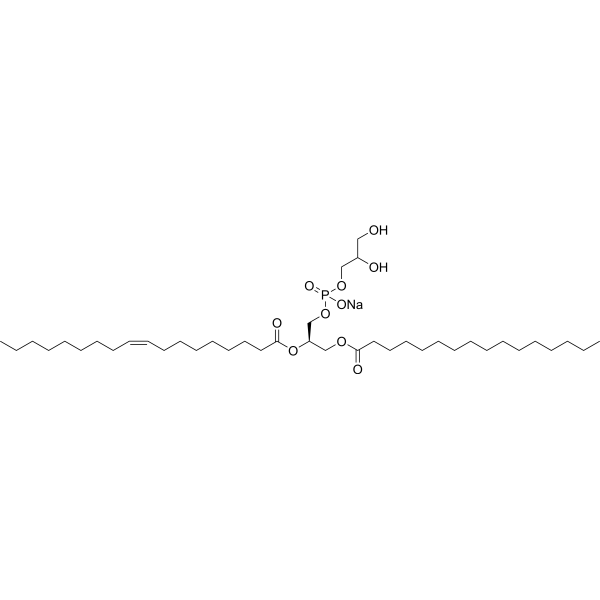
    PG(16:0/18:1); 1-Palmitoyl-2-oleoyl-sn-glycero-3-phospho-(1'-rac-glycerol)

    Liposome Biochemical Assay Reagents Neurotensin Receptor Neurological Disease
    POPG sodium salt is a negatively charged phospholipid. POPG sodium salt affects the interactions of membrane proteins with other molecules by changing the charge characteristics of the lipid environment. POPG sodium salt increases the apparent affinity of Gαq and Gβ1γ1 for activated NTS1. POPG sodium salt can interact with the positive charge of peptides. POPG sodium salt can be used in Parkinson's disease research .
    POPG sodium salt
  • HY-107916
    Thyrotropin
    1 Publications Verification

    TSH; Pretiron

    TSH Receptor PKC Apoptosis Metabolic Disease Inflammation/Immunology Endocrinology Cancer
    Thyrotropin (TSH, Pretiron) is a thyroid-stimulating hormone produced by thyrotrope cells in the anterior pituitary gland. Thyrotropin regulates the endocrine function of the thyroid. Thyrotropin induces transcriptional regulation of TH-gatekeeper genes in tanycytes through the Tshr/Gαq/PKC pathway. Thyrotropin prevents Apoptosis. Thyrotropin has an association of low levels with increased bone remodeling, reduced bone mass and a high fracture risk in mice. Thyrotropin is promising for research of skeletal remodeling, hyperthyroidism .
    Thyrotropin
  • HY-117037
    FR900359
    4 Publications Verification

    Apoptosis ERK Cardiovascular Disease Cancer
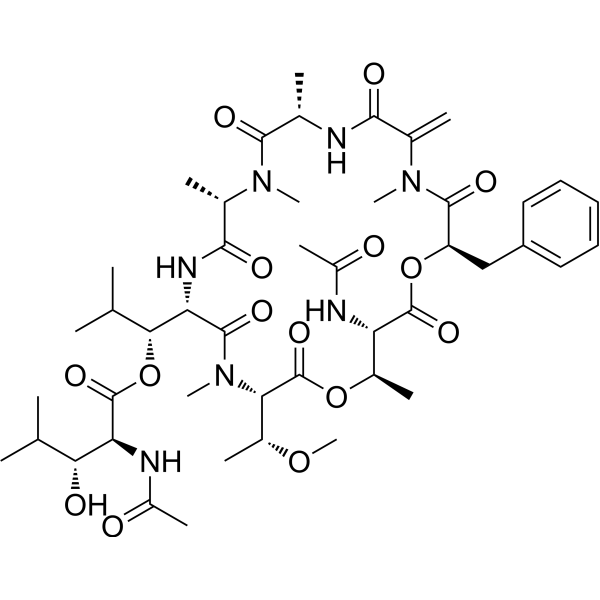
    FR900359 is a depsipeptide selective inhibitor of Gαq/11/14 in mammalia, can inhibits ERK pathway. FR900359 suppresses the proliferation of melanoma cells and decreases of blood pressure. FR900359 also protected against airway hyperreactivity in murine models of allergen sensitization in Ovalbumin, low endotoxin (HY-W250978A)-induced sensitization model of asthma. FR900359 can be used for cancer and cardiovascular disease research .
    FR900359
  • HY-148016

    Protease Activated Receptor (PAR) ERK Inflammation/Immunology
    I-287 is a orally active selective PAR2 inhibitor that acting as a negative allosteric regulator on Gαq and Gα12/13 activity and their downstream effectors. I-287 reduces Complete Freund's adjuvant (HY-153808)-induced inflammation in mice and can be used for inflammation/immunology research .
    I-287
  • HY-P3136

    TRV120055

    Angiotensin Receptor ERK Cardiovascular Disease
    TRV055 (TRV120055) is a G protein-biased agonist of angiotensin II type 1 receptors (AT1Rs). TRV120055 induces fibroblast proliferation, overexpression of collagen I and α-SMA, and stress fibre formation in human cardiac fibroblasts. TRV055 activates AT1 receptor/Gαq-mediated signaling pathways, upregulates TGF-β1 and p-ERK1/2. TRV055 induces collagen secretion in adult rat myofibroblasts at a level comparable to Ang II. TRV055 can be used to study the role of G protein-biased signaling of AT1Rs in regulating fibrotic responses [1]
    TRV055
  • HY-114994

    TSH Receptor Endocrinology
    MS437 is a potent TSH receptor (TSHR) stimulator with an EC50 value of 13x10 -8 M. MS437 shows potent activation of G, Gαq and Gα12 and up-regulation of thyroglobulin (Tg), sodium iodine symporter (NIS) and TSHR gene expressions .
    MS437
  • HY-P3136A

    TRV120055 hydrochloride

    Angiotensin Receptor Cardiovascular Disease
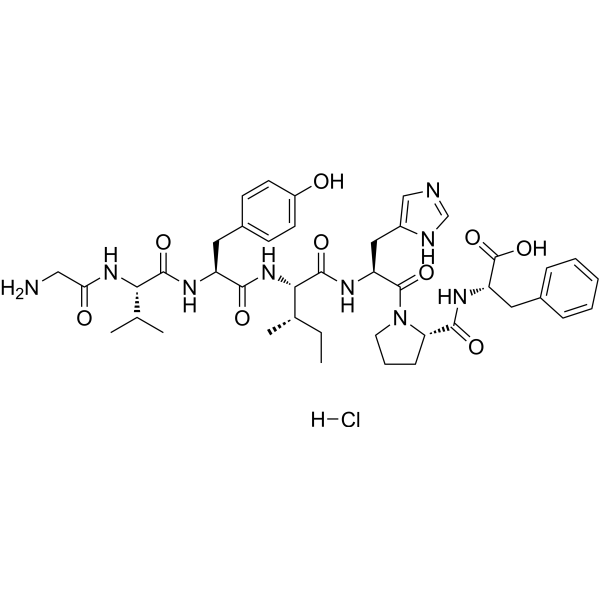
    TRV055 (TRV120055) hydrochloride is a G protein-biased agonist of angiotensin II type 1 receptors (AT1Rs). TRV055 hydrochloride induces fibroblast proliferation, overexpression of collagen I and α-SMA, and stress fibre formation in human cardiac fibroblasts. RV055 hydrochloride activates AT1 receptor/Gαq-mediated signaling pathways, upregulates TGF-β1 and p-ERK1/2. RV055 hydrochloride induces collagen secretion in adult rat myofibroblasts at a level comparable to Ang II. RV055 hydrochloride can be used to study the role of G protein-biased signaling of AT1Rs in regulating fibrotic responses [1]
    TRV055 hydrochloride
  • HY-P3910

    Angiotensin Receptor Cardiovascular Disease
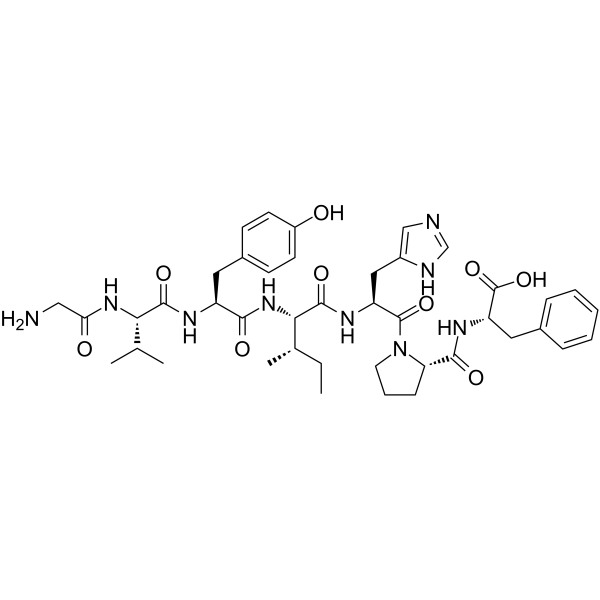
    [Val4] Angiotensin III is an angiotension III peptide. [Val4] Angiotensin III is a potent full agonist of Gαq and βarr2 response, with pEC50 values of 8.31 and 8.44, respectively .
    [Val4] Angiotensin III
  • HY-120816

    Calcium Channel Cardiovascular Disease
    WU-07047, a simplified analog of YM-254890 (HY-111557), is a selective Gαq/11 inhibitor. WU-07047 can inhibit nucleotide exchange .
    WU-07047
  • HY-161317

    Trace Amine-associated Receptor (TAAR) Cancer
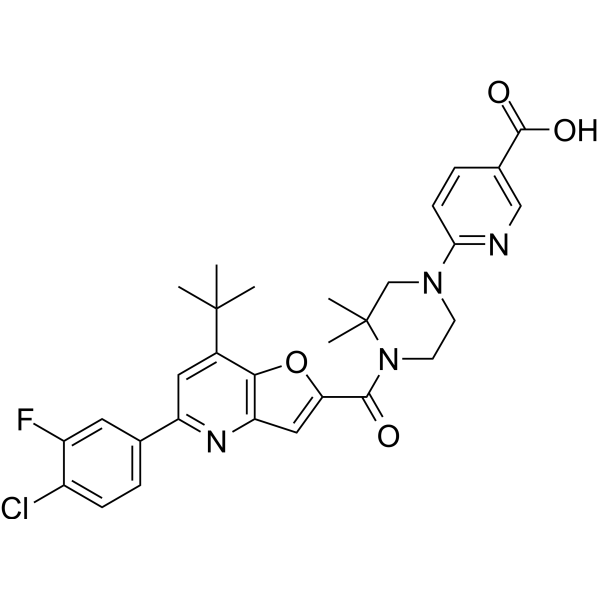
    Gαq/11 protein-IN-1 (compound F33) is an inhibitor of Gαq/11 protein with an IC50 value of 9.4 μM. Gαq/11 protein-IN-1 has antitumor activity .
    Gαq/11 protein-IN-1
  • HY-108554

    Protease Activated Receptor (PAR) Others
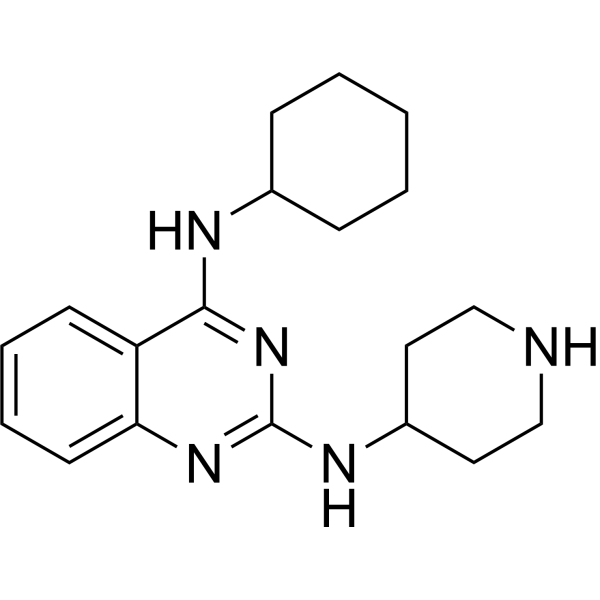
    Q94 hydrochloride, a selective PAR1 antagonist (IC50=916 nM), can selectively block PAR1/Gαq interaction and signalling. Q94 hydrochloride blocks PAR1-mediated increases in both CCL2 mRNA and protein levels in a dose-dependent manner. Q94 hydrochloride also completely blocks thrombin-induced ERK1/2 and MLC phosphorylation .
    Q94 hydrochloride
  • HY-103117

    5-HT Receptor Neurological Disease
    S 32212 hydrochloride is an inverse agonist of 5-HT receptors 5-HT2(CINI) and 5-HT2(CVSV) (Kis=6.6, 8.9 nM) and an antagonist of 5-HT2A and α2β-adrenergic receptors (Ki=5.8, 5.8 nM). S 32212 hydrochloride can reduce the binding of GTPγS to Gαq, and reduce the activity of phospholipase C (PLC) in HEK293 cells expressing 5-HT2(CINI) receptor and CHO cells expressing 5-HT2(CVSV) receptor (EC50=38 and 18.6 nM, respectively). S 32212 hydrochloride (2.5 mg/kg) reduces 5-HT receptor agonist-induced head twitches and penile erections in mice and rats. S 32212 hydrochloride (10, 40 mg/kg) reduces immobility time in the forced swim test and marble burying behavior in mice and rats, exerting antidepressant and anxiolytic activities.
    S 32212 hydrochloride
  • HY-179165

    P2Y Receptor Apoptosis YAP Cancer
    Gαq/11 protein-IN-2 (Compound 9g) is a Gαq/11 protein inhibitor, with an IC50 of 11.3 μM. Gαq/11 protein-IN-2 induces Apoptosis, increases p-YAP. Gαq/11 protein-IN-2 has anticancer activity against uveal melanoma .
    Gαq/11 protein-IN-2
  • HY-182405

    Apoptosis YAP ERK Cancer
    GQ127 is an orally active Gαq/11 inhibitor with an IC50 of 22.6 μM. GQ127 binds directly to Gαq/11 protein and inhibits its activity. GQ127 induces Apoptosis, suppresses viability, migration and invasion of uveal melanoma cells. GQ127 increases the phosphorylation level of YAP and decreases the phosphorylation level of ERK. GQ127 inhibits the growth of uveal melanoma xenografts in mouse models. GQ127 can be used for research related to uveal melanoma .
    GQ127
  • HY-N17826

    Drug Derivative Bacterial P2Y Receptor Endogenous Metabolite Cardiovascular Disease
    YM-254891 is a YM-254890 (HY-111557) analogue and Gαq/11 inhibitor. YM-254891 can be isolated from the fermentation broth of Chromobacterium sp. QS3666. YM-254891 inhibits ADP-induced platelet aggregation .
    YM-254891
  • HY-115643

    GPR119 Metabolic Disease
    AZ13581837 is a GPR120 agonist with oral effectiveness, human EC50 values of 5.2 nM, and mouse EC50 of 4.3 nM. AZ13581837 signals through Gαq, Gαs, and β-arrestin pathways, reduces cAMP production, stimulates GLP-1 secretion, induces glucose lowering, and increases insulin secretion. AZ13581837 can be used for the research of type 2 diabetes .
    AZ13581837
  • HY-182774

    CXCR Cancer
    YU241279 is an orally active CXCR5 inhibitor. YU241279 inhibits CXCL13-mediated Gαq-dependent calcium influx and Gαi2-dependent cAMP reduction in CXCR5-expressing cells. YU241279 inhibits the proliferation of CXCR5-expressing lymphoma cells. YU241279 reduces tumor burden in the peripheral blood and bone marrow of mice implanted with lymphoma tissues. YU241279 is well tolerated during oral administration in mice, maintains stable plasma drug concentrations, and shows no metabolic changes. YU241279 can be used in the research of angioimmunoblastic T-cell lymphoma and Burkitt B-cell lymphoma .
    YU241279

Inquiry Online

Your information is safe with us. * Required Fields.

Salutation


Country or Region *

Applicant Name *


Organization Name *

Department *


Email Address *


Product Name *

Cat. No.


Requested quantity *

Phone Number *


Remarks

Inquiry Online

Inquiry Information

Product Name:
Cat. No.:
Quantity:
MCE Japan Authorized Agent: