1. Search Result
Search Result
Pathways Recommended: Stem Cell/Wnt Cell Cycle/DNA Damage
Results for "

HL-1 cells

" in MedChemExpress (MCE) Product Catalog:

8

Inhibitors & Agonists

4

Fluorescent Dyes

2

Biochemical Assay Reagents

1

Natural
Products

1

Oligonucleotides

1

GMP Molecules

Cat. No. Product Name Target Research Areas Chemical Structure
  • HY-P1004

    Biochemical Assay Reagents Cancer
    Luciferase (bacterial) catalyzes the oxidation of a long-chain aldehyde and reduced flavin mononucleotide. Luciferase (bacterial) protection against oxidative stress for bacterial luminescence .
    Luciferase (bacterial)
  • HY-152086

    Dynamin Cardiovascular Disease
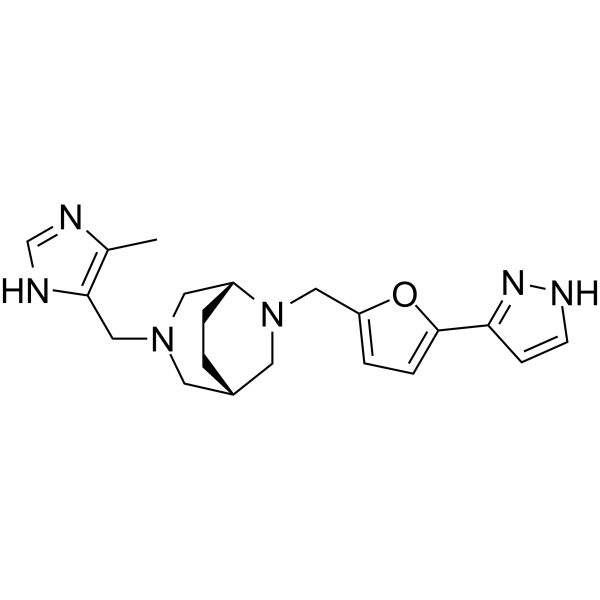
    DRP1i27 is a potent inhibitor of human Drp1 (dynamin-related protein 1). DRP1i27 binds to the GTPase site of Drp1, with hydrogen bonds to Gln34 and Asp218. DRP1i27 targets Drp1-mediated mitochondrial fission in cell line models and protects against simulated ischemia-reperfusion injury .
    DRP1i27
  • HY-152086A

    Dynamin Cardiovascular Disease
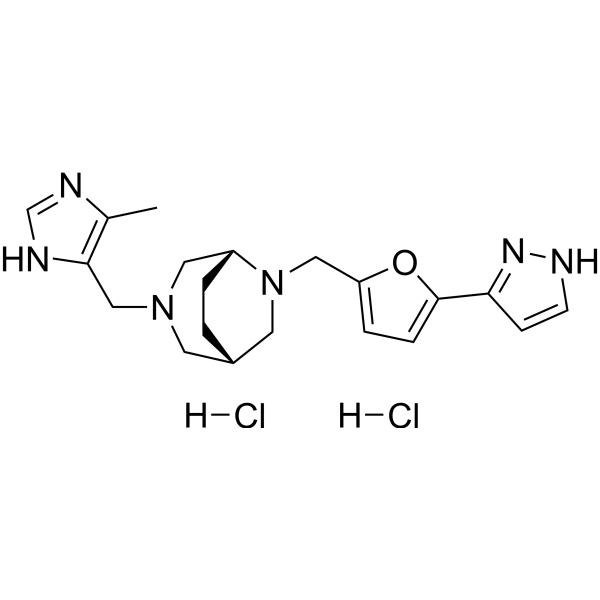
    DRP1i27 dihydrochloride is a potent inhibitor of human Drp1 (dynamin-related protein 1). DRP1i27 dihydrochloride binds to the GTPase site of Drp1, with hydrogen bonds to Gln34 and Asp218. DRP1i27 dihydrochloride targets Drp1-mediated mitochondrial fission in cell line models and protects against simulated ischemia-reperfusion injury .
    DRP1i27 dihydrochloride
  • HY-D1594
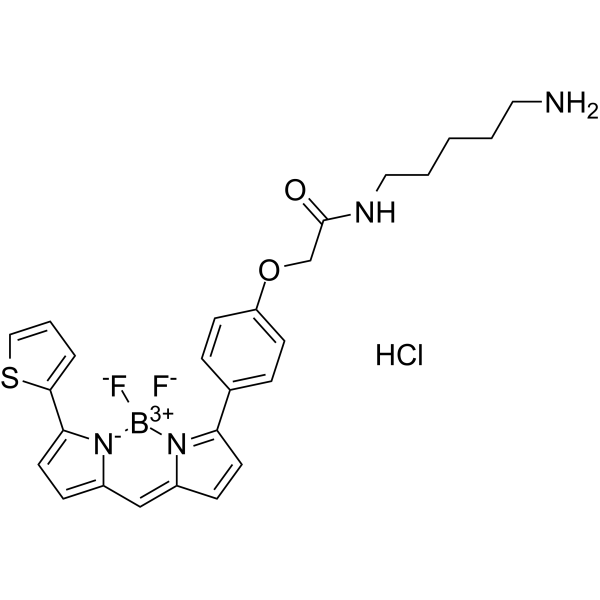
    BODIPY TR Cadaverine
    3 Publications Verification

    Fluorescent Dye Others
    BODIPY TR Cadaverine, a cadaverine derivative, is a red fluorescent dye. BODIPY TR Cadaverine can be used in a a highly sensitive and robust fluorescent displacement assay, which binds to native LPS strongly, specifically recognizing lipid A, and is competitively displaced by compounds displaying an affinity for lipid A .
    BODIPY TR Cadaverine
  • HY-DY1076

    Fluorescent Dye Others
    BODIPY TR Cadaverine (solution) , a cadaverine derivative, is a red fluorescent dye. BODIPY TR Cadaverine can be used in a a highly sensitive and robust fluorescent displacement assay, which binds to native LPS strongly, specifically recognizing lipid A, and is competitively displaced by compounds displaying an affinity for lipid A .
    Solvent and concentration: DMSO: 2 mM
    BODIPY TR Cadaverine (solution)
  • HY-172687

    Liposome Cardiovascular Disease
    DSPE-PEG2000-CSTSMLKAC is a PEG compound which composed of DSPE and a peptide (CSTSMLKAC). DSPE-PEG2000-CSTSMLKAC can be used for drug delivery DSPE-PEG2000-CSTSMLKAC enables targeted delivery of associated nanoliposomes to ischemic myocardial cells .
    DSPE-PEG2000-CSTSMLKAC
  • HY-145816

    PROTACs HDAC Apoptosis PINK1/Parkin Autophagy Reactive Oxygen Species (ROS) Cardiovascular Disease Cancer
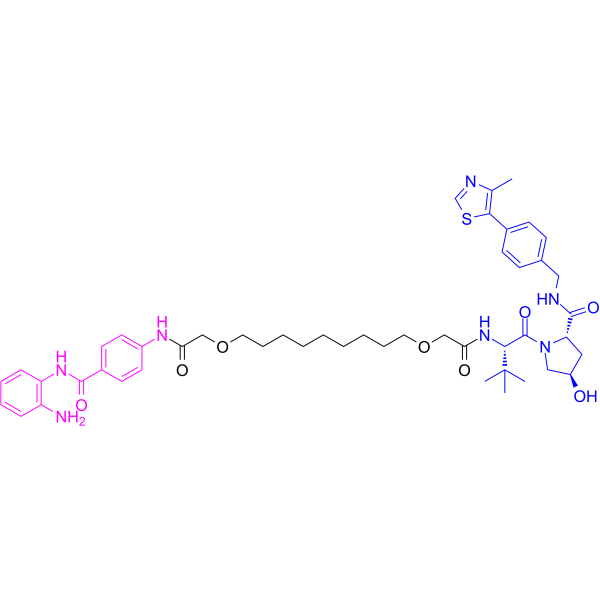
    JPS016 is a class I histone deacetylase (HDAC) PROTAC inhibitor. JPS016 recruits the VHL E3 ligase (Ligands for E3 Ligase) to mediate the ubiquitination and proteasomal degradation of HDAC1, HDAC2 and HDAC3. JPS016 reduces the viability of colon cancer cells and induces Apoptosis. JPS016 activates the PINK1/Parkin mitochondrial Autophagy pathway, enhances cardiomyocyte viability, alleviates mitochondrial damage, and reduces mitochondrial ROS production in cells. JPS016 is applicable to research related to colon cancer and sepsis cardiomyopathy .
    JPS016
  • HY-13689G

    PKC Histone Methyltransferase DNA Methyltransferase DNA/RNA Synthesis Inflammation/Immunology
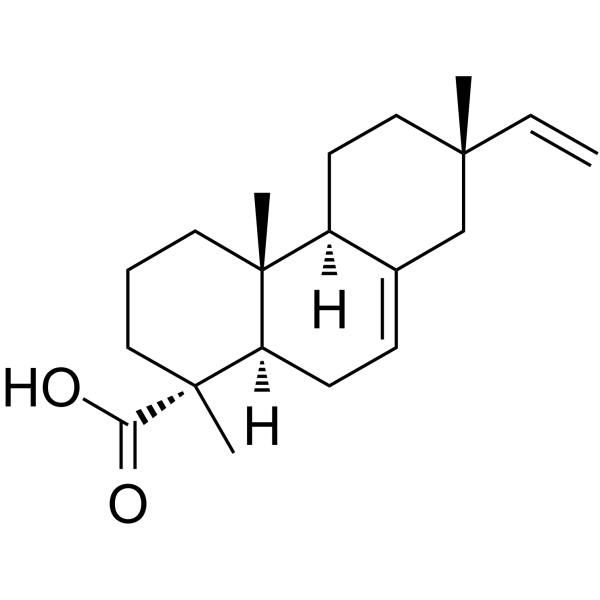
    Go 6983 GMP is Go 6983 (HY-13689) produced by using GMP guidelines. GMP small molecules works appropriately as an auxiliary reagent for cell therapy manufacture. Go 6983 is a dual inhibitor targeting Suv39h1/2 (KMT1A/KMT1B) and PKC, as well as a transcriptional activator capable of inducing DNA hypomethylation. Go 6983 stimulates the transcription of Prdm14 by reducing Suv39h1/2 protein levels, decreasing histone modifications in the Prdm14 promoter region, and increasing the recruitment of RNA polymerase II. Go 6983 induces genome-wide DNA hypomethylation by inhibiting de novo methyltransferase expression and increasing Tet1/Tet2 levels, thereby promoting self-renewal and pluripotency maintenance of stem cells. Meanwhile, Go 6983 can block PKC-mediated signaling pathways to reduce the expression of EMT-related genes and eliminate the upregulation of antioxidant genes downstream of NRF2. Go 6983 is mainly used in mechanism studies related to myocardial ischemia/reperfusion injury .
    Go 6983

Inquiry Online

Your information is safe with us. * Required Fields.

Salutation


Country or Region *

Applicant Name *


Organization Name *

Department *


Email Address *


Product Name *

Cat. No.


Requested quantity *

Phone Number *


Remarks

Inquiry Online

Inquiry Information

Product Name:
Cat. No.:
Quantity:
MCE Japan Authorized Agent:

