1. Search Result
Search Result
Results for "

M1 microglia

" in MedChemExpress (MCE) Product Catalog:

12

Inhibitors & Agonists

4

Biochemical Assay Reagents

2

Peptides

3

Natural
Products

1

Oligonucleotides

Cat. No. Product Name Target Research Areas Chemical Structure
  • HY-N0131
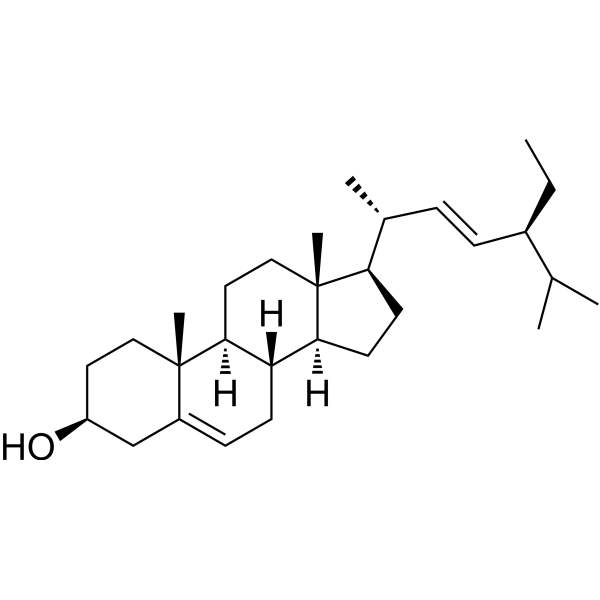
    Stigmasterol
    10+ Cited Publications

    MMP Endogenous Metabolite Neurological Disease Inflammation/Immunology
    Stigmasterol is an orally acitve, immunomodulatory agent with anti-inflammatory and neuroprotective effect, as well as able to cross the blood-brain barrier. Stigmasterol activates AMPK, which in turn inhibits NF-κB and NLRP3 signaling pathways, reduces microglia-mediated neuroinflammation, and alleviates cognitive impairment and Alzheimer's disease. Stigmasterol regulates M1/M2 polarization of microglia through the TLR4/ NF-κB pathway, thereby reducing neuropathic pain. Stigmasterol can be used for neurodegenerative diseases, inflammatory diseases, and pain management, among others .
    Stigmasterol
  • HY-156815

    Orphan GPCR Neurological Disease Inflammation/Immunology
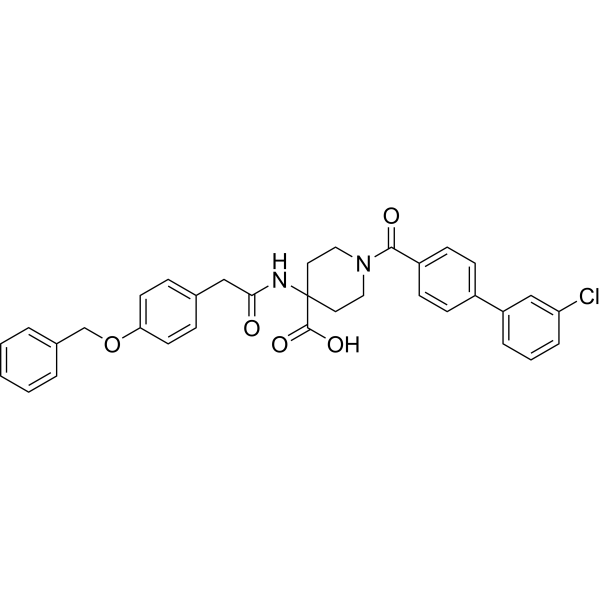
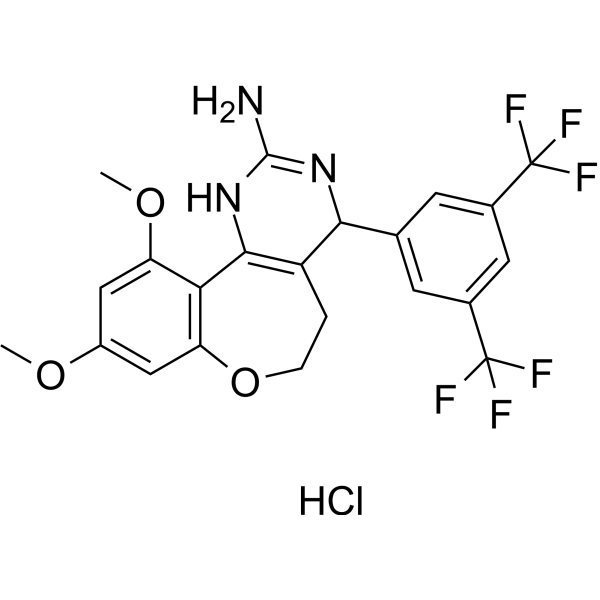
    YL-365 is a potent and selective GPR34 antagonist with an IC50 of 17 nM. YL-365 binds to a portion of the orthosteric binding pocket of GPR34 and induces allosteric changes that stabilize the receptor in an inactive conformation. YL-365 down-regulates expression of the proinflammatory gene iNOS in M1 microglia and suppresses proinflammatory responses. YL-365 reduces mechanical allodynia in a dose-dependent manner in a mouse model of neuropathic pain. YL-365 can be used for the research of neuropathic pain .
    YL-365
  • HY-N2909

    NF-κB RIP kinase Mixed Lineage Kinase Cardiovascular Disease Neurological Disease Inflammation/Immunology
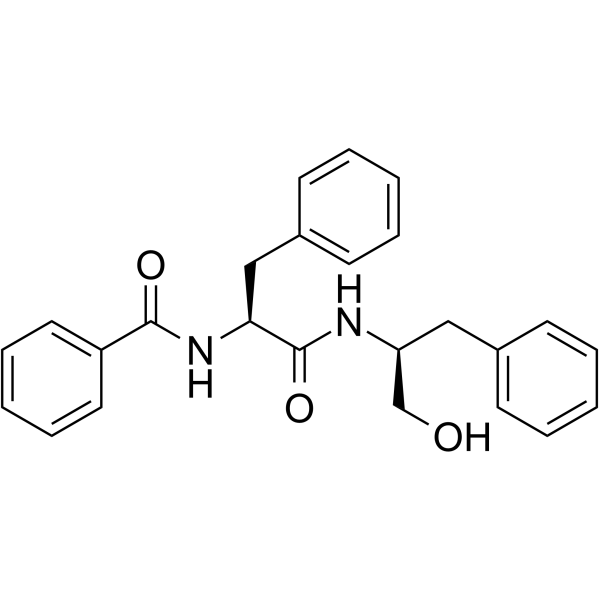
    Aurantiamide is a non-covalent, orally active, blood-brain-permeable GRPR selective antagonist with anti-inflammatory and neuroprotective effects. Aurantiamide reduces inflammation and oxidative stress in renal tissue by inhibiting GRPR-mediated renal necrosis pathways (such as RIPK3/MLKL signaling) and NF-κB inflammatory pathways, exerting anti-acute kidney injury and endothelial function activities. Aurantiamide also inhibits the M1 polarization of microglia and inhibits NLRP3 activation, thereby improving AD mouse models. Aurantiamide has in vivo inhibitory efficacy in acute kidney injury models such as ischemia/reperfusion, sepsis, and hypertension models .
    Aurantiamide
  • HY-P4111

    CXCR Inflammation/Immunology Cancer
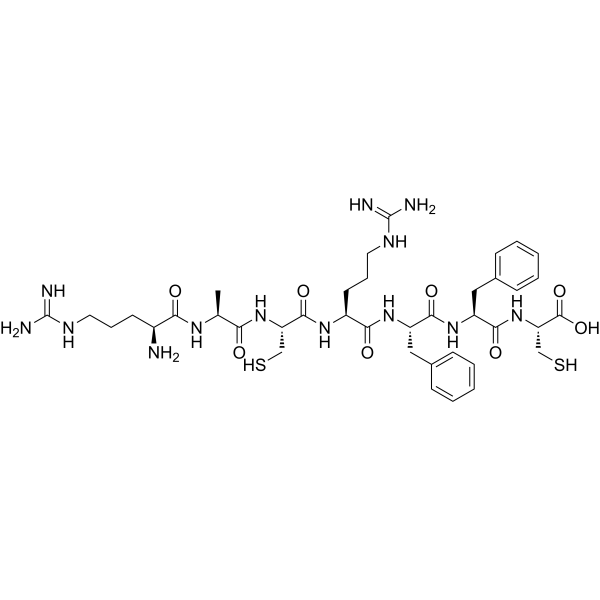
    Peptide R is a cyclic peptide and a specific CXCR4 antagonist. Peptide R exhibits excellent ability to effectively remodel tumor stroma. Peptide R has potential for use in tumor research .
    Peptide R
  • HY-P11315

    Biochemical Assay Reagents Cardiovascular Disease Neurological Disease
    MG1 peptide is an M1 microglia-targeting peptide with blood-brain barrier permeability. MG1 peptide can be used in studies related to ischemic stroke and cerebral ischemia-reperfusion injury .
    MG1 peptide
  • HY-N2439

    Environmental Pollutants Pyroptosis SOD Quinone Reductase Keap1-Nrf2 NF-κB Cardiovascular Disease
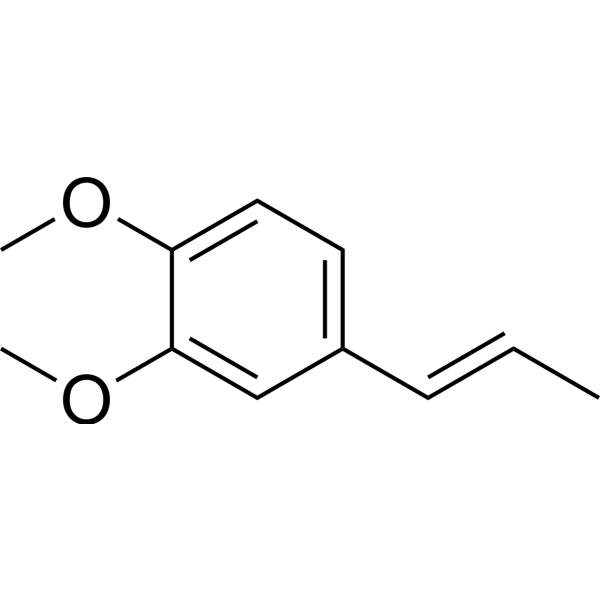
    Methyl isoeugenol is an orally active, blood-brain barrier-permeable isoeugenol-type eugenol analog. Methyl isoeugenol promotes the nuclear translocation of Nrf2, upregulates the expressions of HO-1, NQO1 and SOD, and reduces the expression level of MDA. Methyl isoeugenol decreases the nuclear translocation of NF-κB. Methyl isoeugenol inhibits NLRP3 inflammasome-mediated pyroptosis. Methyl isoeugenol reduces cerebral infarction volume and regulates the M1/M2 phenotypic balance of microglia. Methyl isoeugenol can be used for the research of cerebral ischemia-reperfusion injury .
    Methyl isoeugenol
  • HY-155762

    NOD-like Receptor (NLR) Interleukin Related Neurological Disease Inflammation/Immunology
    Anti-neuroinflammation agent 1 is a potent anti-neuroinflammation agent that regulates polarization BV2 microglia cells from M1 phenotype to M2 phenotype .
    Anti-neuroinflammation agent 1
  • HY-182096C

    Liposome Neurological Disease
    DSPE-PEG5000-MG1 is a PEG compound which composed of DSPE and a MG1 peptide (HY-P11315). MG1 peptide is a M1 Microglia-targeting peptide. MG1 peptide can conjugate to anoparticles, crossing the BBB to precisely M1 microglia recognition and achieving controlled release and specific accumulation of drugs through intelligent molecular switching. DSPE-PEG5000-KTP can be used for drug delivery .
    DSPE-PEG5000-MG1
  • HY-182096A

    Liposome Neurological Disease
    DSPE-PEG2000-MG1 is a PEG compound which composed of DSPE and a MG1 peptide (HY-P11315). MG1 peptide is a M1 Microglia-targeting peptide. MG1 peptide can conjugate to anoparticles, crossing the BBB to precisely M1 microglia recognition and achieving controlled release and specific accumulation of drugs through intelligent molecular switching. DSPE-PEG2000-KTP can be used for drug delivery .
    DSPE-PEG2000-MG1
  • HY-182096B

    Liposome Neurological Disease
    DSPE-PEG3400-MG1 is a PEG compound which composed of DSPE and a MG1 peptide (HY-P11315). MG1 peptide is a M1 Microglia-targeting peptide. MG1 peptide can conjugate to anoparticles, crossing the BBB to precisely M1 microglia recognition and achieving controlled release and specific accumulation of drugs through intelligent molecular switching. DSPE-PEG3400-KTP can be used for drug delivery .
    DSPE-PEG3400-MG1
  • HY-182096

    Liposome Neurological Disease
    DSPE-PEG1000-MG1 is a PEG compound which composed of DSPE and a MG1 peptide (HY-P11315). MG1 peptide is a M1 Microglia-targeting peptide. MG1 peptide can conjugate to anoparticles, crossing the BBB to precisely M1 microglia recognition and achieving controlled release and specific accumulation of drugs through intelligent molecular switching. DSPE-PEG1000-KTP can be used for drug delivery .
    DSPE-PEG1000-MG1
  • HY-155949

    Neurological Disease Cancer
    Bt354 is an orally active STAT3 inhibitor with IC50 values of 4.6 μM (DU145), 6.5 μM (MDA-MB-435) and 7.2 μM (MDA-MB-231), respectively. Bt354 induces cell cycle arrest and apoptosis, and downregulates epithelial-mesenchymal transition-related genes. Bt354 exhibits anti-angiogenic and anti-inflammatory activities, attenuates the polarization of M1 microglia and A1 astrocytes, suppresses inflammasome-related signaling pathways, and alleviates mechanical hyperalgesia and thermal hyperalgesia. Bt354 can be used in research related to glioblastoma multiforme, triple-negative breast cancer, prostate cancer and neuropathic pain .
    Bt354

Inquiry Online

Your information is safe with us. * Required Fields.

Salutation


Country or Region *

Applicant Name *


Organization Name *

Department *


Email Address *


Product Name *

Cat. No.


Requested quantity *

Phone Number *


Remarks

Inquiry Online

Inquiry Information

Product Name:
Cat. No.:
Quantity:
MCE Japan Authorized Agent:

