1. Search Result
Search Result
Results for "

MYCN

" in MedChemExpress (MCE) Product Catalog:

23

Inhibitors & Agonists

1

Recombinant Proteins

2

Antibodies

3

Oligonucleotides

Cat. No. Product Name Target Research Areas Chemical Structure
  • HY-11103
    Sitaxsentan sodium
    2 Publications Verification

    IPI 1040 sodium; TBC11251 sodium

    Endothelin Receptor TGF-β Receptor Cardiovascular Disease Metabolic Disease
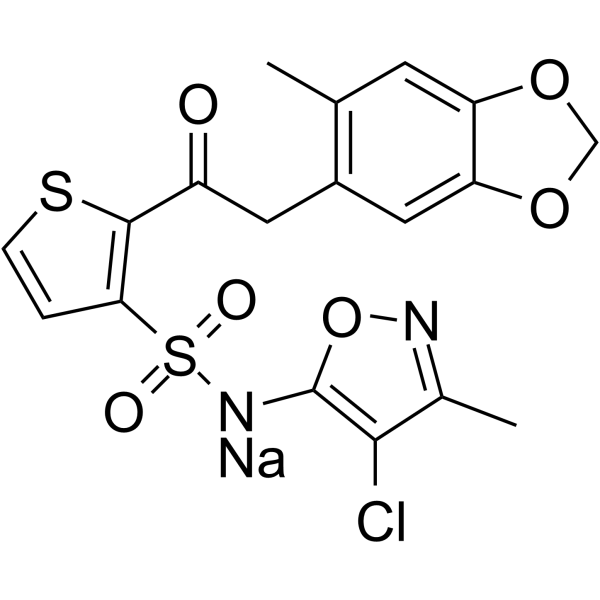
    Sitaxsentan sodium (IPI 1040 sodium; TBC11251 sodium) is a potent, selective and orally active endothelin A receptor (ETA) antagonist with an IC50 of 1.4 nM and a Ki of 0.43 nM. Sitaxsentan sodium exhibits an IC50 for the ETB receptor of as high as 9800 nM. Sitaxsentan sodium is metabolized by CYP2C9 and CYP3A4, normalizes shunt-induced endothelial abnormalities, restores BMPR signaling, and suppresses pulmonary vascular remodeling and hemodynamic deterioration. Sitaxsentan sodium can be applied in the research of pulmonary arterial hypertension and portopulmonary hypertension .
    Sitaxsentan sodium
  • HY-145765
    JQAD1
    2 Publications Verification

    PROTACs Histone Acetyltransferase Apoptosis Caspase PARP Cancer
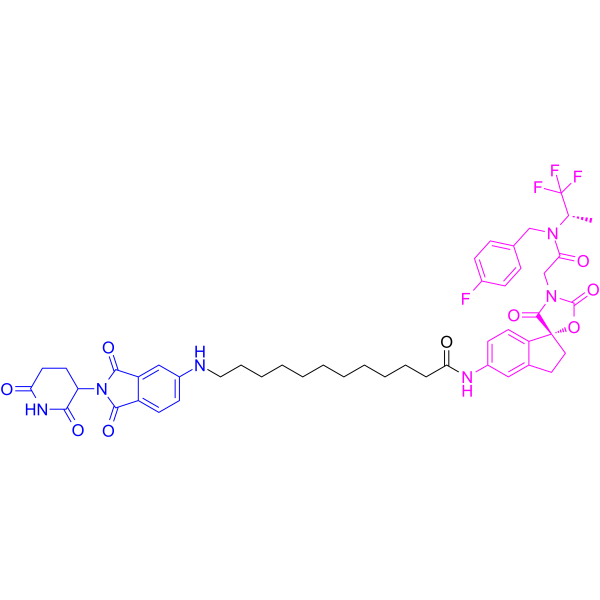
    JQAD1 is a CRBN-dependent PROTAC that selectively targets EP300 for degradation. JQAD1 suppresses EP300 expression and the H3K27ac modification. JQAD1 induces apoptosis. JQAD1 can be used in research of cancer .
    JQAD1
  • HY-156443

    Aldehyde Dehydrogenase (ALDH) Cancer
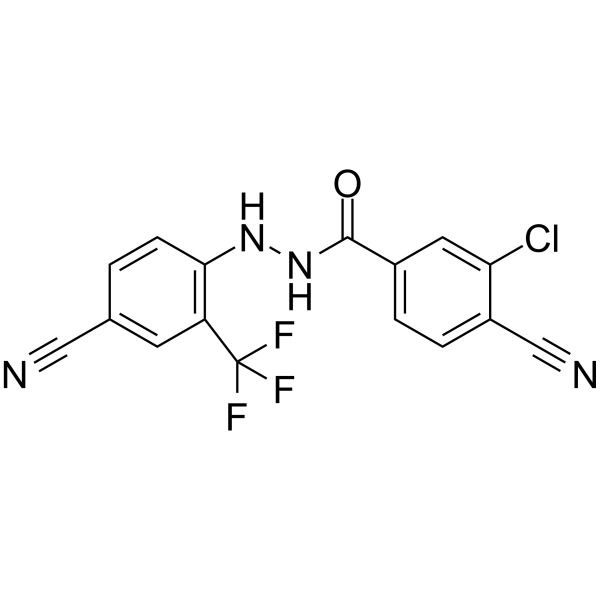
    YG1702 is a potent ALDH18A1-specific inhibitor. YG1702 attenuates the growth of MYCN-amplified NB and down-regulates MYCN. YG1702 physically interacts with ALDH18A1 with a high affinity and might potentially affect its enzymatic activity .
    YG1702
  • HY-171767

    JB325

    PROTACs Apoptosis Caspase Aurora Kinase Cancer
    SK2188 is a highly efficient and selective PROTAC degrader targeting AURKA (DC50 = 3.9 nM). SK2188 induces DNA damage and cell apoptosis. SK2188 indirectly degrades MYCN, inhibits tumor cell proliferation, and provides insights into the study of MYCN-amplified neuroblastoma (Pink: AURKA ligand: MK-5108 (HY-13252); Blue: Thalidomide (HY-14658); Black: Linker: Amino-PEG4-alcohol (HY-W008005)) .
    SK2188
  • HY-124447

    IGF-1R c-Myc Apoptosis TGF-beta/Smad Cancer
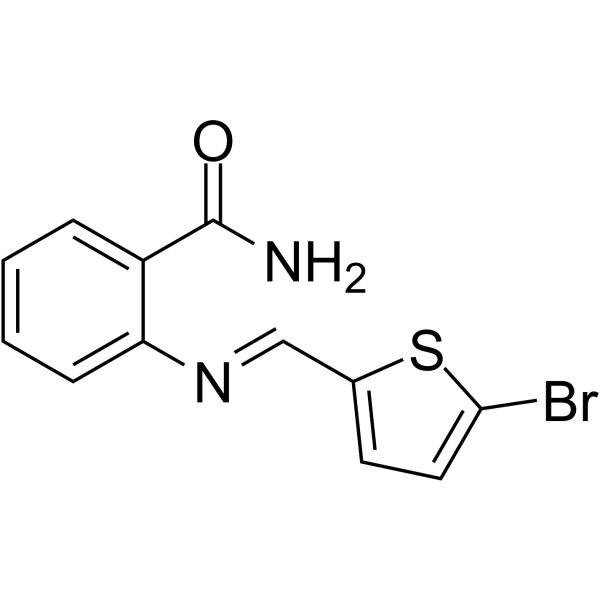
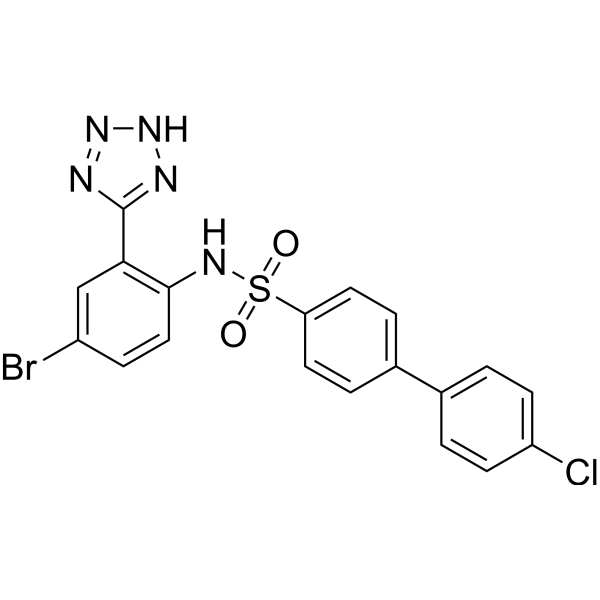
    BTYNB is a structure-specific nucleic acid binder and IGF2BP1 inhibitor (with an IC50 of 5 μM against hBTYNB). BTYNB disrupts the IGF2BP1-RNA interaction and blocks its binding to oncogenic mRNAs such as c-Myc, MDM2, PD-L1. BTYNB completely blocks the INHBA-Smad2/3 pathway, disrupts the MYCN/IGF2BP1 loop, and thereby induces apoptosis and cell cycle arrest, effectively inhibiting the proliferation and survival of cancer cells. In addition, BTYNB acts as an immune activator and tumor microenvironment modulator, enhances T cell-mediated tumor killing, and produces significant synergistic effects with inhibitors of PD-1, BRD and BIRC5. BTYNB can be used in relevant research on various malignant tumors including ovarian cancer, neuroblastoma, leukemia and melanoma .
    BTYNB
  • HY-112273
    CD532
    1 Publications Verification

    Aurora Kinase Cancer
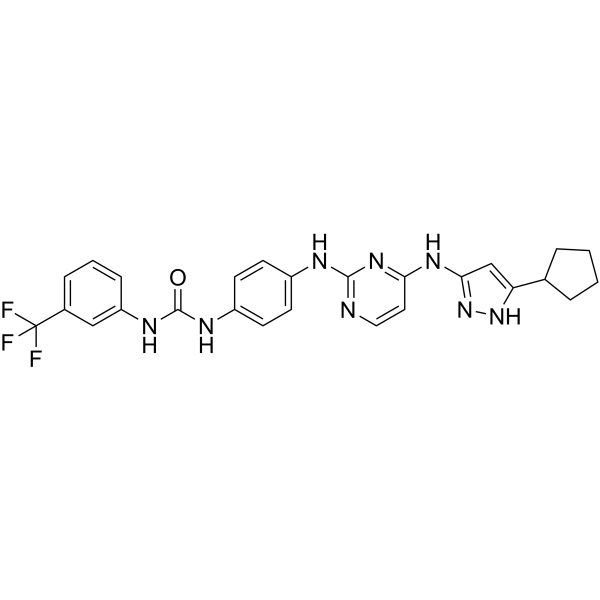
    CD532 is a potent Aurora A kinase inhibitor with an IC50 of 45 nM. CD532 has the dual effect of blocking Aurora A kinase activity and driving degradation of MYCN. CD532 also can directly interact with AURKA and induces a global conformational shift. CD532 can be used for the research of cancer .
    CD532
  • HY-117286

    TEN-010

    Epigenetic Reader Domain Apoptosis Neurological Disease Cancer
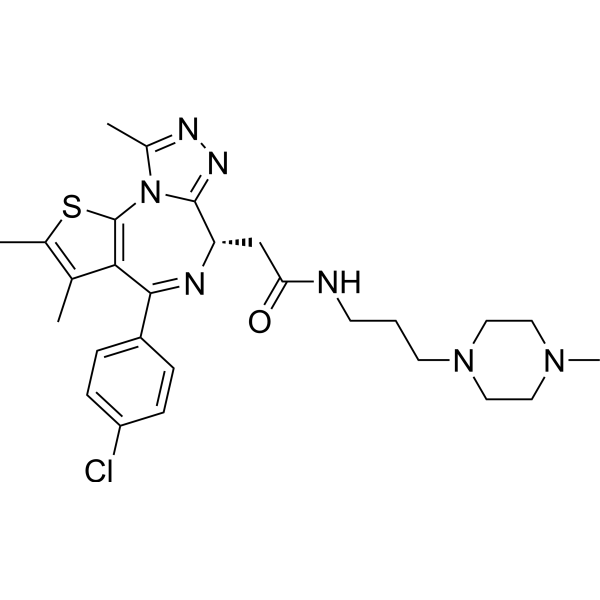
    (S)-JQ-35 (TEN-010) is an orally active, blood-brain barrier-permeable bromodomain inhibitor that selectively targets the bromodomain and extra-terminal domain (BET) protein family (BRD4, BRD3, BRD2 and BRDT). (S)-JQ-35 blocks the activation of Myc gene expression by BRD4, thereby inhibiting cancer cell proliferation and promoting cancer cell apoptosis. (S)-JQ-35 can be used in research related to NUT midline carcinoma and neuroblastoma .
    (S)-JQ-35
  • HY-168439

    PROTACs Aurora Kinase Cancer
    HLB-0532259 is a PROTAC degrader for Aurora-A and N-Myc. HLB-0532259 degrades Aurora-Ain a non-MYCN amplified MCF-7 with a DC50 of 20.2 nM, degrades N-Myc in MYCN amplified cells SK-N-BE and Kelly with DC50 of 179 nM and 229 nM. HLB-0532259 exhibits antitumor efficacy in mouse models . (Pink: ligand for target protein (HY-168440); Black: linker (HY-W007957); Blue: ligand for E3 ligase Cereblon (HY-41547))
    HLB-0532259
  • HY-144878
    VPC-70619
    2 Publications Verification

    c-Myc Cancer
    VPC-70619 is a potent N-Myc inhibitor. VPC-70619 blocks the binding of the N-Myc-Max heterocomplex to the DNA E-box and exhibits potent inhibitory activity against N-Myc-dependent cell lines. VPC-70619 can partially reverse paclitaxel (HY-B0015) resistance in cells by reducing MYCN expression. VPC-70619 can be used for cancer research (e.g., neuroblastoma and thyroid cancer) .
    VPC-70619
  • HY-171768

    JB301

    PROTACs Aurora Kinase Neurological Disease Cancer
    SK2187 is a selective AURKA PROTAC degrader with a DC50 of about 10 nM. SK2187 exhibits growth inhibition against NGP cells with an IC50 of 101.5 nM. SK2187 can be used for the study of MYCN-amplified neuroblastoma (Pink: AURKA ligand: MK-5108 (HY-13252); Blue: E3 ligand (HY-103597); Black: Linker: Amino-PEG3-alcohol (HY-W015088)) .
    SK2187
  • HY-171769

    PROTACs Aurora Kinase Cancer
    dAurAB2 is a dual-degrading PROTAC that potently degrades Aurora-A and Aurora-B with DC50s of 59 nM and 39 nM, respectively. dAurAB2 reduces N-Myc levels in MYCN-amplified IMR32 neuroblastoma cells. dAurAB2 can be used for the study of neuroblastoma. (Pink, Aurora ligand (HY-10804); Blue, E3 ligand: (HY-103597); Black, linker (HY-W105740)) .
    dAurAB2
  • HY-112273A
    CD532 hydrochloride
    1 Publications Verification

    Aurora Kinase Cancer
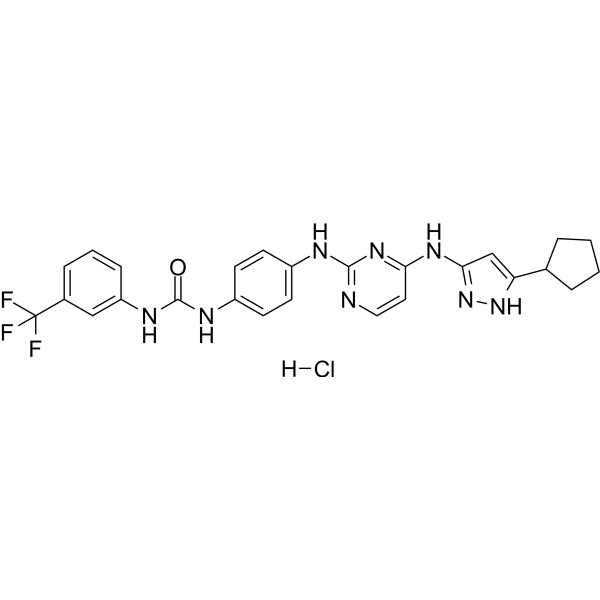
    CD532 hydrochloride is a potent Aurora A kinase inhibitor with an IC50 of 45 nM. CD532 hydrochloride has the dual effect of blocking Aurora A kinase activity and driving degradation of MYCN. CD532 hydrochloride also can directly interact with AURKA and induces a global conformational shift. CD532 hydrochloride can be used for the research of cancer .
    CD532 hydrochloride
  • HY-158062

    PROTACs DNA/RNA Synthesis Apoptosis Cancer
    LC-1-40 is a PROTAC that selectively degrades NUDT1 (DC50=0.97 nM). LC-1-40 selectively inhibits MYCN-induced tumor growth in mouse models. LC-1-40 also induces nucleotide damage and apoptosis in MYCN-associated tumors. LC-1-40 can be used in cancer research . (Red: NUDT1 binder; Blue: CRBN ligand; Black: Linker).
    LC-1-40
  • HY-RS17293

    Small Interfering RNA (siRNA) Others

    Mycn Mouse Pre-designed siRNA Set A contains three designed siRNAs for Mycn gene (Mouse), as well as a negative control, a positive control, and a FAM-labeled negative control.

    Mycn Mouse Pre-designed siRNA Set A
    Mycn Mouse Pre-designed siRNA Set A
  • HY-RS08884

    Small Interfering RNA (siRNA) Others

    MYCN Human Pre-designed siRNA Set A contains three designed siRNAs for MYCN gene (Human), as well as a negative control, a positive control, and a FAM-labeled negative control.

    MYCN Human Pre-designed siRNA Set A
    MYCN Human Pre-designed siRNA Set A
  • HY-152032

    Histone Demethylase Cancer
    LSD1-IN-23 is a competitive/non-competitive mixed inhibitor of lysine specific demethylase 1 (LSD1). LSD1-IN-23 has LSD1 inhibitory activity with an IC50 value of 0.58 μM. LSD1-IN-23 can be used for the research of neuroblastoma (NB) .
    LSD1-IN-23
  • HY-RS23748

    Small Interfering RNA (siRNA) Others

    Mycn Rat Pre-designed siRNA Set A contains three designed siRNAs for Mycn gene (Rat), as well as a negative control, a positive control, and a FAM-labeled negative control.

    Mycn Rat Pre-designed siRNA Set A
    Mycn Rat Pre-designed siRNA Set A
  • HY-181601

    MI102

    Apoptosis Cancer
    NPD15261 (MI102) is a highly selective MYCN inhibitor. NPD15261 reduces the mRNA and protein levels of MYCN in liver cancer cells, inhibits cell proliferation and colony formation, and induces Apoptosis simultaneously. NPD15261 can be used in liver cancer research .
    NPD15261
  • HY-179640

    PROTACs Aurora Kinase Cancer
    SK4454 is a selective AURKA PROTAC degrader degrading AURKA with IC50 = 8 nM. MYCN levels in MYCN-amplified neuroblastoma cells and limited by MDR1-mediated efflux. SK4454 efficiently reduced AURKA levels in vivo. SK4454 can be used for neuroblastoma research .
    SK4454
  • HY-179641

    PROTACs Aurora Kinase Cancer
    SK5527 is a selective AURKA PROTAC degrader degrading AURKA with DC50 = 2 nM. SK5527 bind to NanoLuc-AURKA with an IC50 of 20 nM. SK5527 effectively reduces MYCN levels in MYCN-amplified neuroblastoma cells and limited by MDR1-mediated efflux. SK5527 efficiently reduced AURKA levels in vivo. SK5527 can be used for neuroblasto2ma research .
    SK5527
  • HY-181442

    Casein Kinase Survivin Epigenetic Reader Domain Akt Apoptosis Caspase MDM-2/p53 Neurological Disease Cancer
    CK2-TN03 is an ATP-competitive casein kinase 2 (CK2) inhibitor, with an IC50 of 165 nM and a Ki of 20 nM. CK2-TN03 inhibits CK2-mediated survivin activation and reduces CK2-dependent phosphorylation levels of BRD4/MYCN and AKT1. CK2-TN03 exerts anti-neuroblastoma effects by inhibiting survivin, leading to mitotic catastrophe and apoptosis of cancer cells. CK2-TN03 can be used in studies related to neuroblastoma .
    CK2-TN03
  • HY-181568

    PROTACs Aurora Kinase DNA/RNA Synthesis Apoptosis Neurological Disease Cancer
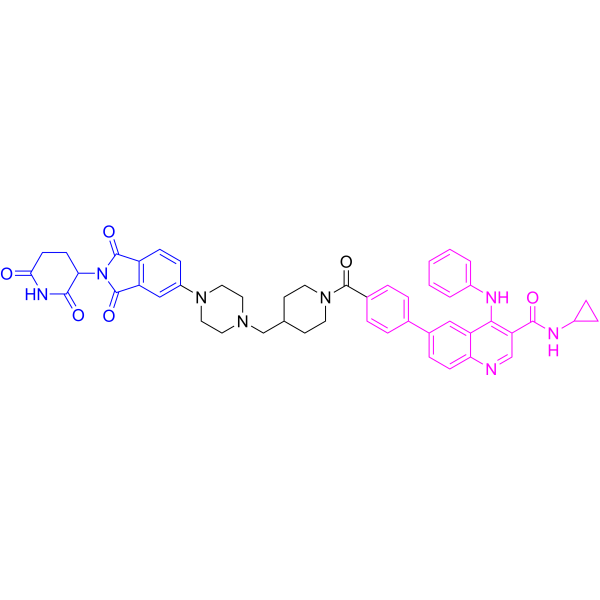
    PROTAC Aurora A Degrader-1 (Compound 280) is a blood-brain barrier-permeable selective Aurora A PROTAC degrader, with DC50 values of 1 nM and 2 nM in LAN5 and SMS-SAN cells, respectively. PROTAC Aurora A Degrader-1 induces the formation of a ternary complex between AURKA and CRBN, degrades AURKA, reduces MYCN levels, induces DNA damage and apoptosis, exerts antiproliferative activity in cancer cells, and regulates the immune system. PROTAC Aurora A Degrader-1 is applicable to the research of neuroblastoma and small cell lung cancer .
    PROTAC Aurora A Degrader-1
  • HY-179375

    CDK Aurora Kinase Cancer
    LCI133 is afirst-in-class,nanomolar-potent, selective multikinase inhibitor targeting CDK4/6/9 and AURKA/B (IC50 = 4.7/10.2/4.1 nM and 2.8/10.6 nM). LCI133 induces S/G2 cell-cycle arrest and robust apoptosis in MYCN-amplified neuroblastoma BE(2)-C cells. LCI133 demonstrates significant antitumor efficacy in a BE(2)-C neuroblastoma xenograft model .
    LCI133

Inquiry Online

Your information is safe with us. * Required Fields.

Salutation


Country or Region *

Applicant Name *


Organization Name *

Department *


Email Address *


Product Name *

Cat. No.


Requested quantity *

Phone Number *


Remarks

Inquiry Online

Inquiry Information

Product Name:
Cat. No.:
Quantity:
MCE Japan Authorized Agent:

