1. Search Result
Search Result
Results for "

Opioid withdrawal

" in MedChemExpress (MCE) Product Catalog:

25

Inhibitors & Agonists

2

Isotope-Labeled Compounds

Targets Recommended:
Cat. No. Product Name Target Research Areas Chemical Structure
  • HY-100903

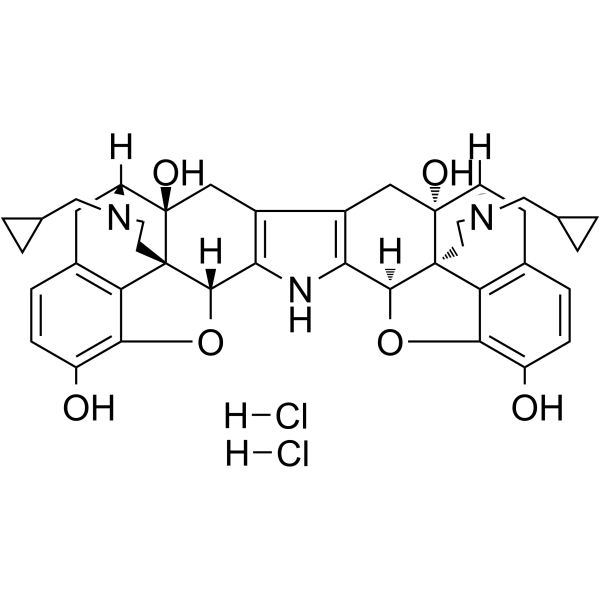
    nor-Binaltorphimine dihydrochloride; nor-BNI dihydrochloride

    Opioid Receptor Neurological Disease
    Norbinaltorphimine dihydrochloride (nor-Binaltorphimine dihydrochloride; nor-BNI dihydrochloride) is a selective, long-acting competitive antagonist of the κ-opioid receptor. Norbinaltorphimine dihydrochloride blocks κ-opioid receptor-mediated analgesic effects, and inhibits butorphanol-induced changes in κ-opioid receptor binding kinetics, desensitization and down-regulation. Norbinaltorphimine dihydrochloride suppresses specific opioid withdrawal symptoms, precipitates withdrawal behaviors in butorphanol-dependent rats, and serves as a molecular probe for studying κ-opioid receptor-agonist interactions. Norbinaltorphimine dihydrochloride is applicable to research related to neurological disorders such as pain .
    Norbinaltorphimine dihydrochloride
  • HY-117040
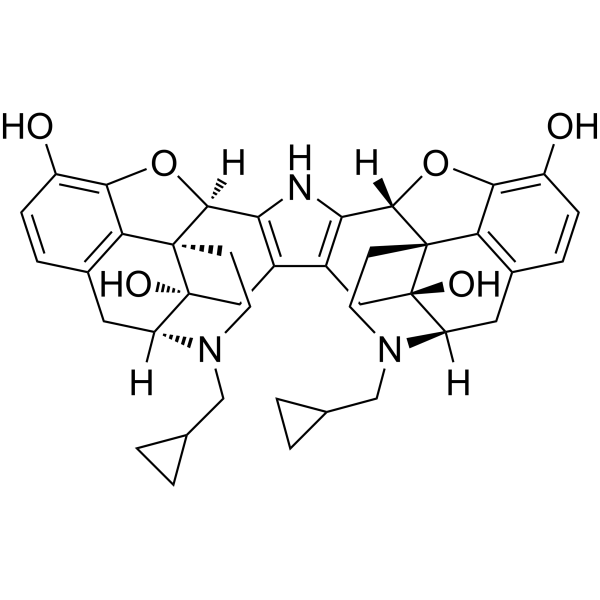
    nor-Binaltorphimine
    5+ Cited Publications

    Norbinaltorphimine; NorBNI

    Opioid Receptor Neurological Disease
    nor-Binaltorphimine (Norbinaltorphimine; NorBNI) is a selective, long-acting competitive antagonist of the κ-opioid receptor. nor-Binaltorphimine blocks κ-opioid receptor-mediated analgesic effects, and inhibits butorphanol-induced changes in κ-opioid receptor binding kinetics, desensitization and down-regulation. nor-Binaltorphimine suppresses specific opioid withdrawal symptoms, precipitates withdrawal behaviors in butorphanol-dependent rats, and serves as a molecular probe for studying κ-opioid receptor-agonist interactions. nor-Binaltorphimine is applicable to research related to neurological disorders such as pain .
    nor-Binaltorphimine
  • HY-B1052

    Baq-168; MDL-14042

    Adrenergic Receptor Imidazoline Receptor Neurological Disease Metabolic Disease
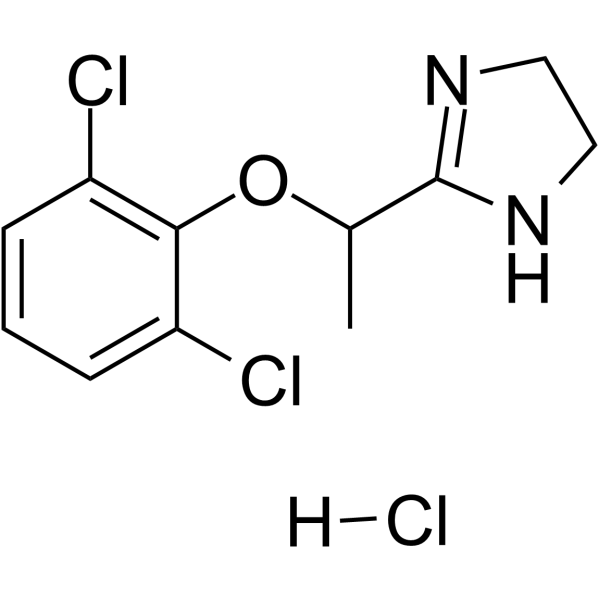
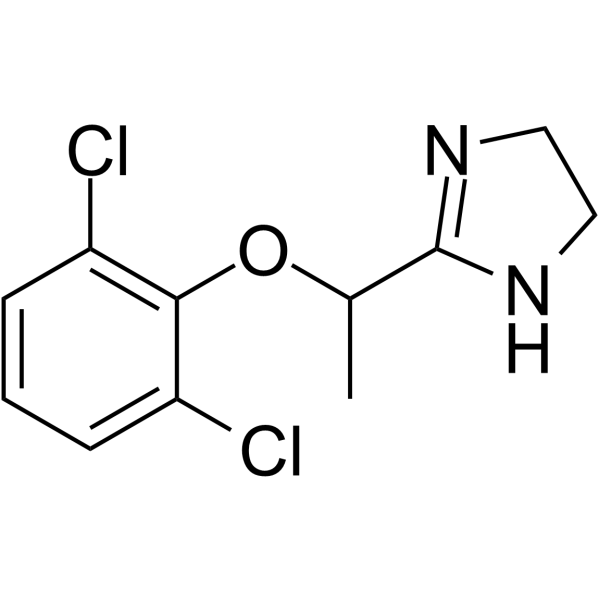
    Lofexidine hydrochloride (Baq-168) is an orally active agonist of the imidazoline I1 receptor (imidazoline I1 receptor) (Ki: 1.9 nM) and α2-adrenergic receptor (α2-adrenergic receptor). Lofexidine hydrochloride binds to the α2A-adrenergic receptor, reduces sympathetic outflow, lowers blood pressure, and exhibits vasoconstrictive effects. Lofexidine hydrochloride regulates the expression of c-fos and alleviates opioid withdrawal symptoms. Lofexidine hydrochloride is applicable to research on opioid addiction and withdrawal .
    Lofexidine hydrochloride
  • HY-A0142A

    Adrenergic Receptor Endocrinology
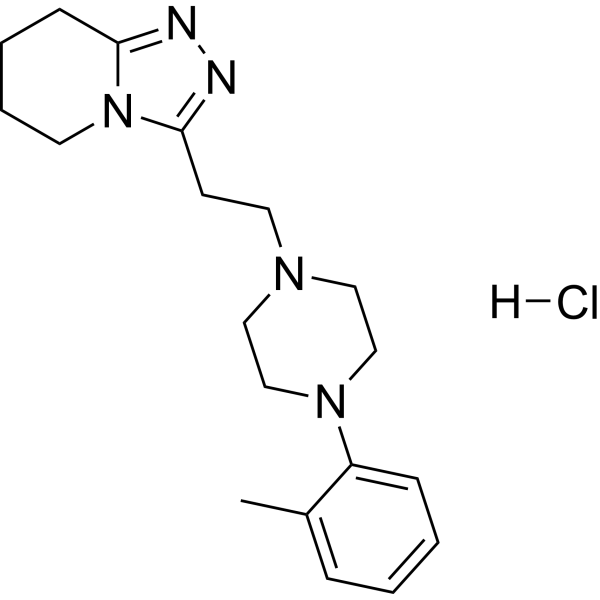
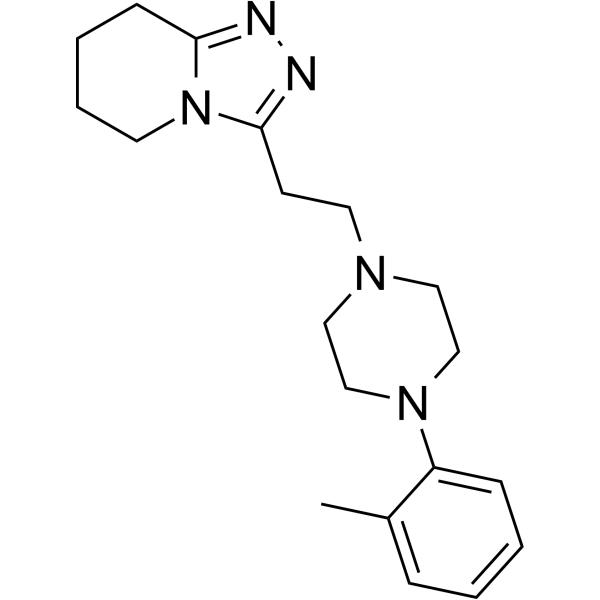
    Dapiprazole hydrochloride is a potent, selective and orally active alpha-1 adrenoceptor antagonist. Dapiprazole hydrochloride suppresses the opioid withdrawal symptoms. Dapiprazole hydrochloride is also used as eye drops for reversing mydriasis .
    Dapiprazole hydrochloride
  • HY-104006

    Opioid Receptor Neurological Disease
    CYM51010 is a biased ligand of μ-opioid receptor – δ-opioid receptor heterodimers with an EC50 of 403 nM. CYM51010 exhibits anti-nociceptive activity similar to morphine but with a decreased levels of tolerance development and withdrawal symptoms .
    CYM51010
  • HY-B1052A

    Baq-168 free base; MDL-14042 free base

    Imidazoline Receptor Adrenergic Receptor Neurological Disease Metabolic Disease
    Lofexidine (Baq-168 free base) is an orally active agonist of the imidazoline I1 receptor (imidazoline I1 receptor) (Ki: 1.9 nM) and α2-adrenergic receptor (α2-adrenergic receptor). Lofexidine binds to the α2A-adrenergic receptor, reduces sympathetic outflow, lowers blood pressure, and exhibits vasoconstrictive effects. Lofexidine regulates the expression of c-fos and alleviates opioid withdrawal symptoms. Lofexidine is applicable to research on opioid addiction and withdrawal .
    Lofexidine
  • HY-163905

    Gap Junction Protein Neurological Disease
    EG-2184 is a Pannexin-1 channel inhibitor. EG-2184 can be used in opioid withdrawal related research .
    EG-2184
  • HY-15691

    Opioid Receptor mTOR Neurological Disease Metabolic Disease
    PF-04455242 is an orally bioavailable, blood-brain barrier-permeable κ-opioid receptor (KOR) inhibitor. PF-04455242 blocks in vivo effects induced by KOR and MOR agonists, and elicits KOR-independent outward currents in ventral tegmental area neurons. PF-04455242 promotes energy expenditure and activates the hypothalamic mTOR pathway. PF-04455242 attenuates stress-induced behavioral effects and produces antidepressant-like effects. PF-04455242 can be used in studies related to pain, depression, addictive disorders, and obesity induced by estrogen withdrawal .
    PF-04455242
  • HY-A0142

    Adrenergic Receptor Endocrinology
    Dapiprazole is a potent, selective and orally active alpha-1 adrenoceptor antagonist. Dapiprazole suppresses the opioid withdrawal symptoms. Dapiprazole is also used as eye drops for reversing mydriasis .
    Dapiprazole
  • HY-178235

    Opioid Receptor Neurological Disease
    MDAN-21 is a bivalent opioid ligand that contains both μ-opioid receptor agonists and δ-opioid receptor antagonists. MDAN-21 has a strong analgesic effect and does not produce tolerance in mouse studies. MDAN-21 can effectively inhibit the withdrawal of morphine dependent monkeys and alleviate abnormal pain in the study of rhesus monkeys. MDAN-21 can be used for the study of allodynia .
    MDAN-21
  • HY-B1052S

    Baq-168-d4; MDL-14042-d4

    Isotope-Labeled Compounds Imidazoline Receptor Adrenergic Receptor Neurological Disease Metabolic Disease
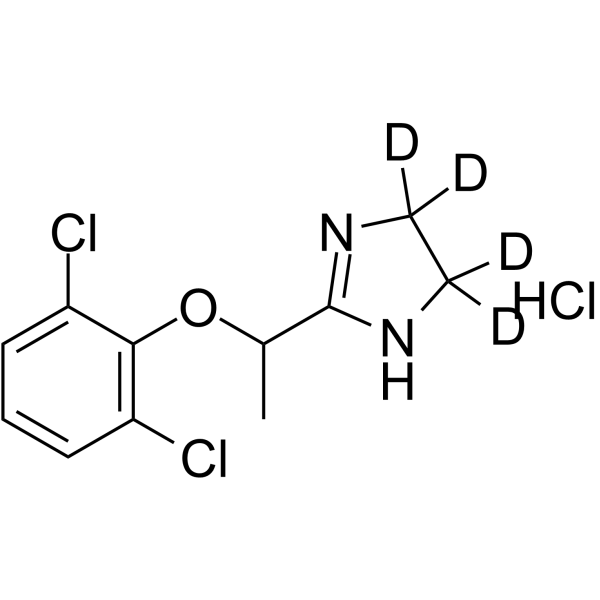
    Lofexidine-d4 hydrochloride (Baq-168-d4) is the deuterium labeled Lofexidine hydrochloride (HY-B1052). Lofexidine hydrochloride (Baq-168) is an orally active agonist of the imidazoline I1 receptor (imidazoline I1 receptor) (Ki: 1.9 nM) and α2-adrenergic receptor (α2-adrenergic receptor). Lofexidine hydrochloride binds to the α2A-adrenergic receptor, reduces sympathetic outflow, lowers blood pressure, and exhibits vasoconstrictive effects. Lofexidine hydrochloride regulates the expression of c-fos and alleviates opioid withdrawal symptoms. Lofexidine hydrochloride is applicable to research on opioid addiction and withdrawal .
    Lofexidine-d4 hydrochloride
  • HY-144609

    Opioid Receptor Neurological Disease
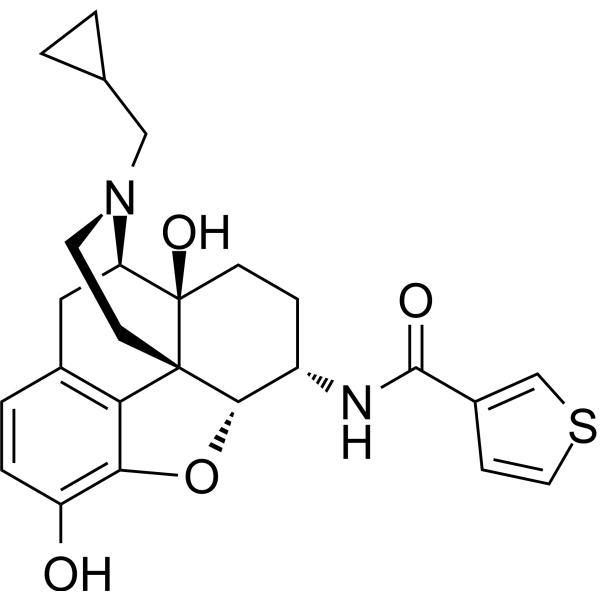
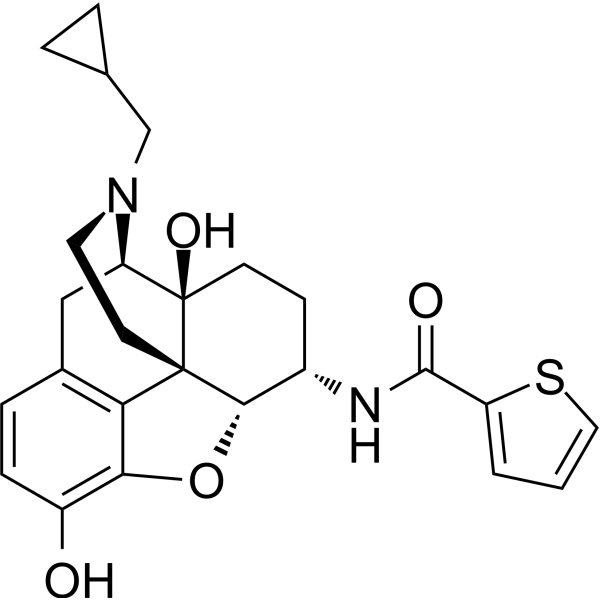
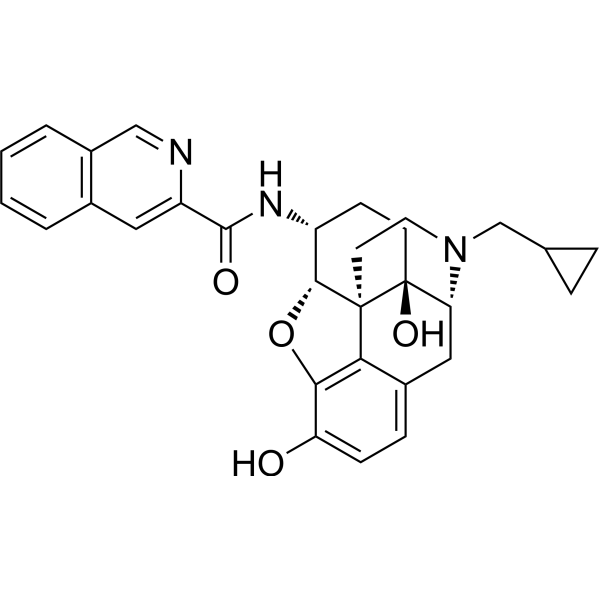
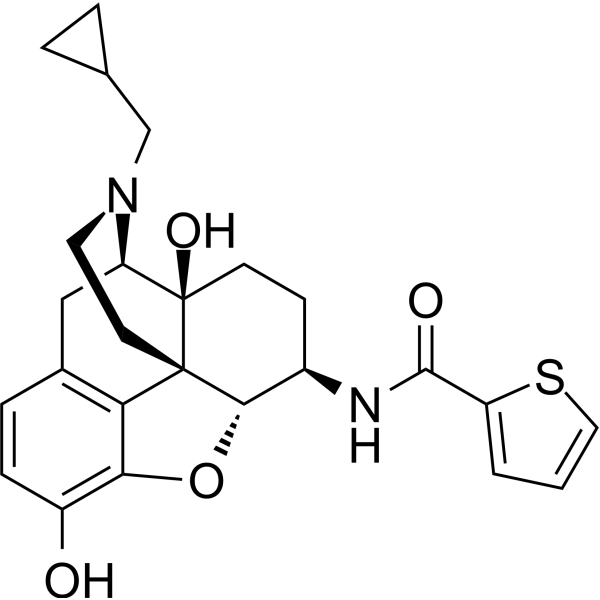
    Mu opioid receptor antagonist 4 (compound 31) is a potent and selective μ opioid receptor (MOR) antagonist with a Ki of 0.38 nM and an EC50 of 1.07 nM. Mu opioid receptor antagonist 4 has remarkable CNS antagonism against morphine, and precipitated fewer withdrawal symptoms than Naloxone. Mu opioid receptor antagonist 4 Mu opioid receptor antagonist 4 can be used for researching opioid use disorders (OUD) .
    Mu opioid receptor antagonist 4
  • HY-144607

    Opioid Receptor Neurological Disease
    Mu opioid receptor antagonist 2 (compound 25) is a potent, selective and blood-brain barrier (BBB) penetrant μ opioid receptor (MOR) antagonist with a Ki of 0.37 nM and an EC50 of 0.44 nM. Mu opioid receptor antagonist 2 has remarkable CNS antagonism against morphine, and precipitated fewer withdrawal symptoms than Naloxone. Mu opioid receptor antagonist 2 can be used for researching opioid use disorders (OUD) .
    Mu opioid receptor antagonist 2
  • HY-151811

    Opioid Receptor Neurological Disease
    NAQ is a potent and selective μ opioid receptor partial agonist, with a Ki of 0.55 nM. NAQ shows selectivity for Mu opioid receptor over the δ receptor (Ki=132.50 nM) and the κ receptor (Ki=26.45 nM). NAQ can be used for the research of opioid withdrawal or dependence .
    NAQ
  • HY-122189

    (-)-Akuammine; Vincamajoridine

    Others Neurological Disease
    Akuammine is an indole alkaloid that has been found in Picralima nitida and has analgesic activity. It selectively binds to the μ- and κ-opioid receptors over the δ-opioid receptor (Kis=0.3, 1.68, and 10.4 μM for the human receptors, respectively). Akuammine inhibits forskolin-induced cAMP production in HEK293 cells expressing human μ- or κ-opioid receptors (IC50s=2.6 and 0.073 μM, respectively). It increases the latency to withdrawal in the tail-flick or hot plate test in mice when administered at a dose of 60 mg/kg.
    Akuammine
  • HY-A0142AR

    Adrenergic Receptor Reference Standards Endocrinology
    Dapiprazole (hydrochloride) (Standard) is the analytical standard of Dapiprazole (hydrochloride). This product is intended for research and analytical applications. Dapiprazole hydrochloride is a potent, selective and orally active alpha-1 adrenoceptor antagonist. Dapiprazole hydrochloride suppresses the opioid withdrawal symptoms. Dapiprazole hydrochloride is also used as eye drops for reversing mydriasis .
    Dapiprazole hydrochloride (Standard)
  • HY-144608

    Opioid Receptor Neurological Disease
    Mu opioid receptor antagonist 3 (compound 26) is a potent and selective μ opioid receptor (MOR) antagonist with a Ki of 0.24 nM and an EC50 of 0.54 nM. Mu opioid receptor antagonist 3 has remarkable CNS antagonism against morphine, and precipitated fewer withdrawal symptoms than Naloxone. Mu opioid receptor antagonist 3 can be used for researching opioid use disorders (OUD) .
    Mu opioid receptor antagonist 3
  • HY-117881

    Opioid Receptor Neurological Disease
    CJ-15208 is a potent and selective κ-opioid receptor antagonist with significant opioid activity. CJ-15208 exhibited strong analgesic effects in the warm water tail withdrawal test in mice and was mediated through multiple opioid receptors. The stereoisomers of CJ-15208 exhibited different opioid activity characteristics, for example, one stereoisomer exhibited κ-opioid receptor antagonism, while the other exhibited δ-opioid receptor antagonism. All stereoisomers of CJ-15208 had no significant effects on respiration. The stereoisomers of CJ-15208 did not lead to the development of drug tolerance, which makes it potential in the further development of safe opioid analgesics .
    CJ-15208
  • HY-B1052R

    Baq-168 (Standard); MDL-14042 (Standard)

    Adrenergic Receptor Reference Standards Neurological Disease Metabolic Disease
    Lofexidine (Baq-168) hydrochloride Standard is the analytical standard of Lofexidine hydrochloride (HY-B1052). This product is intended for research and analytical applications. Lofexidine hydrochloride (Baq-168) is an orally active agonist of the imidazoline I1 receptor (imidazoline I1 receptor) (Ki: 1.9 nM) and α2-adrenergic receptor (α2-adrenergic receptor). Lofexidine hydrochloride binds to the α2A-adrenergic receptor, reduces sympathetic outflow, lowers blood pressure, and exhibits vasoconstrictive effects. Lofexidine hydrochloride regulates the expression of c-fos and alleviates opioid withdrawal symptoms. Lofexidine hydrochloride is applicable to research on opioid addiction and withdrawal .
    Lofexidine hydrochloride (Standard)
  • HY-B1052S1

    Baq-168 free base-d4; MDL-14042 free base-d4

    Isotope-Labeled Compounds Imidazoline Receptor Adrenergic Receptor Neurological Disease Metabolic Disease
    Lofexidine-d4 (Baq-168 free base-d4) is deuterium labeled Lofexidine (HY-B1052A). Lofexidine (Baq-168 free base) is an orally active agonist of the imidazoline I1 receptor (imidazoline I1 receptor) (Ki: 1.9 nM) and α2-adrenergic receptor (α2-adrenergic receptor). Lofexidine binds to the α2A-adrenergic receptor, reduces sympathetic outflow, lowers blood pressure, and exhibits vasoconstrictive effects. Lofexidine regulates the expression of c-fos and alleviates opioid withdrawal symptoms. Lofexidine is applicable to research on opioid addiction and withdrawal .
    Lofexidine-d4
  • HY-170437

    Opioid Receptor Neurological Disease
    MOR modulator-1 (compound 6) is a potent and selective μ opioid receptor (MOR) modulator. MOR modulator-1 exhibits improved opioid receptor selectivity, enhanced in vivo antagonistic effect, and overall fewer withdrawal symptoms compared to NAT (6α-configuration). MOR modulator-1 links with carboxamido linker μ, δ, γ with Kis of 0.25, 41.1, 1.30 nM, respectively[1]
    MOR modulator-1
  • HY-15691A

    Opioid Receptor mTOR Neurological Disease Metabolic Disease
    PF-4455242 hydrochloride is an orally bioavailable, blood-brain barrier-permeable κ-opioid receptor (KOR) inhibitor. PF-4455242 hydrochloride blocks in vivo effects induced by KOR and MOR agonists, and elicits KOR-independent outward currents in ventral tegmental area neurons. PF-4455242 hydrochloride promotes energy expenditure and activates the hypothalamic mTOR pathway. PF-4455242 hydrochloride attenuates stress-induced behavioral effects and produces antidepressant-like effects. PF-4455242 hydrochloride can be used in studies related to pain, depression, addictive disorders, and obesity induced by estrogen withdrawal .
    PF-4455242 hydrochloride
  • HY-181605

    Opioid Receptor Neurological Disease
    MOR antagonist 2 hydrochloride is a blood-brain barrier-permeable μ-opioid receptor (MOR) antagonist, with an IC50 of 28.37 nM, an EC50 of 4.25 nM, and a Ki of 0.18 nM against MOR. MOR antagonist 2 hydrochloride stabilizes the inactive conformation of MOR to reduce receptor activation levels. MOR antagonist 2 hydrochloride antagonizes analgesic effects in the mouse warm-water tail-flick test. MOR antagonist 2 hydrochloride induces fewer opioid withdrawal symptoms (wet dog shakes, paw tremors) in mice with opioid withdrawal symptoms. MOR antagonist 2 hydrochloride can be used for the research of opioid use disorder .
    MOR antagonist 2 hydrochloride
  • HY-100903R

    nor-Binaltorphimine dihydrochloride (Standard); nor-BNI dihydrochloride (Standard)

    Opioid Receptor Reference Standards Neurological Disease
    Norbinaltorphimine dihydrochloride (Standard) is the analytical standard of Norbinaltorphimine dihydrochloride (HY-100903). This product is intended for research and analytical applications. Norbinaltorphimine dihydrochloride (nor-Binaltorphimine dihydrochloride; nor-BNI dihydrochloride) is a selective, long-acting competitive antagonist of the κ-opioid receptor. Norbinaltorphimine dihydrochloride blocks κ-opioid receptor-mediated analgesic effects, and inhibits butorphanol-induced changes in κ-opioid receptor binding kinetics, desensitization and down-regulation. Norbinaltorphimine dihydrochloride suppresses specific opioid withdrawal symptoms, precipitates withdrawal behaviors in butorphanol-dependent rats, and serves as a molecular probe for studying κ-opioid receptor-agonist interactions. Norbinaltorphimine dihydrochloride is applicable to research related to neurological disorders such as pain .
    Norbinaltorphimine dihydrochloride (Standard)
  • HY-104006R

    Reference Standards Opioid Receptor Neurological Disease
    CYM51010 (Standard) is the analytical standard of CYM51010 (HY-104006). This product is intended for research and analytical applications. CYM51010 is a biased ligand of μ-opioid receptor – δ-opioid receptor heterodimers with an EC50 of 403 nM. CYM51010 exhibits anti-nociceptive activity similar to morphine but with a decreased levels of tolerance development and withdrawal symptoms .
    CYM51010 (Standard)

Inquiry Online

Your information is safe with us. * Required Fields.

Salutation


Country or Region *

Applicant Name *


Organization Name *

Department *


Email Address *


Product Name *

Cat. No.


Requested quantity *

Phone Number *


Remarks

Inquiry Online

Inquiry Information

Product Name:
Cat. No.:
Quantity:
MCE Japan Authorized Agent: