



Lofexidine hydrochloride

Based on 1 Customer Validation
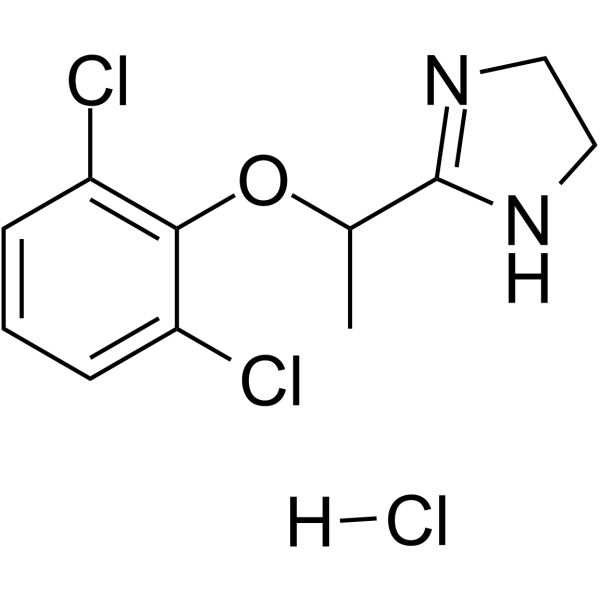
Lofexidine hydrochloride (Baq-168) is an orally active agonist of the imidazoline I1 receptor (imidazoline I1 receptor) (Ki: 1.9 nM) and α2-adrenergic receptor (α2-adrenergic receptor). Lofexidine hydrochloride binds to the α2A-adrenergic receptor, reduces sympathetic outflow, lowers blood pressure, and exhibits vasoconstrictive effects. Lofexidine hydrochloride regulates the expression of c-fos and alleviates opioid withdrawal symptoms. Lofexidine hydrochloride is applicable to research on opioid addiction and withdrawal.
For research use only. We do not sell to patients.
- Purity : 99.72%
- CAS No.: 21498-08-8
- Formula: C11H13Cl3N2O
- Molecular Weight:295.59
-
Storage:
4°C, sealed storage, away from moisture
* In solvent : -80°C, 6 months; -20°C, 1 month (sealed storage, away from moisture)

To place orders, for customer services and technical support, please contact: MedChemExpress USA
Tel: 609-228-6898 E-mail: [email protected] [email protected]


-
 Biological Activity
-
Chemical Information
-
Solvent & Solubility
- Protocols
- Purity & Documentation
- References
-
 Help & FAQs


-
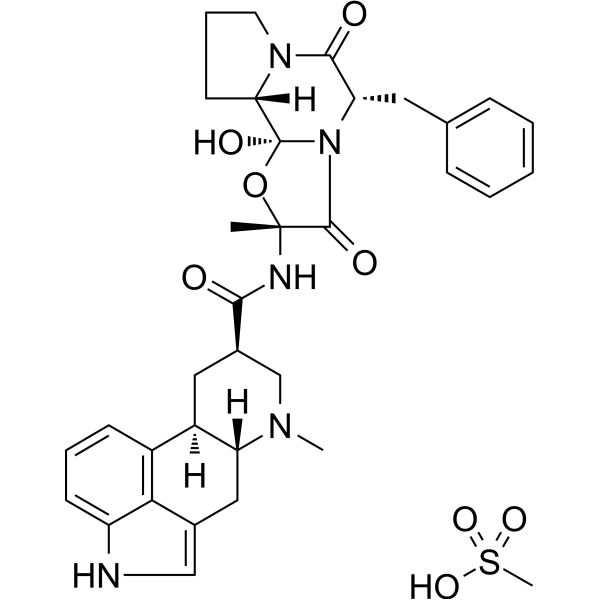
HY-B0670A
Dihydroergotamine mesylate5-HT1B/1D Agonist -
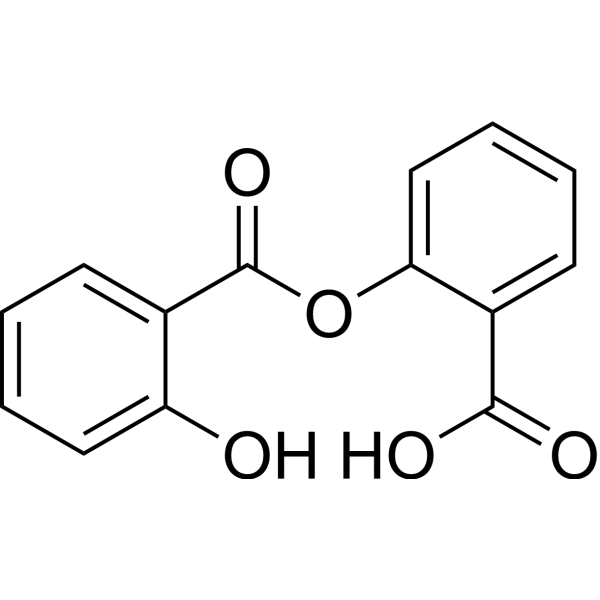
HY-B1245
SalsalateAnti-inflammatory Agent -

HY-B1052R
Lofexidine hydrochloride (Standard)Adrenergic Receptor Agonist -
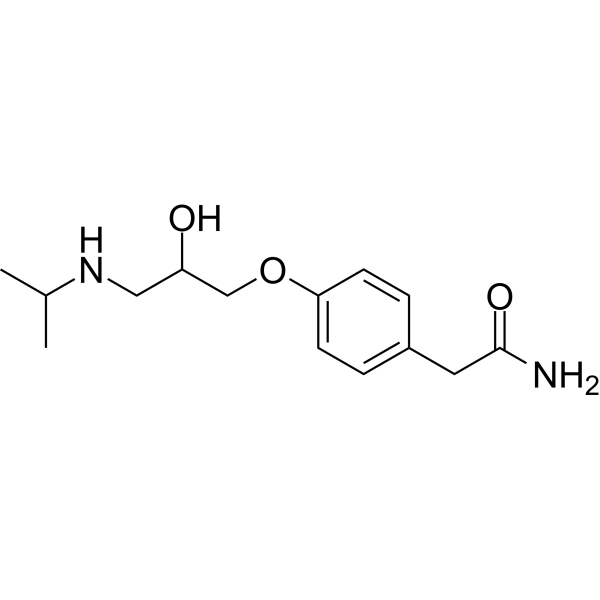
HY-17498
Atenololβ1-Adrenergic Receptor Blocker -
HY-B1037
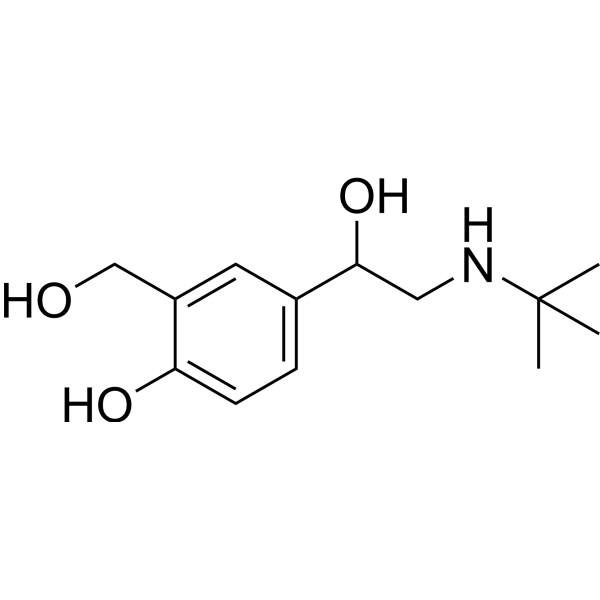
SalbutamolAdrenergic Receptor Agonist -
HY-B0659
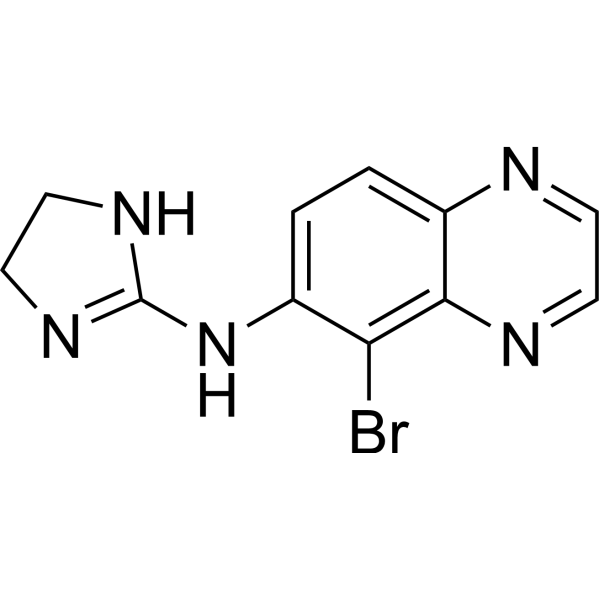
BrimonidineAdrenergic Receptor Agonist -
HY-17498R
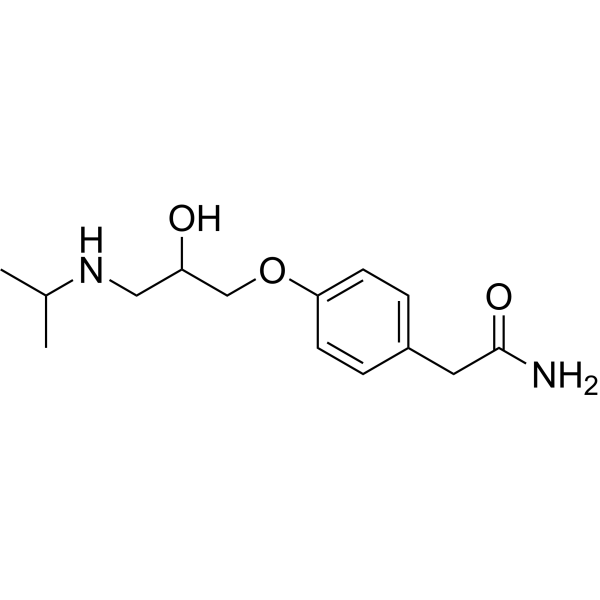
Atenolol (Standard) -
HY-12380
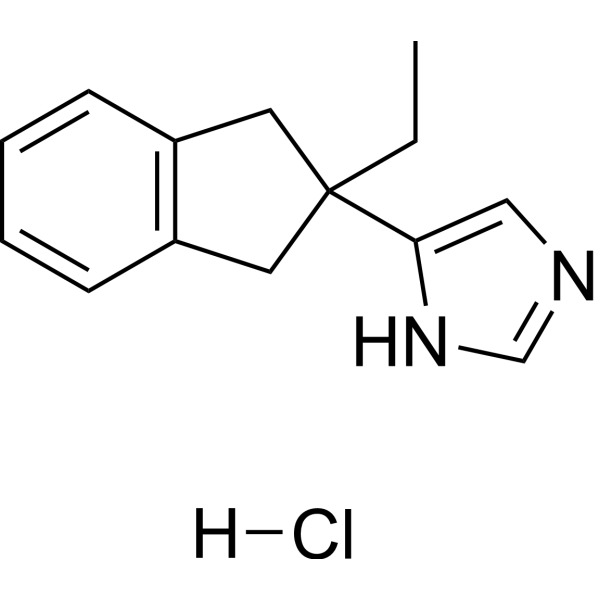
Atipamezole hydrochlorideα2 Adrenergic Antagonist -
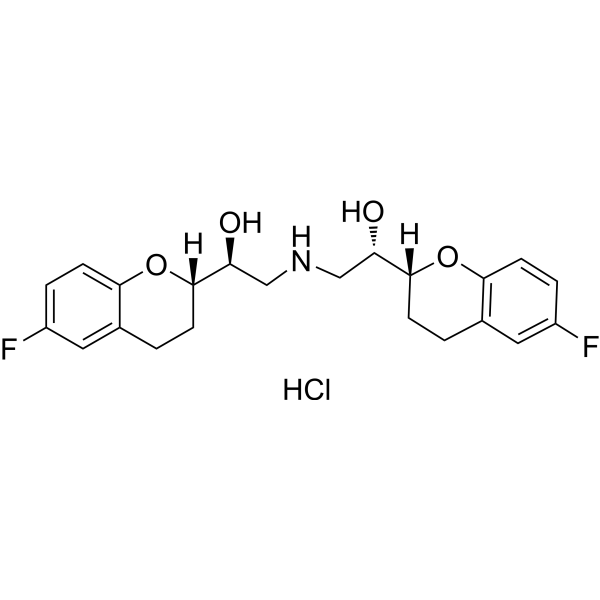
HY-B0203A
Nebivolol hydrochlorideβ Receptor Blocker -
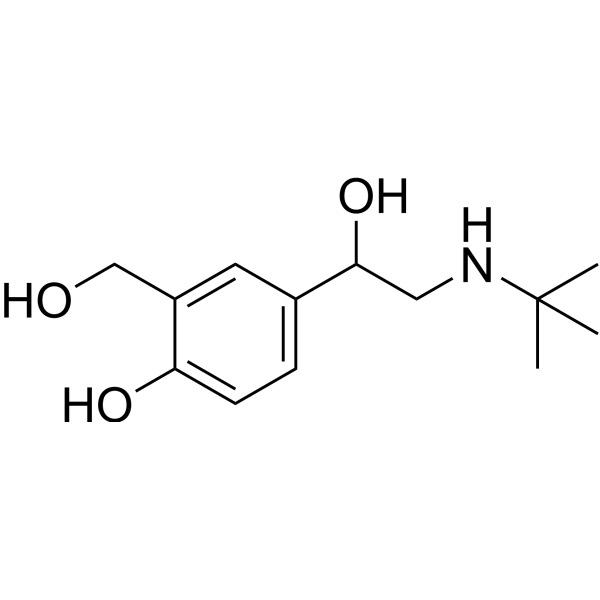
HY-B1037R
Salbutamol (Standard)Adrenergic Receptor Agonist -
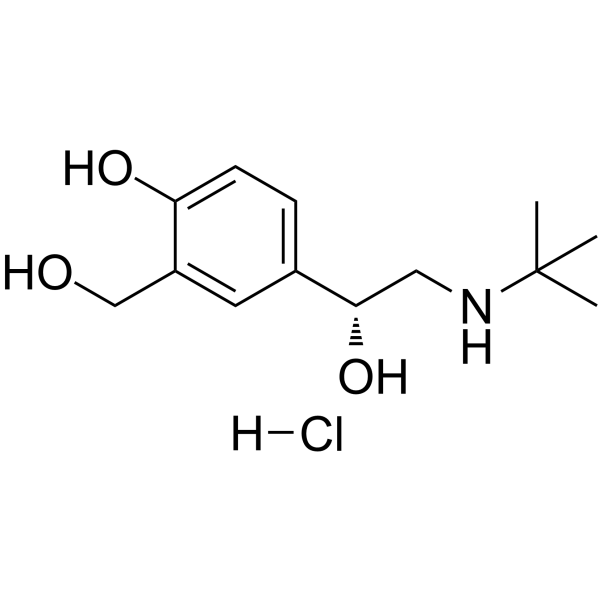
HY-B1675A
Levalbuterol hydrochlorideβ2-Adrenergic Receptor Agonist -
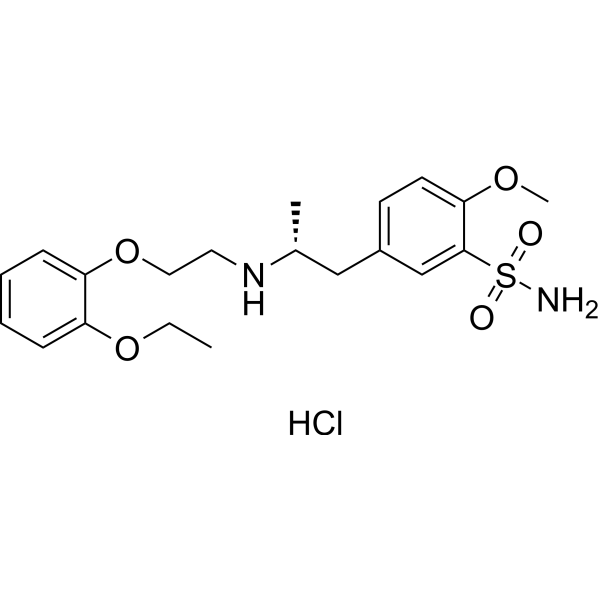
HY-B0661A
Tamsulosin hydrochlorideα1-Adrenergic Receptor Antagonist
All Adrenergic Receptor Isoforms
More

Biological Activity
Description
IC50 & Target
|
α adrenergic receptor |
In Vitro
Lofexidine hydrochloride binds to α2-adrenergic receptors in rat brain cell membranes, with a Kd value of 5.5 nM[1].
Lofexidine hydrochloride induces peripheral vasoconstriction in isolated rabbit ear central artery specimens[1].
Lofexidine hydrochloride attenuates norepinephrine-induced contraction responses of isolated vas deferens specimens in a concentration-dependent manner[1].
MedChemExpress (MCE) has not independently confirmed the accuracy of these methods. They are for reference only. Further protocols information, click here.
In Vivo
Lofexidine (Intravenous administration) hydrochloride induces a transient hypertensive response followed by sustained hypotension in dogs and cats, whereas oral administration only causes hypotension[1].
Lofexidine hydrochloride reduces the expression of Fos protein in the locus coeruleus of morphine-addicted mice during opioid withdrawal[1].
Lofexidine (p.o.) hydrochloride induces reversible neurological symptoms in rats and dogs, with an LD50 of 70-147 mg/kg in rats[2].
MedChemExpress (MCE) has not independently confirmed the accuracy of these methods. They are for reference only.
-
Animal Model:Rats and dogs[2]
-
Dosage:/
-
Administration:p.o.; daily; 1 week (chronic)
-
Result:Caused sedation, ataxia, exophthalmia, hyperexcitability, and convulsions that resolved by day 2.
Found LD50 between 70 and 147 mg/kg in rats.
Caused liver function test elevations that did not exceed the upper normal limit.
Clinical Trial
| NCT Number | Sponsor | Condition | Start Date |
Phase

|
|---|---|---|---|---|
| NCT01329991 | Plexxikon| | 2011-05 | PHASE1 |


Chemical Information
-
CAS No. 21498-08-8
-
Appearance Solid
-
Molecular Weight 295.59
-
Formula C11H13Cl3N2O
-
Color White to off-white
-
SMILES
CC(C1=NCCN1)OC2=C(Cl)C=CC=C2Cl.[H]Cl
-
Synonyms
Baq-168; MDL-14042
-
Shipping
Room temperature in continental US; may vary elsewhere.
-
Storage
4°C, sealed storage, away from moisture
* In solvent : -80°C, 6 months; -20°C, 1 month (sealed storage, away from moisture)


Solvent & Solubility
In Vitro:
H2O : ≥ 100 mg/mL (338.31 mM)
DMSO : 100 mg/mL (338.31 mM; Need ultrasonic; Hygroscopic DMSO has a significant impact on the solubility of product, please use newly opened DMSO)
* "≥" means soluble, but saturation unknown.
Please refer to the solubility information to select the appropriate solvent. Once prepared, please aliquot and store the solution to prevent product inactivation from repeated freeze-thaw cycles.
Storage method and period of stock solution: -80°C, 6 months; -20°C, 1 month (sealed storage, away from moisture). When stored at -80°C, please use it within 6 months. When stored at -20°C, please use it within 1 month.
* Note: If you choose water as the stock solution, please dilute it to the working solution, then filter and sterilize it with a 0.22 μm filter before use.
Please refer to the solubility information to select the appropriate solvent. Once prepared, please aliquot and store the solution to prevent product inactivation from repeated freeze-thaw cycles.
Storage method and period of stock solution: -80°C, 6 months; -20°C, 1 month (sealed storage, away from moisture). When stored at -80°C, please use it within 6 months. When stored at -20°C, please use it within 1 month.
* Note: If you choose water as the stock solution, please dilute it to the working solution, then filter and sterilize it with a 0.22 μm filter before use.
Concentration (start) × Volume (start) = Concentration (final) × Volume (final)
In Vivo:
Select the appropriate dissolution method based on your experimental animal and administration route.
- For the following dissolution methods, please ensure to first prepare a clear stock solution using an In Vitro approach and then sequentially add co-solvents:
- To ensure reliable experimental results, the clarified stock solution can be appropriately stored based on storage conditions. As for the working solution for In Vivo experiments, it is recommended to prepare freshly and use it on the same day.
- The percentages shown for the solvents indicate their volumetric ratio in the final prepared solution. If precipitation or phase separation occurs during preparation, heat and/or sonication can be used to aid dissolution.
Add each solvent one by one: 10% DMSO 40% PEG300 5% Tween-80 45% Saline
Solubility: ≥ 2.08 mg/mL (7.04 mM); Clear solution
This protocol yields a clear solution of ≥ 2.08 mg/mL (saturation unknown).
Taking 1 mL working solution as an example, add 100 μL DMSO stock solution (20.8 mg/mL) to 400 μL PEG300, and mix evenly; then add 50 μL Tween-80 and mix evenly; then add 450 μL Saline to adjust the volume to 1 mL.
Preparation of Saline: Dissolve 0.9 g sodium chloride in ddH₂O and dilute to 100 mL to obtain a clear Saline solution.
Add each solvent one by one: 10% DMSO 90% (20% SBE-β-CD in Saline)
Solubility: ≥ 2.08 mg/mL (7.04 mM); Clear solution
This protocol yields a clear solution of ≥ 2.08 mg/mL (saturation unknown).
Taking 1 mL working solution as an example, add 100 μL DMSO stock solution (20.8 mg/mL) to 900 μL 20% SBE-β-CD in Saline, and mix evenly.
Preparation of 20% SBE-β-CD in Saline (4°C, storage for one week): 2 g SBE-β-CD powder is dissolved in 10 mL Saline, completely dissolve until clear.
For the following dissolution methods, please prepare the working solution directly:
It is recommended to prepare fresh solutions and use them promptly within a short period of time.
The percentages shown for the solvents indicate their volumetric ratio in the final prepared solution. If precipitation or phase separation occurs during preparation, heat and/or sonication can be used to aid dissolution.
Add each solvent one by one: PBS
Solubility: 100 mg/mL (338.31 mM); Clear solution; Need ultrasonic
In Vivo Dissolution Calculator
Please enter the basic information of animal experiments:
-
-
-
-
Recommended: Prepare an additional quantity of animals to account for potential losses during experiments.
Working solution concentration: 0.22 mg/mL
This product has good water solubility, please refer to the measured solubility data in water/PBS/Saline for details.

Protocols
-
RNA extraction experimental
By lysing cells, releasing RNA, and removing impurities such as proteins and DNA, high-purity RNA products are finally obtained. The commonly used traditional method is the guanidine isothiocyanate/phenol/chloroform method (Trizol), which is suitable for a variety of animal materials including animal tissues, microorganisms, cultured cells, etc., and most plant materials.


Purity & Documentation
-
Data Sheet (278 KB)
-
SDS (480 KB)
- English - EN (480 KB)
- Français - FR (480 KB)
- Deutsch - DE (480 KB)
- Norwegian - NO (480 KB)
- Español - ES (480 KB)
- Swedish - SV (480 KB)
- Italian - IT (480 KB)
- Korean - KR (480 KB)
- Portuguese - PT (480 KB)
-
Handling Instructions (2659 KB)
References


Complete Stock Solution Preparation Table
Please refer to the solubility information to select the appropriate solvent. Once prepared, please aliquot and store the solution to prevent product inactivation from repeated freeze-thaw cycles.
Storage method and period of stock solution: -80°C, 6 months; -20°C, 1 month (sealed storage, away from moisture). When stored at -80°C, please use it within 6 months. When stored at -20°C, please use it within 1 month.
| Optional Solvent | Concentration Solvent Mass | 1 mg | 5 mg | 10 mg | 25 mg |
|---|---|---|---|---|---|
| H2O / DMSO | 1 mM | 3.3831 mL | 16.9153 mL | 33.8306 mL | 84.5766 mL |
| 5 mM | 0.6766 mL | 3.3831 mL | 6.7661 mL | 16.9153 mL | |
| 10 mM | 0.3383 mL | 1.6915 mL | 3.3831 mL | 8.4577 mL | |
| 15 mM | 0.2255 mL | 1.1277 mL | 2.2554 mL | 5.6384 mL | |
| 20 mM | 0.1692 mL | 0.8458 mL | 1.6915 mL | 4.2288 mL | |
| 25 mM | 0.1353 mL | 0.6766 mL | 1.3532 mL | 3.3831 mL | |
| 30 mM | 0.1128 mL | 0.5638 mL | 1.1277 mL | 2.8192 mL | |
| 40 mM | 0.0846 mL | 0.4229 mL | 0.8458 mL | 2.1144 mL | |
| 50 mM | 0.0677 mL | 0.3383 mL | 0.6766 mL | 1.6915 mL | |
| 60 mM | 0.0564 mL | 0.2819 mL | 0.5638 mL | 1.4096 mL | |
| 80 mM | 0.0423 mL | 0.2114 mL | 0.4229 mL | 1.0572 mL | |
| 100 mM | 0.0338 mL | 0.1692 mL | 0.3383 mL | 0.8458 mL |
* Note: If you choose water as the stock solution, please dilute it to the working solution, then filter and sterilize it with a 0.22 μm filter before use.


Lofexidine hydrochloride Related Classifications
HY-B1052 Related Classifications
 Powered by Bioz
Keywords