



Salsalate
Based on 2 publication(s) in Google Scholar
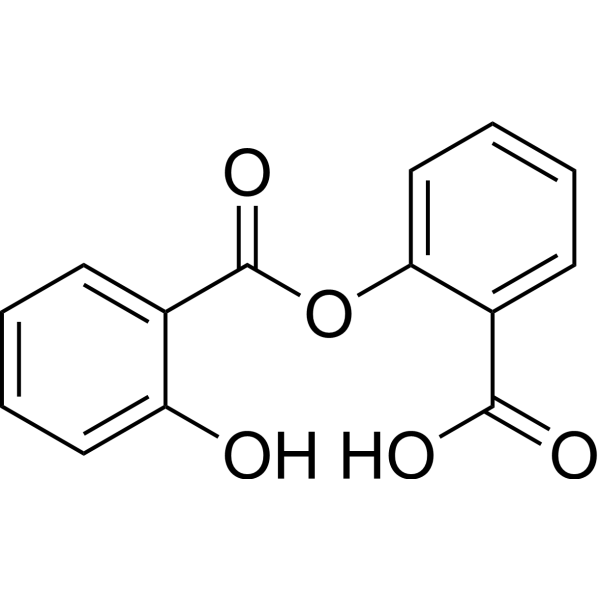
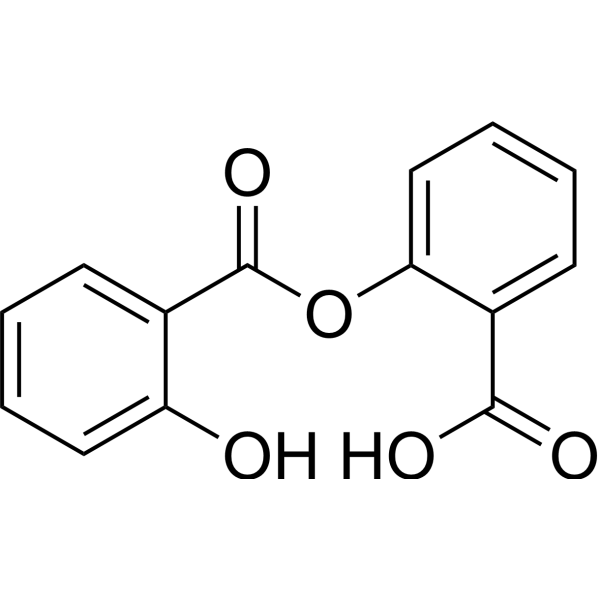
Salsalate is a potent antirheumatic drug with oral activity that reduces irritation during gastric absorption and avoids direct inhibition of cyclooxygenase. Salsalate not only has significant anti-inflammatory effects, but also reduces blood sugar levels, improves insulin resistance, and reduces the expression of cytokines. Salsalate can protect mice from metabolic disorders caused by high-fat diet and effectively improve the symptoms of type 2 diabetes, atherosclerosis and non-alcoholic steatohepatitis[2 ].
Nur für Forschungszwecke. Wir verkaufen nicht an Patienten.
- Reinheit : 99.61%
- CAS. Nr.: 552-94-3
- Formel: C14H10O5
- Molecular Weight:258.23
-
Speicherung:Powder -20°C, 3 years , 4°C, 2 years ; In solvent -80°C, 2 years , -20°C, 1 year

To place orders, for customer services and technical support, please contact: MedChemExpress USA
Tel: 609-228-6898 E-mail: [email protected] [email protected]


-
 Biologische Aktivität
-
Chemical Information
-
Lösungsmittel & Löslichkeit
- Protokoll
- Reinheit & Dokumentation
- Verweise
-
 Help & FAQs



Publications Citing Use of MedChemExpress (MCE) Salsalate
More

Biologische Aktivität
Beschreibung
In Vitro
Salsalate (1 mM, 72 h) inhibits the proliferation of bone marrow-derived macrophages by phosphorylating HMGCoA reductase[1].
MedChemExpress (MCE) has not independently confirmed the accuracy of these methods. They are for reference only. Further protocols information, click here.
-
Cell Line:BMDMs
-
Concentration:1 mM
-
Incubation Time:90 min
-
Result:Increased phosphorylation of ACC in macrophages from WT mice but not from AMPKβ1-/- mice.
-
Cell Line:BMDMs
-
Concentration:1 mM
-
Incubation Time:72 h
-
Result:Inhibited proliferation of WT macrophages but not AMPKβ1-/- mice.
In Vivo
Salsalate (0.5%, orally, daily, for 40 days) protects mice from metabolic dysfunction induced by a high-fat diet by activating mitochondrial uncoupling and the Sln/Serca2a axis in skeletal muscle thermogenesis[2].
Salsalate (0.33%, orally, daily, for 40 weeks) improves dyslipidemia and insulin resistance in mice, enhances diet-induced non-alcoholic steatohepatitis, reduces microvesicular and macrovesicular steatosis in the liver, and decreases the incidence of liver inflammation and fibrosis[3].
MedChemExpress (MCE) has not independently confirmed the accuracy of these methods. They are for reference only.
-
Animal Model:ApoE-/- and LDLr-/- mice and their corresponding germline or bone marrow AMPKβ1-deficient+/+[1]
-
Dosage:Western diet containing 2.5 g/kg salsalate; daily; 6 weeks
-
Administration:Oral
-
Result:Reduced atherosclerotic plaques in the aortic root of ApoE-/- mice, and the reduction in atherosclerosis was associated with reduced macrophage proliferation, reduced plaque lipid content, and reduced serum cholesterol.
-
Animal Model:High-fat diet mice[2]
-
Dosage:0.5%; daily; 40 days
-
Administration:Oral
-
Result:Reduced lipid accumulation in liver and epididymal white adipose tissue (eWAT), suppressed hepatic gluconeogenesis, improved insulin signaling in eWAT, increased the expression of genes related to glucose and fatty acid transport and oxidation in skeletal muscle, enhanced the expression of genes for mitochondrial uncoupling and electron transport, boosted skeletal muscle sarcolipin (Sln) and sarcoplasmic reticulum Ca2+ ATPase 2 (Serca2), and improved whole-body glucose homeostasis.
-
Animal Model:CETP mice were fed a high-fat and high-cholesterol diet[3]
-
Dosage:0.33% in HFC; daily; 20 weeks
-
Administration:Oral
-
Result:Improved dyslipidemia and insulin resistance, improved diet-induced NASH, reduced liver microvesicular and macrovesicular fatty degeneration, reduced the occurrence of liver inflammation and fibrosis, activated genes controlled by PPAR-α, PPARγ coactivator 1β, RXR-α and inhibited transcription factor MLXIPL/ChREBP, downregulated NF-κB pathway, and downregulated TGF-β signaling pathway.


Chemical Information
-
CAS. Nr. 552-94-3
-
Appearance Solid
-
Molecular Weight 258.23
-
Formel C14H10O5
-
Color White to yellow
-
SMILES
O=C(OC1=CC=CC=C1C(O)=O)C2=CC=CC=C2O
-
Synonyms
Salicylsalicylic acid; Disalicylic acid
-
Versand
Room temperature in continental US; may vary elsewhere.
-
Speicherung
Powder -20°C 3 years 4°C 2 years In solvent -80°C 2 years -20°C 1 year


Publications (2)
-
Journal Impact Factor
-
Most Recent
-
Biomacromolecules
Investigation of Basolateral Targeting Micelles for Drug Delivery Applications in Polycystic Kidney Disease. [Abstract]2024 May 13;25(5):2749-2761. PMID: 38652072 -
Cell Mol Bioeng
Combining Metformin and Drug-Loaded Kidney-Targeting Micelles for Polycystic Kidney Disease. [Abstract]2022 Dec 22;16(1):55-67. PMID: 36660586


Lösungsmittel & Löslichkeit
In Vitro:
DMSO : ≥ 100 mg/mL (387.25 mM; Hygroscopic DMSO has a significant impact on the solubility of product, please use newly opened DMSO)
* "≥" means soluble, but saturation unknown.
Please refer to the solubility information to select the appropriate solvent. Once prepared, please aliquot and store the solution to prevent product inactivation from repeated freeze-thaw cycles.
Storage method and period of stock solution: -80°C, 2 years; -20°C, 1 year. When stored at -80°C, please use it within 2 years. When stored at -20°C, please use it within 1 year.
Please refer to the solubility information to select the appropriate solvent. Once prepared, please aliquot and store the solution to prevent product inactivation from repeated freeze-thaw cycles.
Storage method and period of stock solution: -80°C, 2 years; -20°C, 1 year. When stored at -80°C, please use it within 2 years. When stored at -20°C, please use it within 1 year.
Konzentration (Stammlösung) × Volumen (Stammlösung) = Konzentration (Ziellösung) × Volumen (Ziellösung)
In Vivo:
Select the appropriate dissolution method based on your experimental animal and administration route.
- For the following dissolution methods, please ensure to first prepare a clear stock solution using an In Vitro approach and then sequentially add co-solvents:
- To ensure reliable experimental results, the clarified stock solution can be appropriately stored based on storage conditions. As for the working solution for In Vivo experiments, it is recommended to prepare freshly and use it on the same day.
- The percentages shown for the solvents indicate their volumetric ratio in the final prepared solution. If precipitation or phase separation occurs during preparation, heat and/or sonication can be used to aid dissolution.
Add each solvent one by one: 10% DMSO 40% PEG300 5% Tween-80 45% Saline
Solubility: ≥ 2.5 mg/mL (9.68 mM); Clear solution
This protocol yields a clear solution of ≥ 2.5 mg/mL (saturation unknown).
Taking 1 mL working solution as an example, add 100 μL DMSO stock solution (25.0 mg/mL) to 400 μL PEG300, and mix evenly; then add 50 μL Tween-80 and mix evenly; then add 450 μL Saline to adjust the volume to 1 mL.
Preparation of Saline: Dissolve 0.9 g sodium chloride in ddH₂O and dilute to 100 mL to obtain a clear Saline solution.
Add each solvent one by one: 10% DMSO 90% (20% SBE-β-CD in Saline)
Solubility: ≥ 2.5 mg/mL (9.68 mM); Clear solution
This protocol yields a clear solution of ≥ 2.5 mg/mL (saturation unknown).
Taking 1 mL working solution as an example, add 100 μL DMSO stock solution (25.0 mg/mL) to 900 μL 20% SBE-β-CD in Saline, and mix evenly.
Preparation of 20% SBE-β-CD in Saline (4°C, storage for one week): 2 g SBE-β-CD powder is dissolved in 10 mL Saline, completely dissolve until clear.
In Vivo Dissolution Calculator
Please enter the basic information of animal experiments:
-
-
-
-
Recommended: Prepare an additional quantity of animals to account for potential losses during experiments.
Please enter your animal formula composition:
-
%DMSO +
Recommended: Keep the proportion of DMSO in working solution below 2% if your animal is weak.
-
%+
-
+%Tween-80 + +
-
%Saline +
The co-solvents required include: DMSO, . All of co-solvents are available by MedChemExpress (MCE). , Tween 80. All of co-solvents are available by MedChemExpress (MCE).
Working solution concentration: 0.22 mg/mL
Method for preparing stock solution: mg drug dissolved in μL DMSO. Stock solution concentration: mg/mL.
1. Take μL DMSO stock solution;
2. Add μL .
μL , mix evenly;
3. Then add μL Tween 80, mix evenly;
4. Then add μL
Please ensure that the stock solution in the first step is dissolved to a clear state, and add co-solvents in sequence. You can use ultrasonic heating (ultrasonic cleaner, recommended frequency 20-40 kHz), vortexing, etc. to assist dissolution.

Protokoll
-
RNA extraction experimental
By lysing cells, releasing RNA, and removing impurities such as proteins and DNA, high-purity RNA products are finally obtained. The commonly used traditional method is the guanidine isothiocyanate/phenol/chloroform method (Trizol), which is suitable for a variety of animal materials including animal tissues, microorganisms, cultured cells, etc., and most plant materials.
-
Research Protocol for Endocrine Diseases
Endocrine diseases often arise from disrupted hormone production, hormone signaling, or target-tissue responsiveness; for diabetes-focused endocrine disease models, insulin signaling regulates glucose uptake, hepatic glucose output, lipid metabolism, and β-cell compensation. Type 2 diabetes develops through interacting defects in insulin resistance, β-cell dysfunction, adipose inflammation, hepatic glucose overproduction, altered incretin signaling, and ectopic lipid metabolism. A major unresolved question is whether endocrine dysfunction is driven primarily by target-tissue insulin resistance, intrinsic β-cell failure, immune/inflammatory stress, or combined multi-organ failure that differs by disease stage.
-
Research Protocol for Cardiovascular Diseases
Cardiovascular disease can be modeled as maladaptive cardiac remodeling, where ischemic injury or pressure overload activates inflammatory signaling, fibroblast activation, extracellular-matrix deposition, cardiomyocyte hypertrophy, vascular remodeling, and progressive ventricular dysfunction. The TGF-β/SMAD axis is a central profibrotic pathway after myocardial injury and pressure overload, while innate immune and cytokine pathways regulate leukocyte recruitment, scar formation, and adverse remodeling. Key unresolved questions include which inflammatory signals are reparative versus harmful, when fibrosis is protective versus maladaptive, and whether pathway inhibition improves function without weakening necessary infarct healing or compensatory remodeling.
-
Research Protocol for Inflammation-related Diseases
The NLRP3 inflammasome is a cytosolic innate immune signaling platform that integrates priming signals and danger-signal activation to promote caspase-1 activation, maturation of IL-1β and IL-18, and gasdermin D-mediated pyroptotic cell death. The core experimental logic is to determine whether inflammatory disease phenotypes are driven by increased NLRP3 expression, ASC-containing inflammasome assembly, caspase-1 cleavage, GSDMD cleavage, and extracellular release of IL-1β/IL-18 rather than by nonspecific cell injury alone. The pathway is strongly linked to inflammation-related disease phenotypes because monosodium urate crystals activate NALP3/NLRP3 inflammasome signaling in gout-like crystal inflammation, cholesterol crystals activate NLRP3 inflammasomes in atherogenesis models, and DSS-induced intestinal inflammation has been reported to involve NLRP3 inflammasome activity. However, experimental colitis studies also show context-dependent protective effects of NLRP3 inflammasome co
-
Research Protocol for Metabolic Diseases
AMP-activated protein kinase, AMPK, is a conserved cellular energy sensor that responds to reduced cellular energy status and coordinates metabolism by increasing ATP-generating catabolic pathways while suppressing ATP-consuming anabolic processes. In metabolic disease research, the AMPK pathway is experimentally relevant because it regulates hepatic lipid synthesis, fatty acid oxidation, glucose production, skeletal-muscle glucose disposal, mTORC1-linked biosynthesis, autophagy, mitochondrial homeostasis, and whole-body energy balance. The central pathway logic is that energy stress, metformin, exercise-like stimulation, or direct AMPK activators increase AMPKα Thr172 phosphorylation and downstream substrate phosphorylation, including ACC and RAPTOR. Phosphorylation of ACC suppresses lipogenesis and supports fatty acid oxidation, whereas phosphorylation of RAPTOR suppresses mTORC1 signaling and links cellular energy status to growth and protein synthesis control. The pathway is linked


Reinheit & Dokumentation
-
Data Sheet (285 KB)
-
SDS (597 KB)
- English - EN (597 KB)
- Français - FR (597 KB)
- Deutsch - DE (597 KB)
- Norwegian - NO (597 KB)
- Español - ES (597 KB)
- Swedish - SV (597 KB)
- Italian - IT (597 KB)
- Korean - KR (597 KB)
- Portuguese - PT (597 KB)
-
Handling Instructions (2659 KB)
Verweise
[1]. Emily A Day, et al. Salsalate reduces atherosclerosis through AMPKβ1 in mice.Mol Metab.2021 Nov:53:101321. [Content Brief]
[2]. Li Nie, et al. Salsalate Activates Skeletal Muscle Thermogenesis and Protects Mice from High-Fat Diet Induced Metabolic Dysfunction. EBioMedicine. 2017 Sep:23:136-145. [Content Brief]
[3]. Wen Liang, et al. Salsalate attenuates diet induced non-alcoholic steatohepatitis in mice by decreasing lipogenic and inflammatory processes. Br J Pharmacol. 2015 Nov;172(22):5293-305. [Content Brief]
[4]. Murthy SN, et al. Effects of salsalate therapy on recovery from vascular injury in female Zucker fatty rats. Diabetes. 2010;59(12):3240-3246. [Content Brief]
[5]. Scheiman JM, et al. Gastroduodenal mucosal damage with salsalate versus aspirin: results of experimental models and endoscopic studies in humans. Semin Arthritis Rheum. 1990;20(2):121-127. [Content Brief]
[6]. González F, et al. Salicylate administration suppresses the inflammatory response to nutrients and improves ovarian function in polycystic ovary syndrome. Am J Physiol Endocrinol Metab. 2020;319(4):E744-E752. [Content Brief]


Complete Stock Solution Preparation Table
Please refer to the solubility information to select the appropriate solvent. Once prepared, please aliquot and store the solution to prevent product inactivation from repeated freeze-thaw cycles.
Storage method and period of stock solution: -80°C, 2 years; -20°C, 1 year. When stored at -80°C, please use it within 2 years. When stored at -20°C, please use it within 1 year.
| Optional Solvent | Concentration Solvent Mass | 1 mg | 5 mg | 10 mg | 25 mg |
|---|---|---|---|---|---|
| DMSO | 1 mM | 3.8725 mL | 19.3626 mL | 38.7252 mL | 96.8129 mL |
| 5 mM | 0.7745 mL | 3.8725 mL | 7.7450 mL | 19.3626 mL | |
| 10 mM | 0.3873 mL | 1.9363 mL | 3.8725 mL | 9.6813 mL | |
| 15 mM | 0.2582 mL | 1.2908 mL | 2.5817 mL | 6.4542 mL | |
| 20 mM | 0.1936 mL | 0.9681 mL | 1.9363 mL | 4.8406 mL | |
| 25 mM | 0.1549 mL | 0.7745 mL | 1.5490 mL | 3.8725 mL | |
| 30 mM | 0.1291 mL | 0.6454 mL | 1.2908 mL | 3.2271 mL | |
| 40 mM | 0.0968 mL | 0.4841 mL | 0.9681 mL | 2.4203 mL | |
| 50 mM | 0.0775 mL | 0.3873 mL | 0.7745 mL | 1.9363 mL | |
| 60 mM | 0.0645 mL | 0.3227 mL | 0.6454 mL | 1.6135 mL | |
| 80 mM | 0.0484 mL | 0.2420 mL | 0.4841 mL | 1.2102 mL | |
| 100 mM | 0.0387 mL | 0.1936 mL | 0.3873 mL | 0.9681 mL |


Salsalate Related Classifications
HY-B1245 Related Classifications
 Powered by Bioz