



Norbinaltorphimine dihydrochloride
Based on 8 publication(s) in Google Scholar
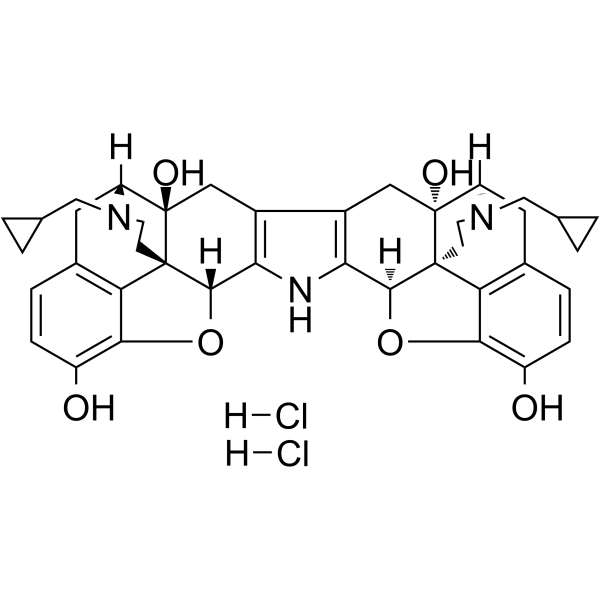
Norbinaltorphimine dihydrochloride (nor-Binaltorphimine dihydrochloride; nor-BNI dihydrochloride) is a selective, long-acting competitive antagonist of the κ-opioid receptor. Norbinaltorphimine dihydrochloride blocks κ-opioid receptor-mediated analgesic effects, and inhibits butorphanol-induced changes in κ-opioid receptor binding kinetics, desensitization and down-regulation. Norbinaltorphimine dihydrochloride suppresses specific opioid withdrawal symptoms, precipitates withdrawal behaviors in butorphanol-dependent rats, and serves as a molecular probe for studying κ-opioid receptor-agonist interactions. Norbinaltorphimine dihydrochloride is applicable to research related to neurological disorders such as pain.
연구목적의 판매만을 진행합니다. 환자를 대상으로 한 판매는 하지 않습니다.
- Purity : 98.91%
- CAS No.: 113158-34-2
- 화학식: C40H45Cl2N3O6
- 분자량:734.71
-
보관:
4°C, sealed storage, away from moisture
* In solvent : -80°C, 6 months; -20°C, 1 month (sealed storage, away from moisture)

To place orders, for customer services and technical support, please contact: MedChemExpress USA
Tel: 609-228-6898 E-mail: [email protected] [email protected]


-
 Biological Activity
-
Chemical Information
-
용액&용해도
- 순도&문서
- References
-
 Help & FAQs


-
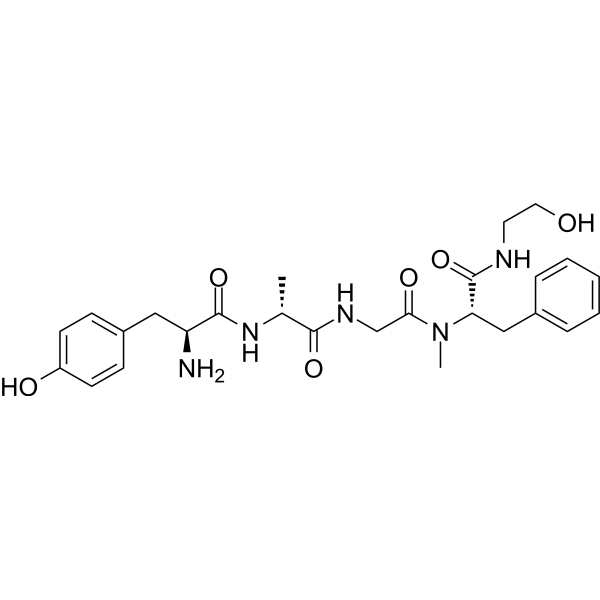
HY-P0210
DAMGOμ-OPR Agonist -
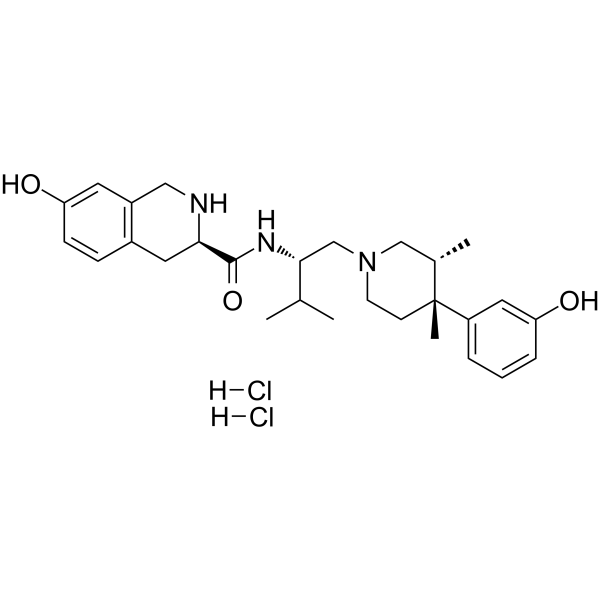
HY-10487
JDTic dihydrochloride -

HY-15997
(-)-U-50488 hydrochlorideKOR Agonist -
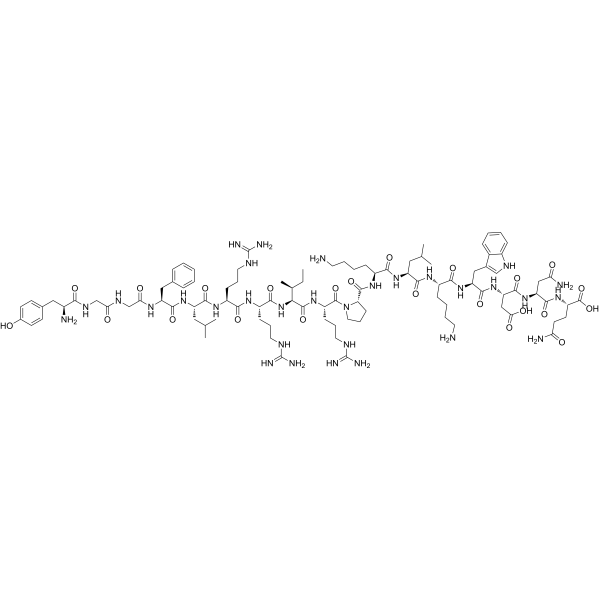
HY-P1333
Dynorphin AKOR Agonist -
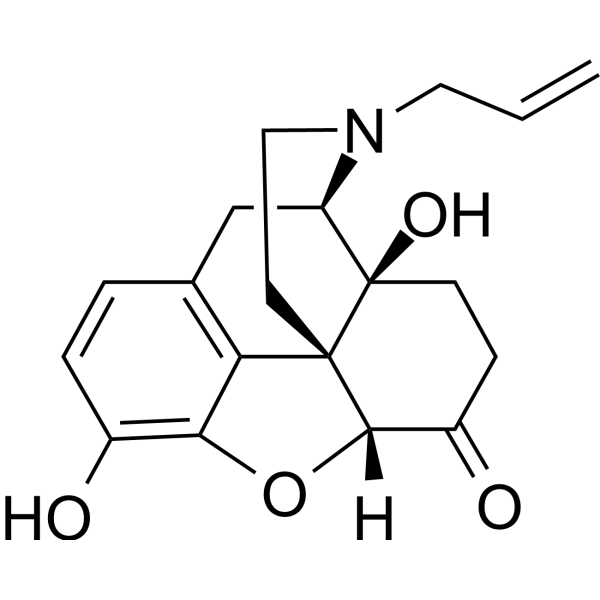
HY-17417A
NaloxoneOpioid Receptor Antagonist -
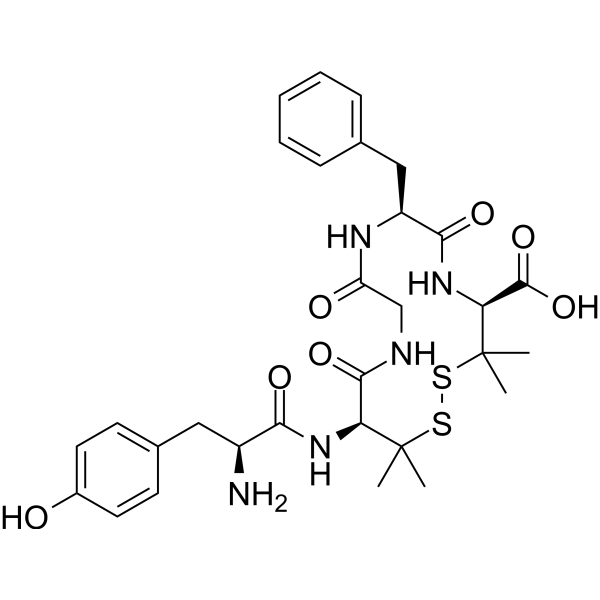
HY-P1334
DPDPEDOR Agonist -
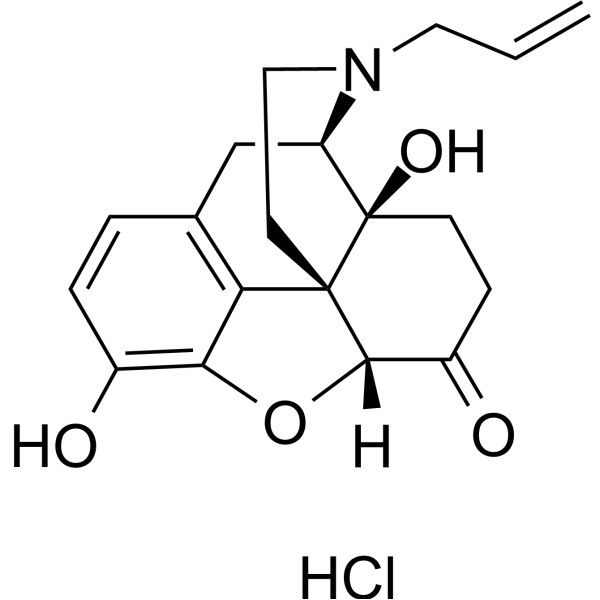
HY-17417
Naloxone hydrochlorideOpioid Receptor Antagonist -

HY-101318
β-Funaltrexamine hydrochlorideµ Opioid Receptor Antagonist -
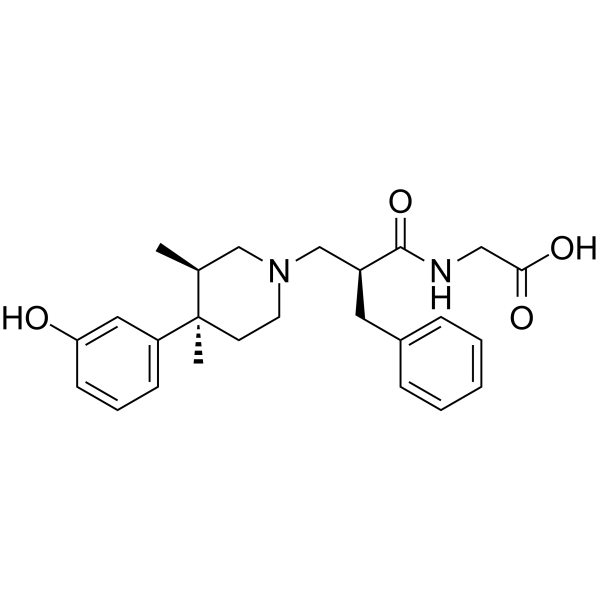
HY-13243
Alvimopanμ-opioid Receptor Antagonist -
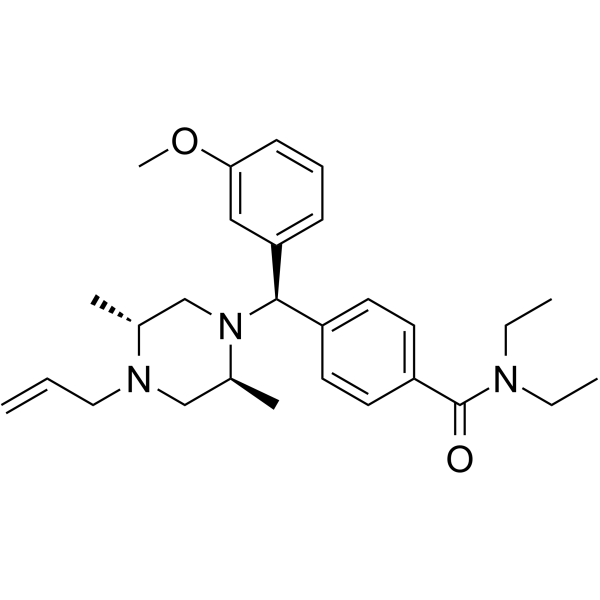
HY-101202
SNC80δ-opioid Receptor Agonist -
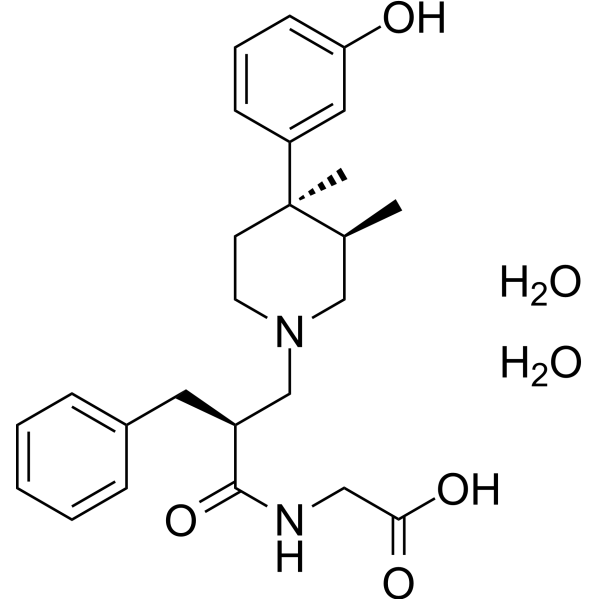
HY-76657A
Alvimopan dihydrateμ-opioid Receptor Antagonist -
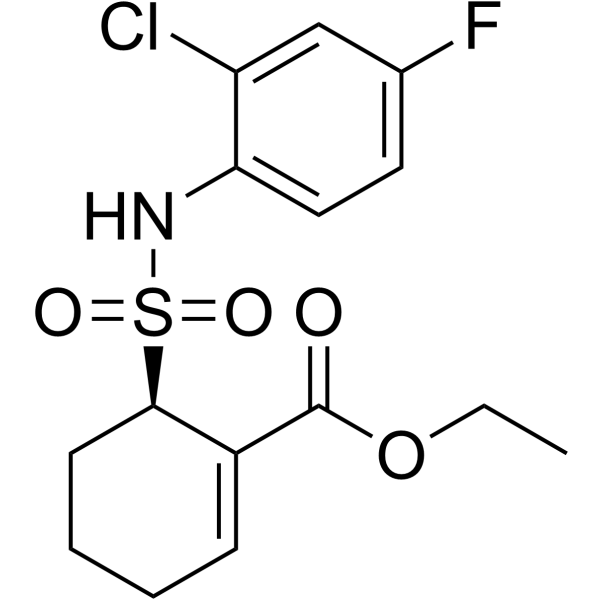
HY-11109
ResatorvidTLR4 Inhibitor
Publications Citing Use of MedChemExpress (MCE) Norbinaltorphimine dihydrochloride
More- Br J Anaesth. 2025 Mar;134(3):759-771. [Abstract]
- J Med Chem. 2026 Mar 5;69(6):6508-6527.
- J Med Chem. 2024 Jun 13;67(11):9552-9574. [Abstract]
- Front Immunol. 2021 Jul 7:12:692286. [Abstract]
- Front Cell Neurosci. 2022 Jun 2;16:894886. [Abstract]
- Prog Neuropsychopharmacol Biol Psychiatry. 2026 Jun 20:147:111760. [Abstract]
- Pharmacol Biochem Behav. 2026 Feb:259:174136. [Abstract]
- Aging (Albany NY). 2021 May 20;13(10):14355-14371. [Abstract]
 Customer Validation & Images

-
WB

-
Flow Cytometry

-
Cell Proliferation/Viability Assay

-
ELISA

-
IF

All Opioid Receptor Isoforms
More

Biological Activity
제품 설명
IC50 & Target
|
κ Opioid Receptor/KOR |
In Vitro
Norbinaltorphimine (0.01 nM-0.1 μM; 120 min) dihydrochloride displaces the binding of [3H]U-69,593 to κ-opioid receptors in rat cortical cell membranes. Its Ki value is 4.8 nM in saline-infused rats, while its potency increases 12-fold (Ki = 0.4 nM) in butorphanol-infused rats, indicating that κ-opioid receptors are hypersensitive to this antagonist[2].
Norbinaltorphimine (20-200 nM; 30 min) dihydrochloride potently antagonizes κ-selective agonists in the longitudinal muscle of guinea pig ileum, while it exhibits extremely weak antagonistic effects on the μ-selective agonist morphine, with a κ/μ selectivity ratio of 19.2[3].
Norbinaltorphimine (20 nM; 30 min) dihydrochloride potently antagonizes κ-selective agonists in rabbit vas deferens preparations[3].
MedChemExpress (MCE) has not independently confirmed the accuracy of these methods. They are for reference only. .
In Vivo
Norbinaltorphimine (12-100 nM/5 μl; intracerebroventricular injection; administered twice, at 3 hours before and 48 hours after the initiation of butorphanol infusion) dihydrochloride blocks most naloxone-precipitated withdrawal symptoms in butorphanol-dependent rats, exerts a significant blocking effect on diarrhea, alleviates forepaw tremor, and prevents butorphanol-induced desensitization of κ-opioid receptors in the cortex and striatum, as well as receptor downregulation in the cortex[2].
MedChemExpress (MCE) has not independently confirmed the accuracy of these methods. They are for reference only.
-
Animal Model:Sprague-Dawley (male, 250-270 g)[1]
-
Dosage:30 μg (single treatment); 30 μg (repeated treatment)
-
Administration:i.c.v.; single injection (single treatment); i.c.v.; twice daily; 10 days (repeated treatment)
-
Result:Abolished U69593-induced antinociception (significant reduction in % MPE vs vehicle) when tested 1, 11, and 30 days post-single 30 μg i.c.v. injection.
Did not alter DAMGO- or DPDPE-induced antinociception when tested 1 and 11 days post-single 30 μg i.c.v. injection.
Abolished U69593-induced antinociception (significant reduction in % MPE vs vehicle) when tested 1, 2, 5, and 20 days post-last repeated 30 μg i.c.v. twice-daily injection.
Abolished DAMGO- and DPDPE-induced antinociception (significant reduction in % MPE vs vehicle) when tested 1 and 2 days post-last repeated 30 μg i.c.v. twice-daily injection.
Showed no effect on DAMGO- or DPDPE-induced antinociception at 5 and 20 days post-last repeated 30 μg i.c.v. twice-daily injection.
Exhibited magnitude of DAMGO and DPDPE antagonism on day 1 post-last repeated dose equivalent to that of selective μ-antagonist CTOP and δ-antagonist ICI 174,864, respectively.
-
Animal Model:Sprague-Dawley (7- to 8-week-old male, 250-300 g, butorphanol dependence model via intracerebroventricular osmotic minipump infusion of butorphanol tartrate at 26 nmol/h for 3 days)[2]
-
Dosage:12 nM/5 μl per rat; 24 nM/5 μl per rat; 48 nM/5 μl per rat; 100 nM/5 μl per rat
-
Administration:i.c.v.; 2 doses (3 h before and 48 h after butorphanol infusion start)
-
Result:Completely blocked naloxone-precipitated withdrawal signs of escape behavior, teeth-chattering, wet shakes, ptosis, body weight loss (>3%), and reversed hypothermia to increased rectal temperatures.
Significantly blocked diarrhea at 12 nM dose.
Significantly blocked diarrhea and attenuated forepaw tremors at 24 nM dose.
Had no effect on withdrawal signs of yawning, ejaculation, or urination.
Prevented butorphanol-induced increases in [3H]U-69,593 K_D values in the cortex (4.33 nM, 96% of saline control) and striatum (5.49 nM, 105% of saline control) at 12 nmol dose.
Prevented butorphanol-induced decreases in [3H]U-69,593 B_max values in the cortex (59.46 fM/mg protein, 97% of saline control) at 12 nmol dose.
Prevented butorphanol-induced supersensitivity of cortical κ-opioid receptors to Norbinaltorphimine itself, blocking the significant reduction in K_i values seen with butorphanol alone.


Chemical Information
-
CAS No. 113158-34-2
-
Appearance Solid
-
분자량 734.71
-
화학식 C40H45Cl2N3O6
-
Color Light yellow to gray
-
SMILES
O[C@]12[C@]34[C@](OC5=C(O)C=CC(C[C@@]2([H])N(CC6CC6)CC4)=C35)([H])C7=C(C8=C([C@@](O9)([H])[C@]%10%11[C@](O)([C@](CC%12=C%11C9=C(C=C%12)O)([H])N(CC%13CC%13)CC%10)C8)N7)C1.Cl[H].Cl[H]
-
Synonyms
nor-Binaltorphimine dihydrochloride; nor-BNI dihydrochloride
-
선적
Room temperature in continental US; may vary elsewhere.
-
보관
4°C, sealed storage, away from moisture
* In solvent : -80°C, 6 months; -20°C, 1 month (sealed storage, away from moisture)


Publications (8)
-
Journal Impact Factor
-
Most Recent
-
Br J Anaesth
Kappa opioid receptor internalisation-induced p38 nuclear translocation suppresses glioma progression. [Abstract]2025 Mar;134(3):759-771. PMID: 39741108
Norbinaltorphimine dihydrochloride purchased from MedChemExpress. Usage Cited in: Br J Anaesth. 2025 Mar;134(3):759-771. [Abstract]
Western immunoblot analysis demonstrates that TRK-820 upregulates Bax expression and downregulates Bcl2 expression. These changes can be partially reversed by the KOP inhibitor nor-BNI (Norbinaltorphimine dihydrochloride, 1 μM) and the p38 inhibitor BIRB796.
Norbinaltorphimine dihydrochloride purchased from MedChemExpress. Usage Cited in: Br J Anaesth. 2025 Mar;134(3):759-771. [Abstract]
Treatment with Trk-820 5 nM promotes apoptosis of GBM cells, which can be largely reversed by nor-BNI (Norbinaltorphimine dihydrochloride, 1 μM) and partially reversed by BIRB796.
Norbinaltorphimine dihydrochloride purchased from MedChemExpress. Usage Cited in: Br J Anaesth. 2025 Mar;134(3):759-771. [Abstract]
TRK-820 5 nM suppresses GBM cell viability, which can be partially reversed by nor-BNI (Norbinaltorphimine dihydrochloride, 1 μM) and BIRB796.
-
-
J Med Chem
Systematic Structure-Activity Relationship Study of Nalfurafine Analogues toward Development of Potentially Nonaddictive Pain Management Treatments. [Abstract]2024 Jun 13;67(11):9552-9574. PMID: 38814086 -
Front Immunol
Butorphanol Promotes Macrophage Phenotypic Transition to Inhibit Inflammatory Lung Injury via κ Receptors. [Abstract]2021 Jul 7:12:692286. PMID: 34305926
Norbinaltorphimine dihydrochloride purchased from MedChemExpress. Usage Cited in: Front Immunol. 2021 Jul 7:12:692286. [Abstract]
Butorphanol regulated macrophage polarization through the KOR in LPS-induced BMDMs. Macrophages were collected and cultured from the bone marrow of mice and incubated with LPS (1 μg/mL) alone or butorphanol (8 μM) plus LPS (1 μg/mL), nor-BNI (Norbinaltorphimine dihydrochloride, KOR antagonist, 5 μM) plus butorphanol (8 μM) plus LPS (1 μg/mL), or naloxegol (MOR antagonist, 5 μM) plus butorphanol (8 μM) plus LPS (1 μg/mL) for 24 h. Cells were pretreated with nor-BNI or naloxegol for 30 min. TNF-α and IL-6 protein levels in the supernatant of macrophage cultures were determined by ELISA.
Norbinaltorphimine dihydrochloride purchased from MedChemExpress. Usage Cited in: Front Immunol. 2021 Jul 7:12:692286. [Abstract]
Butorphanol prevented the interaction of MyD88 with TLR4 and inhibited NF-κB activation through KOR in M1-polarized BMDMs. Macrophages were collected and cultured from the bone marrow of mice and incubated with LPS (1 μg/mL) alone, butorphanol (8 μM) plus LPS (1 μg/mL), or nor-BNI (KOR antagonist, 5 μM) plus butorphanol (8 μM) and LPS (1 μg/mL) for 15 min or 30 min. Cells were pretreated with nor-BNI (Norbinaltorphimine dihydrochloride) for 30 min. To observe the interaction of MyD88 with TLR4, cells were fixed, permeabilized, and stained, and images were obtained by confocal microscopy.
-
Front Cell Neurosci
The Basolateral Amygdala to Ventral Hippocampus Circuit Controls Anxiety-Like Behaviors Induced by Morphine Withdrawal. [Abstract]2022 Jun 2;16:894886. PMID: 35726232 -
Prog Neuropsychopharmacol Biol Psychiatry
A dorsolateral BNST-parabrachial nucleus pathway regulates adolescent alcohol-induced negative affect in females. [Abstract]2026 Jun 20:147:111760. PMID: 42214652 -
Pharmacol Biochem Behav
Dual activation of 5-HT1A and μ-opioid receptors mediates dezocine's antidepressant effects in mice with comorbid pain and depression. [Abstract]2026 Feb:259:174136. PMID: 41365431 -
Aging (Albany NY)
κ-opioid receptor stimulation alleviates rat vascular smooth muscle cell calcification via PFKFB3-lactate signaling. [Abstract]2021 May 20;13(10):14355-14371. PMID: 34016793


용액&용해도
In Vitro:
DMSO : 100 mg/mL (136.11 mM; Need ultrasonic; Hygroscopic DMSO has a significant impact on the solubility of product, please use newly opened DMSO)
H2O : 33.33 mg/mL (45.36 mM; Need ultrasonic)
Please refer to the solubility information to select the appropriate solvent. Once prepared, please aliquot and store the solution to prevent product inactivation from repeated freeze-thaw cycles.
Storage method and period of stock solution: -80°C, 6 months; -20°C, 1 month (sealed storage, away from moisture). When stored at -80°C, please use it within 6 months. When stored at -20°C, please use it within 1 month.
* Note: If you choose water as the stock solution, please dilute it to the working solution, then filter and sterilize it with a 0.22 μm filter before use.
Please refer to the solubility information to select the appropriate solvent. Once prepared, please aliquot and store the solution to prevent product inactivation from repeated freeze-thaw cycles.
Storage method and period of stock solution: -80°C, 6 months; -20°C, 1 month (sealed storage, away from moisture). When stored at -80°C, please use it within 6 months. When stored at -20°C, please use it within 1 month.
* Note: If you choose water as the stock solution, please dilute it to the working solution, then filter and sterilize it with a 0.22 μm filter before use.
Concentration (start) × Volume (start) = Concentration (final) × Volume (final)
In Vivo:
Select the appropriate dissolution method based on your experimental animal and administration route.
- For the following dissolution methods, please ensure to first prepare a clear stock solution using an In Vitro approach and then sequentially add co-solvents:
- To ensure reliable experimental results, the clarified stock solution can be appropriately stored based on storage conditions. As for the working solution for In Vivo experiments, it is recommended to prepare freshly and use it on the same day.
- The percentages shown for the solvents indicate their volumetric ratio in the final prepared solution. If precipitation or phase separation occurs during preparation, heat and/or sonication can be used to aid dissolution.
Add each solvent one by one: 10% DMSO 40% PEG300 5% Tween-80 45% Saline
Solubility: ≥ 2.5 mg/mL (3.40 mM); Clear solution
This protocol yields a clear solution of ≥ 2.5 mg/mL (saturation unknown).
Taking 1 mL working solution as an example, add 100 μL DMSO stock solution (25.0 mg/mL) to 400 μL PEG300, and mix evenly; then add 50 μL Tween-80 and mix evenly; then add 450 μL Saline to adjust the volume to 1 mL.
Preparation of Saline: Dissolve 0.9 g sodium chloride in ddH₂O and dilute to 100 mL to obtain a clear Saline solution.
Add each solvent one by one: 10% DMSO 90% (20% SBE-β-CD in Saline)
Solubility: ≥ 2.5 mg/mL (3.40 mM); Clear solution
This protocol yields a clear solution of ≥ 2.5 mg/mL (saturation unknown).
Taking 1 mL working solution as an example, add 100 μL DMSO stock solution (25.0 mg/mL) to 900 μL 20% SBE-β-CD in Saline, and mix evenly.
Preparation of 20% SBE-β-CD in Saline (4°C, storage for one week): 2 g SBE-β-CD powder is dissolved in 10 mL Saline, completely dissolve until clear.
In Vivo Dissolution Calculator
Please enter the basic information of animal experiments:
-
-
-
-
Recommended: Prepare an additional quantity of animals to account for potential losses during experiments.
Working solution concentration: 0.22 mg/mL
This product has good water solubility, please refer to the measured solubility data in water/PBS/Saline for details.


순도&문서
-
Data Sheet (286 KB)
-
SDS (252 KB)
- English - EN (252 KB)
- Français - FR (252 KB)
- Deutsch - DE (252 KB)
- Norwegian - NO (252 KB)
- Español - ES (252 KB)
- Swedish - SV (252 KB)
- Italian - IT (252 KB)
- Korean - KR (252 KB)
- Portuguese - PT (252 KB)
-
Handling Instructions (2659 KB)
References
[1]. Birch PJ, et al. Norbinaltorphimine: antagonist profile at kappa opioid receptors. Eur J Pharmacol. 1987 Dec 15;144(3):405-8. [Content Brief]
[2]. Flax SM, et al. Effect of norbinaltorphimine on ∆⁹-tetrahydrocannabinol (THC)-induced taste avoidance in adolescent and adult Sprague-Dawley rats. Psychopharmacology (Berl). 2015 Sep;232(17):3193-201. [Content Brief]
[3]. Jackson KJ, et al. Effects of the kappa opioid receptor antagonist, norbinaltorphimine, on stress and drug-induced reinstatement of nicotine-conditioned place preference in mice. Psychopharmacology (Berl). 2013 Apr;226(4):763-8. [Content Brief]


Complete Stock Solution Preparation Table
Please refer to the solubility information to select the appropriate solvent. Once prepared, please aliquot and store the solution to prevent product inactivation from repeated freeze-thaw cycles.
Storage method and period of stock solution: -80°C, 6 months; -20°C, 1 month (sealed storage, away from moisture). When stored at -80°C, please use it within 6 months. When stored at -20°C, please use it within 1 month.
| Optional Solvent | Concentration Solvent Mass | 1 mg | 5 mg | 10 mg | 25 mg |
|---|---|---|---|---|---|
| H2O / DMSO | 1 mM | 1.3611 mL | 6.8054 mL | 13.6108 mL | 34.0270 mL |
| 5 mM | 0.2722 mL | 1.3611 mL | 2.7222 mL | 6.8054 mL | |
| 10 mM | 0.1361 mL | 0.6805 mL | 1.3611 mL | 3.4027 mL | |
| 15 mM | 0.0907 mL | 0.4537 mL | 0.9074 mL | 2.2685 mL | |
| 20 mM | 0.0681 mL | 0.3403 mL | 0.6805 mL | 1.7014 mL | |
| 25 mM | 0.0544 mL | 0.2722 mL | 0.5444 mL | 1.3611 mL | |
| 30 mM | 0.0454 mL | 0.2268 mL | 0.4537 mL | 1.1342 mL | |
| 40 mM | 0.0340 mL | 0.1701 mL | 0.3403 mL | 0.8507 mL | |
| DMSO | 50 mM | 0.0272 mL | 0.1361 mL | 0.2722 mL | 0.6805 mL |
| 60 mM | 0.0227 mL | 0.1134 mL | 0.2268 mL | 0.5671 mL | |
| 80 mM | 0.0170 mL | 0.0851 mL | 0.1701 mL | 0.4253 mL | |
| 100 mM | 0.0136 mL | 0.0681 mL | 0.1361 mL | 0.3403 mL |
* Note: If you choose water as the stock solution, please dilute it to the working solution, then filter and sterilize it with a 0.22 μm filter before use.


Norbinaltorphimine dihydrochloride Related Classifications
HY-100903 Related Classifications
 Powered by Bioz