



δ Opioid Receptor/DOR
The δ-opioid receptor (DOR) is a G protein-coupled receptor (GPCR) that modulates neuronal signaling, particularly within pain and stress response pathways[1][2]. Mechanistically, DOR activation influences intracellular cascades including phospholipase A2 (PLA2), cAMP/protein kinase A (PKA), protein kinase C (PKC), extracellular signal-regulated kinases (ERKs), and p38 mitogen-activated protein kinase (MAPK), contributing to synaptic transmission modulation and cellular stress responses[1][3][4][5][6][7][8]. In disease models, DOR exerts neuroprotective effects during hypoxic/ischemic injury, reduces tau hyperphosphorylation, regulates β-site APP cleaving enzyme 1 (BACE1) in Alzheimer’s pathology, and mitigates microglial overactivation, demonstrating its relevance in neurodegeneration and neuroinflammation[2][3][6][9]. Compared with µ-opioid receptors (MORs), DOR exhibits distinct functional profiles, including neuroprotective signaling and opposing modulation of amyloidogenic pathways, as well as differential receptor heteromerization dynamics with MOR in both central and peripheral nervous systems[1][2][5][6]. Selective DOR agonists such as UFP-512, KNT-127, and DPDPE facilitate analgesia, neuroprotection, and fear extinction through activation of specific brain regions and downstream pathways, while DOR antagonists like naltrindole reverse these effects, providing a practical framework for experimental applications[3][4][10][11]. These findings position DOR as a distinct molecular target with broad utility in neurodegenerative, cardiac, and pain-related research contexts[7][12][13].
References:
- [1]. Zhang Z, et al. Synaptic mechanism for functional synergism between delta- and mu-opioid receptors. J Neurosci. 2010 Mar 31;30(13):4735-45. [Content Brief]
- [2]. Xu Y, et al. Opposite Roles of δ- and μ-Opioid Receptors in BACE1 Regulation and Alzheimer's Injury. Front Cell Neurosci. 2020 Apr 30;14:88. [Content Brief]
- [3]. Xu Y, et al. A Critical Role of δ-Opioid Receptor in Anti-microglial Activation Under Stress. Front Aging Neurosci. 2022 May 19;14:847386. [Content Brief]
- [4]. Kawaminami A, et al. Selective δ-Opioid Receptor Agonist, KNT-127, Facilitates Contextual Fear Extinction via Infralimbic Cortex and Amygdala in Mice. Front Behav Neurosci. 2022 Feb 21;16:808232. [Content Brief]
- [5]. Fujita W, et al. Heteromers of μ-δ opioid receptors: new pharmacology and novel therapeutic possibilities. Br J Pharmacol. 2015 Jan;172(2):375-87. [Content Brief]
- [6]. DiCello JJ, et al. Mu and Delta Opioid Receptors Are Coexpressed and Functionally Interact in the Enteric Nervous System of the Mouse Colon. Cell Mol Gastroenterol Hepatol. 2020;9(3):465-483. [Content Brief]
- [7]. Sheng S, et al. Neuroprotection Against Hypoxic/Ischemic Injury: δ-Opioid Receptors and BDNF-TrkB Pathway. Cell Physiol Biochem. 2018;47(1):302-315. [Content Brief]
- [8]. Zhang Z, et al. Endogenous delta-opioid and ORL1 receptors couple to phosphorylation and activation of p38 MAPK in NG108-15 cells and this is regulated by protein kinase A and protein kinase C. J Neurochem. 1999 Oct;73(4):1502-9. [Content Brief]
- [9]. Li J, et al. A new pathway for neuroprotection against tau hyperphosphorylation via δ-opioid receptor initiated inhibition of CDK5 and AMPK signaling. Front Aging Neurosci. 2025 Jun 24;17:1587219. [Content Brief]
- [10]. Naryzhnaya NV, et al. δ-Opioid Receptor as a Molecular Target for Increasing Cardiac Resistance to Reperfusion in Drug Development. Biomedicines. 2023 Jul 3;11(7):1887. [Content Brief]
- [11]. Duarte BZ, et al. The Psylloidea (Hemiptera) of Portugal (mainland, Azores and Madeira): checklist and new distributional and host records. Zootaxa. 2025 May 30;5642(4):343-385. [Content Brief]
- [12]. Turner SM, et al. Delta-opioid receptor activation prolongs respiratory motor output during oxygen-glucose deprivation in neonatal rat spinal cord in vitro. Neuroscience. 2011 Jul 28;187:70-83. [Content Brief]
- [13]. Bruce DJ, et al. Combination of a δ-opioid Receptor Agonist and Loperamide Produces Peripherally-mediated Analgesic Synergy in Mice. Anesthesiology. 2019 Sep;131(3):649-663. [Content Brief]
All Product Categories
-
δ Opioid Receptor/DOR Inhibitors
(2)
View all products
-
δ Opioid Receptor/DOR Agonists
(45)
View all products
-
δ Opioid Receptor/DOR Antagonists
(18)
View all products
-
δ Opioid Receptor/DOR Activators
(4)
View all products
-
δ Opioid Receptor/DOR Modulators
(5)
View all products
-
δ Opioid Receptor/DOR Ligands
(3)
View all products
-
δ Opioid Receptor/DOR Related Products (82)
Related Products (82)

-
Naltrexone
 0 ImagesNaltrexone is an orally active, long-acting opioid receptor (opioid receptor) antagonist. Naltrexone blocks the euphoric effects of exogenous opioids and reduces alcohol craving by blocking opioid receptors (μ, κ, and δ) as well as opioid growth factor receptors. Low doses of Naltrexone are used to relieve chronic pain, treat inflammatory diseases and inhibit tumor growth, while high doses or continuous administration exert pro-inflammatory or pro-proliferative effects. Naltrexone relieves intractable pruritus caused by psoriasis, atopic dermatitis and other conditions, and its combination with Bupropion (HY-B0403) inhibits food craving, thereby reducing body weight.
-
SNC80
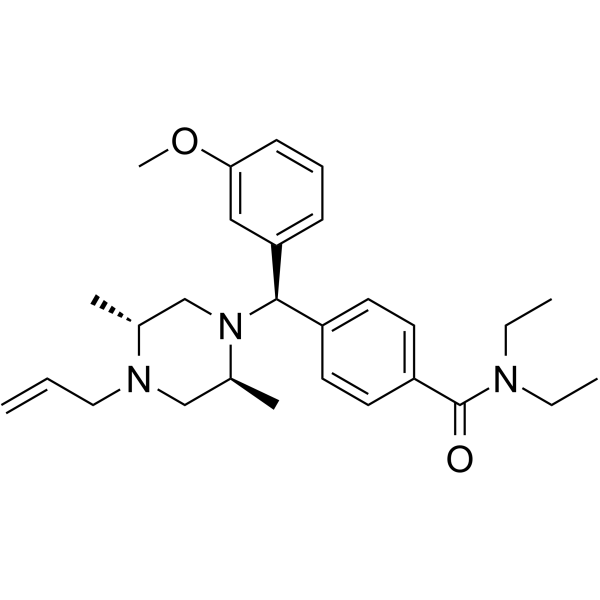 0 ImagesSynonyms: NIH 10815SNC80 (NIH 10815) is a potent, highly selective and non-peptide δ-opioid receptor agonist with a Ki of 1.78 nM and an IC50 of 2.73 nM. SNC80 also selectively activates μ-δ heteromer in HEK293 cells with an EC50 of 52.8 nM. SNC80 shows antinociceptive, antihyperalgesic and antidepressant‐like effects. SNC80 has the potential for multiple headache disorders treatment.
-
β-Endorphin, human
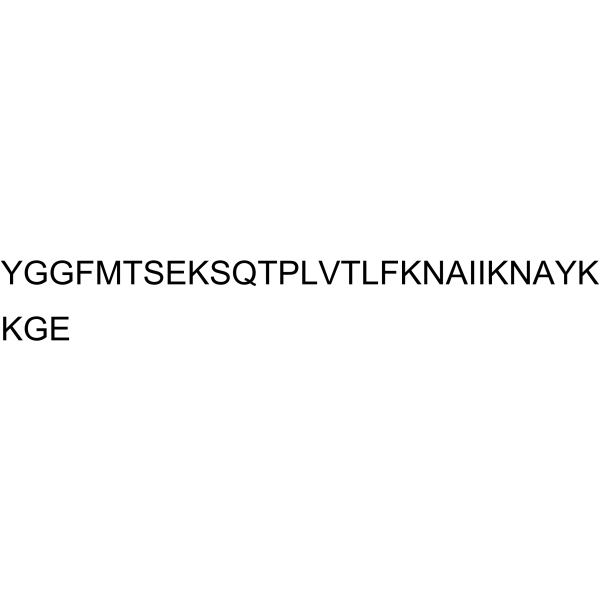 0 Imagesβ-Endorphin, human, a prominent endogenous peptide, existing in the hypophysis cerebri and hypothalamus, is an agonist of opioid receptor, with preferred affinity for μ-opioid receptor and δ-opioid receptor; β-Endorphin, human exhibits antinociception activity.
-
DPDPE
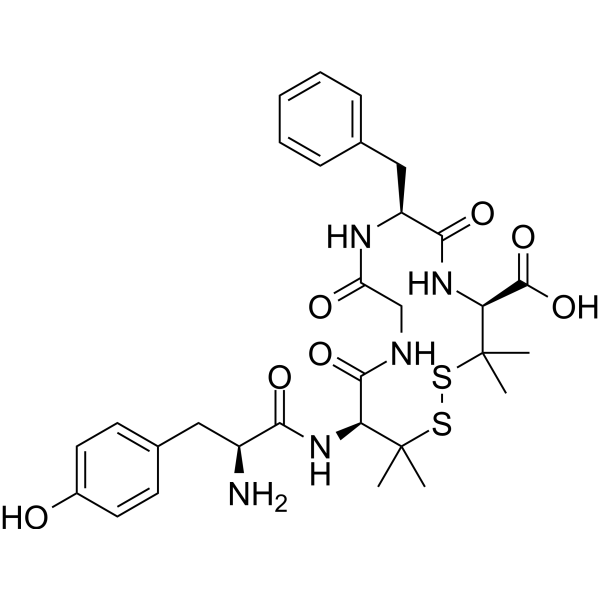 0 ImagesDPDPE, an opioid peptide, is a selective δ-opioid receptor?(DOR) agonist?with anticonvulsant effects.
-
Navacaprant
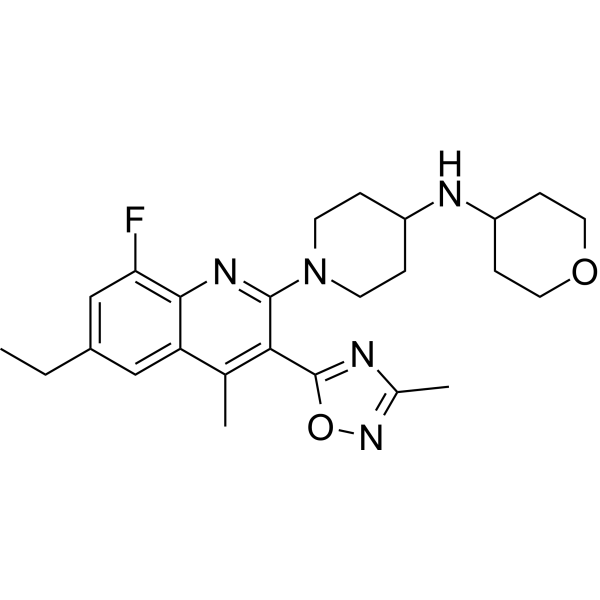 0 ImagesSynonyms: BTRX-335140; CYM-53093Navacaprant (BTRX-335140) is a selective and orally active κ opioid receptor (KOR) antagonist, has antagonist activity for κOR, μOR and δOR with IC50 values of 0.8 nM, 110 nM, and 6500 nM, respectively. Navacaprant endows with favorable in vitro ADMET and in vivo pharmacokinetic profiles and medication-like duration of action in rats. Navacaprant distributes well into the CNS and can be used for the research of neuropathy.
-
Sialorphin TFA
 0 ImagesCat. No.: HY-P11642ASialorphin TFA is a neutral endopeptidase (NEP) and aminopeptidase N (APN) inhibitor that responds to androgen signals. Sialorphin TFA blocks the degradation of endogenous opioid peptides and interacts with μ-, δ-, κ-opioid receptors. Sialorphin TFA regulates the ERK/mTOR signaling pathway by inducing cell cycle arrest, enhancing ERK1/2 activity, and reducing the phosphorylation levels of mTOR, 4E-BP1, p70S6K; accordingly, Sialorphin TFA exhibits antiproliferative activity against colorectal cancer, glioma and prostate cancer cells without cytotoxicity. In addition, Sialorphin TFA also produces antinociceptive responses, regulates sexual behavior, relaxes corpus cavernosum smooth muscle, and alleviates experimental colitis. Sialorphin TFA is also a copper (II) ion-binding ligand. Sialorphin TFA has been used in mechanistic studies related to cancer, pain management and inflammatory bowel disease.
-
Cyclazocine
 0 ImagesCyclazocine is a μ, δ, and κ opioid receptor modulator with Ki values of 0.32, 1.1, and 0.18 nM, respectively. Cyclazocine exhibits "mixed" pharmacological activities, acting as a μ-partial antagonist, κ-agonist, and low-affinity δ ligand. Cyclazocine shows antinociceptive activity in mice. Cyclazocine can be used in studies on psychoactive substance addiction.
-
KOR agonist-9
 0 ImagesCat. No.: HY-183773KOR agonist-9 is a selective kappa opioid receptor (KOR) agonist with an EC50 of 1.41 nM. KOR agonist-9 exhibits >125-fold selectivity over μ/δ-opioid receptors. KOR agonist-9 antinociceptive and antipruritic effects in mice. KOR agonist-9 can be used for the research of pain, pruritus.
-
ADL-5859 hydrochloride
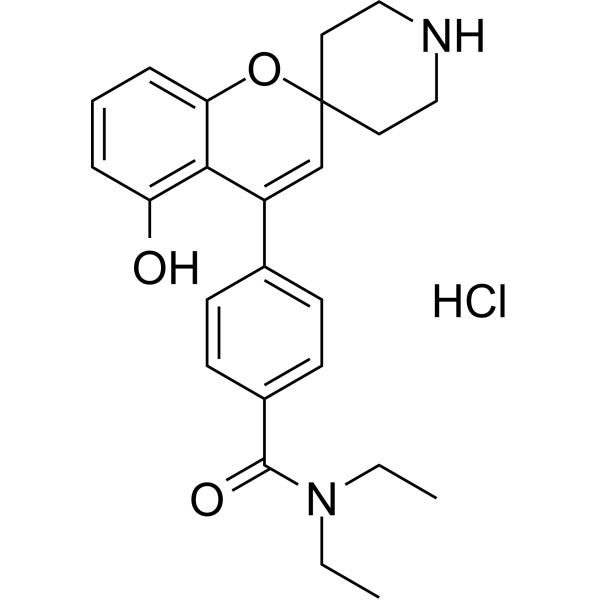 0 ImagesADL-5859 hydrochloride (compound 20) is a selective and orally active δ opioid receptor (DOR) agonist with an Ki and an EC50 value of 0.84 and 20 nM, respectively. ADL-5859 hydrochloride also shows inhibitory activity to hERG channel with an IC50 value of 78 μM. ADL-5859 hydrochloride can be used for the research of pain.
-
[Met5]-Enkephalin, amide TFA
![[Met5]-Enkephalin, amide TFA](https://file.medchemexpress.com/product_pic/hy-p1467a.gif "Click to View [Met5]-Enkephalin, amide TFA Product Detail") 0 ImagesSynonyms: 5-Methionine-enkephalin amide TFA[Met5]-Enkephalin, amide TFA is an agonist for δ opioid receptors as well as putative ζ (zeta) opioid receptors.
0 ImagesSynonyms: 5-Methionine-enkephalin amide TFA[Met5]-Enkephalin, amide TFA is an agonist for δ opioid receptors as well as putative ζ (zeta) opioid receptors.
-
CTAP TFA
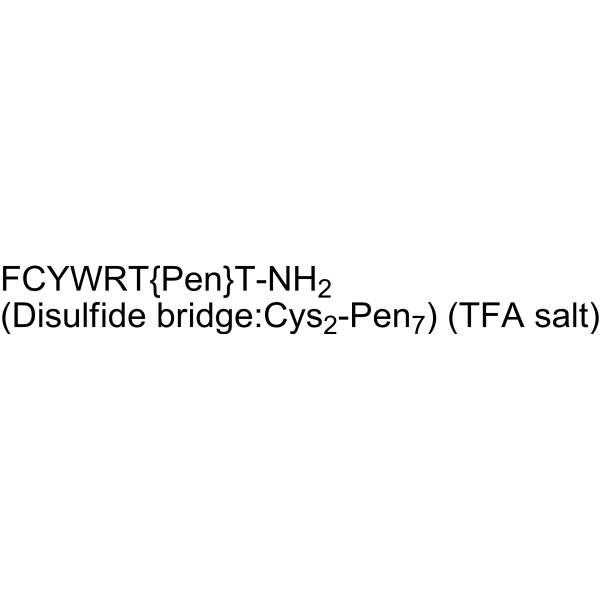 0 ImagesCat. No.: HY-P1335APurity: 99.91%CTAP TFA is a potent, highly selective, and BBB penetrant μ opioid receptor antagonist, with an IC50 of 3.5 nM. CTAP TFA displays over 1200-fold selectivity over δ opioid (IC50=4500 nM) and somatostatin receptors. CTAP TFA can be used for the study of L-DOPA-induced dyskinesia (LID) and opiate overdose or addiction.
-
N-Desmethylclozapine
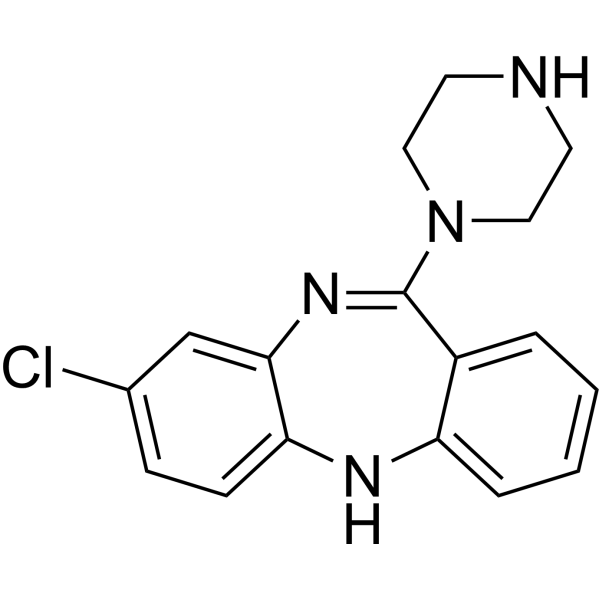 0 ImagesSynonyms: Norclozapine; Desmethylclozapine; NormethylclozapineN-Desmethylclozapine is a major active metabolite of the atypical antipsychotic agent Clozapine. N-Desmethylclozapine is a potent, allosteric and partial M1 receptors agonist (EC50=115 nM) and is able to potentiate hippocampal N-methyl-d-aspartate (NMDA) receptor currents through M1 receptor activation. N-Desmethylclozapine is also a δ-opioid agonist.
-
Deltorphin I
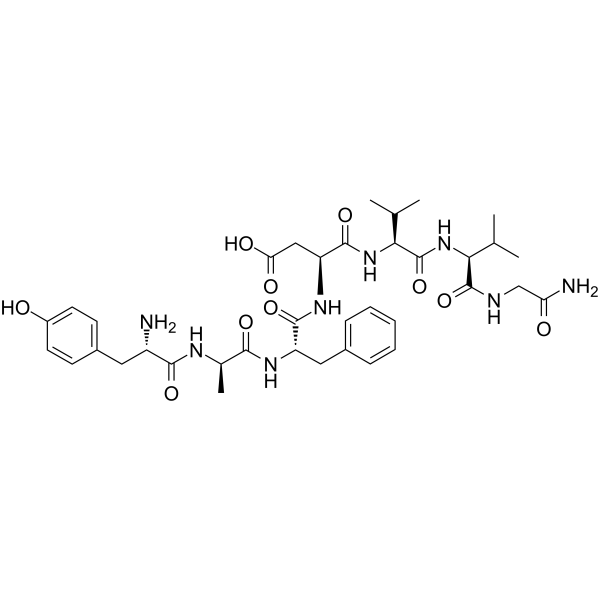 0 ImagesCat. No.: HY-P1336CAS No.: 122752-15-2Synonyms: Deltorphin 1; Deltorphin C; [D-Ala2] Deltorphin IDeltorphin I is a δ-opioid receptor agonist with high affinity and selectivity.
-
Deltorphin 2 TFA
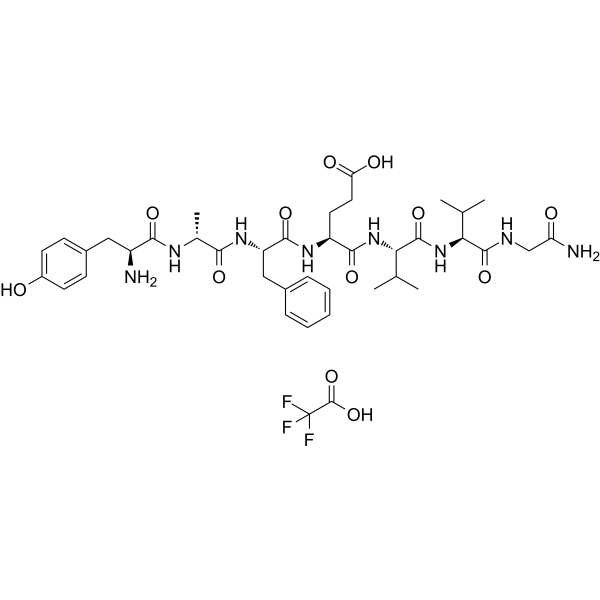 0 ImagesCat. No.: HY-P1013APurity: 98.95%Synonyms: [D-Ala2]-Deltorphin II TFADeltorphin 2 TFA is a selective peptide agonist for the δ opioid receptor.
-
SNC162
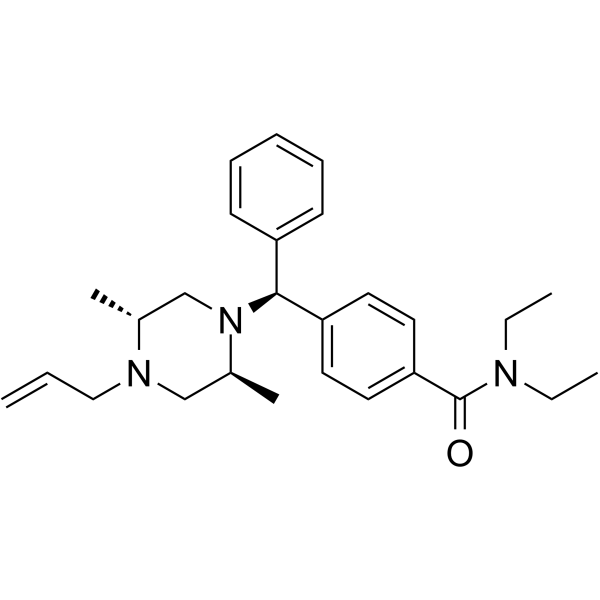 0 ImagesSNC162 is a delta-opioid receptor agonist with an IC50 of 0.94 nM. SNC162 has antidepressant-like and antinociceptiv effects.
-
CTAP
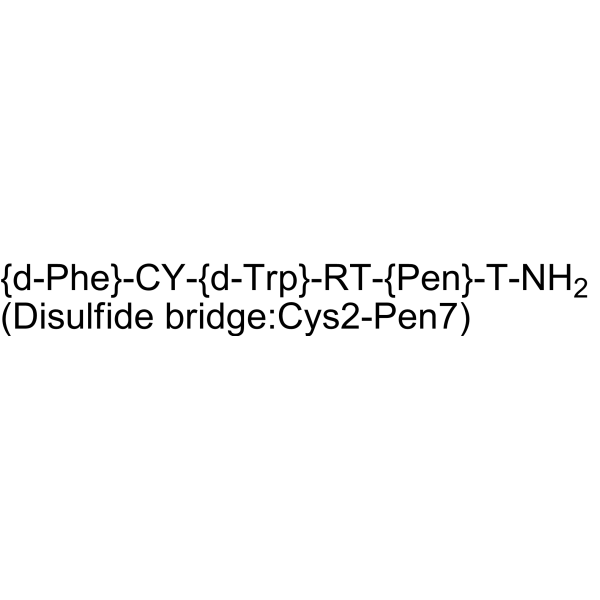 0 ImagesCTAP is a potent, highly selective, and BBB penetrant μ opioid receptor antagonist, with an IC50 of 3.5 nM. CTAP displays over 1200-fold selectivity over δ opioid (IC50=4500 nM) and somatostatin receptors. CTAP can be used for the study of L-DOPA-induced dyskinesia (LID) and opiate overdose or addiction.
-
TAN-452
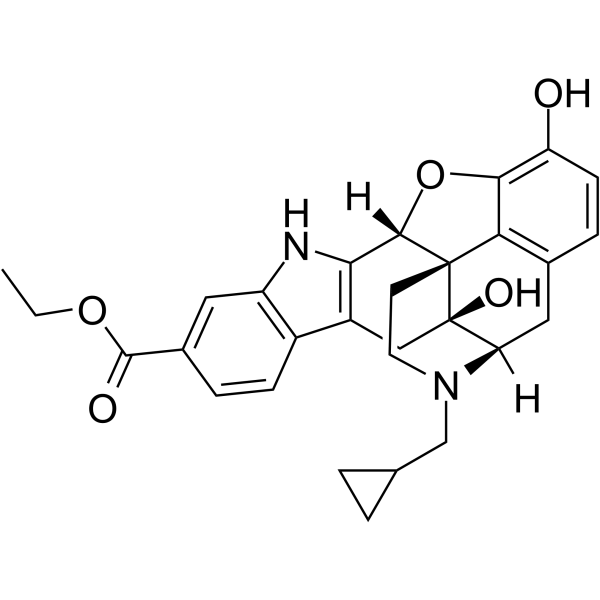 0 ImagesTAN-452 is an orally active, selective peripherally acting δ-opioid receptor (DOR) antagonist with a Ki of 0.47 nM and a Kb of 0.21 nM. TAN-452 is an antagonist for μ-opioid receptor (MOR; Ki=36.56 nM and Kb=9.43 nM) and κ-opioid receptor (KOR; Ki=5.31 nM and Kb=7.18 nM). TAN-452, a derivative of Naltrindole, demonstrates low brain penetrability and attenuates morphine-induced side effects without affecting pain control.
-
BMS-986187
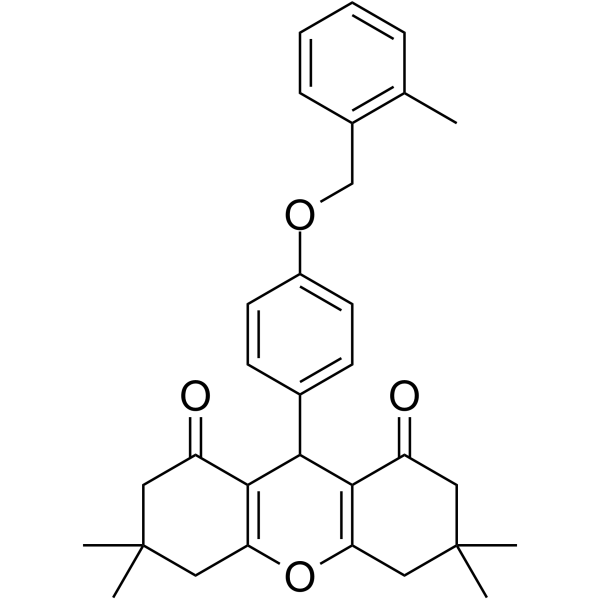 0 ImagesBMS-986187 is an δ-opioid receptor-selective positive allosteric modulator (PAM) with an EC50 of 0.03 μM and a pKB of 6.02 (~1 μM). BMS-986187 has no observable PAM activity at the μ-receptor (EC50=3 μM).
-
J-113397
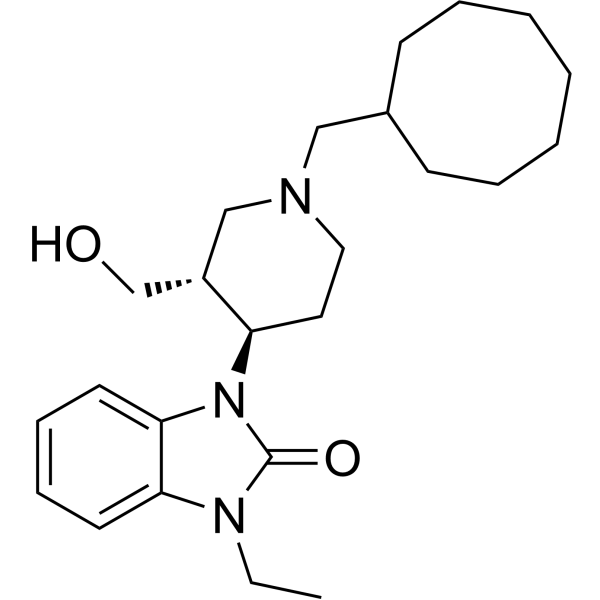 0 ImagesJ-113397 is the first potent and selective nonpeptidyl ORL1 receptor antagonist (Ki: cloned human ORL1=1.8 nM) without any agonistic effects on other opioid receptors.
-
ICI 174864
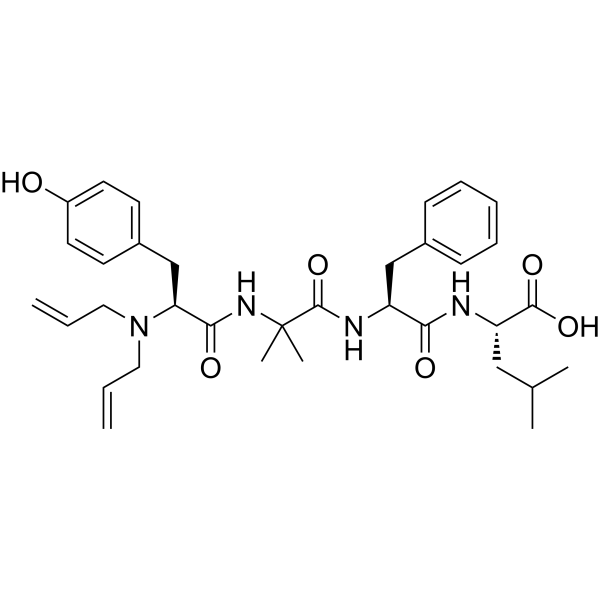 0 ImagesICI 174864 is a selective and brain-penetrant δ-opioid receptor antagonist with Ke values of 22.0 nM to 30.6 nM at δ-opioid receptor in mouse vas deferens. ICI 174864 selectively blocks biological effects mediated by the δ-opioid receptor agonist DPDPE (HY-P1334) after central administration. ICI 174864 reverses hypotension in rats with endotoxic shock and inhibits acetic acid-induced writhing in mice. ICI 174864 can be used for the research of opioid receptor subtypes, endotoxic hypotension and analgesic pathways.



