1. Search Result
Search Result
Results for "

Raynaud's phenomenon

" in MedChemExpress (MCE) Product Catalog:

15

Inhibitors & Agonists

1

Screening Libraries

6

Fluorescent Dyes

Cat. No. Product Name Target Research Areas Chemical Structure
  • HY-D0938
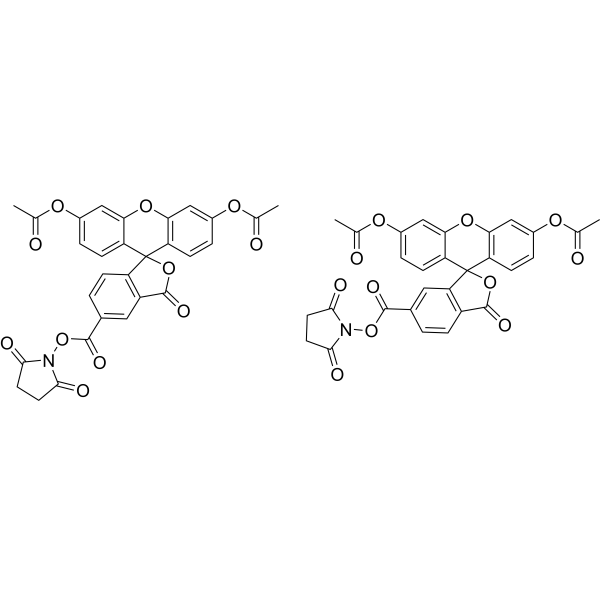
    CFDA-SE
    105+ Cited Publications

    CFSE; 5(6)-Carboxyfluorescein diacetate succinimidyl ester; 5(6)-CFDA N-succinmidyl ester

    Fluorescent Dye Others
    CFDA-SE is a fluorescent dye that can penetrate the cell membrane. It can react with the free amine group in the cytoskeleton protein inside the cell, and finally form a protein complex with fluorescence. After entering the cell, CFDA-SE locates in the cell membrane, cytoplasm and nucleus, and the fluorescence staining is strongest in the nucleus . CFDA-SE dye can be uniformly inherited by the cells with cell division and proliferation, and its attenuation is proportional to the number of cell divisions. This phenomenon can be detected and analyzed by flow cytometry under the excitation light of 488 nm, and can be used to detect the proliferation of cells .
    CFDA-SE
  • HY-126793

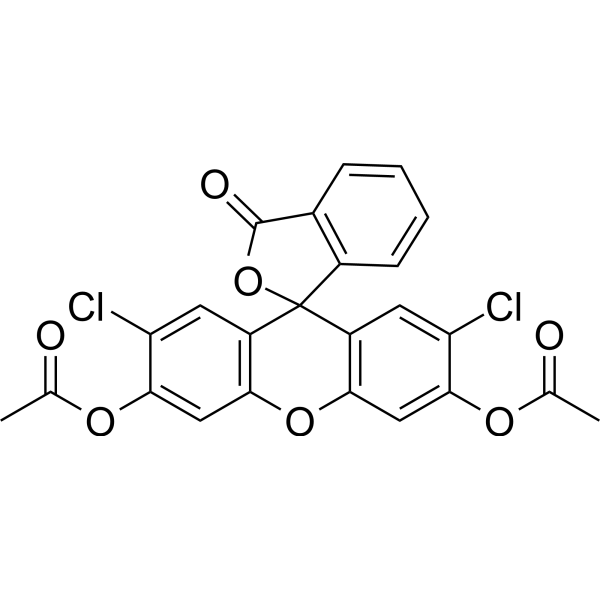
    DCFH2-DA

    Fluorescent Dye Reactive Oxygen Species (ROS) Others
    2′,7′-Dichlorofluorescein diacetate (DCFH2-DA) is a cell-permeable fluorescent probe. 2′,7′-Dichlorofluorescein diacetate can be used to detect the generation of reactive oxygen intermediates and for assessing the overall oxidative stress in toxicological phenomenon .
    2′,7′-Dichlorofluorescein diacetate
  • HY-123538

    Dopamine Receptor G Protein-coupled Receptor Kinase (GRK) Cardiovascular Disease
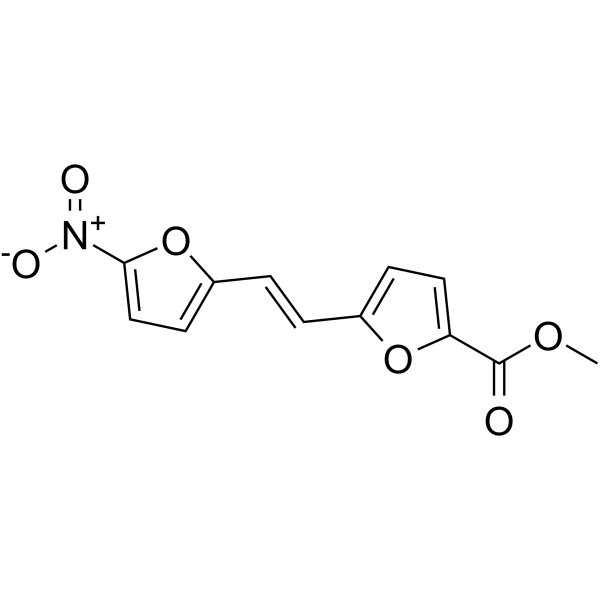
    GRK2 Inhibitor 1 (methyl 5-[2-(5-nitro-2-furyl)vinyl]-2-furoate) is a dual GRK2/β-ARK1 inhibitor that induces dopamine (DA) inhibition reversal (DIR). GRK2 Inhibitor 1 can also block serotonin-induced or neurotensin-induced DIR reversal. Note: DIR refers to the phenomenon in which neurons in addiction-related brain pathways become less sensitive to DA inhibition when exposed to moderate concentrations of DA for a long time .
    GRK2 Inhibitor 1
  • HY-B1170

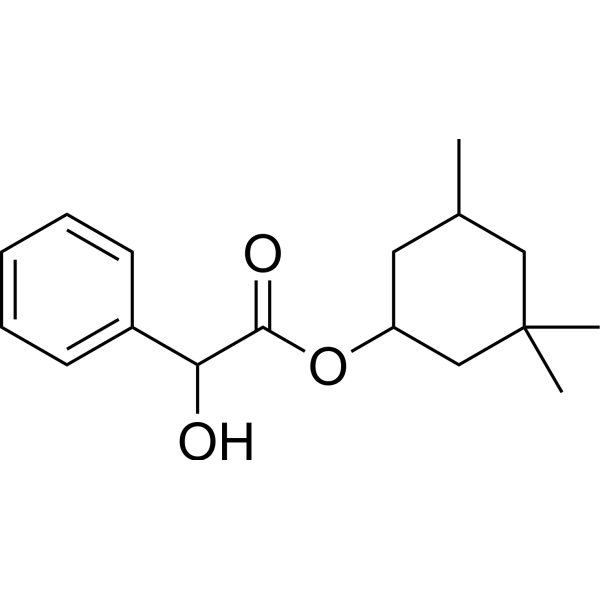
    3,5,5-Trimethylcyclohexyl mandelate

    Calcium Channel Cardiovascular Disease
    Cyclandelate is a vasodilator that can be used in the study of claudication, arteriosclerosis, Raynaud's disease, nocturnal leg cramps, and migraines.
    Cyclandelate
  • HY-DY1009

    Fluorescent Dye Others
    CFDA-SE (solution) is a fluorescent dye that can penetrate the cell membrane. It can react with the free amine group in the cytoskeleton protein inside the cell, and finally form a protein complex with fluorescence. After entering the cell, CFDA-SE locates in the cell membrane, cytoplasm and nucleus, and the fluorescence staining is strongest in the nucleus . CFDA-SE dye can be uniformly inherited by the cells with cell division and proliferation, and its attenuation is proportional to the number of cell divisions. This phenomenon can be detected and analyzed by flow cytometry under the excitation light of 488 nm, and can be used to detect the proliferation of cells .
    Solvent and concentration: DMSO: 5 mM
    CFDA-SE (solution)
  • HY-121660

    Drug Derivative Cardiovascular Disease
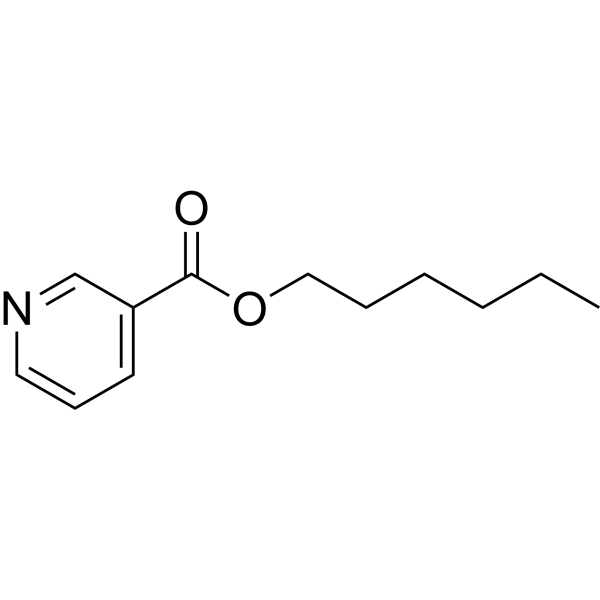
    Hexyl nicotinate is a lipid-soluble nicotinic acid ester and cutaneous vasodilator. Hexyl nicotinate induces localized cutaneous vasodilation and increases blood flow. Hexyl nicotinate can be used for the research of Raynaud's phenomenon .
    Hexyl nicotinate
  • HY-160610A

    Drug Derivative Others
    Carbamoyl phosphate dilithium salt is an antisickling agent and plays a significant role in the urea cycle. Carbamoyl phosphate dilithium salt carbamylates the amino-terminal valine residues of hemoglobin S in erythrocytes, which interferes with the sickling phenomenon. Carbamoyl phosphate dilithium salt exhibits toxicity due to the lithium cation .
    Carbamoyl phosphate dilithium salt
  • HY-W856375A

    Fluorescent Dye Others
    BSPOTPE is the mixture of (E)-BSPOTPE (HY-W856375) and (Z)-BSPOTPE. BSPOTPE binds Human serum albumin (HSA) (HY-P1956), exhibits aggregation-induced emission (AIE) phenomenon. BSPOTPE shows selectivity for albumin (such as HSA and BSA), but has no obvious fluorescence response to other proteins and DNA. BSPOTPE can be used as fluorescent probe for HSA .
    BSPOTPE
  • HY-DY1058

    Fluorescent Dye Reactive Oxygen Species (ROS) Others
    2′,7′-Dichlorofluorescein diacetate (DCFH2-DA) (solution) is a cell-permeable fluorescent probe. 2′,7′-Dichlorofluorescein diacetate can be used to detect the generation of reactive oxygen intermediates and for assessing the overall oxidative stress in toxicological phenomenon .
    Solvent and concentration: DMSO: 10 mM
    The 1 mL volume is defined as the base specification. All larger sizes correspond to incremental volumes of this base.
    2′,7′-Dichlorofluorescein diacetate (solution)
  • HY-100952

    Adrenergic Receptor Cardiovascular Disease
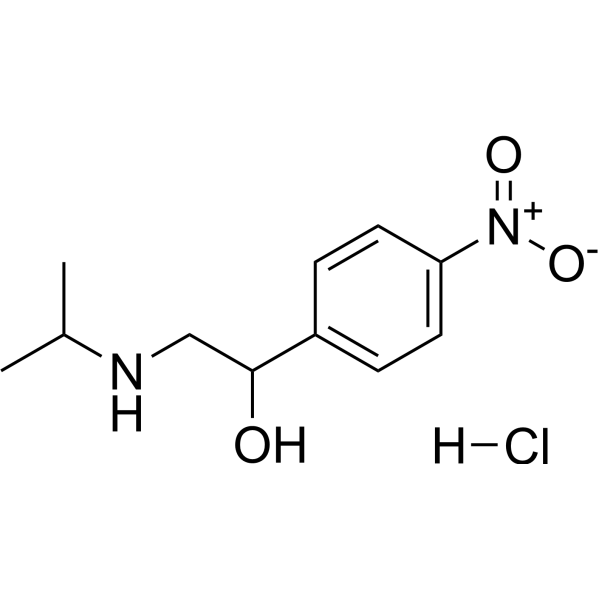
    Nifenalol hydrochloride is a β-adrenergic receptor antagonist. Nifenalol hydrochloride induces the Early Afterdepolarization (EAD) effect. EAD is a phenomenon in cardiac electrophysiology that usually occurs during an action potential in ventricular muscle cells and can lead to arrhythmia. The EAD effect of Nifenalol hydrochloride can be blocked by Tetrodotoxin. Nifenalol hydrochloride is used in the study of conditions such as irregular heartbeat or high blood pressure .
    Nifenalol hydrochloride
  • HY-W856375

    MOFs Fluorescent Dye Others
    (E)-BSPOTPE is the E configuration of BSPOTPE (HY-W856375A). BSPOTPE binds Human serum albumin (HSA) (HY-P1956), exhibits aggregation-induced emission (AIE) phenomenon. BSPOTPE shows selectivity for albumin (such as HSA and BSA), but has no obvious fluorescence response to other proteins and DNA. BSPOTPE can be used as fluorescent probe for HSA .
    (E)-BSPOTPE
  • HY-B0204B

    (-)-UD-CG115

    Phosphodiesterase (PDE) Cardiovascular Disease
    (-)-Pimobedan is an isomer of pimobedan. It has the property of stereoselective partitioning or distribution into erythrocytes. The clearance of (-)-pimobedan from erythrocytes is significantly lower than that of (+)-pimobedan, which is entirely due to its stereoselective distribution into erythrocytes. This stereoselective property of (-)-pimobedan may explain the phenomenon previously reported that it produces a 1.5-fold greater contractile force than the (+)-isomer in detergent-treated myocardial specimens of guinea pigs and dogs. These properties suggest that (-)-pimobedan may have unique advantages in terms of in vivo distribution and pharmacological action, which may have important implications for its clinical use.
    (-)-Pimobendan
  • HY-106067

    UK 37248 free base

    Prostaglandin Receptor
    Dazoxiben is a potent and orally active thromboxane synthetase inhibitor. Dazoxiben has the potential for the research of Raynaud's syndrome .
    Dazoxiben
  • HY-15042

    Bradykinin Receptor Metabolic Disease
    MK 0686, a potent bradykinin B1 receptor antagonist, demonstrates autoinduction of metabolism in rhesus monkeys after oral administration. It undergoes significant biotransformation primarily via oxidation pathways, leading to the formation of metabolites like M11 and M13 in rhesus liver microsomes. This metabolic induction is mediated by CYP2C75, as evidenced by increased mRNA expression, protein levels, and catalytic activity of this enzyme in hepatocytes and liver microsomes from MK 0686-treated animals. The autoinduction phenomenon suggests that MK 0686 enhances its own metabolism by upregulating CYP2C75, potentially influencing its systemic exposure and pharmacokinetics over time .
    MK 0686
  • HY-100113A

    AT2 receptor agonist C21 hydrochloride

    Angiotensin Receptor p38 MAPK TGF-β Receptor TGF-beta/Smad MMP Cardiovascular Disease Neurological Disease Inflammation/Immunology
    Buloxibutid (AT2 receptor agonist C21) hydrochloride is an orally active, selective angiotensin II type 2 receptor (AT2R) agonist, with a Ki value of 0.4 nM for porcine AT2R. Buloxibutid hydrochloride exerts vasodilatory, anti-inflammatory, antifibrotic (promoting the expression of collagenase MMP-13) and tissue repair effects mainly by activating the NO/cGMP pathway, inhibiting the pro-proliferative MAPK signaling, and suppressing the pro-fibrotic TGF-β/Smad pathway and inflammatory NF-κB pathway. Buloxibutid hydrochloride can be used in research related to idiopathic pulmonary fibrosis, hypertension, systemic sclerosis and other conditions .
    Buloxibutid hydrochloride

Inquiry Online

Your information is safe with us. * Required Fields.

Salutation


Country or Region *

Applicant Name *


Organization Name *

Department *


Email Address *


Product Name *

Cat. No.


Requested quantity *

Phone Number *


Remarks

Inquiry Online

Inquiry Information

Product Name:
Cat. No.:
Quantity:
MCE Japan Authorized Agent:

