



MK 0686

Based on 1 Customer Validation
MK 0686, a potent bradykinin B1 receptor antagonist, demonstrates autoinduction of metabolism in rhesus monkeys after oral administration. It undergoes significant biotransformation primarily via oxidation pathways, leading to the formation of metabolites like M11 and M13 in rhesus liver microsomes. This metabolic induction is mediated by CYP2C75, as evidenced by increased mRNA expression, protein levels, and catalytic activity of this enzyme in hepatocytes and liver microsomes from MK 0686-treated animals. The autoinduction phenomenon suggests that MK 0686 enhances its own metabolism by upregulating CYP2C75, potentially influencing its systemic exposure and pharmacokinetics over time.
For research use only. We do not sell to patients.
- Purity : 99.76%
- CAS No.: 578727-68-1
- Formula: C22H19ClF4N2O4
- Molecular Weight:486.84
-
Storage:Powder -20°C, 3 years , 4°C, 2 years ; In solvent -80°C, 6 months , -20°C, 1 month


To place orders, for customer services and technical support, please contact: MedChemExpress USA
Tel: 609-228-6898 E-mail: [email protected] [email protected]


-
 Biological Activity
-
Chemical Information
-
Solvent & Solubility
- Protocols
- Purity & Documentation
- References
-
 Help & FAQs


-
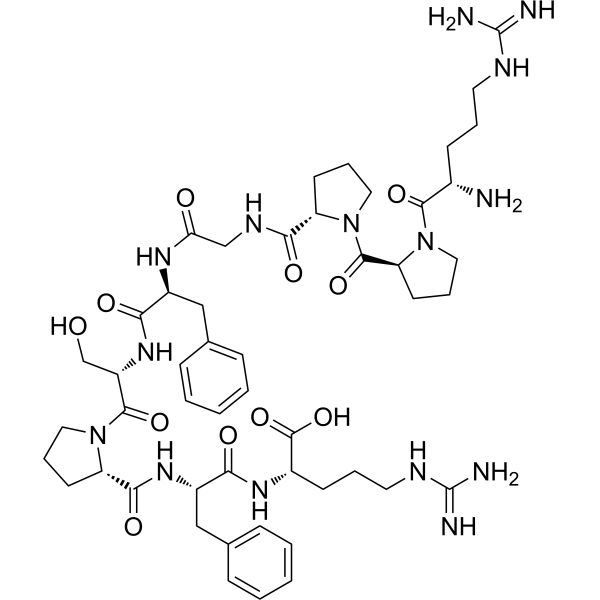
HY-P0206
BradykininBradykinin Receptor Modulator -
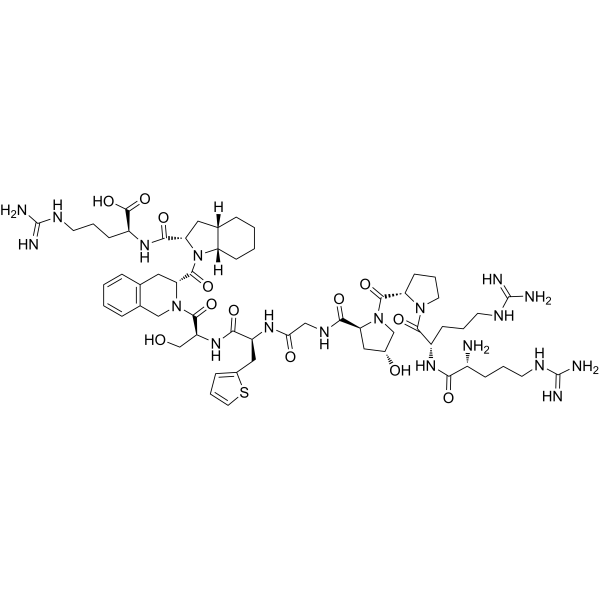
HY-17446
IcatibantBradykinin Receptor Antagonist -
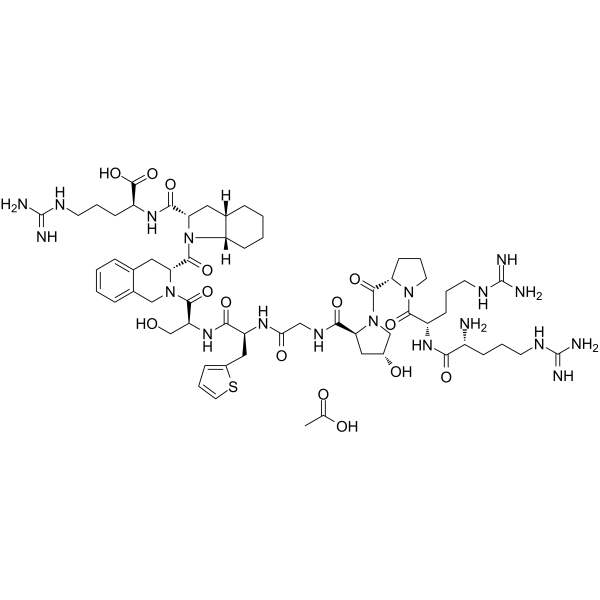
HY-108896
Icatibant acetateBradykinin B2 Antagonist -
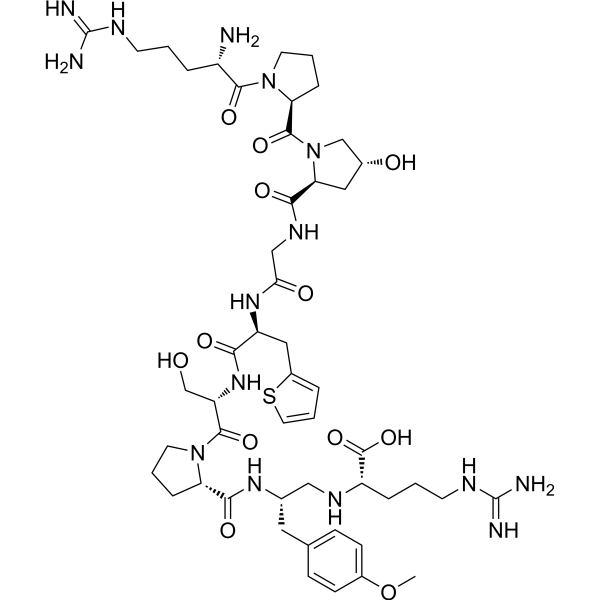
HY-105155
LobradimilBradykinin B2 Receptor Agonist -
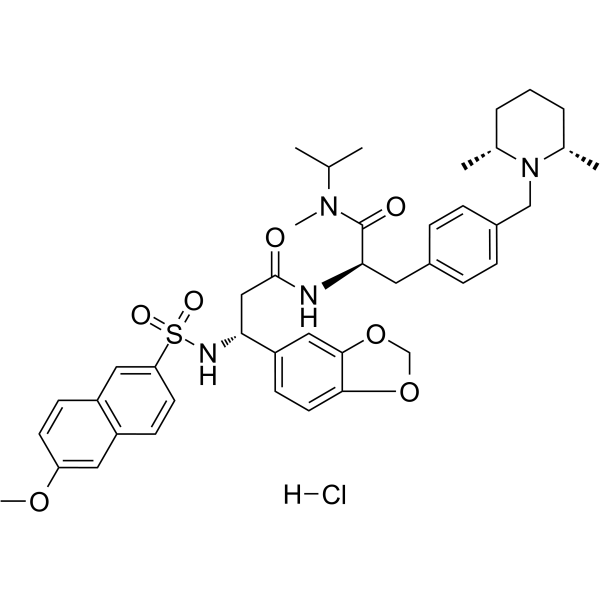
HY-15039
SSR240612 -
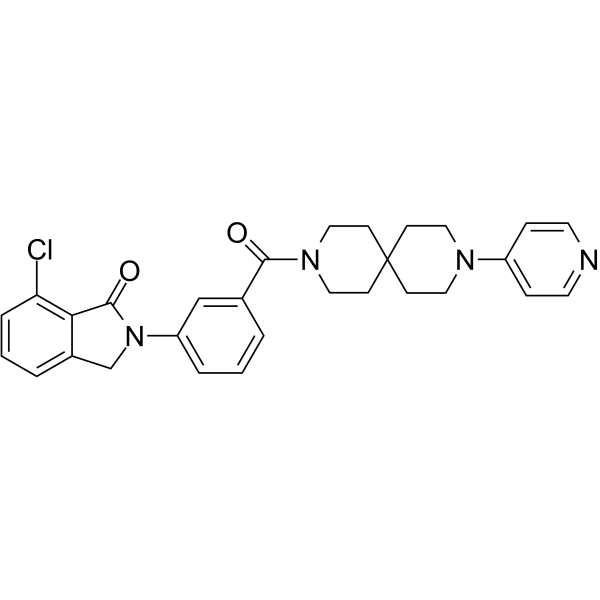
HY-15043
ELN-441958Bradykinin B1 Receptor Antagonist -
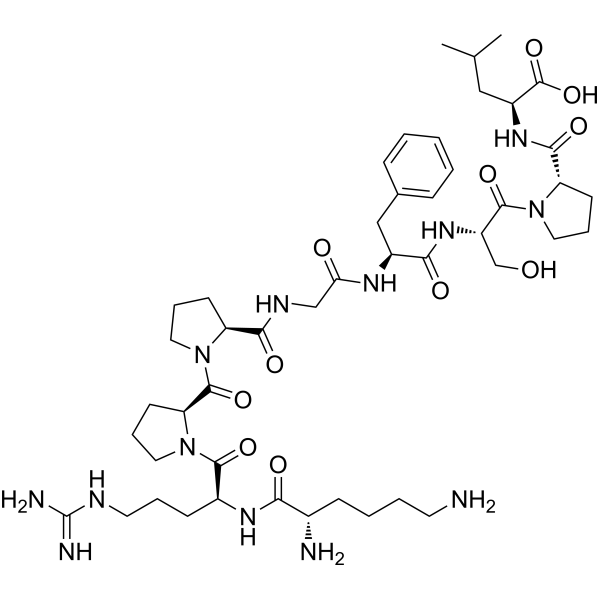
HY-P4676
Lys-(Des-Arg9,Leu8)-BradykininBradykinin Receptor Antagonist -

HY-100827
SafotibantBKB1R Antagonist -
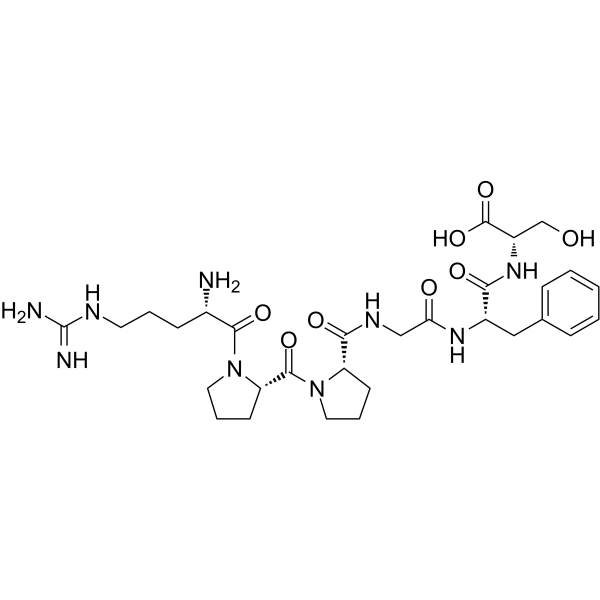
HY-P1469
Bradykinin (1-6)Bradykinin Receptor Modulator -
![Sar-[D-Phe8]-des-Arg9-Bradykinin](https://file.medchemexpress.com/product_pic/hy-103291.gif)
HY-103291
Sar-[D-Phe8]-des-Arg9-BradykininB1 Receptor Agonist -
![[Hyp3]-Bradykinin](https://file.medchemexpress.com/product_pic/hy-p3061.gif)
HY-P3061
[Hyp3]-BradykininBradykinin Receptor Agonist -

HY-P0206A
Bradykinin acetateBradykinin Recepto
All Bradykinin Receptor Isoforms
More

Biological Activity
Description
Cellular Effect
|
Cell Line

|
Type | Value | Description | References |
|---|---|---|---|---|
| CHO | IC50 |
1.52 nM
Compound: 13b
|
Activity at human bradykinin B1 receptor assessed as inhibition of Des-arg kallidin-induced increase of cytosolic calcium in CHO cells by FLIPR
Activity at human bradykinin B1 receptor assessed as inhibition of Des-arg kallidin-induced increase of cytosolic calcium in CHO cells by FLIPR
|
[PMID: 17228869] |


Chemical Information
-
CAS No. 578727-68-1
-
Appearance Solid
-
Molecular Weight 486.84
-
Formula C22H19ClF4N2O4
-
Color White to off-white
-
SMILES
O=C(C(F)(F)F)NC1(C(N[C@H](C)C2=C(F)C=C(C3=CC=CC(Cl)=C3C(OC)=O)C=C2)=O)CC1
-
Shipping
Room temperature in continental US; may vary elsewhere.
-
Storage
Powder -20°C 3 years 4°C 2 years In solvent -80°C 6 months -20°C 1 month


Solvent & Solubility
In Vitro:
DMSO : 100 mg/mL (205.41 mM; Need ultrasonic; Hygroscopic DMSO has a significant impact on the solubility of product, please use newly opened DMSO)
Please refer to the solubility information to select the appropriate solvent. Once prepared, please aliquot and store the solution to prevent product inactivation from repeated freeze-thaw cycles.
Storage method and period of stock solution: -80°C, 6 months; -20°C, 1 month. When stored at -80°C, please use it within 6 months. When stored at -20°C, please use it within 1 month.
Please refer to the solubility information to select the appropriate solvent. Once prepared, please aliquot and store the solution to prevent product inactivation from repeated freeze-thaw cycles.
Storage method and period of stock solution: -80°C, 6 months; -20°C, 1 month. When stored at -80°C, please use it within 6 months. When stored at -20°C, please use it within 1 month.
Concentration (start) × Volume (start) = Concentration (final) × Volume (final)
In Vivo:
Select the appropriate dissolution method based on your experimental animal and administration route.
- For the following dissolution methods, please ensure to first prepare a clear stock solution using an In Vitro approach and then sequentially add co-solvents:
- To ensure reliable experimental results, the clarified stock solution can be appropriately stored based on storage conditions. As for the working solution for In Vivo experiments, it is recommended to prepare freshly and use it on the same day.
- The percentages shown for the solvents indicate their volumetric ratio in the final prepared solution. If precipitation or phase separation occurs during preparation, heat and/or sonication can be used to aid dissolution.
In Vivo Dissolution Calculator
Please enter the basic information of animal experiments:
-
-
-
-
Recommended: Prepare an additional quantity of animals to account for potential losses during experiments.
Please enter your animal formula composition:
-
%DMSO +
Recommended: Keep the proportion of DMSO in working solution below 2% if your animal is weak.
-
%+
-
+%Tween-80 + +
-
%Saline +
The co-solvents required include: DMSO, . All of co-solvents are available by MedChemExpress (MCE). , Tween 80. All of co-solvents are available by MedChemExpress (MCE).
Working solution concentration: 0.22 mg/mL
Method for preparing stock solution: mg drug dissolved in μL DMSO. Stock solution concentration: mg/mL.
1. Take μL DMSO stock solution;
2. Add μL .
μL , mix evenly;
3. Then add μL Tween 80, mix evenly;
4. Then add μL
Please ensure that the stock solution in the first step is dissolved to a clear state, and add co-solvents in sequence. You can use ultrasonic heating (ultrasonic cleaner, recommended frequency 20-40 kHz), vortexing, etc. to assist dissolution.


Purity & Documentation
-
Data Sheet (275 KB)
-
SDS (251 KB)
- English - EN (251 KB)
- Français - FR (251 KB)
- Deutsch - DE (251 KB)
- Norwegian - NO (251 KB)
- Español - ES (251 KB)
- Swedish - SV (251 KB)
- Italian - IT (251 KB)
- Korean - KR (251 KB)
- Portuguese - PT (251 KB)
-
Handling Instructions (2659 KB)
References


Complete Stock Solution Preparation Table
Please refer to the solubility information to select the appropriate solvent. Once prepared, please aliquot and store the solution to prevent product inactivation from repeated freeze-thaw cycles.
Storage method and period of stock solution: -80°C, 6 months; -20°C, 1 month. When stored at -80°C, please use it within 6 months. When stored at -20°C, please use it within 1 month.
| Optional Solvent | Concentration Solvent Mass | 1 mg | 5 mg | 10 mg | 25 mg |
|---|---|---|---|---|---|
| DMSO | 1 mM | 2.0541 mL | 10.2703 mL | 20.5406 mL | 51.3516 mL |
| 5 mM | 0.4108 mL | 2.0541 mL | 4.1081 mL | 10.2703 mL | |
| 10 mM | 0.2054 mL | 1.0270 mL | 2.0541 mL | 5.1352 mL | |
| 15 mM | 0.1369 mL | 0.6847 mL | 1.3694 mL | 3.4234 mL | |
| 20 mM | 0.1027 mL | 0.5135 mL | 1.0270 mL | 2.5676 mL | |
| 25 mM | 0.0822 mL | 0.4108 mL | 0.8216 mL | 2.0541 mL | |
| 30 mM | 0.0685 mL | 0.3423 mL | 0.6847 mL | 1.7117 mL | |
| 40 mM | 0.0514 mL | 0.2568 mL | 0.5135 mL | 1.2838 mL | |
| 50 mM | 0.0411 mL | 0.2054 mL | 0.4108 mL | 1.0270 mL | |
| 60 mM | 0.0342 mL | 0.1712 mL | 0.3423 mL | 0.8559 mL | |
| 80 mM | 0.0257 mL | 0.1284 mL | 0.2568 mL | 0.6419 mL | |
| 100 mM | 0.0205 mL | 0.1027 mL | 0.2054 mL | 0.5135 mL |


MK 0686 Related Classifications
HY-15042 Related Classifications
 Powered by Bioz