1. Search Result
Search Result
Results for "

Zn(II)

" in MedChemExpress (MCE) Product Catalog:

27

Inhibitors & Agonists

1

Fluorescent Dyes

7

Biochemical Assay Reagents

3

Natural
Products

7

Isotope-Labeled Compounds

Cat. No. Product Name Target Research Areas Chemical Structure
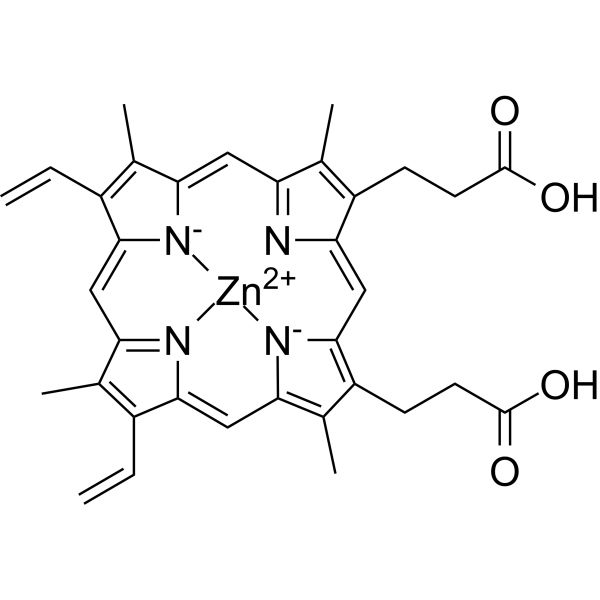
  • HY-101193
    Zinc Protoporphyrin
    65+ Cited Publications

    Zn(II)-protoporphyrin IX; ZnPP; Zinc Protoporphyrin-9

    Reactive Oxygen Species (ROS) Endogenous Metabolite Apoptosis Cardiovascular Disease Metabolic Disease Cancer
    Zinc Protoporphyrin (Zn(II)-protoporphyrin IX) is an orally active and competitive heme oxygenase-1 (HO-1) inhibitor. Zinc Protoporphyrin regulates expression of HO-1 at the transcriptional level. The effect of Zinc Protoporphyrin on HO-1 expression is controversial.  It was shown to induce HO-1 expression in some cells, but suppress it in others. Zinc Protoporphyrin is used as a screening marker of iron deficiency in vivo. Zinc Protoporphyrin has anti-cancer activity .
    Zinc Protoporphyrin
  • HY-W583212

    ZnMP

    Biochemical Assay Reagents Heme Oxygenase (HO) Inflammation/Immunology
    Zn (II) Mesoporphyrin IX (ZnMP) is a heme oxygenase inhibitor with photochemical substrate activity. Zn (II) Mesoporphyrin IX specifically inhibits the activity of bone marrow heme oxygenase. In vitro, Zn (II) Mesoporphyrin IX inhibits the growth of erythroid and myeloid progenitor cells in rabbit bone marrow, and blocks the rhG-CSF-induced mobilization of these progenitor cells into the peripheral blood, exhibiting toxicity to hematopoietic growth and progenitor cell production in rabbits. Zn (II) Mesoporphyrin IX undergoes irreversible photochemical decomposition conforming to first-order kinetic characteristics when irradiated with UV-B in 95% ethanol solution. Zn (II) Mesoporphyrin IX can be used in hematopoietic regulation research, but its photolability and toxic effects on the hematopoietic system require attention .
    Zn(II) Mesoporphyrin IX
  • HY-N2362

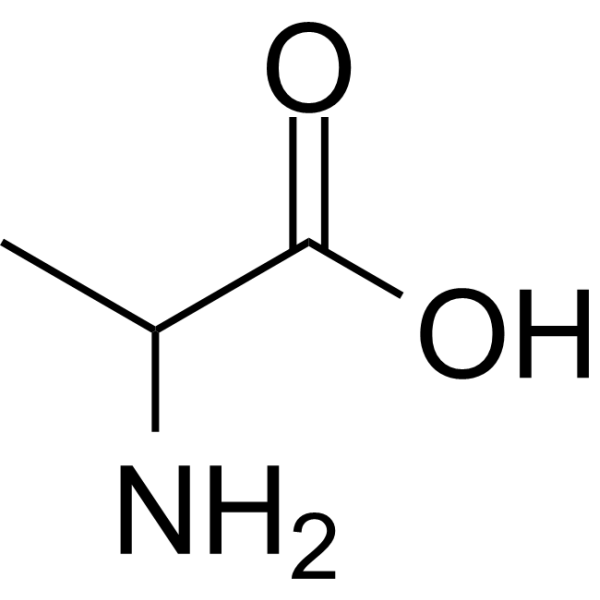
    DL-2-Aminopropionic acid

    Endogenous Metabolite Metabolic Disease
    DL-alanine, an orally active amino acid, is the racemic compound of L- and D-alanine. DL-alanine is employed both as a reducing and a capping agent, used with silver nitrate aqueous solutions for the production of nanoparticles. DL-alanine can be used for the research of transition metals chelation, such as Cu(II), Zn(II), Cd(11). DL-alanine, a sweetener, is classed together with glycine and sodium saccharin. DL-alanine plays a key role in the glucose-alanine cycle between tissues and liver .
    DL-Alanine
  • HY-W127776

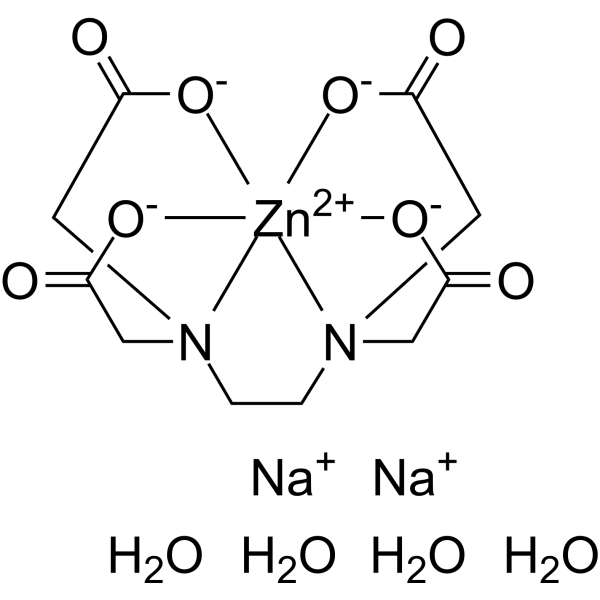
    Ethylenediaminetetraacetic acid zinc disodium tetrahydrate

    Biochemical Assay Reagents Others
    Zn(II)-EDTA (Ethylenediaminetetraacetic acid zinc) disodium tetrahydrate is a coordinating agent. Zn(II)-EDTA disodium tetrahydrate coordinates with Zn 2+ to modify its solvated structure, provides pre-synthesized EDTA-Zn complexes that release Zn 2+ to repair zinc anode defects under interfacial electric field, adsorbs onto zinc anode surface to block oxygen and water molecules, inhibits corrosion and hydrogen evolution reactions, promotes uniform Zn 2+ deposition, suppresses zinc dendrite formation, and modulates the hydrogen bonding network within the electrolyte. Zn(II)-EDTA disodium tetrahydrate acts as an electrolyte additive to enhance reversibility and stability of zinc anodes in aqueous zinc-ion batteries .
    Zn(Ⅱ)-EDTA disodium tetrahydrate
  • HY-D0156

    Fluorescent Dye Others
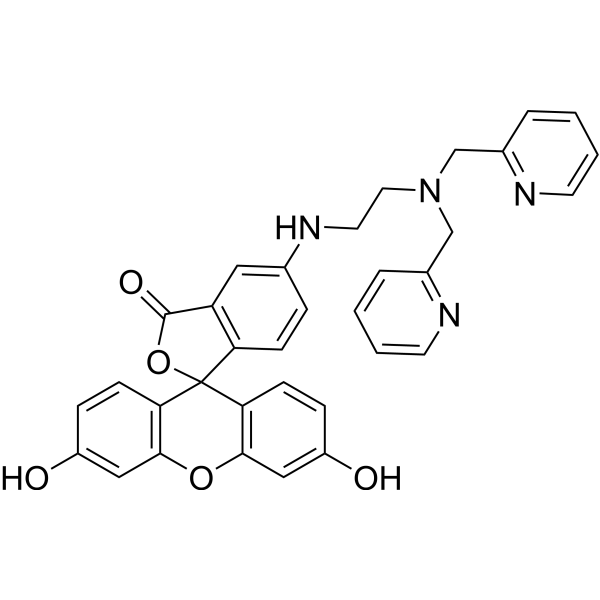
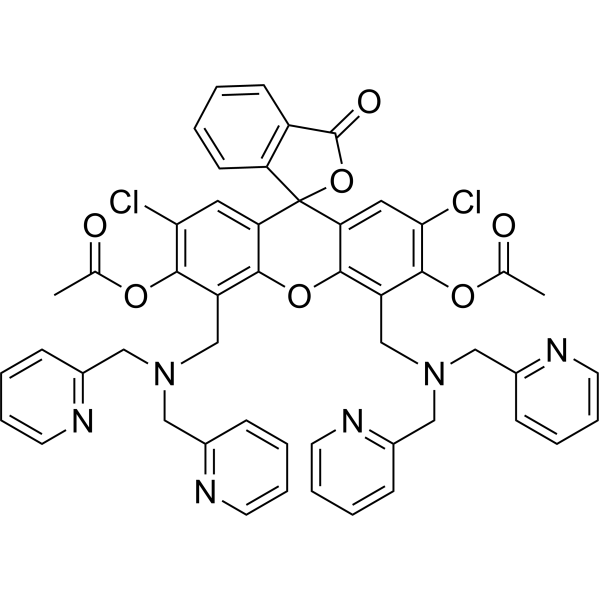
    ZnAF-1, a fluorescein-based zinc sensor containing the N,N-bis(2-pyridylmethyl)ethylenediamine chelating unit, can be used for Zn2+ detection . ZnAF-1 can bind Zn(II) with a 1 : 1 stoichiometry .
    ZnAF-1
  • HY-D0179
    Cyclam
    1 Publications Verification

    Biochemical Assay Reagents Infection Cardiovascular Disease
    Cyclam is a metal chelator that forms metal complexes with a variety of metal ions. Cyclam metal complexes exhibits anti-HIV (such as AMD3100), nitric oxide (NO) releasing and scavenging (such as Zn(II)-Cyclam and Ru(II)-Cyclam), and SOD mimetic (such as Mn(III)-Cyclam and Zn(II)-Cyclam) activities .
    Cyclam
  • HY-W583271

    Vasopressin Receptor Biochemical Assay Reagents Metabolic Disease
    Zn(II) Deuteroporphyrin IX 2,4 bis ethylene glycol is a heme oxygenase (HO) inhibitor, and inhibiting HO activity can reduce the release of hypothalamic hormones like AVP, OT, and ANP caused by hyperosmolarity. Zn(II) Deuteroporphyrin IX 2,4 bis ethylene glycol can be used for research on hyperbilirubinemia .
    Zn(II) Deuteroporphyrin IX 2,4 bis ethylene glycol
  • HY-101193R

    Zn(II)-protoporphyrin IX (Standard); ZnPP (Standard); Zinc Protoporphyrin-9 (Standard)

    Reference Standards Reactive Oxygen Species (ROS) Endogenous Metabolite Apoptosis Cardiovascular Disease Metabolic Disease Cancer
    Zinc Protoporphyrin (Standard) is the analytical standard of Zinc Protoporphyrin. This product is intended for research and analytical applications. Zinc Protoporphyrin (Zn(II)-protoporphyrin IX) is an orally active and competitive heme oxygenase-1 (HO-1) inhibitor and markedly attenuates the protective effects of Phloroglucinol (PG) against H2O2 . Zinc Protoporphyrin is used as a screening marker of iron deficiency in individual pregnant women and children, but also to assess population iron status in combination with haemoglobin concentration . Zinc Protoporphyrin has anti-cancer activity .
    Zinc Protoporphyrin (Standard)
  • HY-W001939

    Biochemical Assay Reagents Cancer
    4-Acetylbenzoic acid is a Zn(II) complex. 4-Acetylbenzoic acid is a derivative of benzoic acid that is commonly used in chemical synthesis. 4-Acetylbenzoic acid has an IC50 of 331.3 μM in murine L929 fibroblasts and an IC50 of 176 μM in metastatic melanoma B16 F10 cell lines .
    4-Acetylbenzoic acid
  • HY-W112937

    MOFs Others
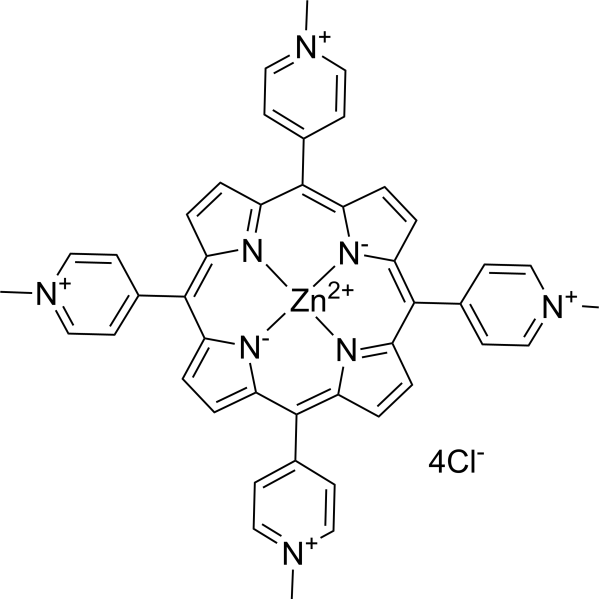
    Zn(II)TMPyP tetrachloride is an ionic MOF linker that serves as a biomaterial or organic/chemical reagent for biomedical research, and also acts as a sulfonylation reagent .
    Zn(II)TMPyP tetrachloride
  • HY-NP144

    Biochemical Assay Reagents Neurological Disease
    Nerve Growth Factor 7S,murine submaxillary gland is a high-molecular-weight α2β2γ2 neurotrophic factor complex isolated from murine submaxillary glands. Nerve Growth Factor 7S,murine submaxillary gland prevents the binding of active β-NGF dimers to neuronal receptors by sequestering the receptor-interacting region of β-NGF within the complex. Nerve Growth Factor 7S,murine submaxillary gland lacks neurotrophic activity due to the sequestration of β-NGF dimers and the occlusion of receptor-binding sites. Nerve Growth Factor 7S,murine submaxillary gland can be used in research related to neurodegenerative diseases .
    Nerve Growth Factor 7S,murine submaxillary gland
  • HY-N2362S2

    DL-2-Aminopropionic acid-d3

    Endogenous Metabolite Metabolic Disease
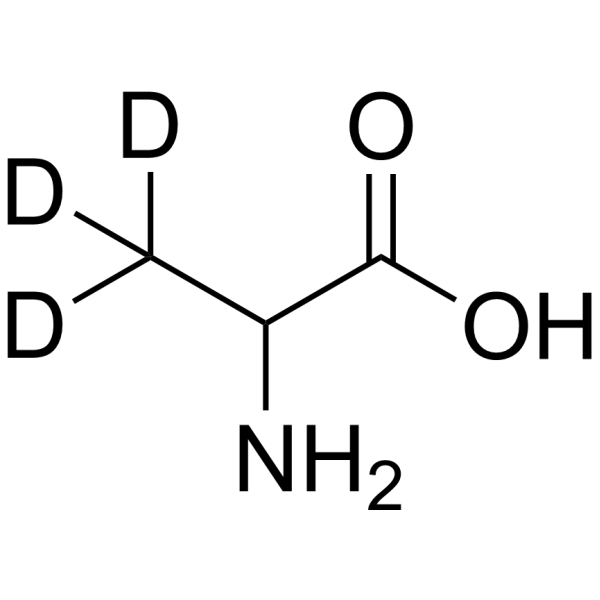
    DL-Alanine-d3 is the deuterium labeled DL-Alanine. DL-alanine, an amino acid, is the racemic compound of L- and D-alanine. DL-alanine is employed both as a reducing and a capping agent, used with silver nitrate aqueous solutions for the production of nanoparticles. DL-alanine can be used for the research of transition metals chelation, such as Cu(II), Zn(II), Cd(11). DL-alanine, a sweetener, is classed together with glycine, and sodium saccharin. DL-alanine plays a key role in the glucose-alanine cycle between tissues and liver .
    DL-Alanine-d3
  • HY-162158

    Fluorescent Dye Others
    DA ZP1 is a fluorogenic Zn(II) sensor (Kd Zn 2+ = 0.6 nM) . Ex / Em = 490 / 522 nm
    DA ZP1
  • HY-W036428

    Zn(II) meso-Tetra(4-carboxyphenyl) Porphine

    MOFs Others
    Zinc(II) tetrakis(4-carboxyphenyl)porphine(Zn(II) meso-Tetra(4-carboxyphenyl) Porphine) is a metal-organic framework (MOF).
    Zinc(II) tetrakis(4-carboxyphenyl)porphine
  • HY-W001939R

    Biochemical Assay Reagents Reference Standards Cancer
    4-Acetylbenzoic acid (Standard) is the analytical standard of 4-Acetylbenzoic acid. This product is intended for research and analytical applications. 4-Acetylbenzoic acid is a Zn(II) complex. 4-Acetylbenzoic acid is a derivative of benzoic acid that is commonly used in chemical synthesis. 4-Acetylbenzoic acid has an IC50 of 331.3 μM in murine L929 fibroblasts and an IC50 of 176 μM in metastatic melanoma B16 F10 cell lines .
    4-Acetylbenzoic acid (Standard)
  • HY-W130303

    N-Acetylacetamide; Diacetylamine; Diacetimide

    Biochemical Assay Reagents Others
    Diacetamide is shown to form a variety of new compounds with a general formula [M(C4H7O2N) 3](ClO4)2, where M = Mn(II), Fe(II), Co(II), Ni(II), or Zn(II). Diacetamide ligands can be used in uranium extraction from wastewater. Diacetamide can be used for amidase synthesis .
    Diacetamide
  • HY-N2362S5

    DL-2-Aminopropionic acid-15N

    Endogenous Metabolite Metabolic Disease
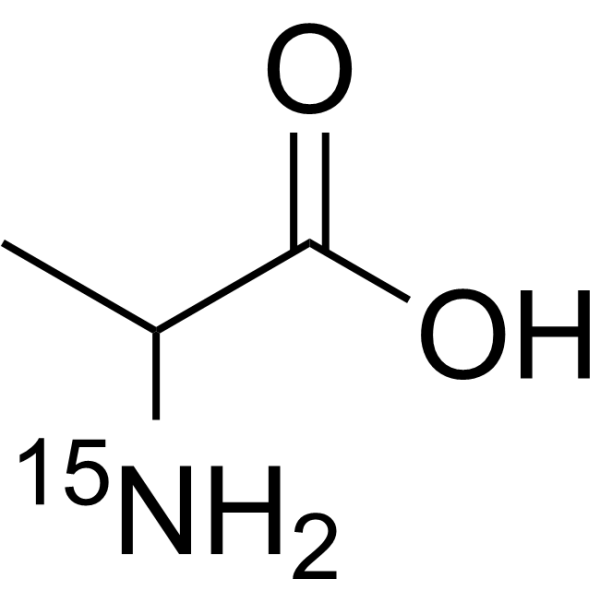
    DL-Alanine- 15N is the 15N labeled DL-Alanine . DL-alanine, an amino acid, is the racemic compound of L- and D-alanine. DL-alanine is employed both as a reducing and a capping agent, used with silver nitrate aqueous solutions for the production of nanoparticles. DL-alanine can be used for the research of transition metals chelation, such as Cu(II), Zn(II), Cd(11). DL-alanine, a sweetener, is classed together with glycine, and sodium saccharin. DL-alanine plays a key role in the glucose-alanine cycle between tissues and liver .
    DL-Alanine-15N
  • HY-N2362S

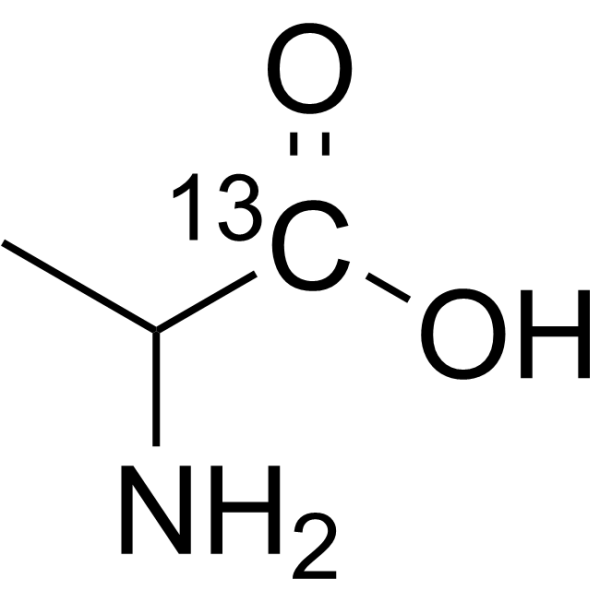
    DL-2-Aminopropionic acid-13C-1

    Endogenous Metabolite Metabolic Disease
    DL-Alanine- 13C-1 is the 13C-labeled DL-Alanine. DL-alanine, an amino acid, is the racemic compound of L- and D-alanine. DL-alanine is employed both as a reducing and a capping agent, used with silver nitrate aqueous solutions for the production of nanoparticles. DL-alanine can be used for the research of transition metals chelation, such as Cu(II), Zn(II), Cd(11). DL-alanine, a sweetener, is classed together with glycine, and sodium saccharin. DL-alanine plays a key role in the glucose-alanine cycle between tissues and liver .
    DL-Alanine-13C-1
  • HY-N2362S1

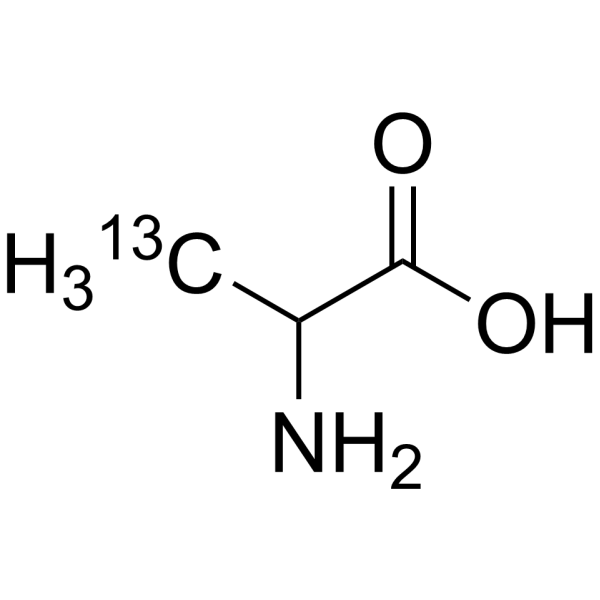
    DL-2-Aminopropionic acid-13C-3

    Isotope-Labeled Compounds Endogenous Metabolite Metabolic Disease
    DL-Alanine- 13C-3 is the 13C-labeled DL-Alanine. DL-alanine, an amino acid, is the racemic compound of L- and D-alanine. DL-alanine is employed both as a reducing and a capping agent, used with silver nitrate aqueous solutions for the production of nanoparticles. DL-alanine can be used for the research of transition metals chelation, such as Cu(II), Zn(II), Cd(11). DL-alanine, a sweetener, is classed together with glycine, and sodium saccharin. DL-alanine plays a key role in the glucose-alanine cycle between tissues and liver .
    DL-Alanine-13C-3
  • HY-W543723

    MOFs Others
    Zn(II)Phthalocyaninetetrasulfonicacid is a metal-organic framework (MOF).
    Zn(II)Phthalocyaninetetrasulfonicacid
  • HY-N2362S8

    DL-2-Aminopropionic acid-d7

    Isotope-Labeled Compounds Metabolic Disease
    DL-Alanine-d7 (DL-2-Aminopropionic acid-d7) is deuterium labeled DL-Alanine. DL-alanine, an orally active amino acid, is the racemic compound of L- and D-alanine. DL-alanine is employed both as a reducing and a capping agent, used with silver nitrate aqueous solutions for the production of nanoparticles. DL-alanine can be used for the research of transition metals chelation, such as Cu(II), Zn(II), Cd(11). DL-alanine, a sweetener, is classed together with glycine and sodium saccharin. DL-alanine plays a key role in the glucose-alanine cycle between tissues and liver .
    DL-Alanine-d7
  • HY-N2362S9

    DL-2-Aminopropionic acid-13C2,15N2

    Isotope-Labeled Compounds Endogenous Metabolite Metabolic Disease
    DL-Alanine- 13C2, 15N (DL-2-Aminopropionic acid- 13C2, 15N) is 13C and 15N labeled DL-Alanine. DL-alanine, an orally active amino acid, is the racemic compound of L- and D-alanine. DL-alanine is employed both as a reducing and a capping agent, used with silver nitrate aqueous solutions for the production of nanoparticles. DL-alanine can be used for the research of transition metals chelation, such as Cu(II), Zn(II), Cd(11). DL-alanine, a sweetener, is classed together with glycine and sodium saccharin. DL-alanine plays a key role in the glucose-alanine cycle between tissues and liver .
    DL-Alanine-13C2,15N
  • HY-136476B

    Heme Oxygenase (HO) MOFs Inflammation/Immunology Cancer
    Cu (II) Protoporphyrin IX is used as a negative control for Zn (II) Protoporphyrin (an inihibitor of heme oxygenase). Heme oxygenase has been implicated in tumor cell resistance to chemotherapy, reduction of free radical formation and inflammation, and associated with vascular repair .
    Cu(II) protoporphyrin IX
  • HY-150260

    Bacterial Infection
    SA09-Cu is a noncompetitive and potent NDM-1 inhibitor with an IC50 of 9.6 nM. SA09-Cu can convert NDM-1 into an inactive state by oxidizing the Zn(II)-thiolate site of the enzyme and avoids to be reduced by intracellular thiols of bacteria. SA09-Cu exhibits excellent inhibition against a series of clinical NDM-1-producing carbapenem-resistant Enterobacteriaceae (CRE) in restoring the Meropenem (HY-13678) effect, and slows down the development of carbapenem resistance .
    SA09-Cu
  • HY-W112286

    meso-Tetra (4-pyridyl) porphine-Zn(II)

    MOFs Others
    5,10,15,20-Tetra (4-pyridyl)-21H, 23H-porphyrin zinc (meso-Tetra (4-pyridyl) porphine-Zn(II)) is a metal-organic framework (MOF).
    5,10,15,20-Tetra (4-pyridyl)-21H, 23H-porphyrin zinc
  • HY-113658

    Endogenous Metabolite Others
    ts-SA is a carbonic anhydrase (CA) inhibitor with activity against seven human CA homologues. ts-SA can bind to the Zn(II) ion in the enzyme active site in a deprotonated form. The organic skeleton of ts-SA extends in the enzyme cavity and participates in multiple interactions with amino acid residues and water molecules. Due to its structural differences, the inhibitory performance of ts-SA is significantly better than that of another pyridine derivative. ts-SA exhibits low nanomolar inhibitory activity and is a multi-target CA inhibitor .
    ts-SA
  • HY-N2362S7

    DL-2-Aminopropionic acid-13C3-4

    Isotope-Labeled Compounds Endogenous Metabolite Metabolic Disease
    DL-Alanine- 13C3-4 (DL-2-Aminopropionic acid- 13C3-4) is the 13C-labeled DL-Alanine (HY-N2362). DL-Alanine, an orally active amino acid, is the racemic compound of L- and D-alanine. DL-alanine is employed both as a reducing and a capping agent, used with silver nitrate aqueous solutions for the production of nanoparticles. DL-alanine can be used for the research of transition metals chelation, such as Cu(II), Zn(II), Cd(11). DL-alanine, a sweetener, is classed together with glycine and sodium saccharin. DL-alanine plays a key role in the glucose-alanine cycle between tissues and liver .
    DL-Alanine-13C3-4

Inquiry Online

Your information is safe with us. * Required Fields.

Salutation


Country or Region *

Applicant Name *


Organization Name *

Department *


Email Address *


Product Name *

Cat. No.


Requested quantity *

Phone Number *


Remarks

Inquiry Online

Inquiry Information

Product Name:
Cat. No.:
Quantity:
MCE Japan Authorized Agent:

