
1. Search Result
Search Result
Results for "

acute inflammatory conditions

" in MedChemExpress (MCE) Product Catalog:

15

阻害剤およびアゴニスト

1

生化学アッセイ試薬

2

阻害性抗体

3

同位体標識化合物

製品番号 製品名 Target 研究分野 構造式
  • HY-B1060
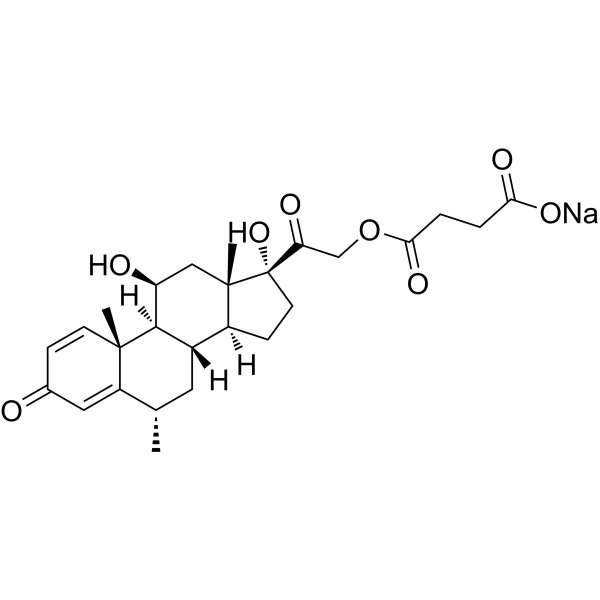
    Methylprednisolone succinate sodium
    2 Publications Verification

    Methylprednisolone hydrogen succinate sodium

    Glucocorticoid Receptor Infection Neurological Disease Inflammation/Immunology Cancer
    Methylprednisolone succinate (Methylprednisolone hydrogen succinate) sodium is a prodrug of Methylprednisolone (HY-B0260) and glucocorticoid with immunosuppressant and anti-inflammatory activity. Methylprednisolone succinate sodium binds cytosolic glucocorticoid receptors, translocates to nuclei, and modulates target gene transcription. Methylprednisolone succinate sodium alters Bax, Bcl-2, occludin, and ZO-1 expression; attenuates TLR4/NF-κB signaling; suppresses proinflammatory cytokine production and immune cell activation. Methylprednisolone succinate sodium can be used for the research of intracranial haemorrhage, rheumatoid arthritis, multiple sclerosis, preterminal cancer, inflammatory conditions, shock, immediate-type hypersensitivity, acute myocardial ischemia, hypoxic heart muscle damage, and traumatic spinal cord injury .
    Methylprednisolone succinate sodium
  • HY-125474
    Carrageenan
    1 Publications Verification

    Environmental Pollutants HIV HSV Infection Cancer
    Carrageenan is an antiviral and anticancer agent. Carrageenan inhibits herpes simplex virus (HSV), HIV, and hepatitis A virus (HAV) by directly binding to the viral capsid to block the attachment of viruses such as HPV to HSPG factors on the cell surface. Carrageenan delays and arrests cell cycle progression, exhibits cytotoxicity against HeLa cancer cells, and can be applied to studies related to cervical cancer, genital warts, hepatitis A, and other conditions. Carrageenan also induces acute non-immune inflammation, triggers a three-phase inflammatory response involving the release of multiple proinflammatory mediators, and causes persistent edema, hyperalgesia, and neutrophil recruitment in mice .
    Carrageenan
  • HY-B1900
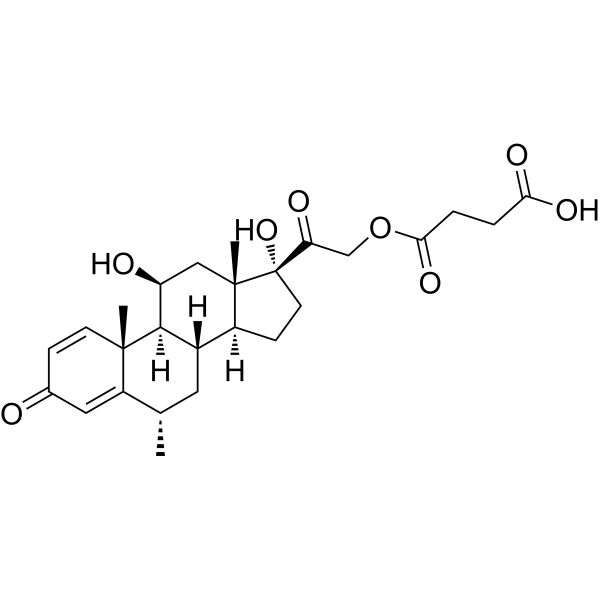
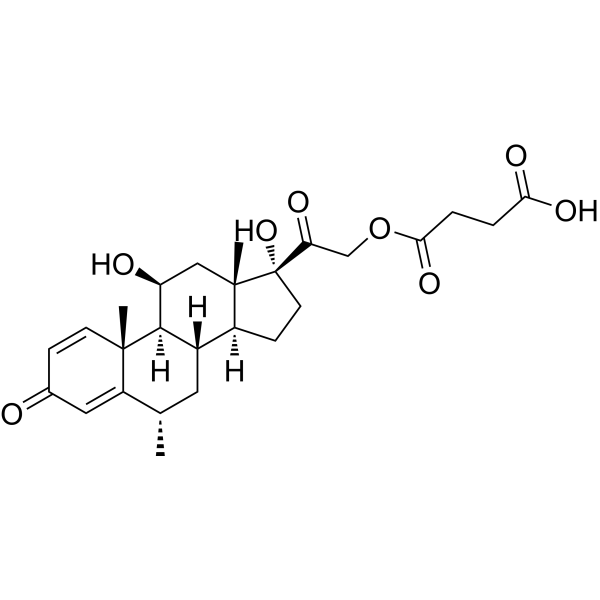
    Methylprednisolone succinate
    2 Publications Verification

    Methylprednisolone hydrogen succinate

    Glucocorticoid Receptor Bacterial Toll-like Receptor (TLR) NF-κB Infection Neurological Disease Metabolic Disease Inflammation/Immunology Cancer
    Methylprednisolone succinate (Methylprednisolone hydrogen succinate) is a prodrug of Methylprednisolone (HY-B0260) and glucocorticoid with immunosuppressant and anti-inflammatory activity. Methylprednisolone succinate binds cytosolic glucocorticoid receptors, translocates to nuclei, and modulates target gene transcription. Methylprednisolone succinate alters Bax, Bcl-2, occludin, and ZO-1 expression; attenuates TLR4/NF-κB signaling; suppresses proinflammatory cytokine production and immune cell activation. Methylprednisolone succinate can be used for the research of intracranial haemorrhage, rheumatoid arthritis, multiple sclerosis, preterminal cancer, inflammatory conditions, shock, immediate-type hypersensitivity, acute myocardial ischemia, hypoxic heart muscle damage, and traumatic spinal cord injury .
    Methylprednisolone succinate
  • HY-17474
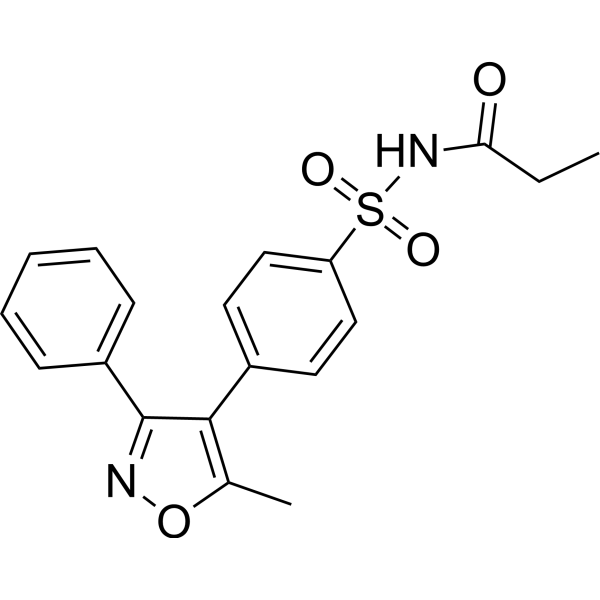
    Parecoxib
    5 Publications Verification

    SC 69124

    COX Infection Neurological Disease Inflammation/Immunology Cancer
    Parecoxib (SC 69124) is a highly selective and orally active COX-2 inhibitor that is permeable to the blood-brain barrier, the proagent of Valdecoxib (HY-15762). Parecoxib Sodium is a nonsteroidal anti-inflammatory agent (NSAID) and inhibits prostaglandin (PG) synthesis. Parecoxib can be used for the relief of acute postoperative pain and symptoms of chronic inflammatory conditions such as osteoarthritis and rheumatoid arthritis in vivo.
    Parecoxib
  • HY-17474A
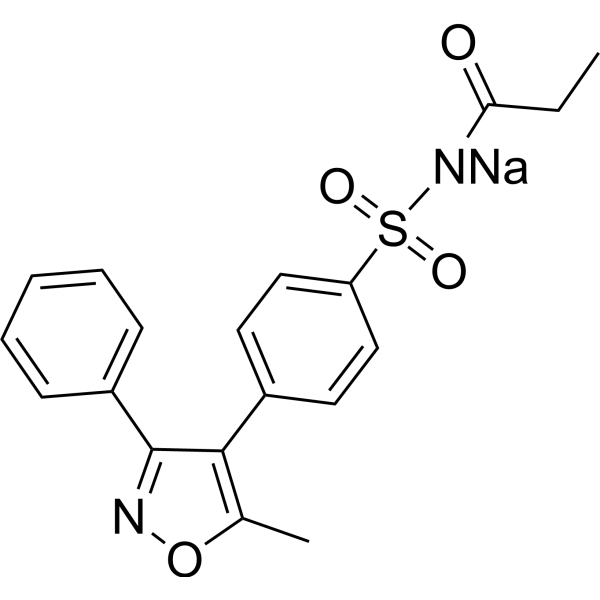
    Parecoxib Sodium
    5 Publications Verification

    SC 69124A

    COX Infection Neurological Disease Inflammation/Immunology Cancer
    Parecoxib Sodium (SC 69124A) is a highly selective and orally active COX-2 inhibitor that is permeable to the blood-brain barrier, the proagent of Valdecoxib (HY-15762). Parecoxib Sodium is a nonsteroidal anti-inflammatory agent (NSAID) and inhibits prostaglandin (PG) synthesis. Parecoxib Sodium can be used for the relief of acute postoperative pain and symptoms of chronic inflammatory conditions such as osteoarthritis and rheumatoid arthritis in vivo.
    Parecoxib Sodium
  • HY-B1900R
    Methylprednisolone succinate (Standard)
    1 Publications Verification

    Methylprednisolone hydrogen succinate (Standard)

    Reference Standards Glucocorticoid Receptor Bacterial Toll-like Receptor (TLR) NF-κB Metabolic Disease Inflammation/Immunology Cancer
    Methylprednisolone succinate (Standard) is the analytical standard of Methylprednisolone succinate (HY-B1900). This product is intended for research and analytical applications. Methylprednisolone succinate (Methylprednisolone hydrogen succinate) is a prodrug of Methylprednisolone (HY-B0260) and glucocorticoid with immunosuppressant and anti-inflammatory activity. Methylprednisolone succinate binds cytosolic glucocorticoid receptors, translocates to nuclei, and modulates target gene transcription. Methylprednisolone succinate alters Bax, Bcl-2, occludin, and ZO-1 expression; attenuates TLR4/NF-κB signaling; suppresses proinflammatory cytokine production and immune cell activation. Methylprednisolone succinate can be used for the research of intracranial haemorrhage, rheumatoid arthritis, multiple sclerosis, preterminal cancer, inflammatory conditions, shock, immediate-type hypersensitivity, acute myocardial ischemia, hypoxic heart muscle damage, and traumatic spinal cord injury .
    Methylprednisolone succinate (Standard)
  • HY-178951

    STING IKK Reactive Oxygen Species (ROS) IFNAR PARP Caspase Inflammation/Immunology
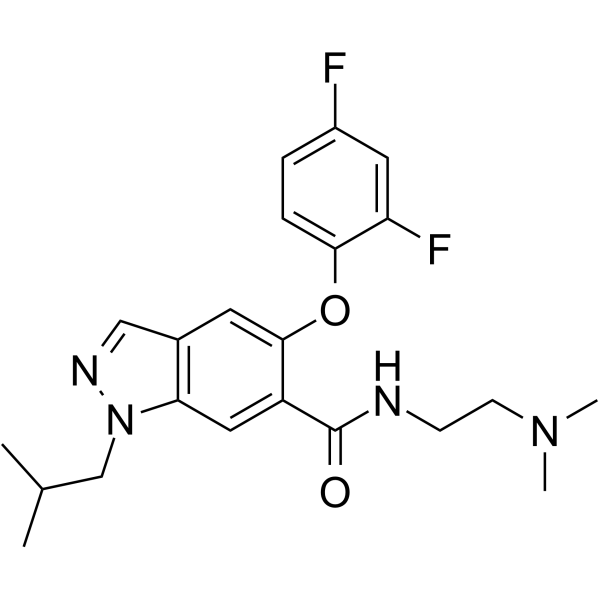
    STING-IN-17 (compound 10a) is an orally active STING (human STING IC50 = 29 nM, mouse STING IC50 = 15 nM) inhibitor. STING-IN-17 can inhibit the phosphorylation of STING, TBK1 and IRF3. STING-IN-17 dose dependently inhibits the mRNA expression of IP10, IFNB1 and ISG56. STING-IN-17 can reduce ROS and inhibit the expression of cleaved-PARP/caspase-3. STING-IN-17 can improve kidney function. STING-IN-17 can be used for research on inflammatory conditions such as acute kidney injury .
    STING-IN-17
  • HY-P991657

    Complement System Cardiovascular Disease
    MEDI7814 is a humanized monoclonal antibody inhibitor targeting C5a and C5adesArg. MEDI7814 binds to recombinant human C5a and serum purified human C5a with affinities of 14 pM and 8 pM, respectively. MEDI7814 is acute inflammatory diseases such as sepsis and renal ischemia-reperfusion injury .
    MEDI7814
  • HY-17474S

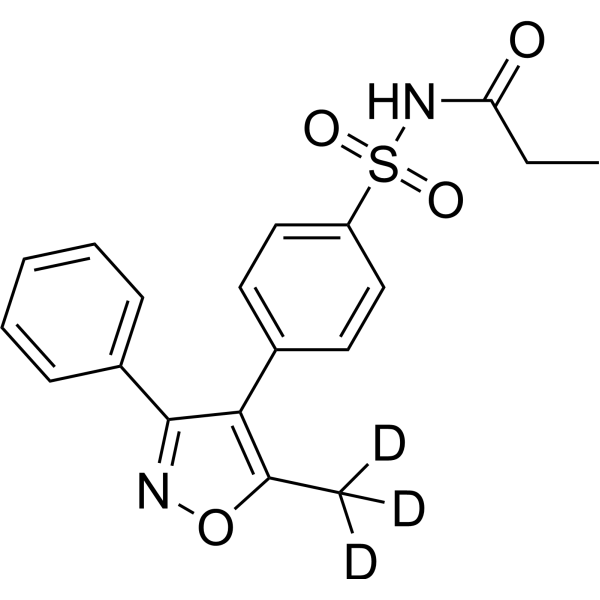
    SC 69124-d3

    Isotope-Labeled Compounds COX Inflammation/Immunology Cancer
    Parecoxib-d3 is the deuterium labeled Parecoxib. Parecoxib (SC 69124) is a highly selective and orally active COX-2 inhibitor, the proagent of Valdecoxib (HY-15762). Parecoxib Sodium is a nonsteroidal anti-inflammatory agent (NSAID) and inhibits prostaglandin (PG) synthesis. Parecoxib can be used for the relief of acute postoperative pain and symptoms of chronic inflammatory conditions such as osteoarthritis and rheumatoid arthritis in vivo.
    Parecoxib-d3
  • HY-17474AR

    SC 69124A (Standard)

    Reference Standards COX Inflammation/Immunology Cancer
    Parecoxib (Sodium) (Standard) is the analytical standard of Parecoxib (Sodium). This product is intended for research and analytical applications. Parecoxib Sodium (SC 69124A) is a highly selective and orally active COX-2 inhibitor, the proagent of Valdecoxib (HY-15762). Parecoxib Sodium is a nonsteroidal anti-inflammatory agent (NSAID) and inhibits prostaglandin (PG) synthesis. Parecoxib Sodium can be used for the relief of acute postoperative pain and symptoms of chronic inflammatory conditions such as osteoarthritis and rheumatoid arthritis in vivo.
    Parecoxib Sodium (Standard)
  • HY-17474R

    SC 69124 (Standard)

    Reference Standards COX Inflammation/Immunology Cancer
    Parecoxib (Standard) is the analytical standard of Parecoxib. This product is intended for research and analytical applications. Parecoxib (SC 69124) is a highly selective and orally active COX-2 inhibitor, the proagent of Valdecoxib (HY-15762). Parecoxib Sodium is a nonsteroidal anti-inflammatory agent (NSAID) and inhibits prostaglandin (PG) synthesis. Parecoxib can be used for the relief of acute postoperative pain and symptoms of chronic inflammatory conditions such as osteoarthritis and rheumatoid arthritis in vivo.
    Parecoxib (Standard)
  • HY-17474AS

    SC 69124A-d5

    Isotope-Labeled Compounds COX Inflammation/Immunology Cancer
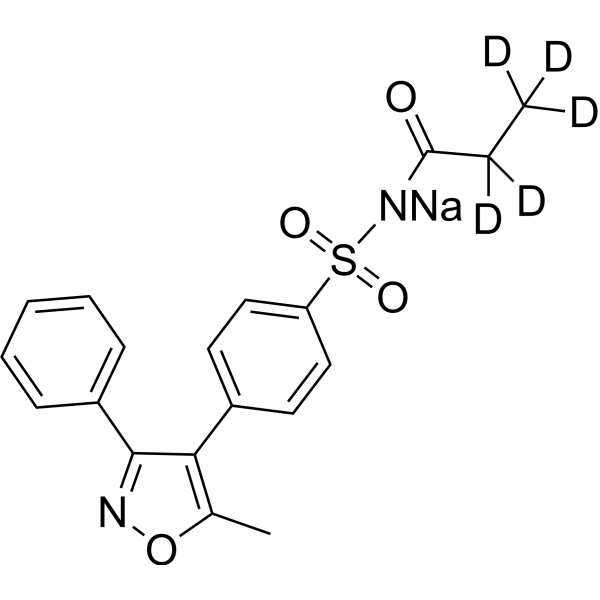
    Parecoxib-d5 sodium is the deuterium labeled Parecoxib sodium. Parecoxib Sodium (SC 69124A) is a highly selective and orally active COX-2 inhibitor, the proagent of Valdecoxib (HY-15762). Parecoxib Sodium is a nonsteroidal anti-inflammatory agent (NSAID) and inhibits prostaglandin (PG) synthesis. Parecoxib Sodium can be used for the relief of acute postoperative pain and symptoms of chronic inflammatory conditions such as osteoarthritis and rheumatoid arthritis in vivo .
    Parecoxib-d5 sodium
  • HY-17474S1

    SC 69124-d5

    Isotope-Labeled Compounds COX Inflammation/Immunology Cancer
    Parecoxib-d5 (SC 69124-d5) is deuterium labeled Parecoxib. Parecoxib (SC 69124) is a highly selective and orally active COX-2 inhibitor, the proagent of Valdecoxib (HY-15762). Parecoxib Sodium is a nonsteroidal anti-inflammatory agent (NSAID) and inhibits prostaglandin (PG) synthesis. Parecoxib can be used for the relief of acute postoperative pain and symptoms of chronic inflammatory conditions such as osteoarthritis and rheumatoid arthritis in vivo.
    Parecoxib-d5
  • HY-P990160

    MHC Neurological Disease Metabolic Disease Inflammation/Immunology
    Anti-Rat TCR alpha/beta Antibody (R73) is an anti-mouse TCR alpha/beta IgG1 monoclonal antibody. Anti-Rat TCR alpha/beta Antibody (R73) suppresses immune response by depleting α/β + T cells. Anti-Rat TCR alpha/beta Antibody (R73) can inhibit the expression of pro-inflammatory cytokines. Anti-Rat TCR alpha/beta Antibody (R73) can extend graft survival time by reducing infiltration of T cells and neutrophils. Anti-Rat TCR alpha/beta Antibody (R73) can be used for researches on inflammation, metabolic conditions and xenotransplantation such as arthritis, acute inflammatory peripheral neuropathy and diabetes .
    Anti-Rat TCR alpha/beta Antibody (R73)
  • HY-178950

    Src TNF Receptor Interleukin Related NOD-like Receptor (NLR) Caspase Inflammation/Immunology
    Hck-IN-3 (compound 2D) is an orally effective inhibitor targeting HCK (KD = 3.92 μM). Hck-IN-3 can inhibit the release of NO. Hck-IN-3 has an IC50 of 6.52 μM in RAW264.7 cells. Hck-IN-3 can inhibit the release of TNF-α, IL-6, and IL-1β in a concentration dependent manner. Hck-IN-3 downregulates the protein expression of NLRP3, ASC, pro-caspase-1, and pro-IL-1β in a concentration dependent manner. Hck-IN-3 can be used for research on acute non traumatic inflammatory conditions .
    Hck-IN-3

オンラインお問い合わせ

入力情報は安全に管理されます. 必須入力項目.

タイトル


国或いは地域 *

お名前 *


組纖名 *

デパートメント *


メールアドレス *


製品名 *

製品番号


カスタマ需要量 *

電話番号 *


必ず会社名を記載ください。個人への返信は行いません。

備考

バルクお問い合わせ

Inquiry Information

製品名:
製品番号:
数量:
MCE 日本正規代理店:

