



Methylprednisolone succinate sodium
Based on 3 publication(s) in Google Scholar
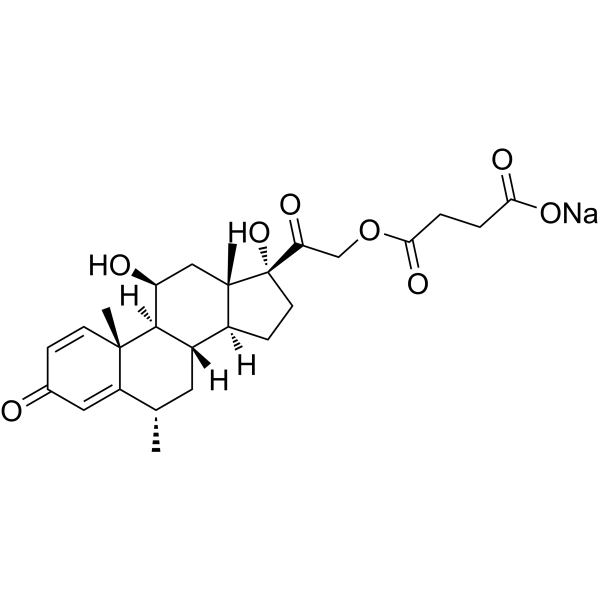
Methylprednisolone succinate (Methylprednisolone hydrogen succinate) sodium is a prodrug of Methylprednisolone (HY-B0260) and glucocorticoid with immunosuppressant and anti-inflammatory activity. Methylprednisolone succinate sodium binds cytosolic glucocorticoid receptors, translocates to nuclei, and modulates target gene transcription. Methylprednisolone succinate sodium alters Bax, Bcl-2, occludin, and ZO-1 expression; attenuates TLR4/NF-κB signaling; suppresses proinflammatory cytokine production and immune cell activation. Methylprednisolone succinate sodium can be used for the research of intracranial haemorrhage, rheumatoid arthritis, multiple sclerosis, preterminal cancer, inflammatory conditions, shock, immediate-type hypersensitivity, acute myocardial ischemia, hypoxic heart muscle damage, and traumatic spinal cord injury.
For research use only. We do not sell to patients.
- Purity : 98.82%
- CAS No.: 2375-03-3
- Formula: C26H33NaO8
- Molecular Weight:496.53
-
Storage:
-20°C, sealed storage, away from moisture
* In solvent : -80°C, 6 months; -20°C, 1 month (sealed storage, away from moisture)

To place orders, for customer services and technical support, please contact: MedChemExpress USA
Tel: 609-228-6898 E-mail: [email protected] [email protected]


-
 Biological Activity
-
Chemical Information
-
Solvent & Solubility
- Purity & Documentation
- References
-
 Help & FAQs


-
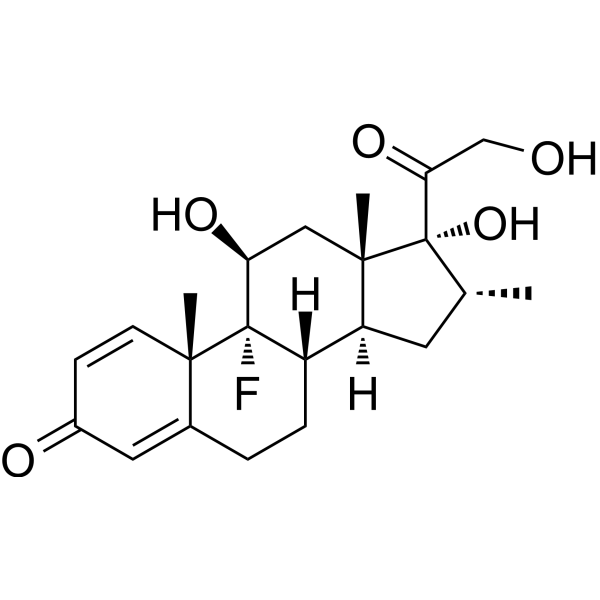
HY-14648
Dexamethasone -
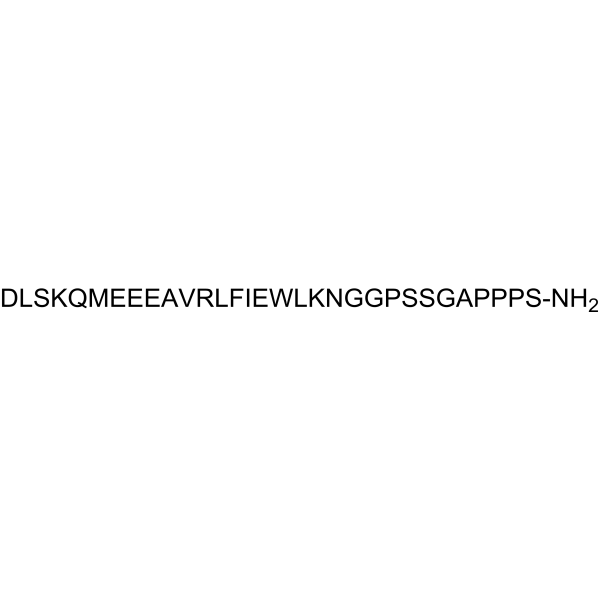
HY-P0264
Exendin(9-39) amide -
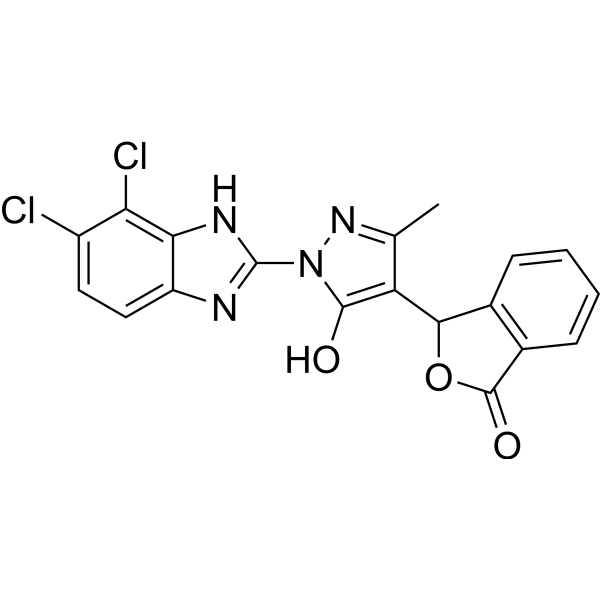
HY-114180
RU.521 -
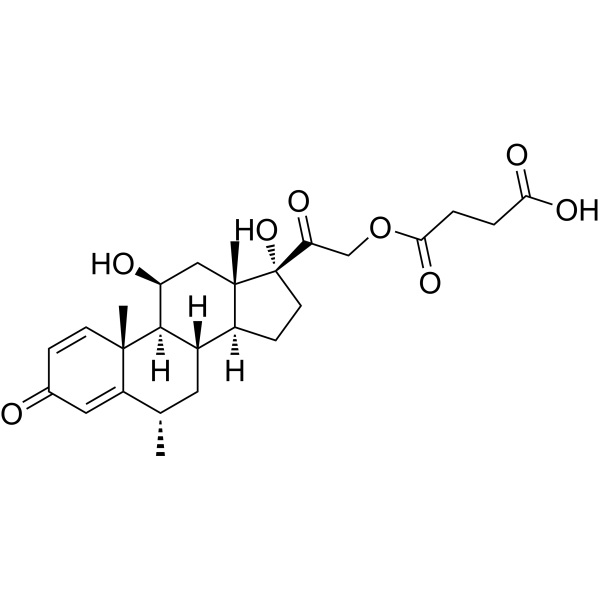
HY-B1900
Methylprednisolone succinate -
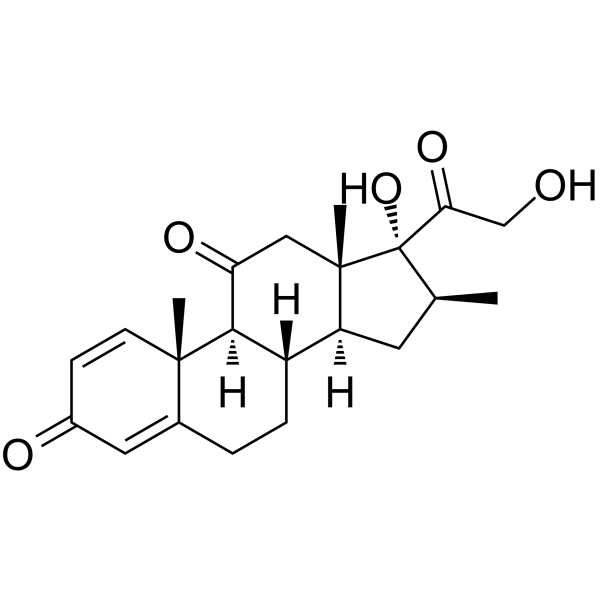
HY-B0243
Meprednisone -
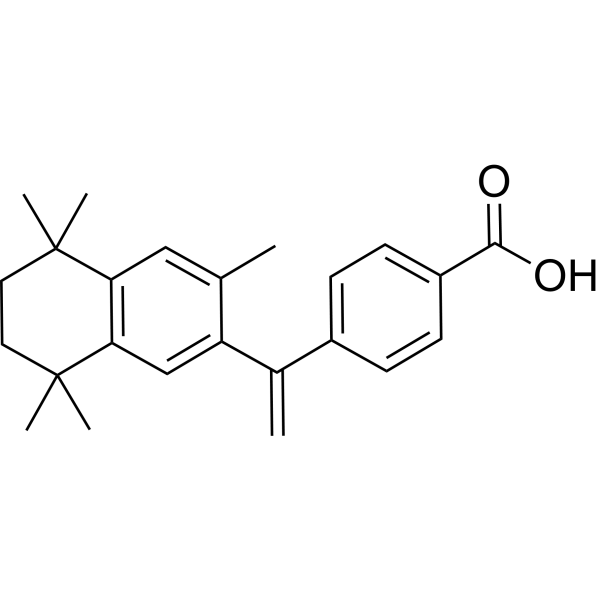
HY-14171
Bexarotene -
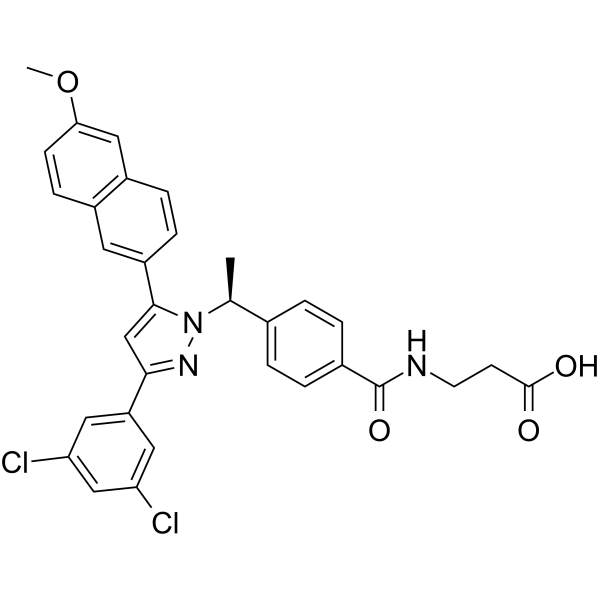
HY-50663
MK 0893 -
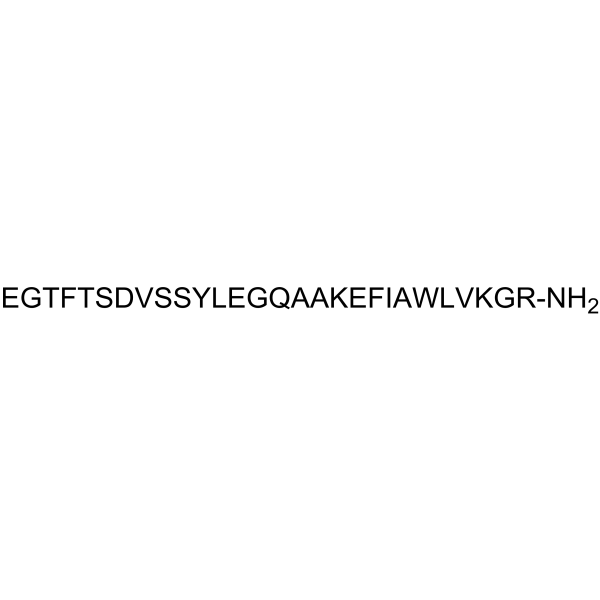
HY-P1141
GLP-1(9-36)amide -
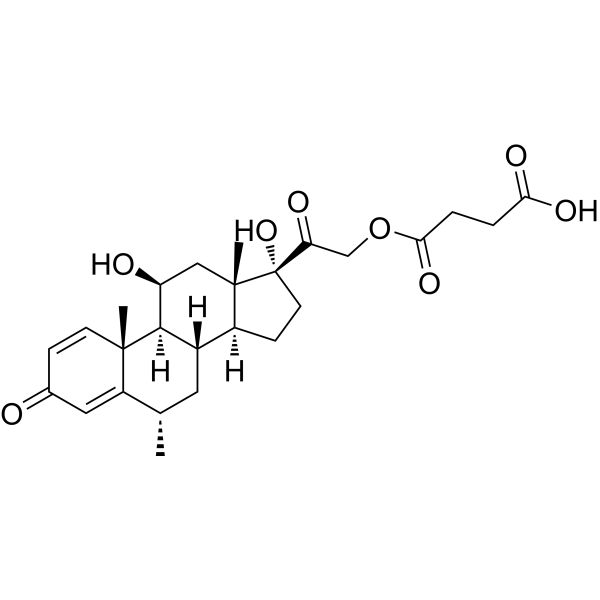
HY-B1900R
Methylprednisolone succinate (Standard) -
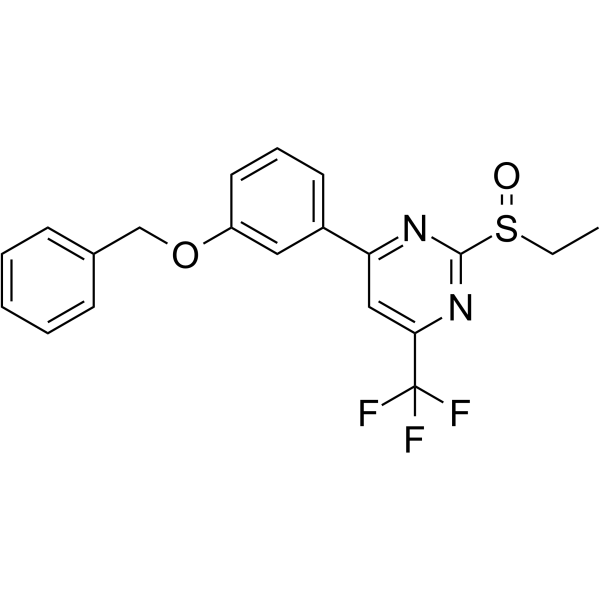
HY-103546
BETP -
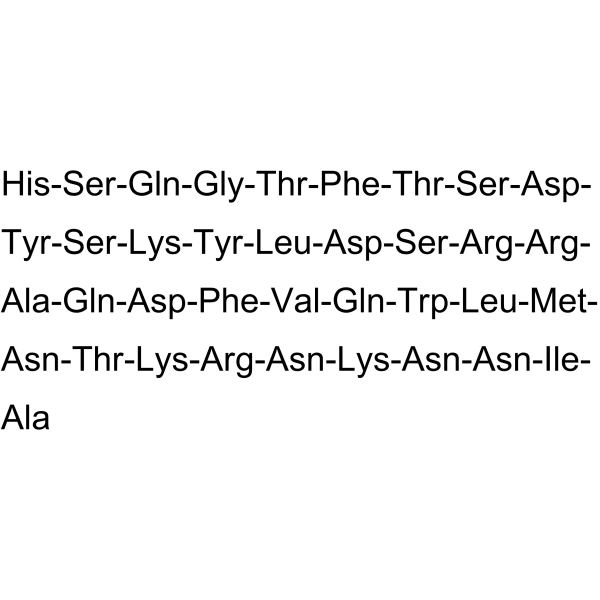
HY-P1144
Oxyntomodulin (bovine, porcine) -
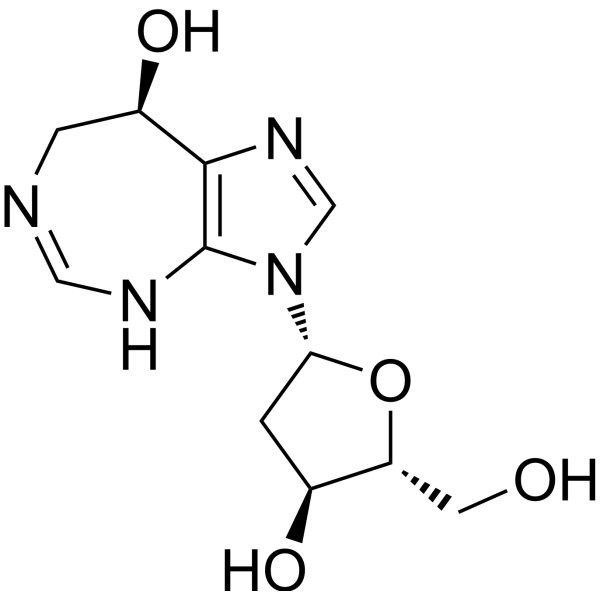
HY-A0006
Pentostatin
Publications Citing Use of MedChemExpress (MCE) Methylprednisolone succinate sodium
More

Biological Activity
Description
In Vitro
Methylprednisolone succinate sodium (0.4-1.25 mg/mL methylprednisolone equivalent; 24 h at 24°C) is chemically stable and visually compatible in admixtures with Cimetidine hydrochloride (HY-14289A) (3 mg/mL) in 5% dextrose injection, with no significant loss of methylprednisolone 21-succinate ester concentration[2].
MedChemExpress (MCE) has not independently confirmed the accuracy of these methods. They are for reference only.
In Vivo
Methylprednisolone succinate sodium (40 mg/kg; slow administration over 1 minute) improves collateral blood flow into the infarcted area and enhances the metabolic response of ischemic myocardium in acute myocardial ischemia dogs[5].
MedChemExpress (MCE) has not independently confirmed the accuracy of these methods. They are for reference only.
-
Animal Model:C57/BL (male, 6-8 weeks old, 20-23 g, intracranial haemorrhage induced by bacterial collagenase IV injection)[1]
-
Dosage:30 mg/kg
-
Administration:ip; at 2, 24 and 48 h after ICH
-
Result:Significantly reduced Evans Blue extravasation in the haemorrhagic hemisphere at day 1 post-ICH; reduced brain water content at day 3 post-ICH; partially protected tight junction proteins ZO-1 and occludin expression; reduced proinflammatory cytokines IL-1β and TNF-α expression; inhibited microglia activation and neutrophil infiltration; suppressed TLR4/NF-κB signalling pathway activation; reduced number of TUNEL-positive neuronal cells in the perihematoma area; increased Bcl-2 expression; decreased Bax expression.


Chemical Information
-
CAS No. 2375-03-3
-
Appearance Solid
-
Molecular Weight 496.53
-
Formula C26H33NaO8
-
Color White to off-white
-
SMILES
C[C@@]12[C@](C(COC(CCC(O[Na])=O)=O)=O)(O)CC[C@@]1([H])[C@]3([H])C[C@H](C)C4=CC(C=C[C@]4(C)[C@@]3([H])[C@@H](O)C2)=O
-
Synonyms
Methylprednisolone hydrogen succinate sodium
-
Shipping
Room temperature in continental US; may vary elsewhere.
-
Storage
-20°C, sealed storage, away from moisture
* In solvent : -80°C, 6 months; -20°C, 1 month (sealed storage, away from moisture)


Publications (3)
-
Journal Impact Factor
-
Most Recent


Solvent & Solubility
In Vitro:
DMSO : 116.67 mg/mL (234.97 mM; Need ultrasonic; Hygroscopic DMSO has a significant impact on the solubility of product, please use newly opened DMSO)
H2O : 50 mg/mL (100.70 mM; Need ultrasonic)
Please refer to the solubility information to select the appropriate solvent. Once prepared, please aliquot and store the solution to prevent product inactivation from repeated freeze-thaw cycles.
Storage method and period of stock solution: -80°C, 6 months; -20°C, 1 month (sealed storage, away from moisture). When stored at -80°C, please use it within 6 months. When stored at -20°C, please use it within 1 month.
* Note: If you choose water as the stock solution, please dilute it to the working solution, then filter and sterilize it with a 0.22 μm filter before use.
Please refer to the solubility information to select the appropriate solvent. Once prepared, please aliquot and store the solution to prevent product inactivation from repeated freeze-thaw cycles.
Storage method and period of stock solution: -80°C, 6 months; -20°C, 1 month (sealed storage, away from moisture). When stored at -80°C, please use it within 6 months. When stored at -20°C, please use it within 1 month.
* Note: If you choose water as the stock solution, please dilute it to the working solution, then filter and sterilize it with a 0.22 μm filter before use.
Concentration (start) × Volume (start) = Concentration (final) × Volume (final)
In Vivo:
Select the appropriate dissolution method based on your experimental animal and administration route.
- For the following dissolution methods, please ensure to first prepare a clear stock solution using an In Vitro approach and then sequentially add co-solvents:
- To ensure reliable experimental results, the clarified stock solution can be appropriately stored based on storage conditions. As for the working solution for In Vivo experiments, it is recommended to prepare freshly and use it on the same day.
- The percentages shown for the solvents indicate their volumetric ratio in the final prepared solution. If precipitation or phase separation occurs during preparation, heat and/or sonication can be used to aid dissolution.
Add each solvent one by one: 10% DMSO 40% PEG300 5% Tween-80 45% Saline
Solubility: ≥ 2.08 mg/mL (4.19 mM); Clear solution
This protocol yields a clear solution of ≥ 2.08 mg/mL (saturation unknown).
Taking 1 mL working solution as an example, add 100 μL DMSO stock solution (20.8 mg/mL) to 400 μL PEG300, and mix evenly; then add 50 μL Tween-80 and mix evenly; then add 450 μL Saline to adjust the volume to 1 mL.
Preparation of Saline: Dissolve 0.9 g sodium chloride in ddH₂O and dilute to 100 mL to obtain a clear Saline solution.
Add each solvent one by one: 10% DMSO 90% (20% SBE-β-CD in Saline)
Solubility: ≥ 2.08 mg/mL (4.19 mM); Clear solution
This protocol yields a clear solution of ≥ 2.08 mg/mL (saturation unknown).
Taking 1 mL working solution as an example, add 100 μL DMSO stock solution (20.8 mg/mL) to 900 μL 20% SBE-β-CD in Saline, and mix evenly.
Preparation of 20% SBE-β-CD in Saline (4°C, storage for one week): 2 g SBE-β-CD powder is dissolved in 10 mL Saline, completely dissolve until clear.
In Vivo Dissolution Calculator
Please enter the basic information of animal experiments:
-
-
-
-
Recommended: Prepare an additional quantity of animals to account for potential losses during experiments.
Working solution concentration: 0.22 mg/mL
This product has good water solubility, please refer to the measured solubility data in water/PBS/Saline for details.


Purity & Documentation
-
Data Sheet (279 KB)
-
SDS (419 KB)
- English - EN (419 KB)
- Français - FR (419 KB)
- Deutsch - DE (419 KB)
- Norwegian - NO (419 KB)
- Español - ES (419 KB)
- Swedish - SV (419 KB)
- Italian - IT (419 KB)
- Korean - KR (419 KB)
- Portuguese - PT (419 KB)
-
Handling Instructions (2659 KB)
References
[1]. Cheng S, et al. Methylprednisolone sodium succinate reduces BBB disruption and inflammation in a model mouse of intracranial haemorrhage. Brain Res Bull. 2016;127:226-233. [Content Brief]
[2]. Della Cuna GR, et al. Effect of methylprednisolone sodium succinate on quality of life in preterminal cancer patients: a placebo-controlled, multicenter study. The Methylprednisolone Preterminal Cancer Study Group. Eur J Cancer Clin Oncol. 1989;25(12):1817-1821. [Content Brief]
[3]. Toutain PL, et al. Pharmacokinetics of methylprednisolone, methylprednisolone sodium succinate, and methylprednisolone acetate in dogs. J Pharm Sci. 1986;75(3):251-255. [Content Brief]
[4]. Walker AI, et al. Immediate-type hypersensitivity to succinylated corticosteroids. Int Arch Allergy Immunol. 2011;155(1):86-92. [Content Brief]
[5]. Masters TN, et al. Beneficial metabolic effects of methylprednisolone sodium succinate in acute myocardial ischemia. Am J Cardiol. 1976;37(4):557-563. [Content Brief]
[6]. Fehlings MG, et al. Efficacy and Safety of Methylprednisolone Sodium Succinate in Acute Spinal Cord Injury: A Systematic Review. Global Spine J. 2017;7(3 Suppl):116S-137S. [Content Brief]


Complete Stock Solution Preparation Table
Please refer to the solubility information to select the appropriate solvent. Once prepared, please aliquot and store the solution to prevent product inactivation from repeated freeze-thaw cycles.
Storage method and period of stock solution: -80°C, 6 months; -20°C, 1 month (sealed storage, away from moisture). When stored at -80°C, please use it within 6 months. When stored at -20°C, please use it within 1 month.
| Optional Solvent | Concentration Solvent Mass | 1 mg | 5 mg | 10 mg | 25 mg |
|---|---|---|---|---|---|
| H2O / DMSO | 1 mM | 2.0140 mL | 10.0699 mL | 20.1398 mL | 50.3494 mL |
| 5 mM | 0.4028 mL | 2.0140 mL | 4.0280 mL | 10.0699 mL | |
| 10 mM | 0.2014 mL | 1.0070 mL | 2.0140 mL | 5.0349 mL | |
| 15 mM | 0.1343 mL | 0.6713 mL | 1.3427 mL | 3.3566 mL | |
| 20 mM | 0.1007 mL | 0.5035 mL | 1.0070 mL | 2.5175 mL | |
| 25 mM | 0.0806 mL | 0.4028 mL | 0.8056 mL | 2.0140 mL | |
| 30 mM | 0.0671 mL | 0.3357 mL | 0.6713 mL | 1.6783 mL | |
| 40 mM | 0.0503 mL | 0.2517 mL | 0.5035 mL | 1.2587 mL | |
| 50 mM | 0.0403 mL | 0.2014 mL | 0.4028 mL | 1.0070 mL | |
| 60 mM | 0.0336 mL | 0.1678 mL | 0.3357 mL | 0.8392 mL | |
| 80 mM | 0.0252 mL | 0.1259 mL | 0.2517 mL | 0.6294 mL | |
| 100 mM | 0.0201 mL | 0.1007 mL | 0.2014 mL | 0.5035 mL |
* Note: If you choose water as the stock solution, please dilute it to the working solution, then filter and sterilize it with a 0.22 μm filter before use.


Methylprednisolone succinate sodium Related Classifications
HY-B1060 Related Classifications
 Powered by Bioz