


1. Search Result
Search Result
Results for "

airway fibrosis

" in MedChemExpress (MCE) Product Catalog:

16

Inhibitors & Agonists

2

Peptides

2

Inhibitory Antibodies

1

Isotope-Labeled Compounds

Targets Recommended:
Cat. No. Product Name Target Research Areas Chemical Structure
  • HY-16657
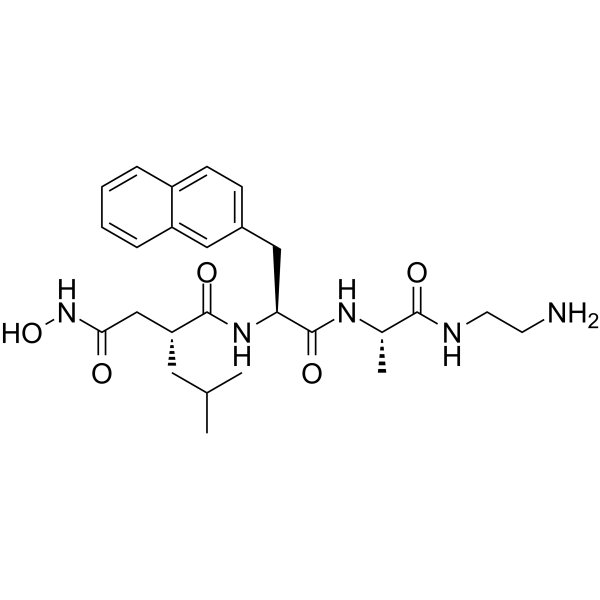
    TAPI-1
    10+ Cited Publications

    MMP NF-κB Apoptosis TNF Receptor Inflammation/Immunology Cancer
    TAPI-1 is a broad-spectrum MMP inhibitor and NF-κB p65 inhibitor that targets ADAM17/TACE, ADAM10 and other proteins. TAPI-1 reduces the proteolytic cleavage of membrane-bound TNF-α, decreases TNF-α levels, inhibits NF-κB pathway activation, and downregulates profibrotic markers. TAPI-1 reduces the proportion of proinflammatory immune cells, alleviates cardiac and airway fibrosis, and improves cardiac function after myocardial infarction. Meanwhile, TAPI-1 inhibits the viability, migration and invasion of esophageal squamous cell carcinoma cells, enhances the chemosensitivity of Cisplatin (HY-17394), induces apoptosis, and shows low toxicity to normal esophageal epithelial cells. TAPI-1 can be widely used in studies related to myocardial infarction-induced heart failure, severe traumatic tracheal stenosis, esophageal squamous cell carcinoma and other conditions .
    TAPI-1
  • HY-156963

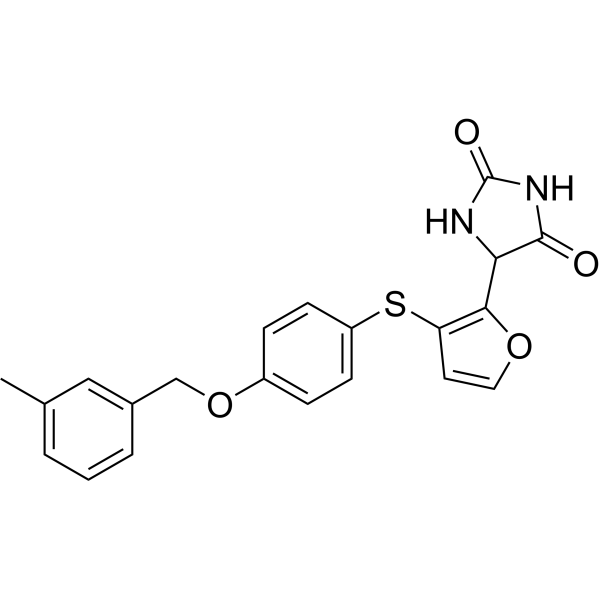
    FP-025

    MMP Inflammation/Immunology
    Aderamastat (FP-025) is an orally active, selective MMP-12 inhibitor. Aderamastat provides protection against house dust mite (HDM)-sensitized allergic asthma. Aderamastat can be used in the research of respiratory diseases, including chronic inflammatory airway diseases and pulmonary fibrosis .
    Aderamastat
  • HY-108858
    Dornase alfa
    1 Publications Verification

    rhDNase

    DNA/RNA Synthesis Endonuclease Inflammation/Immunology
    Dornase alfa (rhDNase) is a recombinant human deoxyribonuclease I (rhDNase) that can specifically degrade extracellular DNA. Dornase alfa catalyzes the cleavage of DNA released by neutrophils in respiratory mucus, reduces sputum viscosity, thereby improving mucus clearance efficiency, reducing airway obstruction and alleviating inflammatory responses. Dornase alfa can be used to improve lung function (such as FEV_1) in cystic fibrosis (CF), reduce the risk of acute pulmonary exacerbations, and has good in vivo tolerability. Dornase alfa acts locally on the respiratory tract through aerosol inhalation, specifically improving the high viscosity of mucus caused by DNA accumulation and related respiratory symptoms .
    Dornase alfa
  • HY-P990094

    CSL311

    c-Fms Inflammation/Immunology
    Trabikibart (CSL311) is a specific inhibitor targeting the βc receptor (CSF2RB) that inhibits signal transduction mediated by GM-CSF, IL-5, and IL-3. Trabikibart exhibits significant anti-inflammatory and anti-edema effects, reduces myeloid cell infiltration, and inhibits inflammatory cell survival. Trabikibart also possesses antiviral immune functions, which alleviate pulmonary inflammation, reverse airway dysfunction and fibrosis, and thereby restore impaired pulmonary function. Trabikibart can be used in research on related diseases such as acute respiratory distress syndrome, viral pneumonia, asthma, and chronic rhinosinusitis with nasal polyps .
    Trabikibart
  • HY-108464A

    Sodium Channel TRP Channel Metabolic Disease Inflammation/Immunology
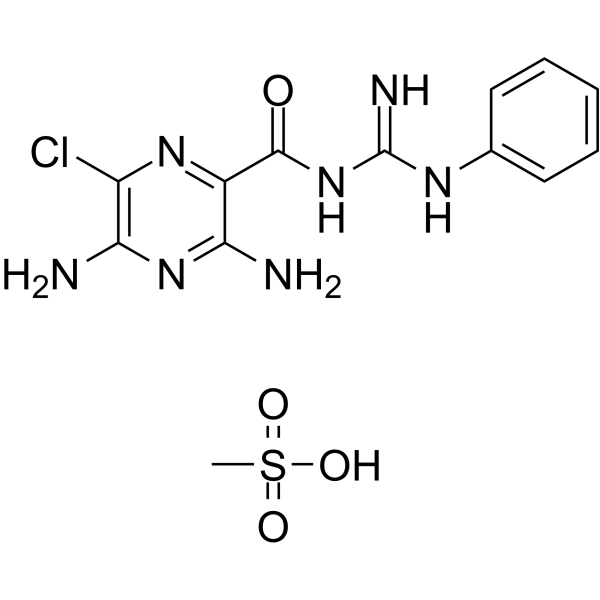
    Phenamil methanesulfonate, an analog of Amiloride (HY-B0285), is a more potent and less reversible epithelial sodium channel (ENaC) blocker with an IC50 of 400 nM . Phenamil methanesulfonate is also a competive inhibitor of TRPP3 and inhibits TRPP3-mediated Ca 2+ transport with an IC50 of 140 nM in a Ca 2+ uptake assay . Phenamil methanesulfonate is an intriguing small molecule to promote bone repair by strongly activating BMP signaling pathway . Phenamil methanesulfonate is used for the research of cystic fibrosis lung disease .
    Phenamil methanesulfonate
  • HY-P99193

    MEDI-528

    Interleukin Related Inflammation/Immunology
    Enokizumab (MEDI-528) is a monoclonal antibody targeting to interleukin (IL)-9. IL-9 regulates the development of airway inflammation, mucus production, airway hyperresponsiveness, and airway fibrosis largely by increasing mast cell numbers and activity in the airways .
    Enokizumab
  • HY-121235

    SCH-10304

    COX Calcium Channel TGF-β Receptor Neurological Disease Inflammation/Immunology
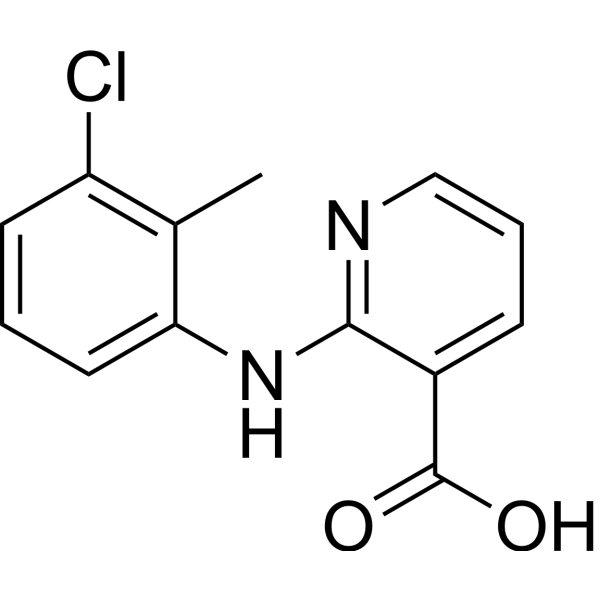
    Clonixin (SCH-10304) is an orally active non-steroidal anti-inflammatory agent (NSAID) that inhibits COX synthesis. Clonixin acts as a voltage-gated L-type calcium channel blocker, exerts vasodilatory effects by antagonizing Ca 2+ in vascular smooth muscle. Clonixin inhibits TGF-β, reduces lung coefficient, immune cell infiltration level, oxidative stress response, airway resistance, hydroxyproline content and collagen deposition. Clonixin can be used in research related to inflammation such as idiopathic pulmonary fibrosis and moderate to severe pain .
    Clonixin
  • HY-P11085

    Bacterial Infection
    WLBU2 is a engineered cationic antimicrobial peptide (eCAP) that overcomes the environmental sensitivity of natural antimicrobial peptides (AMPs). WLBU2 exhibits rapid bactericidal effect, with the MIC values of ≤ 10 μM against both Gram-negative and Gram-positive bacteria including MRSA, vancomycin-resistant enterococci, K. pneumoniae, E.aerogenes, E. cloacae, Escherichia coli, et, al. WLBU2 prevents P. aeruginosa biofilm growth and retains its activity in an environment rich in mucus, low pH and high salt concentrations without negative effects on human airway epithelial cells. WLBU2 can be used for the studies of cystic fibrosis (CF) and Pseudomonas aeruginosa infections .
    WLBU2
  • HY-16363

    PG 490-88

    Apoptosis TGF-β Receptor NF-κB Interleukin Related IFNAR TNF Receptor Inflammation/Immunology
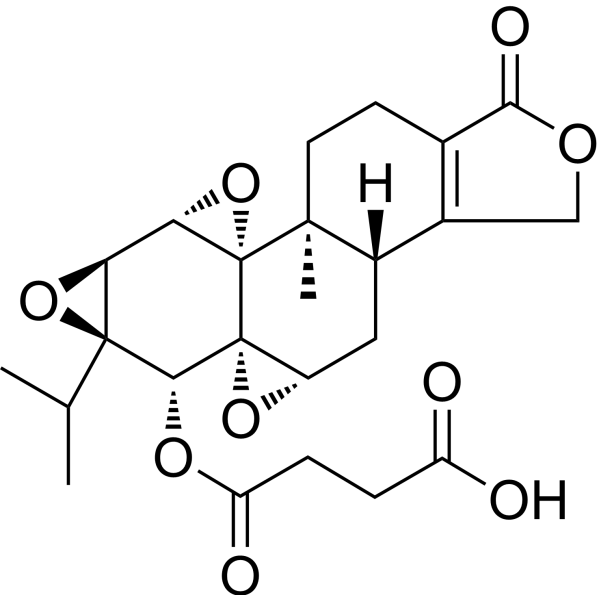
    Omtriptolide (PG490-88) is a derivative proagent of triptolide purified from the Chinese herb.
    Omtriptolide
  • HY-119229

    CFTR Inflammation/Immunology
    VRT-325 is a CFTR modulator. VRT-325 inhibits disulfide cross-linking between cysteines in transmembrane segments 6 and 7 of CFTR and P-gp. VRT-325 promotes maturation of CFTR and P-gp processing mutants, rescues ΔF508-CFTR folding at the endoplasmic reticulum. VRT-325 binds ΔF508-CFTR nucleotide-binding domain 1, and increases mature ΔF508-CFTR cell surface expression and chloride conductance. VRT-325 can be used for the research of cystic fibrosis [1] [3].
    VRT-325
  • HY-161815

    Drug Intermediate Interleukin Related Inflammation/Immunology
    Anti-inflammatory agent 89 is a multi-target glucocorticoid-isothiocyanate hybrid with anti-inflammatory activity. Anti-inflammatory agent 89 releases hydrogen sulfide via its isothiocyanate group, inhibits antigen-induced mast cell degranulation, alleviates pulmonary inflammation, and suppresses bronchial hyperresponsiveness and airway fibrosis. Anti-inflammatory agent 89 can be used in asthma research .
    Anti-inflammatory agent 89
  • HY-170387

    5-HT Receptor Cardiovascular Disease
    MRS8209 is the antagonist for serotonin receptor with a Ki of 4.27 nM for 5-HT2BR. MRS8209 exhibits protective effect on pressure at airway opening (PAO), and can be used in research of pulmonary fibrosis .
    MRS8209
  • HY-121235R

    SCH-10304 (Standard)

    Reference Standards COX Calcium Channel TGF-β Receptor Neurological Disease Inflammation/Immunology
    Clonixin (SCH-10304) (Standard) is the analytical standard of Clonixin. This product is intended for research and analytical applications. Clonixin is an orally active non-steroidal anti-inflammatory agent (NSAID) that inhibits COX synthesis. Clonixin acts as a voltage-gated L-type calcium channel blocker, exerts vasodilatory effects by antagonizing Ca 2+ in vascular smooth muscle. Clonixin inhibits TGF-β, reduces lung coefficient, immune cell infiltration level, oxidative stress response, airway resistance, hydroxyproline content and collagen deposition. Clonixin can be used in research related to inflammation such as idiopathic pulmonary fibrosis and moderate to severe pain .
    Clonixin (Standard)
  • HY-16362

    PG 490-88Na

    Apoptosis TGF-β Receptor NF-κB Interleukin Related IFNAR TNF Receptor Inflammation/Immunology
    Omtriptolide sodium (PG490-88Na) is a derivative of Triptolide (HY-32735). Omtriptolide sodium exhibits significant immunosuppressive, anti-fibrotic and anti-inflammatory properties. The mechanism of action of Omtriptolide sodium is diverse, including inhibiting T cell activation and proliferation, inducing T cell apoptosis (apoptosis), blocking fibroblast maturation/proliferation, inhibiting TGF-β mRNA expression, and suppressing pro-inflammatory cytokines (such as IL-2, IFN-γ, TNF-α) by blocking transcription factors such as NF-κB. Omtriptolide sodium can be used for research on obstructive airway diseases, pulmonary fibrosis and graft-versus-host disease .
    Omtriptolide sodium
  • HY-P11085A

    Bacterial Infection
    WLBU2 acetate is a engineered cationic antimicrobial peptide (eCAP) that overcomes the environmental sensitivity of natural antimicrobial peptides (AMPs). WLBU2 acetate exhibits rapid bactericidal effect, with the MIC values of ≤ 10 μM against both Gram-negative and Gram-positive bacteria including MRSA, vancomycin-resistant enterococci, K. pneumoniae, E.aerogenes, E. cloacae, Escherichia coli, et, al. WLBU2 acetate prevents P. aeruginosa biofilm growth and retains its activity in an environment rich in mucus, low pH and high salt concentrations without negative effects on human airway epithelial cells. WLBU2 acetate can be used for the studies of cystic fibrosis (CF) and Pseudomonas aeruginosa infections .
    WLBU2 acetate
  • HY-121235S1

    SCH-10304-13C,d3

    Isotope-Labeled Compounds COX Calcium Channel TGF-β Receptor Neurological Disease Inflammation/Immunology
    Clonixin- 13C,d3 (SCH-10304- 13C,d3) is the deuterium and 13C-labeled Clonixin (HY-121235). Clonixin is an orally active non-steroidal anti-inflammatory agent (NSAID) that inhibits COX synthesis. Clonixin acts as a voltage-gated L-type calcium channel blocker, exerts vasodilatory effects by antagonizing Ca 2+ in vascular smooth muscle. Clonixin inhibits TGF-β, reduces lung coefficient, immune cell infiltration level, oxidative stress response, airway resistance, hydroxyproline content and collagen deposition. Clonixin can be used in research related to inflammation such as idiopathic pulmonary fibrosis and moderate to severe pain.
    Clonixin-13C,d3

Inquiry Online

Your information is safe with us. * Required Fields.

Salutation


Country or Region *

Applicant Name *


Organization Name *

Department *


Email Address *


Product Name *

Cat. No.


Requested quantity *

Phone Number *


Remarks

Inquiry Online

Inquiry Information

Product Name:
Cat. No.:
Quantity:
MCE Japan Authorized Agent:

