Search Result
Results for "
anxiolytic and anticonvulsant activities
" in MedChemExpress (MCE) Product Catalog:
1
Isotope-Labeled Compounds
| Cat. No. |
Product Name |
Target |
Research Areas |
Chemical Structure |
-
- HY-W013150
-
|
|
GABA Receptor
|
Neurological Disease
|
|
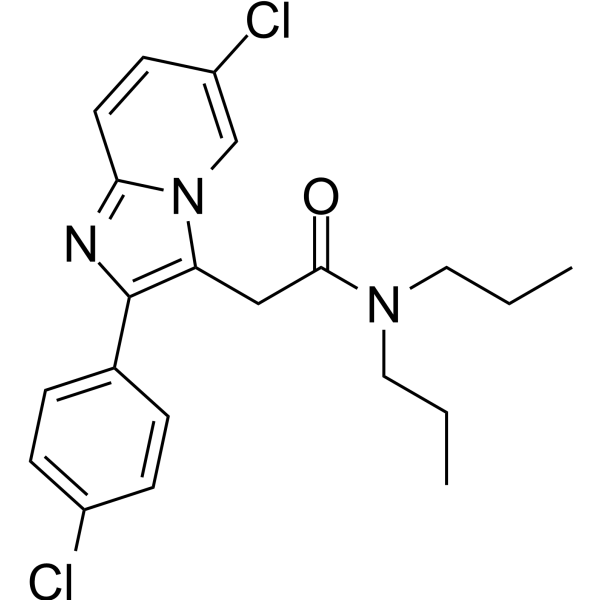
Alpidem, an anxiolytic agent, is an orally active and brain-penetrant GABAA receptor ligand, binds to α1β2γ2 subunit-containing GABAA receptors (IC50 of 17 nM) over α5β2γ2 subunit-containing GABAA receptors (IC50 of >10 μM). Alpidem modulates calcium-induced mitochondrial permeability transition, induces glutathione depletion and hepatocyte necrosis, potentiates TNF-α toxicity, inhibits marble-burying and locomotor activity, enhances stressed rodent feeding behavior, and exerts anticonvulsant effects. Alpidem can be used for the research of anxiety, anxiety disorders, and convulsions .
|
-
-
- HY-B1229
-
|
3-Methylbutanamide
|
GABA Receptor
|
Neurological Disease
Metabolic Disease
|
|
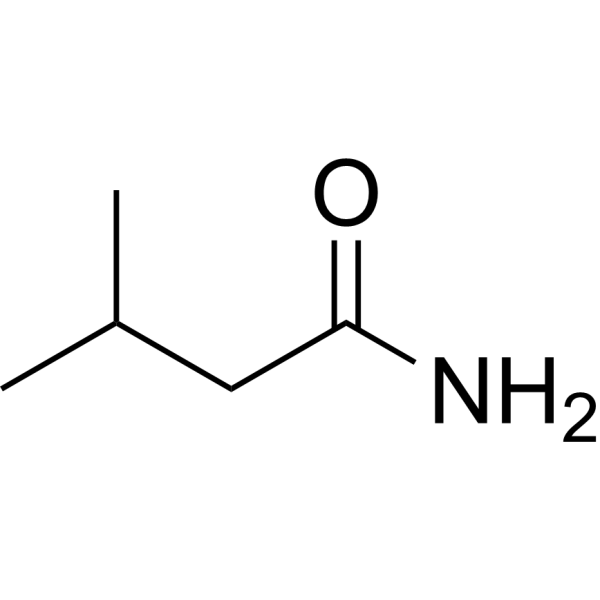
Isovaleramide (3-Methylbutanamide) is an orally active anticonvulsant. Isovaleramide inhibits alcohol dehydrogenase (ADH) activity and regulates GABAergic system. Isovaleramide reduces acute kidney injury. Isovaleramide has antiepileptic, anxiolytic, sedative and hypnotic effects[1] .
|
-
-
- HY-103505
-
|
|
GABA Receptor
|
Neurological Disease
|
|
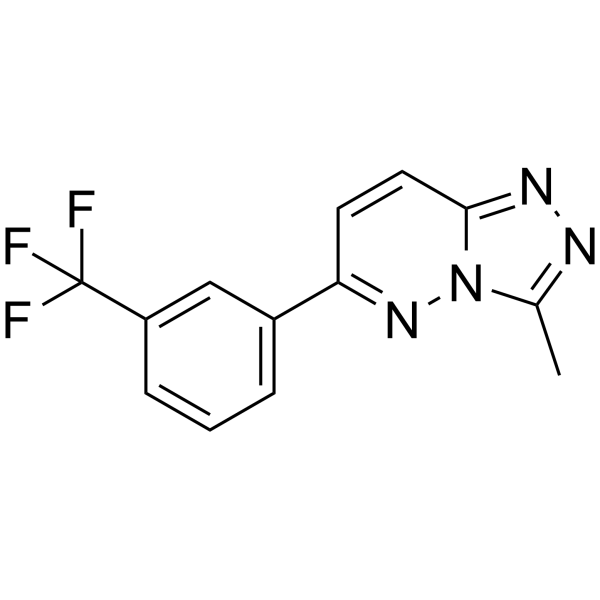
CL 218872 is an orally active and selective ligand for the benzodiazepine receptor subtype BZ1. CL 218872 exhibits anxiolytic, sedative and anticonvulsant activities. CL 218872 can be used in researches of anxiety related disorders and epilepsy .
|
-
-
- HY-114871
-
|
|
GABA Receptor
|
Neurological Disease
|
|
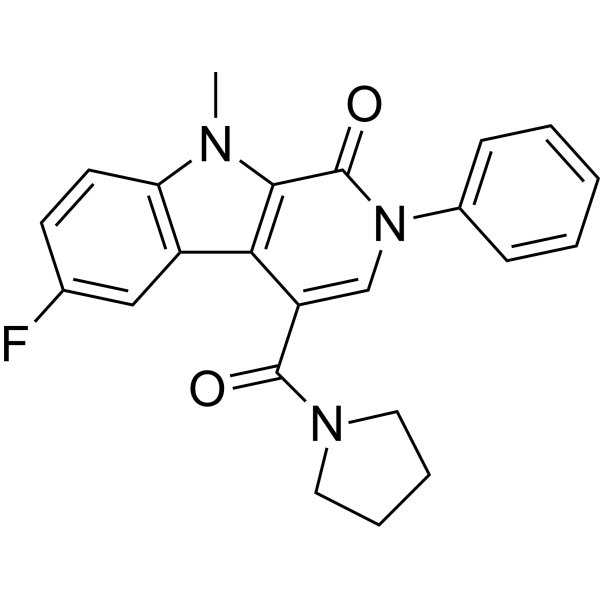
SL651498 is a full agonist of α2 and α3 GABAA receptors, and a partial agonist of α1 and α5 GABAA receptors. SL651498 shows anxiolytic and anticonvulsant activities .
|
-
-
- HY-136591
-
|
|
Drug Metabolite
|
Neurological Disease
Cancer
|
|
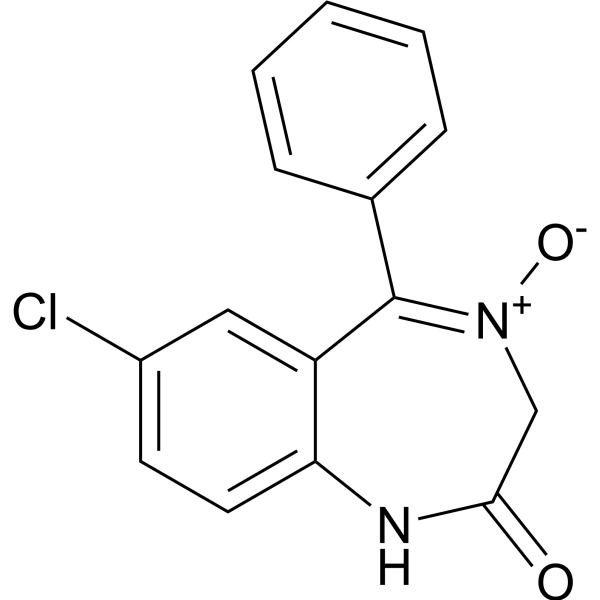
Demoxepam is a major metabolite of Chlordiazepoxide. Demoxepam exhibits cytotoxicity activity against cancer cell lines. Demoxepam has anticonvulsant and anxiolytic effects. Demoxepam has an inhibitory effect on in vitro [ 3H]tryptophan binding to rat hepatic nuclei .
|
-
-
- HY-152358
-
|
|
Nucleoside Antimetabolite/Analog
|
Others
|
|
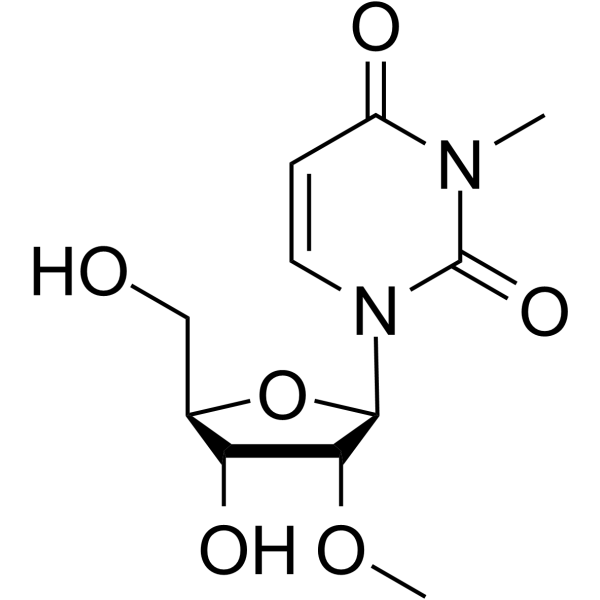
N3-Methyl-2’-O-methyluridine is a uridine analogue. Uridine has potential antiepileptic effects, and its analogs can be used to study anticonvulsant and anxiolytic activities, as well as to develop new antihypertensive agents .
|
-
-
- HY-N9502
-
|
|
Endogenous Metabolite
|
Neurological Disease
|
|
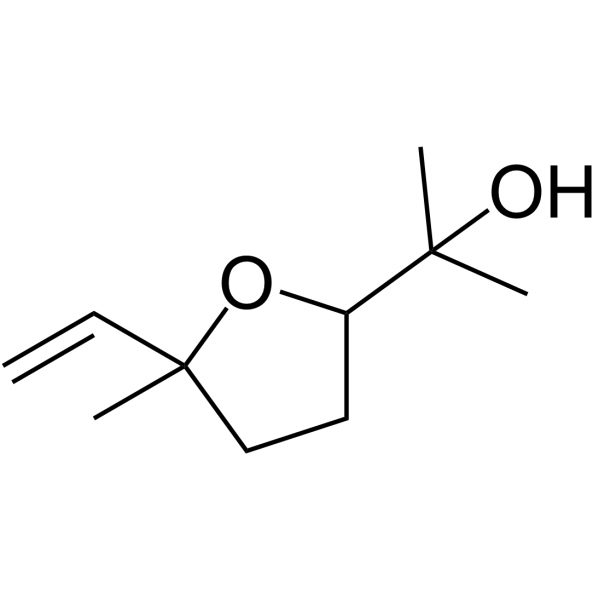
Linalool oxide is a monoterpene and found in aromatic plant essential oils and is a secondary metabolite in elongating wheat plants. Linalool oxide has antinociceptive, anticonvulsant, and anxiolytic activity. Linalool oxide can be used for the research of pain, epilepsy, anxiety disorders .
|
-
-
- HY-B1803A
-
|
ICI 136753 hydrochloride
|
GABA Receptor
|
Neurological Disease
|
|
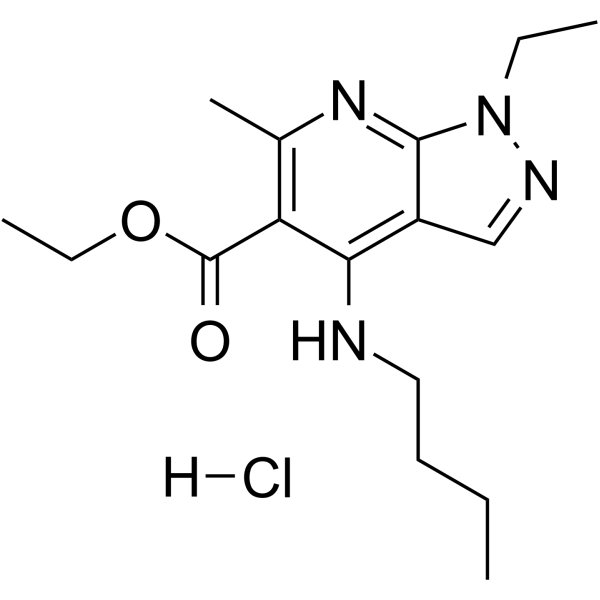
Tracazolate (ICI 136753) hydrochloride is a potent GABAA receptor modulator. Tracazolate hydrochloride has selectivity for β3 and potentiates α1β1γ2s (EC50=13.2 μM), α1β3γ2 (EC50=1.5 μM). Tracazolate hydrochloride has the potency (EC50) determined by the nature of the third subunit (γ1-3, δ, ε) within the receptor complex. Tracazolate hydrochloride possesses anxiolytic and anticonvulsant activity .
|
-
-
- HY-141795
-
|
Co 134444
|
Drug Derivative
|
Neurological Disease
|
|
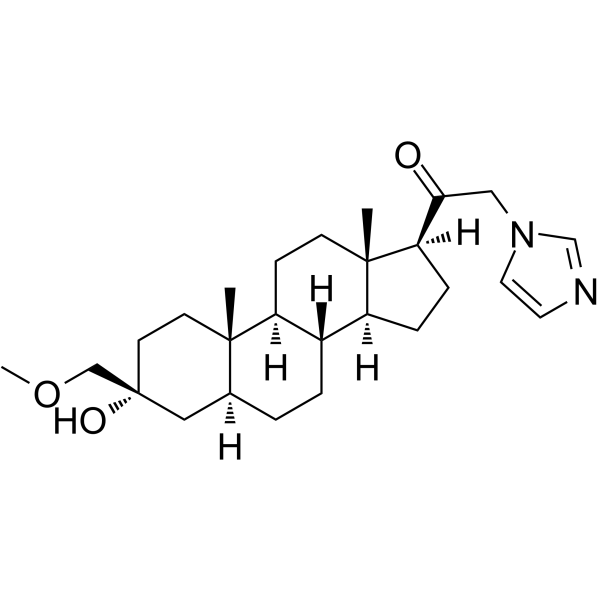
Posovolone (Co 134444) is an orally active, neuroactive steroid. Posovolone has anticonvulsant and anxiolytic-like activity as well as ataxic effects .
|
-
-
- HY-101387
-
|
|
mGluR
|
Neurological Disease
|
|
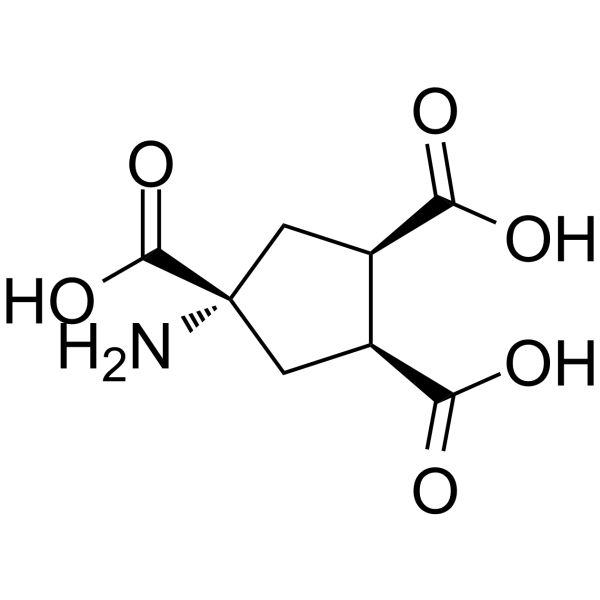
rel-ACPT-I is an agonist of group III mGluRs with diverse biological activities including neuroprotective, anticonvulsant, and anxiolytic-like effects .
|
-
-
- HY-134337
-
|
|
Nucleoside Antimetabolite/Analog
Phosphoramidites
|
Cancer
|
|
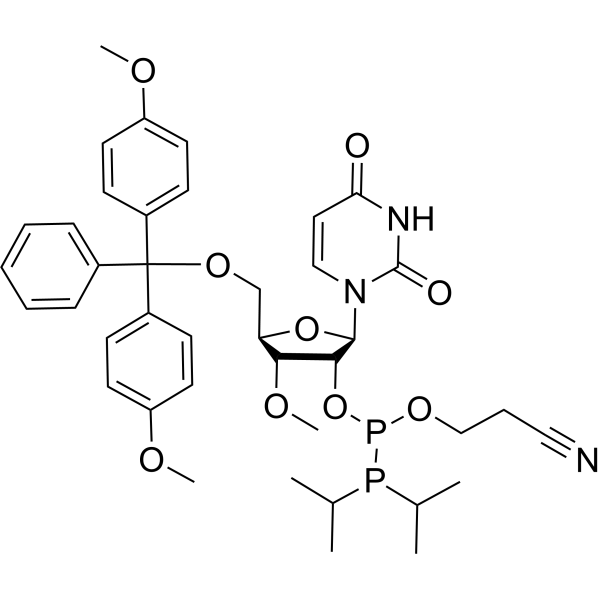
5'-O-DMTr-3'-O-methyl uridine-3'-CED-phosphoramidite is a uridine analog. Uridine has potential antiepileptic effects, and its analogs can be used to study anticonvulsant and anxiolytic activities, as well as to develop new antihypertensive agents .
|
-
-
- HY-164728
-
|
|
Calcium Channel
|
Neurological Disease
|
|
Pregabalin diacid is an impurity of Pregabalin, a lipophilic GABA (γ-aminobutyric acid) analog with anxiolytic and anticonvulsant activity. Pregabalin may act on the α(2)β subunit of voltage-dependent calcium channels, which are widely distributed in the peripheral and central nervous systems. Pregabalin can effectively induce hypoalgesia and improve behavioral disorders .
|
-

-
- HY-152732
-
|
|
Nucleoside Antimetabolite/Analog
|
Others
|
|
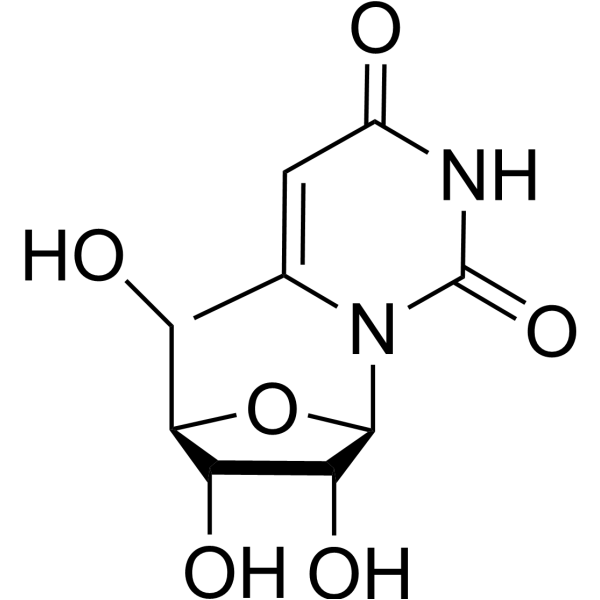
6-Methyluridine is a uridine analogue. Uridine has potential antiepileptic effects, and its analogs can be used to study anticonvulsant and anxiolytic activities, as well as to develop new antihypertensive agents .
|
-
-
- HY-154285
-
|
|
Nucleoside Antimetabolite/Analog
|
Cancer
|
|
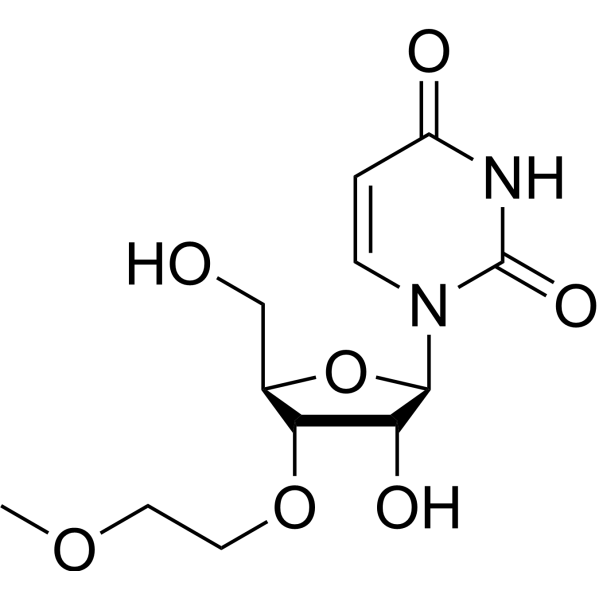
3’-O-(2-Methoxyethyl) uridine is a uridine analog. Uridine has potential antiepileptic effects, and its analogs can be used to study anticonvulsant and anxiolytic activities, as well as to develop new antihypertensive agents .
|
-
-
- HY-154466
-
|
|
Nucleoside Antimetabolite/Analog
|
Cancer
|
|
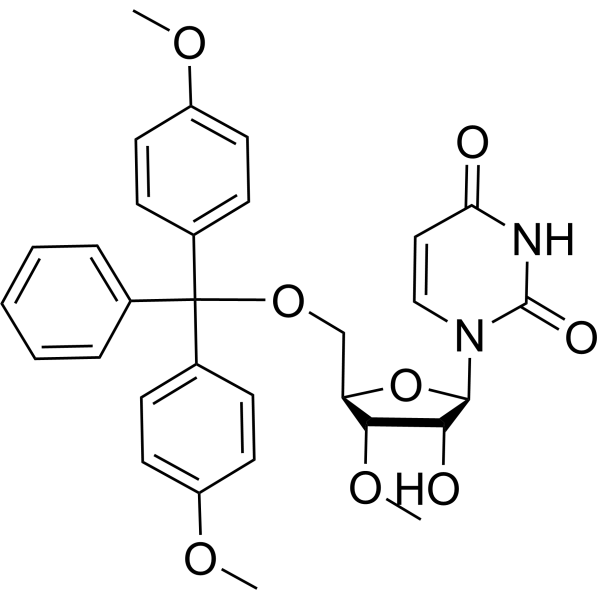
5’-O-(4,4’-Dimethoxytrityl)-3’-O-methyluridine is a uridine analog. Uridine has potential antiepileptic effects, and its analogs can be used to study anticonvulsant and anxiolytic activities, as well as to develop new antihypertensive agents .
|
-
-
- HY-48973
-
|
|
Nucleoside Antimetabolite/Analog
Phosphoramidites
|
Others
|
|
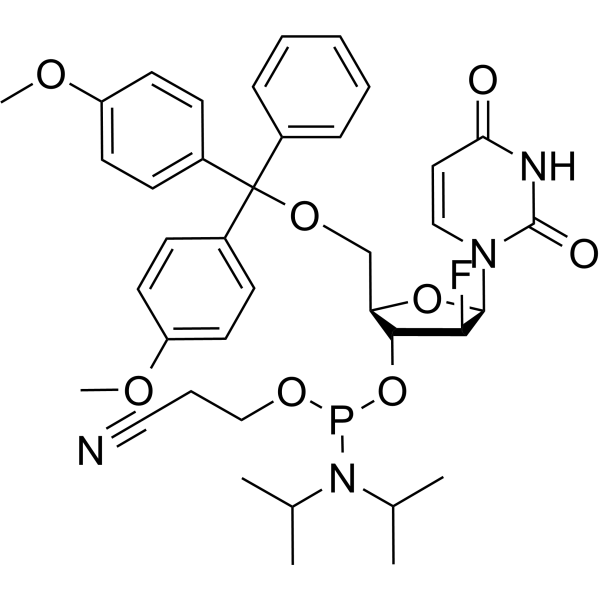
2'-Fluoro-2'-deoxy-ara-U-3'-phosphoramidite is a uridine analog. Uridine has potential antiepileptic effects, and its analogs can be used to study anticonvulsant and anxiolytic activities, as well as to develop new antihypertensive agents .
|
-
-
- HY-154358
-
|
|
Nucleoside Antimetabolite/Analog
|
Cancer
|
|
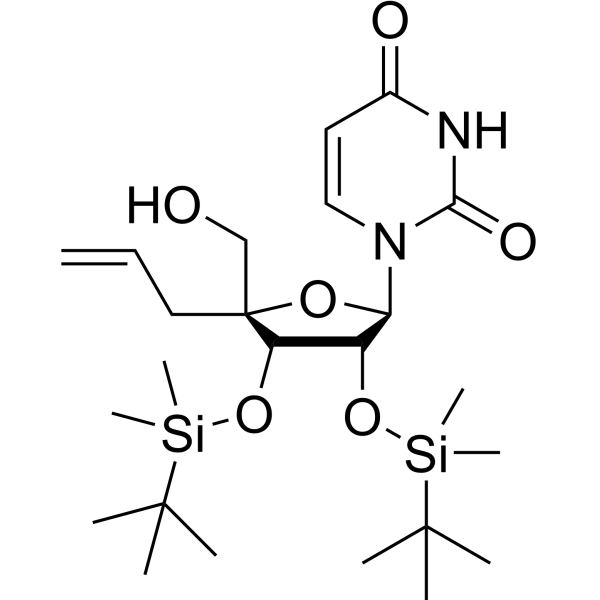
4’-alpha-C-Allyl-2’,3’-bis(O-t-butyldimethylsilyl) uridine is a uridine analog. Uridine has potential antiepileptic effects, and its analogs can be used to study anticonvulsant and anxiolytic activities, as well as to develop new antihypertensive agents .
|
-
-
- HY-154492
-
|
|
Nucleoside Antimetabolite/Analog
|
Cancer
|
|
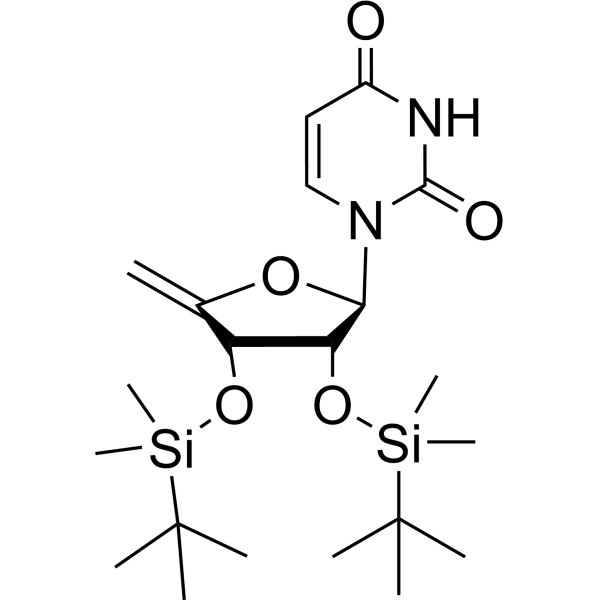
2’,3’-Bis(O-t-butyldimethylsilyl)-4’,5’-didehydro-5’-deoxyuridine is a uridine analog. Uridine has potential antiepileptic effects, and its analogs can be used to study anticonvulsant and anxiolytic activities, as well as to develop new antihypertensive agents .
|
-
-
- HY-154582
-
|
|
Nucleoside Antimetabolite/Analog
|
Others
|
|
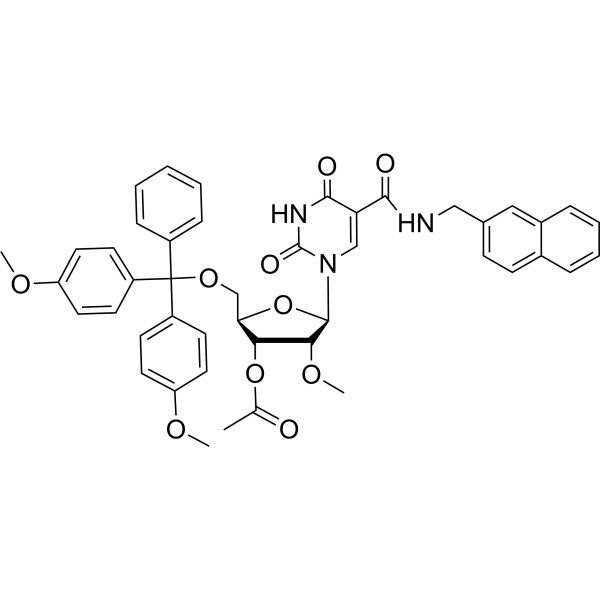
5-Naphthyl-beta-methylaminocarbony-3’-O-acetyl-2’-O-methyl-5’-O-DMTr-uridine is a uridine analog. Uridine has potential antiepileptic effects, and its analogs can be used to study anticonvulsant and anxiolytic activities, as well as to develop new antihypertensive agents .
|
-
-
- HY-152782
-
|
|
Nucleoside Antimetabolite/Analog
|
Others
|
|
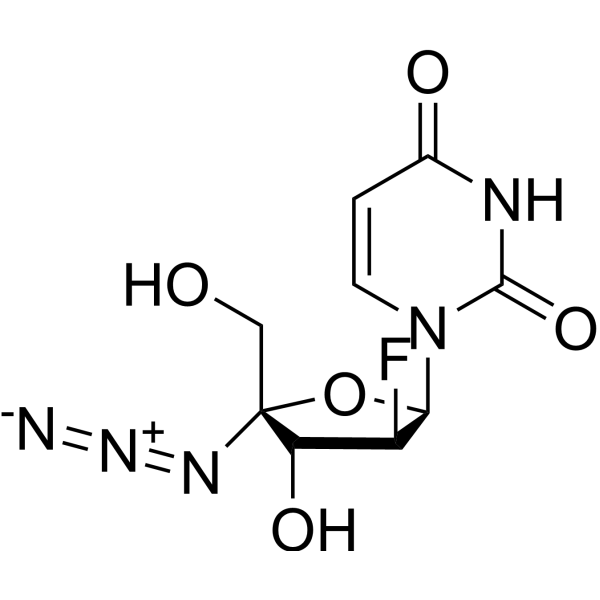
4’-Azido-2’-deoxy-2’-fluoro-beta-D-arabinouridine is a uridine analogue. Uridine has potential antiepileptic effects, and its analogs can be used to study anticonvulsant and anxiolytic activities, as well as to develop new antihypertensive agents . 4’-Azido-2’-deoxy-2’-fluoro-beta-D-arabinouridine is a click chemistry reagent, it contains an Azide group and can undergo copper-catalyzed azide-alkyne cycloaddition reaction (CuAAc) with molecules containing Alkyne groups. It can also undergo strain-promoted alkyne-azide cycloaddition (SPAAC) reactions with molecules containing DBCO or BCN groups.
|
-
-
- HY-121393
-
|
|
GABA Receptor
|
Neurological Disease
|
|
Imidazenil is a partial positive allosteric modulator of GABAA receptors with anxiolytic, antipanic and anticonvulsant activities.
|
-

-
- HY-W020098
-
|
|
Nucleoside Antimetabolite/Analog
|
Cancer
|
|
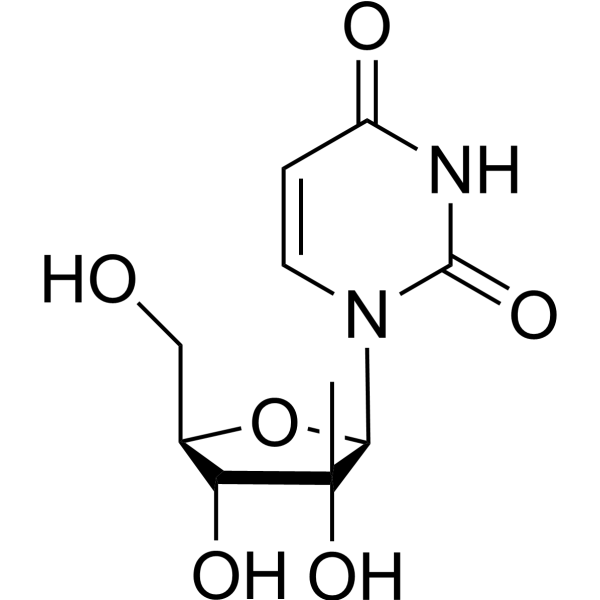
2'-C-methyluridine is a uridine analog. Uridine has potential antiepileptic effects, and its analogs can be used to study anticonvulsant and anxiolytic activities, as well as to develop new antihypertensive agents .
|
-
-
- HY-154488
-
|
|
Nucleoside Antimetabolite/Analog
|
Cancer
|
|
3′-O-[(1,1-Dimethylethyl)dimethylsilyl]-2′-O-methyluridine is a uridine analog. Uridine has potential antiepileptic effects, and its analogs can be used to study anticonvulsant and anxiolytic activities, as well as to develop new antihypertensive agents .
|
-
![3′-O-[(1,1-Dimethylethyl)dimethylsilyl]-2′-O-methyluridine](//file.medchemexpress.com/product_pic/hy-154488.gif)
-
- HY-154517
-
|
|
Nucleoside Antimetabolite/Analog
|
Cancer
|
|
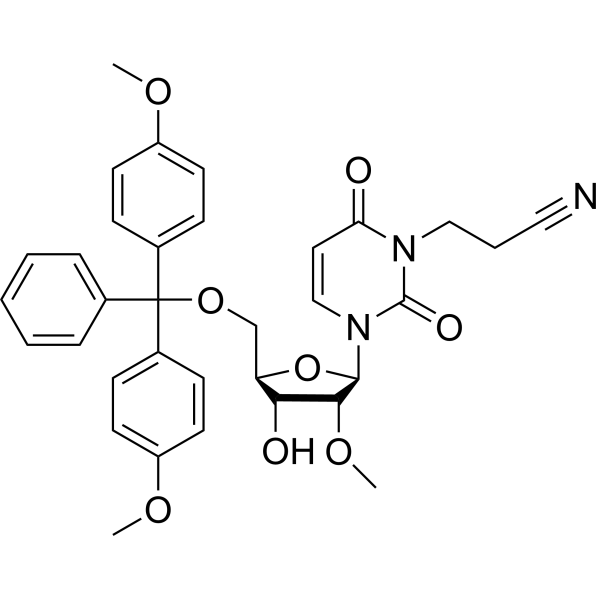
N3-Cyanoethyl-5’-O-(4,4’-dimethoxytrityl)-2’-O-methyluridine is a uridine analog. Uridine has potential antiepileptic effects, and its analogs can be used to study anticonvulsant and anxiolytic activities, as well as to develop new antihypertensive agents .
|
-
-
- HY-171253
-
-

-
- HY-101387A
-
|
|
mGluR
|
Neurological Disease
|
|
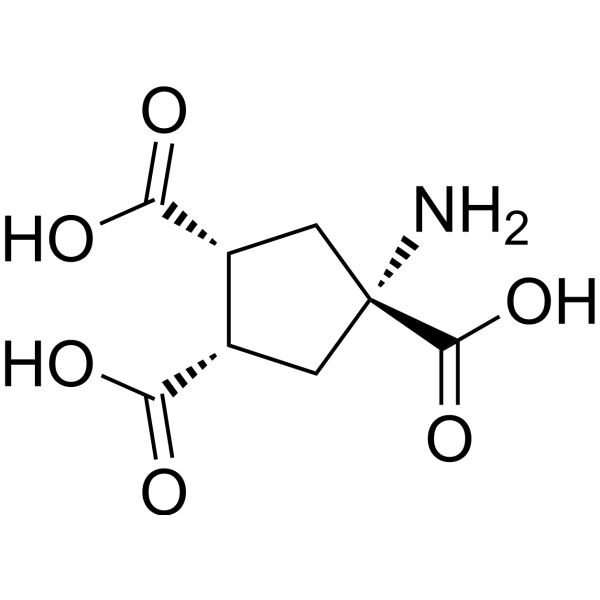
ACPT-II is an antagonist of group III mGluRs with diverse biological activities including neuroprotective, anticonvulsant, and anxiolytic-like effects .
|
-
-
- HY-19082
-
|
|
GABA Receptor
|
Neurological Disease
|
|
Y-23684 is a partial agonist of benzodiazepine receptor (BZR) with anticonvulsant and anxiolytic activities. Y-23684 can be used in the research of treatment of anxiety disorders .
|
-

-
- HY-125508
-
|
|
GABA Receptor
|
Neurological Disease
|
|
CCD-3693 is an orally active GABA receptor agonist. CCD-3693 has anxiolytic, anticonvulsant and sedative hypnotic activities and can be used in research related to neurological diseases .
|
-

-
- HY-152755
-
|
|
Nucleoside Antimetabolite/Analog
|
Others
|
|
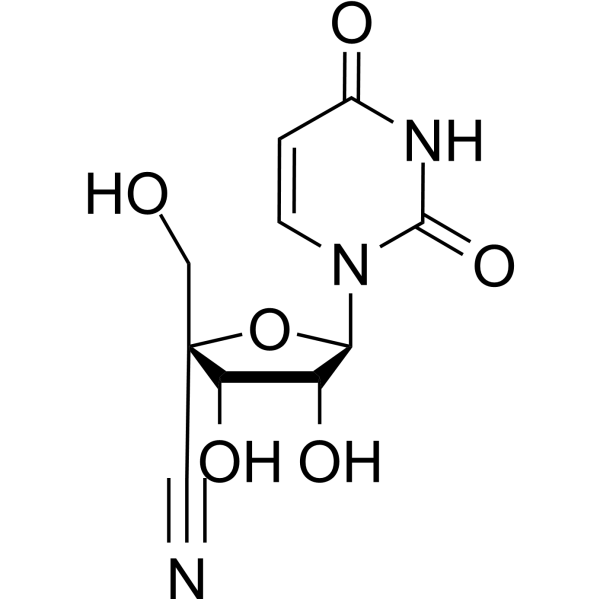
4’-Cyanouridine is a uridine analogue. Uridine has potential antiepileptic effects, and its analogs can be used to study anticonvulsant and anxiolytic activities, as well as to develop new antihypertensive agents .
|
-
-
- HY-152764
-
|
|
Nucleoside Antimetabolite/Analog
|
Others
|
|
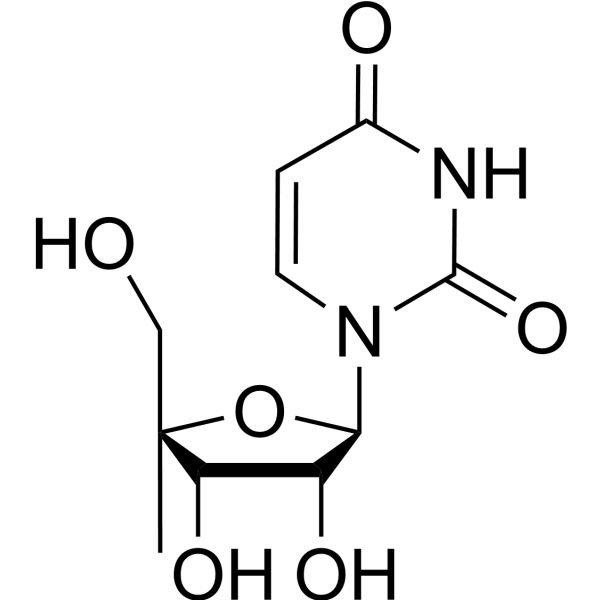
4’-α-C-Methyluridine is a uridine analogue. Uridine has potential antiepileptic effects, and its analogs can be used to study anticonvulsant and anxiolytic activities, as well as to develop new antihypertensive agents .
|
-
-
- HY-152777
-
|
|
Nucleoside Antimetabolite/Analog
|
Others
|
|
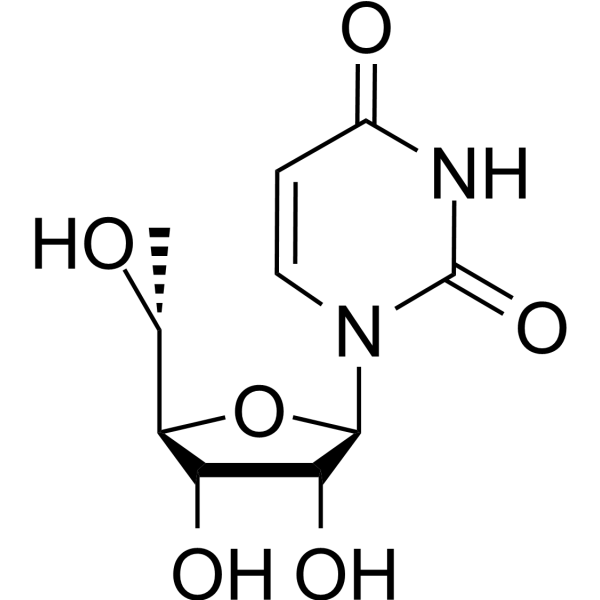
5’(R)-C-Methyluridine is a uridine analogue. Uridine has potential antiepileptic effects, and its analogs can be used to study anticonvulsant and anxiolytic activities, as well as to develop new antihypertensive agents .
|
-
-
- HY-152299
-
|
|
Nucleoside Antimetabolite/Analog
|
Others
|
|
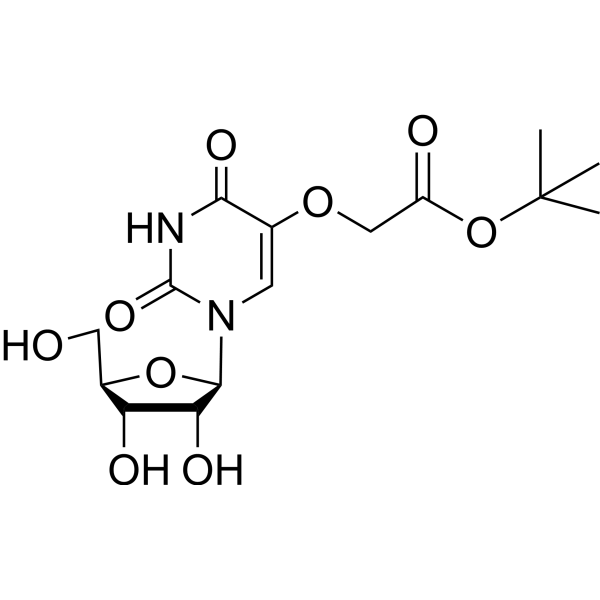
5-(t-Butyloxycarbonylmethoxy)uridine is a uridine analogue. Uridine has potential antiepileptic effects, and its analogs can be used to study anticonvulsant and anxiolytic activities, as well as to develop new antihypertensive agents .
|
-
-
- HY-154735
-
|
|
Nucleoside Antimetabolite/Analog
|
Cancer
|
|
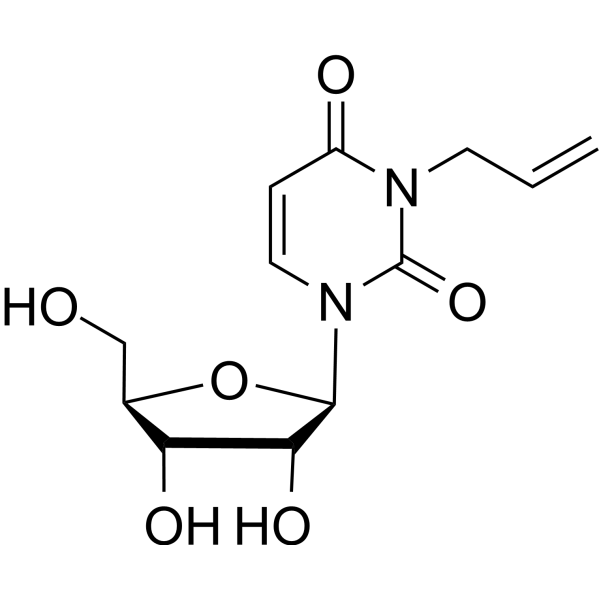
N3-Allyluridine is a uridine analog. Uridine has potential antiepileptic effects, and its analogs can be used to study anticonvulsant and anxiolytic activities, as well as to develop new antihypertensive agents .
|
-
-
- HY-152388
-
|
|
Nucleoside Antimetabolite/Analog
|
Others
|
|
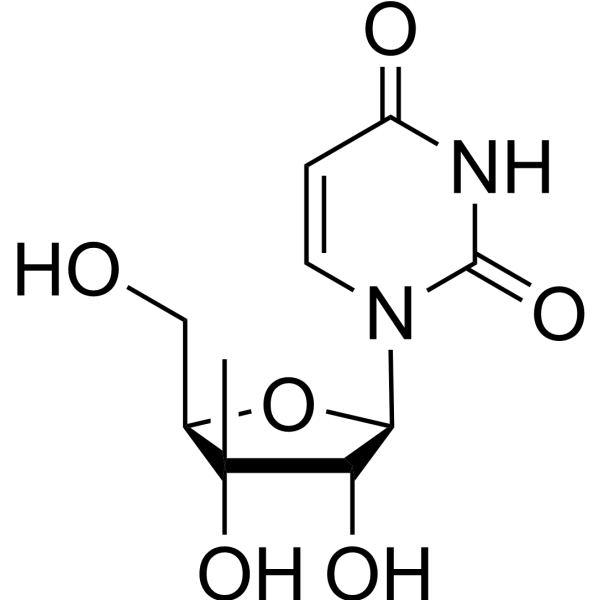
3’-beta-C-Methyluridine is a uridine analogue. Uridine has potential antiepileptic effects, and its analogs can be used to study anticonvulsant and anxiolytic activities, as well as to develop new antihypertensive agents .
|
-
-
- HY-152665
-
|
|
Nucleoside Antimetabolite/Analog
|
Cancer
|
|
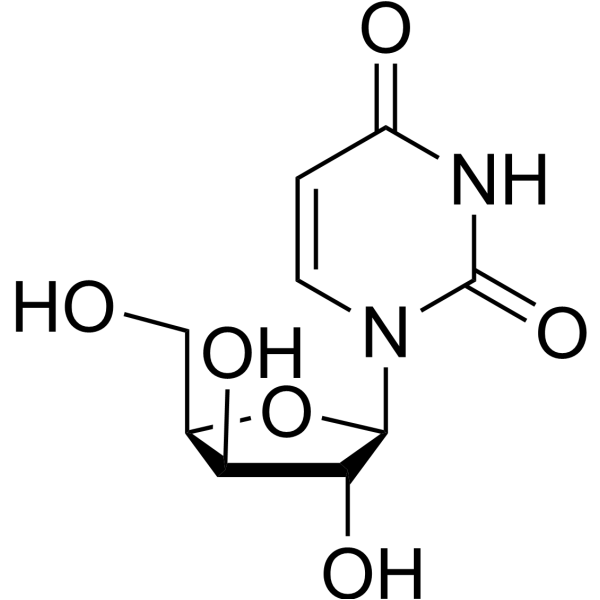
1-(β-D-Xylofuranosyl)uracil is a uridine analog. Uridine has potential antiepileptic effects, and its analogs can be used to study anticonvulsant and anxiolytic activities, as well as to develop new antihypertensive agents .
|
-
-
- HY-152970
-
|
|
Nucleoside Antimetabolite/Analog
Phosphoramidites
|
Others
|
|
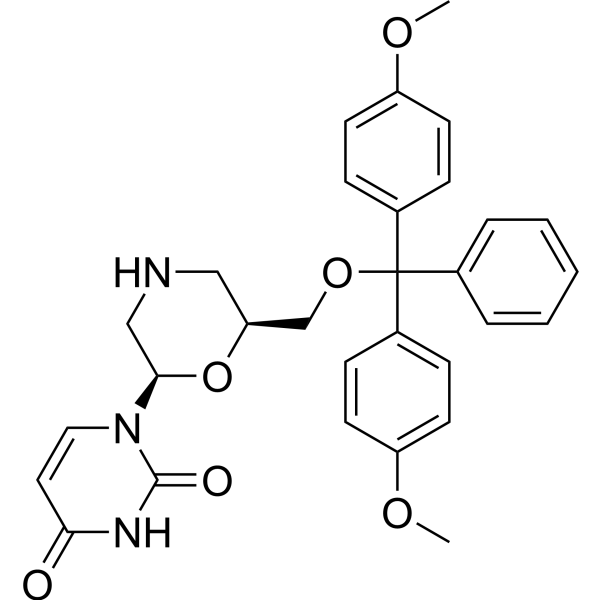
7'-O-DMT-morpholino uracil is a uridine analog. Uridine has potential antiepileptic effects, and its analogs can be used to study anticonvulsant and anxiolytic activities, as well as to develop new antihypertensive agents .
|
-
-
- HY-149077
-
|
|
Others
|
Others
|
|
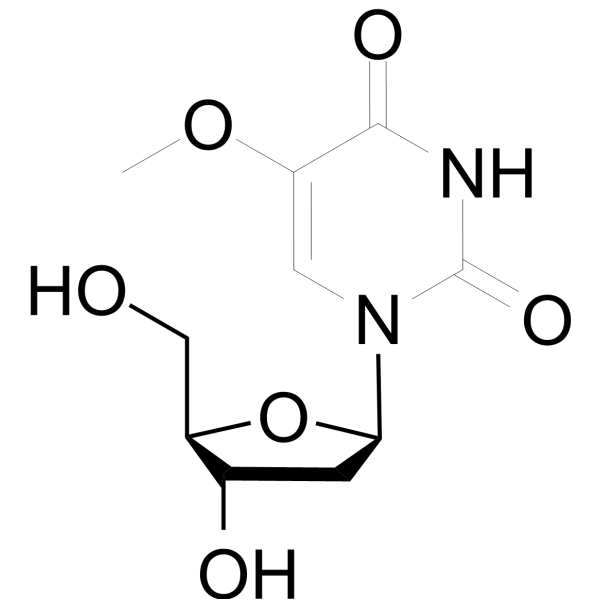
2′-Deoxy-5-methoxyuridine is a uridine analogue. Uridine has potential antiepileptic effects, and its analogs can be used to study anticonvulsant and anxiolytic activities, as well as to develop new antihypertensive agents .
|
-
-
- HY-154734
-
|
|
Nucleoside Antimetabolite/Analog
|
Cancer
|
|
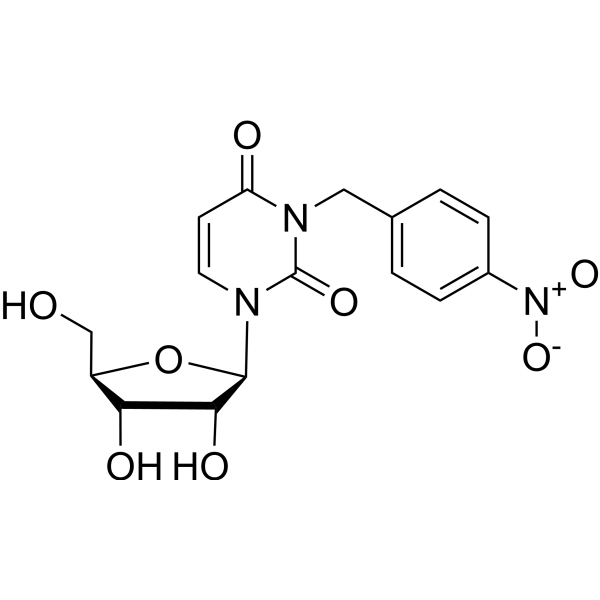
N3-(4-Nitrobenzyl)uridine is a uridine analog. Uridine has potential antiepileptic effects, and its analogs can be used to study anticonvulsant and anxiolytic activities, as well as to develop new antihypertensive agents .
|
-
-
- HY-W557556
-
|
|
Nucleoside Antimetabolite/Analog
|
Cancer
|
|
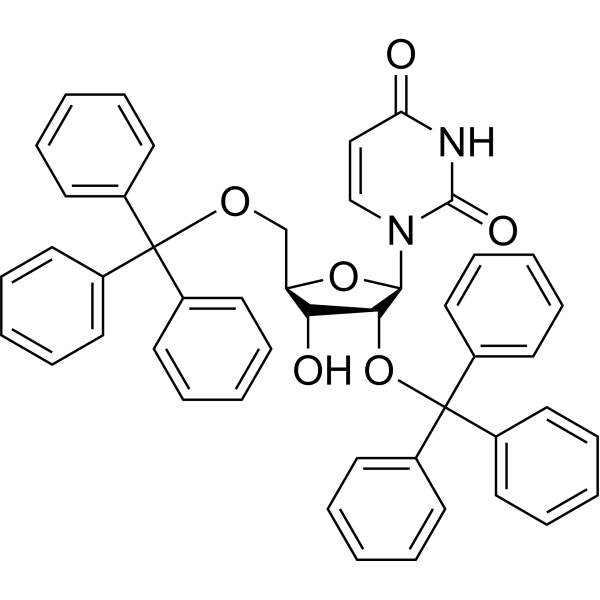
2',5'-Bis-O-(triphenylMethyl)uridine is a uridine analog. Uridine has potential antiepileptic effects, and its analogs can be used to study anticonvulsant and anxiolytic activities, as well as to develop new antihypertensive agents .
|
-
-
- HY-152677
-
|
|
Nucleoside Antimetabolite/Analog
|
Others
|
|
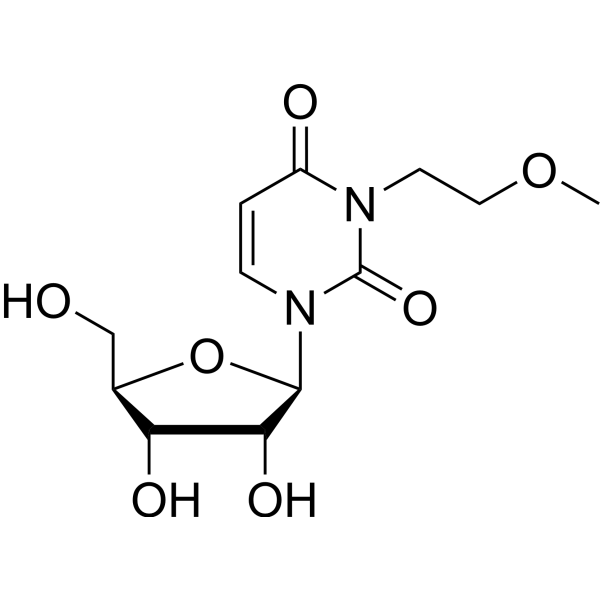
N3-(2-Methoxy)ethyluridine is a uridine analogue. Uridine has potential antiepileptic effects, and its analogs can be used to study anticonvulsant and anxiolytic activities, as well as to develop new antihypertensive agents .
|
-
-
- HY-154217
-
|
|
Nucleoside Antimetabolite/Analog
|
Cancer
|
|
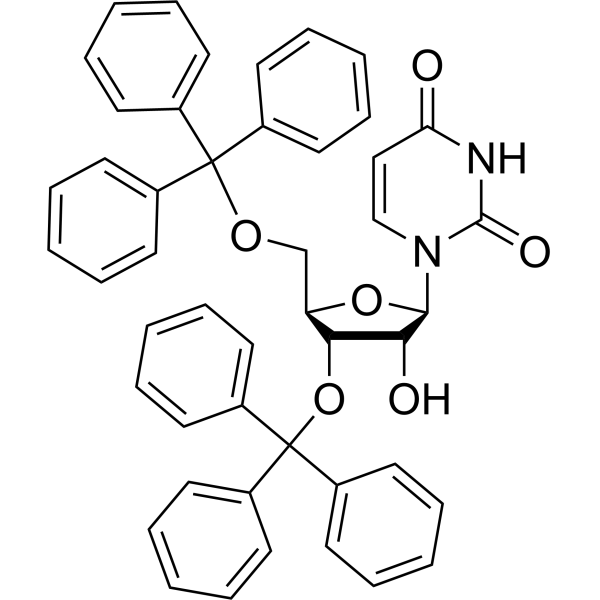
3′,5′-Bis-O-(triphenylmethyl)uridine is a uridine analog. Uridine has potential antiepileptic effects, and its analogs can be used to study anticonvulsant and anxiolytic activities, as well as to develop new antihypertensive agents .
|
-
-
- HY-152529
-
|
|
Nucleoside Antimetabolite/Analog
|
Others
|
|
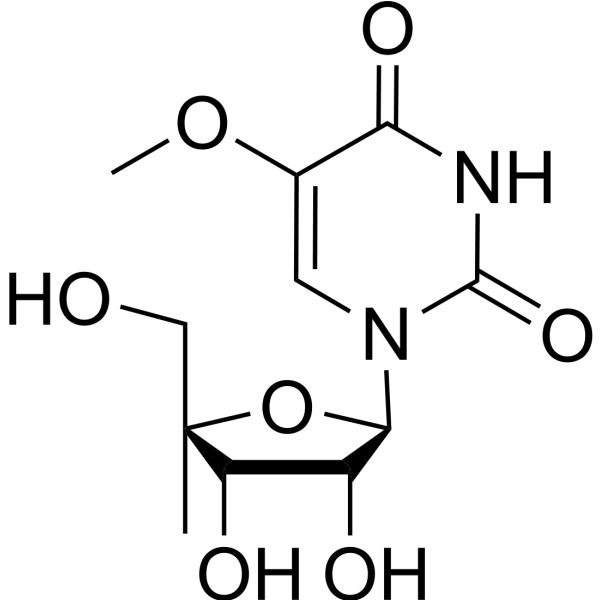
4’-C-Methyl-5-methoxyuridine is a uridine analogue. Uridine has potential antiepileptic effects, and its analogs can be used to study anticonvulsant and anxiolytic activities, as well as to develop new antihypertensive agents .
|
-
-
- HY-152522
-
|
|
Nucleoside Antimetabolite/Analog
|
Others
|
|
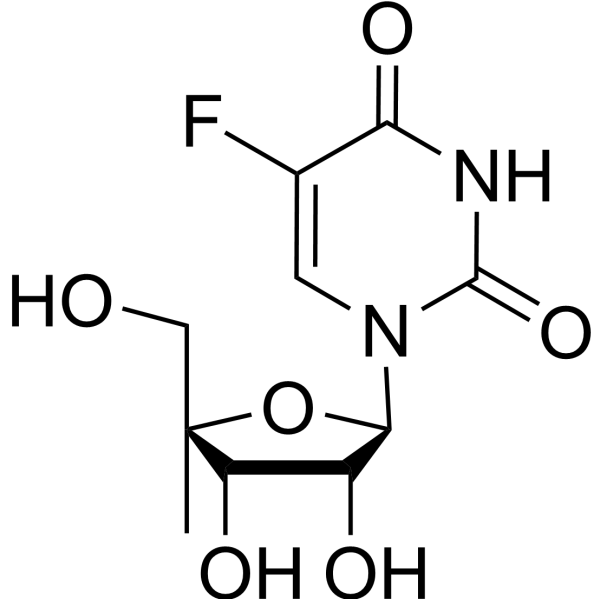
5-Fluoro-4’-C-methyluridine is a uridine analogue. Uridine has potential antiepileptic effects, and its analogs can be used to study anticonvulsant and anxiolytic activities, as well as to develop new antihypertensive agents .
|
-
-
- HY-154738
-
|
|
Nucleoside Antimetabolite/Analog
|
Cancer
|
|
N3-[3-(tert-Butoxycarbonyl)amino]propyluridine is a uridine analog. Uridine has potential antiepileptic effects, and its analogs can be used to study anticonvulsant and anxiolytic activities, as well as to develop new antihypertensive agents .
|
-
![N3-[3-(tert-Butoxycarbonyl)amino]propyluridine](//file.medchemexpress.com/product_pic/hy-154738.gif)
-
- HY-152783
-
|
|
Nucleoside Antimetabolite/Analog
|
Others
|
|
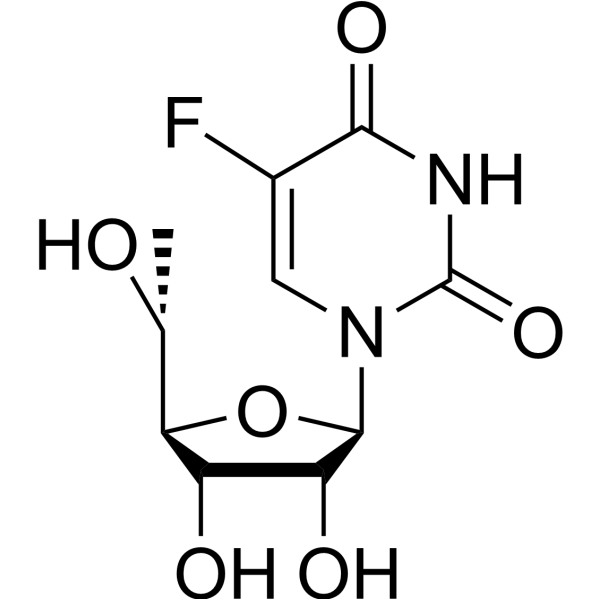
5’(R)-C-Methyl-5-fluorouridine is a uridine analogue. Uridine has potential antiepileptic effects, and its analogs can be used to study anticonvulsant and anxiolytic activities, as well as to develop new antihypertensive agents .
|
-
-
- HY-152969
-
|
|
Nucleoside Antimetabolite/Analog
|
Others
|
|
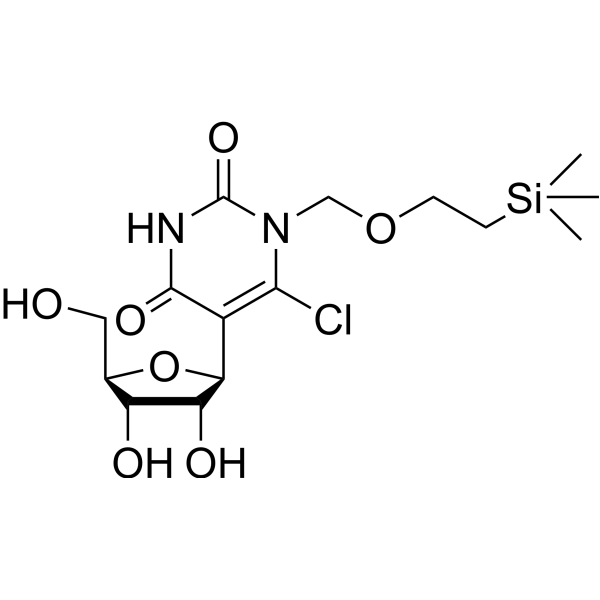
6-Chloro-N1-(trimethylsilylethoxymethyl)pseudouridine is a uridine analog. Uridine has potential antiepileptic effects, and its analogs can be used to study anticonvulsant and anxiolytic activities, as well as to develop new antihypertensive agents .
|
-
-
- HY-152779
-
|
|
Nucleoside Antimetabolite/Analog
|
Others
|
|
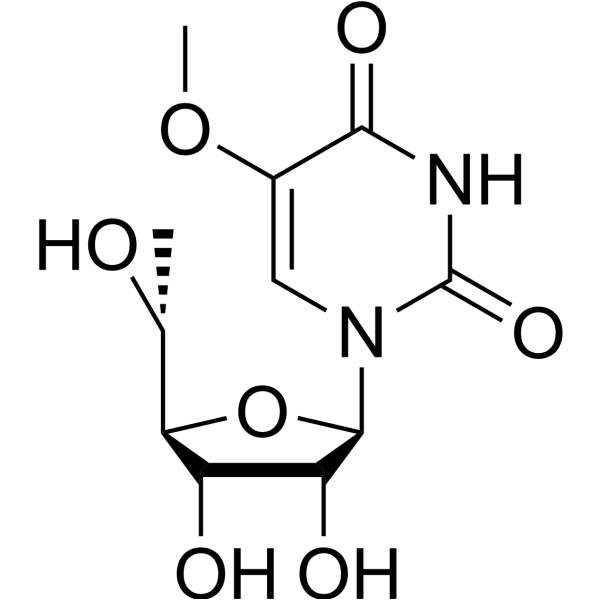
5-Methoxy-5’(R)-C-methyluridine is a uridine analogue. Uridine has potential antiepileptic effects, and its analogs can be used to study anticonvulsant and anxiolytic activities, as well as to develop new antihypertensive agents .
|
-
-
- HY-152798
-
|
|
Nucleoside Antimetabolite/Analog
|
Others
|
|
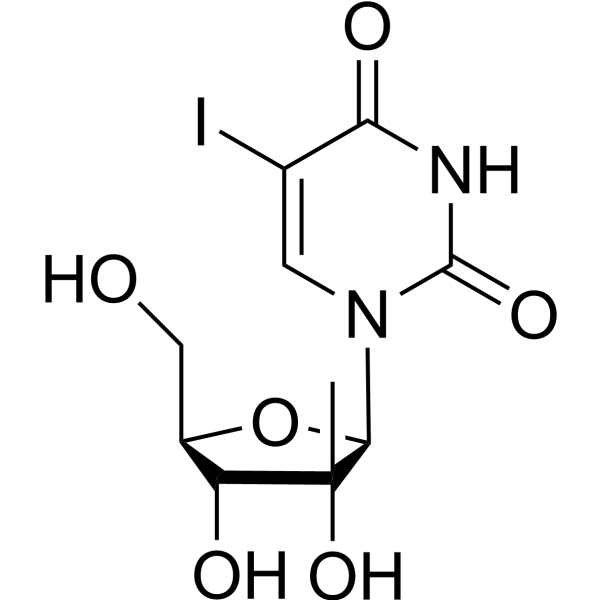
5-Iodo-2’-β-C-methyl uridine is a uridine analogue. Uridine has potential antiepileptic effects, and its analogs can be used to study anticonvulsant and anxiolytic activities, as well as to develop new antihypertensive agents .
|
-
-
- HY-154737
-
|
|
Nucleoside Antimetabolite/Analog
|
Cancer
|
|
N3-[(Pyrid-4-yl)methyl]uridine is a uridine analog. Uridine has potential antiepileptic effects, and its analogs can be used to study anticonvulsant and anxiolytic activities, as well as to develop new antihypertensive agents .
|
-
![N3-[(Pyrid-4-yl)methyl]uridine](//file.medchemexpress.com/product_pic/hy-154737.gif)
-
- HY-152681
-
|
|
Nucleoside Antimetabolite/Analog
|
Others
|
|
N3-[(Tetrahydro-2-furanyl)methyl]uridine is a uridine analogue. Uridine has potential antiepileptic effects, and its analogs can be used to study anticonvulsant and anxiolytic activities, as well as to develop new antihypertensive agents .
|
-
![N3-[(Tetrahydro-2-furanyl)methyl]uridine](//file.medchemexpress.com/product_pic/hy-152681.gif)
- HY-152463
-
|
|
Nucleoside Antimetabolite/Analog
|
Cancer
|
|
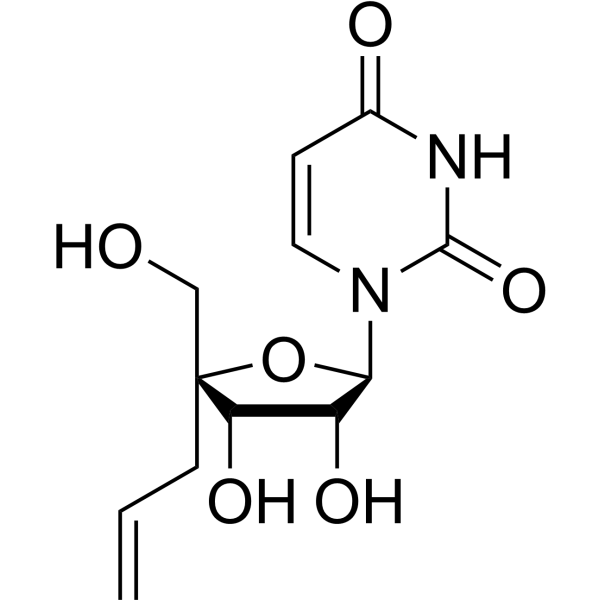
4′-C-2-Propen-1-yluridine is a uridine analog. Uridine has potential antiepileptic effects, and its analogs can be used to study anticonvulsant and anxiolytic activities, as well as to develop new antihypertensive agents .
|
-
- HY-152683
-
|
|
Nucleoside Antimetabolite/Analog
|
Others
|
|
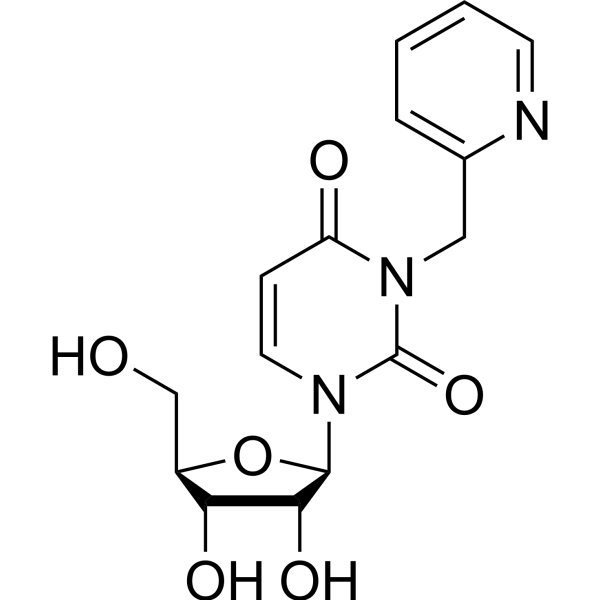
N3-[(Pyrid-2-yl)methyl]uridine is a uridine analogue. Uridine has potential antiepileptic effects, and its analogs can be used to study anticonvulsant and anxiolytic activities, as well as to develop new antihypertensive agents .
|
-
- HY-152574
-
|
|
Nucleoside Antimetabolite/Analog
|
Others
|
|
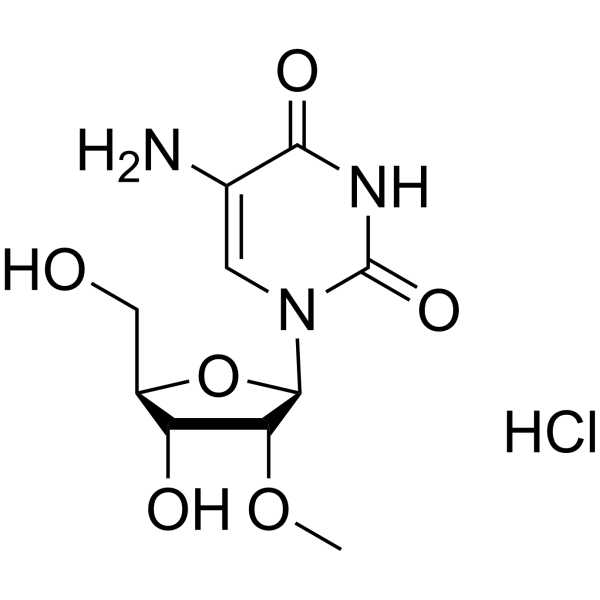
5-Amino-2’-deoxy-2’-O-methyluridine hydrochloride is a uridine analogue. Uridine has potential antiepileptic effects, and its analogs can be used to study anticonvulsant and anxiolytic activities, as well as to develop new antihypertensive agents .
|
-
- HY-152674
-
|
|
Nucleoside Antimetabolite/Analog
|
Others
|
|
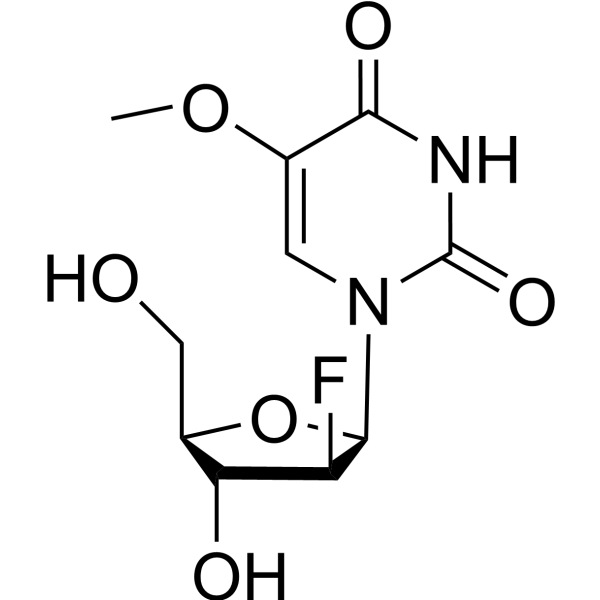
2′-Deoxy-2′-fluoro-5-methoxy-arabinouridine is a uridine analogue. Uridine has potential antiepileptic effects, and its analogs can be used to study anticonvulsant and anxiolytic activities, as well as to develop new antihypertensive agents .
|
-
- HY-154560
-
|
|
Nucleoside Antimetabolite/Analog
|
Cancer
|
|
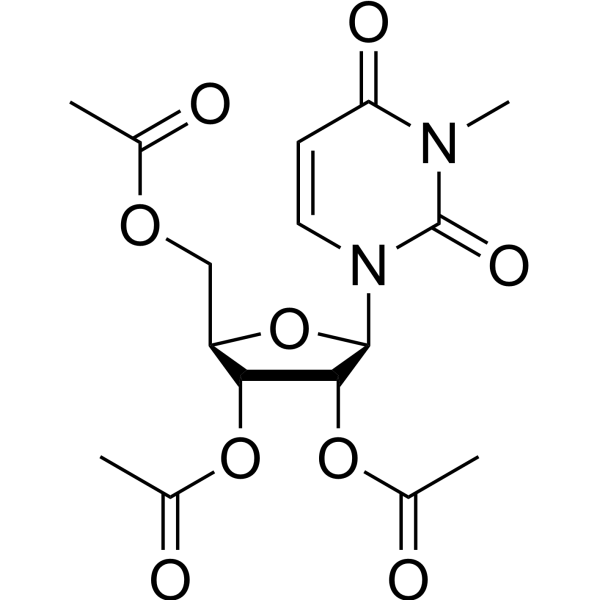
2’,3’,5’-Tri-O-acetyl-N3-methyluridine is a uridine analog. Uridine has potential antiepileptic effects, and its analogs can be used to study anticonvulsant and anxiolytic activities, as well as to develop new antihypertensive agents .
|
-
- HY-152363
-
|
|
Nucleoside Antimetabolite/Analog
|
Others
|
|
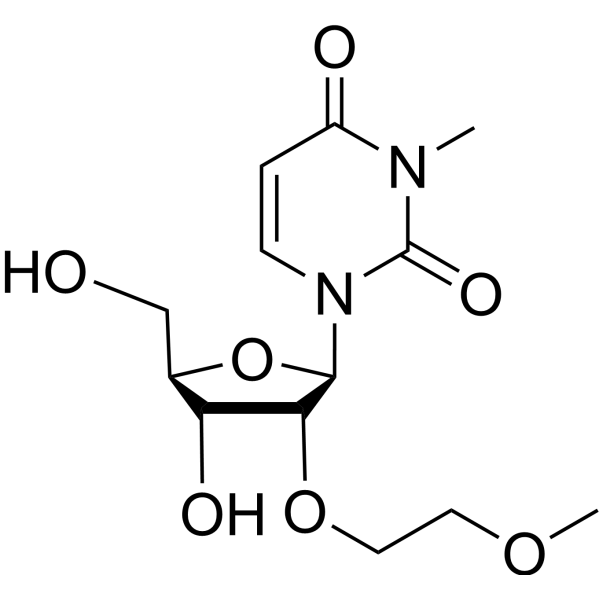
N3-Methyl-2’-O-(2-methoxyethyl)uridine is a uridine analogue. Uridine has potential antiepileptic effects, and its analogs can be used to study anticonvulsant and anxiolytic activities, as well as to develop new antihypertensive agents .
|
-
- HY-154173
-
|
|
Nucleoside Antimetabolite/Analog
|
Cancer
|
|
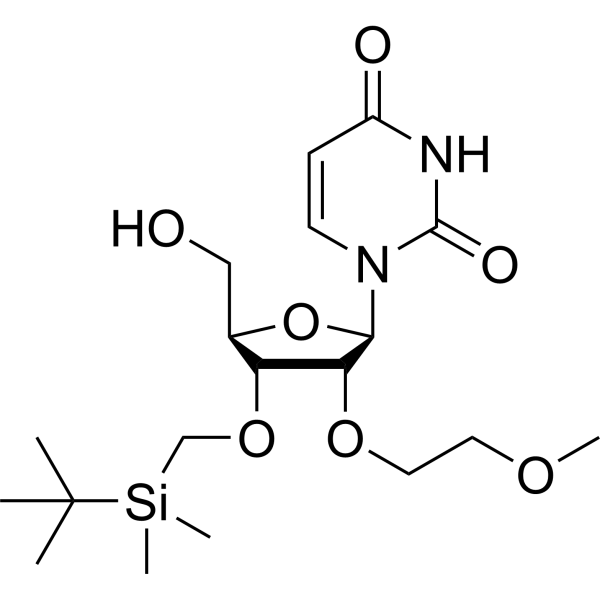
3’-O-(t-Butyldimethylsilyl)-2’-O-(2-methoxyethyl) uridine is a uridine analog. Uridine has potential antiepileptic effects, and its analogs can be used to study anticonvulsant and anxiolytic activities, as well as to develop new antihypertensive agents .
|
-
- HY-154813
-
|
|
Nucleoside Antimetabolite/Analog
|
Others
|
|
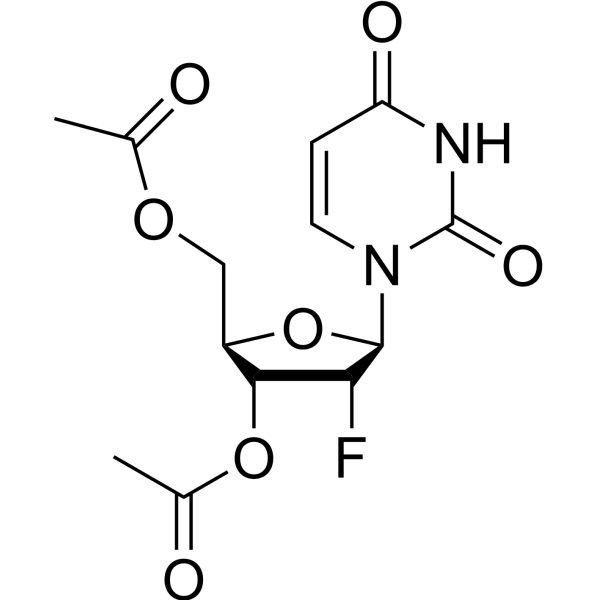
3′,5′-Di-O-acetyl-2′-deoxy-2′-fluorouridine is a uridine analog. Uridine has potential antiepileptic effects, and its analogs can be used to study anticonvulsant and anxiolytic activities, as well as to develop new antihypertensive agents .
|
-
- HY-49199
-
|
|
Nucleoside Antimetabolite/Analog
|
Cancer
|
|
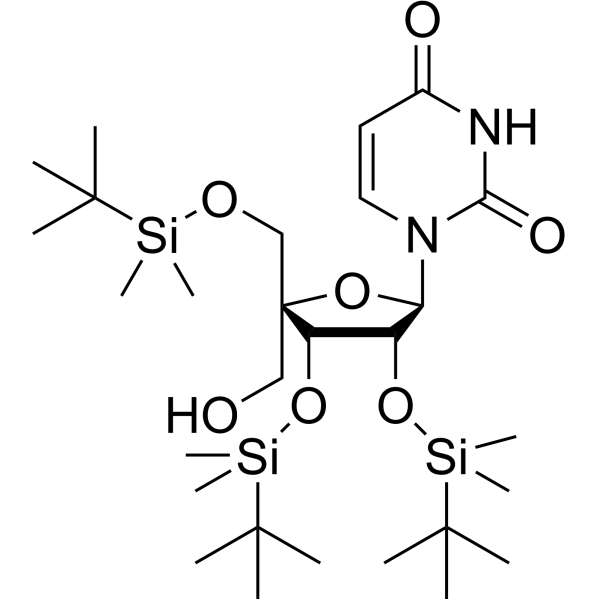
2',3',5'-Tri-O-(t-butyldimethylsilyl)-4'-C-hydroxymethyl uridine is a uridine analog. Uridine has potential antiepileptic effects, and its analogs can be used to study anticonvulsant and anxiolytic activities, as well as to develop new antihypertensive agents .
|
-
- HY-106437
-
|
|
GABA Receptor
|
Neurological Disease
|
|
ELB-139 is a progesterone analogue. ELB-139 is a GABAA receptor partial agonist. ELB-139 has anxiolytic and anticonvulsant activity. ELB-139 induces increase of extracellular 5-HT in the striatum and the medial prefrontal cortex of rats .
|
-

- HY-154410
-
|
|
Nucleoside Antimetabolite/Analog
Phosphoramidites
|
Cancer
|
|
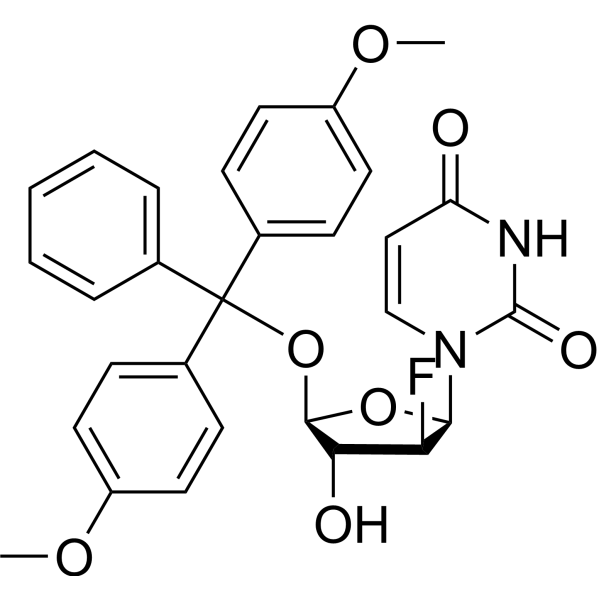
5’-O-DMT-2’-deoxy-2’-fluoro-β-D-arabinouridine is a uridine analog. Uridine has potential antiepileptic effects, and its analogs can be used to study anticonvulsant and anxiolytic activities, as well as to develop new antihypertensive agents .
|
-
- HY-152691
-
|
|
Nucleoside Antimetabolite/Analog
|
Others
|
|
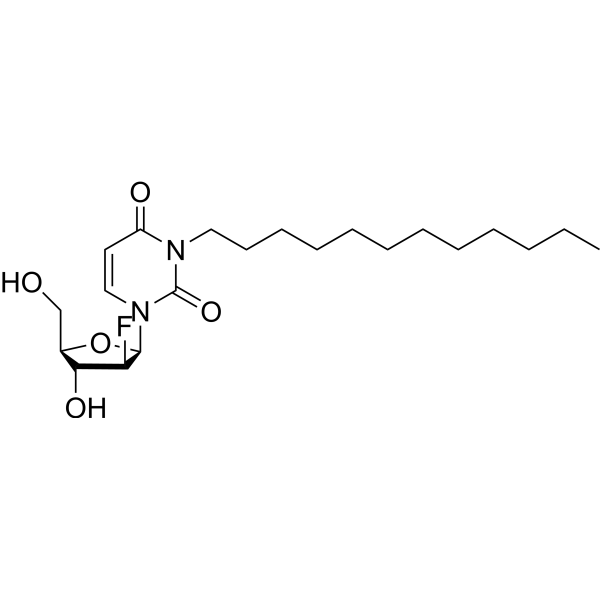
2’-Deoxy-2’-fluoro-N3-(n-dodecyl)-beta-D-arabinouridine is a uridine analogue. Uridine has potential antiepileptic effects, and its analogs can be used to study anticonvulsant and anxiolytic activities, as well as to develop new antihypertensive agents .
|
-
- HY-154175
-
|
|
Nucleoside Antimetabolite/Analog
|
Others
|
|
1-[6-(Diethoxyphosphinyl)-2-O-(2-methoxyethyl)-β-D-ribo-hexofuranosyl]uracil is a uridine analog. Uridine has potential antiepileptic effects, and its analogs can be used to study anticonvulsant and anxiolytic activities, as well as to develop new antihypertensive agents .
|
-
![1-[6-(Diethoxyphosphinyl)-2-O-(2-methoxyethyl)-β-D-ribo-hexofuranosyl]uracil](//file.medchemexpress.com/product_pic/hy-154175.gif)
- HY-152792
-
|
|
Nucleoside Antimetabolite/Analog
|
Others
|
|
2’-Deoxy-2’-fluoro-N3-[(pyrid-2-yl)methyl]uridine is a uridine analogue. Uridine has potential antiepileptic effects, and its analogs can be used to study anticonvulsant and anxiolytic activities, as well as to develop new antihypertensive agents .
|
-
![2’-Deoxy-2’-fluoro-N3-[(pyrid-2-yl)methyl]uridine](//file.medchemexpress.com/product_pic/hy-152792.gif)
- HY-154552
-
|
|
Nucleoside Antimetabolite/Analog
|
Cancer
|
|
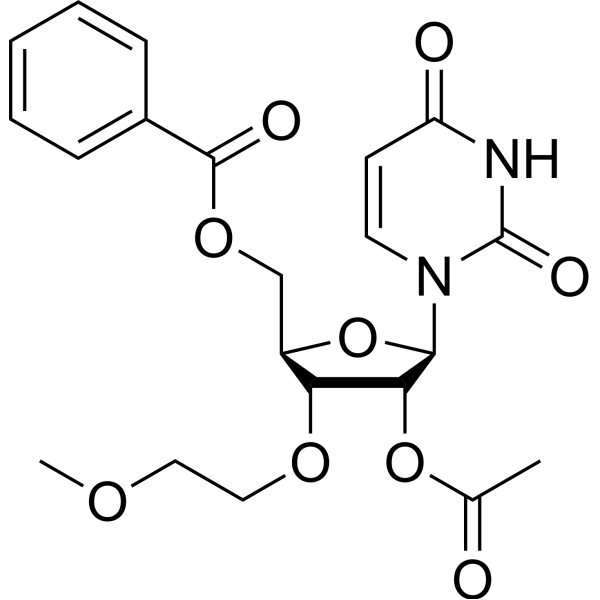
2’-O-Acetyl-5’-O-benzoyl-3’-O-(2-methoxyethyl) uridine is a uridine analog. Uridine has potential antiepileptic effects, and its analogs can be used to study anticonvulsant and anxiolytic activities, as well as to develop new antihypertensive agents .
|
-
- HY-154647
-
|
|
Nucleoside Antimetabolite/Analog
|
Cancer
|
|
N3-(2S)-[2-(tert-Butoxycarbonyl)amino-3-(tert-butoxy carbonyl)]propyluridine is a uridine analog. Uridine has potential antiepileptic effects, and its analogs can be used to study anticonvulsant and anxiolytic activities, as well as to develop new antihypertensive agents .
|
-
![N3-(2S)-[2-(tert-Butoxycarbonyl)amino-3-(tert-butoxy carbonyl)]propyluridine](//file.medchemexpress.com/product_pic/hy-154647.gif)
- HY-N9502R
-
|
|
Reference Standards
Endogenous Metabolite
|
Neurological Disease
|
|
Linalool oxide (Standard) is the analytical standard of Linalool oxide (HY-N9502). This product is intended for research and analytical applications. Linalool oxide is a monoterpene and found in aromatic plant essential oils and is a secondary metabolite in elongating wheat plants. Linalool oxide has antinociceptive, anticonvulsant, and anxiolytic activity. Linalool oxide can be used for the research of pain, epilepsy, anxiety disorders .
|
-

- HY-154652
-
|
|
Nucleoside Antimetabolite/Analog
|
Cancer
|
|
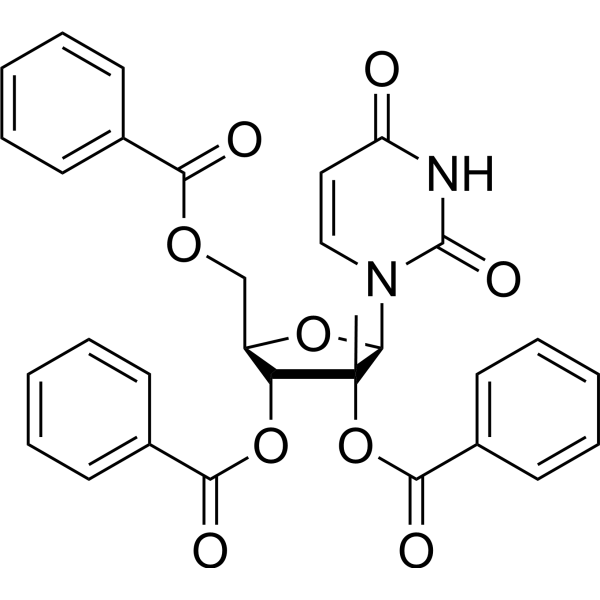
1-(2,3,5-Tri-O-benzoyl-2-C-methyl-β-D-ribofuranosyl)-2,4(1H,3H)-pyrimidinedione is a uridine analog. Uridine has potential antiepileptic effects, and its analogs can be used to study anticonvulsant and anxiolytic activities, as well as to develop new antihypertensive agents .
|
-
- HY-152476
-
|
|
Nucleoside Antimetabolite/Analog
|
Cancer
|
|
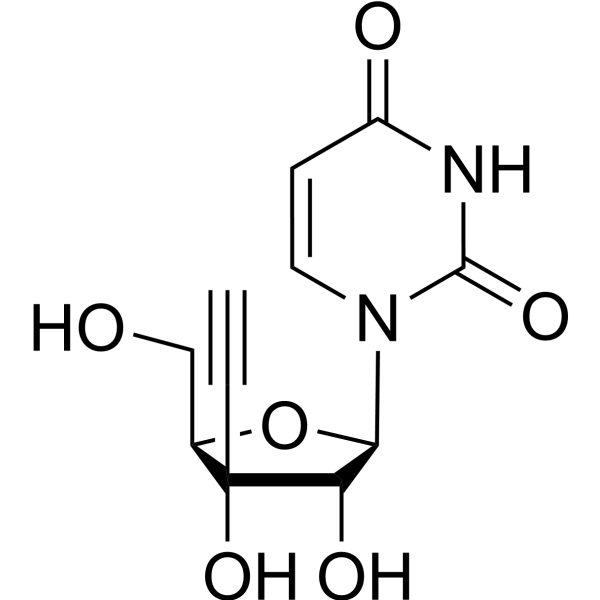
3’-β-C-Ethynyluridine is a uridine analog. Uridine has potential antiepileptic effects, and its analogs can be used to study anticonvulsant and anxiolytic activities, as well as to develop new antihypertensive agents . 3’-β-C-Ethynyluridine is a click chemistry reagent, it contains an Alkyne group and can undergo copper-catalyzed azide-alkyne cycloaddition (CuAAc) with molecules containing Azide groups.
|
-
- HY-154736
-
|
|
Nucleoside Antimetabolite/Analog
|
Cancer
|
|
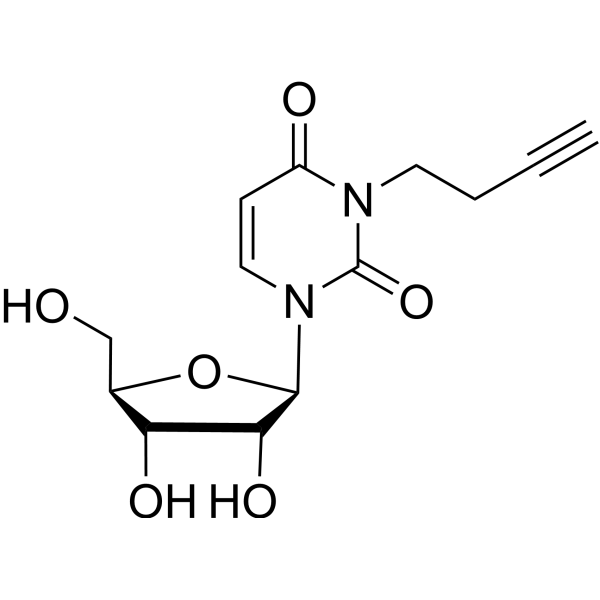
N3-(Butyn-3-yl)uridine is a uridine analog. Uridine has potential antiepileptic effects, and its analogs can be used to study anticonvulsant and anxiolytic activities, as well as to develop new antihypertensive agents . N3-(Butyn-3-yl)uridine is a click chemistry reagent, it contains an Alkyne group and can undergo copper-catalyzed azide-alkyne cycloaddition (CuAAc) with molecules containing Azide groups.
|
-
- HY-77650
-
|
4'-Azidouridine
|
Nucleoside Antimetabolite/Analog
|
Others
|
|
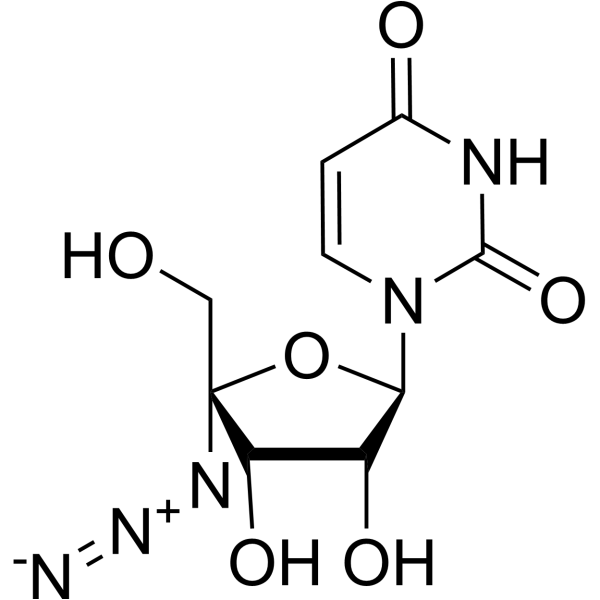
4'-C-azidouridine (4'-Azidouridine) is a uridine analogue. Uridine has potential antiepileptic effects, and its analogs can be used to study anticonvulsant and anxiolytic activities, as well as to develop new antihypertensive agents . 4'-C-Azidouridine is a click chemistry reagent, it contains an Azide group and can undergo copper-catalyzed azide-alkyne cycloaddition reaction (CuAAc) with molecules containing Alkyne groups. It can also undergo strain-promoted alkyne-azide cycloaddition (SPAAC) reactions with molecules containing DBCO or BCN groups.
|
-
- HY-152985
-
|
|
Nucleoside Antimetabolite/Analog
|
Others
|
|
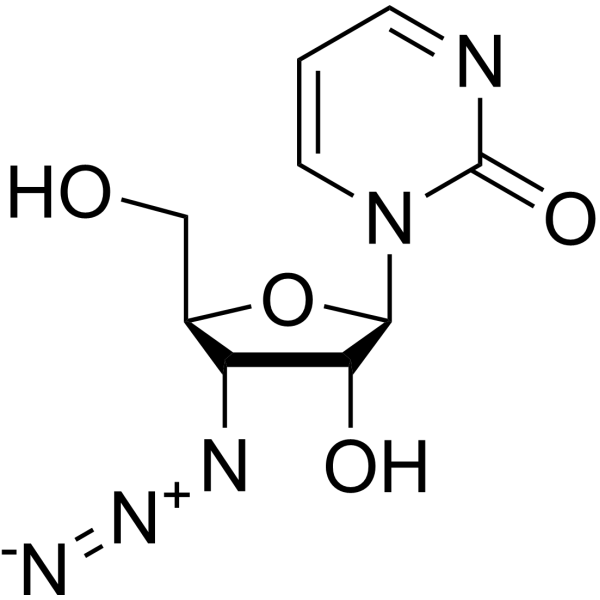
6-Chloro-N1-(trimethylsilylethoxymethyl)pseudouridine is a uridine analog. Uridine has potential antiepileptic effects, and its analogs can be used to study anticonvulsant and anxiolytic activities, as well as to develop new antihypertensive agents . 3’-Azido-3’-deoxy-4-deoxyuridine is a click chemistry reagent, it contains an Azide group and can undergo copper-catalyzed azide-alkyne cycloaddition reaction (CuAAc) with molecules containing Alkyne groups. It can also undergo strain-promoted alkyne-azide cycloaddition (SPAAC) reactions with molecules containing DBCO or BCN groups.
|
-
- HY-154590
-
|
|
Nucleoside Antimetabolite/Analog
|
Cancer
|
|
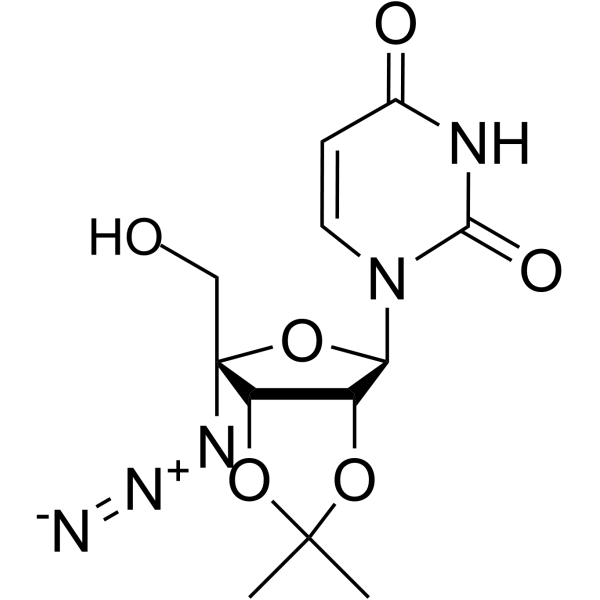
2’,3’-Di-O-isopropylidene-4’-alpha-C-azidouridine is a uridine analog. Uridine has potential antiepileptic effects, and its analogs can be used to study anticonvulsant and anxiolytic activities, as well as to develop new antihypertensive agents . 2’,3’-Di-O-isopropylidene-4’-alpha-C-azidouridine is a click chemistry reagent, it contains an Azide group and can undergo copper-catalyzed azide-alkyne cycloaddition reaction (CuAAc) with molecules containing Alkyne groups. It can also undergo strain-promoted alkyne-azide cycloaddition (SPAAC) reactions with molecules containing DBCO or BCN groups.
|
-
- HY-W377455
-
|
|
Nucleoside Antimetabolite/Analog
|
Others
|
|
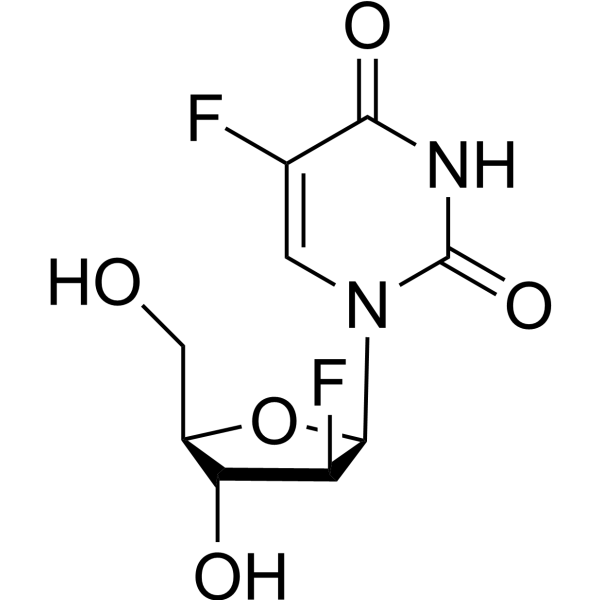
5-Fluoro-1-((2R,3S,4R,5R)-3-fluoro-4-hydroxy-5-(hydroxymethyl)tetrahydrofuran-2-yl)pyrimidine-2,4(1H,3H)-dione (2',5-difluoro-2'-deoxy-1-arabinosyluracil) is a uridine analogue. Uridine has potential antiepileptic effects, and its analogs can be used to study anticonvulsant and anxiolytic activities, as well as to develop new antihypertensive agents .
|
-
- HY-154357
-
|
|
Nucleoside Antimetabolite/Analog
|
Cancer
|
|
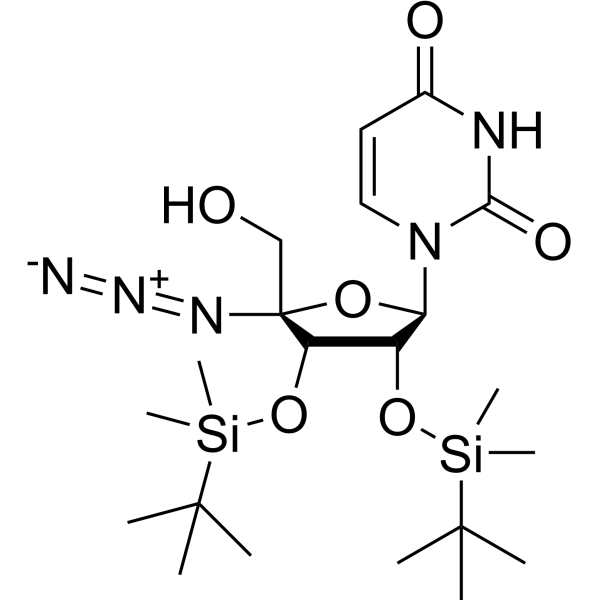
4’-alpha-C-Azido-2’,3’-bis(O-t-butyldimethylsilyl)uridine is a uridine analog. Uridine has potential antiepileptic effects, and its analogs can be used to study anticonvulsant and anxiolytic activities, as well as to develop new antihypertensive agents . 4’-alpha-C-Azido-2’,3’-bis(O-t-butyldimethylsilyl)uridine is a click chemistry reagent, it contains an Azide group and can undergo copper-catalyzed azide-alkyne cycloaddition reaction (CuAAc) with molecules containing Alkyne groups. It can also undergo strain-promoted alkyne-azide cycloaddition (SPAAC) reactions with molecules containing DBCO or BCN groups.
|
-
- HY-W013150R
-
|
|
Reference Standards
GABA Receptor
|
Neurological Disease
|
|
Alpidem (Standard) is the analytical standard of Alpidem (HY-W013150). This product is intended for research and analytical applications. Alpidem, an anxiolytic agent, is an orally active and brain-penetrant GABAA receptor ligand, binds to α1β2γ2 subunit-containing GABAA receptors (IC50 of 17 nM) over α5β2γ2 subunit-containing GABAA receptors (IC50 of >10 μM). Alpidem modulates calcium-induced mitochondrial permeability transition, induces glutathione depletion and hepatocyte necrosis, potentiates TNF-α toxicity, inhibits marble-burying and locomotor activity, enhances stressed rodent feeding behavior, and exerts anticonvulsant effects. Alpidem can be used for the research of anxiety, anxiety disorders, and convulsions.
|
-

- HY-W013150S
-
|
|
Isotope-Labeled Compounds
GABA Receptor
|
Neurological Disease
|
|
Alpidem-d14 is the deuterium labeled Alpidem (HY-W013150) . Alpidem, an anxiolytic agent, is an orally active and brain-penetrant GABAA receptor ligand, binds to α1β2γ2 subunit-containing GABAA receptors (IC50 of 17 nM) over α5β2γ2 subunit-containing GABAA receptors (IC50 of >10 μM). Alpidem modulates calcium-induced mitochondrial permeability transition, induces glutathione depletion and hepatocyte necrosis, potentiates TNF-α toxicity, inhibits marble-burying and locomotor activity, enhances stressed rodent feeding behavior, and exerts anticonvulsant effects. Alpidem can be used for the research of anxiety, anxiety disorders, and convulsions.
|
-

- HY-136591R
-
|
|
Drug Metabolite
Reference Standards
|
Neurological Disease
Cancer
|
|
Demoxepam (Standard) is the analytical standard of Demoxepam. This product is intended for research and analytical applications. Demoxepam is a major metabolite of Chlordiazepoxide. Demoxepam exhibits cytotoxicity activity against cancer cell lines. Demoxepam has anticonvulsant and anxiolytic effects. Demoxepam has an inhibitory effect on in vitro [ 3H]tryptophan binding to rat hepatic nuclei .
|
-

- HY-103505R
-
|
|
Reference Standards
GABA Receptor
|
Neurological Disease
|
|
CL 218872 (Standard) is the analytical standard of CL 218872 (HY-103505). This product is intended for research and analytical applications. CL 218872 is an orally active and selective ligand for the benzodiazepine receptor subtype BZ1. CL 218872 exhibits anxiolytic, sedative and anticonvulsant activities. CL 218872 can be used in researches of anxiety related disorders and epilepsy .
|
-

- HY-B1803
-
|
ICI 136753
|
GABA Receptor
|
Neurological Disease
|
|
Tracazolate (ICI 136753) is an orally active non-benzodiazepine anxiolytic. Tracazolate significantly enhances the binding of the radioligand 3H-flunitrazepam ( 3H-FLU) to brain tissue benzodiazepine receptors. Tracazolate enhances the binding of γ-aminobutyric acid (GABA) to its receptors. Tracazolate exhibits anticonvulsant activity. Tracazolate can be used in anxiety-related research .
|
-

- HY-W644305
-
|
3β-androstenol
|
GABA Receptor
Endogenous Metabolite
|
Neurological Disease
|
Androst-16-en-3-ol is a pheromone derived from boars that triggers mating responses in estrous sows. It also exists in human urine, plasma, saliva and sweat. As an endogenous neurosteroid, Androst-16-en-3-ol acts as a positive allosteric modulator of GABAA receptors (GABAA receptor) and exerts anxiolytic, antidepressant and anticonvulsant activities in mice.
|
-

- HY-15080
-
|
LY 293606
|
iGluR
|
Cardiovascular Disease
Neurological Disease
|
|
GYKI 53405 is a non-competitive, orally active AMPA receptor antagonist. GYKI 53405 shows no significant binding affinity for GABAA, GABAB or benzodiazepine receptors. GYKI 53405 increases self-grooming behavior, induces wet dog-like shakes, reduces spontaneous activity, produces anxiolytic-like behavior, reverses the anxiogenic effect induced by mCPP, inhibits locomotor activity, suppresses sound-induced and maximal electroshock-induced seizures, prolongs survival in global cerebral ischemia models, and exhibits sustained anticonvulsant effects at doses below the sedation threshold. GYKI 53405 can be used in research related to absence epilepsy, anxiety disorders and global cerebral ischemia .
|
-

| Cat. No. |
Product Name |
Category |
Target |
Chemical Structure |
| Cat. No. |
Product Name |
Chemical Structure |
-
- HY-W013150S
-
|
|
|
Alpidem-d14 is the deuterium labeled Alpidem (HY-W013150) . Alpidem, an anxiolytic agent, is an orally active and brain-penetrant GABAA receptor ligand, binds to α1β2γ2 subunit-containing GABAA receptors (IC50 of 17 nM) over α5β2γ2 subunit-containing GABAA receptors (IC50 of >10 μM). Alpidem modulates calcium-induced mitochondrial permeability transition, induces glutathione depletion and hepatocyte necrosis, potentiates TNF-α toxicity, inhibits marble-burying and locomotor activity, enhances stressed rodent feeding behavior, and exerts anticonvulsant effects. Alpidem can be used for the research of anxiety, anxiety disorders, and convulsions.
|
-
| Cat. No. |
Product Name |
|
Classification |
-
- HY-152782
-
|
|
|
Azide
|
|
4’-Azido-2’-deoxy-2’-fluoro-beta-D-arabinouridine is a uridine analogue. Uridine has potential antiepileptic effects, and its analogs can be used to study anticonvulsant and anxiolytic activities, as well as to develop new antihypertensive agents . 4’-Azido-2’-deoxy-2’-fluoro-beta-D-arabinouridine is a click chemistry reagent, it contains an Azide group and can undergo copper-catalyzed azide-alkyne cycloaddition reaction (CuAAc) with molecules containing Alkyne groups. It can also undergo strain-promoted alkyne-azide cycloaddition (SPAAC) reactions with molecules containing DBCO or BCN groups.
|
-
- HY-152476
-
|
|
|
Alkynes
|
|
3’-β-C-Ethynyluridine is a uridine analog. Uridine has potential antiepileptic effects, and its analogs can be used to study anticonvulsant and anxiolytic activities, as well as to develop new antihypertensive agents . 3’-β-C-Ethynyluridine is a click chemistry reagent, it contains an Alkyne group and can undergo copper-catalyzed azide-alkyne cycloaddition (CuAAc) with molecules containing Azide groups.
|
-
- HY-154736
-
|
|
|
Alkynes
|
|
N3-(Butyn-3-yl)uridine is a uridine analog. Uridine has potential antiepileptic effects, and its analogs can be used to study anticonvulsant and anxiolytic activities, as well as to develop new antihypertensive agents . N3-(Butyn-3-yl)uridine is a click chemistry reagent, it contains an Alkyne group and can undergo copper-catalyzed azide-alkyne cycloaddition (CuAAc) with molecules containing Azide groups.
|
-
- HY-152985
-
|
|
|
Azide
|
|
6-Chloro-N1-(trimethylsilylethoxymethyl)pseudouridine is a uridine analog. Uridine has potential antiepileptic effects, and its analogs can be used to study anticonvulsant and anxiolytic activities, as well as to develop new antihypertensive agents . 3’-Azido-3’-deoxy-4-deoxyuridine is a click chemistry reagent, it contains an Azide group and can undergo copper-catalyzed azide-alkyne cycloaddition reaction (CuAAc) with molecules containing Alkyne groups. It can also undergo strain-promoted alkyne-azide cycloaddition (SPAAC) reactions with molecules containing DBCO or BCN groups.
|
-
- HY-154590
-
|
|
|
Azide
|
|
2’,3’-Di-O-isopropylidene-4’-alpha-C-azidouridine is a uridine analog. Uridine has potential antiepileptic effects, and its analogs can be used to study anticonvulsant and anxiolytic activities, as well as to develop new antihypertensive agents . 2’,3’-Di-O-isopropylidene-4’-alpha-C-azidouridine is a click chemistry reagent, it contains an Azide group and can undergo copper-catalyzed azide-alkyne cycloaddition reaction (CuAAc) with molecules containing Alkyne groups. It can also undergo strain-promoted alkyne-azide cycloaddition (SPAAC) reactions with molecules containing DBCO or BCN groups.
|
-
- HY-154357
-
|
|
|
Azide
|
|
4’-alpha-C-Azido-2’,3’-bis(O-t-butyldimethylsilyl)uridine is a uridine analog. Uridine has potential antiepileptic effects, and its analogs can be used to study anticonvulsant and anxiolytic activities, as well as to develop new antihypertensive agents . 4’-alpha-C-Azido-2’,3’-bis(O-t-butyldimethylsilyl)uridine is a click chemistry reagent, it contains an Azide group and can undergo copper-catalyzed azide-alkyne cycloaddition reaction (CuAAc) with molecules containing Alkyne groups. It can also undergo strain-promoted alkyne-azide cycloaddition (SPAAC) reactions with molecules containing DBCO or BCN groups.
|
| Cat. No. |
Product Name |
|
Classification |
-
- HY-152358
-
|
|
|
Nucleoside Analogs
Uridine
|
|
N3-Methyl-2’-O-methyluridine is a uridine analogue. Uridine has potential antiepileptic effects, and its analogs can be used to study anticonvulsant and anxiolytic activities, as well as to develop new antihypertensive agents .
|
-
- HY-134337
-
|
|
|
Phosphoramidites
Uracil
|
|
5'-O-DMTr-3'-O-methyl uridine-3'-CED-phosphoramidite is a uridine analog. Uridine has potential antiepileptic effects, and its analogs can be used to study anticonvulsant and anxiolytic activities, as well as to develop new antihypertensive agents .
|
-
- HY-152732
-
|
|
|
Nucleoside Analogs
Uridine
|
|
6-Methyluridine is a uridine analogue. Uridine has potential antiepileptic effects, and its analogs can be used to study anticonvulsant and anxiolytic activities, as well as to develop new antihypertensive agents .
|
-
- HY-154285
-
|
|
|
Nucleoside Analogs
Uridine
|
|
3’-O-(2-Methoxyethyl) uridine is a uridine analog. Uridine has potential antiepileptic effects, and its analogs can be used to study anticonvulsant and anxiolytic activities, as well as to develop new antihypertensive agents .
|
-
- HY-154466
-
|
|
|
Nucleoside Analogs
Uridine
|
|
5’-O-(4,4’-Dimethoxytrityl)-3’-O-methyluridine is a uridine analog. Uridine has potential antiepileptic effects, and its analogs can be used to study anticonvulsant and anxiolytic activities, as well as to develop new antihypertensive agents .
|
-
- HY-48973
-
|
|
|
Phosphoramidites
Uracil
|
|
2'-Fluoro-2'-deoxy-ara-U-3'-phosphoramidite is a uridine analog. Uridine has potential antiepileptic effects, and its analogs can be used to study anticonvulsant and anxiolytic activities, as well as to develop new antihypertensive agents .
|
-
- HY-154358
-
|
|
|
Nucleoside Analogs
Uridine
|
|
4’-alpha-C-Allyl-2’,3’-bis(O-t-butyldimethylsilyl) uridine is a uridine analog. Uridine has potential antiepileptic effects, and its analogs can be used to study anticonvulsant and anxiolytic activities, as well as to develop new antihypertensive agents .
|
-
- HY-154492
-
|
|
|
Nucleoside Analogs
Uridine
|
|
2’,3’-Bis(O-t-butyldimethylsilyl)-4’,5’-didehydro-5’-deoxyuridine is a uridine analog. Uridine has potential antiepileptic effects, and its analogs can be used to study anticonvulsant and anxiolytic activities, as well as to develop new antihypertensive agents .
|
-
- HY-154582
-
|
|
|
Nucleoside Analogs
Uridine
|
|
5-Naphthyl-beta-methylaminocarbony-3’-O-acetyl-2’-O-methyl-5’-O-DMTr-uridine is a uridine analog. Uridine has potential antiepileptic effects, and its analogs can be used to study anticonvulsant and anxiolytic activities, as well as to develop new antihypertensive agents .
|
-
- HY-152782
-
|
|
|
Nucleoside Analogs
Uridine
|
|
4’-Azido-2’-deoxy-2’-fluoro-beta-D-arabinouridine is a uridine analogue. Uridine has potential antiepileptic effects, and its analogs can be used to study anticonvulsant and anxiolytic activities, as well as to develop new antihypertensive agents . 4’-Azido-2’-deoxy-2’-fluoro-beta-D-arabinouridine is a click chemistry reagent, it contains an Azide group and can undergo copper-catalyzed azide-alkyne cycloaddition reaction (CuAAc) with molecules containing Alkyne groups. It can also undergo strain-promoted alkyne-azide cycloaddition (SPAAC) reactions with molecules containing DBCO or BCN groups.
|
-
- HY-W020098
-
|
|
|
Nucleoside Analogs
Uridine
|
|
2'-C-methyluridine is a uridine analog. Uridine has potential antiepileptic effects, and its analogs can be used to study anticonvulsant and anxiolytic activities, as well as to develop new antihypertensive agents .
|
-
- HY-154488
-
|
|
|
Nucleoside Analogs
Uridine
|
|
3′-O-[(1,1-Dimethylethyl)dimethylsilyl]-2′-O-methyluridine is a uridine analog. Uridine has potential antiepileptic effects, and its analogs can be used to study anticonvulsant and anxiolytic activities, as well as to develop new antihypertensive agents .
|
-
- HY-154517
-
|
|
|
Nucleoside Analogs
Uridine
|
|
N3-Cyanoethyl-5’-O-(4,4’-dimethoxytrityl)-2’-O-methyluridine is a uridine analog. Uridine has potential antiepileptic effects, and its analogs can be used to study anticonvulsant and anxiolytic activities, as well as to develop new antihypertensive agents .
|
-
- HY-152755
-
|
|
|
Nucleoside Analogs
Uridine
|
|
4’-Cyanouridine is a uridine analogue. Uridine has potential antiepileptic effects, and its analogs can be used to study anticonvulsant and anxiolytic activities, as well as to develop new antihypertensive agents .
|
-
- HY-152764
-
|
|
|
Nucleoside Analogs
Uridine
|
|
4’-α-C-Methyluridine is a uridine analogue. Uridine has potential antiepileptic effects, and its analogs can be used to study anticonvulsant and anxiolytic activities, as well as to develop new antihypertensive agents .
|
-
- HY-152777
-
|
|
|
Nucleoside Analogs
Uridine
|
|
5’(R)-C-Methyluridine is a uridine analogue. Uridine has potential antiepileptic effects, and its analogs can be used to study anticonvulsant and anxiolytic activities, as well as to develop new antihypertensive agents .
|
-
- HY-152299
-
|
|
|
Nucleoside Analogs
Uridine
|
|
5-(t-Butyloxycarbonylmethoxy)uridine is a uridine analogue. Uridine has potential antiepileptic effects, and its analogs can be used to study anticonvulsant and anxiolytic activities, as well as to develop new antihypertensive agents .
|
-
- HY-154735
-
|
|
|
Nucleoside Analogs
Uridine
|
|
N3-Allyluridine is a uridine analog. Uridine has potential antiepileptic effects, and its analogs can be used to study anticonvulsant and anxiolytic activities, as well as to develop new antihypertensive agents .
|
-
- HY-152388
-
|
|
|
Nucleoside Analogs
Uridine
|
|
3’-beta-C-Methyluridine is a uridine analogue. Uridine has potential antiepileptic effects, and its analogs can be used to study anticonvulsant and anxiolytic activities, as well as to develop new antihypertensive agents .
|
-
- HY-152665
-
|
|
|
Nucleoside Analogs
Uridine
|
|
1-(β-D-Xylofuranosyl)uracil is a uridine analog. Uridine has potential antiepileptic effects, and its analogs can be used to study anticonvulsant and anxiolytic activities, as well as to develop new antihypertensive agents .
|
-
- HY-152970
-
|
|
|
Phosphoramidites
Uracil
|
|
7'-O-DMT-morpholino uracil is a uridine analog. Uridine has potential antiepileptic effects, and its analogs can be used to study anticonvulsant and anxiolytic activities, as well as to develop new antihypertensive agents .
|
-
- HY-154734
-
|
|
|
Nucleoside Analogs
Uridine
|
|
N3-(4-Nitrobenzyl)uridine is a uridine analog. Uridine has potential antiepileptic effects, and its analogs can be used to study anticonvulsant and anxiolytic activities, as well as to develop new antihypertensive agents .
|
-
- HY-W557556
-
|
|
|
Nucleoside Analogs
Uridine
|
|
2',5'-Bis-O-(triphenylMethyl)uridine is a uridine analog. Uridine has potential antiepileptic effects, and its analogs can be used to study anticonvulsant and anxiolytic activities, as well as to develop new antihypertensive agents .
|
-
- HY-152677
-
|
|
|
Nucleoside Analogs
Uridine
|
|
N3-(2-Methoxy)ethyluridine is a uridine analogue. Uridine has potential antiepileptic effects, and its analogs can be used to study anticonvulsant and anxiolytic activities, as well as to develop new antihypertensive agents .
|
-
- HY-154217
-
|
|
|
Nucleoside Analogs
Uridine
|
|
3′,5′-Bis-O-(triphenylmethyl)uridine is a uridine analog. Uridine has potential antiepileptic effects, and its analogs can be used to study anticonvulsant and anxiolytic activities, as well as to develop new antihypertensive agents .
|
-
- HY-152529
-
|
|
|
Nucleoside Analogs
Uridine
|
|
4’-C-Methyl-5-methoxyuridine is a uridine analogue. Uridine has potential antiepileptic effects, and its analogs can be used to study anticonvulsant and anxiolytic activities, as well as to develop new antihypertensive agents .
|
-
- HY-152522
-
|
|
|
Nucleoside Analogs
Uridine
|
|
5-Fluoro-4’-C-methyluridine is a uridine analogue. Uridine has potential antiepileptic effects, and its analogs can be used to study anticonvulsant and anxiolytic activities, as well as to develop new antihypertensive agents .
|
-
- HY-154738
-
|
|
|
Nucleoside Analogs
Uridine
|
|
N3-[3-(tert-Butoxycarbonyl)amino]propyluridine is a uridine analog. Uridine has potential antiepileptic effects, and its analogs can be used to study anticonvulsant and anxiolytic activities, as well as to develop new antihypertensive agents .
|
-
- HY-152783
-
|
|
|
Nucleoside Analogs
Uridine
|
|
5’(R)-C-Methyl-5-fluorouridine is a uridine analogue. Uridine has potential antiepileptic effects, and its analogs can be used to study anticonvulsant and anxiolytic activities, as well as to develop new antihypertensive agents .
|
-
- HY-152969
-
|
|
|
Nucleoside Analogs
Uridine
|
|
6-Chloro-N1-(trimethylsilylethoxymethyl)pseudouridine is a uridine analog. Uridine has potential antiepileptic effects, and its analogs can be used to study anticonvulsant and anxiolytic activities, as well as to develop new antihypertensive agents .
|
-
- HY-152779
-
|
|
|
Nucleoside Analogs
Uridine
|
|
5-Methoxy-5’(R)-C-methyluridine is a uridine analogue. Uridine has potential antiepileptic effects, and its analogs can be used to study anticonvulsant and anxiolytic activities, as well as to develop new antihypertensive agents .
|
-
- HY-152798
-
|
|
|
Nucleoside Analogs
Uridine
|
|
5-Iodo-2’-β-C-methyl uridine is a uridine analogue. Uridine has potential antiepileptic effects, and its analogs can be used to study anticonvulsant and anxiolytic activities, as well as to develop new antihypertensive agents .
|
-
- HY-154737
-
|
|
|
Nucleoside Analogs
Uridine
|
|
N3-[(Pyrid-4-yl)methyl]uridine is a uridine analog. Uridine has potential antiepileptic effects, and its analogs can be used to study anticonvulsant and anxiolytic activities, as well as to develop new antihypertensive agents .
|
-
- HY-152681
-
|
|
|
Nucleoside Analogs
Uridine
|
|
N3-[(Tetrahydro-2-furanyl)methyl]uridine is a uridine analogue. Uridine has potential antiepileptic effects, and its analogs can be used to study anticonvulsant and anxiolytic activities, as well as to develop new antihypertensive agents .
|
-
- HY-152463
-
|
|
|
Nucleoside Analogs
Uridine
|
|
4′-C-2-Propen-1-yluridine is a uridine analog. Uridine has potential antiepileptic effects, and its analogs can be used to study anticonvulsant and anxiolytic activities, as well as to develop new antihypertensive agents .
|
-
- HY-152683
-
|
|
|
Nucleoside Analogs
Uridine
|
|
N3-[(Pyrid-2-yl)methyl]uridine is a uridine analogue. Uridine has potential antiepileptic effects, and its analogs can be used to study anticonvulsant and anxiolytic activities, as well as to develop new antihypertensive agents .
|
-
- HY-152574
-
|
|
|
Nucleoside Analogs
Uridine
|
|
5-Amino-2’-deoxy-2’-O-methyluridine hydrochloride is a uridine analogue. Uridine has potential antiepileptic effects, and its analogs can be used to study anticonvulsant and anxiolytic activities, as well as to develop new antihypertensive agents .
|
-
- HY-152674
-
|
|
|
Nucleoside Analogs
Uridine
|
|
2′-Deoxy-2′-fluoro-5-methoxy-arabinouridine is a uridine analogue. Uridine has potential antiepileptic effects, and its analogs can be used to study anticonvulsant and anxiolytic activities, as well as to develop new antihypertensive agents .
|
-
- HY-154560
-
|
|
|
Nucleoside Analogs
Uridine
|
|
2’,3’,5’-Tri-O-acetyl-N3-methyluridine is a uridine analog. Uridine has potential antiepileptic effects, and its analogs can be used to study anticonvulsant and anxiolytic activities, as well as to develop new antihypertensive agents .
|
-
- HY-152363
-
|
|
|
Nucleoside Analogs
Uridine
|
|
N3-Methyl-2’-O-(2-methoxyethyl)uridine is a uridine analogue. Uridine has potential antiepileptic effects, and its analogs can be used to study anticonvulsant and anxiolytic activities, as well as to develop new antihypertensive agents .
|
-
- HY-154173
-
|
|
|
Nucleoside Analogs
Uridine
|
|
3’-O-(t-Butyldimethylsilyl)-2’-O-(2-methoxyethyl) uridine is a uridine analog. Uridine has potential antiepileptic effects, and its analogs can be used to study anticonvulsant and anxiolytic activities, as well as to develop new antihypertensive agents .
|
-
- HY-154813
-
|
|
|
Nucleoside Analogs
Uridine
|
|
3′,5′-Di-O-acetyl-2′-deoxy-2′-fluorouridine is a uridine analog. Uridine has potential antiepileptic effects, and its analogs can be used to study anticonvulsant and anxiolytic activities, as well as to develop new antihypertensive agents .
|
-
- HY-49199
-
|
|
|
Nucleoside Analogs
Uridine
|
|
2',3',5'-Tri-O-(t-butyldimethylsilyl)-4'-C-hydroxymethyl uridine is a uridine analog. Uridine has potential antiepileptic effects, and its analogs can be used to study anticonvulsant and anxiolytic activities, as well as to develop new antihypertensive agents .
|
-
- HY-154410
-
|
|
|
Phosphoramidites
Uracil
|
|
5’-O-DMT-2’-deoxy-2’-fluoro-β-D-arabinouridine is a uridine analog. Uridine has potential antiepileptic effects, and its analogs can be used to study anticonvulsant and anxiolytic activities, as well as to develop new antihypertensive agents .
|
-
- HY-152691
-
|
|
|
Nucleoside Analogs
Uridine
|
|
2’-Deoxy-2’-fluoro-N3-(n-dodecyl)-beta-D-arabinouridine is a uridine analogue. Uridine has potential antiepileptic effects, and its analogs can be used to study anticonvulsant and anxiolytic activities, as well as to develop new antihypertensive agents .
|
-
- HY-154175
-
|
|
|
Nucleoside Analogs
Uridine
|
|
1-[6-(Diethoxyphosphinyl)-2-O-(2-methoxyethyl)-β-D-ribo-hexofuranosyl]uracil is a uridine analog. Uridine has potential antiepileptic effects, and its analogs can be used to study anticonvulsant and anxiolytic activities, as well as to develop new antihypertensive agents .
|
-
- HY-152792
-
|
|
|
Nucleoside Analogs
Uridine
|
|
2’-Deoxy-2’-fluoro-N3-[(pyrid-2-yl)methyl]uridine is a uridine analogue. Uridine has potential antiepileptic effects, and its analogs can be used to study anticonvulsant and anxiolytic activities, as well as to develop new antihypertensive agents .
|
-
- HY-154552
-
|
|
|
Nucleoside Analogs
Uridine
|
|
2’-O-Acetyl-5’-O-benzoyl-3’-O-(2-methoxyethyl) uridine is a uridine analog. Uridine has potential antiepileptic effects, and its analogs can be used to study anticonvulsant and anxiolytic activities, as well as to develop new antihypertensive agents .
|
-
- HY-154647
-
|
|
|
Nucleoside Analogs
Uridine
|
|
N3-(2S)-[2-(tert-Butoxycarbonyl)amino-3-(tert-butoxy carbonyl)]propyluridine is a uridine analog. Uridine has potential antiepileptic effects, and its analogs can be used to study anticonvulsant and anxiolytic activities, as well as to develop new antihypertensive agents .
|
-
- HY-154652
-
|
|
|
Nucleoside Analogs
|
|
1-(2,3,5-Tri-O-benzoyl-2-C-methyl-β-D-ribofuranosyl)-2,4(1H,3H)-pyrimidinedione is a uridine analog. Uridine has potential antiepileptic effects, and its analogs can be used to study anticonvulsant and anxiolytic activities, as well as to develop new antihypertensive agents .
|
- HY-152476
-
|
|
|
Nucleoside Analogs
Uridine
|
|
3’-β-C-Ethynyluridine is a uridine analog. Uridine has potential antiepileptic effects, and its analogs can be used to study anticonvulsant and anxiolytic activities, as well as to develop new antihypertensive agents . 3’-β-C-Ethynyluridine is a click chemistry reagent, it contains an Alkyne group and can undergo copper-catalyzed azide-alkyne cycloaddition (CuAAc) with molecules containing Azide groups.
|
- HY-154736
-
|
|
|
Nucleoside Analogs
Uridine
|
|
N3-(Butyn-3-yl)uridine is a uridine analog. Uridine has potential antiepileptic effects, and its analogs can be used to study anticonvulsant and anxiolytic activities, as well as to develop new antihypertensive agents . N3-(Butyn-3-yl)uridine is a click chemistry reagent, it contains an Alkyne group and can undergo copper-catalyzed azide-alkyne cycloaddition (CuAAc) with molecules containing Azide groups.
|
- HY-77650
-
|
4'-Azidouridine
|
|
Nucleoside Analogs
Uridine
|
|
4'-C-azidouridine (4'-Azidouridine) is a uridine analogue. Uridine has potential antiepileptic effects, and its analogs can be used to study anticonvulsant and anxiolytic activities, as well as to develop new antihypertensive agents . 4'-C-Azidouridine is a click chemistry reagent, it contains an Azide group and can undergo copper-catalyzed azide-alkyne cycloaddition reaction (CuAAc) with molecules containing Alkyne groups. It can also undergo strain-promoted alkyne-azide cycloaddition (SPAAC) reactions with molecules containing DBCO or BCN groups.
|
- HY-152985
-
|
|
|
Nucleoside Analogs
Uridine
|
|
6-Chloro-N1-(trimethylsilylethoxymethyl)pseudouridine is a uridine analog. Uridine has potential antiepileptic effects, and its analogs can be used to study anticonvulsant and anxiolytic activities, as well as to develop new antihypertensive agents . 3’-Azido-3’-deoxy-4-deoxyuridine is a click chemistry reagent, it contains an Azide group and can undergo copper-catalyzed azide-alkyne cycloaddition reaction (CuAAc) with molecules containing Alkyne groups. It can also undergo strain-promoted alkyne-azide cycloaddition (SPAAC) reactions with molecules containing DBCO or BCN groups.
|
- HY-154590
-
|
|
|
Nucleoside Analogs
Uridine
|
|
2’,3’-Di-O-isopropylidene-4’-alpha-C-azidouridine is a uridine analog. Uridine has potential antiepileptic effects, and its analogs can be used to study anticonvulsant and anxiolytic activities, as well as to develop new antihypertensive agents . 2’,3’-Di-O-isopropylidene-4’-alpha-C-azidouridine is a click chemistry reagent, it contains an Azide group and can undergo copper-catalyzed azide-alkyne cycloaddition reaction (CuAAc) with molecules containing Alkyne groups. It can also undergo strain-promoted alkyne-azide cycloaddition (SPAAC) reactions with molecules containing DBCO or BCN groups.
|
- HY-154357
-
|
|
|
Nucleoside Analogs
Uridine
|
|
4’-alpha-C-Azido-2’,3’-bis(O-t-butyldimethylsilyl)uridine is a uridine analog. Uridine has potential antiepileptic effects, and its analogs can be used to study anticonvulsant and anxiolytic activities, as well as to develop new antihypertensive agents . 4’-alpha-C-Azido-2’,3’-bis(O-t-butyldimethylsilyl)uridine is a click chemistry reagent, it contains an Azide group and can undergo copper-catalyzed azide-alkyne cycloaddition reaction (CuAAc) with molecules containing Alkyne groups. It can also undergo strain-promoted alkyne-azide cycloaddition (SPAAC) reactions with molecules containing DBCO or BCN groups.
|
Your information is safe with us. * Required Fields.
Inquiry Information
- Product Name:
- Cat. No.:
- Quantity:
- MCE Japan Authorized Agent:





![3′-O-[(1,1-Dimethylethyl)dimethylsilyl]-2′-O-methyluridine](http://file.medchemexpress.com/product_pic/hy-154488.gif)


![N3-[3-(tert-Butoxycarbonyl)amino]propyluridine](http://file.medchemexpress.com/product_pic/hy-154738.gif)
![N3-[(Pyrid-4-yl)methyl]uridine](http://file.medchemexpress.com/product_pic/hy-154737.gif)
![N3-[(Tetrahydro-2-furanyl)methyl]uridine](http://file.medchemexpress.com/product_pic/hy-152681.gif)

![1-[6-(Diethoxyphosphinyl)-2-O-(2-methoxyethyl)-β-D-ribo-hexofuranosyl]uracil](http://file.medchemexpress.com/product_pic/hy-154175.gif)
![2’-Deoxy-2’-fluoro-N3-[(pyrid-2-yl)methyl]uridine](http://file.medchemexpress.com/product_pic/hy-152792.gif)
![N3-(2S)-[2-(tert-Butoxycarbonyl)amino-3-(tert-butoxy carbonyl)]propyluridine](http://file.medchemexpress.com/product_pic/hy-154647.gif)





