1. Search Result
Search Result
Results for "

cerebral blood flow

" in MedChemExpress (MCE) Product Catalog:

17

Inhibitors & Agonists

1

Peptides

3

Natural
Products

Cat. No. Product Name Target Research Areas Chemical Structure
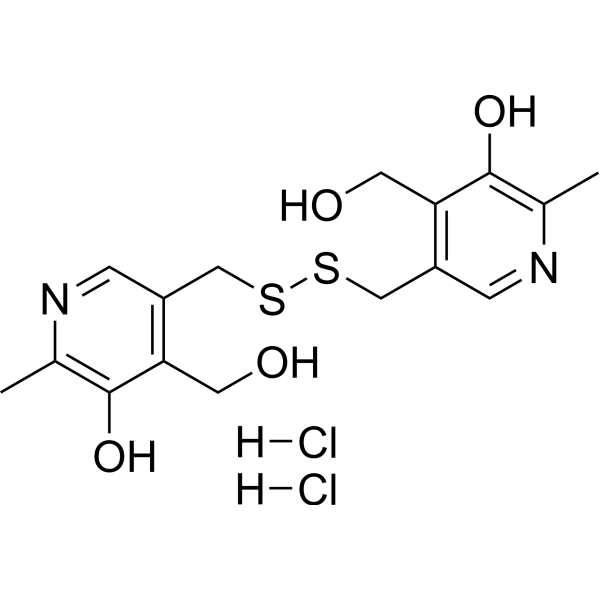
  • HY-B0910A
    Pyrithioxin dihydrochloride
    2 Publications Verification

    Pyritinol dihydrochloride; Pyridoxine disulfide dihydrochloride; Vitamin B6 disulfide dihydrochloride

    Drug Derivative Infection Neurological Disease Metabolic Disease Inflammation/Immunology Cancer
    Pyrithioxin (Pyritinol) dihydrochloride is the dihydrochloride salt of Pyrithioxin (HY-B0910). Pyrithioxin (Pyritinol) is an orally active neurodynamic compound. Pyrithioxin can promote the metabolism of glucose and amino acids, increase carotid blood flow and improve cerebral blood flow. Pyrithioxin exhibits anti-inflammation, anti-tumor and neuroprotective effect. Pyrithioxin can be used for the researches of cancer, inflammation, immunology, metabolic and neurological disease such as cerebral infarct, epilepsy, fibrosarcomas and rheumatoid polyarthritis .
    Pyrithioxin dihydrochloride
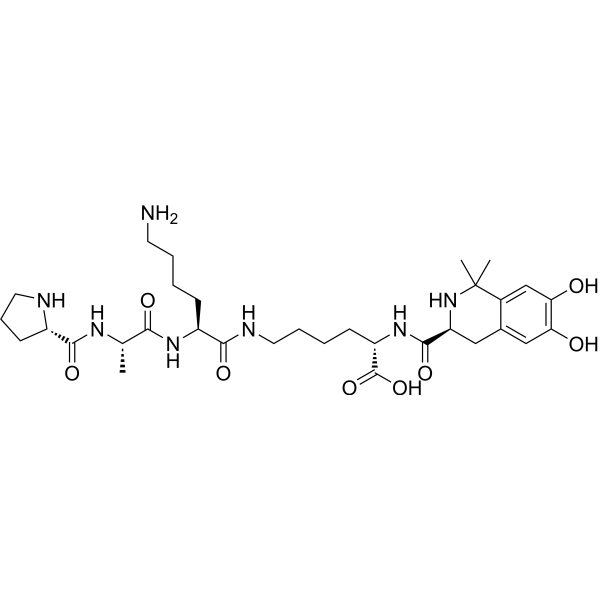
  • HY-132828

    LT3001; DHDMIQK(KAP)

    P-selectin Cardiovascular Disease Metabolic Disease Inflammation/Immunology
    Odatroltide (LT3001; DHDMIQK(KAP)) is a P-selectin inhibitor. Odatroltide is a peptide molecule comprising a tripeptide Pro-Ala-Lys (PAK) and an (S)-6,7-dihydroxy-1,1-dimethyl-1,2,3,4-tetrahydro-isoquinoline-3-carboxylic acid domain. Odatroltide can restore cerebral blood flow, scavenge free radicals, and inhibit leukocyte migration. Odatroltide possesses thrombolytic and anti-thrombotic activities .
    Odatroltide
  • HY-W008344

    Nucleoside Antimetabolite/Analog Apoptosis Infection Cardiovascular Disease Neurological Disease Inflammation/Immunology Cancer
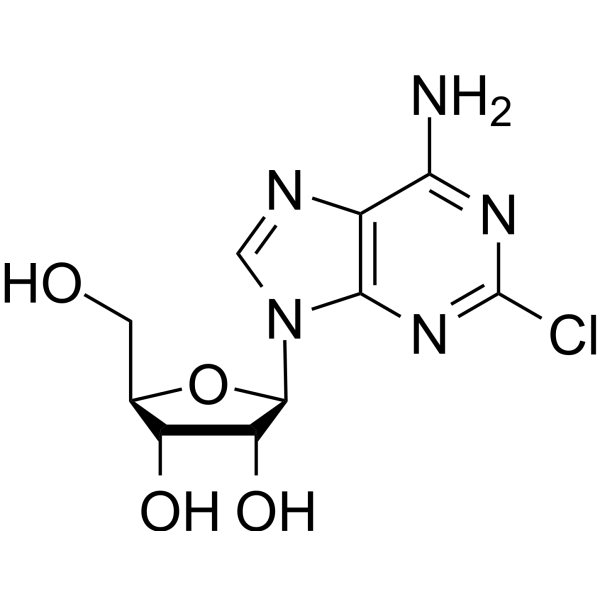
    2-Chloroadenosine is an adenosine analog, a transporter permeabilizer of nucleoside transporters, and a competitive uridine influx inhibitor (apparent Ki=33 μM). 2-Chloroadenosine binds to nitrobenzylthioinosine with high affinity (apparent Ki=0.18 mM). 2-Chloroadenosine promotes Apoptosis and increases cerebral blood flow. 2-Chloroadenosine has anticonvulsant properties. 2-Chloroadenosine is used to study infection, inflammatory diseases, cancer, blood-related diseases, lung injury, epilepsy, and kidney disease .
    2-Chloroadenosine
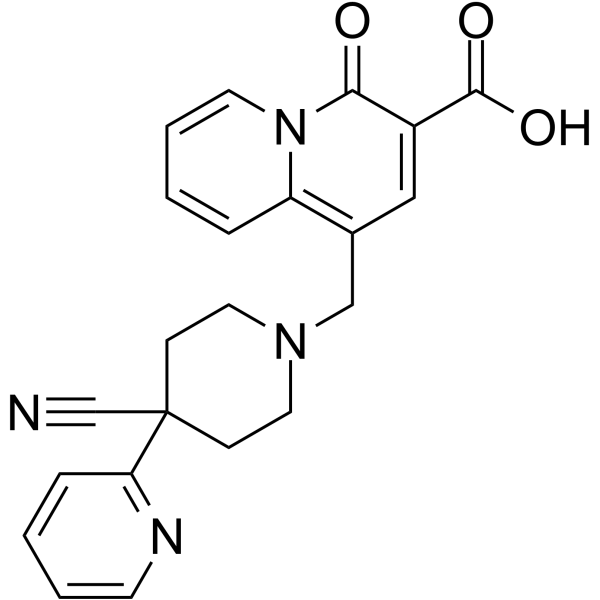
  • HY-118342
    PQCA
    1 Publications Verification

    mAChR Neurological Disease
    PQCA is a highly selective and potent muscarinic M1 receptor positive allosteric modulator. PQCA has an EC50 value of 49 nM and 135 nM on rhesus and human M1 receptor, respectively. PQCA is inactive for other muscarinic receptors. PQCA has potential to reduce the cognitive deficits associated with Alzheimer's disease .
    PQCA
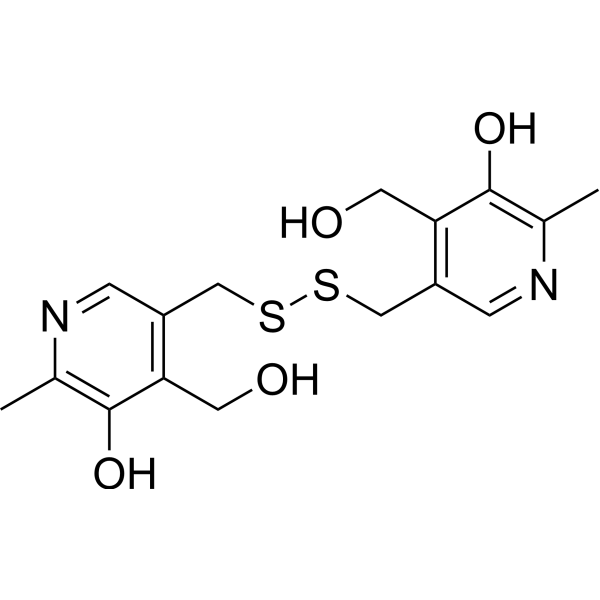
  • HY-B0910
    Pyrithioxin
    2 Publications Verification

    Pyritinol; Pyridoxine disulfide; Vitamin B6 disulfide

    Drug Derivative Neurological Disease Metabolic Disease Inflammation/Immunology Cancer
    Pyrithioxin (Pyritinol) is an orally active neurodynamic compound. Pyrithioxin can promote the metabolism of glucose and amino acids, increase carotid blood flow and improve cerebral blood flow. Pyrithioxin exhibits anti-inflammation, anti-tumor and neuroprotective effect. Pyrithioxin can be used for the researches of cancer, inflammation, immunology, metabolic and neurological disease such as cerebral infarct, epilepsy, fibrosarcomas and rheumatoid polyarthritis .
    Pyrithioxin
  • HY-105559A

    Quinotoxine hydrochloride

    Drug Isomer Cardiovascular Disease
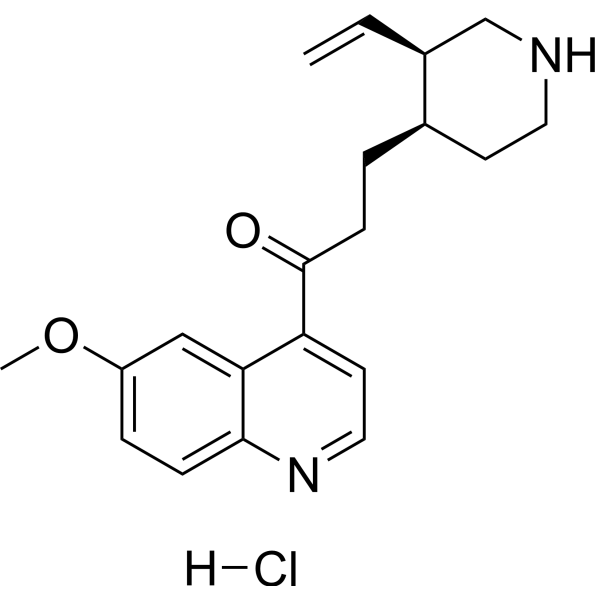
    Viquidil hydrochloride (Quinotoxine hydrochloride), an isomer of Quinidine, is a cerebral vasodilator agent. Viquidil hydrochloride shows antithrombotic activity .
    Viquidil hydrochloride
  • HY-105559

    Quinotoxine

    Potassium Channel Cardiovascular Disease
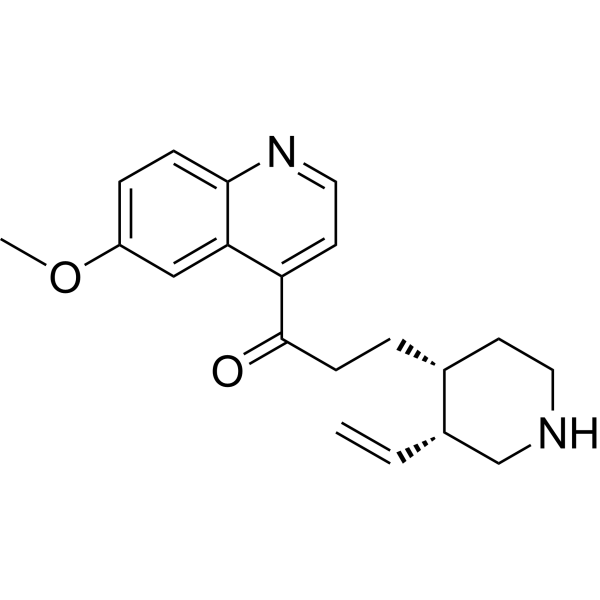
    Viquidil (Quinotoxine), an isomer of Quinidine, is a cerebral vasodilator agent. Viquidil shows antithrombotic activity .
    Viquidil
  • HY-14124

    Opioid Receptor Neurological Disease
    MK-5757 is a Nociceptin/Orphanin FQ Peptide Receptor antagonist. ORL1 antagonist 3 can improve cerebral blood flow disorders and ischemic damage, and alleviate abnormal neurological symptoms. ORL1 antagonist 3can be used for the research of neurological disease, such as traumatic brain injury .
    MK-5757
  • HY-146351

    HDAC Neurological Disease
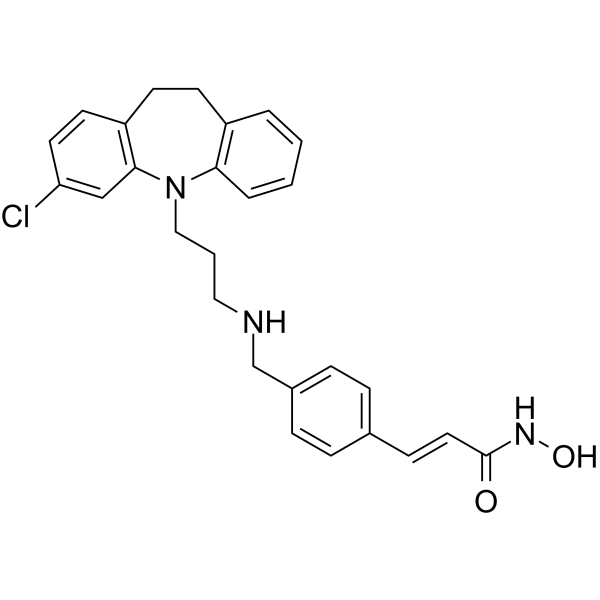
    HDAC-IN-38 (compound 13) is a potent HDAC inhibitor. HDAC-IN-38 shows similar micro-molar inhibitory activity toward HDAC1, 2, 3, 5, 6, and 8. HDAC-IN-38 increases cerebral blood flow (CBF), attenuates cognitive impairment, and improves hippocampal atrophy. HDAC-IN-38 also increases the level of histone acetylation (H3K14 or H4K5) .
    HDAC-IN-38
  • HY-105925

    MCN 2378

    Adrenergic Receptor Cardiovascular Disease
    Mefenidil (MCN 2378) is a selective cerebral vasodilator that is not affected by beta-adrenergic blockade. Mefenidil can be used in the study of cardiovascular disease. In monkey models, mefenidil preferentially increases cerebral blood flow over systemic (femoral) blood flow. Mefenidil is also able to reduce systemic arterial pressure in anesthetized dogs.
    Mefenidil
  • HY-118934

    Others Cardiovascular Disease
    Novocebrin is an orally active synthetic brain-active basic dithiophene compound. As a blood flow enhancer, Novocebrin induces a strong and sustained increase in cerebral and femoral blood flow in dogs. Novocebrin is widely applicable to the research of cerebral and peripheral blood flow-related diseases .
    Novocebrin
  • HY-119291

    Phosphodiesterase (PDE) Others
    RA642 is a compound with vasodilatory and hypertensive effects, with the activity of increasing arterial blood pressure, enhancing cerebral blood flow, reducing cerebrovascular resistance and peripheral resistance, and having a papaverine-like relaxant effect on smooth muscle in anesthetized animals.
    RA642
  • HY-B0910AR

    Pyritinol dihydrochloride (Standard); Pyridoxine disulfide dihydrochloride (Standard); Vitamin B6 disulfide dihydrochloride (Standard)

    Reference Standards Drug Derivative Neurological Disease Metabolic Disease Inflammation/Immunology Cancer
    Pyrithioxin (Pyritinol) dihydrochloride (Standard) is the analytical standard of Pyrithioxin dihydrochloride (HY-B0910A). Pyrithioxin (Pyritinol) is an orally active neurodynamic compound. Pyrithioxin can promote the metabolism of glucose and amino acids, increase carotid blood flow and improve cerebral blood flow. Pyrithioxin exhibits anti-inflammation, anti-tumor and neuroprotective effect. Pyrithioxin can be used for the researches of cancer, inflammation, immunology, metabolic and neurological disease such as cerebral infarct, epilepsy, fibrosarcomas and rheumatoid polyarthritis .
    Pyrithioxin dihydrochloride (Standard)
  • HY-111499

    Endogenous Metabolite Calcium Channel Neurological Disease
    Emopamil is an inhibitor of calcium channel that can reduce ischemia-induced neuronal cell damage .
    Emopamil
  • HY-129706

    Others Cardiovascular Disease
    LY127210 free base is an orally active peripheral arterial vasodilating antihypertensive agent. LY127210 free base interferes with the baroreflex mechanism, exerts direct myocardial bradycardic activity, has no α or β receptor blocking properties, and acts via all conventional administration routes. LY127210 free base reduces vascular resistance, cardiac output, heart rate, left ventricular end-diastolic pressure, regional vascular resistance, as well as blood flow in the skin and cerebral cortex. LY127210 free base can be used in research related to hypertension .
    LY127210 free base
  • HY-118275

    Cholinesterase (ChE) Neurological Disease
    FK960 is a potential anti-dementia agent that reverses the reduction in cerebral blood flow (rCBF) caused by sensory stimulation by enhancing cholinergic neurotransmission. In macaque experiments, physostigmine (AChE inhibitor; HY-N6608) was able to completely eliminate the rCBF in the sensory cortex increased by vibrotactile stimulation. FK960 (1-1000 μg/kg) can restore the eliminated rCBF response, and the action time can last for 1 hour. However, FK960 cannot restore the rCBF response eliminated by HA-966 (NMDA modulator; HY-100822), indicating that its function is not dependent on non-glutamatergic neurotransmission.
    FK960
  • HY-W197533

    GABA Receptor Cardiovascular Disease Neurological Disease
    3-Hydroxymethyl-β-carboline is a Benzodiazepine antagonist with a Ki value of ~1470 nM. 3-Hydroxymethyl-β-carboline reverses Flurazepam-induced sleep, cerebrovascular and cerebral metabolic inhibition, and also partially reverses Flurazepam-induced decreases in blood pressure and heart rate. 3-Hydroxymethyl-β-carboline disrupts the anticonvulsant and anxiolytic effects of Diazepam in male mice. 3-Hydroxymethyl-β-carboline has no effect on sodium-dependent high-affinity choline uptake in rat cortical or hippocampal synaptosomes .
    3-Hydroxymethyl-β-carboline

Inquiry Online

Your information is safe with us. * Required Fields.

Salutation


Country or Region *

Applicant Name *


Organization Name *

Department *


Email Address *


Product Name *

Cat. No.


Requested quantity *

Phone Number *


Remarks

Inquiry Online

Inquiry Information

Product Name:
Cat. No.:
Quantity:
MCE Japan Authorized Agent:

