



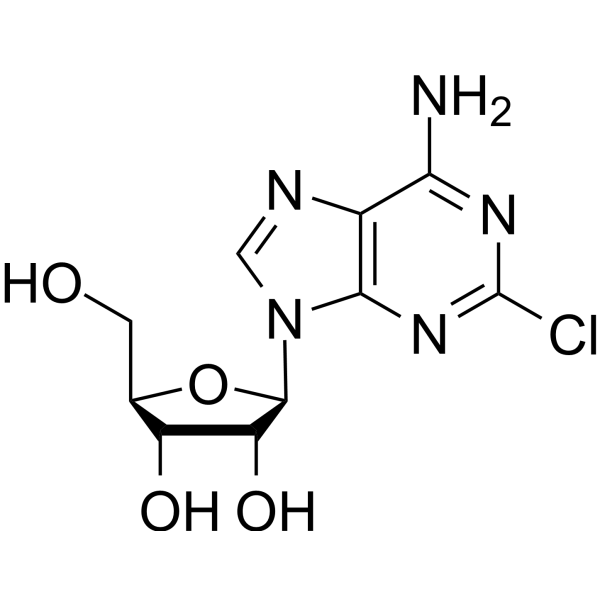
2-Chloroadenosine

Based on 1 Customer Validation
2-Chloroadenosine is an adenosine analog, a transporter permeabilizer of nucleoside transporters, and a competitive uridine influx inhibitor (apparent Ki=33 μM). 2-Chloroadenosine binds to nitrobenzylthioinosine with high affinity (apparent Ki=0.18 mM). 2-Chloroadenosine promotes Apoptosis and increases cerebral blood flow. 2-Chloroadenosine has anticonvulsant properties. 2-Chloroadenosine is used to study infection, inflammatory diseases, cancer, blood-related diseases, lung injury, epilepsy, and kidney disease.
Nos produits utilisent uniquement pour la recherche. Nous ne vendons pas aux patients.
- Pureté : 99.41%
- CAS No.: 146-77-0
- Formule: C10H12ClN5O4
- Masse moléculaire:301.69
-
Stockage:Powder -20°C, 3 years , 4°C, 2 years ; In solvent -80°C, 6 months , -20°C, 1 month

To place orders, for customer services and technical support, please contact: MedChemExpress USA
Tel: 609-228-6898 E-mail: [email protected] [email protected]


-
 Activité biologique
-
Chemical Information
-
Solvant et solubilité
- Protocole
- Pureté et documentation
- Références
-
 Help & FAQs


-
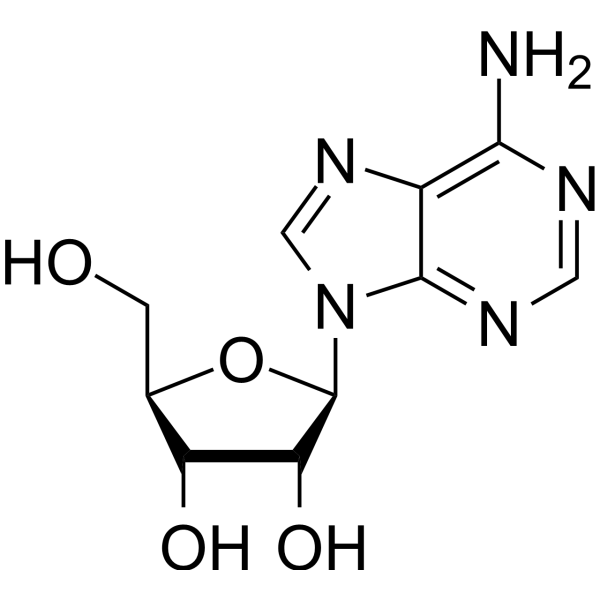
HY-B0228
AdenosineEndogenous Autacoid -
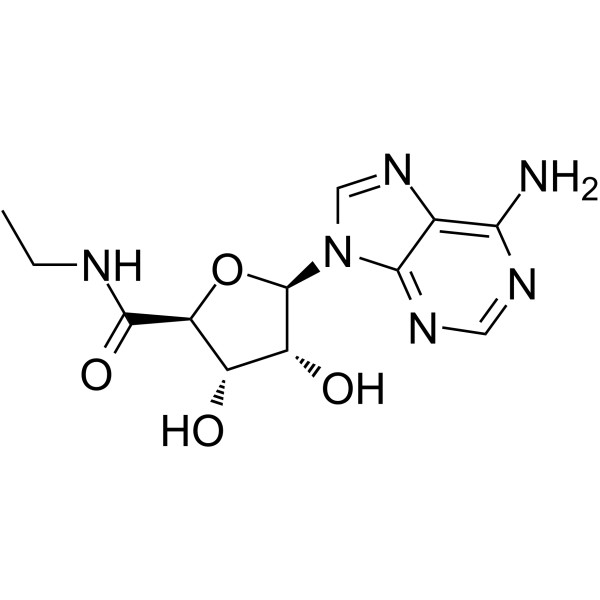
HY-103173
5'-N-EthylcarboxamidoadenosineAdenosine Receptor Agonist -
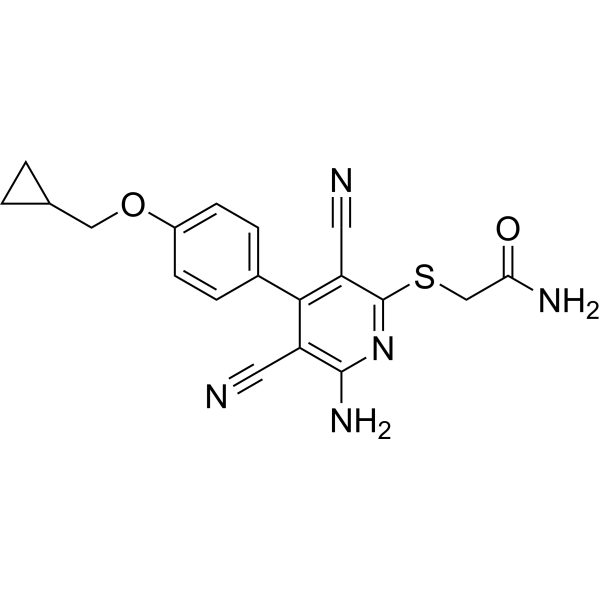
HY-103171
BAY 60-6583A2B Receptor Agonist -
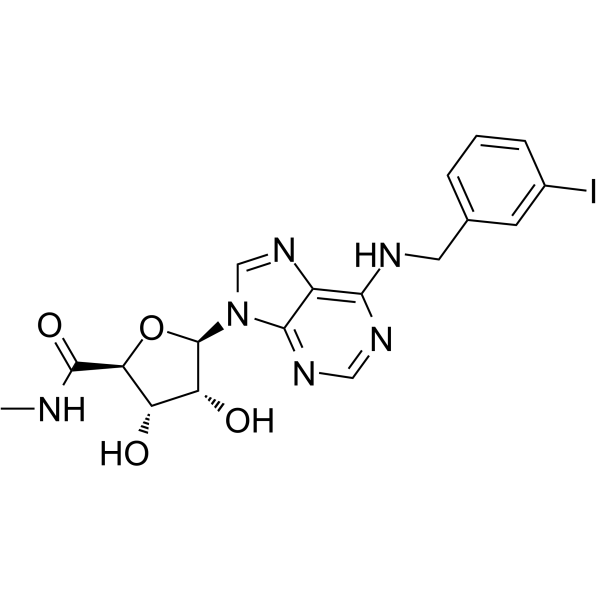
HY-13591
PiclidenosonA3AR Agonist -
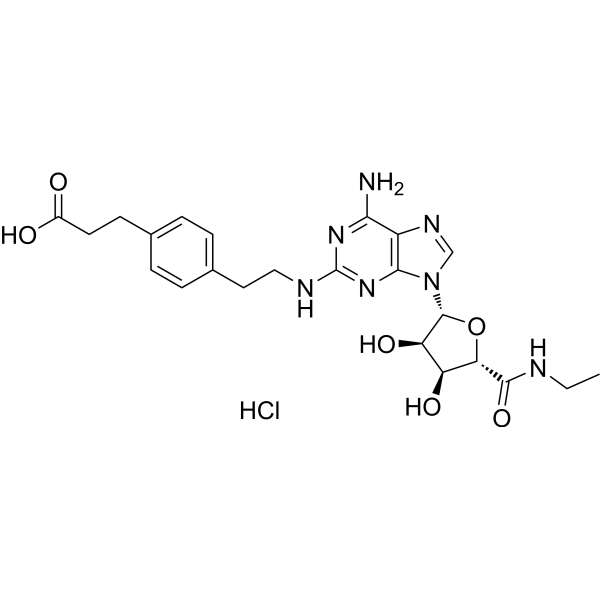
HY-13201A
CGS 21680 HydrochlorideAdenosine A2A Receptor Agonist -
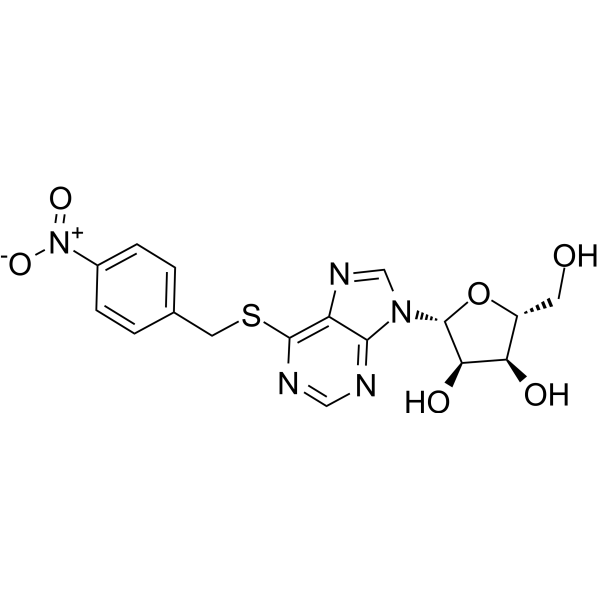
HY-W010936
NitrobenzylthioinosineENT1 Transporter Inhibitor -

HY-B0228R
Adenosine (Standard)Endogenous Autacoid -
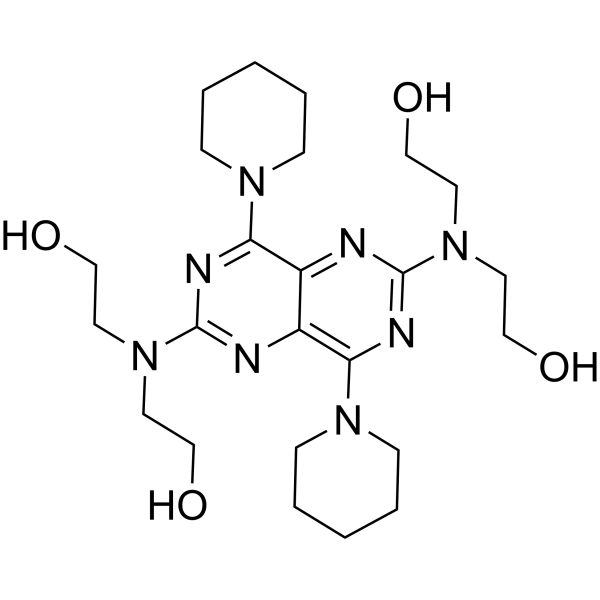
HY-B0312
DipyridamolePDE Inhibitor -
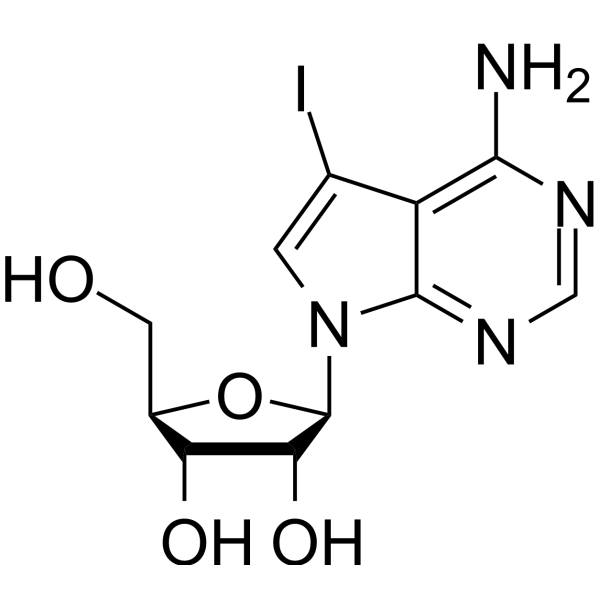
HY-15424
5-IodotubercidinAdenosine Kinase Inhibitor -
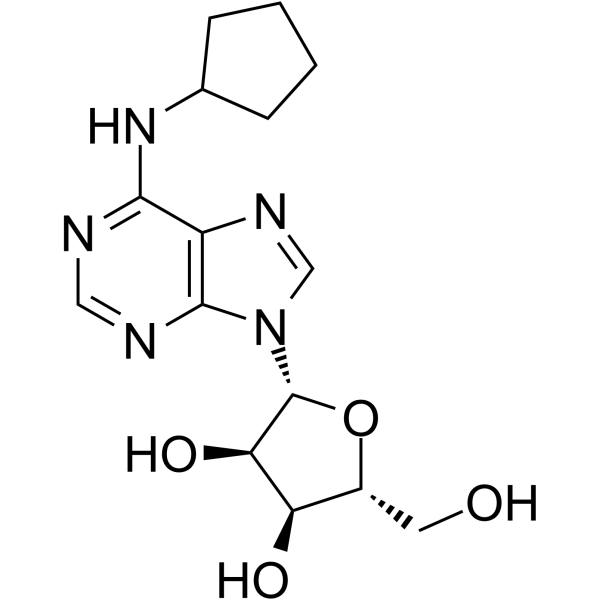
HY-103181
N6-CyclopentyladenosineAdenosine A1 Receptor Agonist -
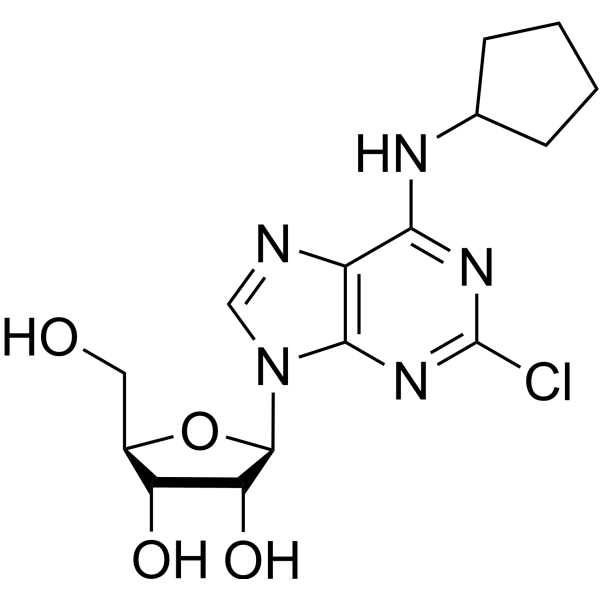
HY-103185
CCPAA1 Adenosine Receptor Agonist -
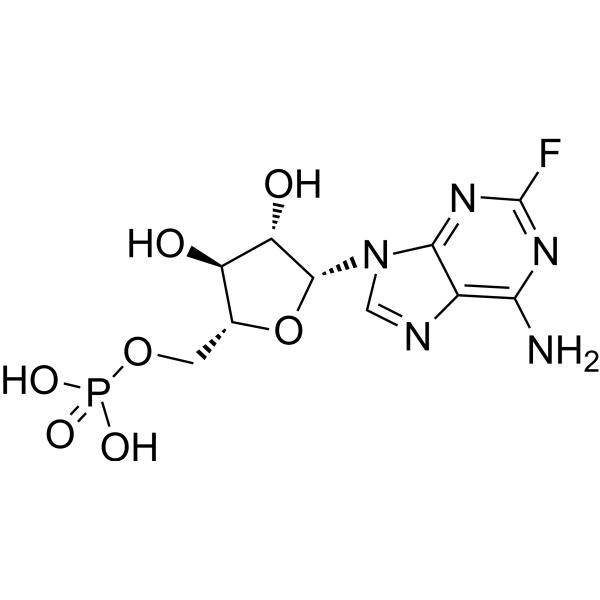
HY-B0028
Fludarabine phosphateApoptosis Inducer


Activité biologique
Description
Cellular Effect
|
Cell Line

|
Type | Value | Description | References |
|---|---|---|---|---|
| CCRF-CEM | IC50 |
10 μM
Compound: 2-Chloro-adenosine
|
Compound was tested for cytotoxicity against CCRF-CEM cell lines
Compound was tested for cytotoxicity against CCRF-CEM cell lines
|
[PMID: 1732556] |
| HEp-2 | IC50 |
3 μM
Compound: 2-Chloro-adenosine
|
Compound was tested for cytotoxicity against HEp-2 cell lines
Compound was tested for cytotoxicity against HEp-2 cell lines
|
[PMID: 1732556] |
| HT-29 | IC50 |
85.6 μM
Compound: 2-Cl-Ado
|
In vitro inhibitory activity against human colon carcinoma HT-29 cell line
In vitro inhibitory activity against human colon carcinoma HT-29 cell line
|
[PMID: 16033277] |
| K562 | IC50 |
15.4 μM
Compound: 2-Cl-Ado
|
In vitro inhibitory activity against human myelogenous leukemia K562 cell line
In vitro inhibitory activity against human myelogenous leukemia K562 cell line
|
[PMID: 16033277] |
| K562 | IC50 |
19.5 μM
Compound: 2-Cl-Ado
|
In vitro inhibitory activity against human leukemia K562IU cell line
In vitro inhibitory activity against human leukemia K562IU cell line
|
[PMID: 16033277] |
| L1210 | IC50 |
<3 μM
Compound: 2-Chloro-adenosine
|
Compound was tested for cytotoxicity against L1210 cell lines
Compound was tested for cytotoxicity against L1210 cell lines
|
[PMID: 1732556] |
| MCF7 | IC50 |
72.6 μM
Compound: 2-Cl-Ado
|
In vitro inhibitory activity against human breast carcinoma MCF-7 cell line
In vitro inhibitory activity against human breast carcinoma MCF-7 cell line
|
[PMID: 16033277] |
In Vitro
2-Chloroadenosine (50 μM; 24-72 h) can lead to increased apoptosis, cell cycle arrest in the S phase, inhibition of DNA synthesis, and DNA strand breaks in PC3 cells[1].
2-Chloroadenosine (10-50 μM, 6-72 h) induces apoptotic cell death in EHEB cells[2].
2-Chloroadenosine (0.01-1.0 mM; 18 h) has a selective lethal effect, leading to a rapid decrease in intracellular ATP content in mouse peritoneal macrophages[6].
MedChemExpress (MCE) has not independently confirmed the accuracy of these methods. They are for reference only.
-
Cell Line:EHEB
-
Concentration:10, 20, 50 μM
-
Incubation Time:6, 24, 48, 72 h
-
Result:Activated the intrinsic pathway of apoptosis in cells, and ATP consumption played an important role in this process.
Led to a time- and dose-dependent activation of caspase-3.
Showed a significant increase of the percentage of both early apoptosis and late apoptosis.
In Vivo
2-Chloroadenosine (0.3-12 nmoles; intraparenchymal injection; single dose) produces dose-dependent and sustained cerebral vasodilation and increases cerebral blood flow in normal rats as measured by spin-labeled MRI, with significant effects on both local and hemispheric blood flow[8].
2-Chloroadenosine (0.5-4 mg/kg, i.p.) inhibits the shake response in rats induced by ice-water exposure, Icilin (HY-11062) injection, or Naloxone (HY-17417A)-precipitated morphine withdrawal in a dose-dependent manner[9].
2-Chloroadenosine (1-10 mg/kg; intraperitoneal injection; administered after the first successful stimulation) has different degrees of inhibitory effects on cortical postepileptic discharges in rats of different ages, and the inhibitory effects on movement and EEG phenomena are most obvious in 18-day-old rats[10].
2-Chloroadenosine (1 mg/mL; intravenous infusion) can alleviate rabbit lung ischemia-reperfusion injury, reduce pulmonary artery pressure, increase cardiac output, and reduce alveolar leukocyte infiltration and protein exudation[11].
2-Chloroadenosine (9-18 nM/min; intravenous injection) can reduce mean arterial blood pressure, filtration fraction, inulin clearance, urine flow and K excretion rate in anesthetized rats in a dose-dependent manner, while reducing Na excretion rate and fractional Na excretion, and increasing plasma K[12].
2-Chloroadenosine (0.1 mM; local perfusion) increases collateral-dependent and normal cerebral blood flow in canine middle cerebral artery branch occlusion[13].
2-Chloroadenosine (0.25-1 mg/kg; intraperitoneal injection) significantly increases the electroconvulsive threshold and enhances the anticonvulsant activity of carbamazepine and clonazepam in mice[14].
2-Chloroadenosine (10 μg/kg/day; intravenous injection; 5 days) improves the survival rate of BALB/c mice infected with Klebsiella pneumoniae B5055 and reduces the levels of inflammatory markers[15].
2-Chloroadenosine (10 μg/kg; intravenous injection) can alleviate acute lung injury induced by live Escherichia coli or endotoxin plus latex particles in guinea pigs under neutropenia and reduce plasma TNF-α levels[16].
MedChemExpress (MCE) has not independently confirmed the accuracy of these methods. They are for reference only.
-
Animal Model:Male Sprague-Dawley rats (weight 371 g)[8]
-
Dosage:0.3, 6.0 or 12 nmoles
-
Administration:intraparenchymal injection; single dose
-
Result:Produced dose-dependent and sustained cerebral vasodilation and increased cerebral blood flow.
Increased the cerebral blood flow in the 3.6 mm diameter circular region of interest (ROI) around the injection site by 3.77 and 3.93 times, respectively, and increased the cerebral blood flow in the ipsilateral hemisphere ROI by 2.92 and 2.78 times, respectively, at 90 and 180 minutes after injection.


Chemical Information
-
CAS No. 146-77-0
-
Appearance Solid
-
Masse moléculaire 301.69
-
Formule C10H12ClN5O4
-
Color White to off-white
-
SMILES
OC[C@@H]1[C@@H](O)[C@@H](O)[C@H](N2C=NC3=C2N=C(Cl)N=C3N)O1
-
Livraison
Room temperature in continental US; may vary elsewhere.
-
Stockage
Powder -20°C 3 years 4°C 2 years In solvent -80°C 6 months -20°C 1 month


Solvant et solubilité
In Vitro:
DMSO : 100 mg/mL (331.47 mM; Need ultrasonic; Hygroscopic DMSO has a significant impact on the solubility of product, please use newly opened DMSO)
H2O : 33.33 mg/mL (110.48 mM; Need ultrasonic)
Please refer to the solubility information to select the appropriate solvent. Once prepared, please aliquot and store the solution to prevent product inactivation from repeated freeze-thaw cycles.
Storage method and period of stock solution: -80°C, 6 months; -20°C, 1 month. When stored at -80°C, please use it within 6 months. When stored at -20°C, please use it within 1 month.
* Note: If you choose water as the stock solution, please dilute it to the working solution, then filter and sterilize it with a 0.22 μm filter before use.
Please refer to the solubility information to select the appropriate solvent. Once prepared, please aliquot and store the solution to prevent product inactivation from repeated freeze-thaw cycles.
Storage method and period of stock solution: -80°C, 6 months; -20°C, 1 month. When stored at -80°C, please use it within 6 months. When stored at -20°C, please use it within 1 month.
* Note: If you choose water as the stock solution, please dilute it to the working solution, then filter and sterilize it with a 0.22 μm filter before use.
Concentration (start) × Volume (start) = Concentration (final) × Volume (final)
In Vivo:
Select the appropriate dissolution method based on your experimental animal and administration route.
- For the following dissolution methods, please ensure to first prepare a clear stock solution using an In Vitro approach and then sequentially add co-solvents:
- To ensure reliable experimental results, the clarified stock solution can be appropriately stored based on storage conditions. As for the working solution for In Vivo experiments, it is recommended to prepare freshly and use it on the same day.
- The percentages shown for the solvents indicate their volumetric ratio in the final prepared solution. If precipitation or phase separation occurs during preparation, heat and/or sonication can be used to aid dissolution.
Add each solvent one by one: 10% DMSO 40% PEG300 5% Tween-80 45% Saline
Solubility: ≥ 2.5 mg/mL (8.29 mM); Clear solution
This protocol yields a clear solution of ≥ 2.5 mg/mL (saturation unknown).
Taking 1 mL working solution as an example, add 100 μL DMSO stock solution (25.0 mg/mL) to 400 μL PEG300, and mix evenly; then add 50 μL Tween-80 and mix evenly; then add 450 μL Saline to adjust the volume to 1 mL.
Preparation of Saline: Dissolve 0.9 g sodium chloride in ddH₂O and dilute to 100 mL to obtain a clear Saline solution.
Add each solvent one by one: 10% DMSO 90% (20% SBE-β-CD in Saline)
Solubility: ≥ 2.5 mg/mL (8.29 mM); Clear solution
This protocol yields a clear solution of ≥ 2.5 mg/mL (saturation unknown).
Taking 1 mL working solution as an example, add 100 μL DMSO stock solution (25.0 mg/mL) to 900 μL 20% SBE-β-CD in Saline, and mix evenly.
Preparation of 20% SBE-β-CD in Saline (4°C, storage for one week): 2 g SBE-β-CD powder is dissolved in 10 mL Saline, completely dissolve until clear.
For the following dissolution methods, please prepare the working solution directly:
It is recommended to prepare fresh solutions and use them promptly within a short period of time.
The percentages shown for the solvents indicate their volumetric ratio in the final prepared solution. If precipitation or phase separation occurs during preparation, heat and/or sonication can be used to aid dissolution.
Add each solvent one by one: PBS
Solubility: 18.75 mg/mL (62.15 mM); Clear solution; Need ultrasonic
In Vivo Dissolution Calculator
Please enter the basic information of animal experiments:
-
-
-
-
Recommended: Prepare an additional quantity of animals to account for potential losses during experiments.
Working solution concentration: 0.22 mg/mL
This product has good water solubility, please refer to the measured solubility data in water/PBS/Saline for details.


Pureté et documentation
-
Fiche technique (295 KB)
-
SDS (393 KB)
- English - EN (393 KB)
- Français - FR (393 KB)
- Deutsch - DE (393 KB)
- Norwegian - NO (393 KB)
- Español - ES (393 KB)
- Swedish - SV (393 KB)
- Italian - IT (393 KB)
- Korean - KR (393 KB)
- Portuguese - PT (393 KB)
-
Instruction de manipulation (2659 KB)
Références
[1]. Zhai XF, et al. MiR-181a contributes to bufalin-induced apoptosis in PC-3 prostate cancer cells. BMC Complement Altern Med. 2013 Nov 23;13:325. [Content Brief]
[2]. Bastin-Coyette L, et al. Mechanisms of cell death induced by 2-chloroadenosine in leukemic B-cells. Biochem Pharmacol. 2008 Apr 1;75(7):1451-60. [Content Brief]
[3]. Koshiba M, et al. 2-Chloroadenosine but not adenosine induces apoptosis in rheumatoid fibroblasts independently of cell surface adenosine receptor signalling. Br J Pharmacol. 2002 Mar;135(6):1477-86. [Content Brief]
[4]. Szondy Z. Methylprednisolone and 2-chloroadenosine induce DNA fragmentation at different stages of human T-lymphocyte development. Immunol Lett. 1997 Jun;58(1):59-65. [Content Brief]
[5]. Szondy Z. The 2-chlorodeoxyadenosine-induced cell death signalling pathway in human thymocytes is different from that induced by 2-chloroadenosine. Biochem J. 1995 Oct 15;311 ( Pt 2)(Pt 2):585-8. [Content Brief]
[6]. Saito T, et al. 2-Chloroadenosine: a selective lethal effect to mouse macrophages and its mechanism. J Immunol. 1985 Mar;134(3):1815-22. [Content Brief]
[7]. Evans MC, et al. An adenosine analogue, 2-chloroadenosine, protects against long term development of ischaemic cell loss in the rat hippocampus. Neurosci Lett. 1987 Dec 29;83(3):287-92. [Content Brief]
[8]. Kochanek PM, et al. Assessment of the effect of 2-chloroadenosine in normal rat brain using spin-labeled MRI measurement of perfusion. Magn Reson Med. 2001 May;45(5):924-9. [Content Brief]
[9]. Tse SY, et al. Inhibition of the shake response in rats by adenosine and 2-chloroadenosine. Psychopharmacology (Berl). 1986;90(3):322-6. [Content Brief]
[10]. Pometlová M, et al. Effects of 2-chloroadenosine on cortical epileptic afterdischarges in immature rats. Pharmacol Rep. 2010 Jan-Feb;62(1):62-7. [Content Brief]
[11]. Marts BC, et al. Protective effect of 2-chloroadenosine on lung ischemia reperfusion injury. J Surg Res. 1993 Jun;54(6):523-9. [Content Brief]
[12]. Churchill PC. Renal effects of 2-chloroadenosine and their antagonism by aminophylline in anesthetized rats. J Pharmacol Exp Ther. 1982 Aug;222(2):319-23. [Content Brief]
[13]. Muhonen MG, et al. Effects of adenosine and 2-chloroadenosine on cerebral collateral vessels. J Cereb Blood Flow Metab. 1995 Nov;15(6):1075-81. [Content Brief]
[14]. Borowicz KK, et al. 2-Chloroadenosine, a preferential agonist of adenosine A1 receptors, enhances the anticonvulsant activity of carbamazepine and clonazepam in mice. Eur Neuropsychopharmacol. 2002 Apr;12(2):173-9. [Content Brief]
[16]. Sakamaki F, et al. Attenuation by intravenous 2-chloroadenosine of acute lung injury induced by live escherichia coli or latex particles added to endotoxin in the neutropenic state. J Lab Clin Med. 2003 Aug;142(2):128-35. [Content Brief]
[17]. Jarvis SM,2-Chloroadenosine, a permeant for the nucleoside transporter.Biochem Pharmacol. 1985 Sep 15;34(18):3237-41. [Content Brief]


Complete Stock Solution Preparation Table
Please refer to the solubility information to select the appropriate solvent. Once prepared, please aliquot and store the solution to prevent product inactivation from repeated freeze-thaw cycles.
Storage method and period of stock solution: -80°C, 6 months; -20°C, 1 month. When stored at -80°C, please use it within 6 months. When stored at -20°C, please use it within 1 month.
| Optional Solvent | Concentration Solvent Mass | 1 mg | 5 mg | 10 mg | 25 mg |
|---|---|---|---|---|---|
| H2O / DMSO | 1 mM | 3.3147 mL | 16.5733 mL | 33.1466 mL | 82.8665 mL |
| 5 mM | 0.6629 mL | 3.3147 mL | 6.6293 mL | 16.5733 mL | |
| 10 mM | 0.3315 mL | 1.6573 mL | 3.3147 mL | 8.2867 mL | |
| 15 mM | 0.2210 mL | 1.1049 mL | 2.2098 mL | 5.5244 mL | |
| 20 mM | 0.1657 mL | 0.8287 mL | 1.6573 mL | 4.1433 mL | |
| 25 mM | 0.1326 mL | 0.6629 mL | 1.3259 mL | 3.3147 mL | |
| 30 mM | 0.1105 mL | 0.5524 mL | 1.1049 mL | 2.7622 mL | |
| 40 mM | 0.0829 mL | 0.4143 mL | 0.8287 mL | 2.0717 mL | |
| 50 mM | 0.0663 mL | 0.3315 mL | 0.6629 mL | 1.6573 mL | |
| 60 mM | 0.0552 mL | 0.2762 mL | 0.5524 mL | 1.3811 mL | |
| 80 mM | 0.0414 mL | 0.2072 mL | 0.4143 mL | 1.0358 mL | |
| 100 mM | 0.0331 mL | 0.1657 mL | 0.3315 mL | 0.8287 mL |
* Note: If you choose water as the stock solution, please dilute it to the working solution, then filter and sterilize it with a 0.22 μm filter before use.


2-Chloroadenosine Related Classifications
HY-W008344 Related Classifications
 Powered by Bioz