Search Result
Results for "
dichlorido(η6-toluene)(3,5,6-bicyclophosphite-1,2-O-isopropylidene-α-D-glucofuranose)ruthenium(II)
" in MedChemExpress (MCE) Product Catalog:
47
Biochemical Assay Reagents
8
Isotope-Labeled Compounds
| Cat. No. |
Nombre del producto |
Target |
Áreas de investigación |
Chemical Structure |
-
- HY-103311
-
|
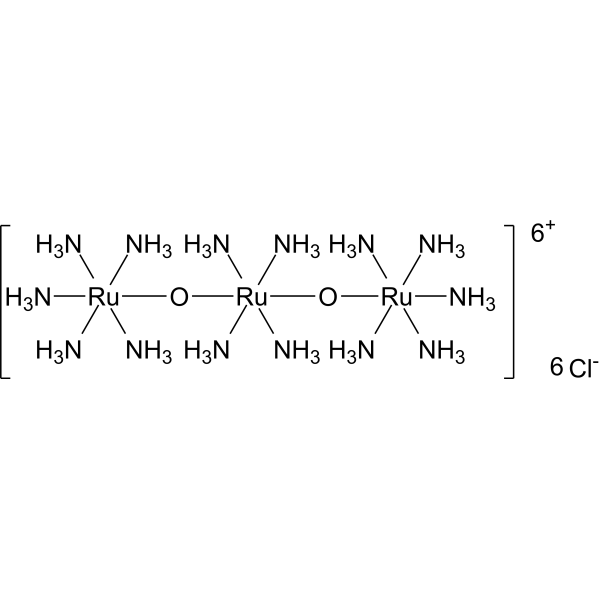
Ammoniated ruthenium oxychloride
|
Calcium Channel
|
Cardiovascular Disease
|
|
Ruthenium red (Ammoniated ruthenium oxychloride) is a polycationic dye widely used for electron microscopy (EM) of cells, tissues and vegetative bacteria. Ruthenium red strongly reacts with phospholipids and fatty acids and binds to acidic mucopolysaccharides. Ruthenium red is a L-type calcium current (ICa) blocker .
|
-
-
- HY-W074143
-
|
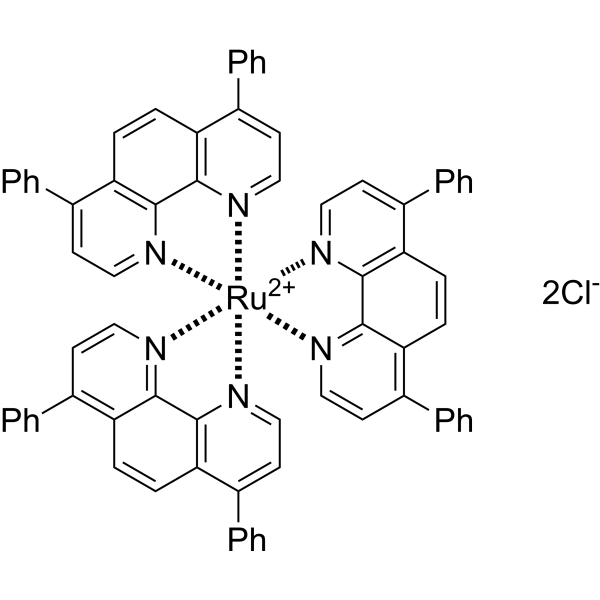
[Ru(DPP)3]Cl2
|
Fluorescent Dye
|
Cancer
|
|
Tris(4,7-diphenyl-1,10-phenanthroline)ruthenium(II) dichloride ([Ru(dpp)3] 2+) is an electrochemiluminescent (ECL) probe and oxygen-sensitive sensor. Tris(4,7-diphenyl-1,10-phenanthroline)ruthenium(II) dichloride can be used to modify electrode surfaces for the detection of sulfates (S2O8 2-) and oxalates, based on electrochemical reactions that generate excited-state species, releasing photons through irreversible redox reactions. Tris(4,7-diphenyl-1,10-phenanthroline)ruthenium(II) dichloride utilizes the oxygen quenching of fluorescence mechanism, where fluorescence intensity reflects the metabolic rate of living microorganisms or oxygen levels within cells/tumors, allowing for real-time detection. Tris(4,7-diphenyl-1,10-phenanthroline)ruthenium(II) dichloride's main applications include microbial detection, antibacterial activity studies, and tumor microenvironment research .
|
-
-
- HY-W087995
-
|
Mono-acetone glucose; 1,2-O-isopropylidene-α-D-glucofuranose
|
Biochemical Assay Reagents
|
Others
|
|
1,2-O-Isopropylidene-alpha-d-glucofuranose (Mono-acetone glucose) is a biochemical reagent that can be used as a biological material or organic compound for life science related research.
|
-

-
- HY-W014141
-
|
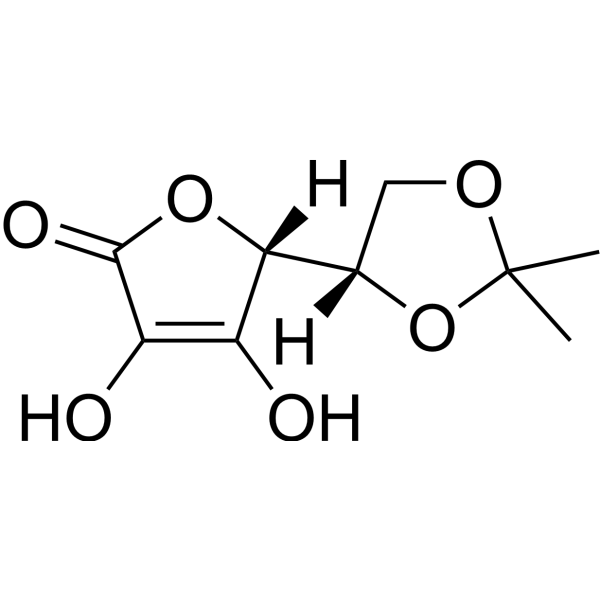
L-Ascorbic acid 5,6-acetonide
|
Biochemical Assay Reagents
|
Infection
|
|
5,6-O-Isopropylidene-L-ascorbic acid (L-Ascorbic acid 5,6-acetonide) is an organic compound and a derivative of L-ascorbic acid (vitamin C). 5,6-O-Isopropylidene-L-ascorbic acid inhibits biofilm formation by pathogenic bacteria. 5,6-O-Isopropylidene-L-ascorbic acid is applicable to studies related to bacterial infections .
|
-
-
- HY-W036647
-
|
|
Biochemical Assay Reagents
|
Others
|
|
1,2:3,4-Di-O-isopropylidene-α-D-galactopyranose is a biochemical reagent that can be used as a biological material or organic compound for life science related research .
|
-

-
- HY-Y1109
-
|
Tetrachlorobis(mu-4-cymene)diruthenium(II)
|
Biochemical Assay Reagents
|
Cancer
|
|
Dichloro(p-cymene)ruthenium(II) dimer (Tetrachlorobis(mu-4-cymene)diruthenium(II)) is a ruthenium-based organometallic catalyst precursor, which is widely applied in the field of organic synthesis .
|
-

-
- HY-W033466
-
|
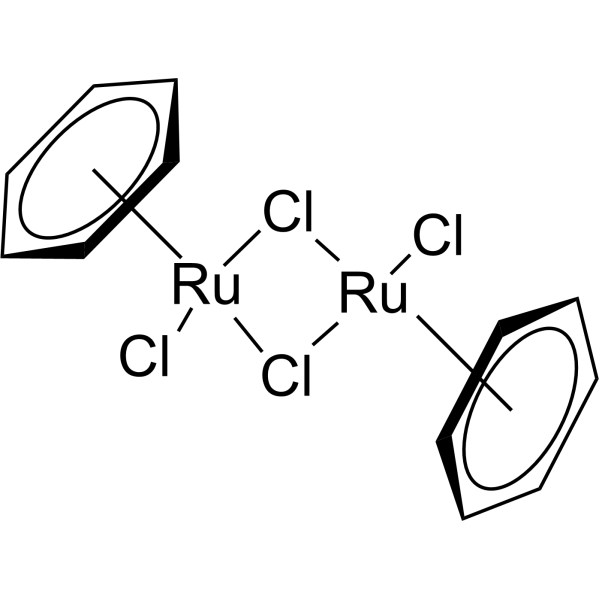
Benzeneruthenium(II) chloride dimer
|
Biochemical Assay Reagents
|
Others
|
|
Benzeneruthenium(II) Chloride Dimer (Benzeneruthenium(II) chloride dimer) is a dinuclear complex. Benzeneruthenium(II) Chloride Dimer undergoes a hydrolysis reaction to generate a mixture of mononuclear ruthenium complexes in equilibrium .
|
-
-
- HY-76693
-
|
|
Nucleoside Antimetabolite/Analog
Drug Intermediate
|
Others
|
|
2,3-O-Isopropylidene-D-ribonolactone is an acetonide derivative of d-ribonolactone and an intermediate in organic synthesis.2,3-O-Isopropylidene-D-ribonolactone forms via acid-catalyzed acetalization of d-ribonolactone with acetone.2,3-O-Isopropylidene-D-ribonolactone facilitates production of 1,5-dideoxy-1,5-imino-d-ribitol and 1,5-dideoxy-1,5-imino-l-arabinitol .
|
-

-
- HY-W015179
-
|
Monoacetone-D-xylose
|
Biochemical Assay Reagents
Drug Derivative
|
Others
|
|
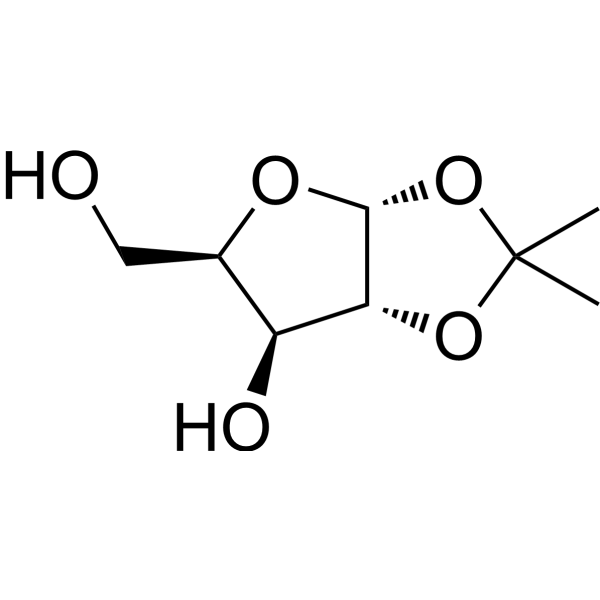
1,2-O-Isopropylidene-alpha-D-xylofuranose is a derivative of D-xylose (HY-N0537). 1,2-O-isopropylidene-α-D-xylofuranose can be used in the asymmetric alkylation of Benzaldehyde with Diethylzinc .
|
-
-
- HY-W020958
-
|
Tris(acetylacetonato)ruthenium (III)
|
Caspase
Apoptosis
|
Cancer
|
|
Ru (acac) 3 (Tris (acetylacetonato) ruthenium (III)) is a caspase-3 activator and Apoptosis inducer. Ru (acac) 3 exerts growth inhibitory effects on various cell lines in vitro by inhibiting DNA/RNA synthesis and inducing mild reversible S-phase cell cycle arrest. Ru (acac) 3 is commonly used in research related to ovarian cancer, osteosarcoma, cervical cancer, melanoma, and other fields .
|
-

-
- HY-79986
-
|
|
Drug Intermediate
|
Others
|
|
Diiodo(p-cymene)ruthenium(II) dimer is a drug intermediate for synthesis of various active compounds.
|
-

-
- HY-W243018S
-
|
|
Isotope-Labeled Compounds
|
Others
|
|
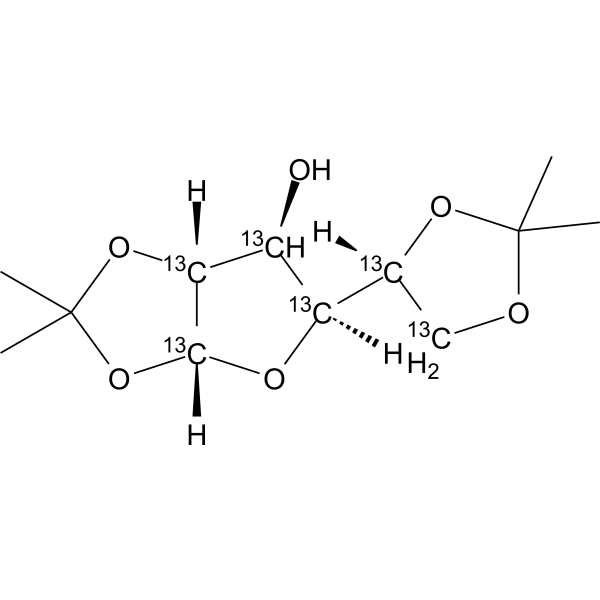
1,2:5,6-Di-O-isopropylidene-a-D-glucofuranose-1,2,3,4,5,6- 13C6 is the 13C labeled 1,2:5,6-Di-O-isopropylidene-a-D-glucofuranose-1,2,3,4,5,6 .
|
-
-
- HY-D1708
-
-
-
- HY-W140535
-
|
|
Fluorescent Dye
MOFs
|
Others
|
|
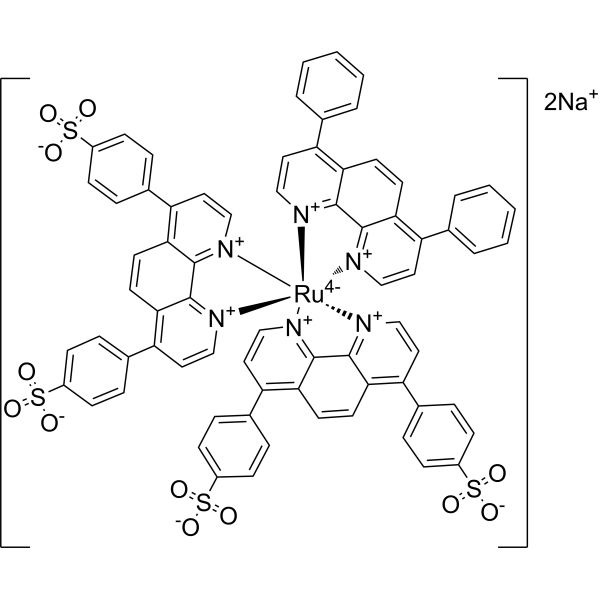
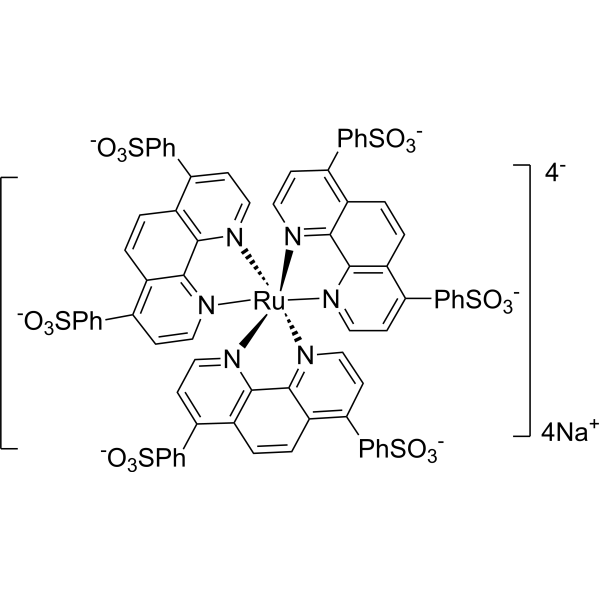
Tetrasodium, 4-(1,10-phenanthrolin-4-yl)benzenesulfonate,ruthenium((II)) is a luminescent ruthenium complex. Tetrasodium, 4-(1,10-phenanthrolin-4-yl)benzenesulfonate,ruthenium((II)) is used in biological and chemical fields as a fluorescent indicator dye and an electrochemiluminescent probe .
|
-
-
- HY-W103225
-
|
|
Bacterial
|
Infection
|
|
Dihydroanthracene (9,10-Dihydroanthracene) is a substrate for toluene dioxygenase (TDO) expressed by Pseudomonas putida UV4. Toluene dioxygenase (TDO) expressed by Pseudomonas putida UV4 catalyzes the benzylic monooxygenation of Dihydroanthracene to 9-hydroxy-9,10-DHA as the only product .
|
-

-
- HY-113949A
-
|
|
Drug Isomer
|
Others
|
|
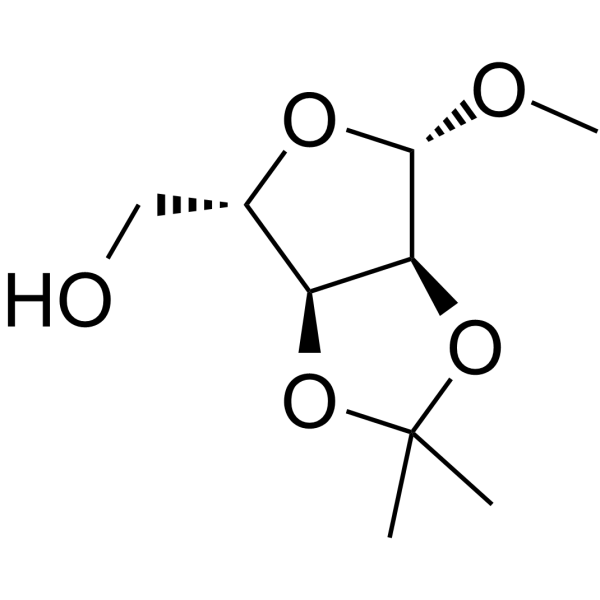
Methyl 2,3-O-Isopropylidene-β-L-ribofuranoside is an enantiomer of Methyl 2,3-O-Isopropylidene-β-D-ribofuranoside. Methyl 2,3-O-Isopropylidene-β-L-ribofuranoside is a derivative of L-ribose .
|
-
-
- HY-154289
-
|
|
Nucleoside Antimetabolite/Analog
|
Cancer
|
|
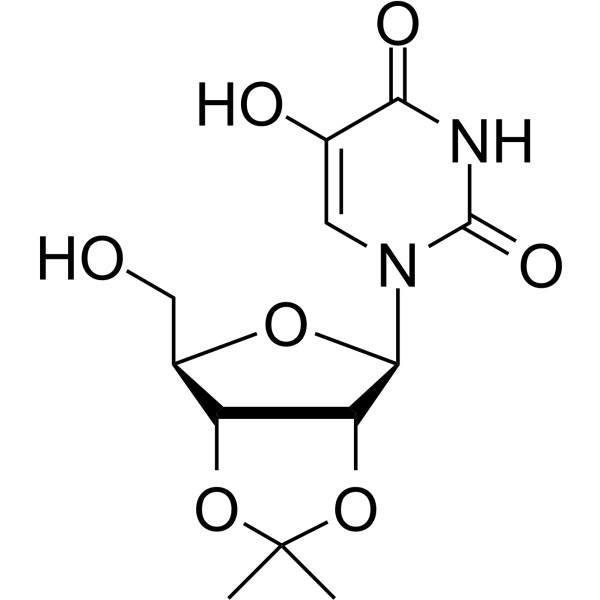
2’,3’-Isopropylidene-5-hydroxyuridine is a purine nucleoside analog. Purine nucleoside analogs have broad antitumor activity targeting indolent lymphoid malignancies. Anticancer mechanisms in this process rely on inhibition of DNA synthesis, induction of apoptosis, etc .
|
-
-
- HY-W555976
-
|
|
Nucleoside Antimetabolite/Analog
|
Cancer
|
|
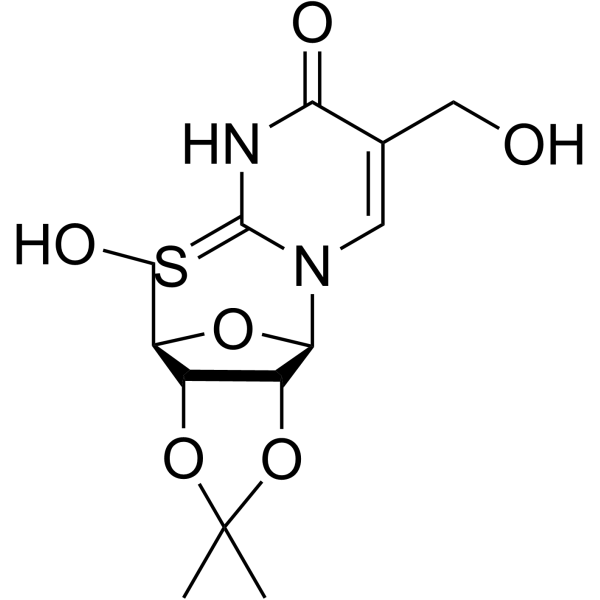
5-Hydroxymethyl-2',3'-O-isopropylidene-2-thiouridine is a purine nucleoside analog. Purine nucleoside analogs have broad antitumor activity targeting indolent lymphoid malignancies. Anticancer mechanisms in this process rely on inhibition of DNA synthesis, induction of apoptosis, etc .
|
-
-
- HY-W357105
-
|
1,2-O-isopropylidene-3,5,6-tri-o-benzyl-α-D-glucofuranose
|
Biochemical Assay Reagents
|
Others
|
|
3,5,6-tri-O-Benzyl-1,2-O-isopropylidene-D-glucofuranose (1,2-O-Isopropylidene-3,5,6-tri-o-benzyl-α-D-glucofuranose) is a synthetic sugar compound.
|
-

-
- HY-W555991
-
|
|
Biochemical Assay Reagents
|
|
|
2',3'-O-Isopropylidene-6-mercaptopurine riboside is a compound with excellent metal complexing activity. 2',3'-O-Isopropylidene-6-mercaptopurine riboside can be used to study the mechanism of metal complexing.
|
-

-
- HY-77732
-
|
isopropylidene ticagrelor
|
Drug Derivative
|
Cancer
|
|
Ticagrelor acetonide (Isopropylidene ticagrelor) (Compound 7) is a drug intermediate that can be used for the synthesis of lysine-specific demethylase (LSD1) inhibitors .
|
-

-
- HY-113949
-
|
|
Drug Intermediate
|
Others
|
|
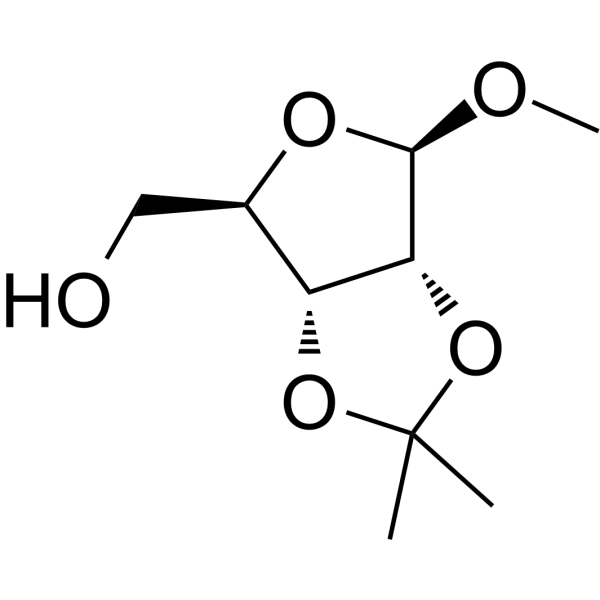
Methyl 2,3-O-Isopropylidene-β-D-ribofuranoside is a furanose derivative. Methyl 2,3-O-Isopropylidene-β-D-ribofuranoside serves as an important intermediate for the synthesis of compounds such as arsenic-containing ribosides .
|
-
-
- HY-34544
-
|
|
Others
|
Others
|
|
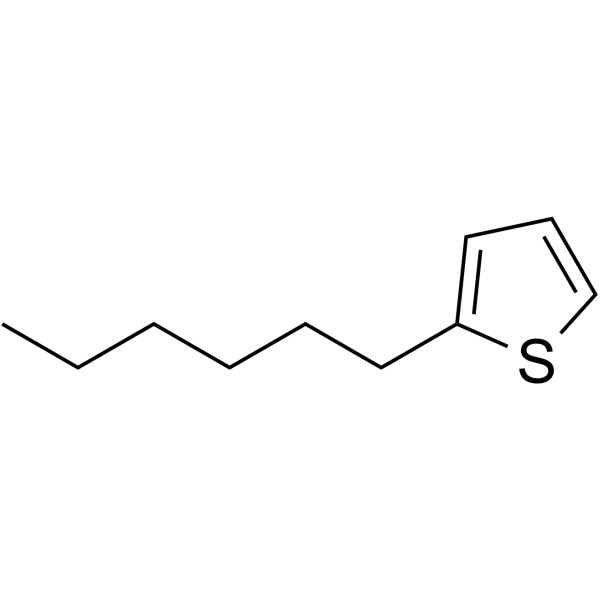
2-Hexylthiophene is an extremely weak basic heteroaromatic compound. 2-Hexylthiophene can be used to modify and improve the molar absorption coefficient of ruthenium sensitizer
|
-
-
- HY-W145583
-
|
|
Biochemical Assay Reagents
|
Others
|
|
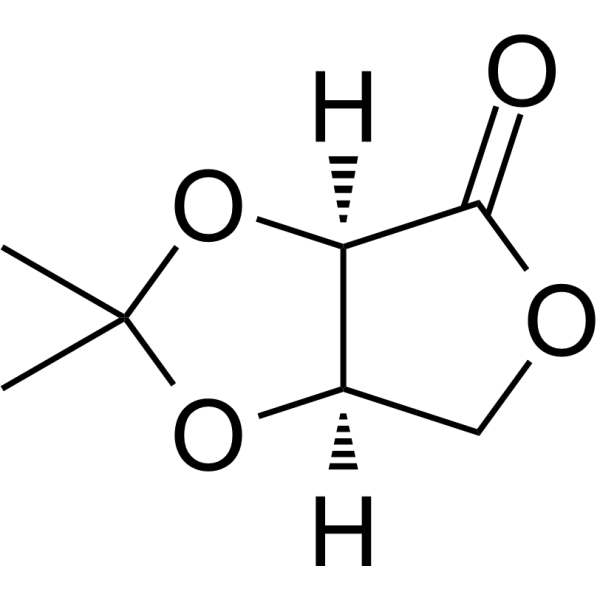
2,3-O-Isopropylidene-D-erythronolactone is a biochemical reagent that can be used as a biological material or organic compound for life science related research.
|
-
-
- HY-W337673
-
-

-
- HY-W101129
-
|
|
Biochemical Assay Reagents
|
Others
|
|
2,3:5,6-Di-O-isopropylidene-α-D-mannofuranose is a biochemical reagent that can be used as a biological material or organic compound for life science related research.
|
-

-
- HY-W416187
-
-

-
- HY-W145575
-
|
Diacetone-D-xylose
|
Biochemical Assay Reagents
|
Others
|
|
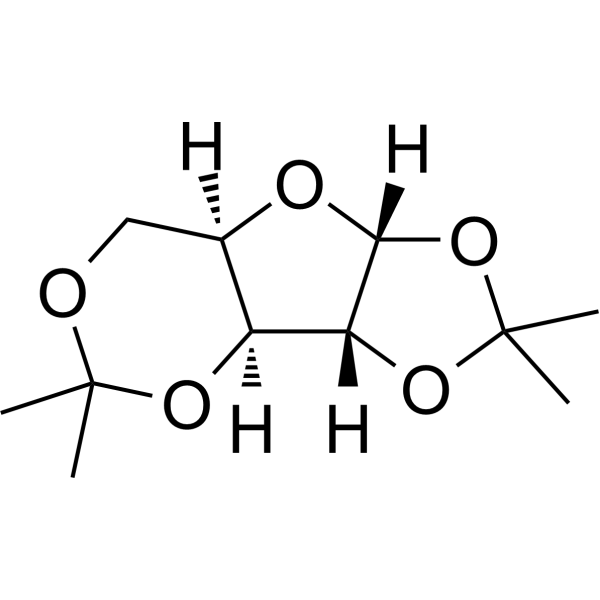
1,2:3,5-Di-O-isopropylidene-alpha-D-xylofuranose is a biochemical reagent that can be used as a biological material or organic compound for life science related research.
|
-
-
- HY-112793
-
|
|
Biochemical Assay Reagents
|
Others
|
|
3-O-Benzyl-1,2-O-isopropylidene-α-D-glucofuranose is a class of biochemical reagents used in glycobiology research. Glycobiology studies the structure, synthesis, biology, and evolution of sugars. It involves carbohydrate chemistry, enzymology of glycan formation and degradation, protein-glycan recognition, and the role of glycans in biological systems. This field is closely related to basic research, biomedicine, and biotechnology .
|
-

-
- HY-W698504
-
|
|
Biochemical Assay Reagents
|
Others
|
|
3-Azido-3-deoxy-1,2:5,6-di-O-isopropylidene-α-D-glucofuranose is a class of biochemical reagents used in glycobiology research. Glycobiology studies the structure, synthesis, biology, and evolution of sugars. It involves carbohydrate chemistry, enzymology of glycan formation and degradation, protein-glycan recognition, and the role of glycans in biological systems. This field is closely related to basic research, biomedicine, and biotechnology .
|
-

-
- HY-W034154
-
|
Tetrakis(triphenylphosphine)ruthenium dihydride
|
Drug Intermediate
Endogenous Metabolite
|
|
|
Dihydridotetrakis(triphenylphosphine)ruthenium(II) (Tetrakis(triphenylphosphine)ruthenium dihydride) is a catalyst with good catalytic activity. Dihydridotetrakis(triphenylphosphine)ruthenium(II) can be used in organic synthesis reactions, especially in hydrogenation and dehydrogenation reactions. Dihydridotetrakis(triphenylphosphine)ruthenium(II) has received extensive attention in the study of metal catalysts, and its high efficiency makes it an ideal research object.
|
-

-
- HY-W749199
-
-

-
- HY-W835928
-
-

-
- HY-133538
-
|
|
ADC Linker
|
Cancer
|
|
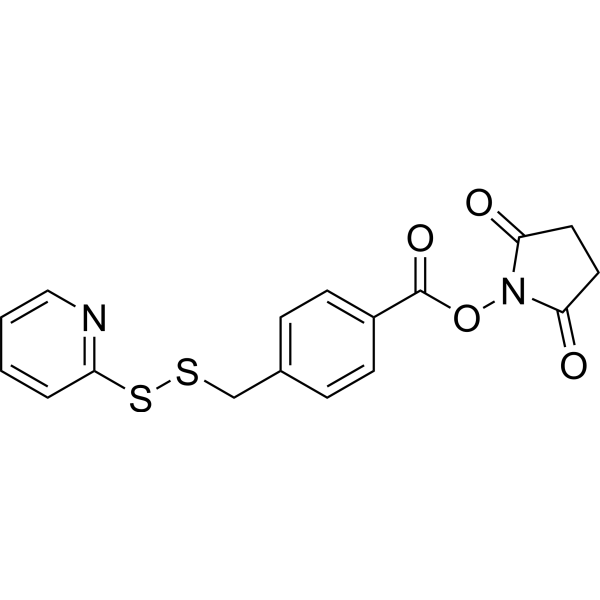
4-Succinimidyl-oxycarbonyl-α-(2-pyridyldithio)toluene is a non-cleavable ADC linker used in the synthesis of antibody-drug conjugates (ADCs) .
|
-
-
- HY-W357105R
-
|
1,2-O-isopropylidene-3,5,6-tri-o-benzyl-α-D-glucofuranose (Standard)
|
Biochemical Assay Reagents
Reference Standards
|
Others
|
|
3,5,6-tri-O-Benzyl-1,2-O-isopropylidene-D-glucofuranose (Standard) is the analytical standard of 3,5,6-tri-O-Benzyl-1,2-O-isopropylidene-D-glucofuranose. This product is intended for research and analytical applications. 3,5,6-tri-O-Benzyl-1,2-O-isopropylidene-D-glucofuranose (1,2-O-Isopropylidene-3,5,6-tri-o-benzyl-α-D-glucofuranose) is a synthetic sugar compound.
|
-

-
- HY-W040301
-
-

-
- HY-W739899
-
|
|
Biochemical Assay Reagents
|
|
|
5'-Ethylcarboxamido-2',3'-isopropylidene adenosine is an adenosine receptor agonist that promotes the activity of A2B adenosine receptors. 5'-Ethylcarboxamido-2',3'-isopropylidene adenosine can be used to study the role of adenosine in physiological processes. 5'-Ethylcarboxamido-2',3'-isopropylidene adenosine is used as a potential inhibitory target in compound development.
|
-

-
- HY-W750280
-
-

-
- HY-141884
-
-

-
- HY-20550R
-
|
α,α,α',α'-5-Pentamethyl-1,3-benzenediacetonitrile (Standard)
|
Reference Standards
|
|
|
3,5-Bis(2-cyanoprop-2-yl)toluene (Standard) is the analytical standard of 3,5-Bis(2-cyanoprop-2-yl)toluene. This product is intended for research and analytical applications.
|
-

-
- HY-N1782
-
|
|
Others
|
Inflammation/Immunology
|
|
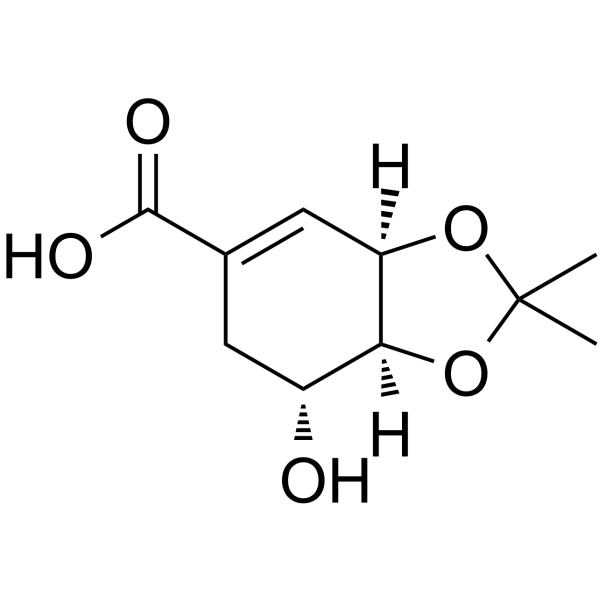
3,4-O-Isopropylidene-shikimicn acid is a natural product that can be isolated from the whole plants of Hypericum wightianum. 3,4-O-Isopropylidene-shikimic acid has anti-inflammatory effect and antioxidant activities .
|
-
-
- HY-W352828
-
|
|
Biochemical Assay Reagents
|
Others
|
|
1,2-O-Cyclohexylidene-α-D-glucofuranose is a class of biochemical reagents used in glycobiology research. Glycobiology studies the structure, synthesis, biology, and evolution of sugars. It involves carbohydrate chemistry, enzymology of glycan formation and degradation, protein-glycan recognition, and the role of glycans in biological systems. This field is closely related to basic research, biomedicine, and biotechnology .
|
-

-
- HY-W699040
-
|
|
Biochemical Assay Reagents
|
Others
|
|
1,2-Isopropylidene-3-oleoyl-sn-glycerol is a fatty acid that can be used as a biological material or organic compound for life science related research .
|
-

-
- HY-W100312S
-
|
toluene, 2-amino-13C6 hydrochloride
|
Isotope-Labeled Compounds
|
Others
|
|
o-Toluidine-13C6 hydrochloride (Toluene, 2-amino-13C6 hydrochloride) is the 13C labeled isotope of o-Toluidine hydrochloride (HY-W100312) .
|
-

-
- HY-W497908
-
-

-
- HY-W777682
-
-

-
- HY-44327
-
|
|
Biochemical Assay Reagents
|
Others
|
|
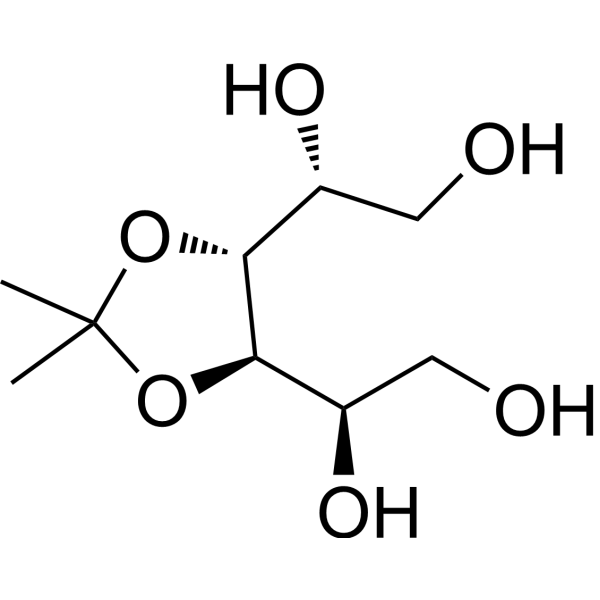
3,4-O-Isopropylidene-D-mannitol is a biochemical reagent that can be used as a biological material or organic compound for life science related research.
|
-
-
- HY-W552419
-
|
|
Nucleoside Antimetabolite/Analog
|
Cancer
|
|
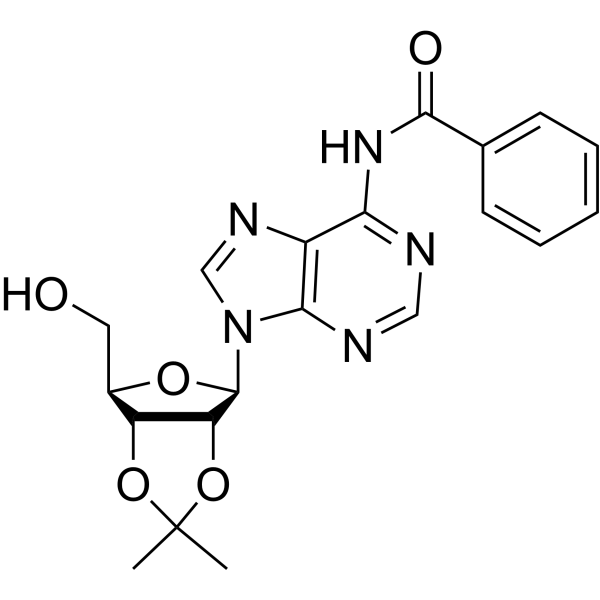
N6-Benzoyl-2',3'-isopropylidene adenosine is an adenosine analog. Adenosine analogs mostly act as smooth muscle vasodilators and have also been shown to inhibit cancer progression. Its popular products are adenosine phosphate, Acadesine (HY-13417), Clofarabine (HY-A0005), Fludarabine phosphate (HY-B0028) and Vidarabine (HY-B0277) .
|
-
-
- HY-150980S
-
|
|
Isotope-Labeled Compounds
|
Others
|
|
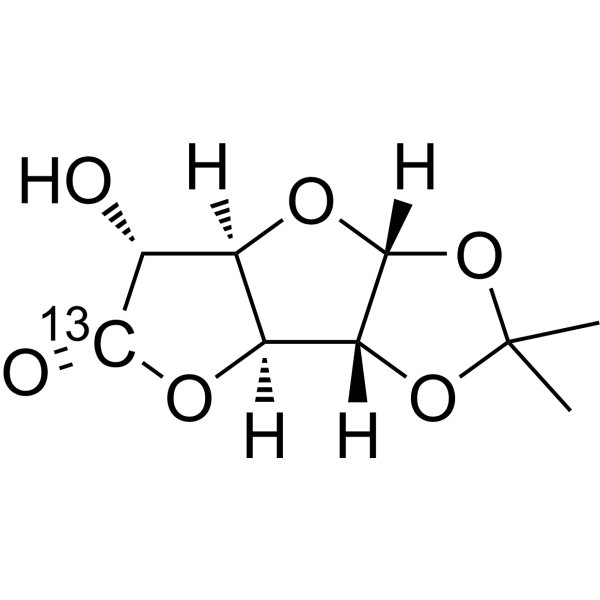
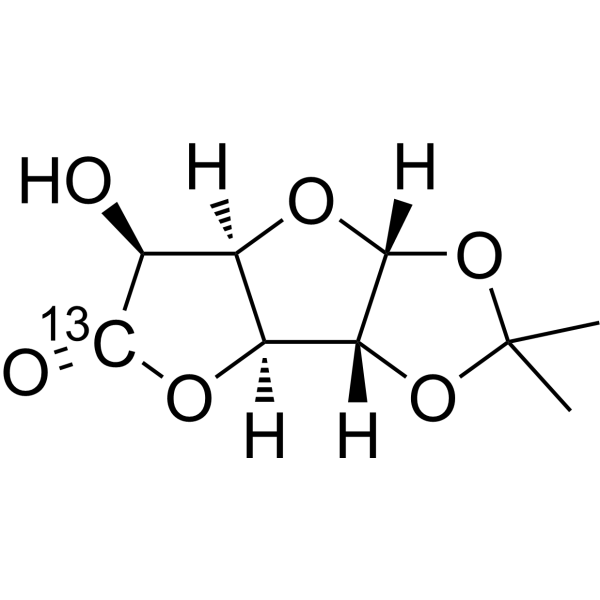
1,2-O-Isopropylidene-β-L-idofuranuronic-6- 13C acid γ-lactone is the 13C labeled 1,2-O-Isopropylidene-β-L-idofuranuronic acid γ-lactone .
|
-
-
- HY-150981S
-
|
|
Isotope-Labeled Compounds
|
Others
|
|
1,2-O-Isopropylidene-a-D-glucofuranuronic-6- 13C acid, γ-lactone is the 13C labeled 1,2-O-Isopropylidene-β-L-idofuranuronic acid, γ-lactone .
|
-
- HY-150966
-
|
|
Mitochondrial Metabolism
|
Cancer
|
|
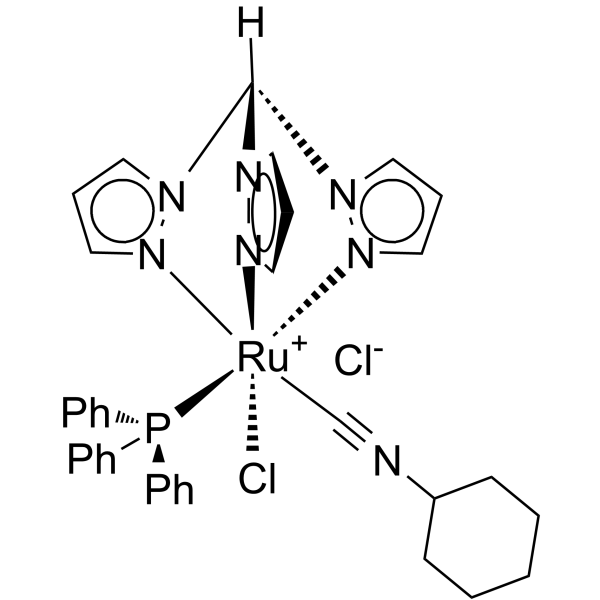
Antiproliferative agent-10 (compound 8) is an anti-tumour ruthenium(II)-tris-pyrazolylmethane complex that inhibits the growth of cancer cells by inhibiting mitochondrial calcium uptake .
|
-
- HY-150969
-
|
|
Mitochondrial Metabolism
|
Cancer
|
|
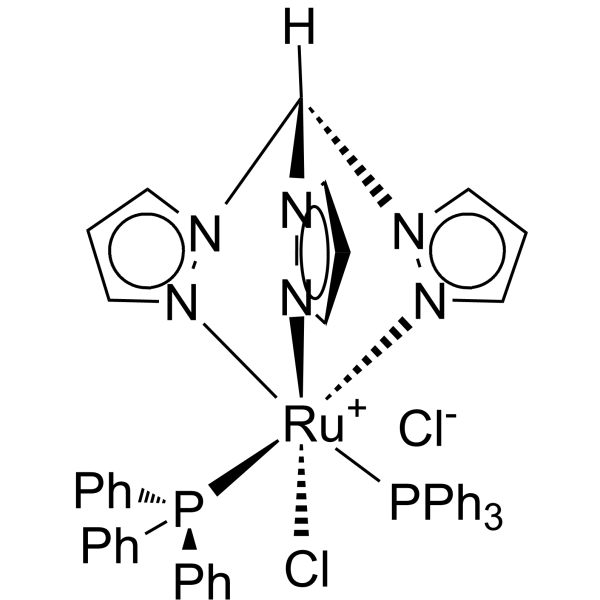
Antiproliferative agent-10 (compound 1) is an anti-tumour ruthenium(II)-tris-pyrazolylmethane complex that inhibits the growth of cancer cells by inhibiting mitochondrial calcium uptake .
|
-
- HY-W145653
-
|
1,2:3,5-Di-O-isopropylidene-alpha-D-apiose
|
Biochemical Assay Reagents
|
Others
|
|
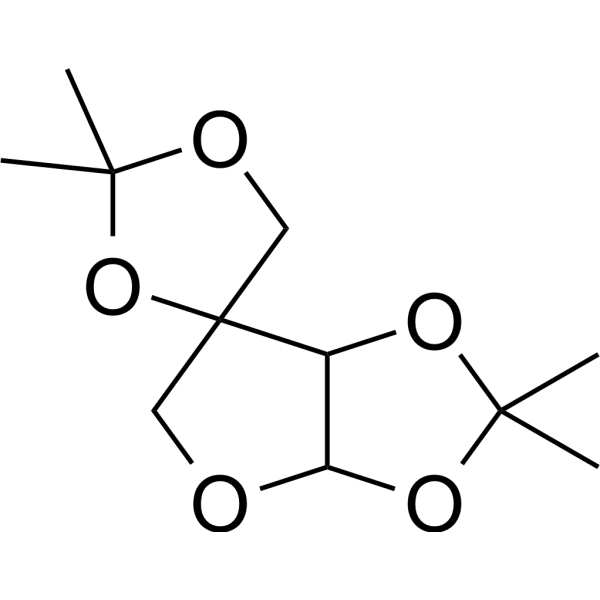
1,2:3,5-Di-O-isopropylidene-α-D-apiose is a biochemical reagent that can be used as a biological material or organic compound for life science related research.
|
-
- HY-W695196
-
|
|
Biochemical Assay Reagents
|
Others
|
|
α-D-Glucofuranose,1,2:5,6-bis-O-(1-methylethylidene),3-acetate is a class of biochemical reagents used in glycobiology research. Glycobiology studies the structure, synthesis, biology, and evolution of sugars. It involves carbohydrate chemistry, enzymology of glycan formation and degradation, protein-glycan recognition, and the role of glycans in biological systems. This field is closely related to basic research, biomedicine, and biotechnology .
|
-

- HY-W357106
-
|
1,2:5,6-di-O-isopropylidene-3-O-benzyl-α-D-allofuranose
|
Biochemical Assay Reagents
|
Others
|
|
3-O-Benzyl-1,2:5,6-di-O-isopropylidene-a-D-allofuranose is a nucleoside analog.
|
-

- HY-24400
-
-
- HY-N9218
-
|
|
Others
|
Others
|
|
Quinovic acid 3-O-(3',4'-O-isopropylidene)-β-D-fucopyranoside is a Triterpenoids product that can be isolated from the herbs of Mitragyna rotundifolia .
|
-

- HY-166985
-
-

- HY-W554443
-
|
|
Biochemical Assay Reagents
|
Others
|
|
4,6-O-Isopropylidene-D-glucal is a class of biochemical reagents used in glycobiology research. Glycobiology studies the structure, synthesis, biology, and evolution of sugars. It involves carbohydrate chemistry, enzymology of glycan formation and degradation, protein-glycan recognition, and the role of glycans in biological systems. This field is closely related to basic research, biomedicine, and biotechnology .
|
-

- HY-W457757
-
|
1,2-O-isopropylidene-3-O-Methyl-D-ribofuranose
|
Nucleoside Antimetabolite/Analog
|
Cancer
|
|
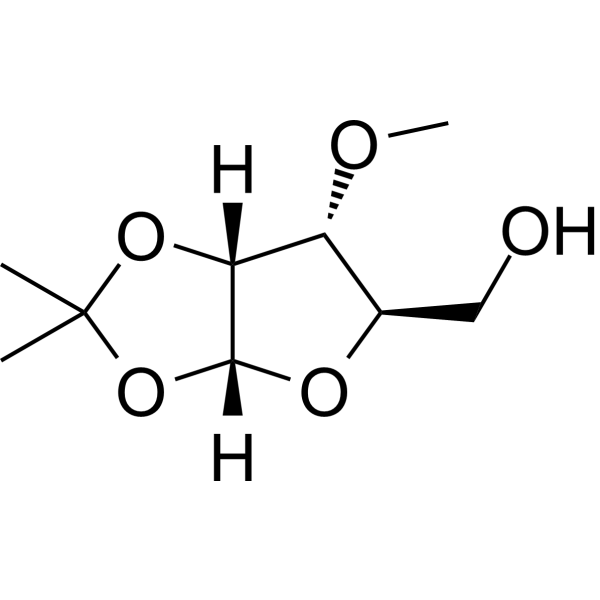
1,2-Di-O-isopropylidene-3-O-methyl-D-ribofuranose is a purine nucleoside analog. Purine nucleoside analogs have broad antitumor activity targeting indolent lymphoid malignancies. Anticancer mechanisms in this process rely on inhibition of DNA synthesis, induction of apoptosis, etc .
|
-
- HY-154590
-
|
|
Nucleoside Antimetabolite/Analog
|
Cancer
|
|
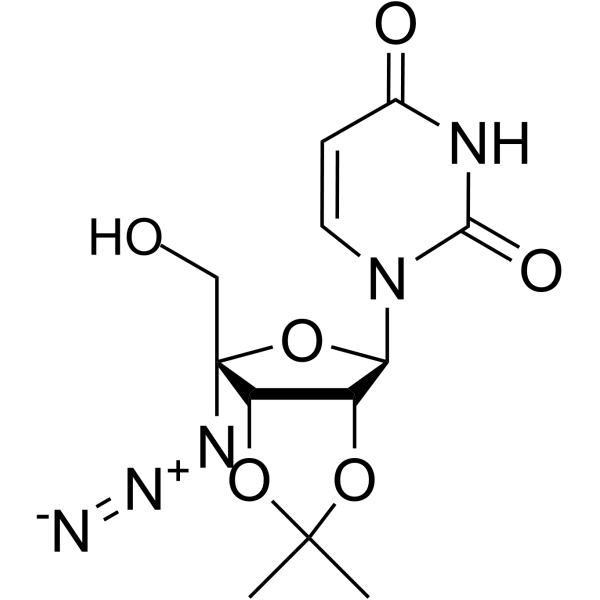
2’,3’-Di-O-isopropylidene-4’-alpha-C-azidouridine is a uridine analog. Uridine has potential antiepileptic effects, and its analogs can be used to study anticonvulsant and anxiolytic activities, as well as to develop new antihypertensive agents . 2’,3’-Di-O-isopropylidene-4’-alpha-C-azidouridine is a click chemistry reagent, it contains an Azide group and can undergo copper-catalyzed azide-alkyne cycloaddition reaction (CuAAc) with molecules containing Alkyne groups. It can also undergo strain-promoted alkyne-azide cycloaddition (SPAAC) reactions with molecules containing DBCO or BCN groups.
|
-
- HY-W564313
-
|
|
Nucleoside Antimetabolite/Analog
|
Cancer
|
|
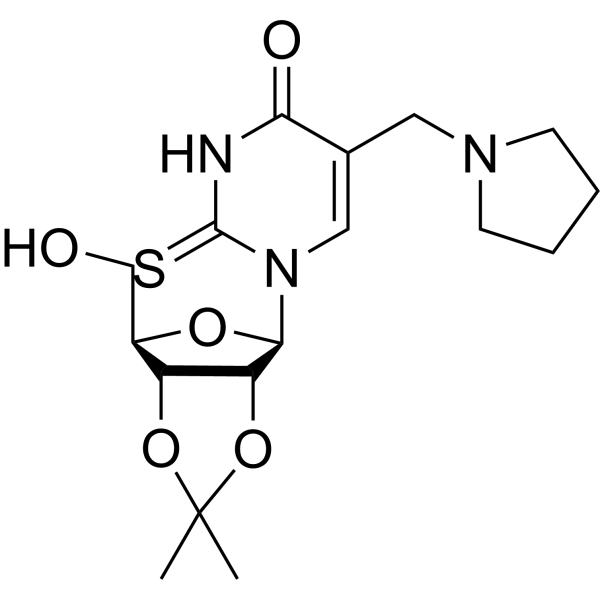
2',3'-O-Isopropylidene-5-pyrrolidinomethyl-2-thiouridine is a purine nucleoside analog. Purine nucleoside analogs have broad antitumor activity targeting indolent lymphoid malignancies. Anticancer mechanisms in this process rely on inhibition of DNA synthesis, induction of apoptosis, etc .
|
-
- HY-154391
-
|
|
Nucleoside Antimetabolite/Analog
|
Cancer
|
|
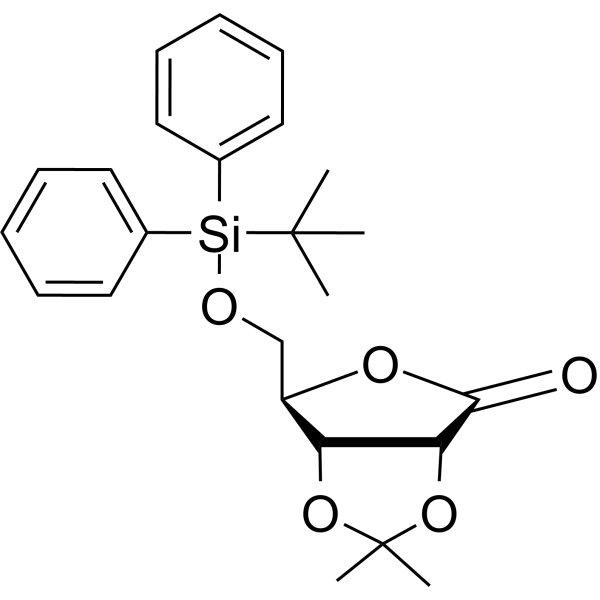
5-O-(tert-Butyldiphenylsilyl)-2,3-isopropylidene-D-ribonolactone is a purine nucleoside analog. Purine nucleoside analogs have broad antitumor activity targeting indolent lymphoid malignancies. Anticancer mechanisms in this process rely on inhibition of DNA synthesis, induction of apoptosis, etc .
|
-
- HY-W145557
-
-

- HY-W749377
-
|
toluene, 2,3,4,5,6-pentabromo-13C6
|
Isotope-Labeled Compounds
|
Others
|
|
1,2,3,4,5-Pentabromo-6-methylbenzene- 13C6 (Toluene, 2,3,4,5,6-pentabromo- 13C6) is the 13C-labeled 1,2,3,4,5-Pentabromo-6-methylbenzene (HY-W274110).
|
-

- HY-W552365
-
|
|
Biochemical Assay Reagents
|
Others
|
|
2,3:5,6-Di-O-isopropylidene-D-mannitol is a class of biochemical reagents used in glycobiology research. Glycobiology studies the structure, synthesis, biology, and evolution of sugars. It involves carbohydrate chemistry, enzymology of glycan formation and degradation, protein-glycan recognition, and the role of glycans in biological systems. This field is closely related to basic research, biomedicine, and biotechnology .
|
-

- HY-W045998
-
|
|
Nucleoside Antimetabolite/Analog
|
Cancer
|
|
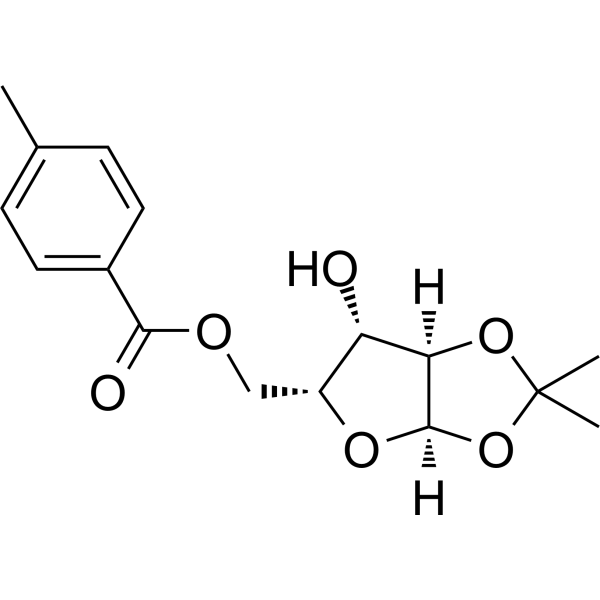
1,2-O-Isopropylidene-5-O-p-toluoyl-a-D-xylofuranose is a purine nucleoside analog. Purine nucleoside analogs have broad antitumor activity targeting indolent lymphoid malignancies. Anticancer mechanisms in this process rely on inhibition of DNA synthesis, induction of apoptosis, etc .
|
-
- HY-154499
-
|
|
Nucleoside Antimetabolite/Analog
|
Cancer
|
|
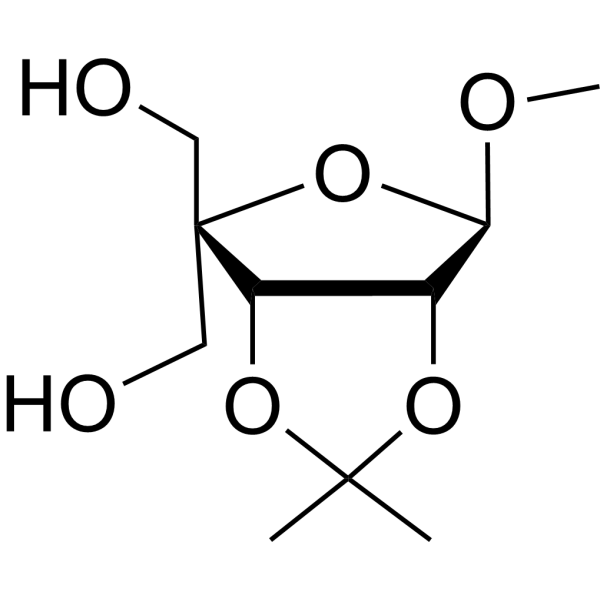
Methyl 4-C-hydroxymethyl-2,3-O-isopropylidene-beta-D-ribofuranoside is a purine nucleoside analog. Purine nucleoside analogs have broad antitumor activity targeting indolent lymphoid malignancies. Anticancer mechanisms in this process rely on inhibition of DNA synthesis, induction of apoptosis, etc .
|
-
- HY-43426A
-
|
|
Nucleoside Antimetabolite/Analog
|
Cancer
|
|
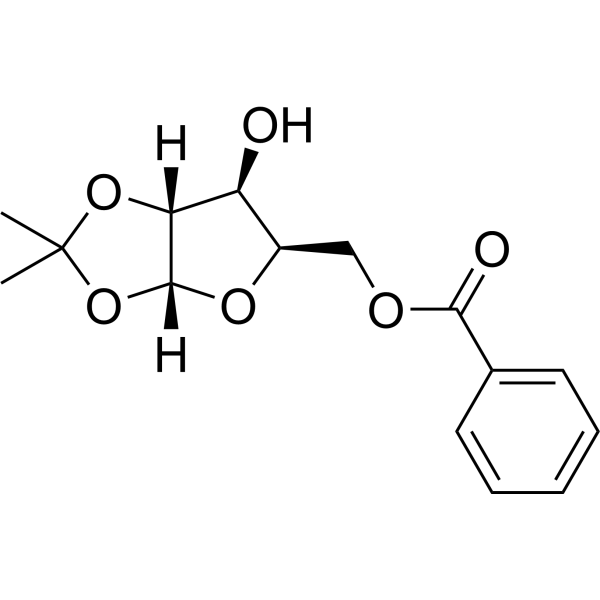
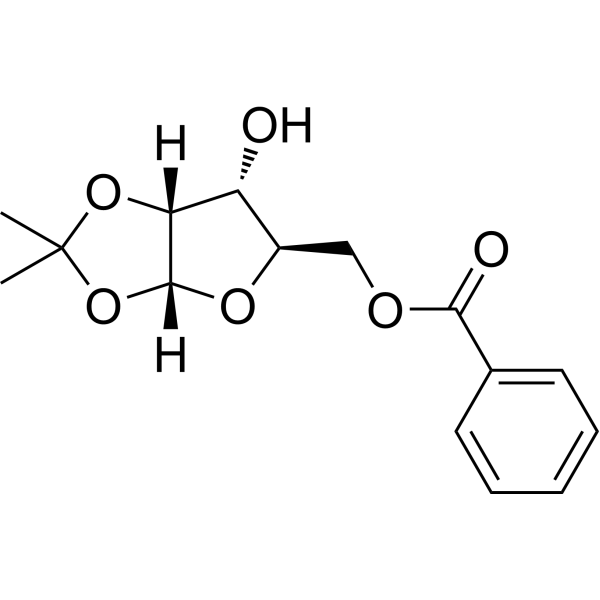
5-O-Benzoyl-1,2-di-O-isopropylidene-alpha-D-xylofuranose is a purine nucleoside analog. Purine nucleoside analogs have broad antitumor activity targeting indolent lymphoid malignancies. Anticancer mechanisms in this process rely on inhibition of DNA synthesis, induction of apoptosis, etc .
|
-
- HY-43426
-
|
|
Nucleoside Antimetabolite/Analog
|
Cancer
|
|
(R)-5-O-Benzoyl-1,2-di-O-isopropylidene-alpha-D-xylofuranose is a purine nucleoside analog. Purine nucleoside analogs have broad antitumor activity targeting indolent lymphoid malignancies. Anticancer mechanisms in this process rely on inhibition of DNA synthesis, induction of apoptosis, etc .
|
-
- HY-154045
-
|
|
Nucleoside Antimetabolite/Analog
|
Cancer
|
|
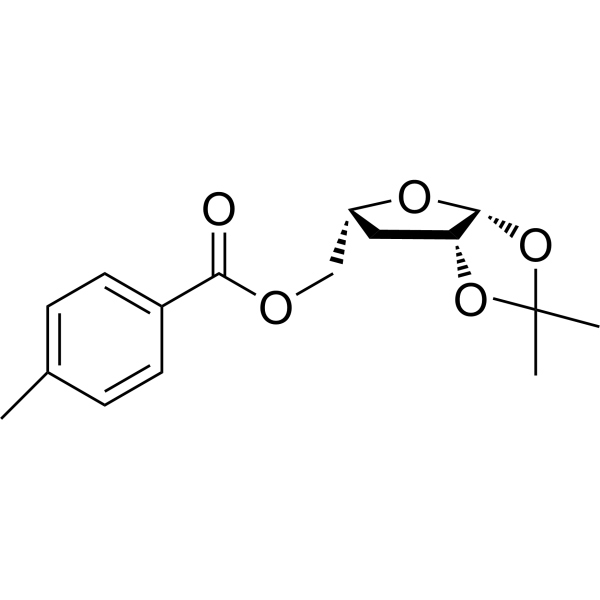
3’-Deoxy-1,2-O-isopropylidene-5-O-(p-toluoyl)-L-arabinofuranose is a purine nucleoside analog. Purine nucleoside analogs have broad antitumor activity targeting indolent lymphoid malignancies. Anticancer mechanisms in this process rely on inhibition of DNA synthesis, induction of apoptosis, etc .
|
-
- HY-W776886
-
|
|
Biochemical Assay Reagents
|
Others
|
|
Benzyl 2,3-O-isopropylidene-α-D-mannopentenofuranoside-6-aldehydeis a class of biochemical reagents used in glycobiology research. Glycobiology studies the structure, synthesis, biology, and evolution of sugars. It involves carbohydrate chemistry, enzymology of glycan formation and degradation, protein-glycan recognition, and the role of glycans in biological systems. This field is closely related to basic research, biomedicine, and biotechnology .
|
-

- HY-W556276
-
|
|
Nucleoside Antimetabolite/Analog
|
Cancer
|
|
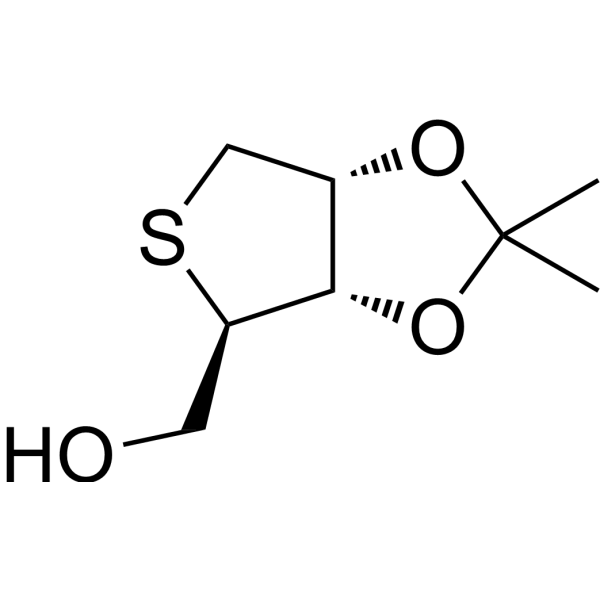
1,4-Anhydro-2,3-di-O-isopropylidene-4-thio-D-ribitol is a purine nucleoside analog. Purine nucleoside analogs have broad antitumor activity targeting indolent lymphoid malignancies. Anticancer mechanisms in this process rely on inhibition of DNA synthesis, induction of apoptosis, etc .
|
-
- HY-W739801
-
|
|
Biochemical Assay Reagents
|
Others
|
|
Benzyl 2,3-O-Isopropylidene-6-O-trityl-α-D-mannofuranose is a class of biochemical reagents used in glycobiology research. Glycobiology studies the structure, synthesis, biology, and evolution of sugars. It involves carbohydrate chemistry, enzymology of glycan formation and degradation, protein-glycan recognition, and the role of glycans in biological systems. This field is closely related to basic research, biomedicine, and biotechnology .
|
-

- HY-W601451
-
-

- HY-W998790
-
-

- HY-W112606
-
|
|
MOFs
|
Others
|
|
2,6-Bis(4-pyridyl)toluene is a metal-organic framework (MOF).
|
-

- HY-W033559
-
|
|
Biochemical Assay Reagents
|
Others
|
|
Carbonylhydrido(tetrahydroborato)[bis(2-diphenylphosphinoethyl) aMino]ruthenium(II) is a ruthenium catalyst for homogeneous hydrogenations of esters under base free conditions. .
|
-
![Carbonylhydrido(tetrahydroborato)[bis(2-diphenylphosphinoethyl) aMino]ruthenium(II)](//file.medchemexpress.com/product_pic/hy-w033559.gif)
- HY-W753302
-
-

- HY-W075614
-
|
|
MOFs
|
Others
|
|
Tris(4,4''-dicarboxylicacid-2,2''-bipyridyl)rutheniuM(II) dichloride is a metal-organic framework (MOF).
|
-

- HY-W124430
-
|
toluene,p,p'-methylenedi
|
MOFs
|
Others
|
|
([1,1'-Biphenyl]-4,4'-diylbis(methylene))bis(phosphonic acid) (Toluene,p,p'-methylenedi) is a metal-organic framework (MOF).
|
-
![([1,1'-Biphenyl]-4,4'-diylbis(methylene))bis(phosphonic acid)](//file.medchemexpress.com/product_pic/hy-w124430.gif)
- HY-N0981
-
|
|
Others
|
Others
|
|
1,2-O-Isopropylidene-beta-D-fructopyranose is a natural product .
|
-

- HY-W856287
-
|
|
MOFs
|
Others
|
|
Bis(2,2'-bipyridyl)(4,4'-dicarboxyl-2,2'-bipyridyl)ruthenium(II) (bishexafluorophosphate) is a metal-organic framework (MOF).
|
-

- HY-W241315
-
-

- HY-W112605
-
|
4-[2-[2-Methyl-3-(2-pyridin-4-ylethynyl)phenyl]ethynyl]pyridine
|
MOFs
|
Others
|
|
2,6-Bis(4-pyridylethynyl)toluene (4-[2-[2-Methyl-3-(2-pyridin-4-ylethynyl)phenyl]ethynyl]pyridine) is a metal-organic framework (MOF).
|
-

- HY-W726084
-
-

- HY-N0979
-
|
|
Others
|
Others
|
|
1,2--4,5-Di-O-isopropylidene-β-D-fructopyranose is a natural product .
|
-

- HY-W776873
-
|
|
Biochemical Assay Reagents
|
Others
|
|
6-Azido-6-deoxy-1,2-O-(1-methylethylidene)-α-D-glucofuranose is a class of biochemical reagents used in glycobiology research. Glycobiology studies the structure, synthesis, biology, and evolution of sugars. It involves carbohydrate chemistry, enzymology of glycan formation and degradation, protein-glycan recognition, and the role of glycans in biological systems. This field is closely related to basic research, biomedicine, and biotechnology .
|
-

- HY-178532
-
-

- HY-W127490
-
-

- HY-W543741
-
|
|
MOFs
|
Others
|
|
Ruthenium(2+),bis(2,2'-bipyridine-κN1,κN1')(4-ethenyl-4'-methyl-2,2'-bipyridine-κN1,κN1')-,(OC-6-33)-,hexafluorophosphate(1-)(1:2) is a metal-organic framework (MOF).
|
-

- HY-175996S
-
|
o-toluene-azo-o-toluidine-d6
|
Isotope-Labeled Compounds
Biochemical Assay Reagents
|
Others
|
|
2-Methyl-5-(p-tolyldiazenyl)aniline-d6 (o-Toluene-azo-o-toluidine-d6) is the deuterium labeled 2-Methyl-5-(p-tolyldiazenyl)aniline (HY-W040297). 2-Methyl-5-(p-tolyldiazenyl)aniline is a biochemical reagent that can be used as a biological material or organic compound for life science related research.
|
-

- HY-W460507
-
|
|
Biochemical Assay Reagents
|
Others
|
|
Methyl 3,4-O-isopropylidene-L-threonate is a class of biochemical reagents used in glycobiology research. Glycobiology studies the structure, synthesis, biology, and evolution of sugars. It involves carbohydrate chemistry, enzymology of glycan formation and degradation, protein-glycan recognition, and the role of glycans in biological systems. This field is closely related to basic research, biomedicine, and biotechnology .
|
-

- HY-176859
-
|
|
Apoptosis
|
Cancer
|
|
[Ru(dpp)(bpy)(mtmp)](PF6)2 (Compound 5) is a trisheteroleptic ruthenium complex. [Ru(dpp)(bpy)(mtmp)](PF6)2 has a light-activated anticancer activity. [Ru(dpp)(bpy)(mtmp)](PF6)2 can selectively cleave off upon green light irradiation, thereby releasing a phototoxic ruthenium-based photoproduct that binds to nuclear DNA, induces DNA damage and apoptosis in cancer cells. [Ru(dpp)(bpy)(mtmp)](PF6)2 can be used for phototherapy of cancers like conjunctival melanoma research .
|
-
2](//file.medchemexpress.com/product_pic/hy-176859.gif)
- HY-W077275
-
|
|
Biochemical Assay Reagents
|
Others
|
|
5,6-Isopropylidene-L-gulonic acid γ-lactone is a class of biochemical reagents used in glycobiology research. Glycobiology studies the structure, synthesis, biology, and evolution of sugars. It involves carbohydrate chemistry, enzymology of glycan formation and degradation, protein-glycan recognition, and the role of glycans in biological systems. This field is closely related to basic research, biomedicine, and biotechnology .
|
-

- HY-W740311
-
|
|
Biochemical Assay Reagents
|
Others
|
|
Methyl 3,4-O-isopropylidene-α-D-galactopyranoside is a class of biochemical reagents used in glycobiology research. Glycobiology studies the structure, synthesis, biology, and evolution of sugars. It involves carbohydrate chemistry, enzymology of glycan formation and degradation, protein-glycan recognition, and the role of glycans in biological systems. This field is closely related to basic research, biomedicine, and biotechnology .
|
-

- HY-W049713
-
|
|
Biochemical Assay Reagents
|
|
|
4-Methoxyphenyl 3, 4-O-isopropylidene-β-d-Galactopyranoside is a class of biochemical reagents used for the study of glycobiology. Glycobiology studies the structure, synthesis, biology, and evolution of sugars. It deals with carbohydrate chemistry, glycan formation and degradation enzymology, protein-glycan recognition, and the role of glycans in biological systems. The field is closely related to basic research, biomedicine and biotechnology .
|
-

- HY-W739762
-
|
|
Biochemical Assay Reagents
|
Others
|
|
2,3-O-Isopropylidene-1,6-ditosyl-L-sorbose is a class of biochemical reagents used in glycobiology research. Glycobiology studies the structure, synthesis, biology, and evolution of sugars. It involves carbohydrate chemistry, enzymology of glycan formation and degradation, protein-glycan recognition, and the role of glycans in biological systems. This field is closely related to basic research, biomedicine, and biotechnology .
|
-

- HY-W347990
-
|
|
Biochemical Assay Reagents
|
Others
|
|
5-Bromo-5-deoxy-2,3-isopropylidene-D-ribonolactone is a class of biochemical reagents used in glycobiology research. Glycobiology studies the structure, synthesis, biology, and evolution of sugars. It involves carbohydrate chemistry, enzymology of glycan formation and degradation, protein-glycan recognition, and the role of glycans in biological systems. This field is closely related to basic research, biomedicine, and biotechnology .
|
-

- HY-W777377
-
|
|
Biochemical Assay Reagents
|
Others
|
|
Methyl 3,4-O-Isopropylidene-6-O-trityl-α-D-galactopyranoside is a class of biochemical reagents used in glycobiology research. Glycobiology studies the structure, synthesis, biology, and evolution of sugars. It involves carbohydrate chemistry, enzymology of glycan formation and degradation, protein-glycan recognition, and the role of glycans in biological systems. This field is closely related to basic research, biomedicine, and biotechnology .
|
-

| Cat. No. |
Nombre del producto |
Type |
-
- HY-103311
-
|
Ammoniated ruthenium oxychloride
|
Fluorescent Dyes
|
|
Ruthenium red (Ammoniated ruthenium oxychloride) is a polycationic dye widely used for electron microscopy (EM) of cells, tissues and vegetative bacteria. Ruthenium red strongly reacts with phospholipids and fatty acids and binds to acidic mucopolysaccharides. Ruthenium red is a L-type calcium current (ICa) blocker .
|
-
- HY-W074143
-
|
[Ru(DPP)3]Cl2
|
Fluorescent Dyes
|
|
Tris(4,7-diphenyl-1,10-phenanthroline)ruthenium(II) dichloride ([Ru(dpp)3] 2+) is an electrochemiluminescent (ECL) probe and oxygen-sensitive sensor. Tris(4,7-diphenyl-1,10-phenanthroline)ruthenium(II) dichloride can be used to modify electrode surfaces for the detection of sulfates (S2O8 2-) and oxalates, based on electrochemical reactions that generate excited-state species, releasing photons through irreversible redox reactions. Tris(4,7-diphenyl-1,10-phenanthroline)ruthenium(II) dichloride utilizes the oxygen quenching of fluorescence mechanism, where fluorescence intensity reflects the metabolic rate of living microorganisms or oxygen levels within cells/tumors, allowing for real-time detection. Tris(4,7-diphenyl-1,10-phenanthroline)ruthenium(II) dichloride's main applications include microbial detection, antibacterial activity studies, and tumor microenvironment research .
|
-
- HY-D1708
-
| Cat. No. |
Nombre del producto |
Type |
-
- HY-W087995
-
|
Mono-acetone glucose; 1,2-O-isopropylidene-α-D-glucofuranose
|
Biochemical Assay Reagents
|
|
1,2-O-Isopropylidene-alpha-d-glucofuranose (Mono-acetone glucose) is a biochemical reagent that can be used as a biological material or organic compound for life science related research.
|
-
- HY-W014141
-
|
L-Ascorbic acid 5,6-acetonide
|
Biochemical Assay Reagents
|
|
5,6-O-Isopropylidene-L-ascorbic acid (L-Ascorbic acid 5,6-acetonide) is an organic compound and a derivative of L-ascorbic acid (vitamin C). 5,6-O-Isopropylidene-L-ascorbic acid inhibits biofilm formation by pathogenic bacteria. 5,6-O-Isopropylidene-L-ascorbic acid is applicable to studies related to bacterial infections .
|
-
- HY-W036647
-
|
|
Biochemical Assay Reagents
|
|
1,2:3,4-Di-O-isopropylidene-α-D-galactopyranose is a biochemical reagent that can be used as a biological material or organic compound for life science related research .
|
-
- HY-W033466
-
|
Benzeneruthenium(II) chloride dimer
|
Biochemical Assay Reagents
|
|
Benzeneruthenium(II) Chloride Dimer (Benzeneruthenium(II) chloride dimer) is a dinuclear complex. Benzeneruthenium(II) Chloride Dimer undergoes a hydrolysis reaction to generate a mixture of mononuclear ruthenium complexes in equilibrium .
|
-
- HY-76693
-
|
|
Biochemical Assay Reagents
|
|
2,3-O-Isopropylidene-D-ribonolactone is an acetonide derivative of d-ribonolactone and an intermediate in organic synthesis.2,3-O-Isopropylidene-D-ribonolactone forms via acid-catalyzed acetalization of d-ribonolactone with acetone.2,3-O-Isopropylidene-D-ribonolactone facilitates production of 1,5-dideoxy-1,5-imino-d-ribitol and 1,5-dideoxy-1,5-imino-l-arabinitol .
|
-
- HY-W015179
-
|
Monoacetone-D-xylose
|
Biochemical Assay Reagents
|
|
1,2-O-Isopropylidene-alpha-D-xylofuranose is a derivative of D-xylose (HY-N0537). 1,2-O-isopropylidene-α-D-xylofuranose can be used in the asymmetric alkylation of Benzaldehyde with Diethylzinc .
|
-
- HY-W020958
-
|
Tris(acetylacetonato)ruthenium (III)
|
Biochemical Assay Reagents
|
|
Ru (acac) 3 (Tris (acetylacetonato) ruthenium (III)) is a caspase-3 activator and Apoptosis inducer. Ru (acac) 3 exerts growth inhibitory effects on various cell lines in vitro by inhibiting DNA/RNA synthesis and inducing mild reversible S-phase cell cycle arrest. Ru (acac) 3 is commonly used in research related to ovarian cancer, osteosarcoma, cervical cancer, melanoma, and other fields .
|
-
- HY-W357105
-
|
1,2-O-isopropylidene-3,5,6-tri-o-benzyl-α-D-glucofuranose
|
Biochemical Assay Reagents
|
|
3,5,6-tri-O-Benzyl-1,2-O-isopropylidene-D-glucofuranose (1,2-O-Isopropylidene-3,5,6-tri-o-benzyl-α-D-glucofuranose) is a synthetic sugar compound.
|
-
- HY-W555991
-
|
|
Biochemical Assay Reagents
|
|
2',3'-O-Isopropylidene-6-mercaptopurine riboside is a compound with excellent metal complexing activity. 2',3'-O-Isopropylidene-6-mercaptopurine riboside can be used to study the mechanism of metal complexing.
|
-
- HY-W145583
-
|
|
Biochemical Assay Reagents
|
|
2,3-O-Isopropylidene-D-erythronolactone is a biochemical reagent that can be used as a biological material or organic compound for life science related research.
|
-
- HY-W337673
-
-
- HY-W101129
-
|
|
Biochemical Assay Reagents
|
|
2,3:5,6-Di-O-isopropylidene-α-D-mannofuranose is a biochemical reagent that can be used as a biological material or organic compound for life science related research.
|
-
- HY-W416187
-
-
- HY-W145575
-
|
Diacetone-D-xylose
|
Biochemical Assay Reagents
|
|
1,2:3,5-Di-O-isopropylidene-alpha-D-xylofuranose is a biochemical reagent that can be used as a biological material or organic compound for life science related research.
|
-
- HY-112793
-
|
|
Biochemical Assay Reagents
|
|
3-O-Benzyl-1,2-O-isopropylidene-α-D-glucofuranose is a class of biochemical reagents used in glycobiology research. Glycobiology studies the structure, synthesis, biology, and evolution of sugars. It involves carbohydrate chemistry, enzymology of glycan formation and degradation, protein-glycan recognition, and the role of glycans in biological systems. This field is closely related to basic research, biomedicine, and biotechnology .
|
-
- HY-W698504
-
|
|
Biochemical Assay Reagents
|
|
3-Azido-3-deoxy-1,2:5,6-di-O-isopropylidene-α-D-glucofuranose is a class of biochemical reagents used in glycobiology research. Glycobiology studies the structure, synthesis, biology, and evolution of sugars. It involves carbohydrate chemistry, enzymology of glycan formation and degradation, protein-glycan recognition, and the role of glycans in biological systems. This field is closely related to basic research, biomedicine, and biotechnology .
|
-
- HY-W835928
-
-
- HY-W357105R
-
|
1,2-O-isopropylidene-3,5,6-tri-o-benzyl-α-D-glucofuranose (Standard)
|
Biochemical Assay Reagents
|
|
3,5,6-tri-O-Benzyl-1,2-O-isopropylidene-D-glucofuranose (Standard) is the analytical standard of 3,5,6-tri-O-Benzyl-1,2-O-isopropylidene-D-glucofuranose. This product is intended for research and analytical applications. 3,5,6-tri-O-Benzyl-1,2-O-isopropylidene-D-glucofuranose (1,2-O-Isopropylidene-3,5,6-tri-o-benzyl-α-D-glucofuranose) is a synthetic sugar compound.
|
-
- HY-W739899
-
|
|
Biochemical Assay Reagents
|
|
5'-Ethylcarboxamido-2',3'-isopropylidene adenosine is an adenosine receptor agonist that promotes the activity of A2B adenosine receptors. 5'-Ethylcarboxamido-2',3'-isopropylidene adenosine can be used to study the role of adenosine in physiological processes. 5'-Ethylcarboxamido-2',3'-isopropylidene adenosine is used as a potential inhibitory target in compound development.
|
-
- HY-141884
-
|
2',3'-isopropylidene cytidine
|
Biochemical Assay Reagents
|
|
2',3'-O-Isopropylidenecytidine (2',3'-Isopropylidene cytidine) is a synthetic sugar compound.
|
-
- HY-W352828
-
|
|
Biochemical Assay Reagents
|
|
1,2-O-Cyclohexylidene-α-D-glucofuranose is a class of biochemical reagents used in glycobiology research. Glycobiology studies the structure, synthesis, biology, and evolution of sugars. It involves carbohydrate chemistry, enzymology of glycan formation and degradation, protein-glycan recognition, and the role of glycans in biological systems. This field is closely related to basic research, biomedicine, and biotechnology .
|
-
- HY-W699040
-
|
|
Biochemical Assay Reagents
|
|
1,2-Isopropylidene-3-oleoyl-sn-glycerol is a fatty acid that can be used as a biological material or organic compound for life science related research .
|
-
- HY-W497908
-
-
- HY-W777682
-
-
- HY-44327
-
|
|
Biochemical Assay Reagents
|
|
3,4-O-Isopropylidene-D-mannitol is a biochemical reagent that can be used as a biological material or organic compound for life science related research.
|
-
- HY-W145653
-
|
1,2:3,5-Di-O-isopropylidene-alpha-D-apiose
|
Biochemical Assay Reagents
|
|
1,2:3,5-Di-O-isopropylidene-α-D-apiose is a biochemical reagent that can be used as a biological material or organic compound for life science related research.
|
-
- HY-W695196
-
|
|
Biochemical Assay Reagents
|
|
α-D-Glucofuranose,1,2:5,6-bis-O-(1-methylethylidene),3-acetate is a class of biochemical reagents used in glycobiology research. Glycobiology studies the structure, synthesis, biology, and evolution of sugars. It involves carbohydrate chemistry, enzymology of glycan formation and degradation, protein-glycan recognition, and the role of glycans in biological systems. This field is closely related to basic research, biomedicine, and biotechnology .
|
-
- HY-W357106
-
|
1,2:5,6-di-O-isopropylidene-3-O-benzyl-α-D-allofuranose
|
Biochemical Assay Reagents
|
|
3-O-Benzyl-1,2:5,6-di-O-isopropylidene-a-D-allofuranose is a nucleoside analog.
|
-
- HY-24400
-
|
|
Biochemical Assay Reagents
|
|
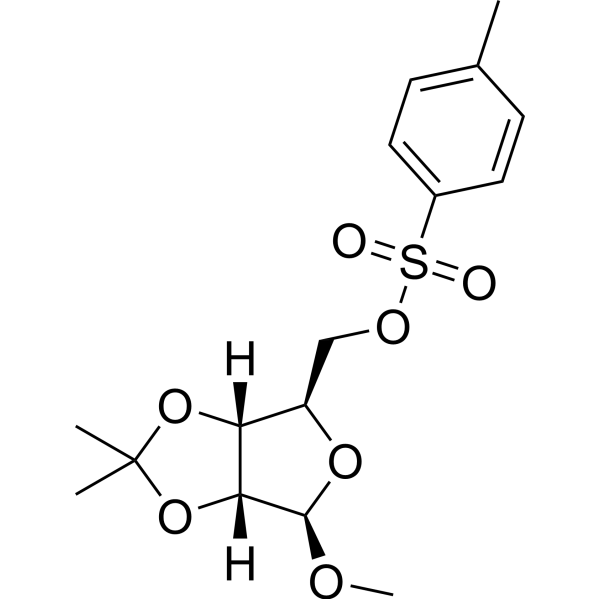
Methyl 2,3-O-isopropylidene-5-O-tosyl-D-ribonucleoside is a biochemical reagent that can be used for compound synthesis .
|
-
- HY-166985
-
-
- HY-W554443
-
|
|
Biochemical Assay Reagents
|
|
4,6-O-Isopropylidene-D-glucal is a class of biochemical reagents used in glycobiology research. Glycobiology studies the structure, synthesis, biology, and evolution of sugars. It involves carbohydrate chemistry, enzymology of glycan formation and degradation, protein-glycan recognition, and the role of glycans in biological systems. This field is closely related to basic research, biomedicine, and biotechnology .
|
-
- HY-W145557
-
|
|
Biochemical Assay Reagents
|
|
4-Methoxyphenyl 3,4-O-isopropylidene-2,6-bis-O-(4-methylbenzoyl)-β-D-galactopyranoside is a biochemical reagent.
|
-
- HY-W552365
-
|
|
Biochemical Assay Reagents
|
|
2,3:5,6-Di-O-isopropylidene-D-mannitol is a class of biochemical reagents used in glycobiology research. Glycobiology studies the structure, synthesis, biology, and evolution of sugars. It involves carbohydrate chemistry, enzymology of glycan formation and degradation, protein-glycan recognition, and the role of glycans in biological systems. This field is closely related to basic research, biomedicine, and biotechnology .
|
-
- HY-W776886
-
|
|
Biochemical Assay Reagents
|
|
Benzyl 2,3-O-isopropylidene-α-D-mannopentenofuranoside-6-aldehydeis a class of biochemical reagents used in glycobiology research. Glycobiology studies the structure, synthesis, biology, and evolution of sugars. It involves carbohydrate chemistry, enzymology of glycan formation and degradation, protein-glycan recognition, and the role of glycans in biological systems. This field is closely related to basic research, biomedicine, and biotechnology .
|
-
- HY-W739801
-
|
|
Biochemical Assay Reagents
|
|
Benzyl 2,3-O-Isopropylidene-6-O-trityl-α-D-mannofuranose is a class of biochemical reagents used in glycobiology research. Glycobiology studies the structure, synthesis, biology, and evolution of sugars. It involves carbohydrate chemistry, enzymology of glycan formation and degradation, protein-glycan recognition, and the role of glycans in biological systems. This field is closely related to basic research, biomedicine, and biotechnology .
|
-
- HY-W601451
-
|
|
Biochemical Assay Reagents
|
|
3,6-Di-O-acetyl-5-S-acetyl-5-deoxy-1,2-O-isopropylidene-α-D-glucofuranose can be used in glycobiology research.
|
-
- HY-W241315
-
-
- HY-W726084
-
-
- HY-W776873
-
|
|
Biochemical Assay Reagents
|
|
6-Azido-6-deoxy-1,2-O-(1-methylethylidene)-α-D-glucofuranose is a class of biochemical reagents used in glycobiology research. Glycobiology studies the structure, synthesis, biology, and evolution of sugars. It involves carbohydrate chemistry, enzymology of glycan formation and degradation, protein-glycan recognition, and the role of glycans in biological systems. This field is closely related to basic research, biomedicine, and biotechnology .
|
-
- HY-W127490
-
-
- HY-W460507
-
|
|
Biochemical Assay Reagents
|
|
Methyl 3,4-O-isopropylidene-L-threonate is a class of biochemical reagents used in glycobiology research. Glycobiology studies the structure, synthesis, biology, and evolution of sugars. It involves carbohydrate chemistry, enzymology of glycan formation and degradation, protein-glycan recognition, and the role of glycans in biological systems. This field is closely related to basic research, biomedicine, and biotechnology .
|
-
- HY-W077275
-
|
|
Biochemical Assay Reagents
|
|
5,6-Isopropylidene-L-gulonic acid γ-lactone is a class of biochemical reagents used in glycobiology research. Glycobiology studies the structure, synthesis, biology, and evolution of sugars. It involves carbohydrate chemistry, enzymology of glycan formation and degradation, protein-glycan recognition, and the role of glycans in biological systems. This field is closely related to basic research, biomedicine, and biotechnology .
|
-
- HY-W740311
-
|
|
Biochemical Assay Reagents
|
|
Methyl 3,4-O-isopropylidene-α-D-galactopyranoside is a class of biochemical reagents used in glycobiology research. Glycobiology studies the structure, synthesis, biology, and evolution of sugars. It involves carbohydrate chemistry, enzymology of glycan formation and degradation, protein-glycan recognition, and the role of glycans in biological systems. This field is closely related to basic research, biomedicine, and biotechnology .
|
-
- HY-W049713
-
|
|
Biochemical Assay Reagents
|
|
4-Methoxyphenyl 3, 4-O-isopropylidene-β-d-Galactopyranoside is a class of biochemical reagents used for the study of glycobiology. Glycobiology studies the structure, synthesis, biology, and evolution of sugars. It deals with carbohydrate chemistry, glycan formation and degradation enzymology, protein-glycan recognition, and the role of glycans in biological systems. The field is closely related to basic research, biomedicine and biotechnology .
|
-
- HY-W739762
-
|
|
Biochemical Assay Reagents
|
|
2,3-O-Isopropylidene-1,6-ditosyl-L-sorbose is a class of biochemical reagents used in glycobiology research. Glycobiology studies the structure, synthesis, biology, and evolution of sugars. It involves carbohydrate chemistry, enzymology of glycan formation and degradation, protein-glycan recognition, and the role of glycans in biological systems. This field is closely related to basic research, biomedicine, and biotechnology .
|
-
- HY-W347990
-
|
|
Biochemical Assay Reagents
|
|
5-Bromo-5-deoxy-2,3-isopropylidene-D-ribonolactone is a class of biochemical reagents used in glycobiology research. Glycobiology studies the structure, synthesis, biology, and evolution of sugars. It involves carbohydrate chemistry, enzymology of glycan formation and degradation, protein-glycan recognition, and the role of glycans in biological systems. This field is closely related to basic research, biomedicine, and biotechnology .
|
-
- HY-W777377
-
|
|
Biochemical Assay Reagents
|
|
Methyl 3,4-O-Isopropylidene-6-O-trityl-α-D-galactopyranoside is a class of biochemical reagents used in glycobiology research. Glycobiology studies the structure, synthesis, biology, and evolution of sugars. It involves carbohydrate chemistry, enzymology of glycan formation and degradation, protein-glycan recognition, and the role of glycans in biological systems. This field is closely related to basic research, biomedicine, and biotechnology .
|
| Cat. No. |
Nombre del producto |
Category |
Target |
Chemical Structure |
| Cat. No. |
Nombre del producto |
Chemical Structure |
-
- HY-W243018S
-
|
|
|
1,2:5,6-Di-O-isopropylidene-a-D-glucofuranose-1,2,3,4,5,6- 13C6 is the 13C labeled 1,2:5,6-Di-O-isopropylidene-a-D-glucofuranose-1,2,3,4,5,6 .
|
-
-
- HY-W749199
-
|
|
|
2-Ethyl toluene- 13C6 is the 13C-labeled 1-Ethyl-2-methylbenzene (HY-W008826).
|
-
-
- HY-W750280
-
|
|
|
Octadecanoyl isopropylidene glycerol-d5 is the deuterium labeled Octadecanoyl isopropylidene glycerol.
|
-
-
- HY-W100312S
-
|
|
|
o-Toluidine-13C6 hydrochloride (Toluene, 2-amino-13C6 hydrochloride) is the 13C labeled isotope of o-Toluidine hydrochloride (HY-W100312) .
|
-
-
- HY-150980S
-
|
|
|
1,2-O-Isopropylidene-β-L-idofuranuronic-6- 13C acid γ-lactone is the 13C labeled 1,2-O-Isopropylidene-β-L-idofuranuronic acid γ-lactone .
|
-
-
- HY-150981S
-
|
|
|
1,2-O-Isopropylidene-a-D-glucofuranuronic-6- 13C acid, γ-lactone is the 13C labeled 1,2-O-Isopropylidene-β-L-idofuranuronic acid, γ-lactone .
|
-
-
- HY-W749377
-
|
|
|
1,2,3,4,5-Pentabromo-6-methylbenzene- 13C6 (Toluene, 2,3,4,5,6-pentabromo- 13C6) is the 13C-labeled 1,2,3,4,5-Pentabromo-6-methylbenzene (HY-W274110).
|
-
-
- HY-175996S
-
|
|
|
2-Methyl-5-(p-tolyldiazenyl)aniline-d6 (o-Toluene-azo-o-toluidine-d6) is the deuterium labeled 2-Methyl-5-(p-tolyldiazenyl)aniline (HY-W040297). 2-Methyl-5-(p-tolyldiazenyl)aniline is a biochemical reagent that can be used as a biological material or organic compound for life science related research.
|
-
| Cat. No. |
Nombre del producto |
|
Classification |
-
- HY-154590
-
|
|
|
Azide
|
|
2’,3’-Di-O-isopropylidene-4’-alpha-C-azidouridine is a uridine analog. Uridine has potential antiepileptic effects, and its analogs can be used to study anticonvulsant and anxiolytic activities, as well as to develop new antihypertensive agents . 2’,3’-Di-O-isopropylidene-4’-alpha-C-azidouridine is a click chemistry reagent, it contains an Azide group and can undergo copper-catalyzed azide-alkyne cycloaddition reaction (CuAAc) with molecules containing Alkyne groups. It can also undergo strain-promoted alkyne-azide cycloaddition (SPAAC) reactions with molecules containing DBCO or BCN groups.
|
| Cat. No. |
Nombre del producto |
|
Classification |
-
- HY-154289
-
|
|
|
Nucleoside Analogs
Uridine
|
|
2’,3’-Isopropylidene-5-hydroxyuridine is a purine nucleoside analog. Purine nucleoside analogs have broad antitumor activity targeting indolent lymphoid malignancies. Anticancer mechanisms in this process rely on inhibition of DNA synthesis, induction of apoptosis, etc .
|
-
- HY-W555976
-
|
|
|
Nucleoside Analogs
Uridine
|
|
5-Hydroxymethyl-2',3'-O-isopropylidene-2-thiouridine is a purine nucleoside analog. Purine nucleoside analogs have broad antitumor activity targeting indolent lymphoid malignancies. Anticancer mechanisms in this process rely on inhibition of DNA synthesis, induction of apoptosis, etc .
|
-
- HY-W739899
-
|
|
|
Nucleoside Analogs
Adenosine
|
|
5'-Ethylcarboxamido-2',3'-isopropylidene adenosine is an adenosine receptor agonist that promotes the activity of A2B adenosine receptors. 5'-Ethylcarboxamido-2',3'-isopropylidene adenosine can be used to study the role of adenosine in physiological processes. 5'-Ethylcarboxamido-2',3'-isopropylidene adenosine is used as a potential inhibitory target in compound development.
|
-
- HY-141884
-
|
2',3'-isopropylidene cytidine
|
|
Nucleoside Analogs
Cytidine
|
|
2',3'-O-Isopropylidenecytidine (2',3'-Isopropylidene cytidine) is a synthetic sugar compound.
|
-
- HY-W552419
-
|
|
|
Nucleoside Analogs
Adenosine
|
|
N6-Benzoyl-2',3'-isopropylidene adenosine is an adenosine analog. Adenosine analogs mostly act as smooth muscle vasodilators and have also been shown to inhibit cancer progression. Its popular products are adenosine phosphate, Acadesine (HY-13417), Clofarabine (HY-A0005), Fludarabine phosphate (HY-B0028) and Vidarabine (HY-B0277) .
|
-
- HY-154590
-
|
|
|
Nucleoside Analogs
Uridine
|
|
2’,3’-Di-O-isopropylidene-4’-alpha-C-azidouridine is a uridine analog. Uridine has potential antiepileptic effects, and its analogs can be used to study anticonvulsant and anxiolytic activities, as well as to develop new antihypertensive agents . 2’,3’-Di-O-isopropylidene-4’-alpha-C-azidouridine is a click chemistry reagent, it contains an Azide group and can undergo copper-catalyzed azide-alkyne cycloaddition reaction (CuAAc) with molecules containing Alkyne groups. It can also undergo strain-promoted alkyne-azide cycloaddition (SPAAC) reactions with molecules containing DBCO or BCN groups.
|
-
- HY-W564313
-
|
|
|
Nucleoside Analogs
Uridine
|
|
2',3'-O-Isopropylidene-5-pyrrolidinomethyl-2-thiouridine is a purine nucleoside analog. Purine nucleoside analogs have broad antitumor activity targeting indolent lymphoid malignancies. Anticancer mechanisms in this process rely on inhibition of DNA synthesis, induction of apoptosis, etc .
|
-
- HY-154391
-
|
|
|
Nucleoside Analogs
|
|
5-O-(tert-Butyldiphenylsilyl)-2,3-isopropylidene-D-ribonolactone is a purine nucleoside analog. Purine nucleoside analogs have broad antitumor activity targeting indolent lymphoid malignancies. Anticancer mechanisms in this process rely on inhibition of DNA synthesis, induction of apoptosis, etc .
|
-
- HY-154499
-
|
|
|
Nucleoside Analogs
|
|
Methyl 4-C-hydroxymethyl-2,3-O-isopropylidene-beta-D-ribofuranoside is a purine nucleoside analog. Purine nucleoside analogs have broad antitumor activity targeting indolent lymphoid malignancies. Anticancer mechanisms in this process rely on inhibition of DNA synthesis, induction of apoptosis, etc .
|
-
- HY-154045
-
|
|
|
Nucleoside Analogs
|
|
3’-Deoxy-1,2-O-isopropylidene-5-O-(p-toluoyl)-L-arabinofuranose is a purine nucleoside analog. Purine nucleoside analogs have broad antitumor activity targeting indolent lymphoid malignancies. Anticancer mechanisms in this process rely on inhibition of DNA synthesis, induction of apoptosis, etc .
|
-
- HY-W556276
-
|
|
|
Nucleoside Analogs
|
|
1,4-Anhydro-2,3-di-O-isopropylidene-4-thio-D-ribitol is a purine nucleoside analog. Purine nucleoside analogs have broad antitumor activity targeting indolent lymphoid malignancies. Anticancer mechanisms in this process rely on inhibition of DNA synthesis, induction of apoptosis, etc .
|
-
- HY-W998790
-
-
- HY-178532
-
Your information is safe with us. * Required Fields.
Inquiry Information
- Nombre del producto:
- Cat. No.:
- Cantidad:
- MCE Japan Authorized Agent:





![Carbonylhydrido(tetrahydroborato)[bis(2-diphenylphosphinoethyl) aMino]ruthenium(II)](http://file.medchemexpress.com/product_pic/hy-w033559.gif)


![([1,1'-Biphenyl]-4,4'-diylbis(methylene))bis(phosphonic acid)](http://file.medchemexpress.com/product_pic/hy-w124430.gif)


2](http://file.medchemexpress.com/product_pic/hy-176859.gif)





