Search Result
Results for "
fluorescence turn-on
" in MedChemExpress (MCE) Product Catalog:
2
Biochemical Assay Reagents
| Cat. No. |
Product Name |
Target |
Research Areas |
Chemical Structure |
-
- HY-D0155
-
|
|
Fluorescent Dye
|
Others
|
|
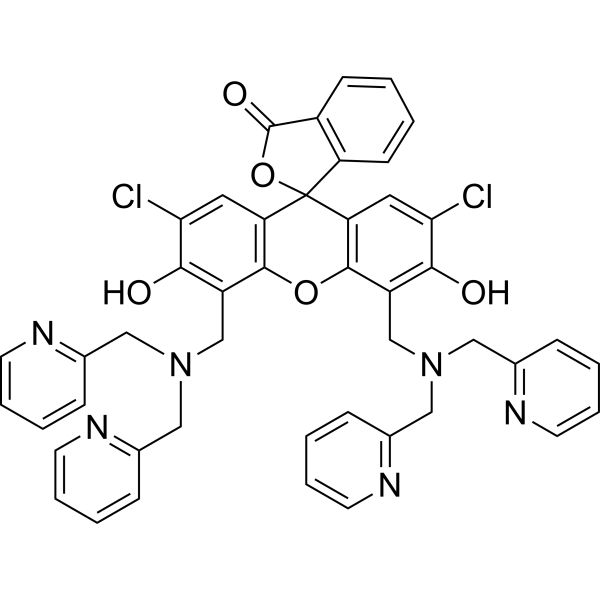
Zinpyr-1 is a zinc-responsive fluorescent indicator and a membrane-permeable metal-binding probe. Zinpyr-1 forms a complex with Mn 2+ ions and generates a fluorescence turn-on signal. Zinpyr-1 binds to free zinc ions in serum, enabling quantitative detection of free zinc concentration. Zinpyr-1 produces fluorescence signals reflecting the relative zinc concentration in plant root cells, localizes to specific layers of plant root cells, and can be used to support analyses related to plant zinc transporter mutations and homeostasis .
|
-
-
- HY-129109
-
|
|
Fluorescent Dye
|
Inflammation/Immunology
Cancer
|
|
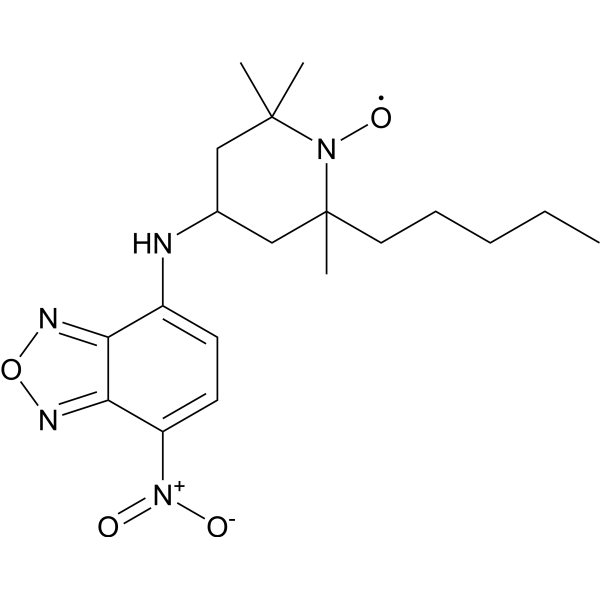
NBD-Pen is the first fluorescence probe for lipid radicals with high selectivity and sensitivity (λex: 470 nm, λem: 530 nm). NBD-Pen specifically detects lipid derived radicals over other reactive species present in biological systems, including H2O2, ClO -, O2 -?, and ?OH. NBD-Pen directly detects lipid radicals in living cells by turn-on fluorescence. NBD-Pen decreases inflammation, apoptosis, and oxidative stress markers. NBD-Pen can be studied in various disease models such as hepatic carcinoma .
|
-
-
- HY-D2264
-
|
|
Fluorescent Dye
|
Others
|
|
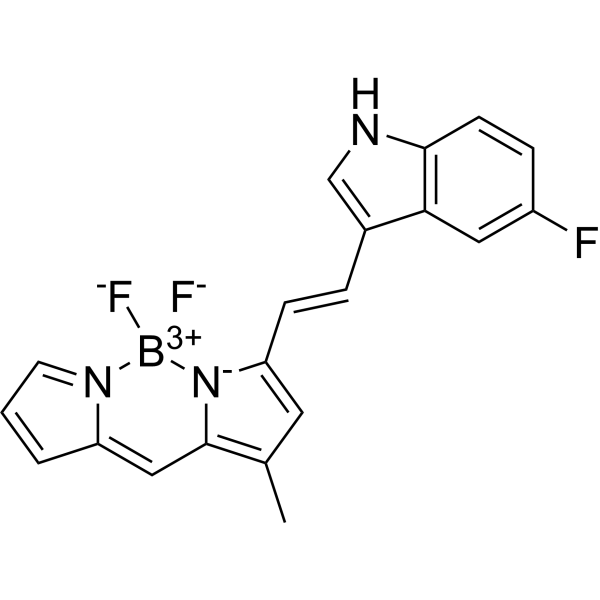
Caffeine orange (Compound 1) is an aqueous-phase fluorescence turn-on sensor for caffeine that is highly selective to caffeine. Caffeine orange makes caffeinated coffee appear orange when exposed to 532 nM of green excitation light. Caffeine orange has excellent photophysical properties such as high extinction coefficient, high light stability and narrow emission bandwidth, which can be used in the research of caffeine detection devices .
|
-
-
- HY-D1261
-
|
Thiol-green 1
|
Fluorescent Dye
|
Others
|
|
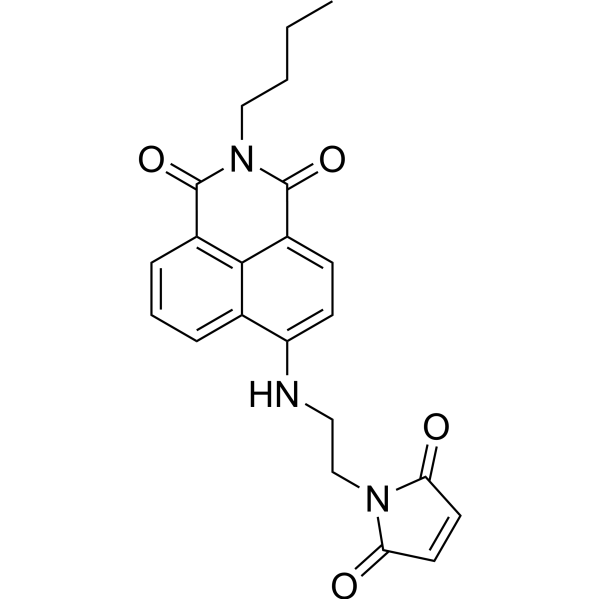
Naph-EA-mal (Thiol-green 1) is a rapid detect and ultrafast turn-on thiol fluorescence probe for protein labeling and bioimaging. Naph-EA-mal (Thiol-green 1) can be used to detect thiols in living cells, label the protein thiols, quantify the concentration of total thiols in cell lysate, and determine the reversible protein thiols oxidation in fixed cells . Ex: 488 nM; Em: 540 nM.
|
-
-
- HY-W005148
-
|
|
Biochemical Assay Reagents
|
Others
|
|
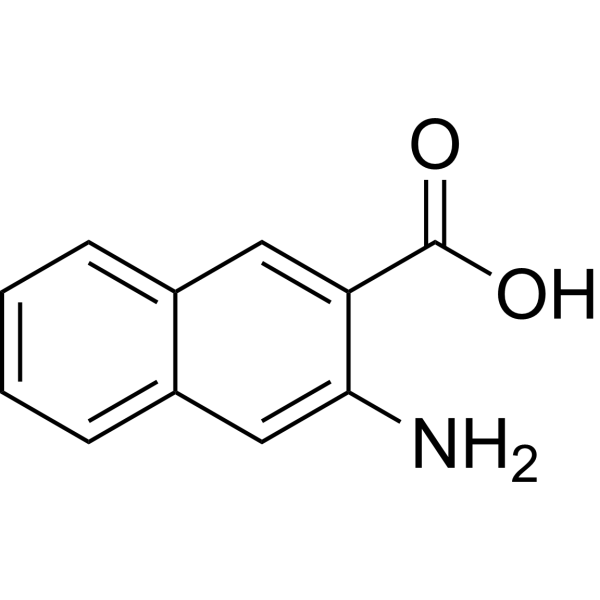
3-Amino-2-naphthoic acid is a derivative of naphthalene and can be used to synthesize other compounds. 3-Amino-2-naphthoic acid is commonly used as the base material for synthesizing various dyes and pigments. 3-Amino-2-naphthoic acid has been developed as a "turn-on" fluorescence probe for the specific detection of the cyanate anion (CNO -) .
|
-
-
- HY-D1256
-
|
|
Fluorescent Dye
|
Neurological Disease
Metabolic Disease
|
|
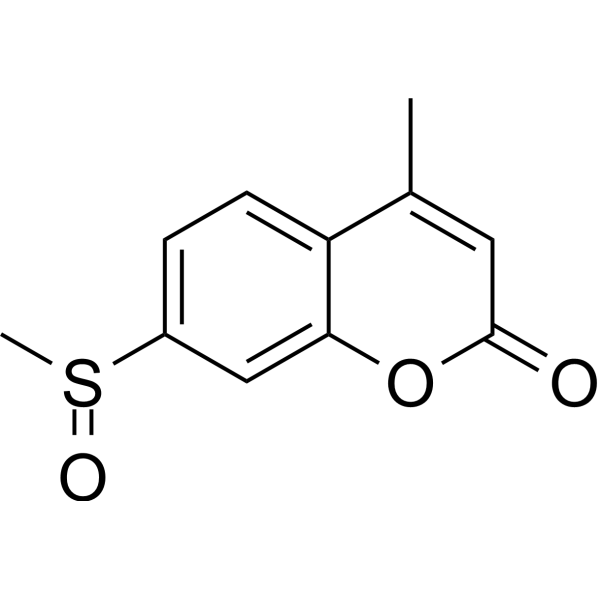
Msr-blue is a first turn-on fluorescent probe for methionine sulfoxide reductase with a more than 100-fold fluorescence increment. Msr-blue is used for monitoring the enzyme activity in live cells (λex=340 nm, λem=440 nm) .
|
-
-
- HY-143285
-
|
|
Fluorescent Dye
|
Infection
|
|
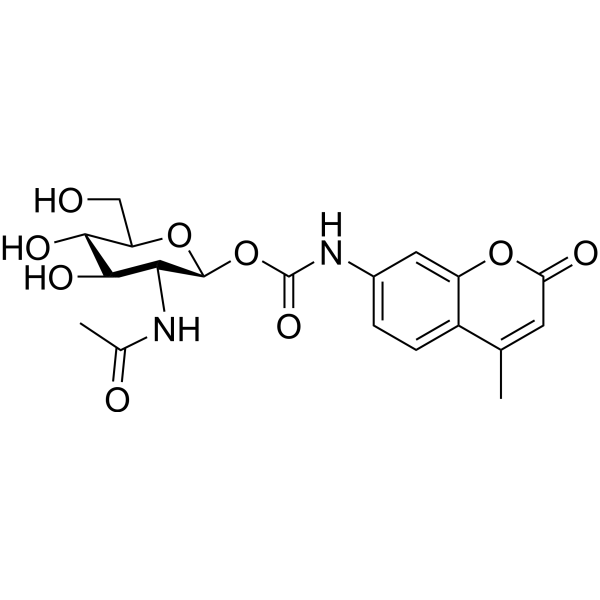
AMC-GlcNAc (compound 1) is a potent fluorogenic probe for detection and characterization of β-hexosaminidase enzyme activity. AMC-GlcNAc enables continuous monitoring by turn-on fluorescence and fluorescence signal is constant over a wide pH range (Ex=325 nm, Em=390 nm). AMC-GlcNAc enables ratiometric fluorescence detection with high sensitivity and low background, which can be used to screen for recombinant dispersin B activity in E. coli cell lysate .
|
-
-
- HY-D1065
-
|
|
Fluorescent Dye
|
Inflammation/Immunology
|
|
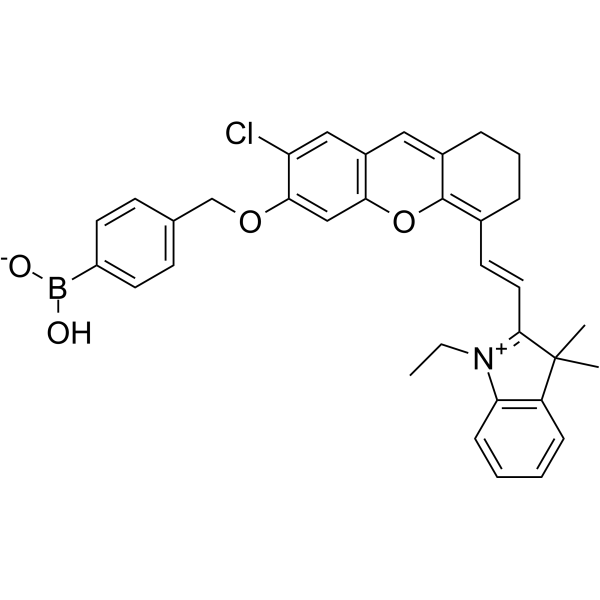
NIR-H2O2 is a cell-permeable near-infrared (NIR) fluorescent turn-on sensor. NIR-H2O2 has both absorption and emission in the NIR region. NIR-H2O2 responds to H2O2 with a large turn-on NIR fluorescence signal upon excitation in the NIR region. NIR-H2O2 is capable of imaging endogenously produced H2O2 in living cells and mice .
|
-
-
- HY-172333
-
|
|
Fluorescent Dye
|
Others
|
|
HCy-Lyso is a lysosome-targeting turn-on fluorescent probe based on hydrocyanine. HCy-Lyso integrates a hydrocyanine moiety for selective recognition of hydroxyl radicals (•OH) and a morpholine group for lysosome targeting. Upon reacting with •OH, HCy-Lyso undergoes an extension of its π-conjugation system, producing a strong fluorescence signal at 598 nm when excited at 510 nm .
|
-

-
- HY-D2966
-
|
|
Fluorescent Dye
|
Others
|
|
TMR-NO-BG is a hybrid probe (Ex/Em: 557 nm/571 nm). TMR-NO-BG covalently connects the tetramethylrhodamine (TMR) lactone NO sensing unit with the SNAP-tag reactive benzyl guanine (BG) for achieving subcellular-specific nitric oxide (NO) detection .
|
-

-
- HY-D1066
-
|
|
Fluorescent Dye
|
Others
|
|
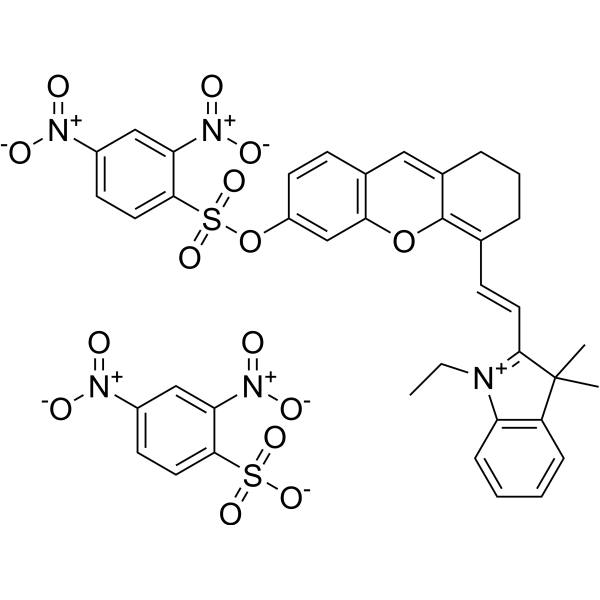
NIR-Thiol dinitrobenzenesulfonate has both absorption and emission in the NIR region. NIR-Thiol dinitrobenzenesulfonate responds to thiol with a large turn-on NIR fluorescence signal upon excitation in the NIR region. NIR-Thiol dinitrobenzenesulfonate is capable of imaging endogenously produced thiol in living cells and mice .
|
-
-
- HY-D1259
-
|
VDP-green (NEP)
|
Fluorescent Dye
|
Neurological Disease
|
|
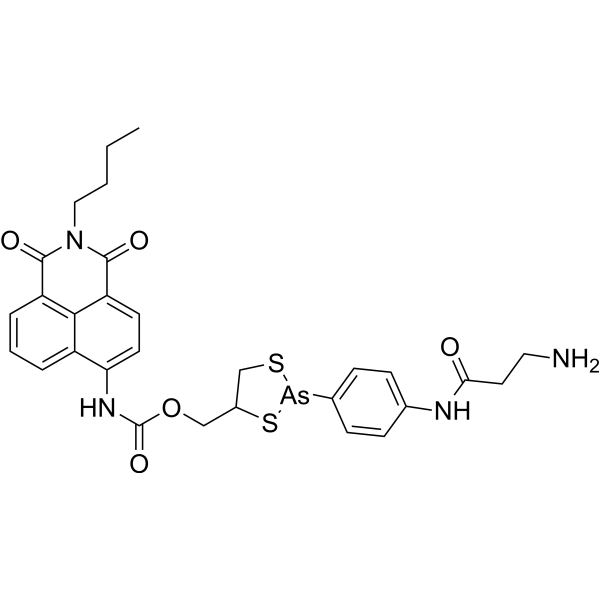
NEP (VDP-green (NEP)) is a turn-on fluorescent probe based on the intramolecular charge transfer (ICT) mechanism for sensing vicinal dithiol-containing proteins (VDPs). NEP exhibits high selectivity toward VDPs in live cells and in vivo and displays a strong green fluorescence signal (λex/λem=430/535 nm). NEP has the potential for parkinsonism .
|
-
-
- HY-D3243
-
|
|
Fluorescent Dye
|
Others
|
|
Mn1 (M1) is a BODIPY-based Mn 2+-selective "turn-on" Fluorescent sensor and fluorescence modulator. In the absence of Mn 2+, Mn1 undergoes fluorescence quenching via photoinduced electron transfer; binding to Mn 2+ inhibits this mechanism, thereby generating a fluorescence "turn-on" response. Mn1 exhibits Mn 2+-specific cellular fluorescence response .
|
-

-
- HY-D3449
-
|
|
Fluorescent Dye
Reactive Oxygen Species (ROS)
|
Others
|
|
8-(9-Bromoanthracene)-BODIPY 505/515 is a fluorescence turn-on probe with selective fluorescence turn-on response towards hydroxyl radical. 8-(9-Bromoanthracene)-BODIPY 505/515 can be used to detect reactive oxygen/nitrogen species (ROS/RNS) . (Ex/Em = 505/515 nm)
|
-

-
- HY-D3244
-
|
|
Fluorescent Dye
|
Others
|
|
RDDB is a rhodamine-based turn-on fluorescent and colorimetric chemosensor selective for Mn 2+, with a limit of detection of 5×10 -8 M (excitation wavelength: 480-550 nm; fluorescence signal collection range: >590 nm). In the presence of Mn 2+, RDDB undergoes a spirolactam ring-opening reaction of its rhodamine hydrazide moiety, resulting in turn-on fluorescence and a color change. RDDB can be used for intracellular Mn 2+ imaging .
|
-

-
- HY-D3152
-
|
|
Fluorescent Dye
|
Others
|
|
NRh-Cu is a highly sensitive near-infrared fluorescence turn-on indicator and Cu 2+-selective probe (λex=680 nm, λem=740 nm). When NRh-Cu interacts with Cu 2+, it undergoes a structural transition from a non-fluorescent spirocyclic state to a fluorescent ring-opened state, which drives the enhancement of fluorescence emission. NRh-Cu can be used for Cu 2+ imaging in live cells and in vivo .
|
-

-
- HY-D3411
-
|
|
Fluorescent Dye
|
Others
|
|
Rhobo6 is a cell-impermeable glycan-binding, fluorescence turn-on imaging agent with a Kd of 53 µM for glycans. Rhobo6 reversibly binds target glycans and enables wash-free live ECM visualization. Rhobo6 can be used for fluorescent labeling of ECM in living samples or decellularized tissues (Ex/Em = 488/561 nm) .
|
-

-
- HY-D3180
-
|
|
Fluorescent Dye
|
Cardiovascular Disease
Neurological Disease
|
|
CDr20 is a fluorescent chemical probe capable of crossing the blood-brain barrier. CDr20 undergoes glucuronidation catalyzed by the UDP-glucuronosyltransferase Ugt1a7c, which triggers a fluorescence turn-on response. CDr20 enables visualization of live microglial cells. CDr20 can be used for research on Alzheimer's disease, stroke, and autism .
|
-

-
- HY-D3230
-
|
|
Fluorescent Dye
|
Others
|
|
FLCS1 is a BODIPY-based Fluorescent probe and selective copper (I) ion binder (λex = 630 nm, λemis = 660 nm). Binding of FLCS1 to copper (I) ions induces fluorescence turn-on. Addition of copper (I) to a methanolic solution of FLCS1 causes a slight red shift (4 nm) in the maximum absorption wavelength (λmax) in the UV-Vis spectrum .
|
-

-
- HY-D2998
-
|
|
Fluorescent Dye
|
Others
|
|
ONOO-LysopH is a new Rhodamine-based near-infrared fluorescent probe. ONOO-LysopH is acid-sensitive, exhibiting rapid near-infrared fluorescence enhancement around 686 nm under acidic pH conditions. ONOO-LysopH also displays a rapid NIR turn-on fluorescence around 678 nm for ONOO− at physiological pH. ONOO-LysopH can target lysosomes to track lysosomal pH changes and image endogenous/exogenous ONOO− in live cells. ONOO-LysopH is applicable for cell imaging ONOO− and tracking lysosomal pH changes .
|
-

-
- HY-D3200
-
|
|
Fluorescent Dye
Cuproptosis
|
Others
|
|
Dns-LLC is a cell-permeable Cu +-selective fluorescent probe that forms a 1:1 complex with Cu +. The thiol group of Dns-LLC plays a key binding role, while the sulfonamide and amide groups jointly contribute to the stabilization of the complex. Upon binding to Cu + in aqueous buffer solutions, Dns-LLC generates a turn-on fluorescence response, which can be used for the detection of Cu + in the Golgi apparatus .
|
-

-
- HY-D3141
-
|
|
|
Cancer
|
|
DR probe is a "dual-key-and-lock" fluorescent probe designed based on the Resorufin (HY-123533) scaffold (Ex/Em = 647 nm/663-738 nm). DR probe can be sequentially activated by hydrogen peroxide to form the intermediate SR, which acts as a tyrosinase substrate to trigger a fluorescence turn-on signal. DR probe can distinguish normal melanocytes from melanoma cells. DR probe supports cell imaging and can be applied to mouse melanoma models to achieve melanoma diagnosis with higher accuracy and lower false-positive rates. DR probe is applicable to relevant research on melanoma .
|
-

-
- HY-D2939
-
|
|
Fluorescent Dye
|
Others
|
BGSBD is a SNAP-tag-based fluorescent probe (Ex/Em: 435 nm/516 nm) based on the environmentally sensitive fluorescent group SBD, specifically designed for protein labeling of live cells without washing. BGSBD achieves a 280-fold fluorescence enhancement after labeling by ingeniously utilizing the hydrophobic binding pocket of the SNAP-tag protein, providing an ideal tool for real-time monitoring of protein dynamics within cells .
|
-

| Cat. No. |
Product Name |
Type |
-
- HY-D0155
-
|
|
Fluorescent Dyes
|
|
Zinpyr-1 is a zinc-responsive fluorescent indicator and a membrane-permeable metal-binding probe. Zinpyr-1 forms a complex with Mn 2+ ions and generates a fluorescence turn-on signal. Zinpyr-1 binds to free zinc ions in serum, enabling quantitative detection of free zinc concentration. Zinpyr-1 produces fluorescence signals reflecting the relative zinc concentration in plant root cells, localizes to specific layers of plant root cells, and can be used to support analyses related to plant zinc transporter mutations and homeostasis .
|
-
- HY-129109
-
|
|
Fluorescent Dyes
|
|
NBD-Pen is the first fluorescence probe for lipid radicals with high selectivity and sensitivity (λex: 470 nm, λem: 530 nm). NBD-Pen specifically detects lipid derived radicals over other reactive species present in biological systems, including H2O2, ClO -, O2 -?, and ?OH. NBD-Pen directly detects lipid radicals in living cells by turn-on fluorescence. NBD-Pen decreases inflammation, apoptosis, and oxidative stress markers. NBD-Pen can be studied in various disease models such as hepatic carcinoma .
|
-
- HY-D2264
-
|
|
Fluorescent Dyes
|
|
Caffeine orange (Compound 1) is an aqueous-phase fluorescence turn-on sensor for caffeine that is highly selective to caffeine. Caffeine orange makes caffeinated coffee appear orange when exposed to 532 nM of green excitation light. Caffeine orange has excellent photophysical properties such as high extinction coefficient, high light stability and narrow emission bandwidth, which can be used in the research of caffeine detection devices .
|
-
- HY-D1261
-
|
Thiol-green 1
|
Fluorescent Dyes
|
|
Naph-EA-mal (Thiol-green 1) is a rapid detect and ultrafast turn-on thiol fluorescence probe for protein labeling and bioimaging. Naph-EA-mal (Thiol-green 1) can be used to detect thiols in living cells, label the protein thiols, quantify the concentration of total thiols in cell lysate, and determine the reversible protein thiols oxidation in fixed cells . Ex: 488 nM; Em: 540 nM.
|
-
- HY-D1256
-
|
|
Fluorescent Dyes
|
|
Msr-blue is a first turn-on fluorescent probe for methionine sulfoxide reductase with a more than 100-fold fluorescence increment. Msr-blue is used for monitoring the enzyme activity in live cells (λex=340 nm, λem=440 nm) .
|
-
- HY-143285
-
|
|
Fluorescent Dyes
|
|
AMC-GlcNAc (compound 1) is a potent fluorogenic probe for detection and characterization of β-hexosaminidase enzyme activity. AMC-GlcNAc enables continuous monitoring by turn-on fluorescence and fluorescence signal is constant over a wide pH range (Ex=325 nm, Em=390 nm). AMC-GlcNAc enables ratiometric fluorescence detection with high sensitivity and low background, which can be used to screen for recombinant dispersin B activity in E. coli cell lysate .
|
-
- HY-D1065
-
|
|
Fluorescent Dyes
|
|
NIR-H2O2 is a cell-permeable near-infrared (NIR) fluorescent turn-on sensor. NIR-H2O2 has both absorption and emission in the NIR region. NIR-H2O2 responds to H2O2 with a large turn-on NIR fluorescence signal upon excitation in the NIR region. NIR-H2O2 is capable of imaging endogenously produced H2O2 in living cells and mice .
|
-
- HY-D2966
-
|
|
Fluorescent Dyes
|
|
TMR-NO-BG is a hybrid probe (Ex/Em: 557 nm/571 nm). TMR-NO-BG covalently connects the tetramethylrhodamine (TMR) lactone NO sensing unit with the SNAP-tag reactive benzyl guanine (BG) for achieving subcellular-specific nitric oxide (NO) detection .
|
-
- HY-D1066
-
|
|
Fluorescent Dyes
|
|
NIR-Thiol dinitrobenzenesulfonate has both absorption and emission in the NIR region. NIR-Thiol dinitrobenzenesulfonate responds to thiol with a large turn-on NIR fluorescence signal upon excitation in the NIR region. NIR-Thiol dinitrobenzenesulfonate is capable of imaging endogenously produced thiol in living cells and mice .
|
-
- HY-D1259
-
|
VDP-green (NEP)
|
Fluorescent Dyes
|
|
NEP (VDP-green (NEP)) is a turn-on fluorescent probe based on the intramolecular charge transfer (ICT) mechanism for sensing vicinal dithiol-containing proteins (VDPs). NEP exhibits high selectivity toward VDPs in live cells and in vivo and displays a strong green fluorescence signal (λex/λem=430/535 nm). NEP has the potential for parkinsonism .
|
-
- HY-D3243
-
|
|
Fluorescent Dyes
|
|
Mn1 (M1) is a BODIPY-based Mn 2+-selective "turn-on" Fluorescent sensor and fluorescence modulator. In the absence of Mn 2+, Mn1 undergoes fluorescence quenching via photoinduced electron transfer; binding to Mn 2+ inhibits this mechanism, thereby generating a fluorescence "turn-on" response. Mn1 exhibits Mn 2+-specific cellular fluorescence response .
|
-
- HY-D3449
-
|
|
Fluorescent Dyes
|
|
8-(9-Bromoanthracene)-BODIPY 505/515 is a fluorescence turn-on probe with selective fluorescence turn-on response towards hydroxyl radical. 8-(9-Bromoanthracene)-BODIPY 505/515 can be used to detect reactive oxygen/nitrogen species (ROS/RNS) . (Ex/Em = 505/515 nm)
|
-
- HY-D3244
-
|
|
Fluorescent Dyes
|
|
RDDB is a rhodamine-based turn-on fluorescent and colorimetric chemosensor selective for Mn 2+, with a limit of detection of 5×10 -8 M (excitation wavelength: 480-550 nm; fluorescence signal collection range: >590 nm). In the presence of Mn 2+, RDDB undergoes a spirolactam ring-opening reaction of its rhodamine hydrazide moiety, resulting in turn-on fluorescence and a color change. RDDB can be used for intracellular Mn 2+ imaging .
|
-
- HY-D3152
-
|
|
Fluorescent Dyes
|
|
NRh-Cu is a highly sensitive near-infrared fluorescence turn-on indicator and Cu 2+-selective probe (λex=680 nm, λem=740 nm). When NRh-Cu interacts with Cu 2+, it undergoes a structural transition from a non-fluorescent spirocyclic state to a fluorescent ring-opened state, which drives the enhancement of fluorescence emission. NRh-Cu can be used for Cu 2+ imaging in live cells and in vivo .
|
-
- HY-D3411
-
|
|
Fluorescent Dyes
|
|
Rhobo6 is a cell-impermeable glycan-binding, fluorescence turn-on imaging agent with a Kd of 53 µM for glycans. Rhobo6 reversibly binds target glycans and enables wash-free live ECM visualization. Rhobo6 can be used for fluorescent labeling of ECM in living samples or decellularized tissues (Ex/Em = 488/561 nm) .
|
-
- HY-D3180
-
|
|
Fluorescent Dyes
|
|
CDr20 is a fluorescent chemical probe capable of crossing the blood-brain barrier. CDr20 undergoes glucuronidation catalyzed by the UDP-glucuronosyltransferase Ugt1a7c, which triggers a fluorescence turn-on response. CDr20 enables visualization of live microglial cells. CDr20 can be used for research on Alzheimer's disease, stroke, and autism .
|
-
- HY-D3230
-
|
|
Fluorescent Dyes
|
|
FLCS1 is a BODIPY-based Fluorescent probe and selective copper (I) ion binder (λex = 630 nm, λemis = 660 nm). Binding of FLCS1 to copper (I) ions induces fluorescence turn-on. Addition of copper (I) to a methanolic solution of FLCS1 causes a slight red shift (4 nm) in the maximum absorption wavelength (λmax) in the UV-Vis spectrum .
|
-
- HY-D2998
-
|
|
Fluorescent Dyes
|
|
ONOO-LysopH is a new Rhodamine-based near-infrared fluorescent probe. ONOO-LysopH is acid-sensitive, exhibiting rapid near-infrared fluorescence enhancement around 686 nm under acidic pH conditions. ONOO-LysopH also displays a rapid NIR turn-on fluorescence around 678 nm for ONOO− at physiological pH. ONOO-LysopH can target lysosomes to track lysosomal pH changes and image endogenous/exogenous ONOO− in live cells. ONOO-LysopH is applicable for cell imaging ONOO− and tracking lysosomal pH changes .
|
-
- HY-D3200
-
|
|
Fluorescent Dyes
|
|
Dns-LLC is a cell-permeable Cu +-selective fluorescent probe that forms a 1:1 complex with Cu +. The thiol group of Dns-LLC plays a key binding role, while the sulfonamide and amide groups jointly contribute to the stabilization of the complex. Upon binding to Cu + in aqueous buffer solutions, Dns-LLC generates a turn-on fluorescence response, which can be used for the detection of Cu + in the Golgi apparatus .
|
-
- HY-D3141
-
|
|
Fluorescent Dyes
|
|
DR probe is a "dual-key-and-lock" fluorescent probe designed based on the Resorufin (HY-123533) scaffold (Ex/Em = 647 nm/663-738 nm). DR probe can be sequentially activated by hydrogen peroxide to form the intermediate SR, which acts as a tyrosinase substrate to trigger a fluorescence turn-on signal. DR probe can distinguish normal melanocytes from melanoma cells. DR probe supports cell imaging and can be applied to mouse melanoma models to achieve melanoma diagnosis with higher accuracy and lower false-positive rates. DR probe is applicable to relevant research on melanoma .
|
-
- HY-D2939
-
|
|
Fluorescent Dyes
|
BGSBD is a SNAP-tag-based fluorescent probe (Ex/Em: 435 nm/516 nm) based on the environmentally sensitive fluorescent group SBD, specifically designed for protein labeling of live cells without washing. BGSBD achieves a 280-fold fluorescence enhancement after labeling by ingeniously utilizing the hydrophobic binding pocket of the SNAP-tag protein, providing an ideal tool for real-time monitoring of protein dynamics within cells .
|
| Cat. No. |
Product Name |
Type |
-
- HY-D0155
-
|
|
Biochemical Assay Reagents
|
|
Zinpyr-1 is a zinc-responsive fluorescent indicator and a membrane-permeable metal-binding probe. Zinpyr-1 forms a complex with Mn 2+ ions and generates a fluorescence turn-on signal. Zinpyr-1 binds to free zinc ions in serum, enabling quantitative detection of free zinc concentration. Zinpyr-1 produces fluorescence signals reflecting the relative zinc concentration in plant root cells, localizes to specific layers of plant root cells, and can be used to support analyses related to plant zinc transporter mutations and homeostasis .
|
-
- HY-W005148
-
|
|
Biochemical Assay Reagents
|
|
3-Amino-2-naphthoic acid is a derivative of naphthalene and can be used to synthesize other compounds. 3-Amino-2-naphthoic acid is commonly used as the base material for synthesizing various dyes and pigments. 3-Amino-2-naphthoic acid has been developed as a "turn-on" fluorescence probe for the specific detection of the cyanate anion (CNO -) .
|
Your information is safe with us. * Required Fields.
Inquiry Information
- Product Name:
- Cat. No.:
- Quantity:
- MCE Japan Authorized Agent:








