Search Result
Results for "
nitrogen+source
" in MedChemExpress (MCE) Product Catalog:
2
Biochemical Assay Reagents
5
Isotope-Labeled Compounds
| Cat. No. |
Product Name |
Target |
Research Areas |
Chemical Structure |
-
- HY-B0504S
-
|
NSC13123-d3
|
Isotope-Labeled Compounds
Endogenous Metabolite
iGluR
GABA Receptor
|
Metabolic Disease
Cancer
|
|
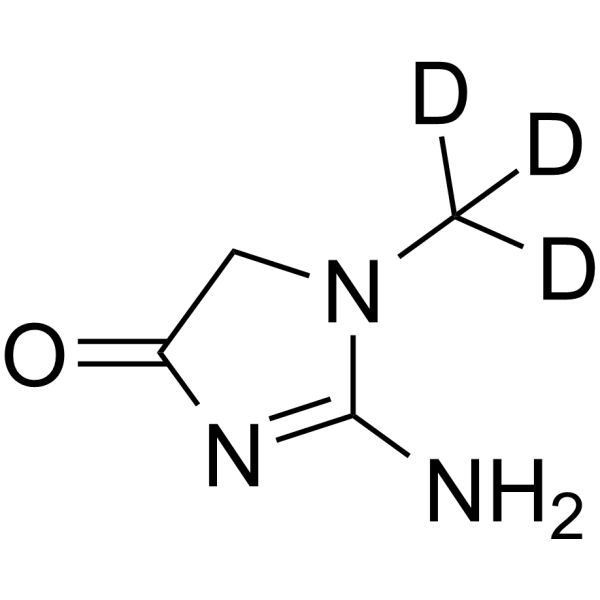
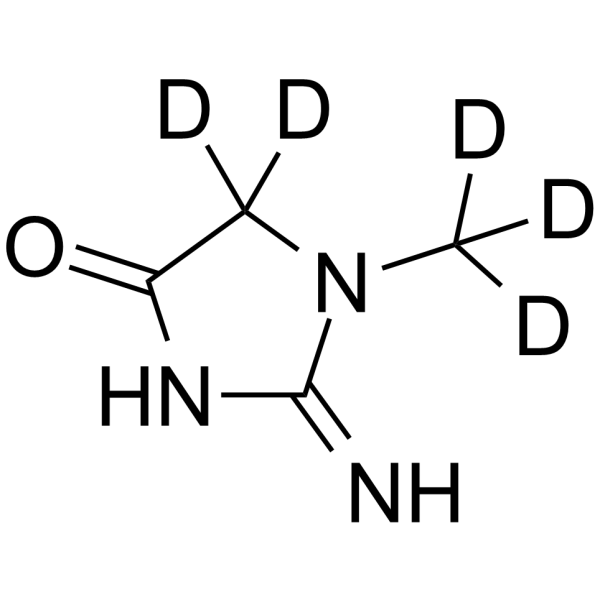
Creatinine-d3 is a deuterium labeled Creatinine. Creatinine (NSC13123) is an orally active, blood-brain barrier-permeable modulator of GABAA and NMDA receptors, with activities of antioxidation and metabolic regulation. Creatinine is generated via non-enzymatic conversion of creatine and phosphocreatine in muscle. Creatinine serum levels correlate with muscle mass, glomerular filtration rate, and extrarenal clearance, serving as an evaluation biomarker for renal function, muscle mass, and clinical outcomes, and used for perioperative renal risk assessment. In addition, Creatinine can induce specific Cryptococcus species to produce creatinine deiminase and act as their nitrogen source, while it can be secreted via renal tubules. Creatinine is widely used in research related to various diseases such as neurodegenerative diseases, psychiatric disorders, acute kidney injury, chronic kidney disease, and renal failure .
|
-
-
- HY-Y0261A
-
|
|
Environmental Pollutants
Biochemical Assay Reagents
|
Others
|
|
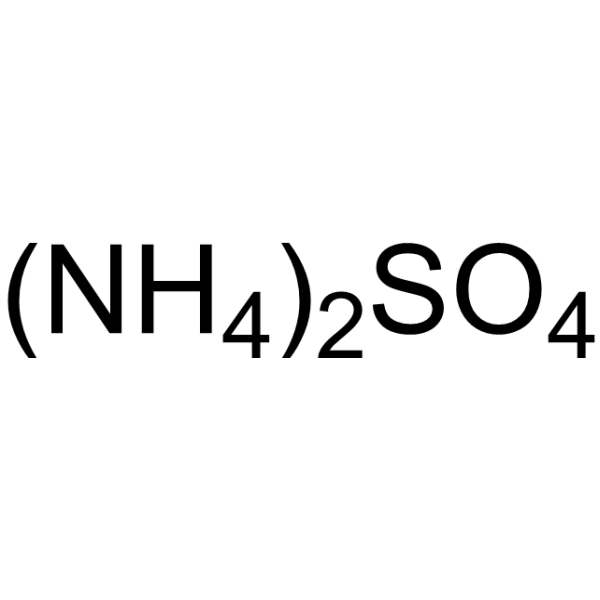
Ammonium sulphate,≥99.0%,AR is an inorganic sulfate salt used for molecular biology . Ammonium sulphate,≥99.0%,AR can be used to precipitate proteins, separate antibodies, and enhance antigen-antibody reactions. Ammonium sulphate,≥99.0%,AR can serve as a nitrogen source in plant fertilizers and has developmentally toxicity to freshwater snails, but increases the number of Anopheles africanus and Culex mosquito larvae in rice paddies. Ammonium sulphate,≥99.0%,AR also inhibits the conversion of glucose to ascorbic acid in plants .
|
-
-
- HY-B0504
-
|
NSC13123
|
Endogenous Metabolite
GABA Receptor
iGluR
|
Infection
Neurological Disease
Metabolic Disease
Cancer
|
|
Creatinine (NSC13123) is an orally active, blood-brain barrier-permeable modulator of GABAA and NMDA receptors, with activities of antioxidation and metabolic regulation. Creatinine is generated via non-enzymatic conversion of creatine and phosphocreatine in muscle. Creatinine serum levels correlate with muscle mass, glomerular filtration rate, and extrarenal clearance, serving as an evaluation biomarker for renal function, muscle mass, and clinical outcomes, and used for perioperative renal risk assessment. In addition, Creatinine can induce specific Cryptococcus species to produce creatinine deiminase and act as their nitrogen source, while it can be secreted via renal tubules. Creatinine is widely used in research related to various diseases such as neurodegenerative diseases, psychiatric disorders, acute kidney injury, chronic kidney disease, and renal failure .
|
-
-
- HY-W008150
-
|
α-Hydroxyisovaleric acid
|
Endogenous Metabolite
|
Metabolic Disease
|
|
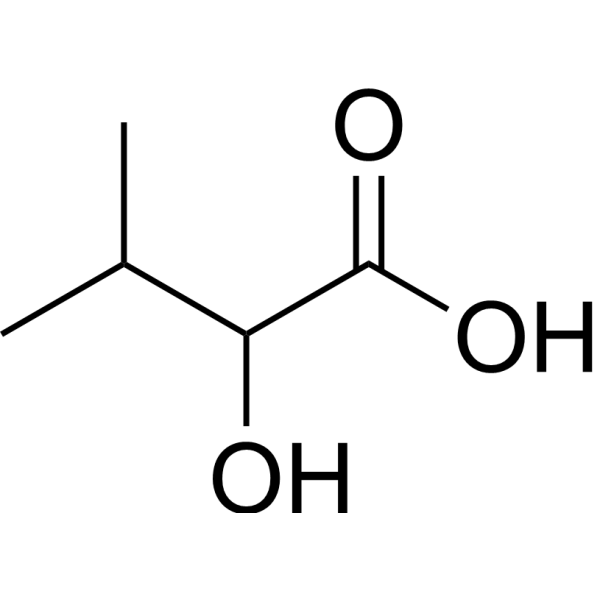
2-Hydroxy-3-methylbutanoic acid (α-Hydroxyisovaleric acid) is an α-hydroxy analogue of valine and a valine precursor that reduces urea excretion. 2-Hydroxy-3-methylbutanoic acid can promote the growth of chickens and rats, and is converted into valine in the body, participating in protein synthesis and maintaining nitrogen balance, thereby supporting animal growth and development. 2-Hydroxy-3-methylbutanoic acid has a more significant effect on the valine-deficient dietary model. 2-Hydroxy-3-methylbutanoic acid is mainly used in animal nutrition research to evaluate its potential application as a nitrogen source substitute in feed .
|
-
-
- HY-B0504S2
-
|
NSC13123-d5
|
Isotope-Labeled Compounds
Endogenous Metabolite
iGluR
GABA Receptor
|
Metabolic Disease
|
|
Creatinine-d5 is the deuterium labeled Creatinine. Creatinine (NSC13123) is an orally active, blood-brain barrier-permeable modulator of GABAA and NMDA receptors, with activities of antioxidation and metabolic regulation. Creatinine is generated via non-enzymatic conversion of creatine and phosphocreatine in muscle. Creatinine serum levels correlate with muscle mass, glomerular filtration rate, and extrarenal clearance, serving as an evaluation biomarker for renal function, muscle mass, and clinical outcomes, and used for perioperative renal risk assessment. In addition, Creatinine can induce specific Cryptococcus species to produce creatinine deiminase and act as their nitrogen source, while it can be secreted via renal tubules. Creatinine is widely used in research related to various diseases such as neurodegenerative diseases, psychiatric disorders, acute kidney injury, chronic kidney disease, and renal failure .
|
-
-
- HY-B0504R
-
|
NSC13123 (Standard)
|
Reference Standards
Endogenous Metabolite
iGluR
GABA Receptor
|
Metabolic Disease
Cancer
|
|
Creatinine (Standard) is the analytical standard of Creatinine. This product is intended for research and analytical applications. Creatinine (NSC13123) is an orally active, blood-brain barrier-permeable modulator of GABAA and NMDA receptors, with activities of antioxidation and metabolic regulation. Creatinine is generated via non-enzymatic conversion of creatine and phosphocreatine in muscle. Creatinine serum levels correlate with muscle mass, glomerular filtration rate, and extrarenal clearance, serving as an evaluation biomarker for renal function, muscle mass, and clinical outcomes, and used for perioperative renal risk assessment. In addition, Creatinine can induce specific Cryptococcus species to produce creatinine deiminase and act as their nitrogen source, while it can be secreted via renal tubules. Creatinine is widely used in research related to various diseases such as neurodegenerative diseases, psychiatric disorders, acute kidney injury, chronic kidney disease, and renal failure .
|
-

-
- HY-114516
-
|
|
Endogenous Metabolite
|
Metabolic Disease
|
|
Fructosylvaline (Fructose Valine) is a model fructosyl-amine (Amadori compound) for glycated hemoglobin. Fructosylvaline can be used as a nitrogen source to cultivate microbial strains .
|
-

-
- HY-W010378
-
|
H-D-Asn-OH
|
Endogenous Metabolite
|
Metabolic Disease
|
|
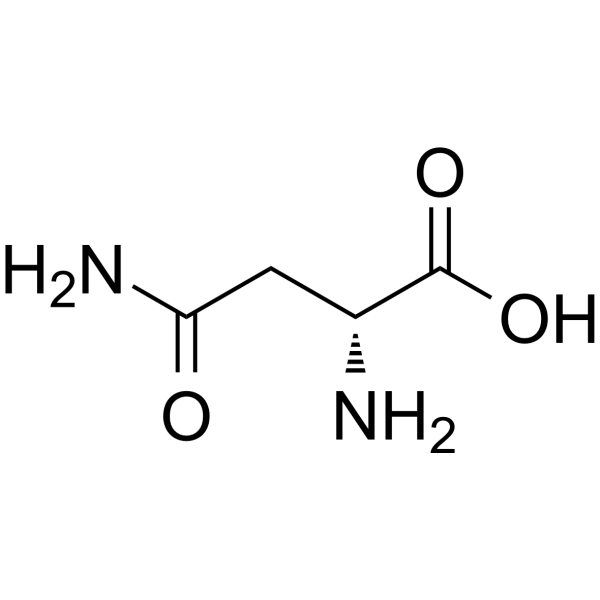
D-Asparagine (H-D-Asn-OH) acts as a competitive inhibitor of L-asparagine hydrolysis, with a Ki value of 0.24 mM. D-Asparagine serves as a nitrogen source for yeast strains. D-Asparagine is a good substrate for external yeast asparaginase but a poor substrate for internal yeast asparaginase .
|
-
-
- HY-B0504S1
-
|
NSC13123-13C
|
Isotope-Labeled Compounds
Endogenous Metabolite
iGluR
GABA Receptor
|
Metabolic Disease
|
|
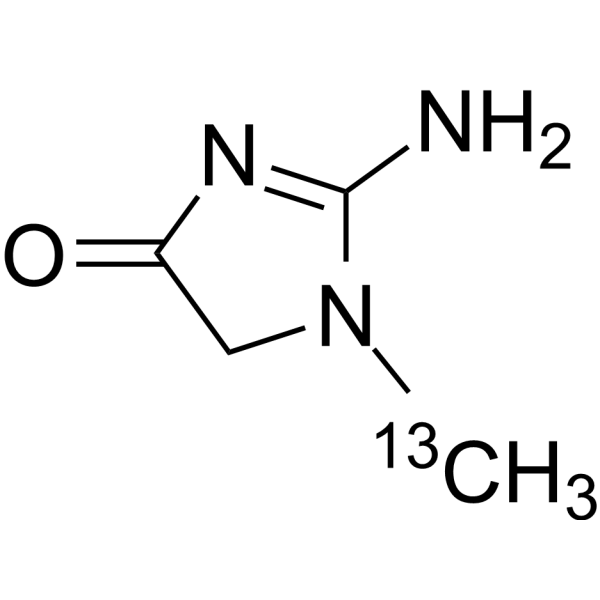
Creatinine- 13C is the 13C-labeled Creatinine. Creatinine (NSC13123) is an orally active, blood-brain barrier-permeable modulator of GABAA and NMDA receptors, with activities of antioxidation and metabolic regulation. Creatinine is generated via non-enzymatic conversion of creatine and phosphocreatine in muscle. Creatinine serum levels correlate with muscle mass, glomerular filtration rate, and extrarenal clearance, serving as an evaluation biomarker for renal function, muscle mass, and clinical outcomes, and used for perioperative renal risk assessment. In addition, Creatinine can induce specific Cryptococcus species to produce creatinine deiminase and act as their nitrogen source, while it can be secreted via renal tubules. Creatinine is widely used in research related to various diseases such as neurodegenerative diseases, psychiatric disorders, acute kidney injury, chronic kidney disease, and renal failure .
|
-
-
- HY-W000438
-
|
|
Amino Acid Derivatives
|
Others
|
|
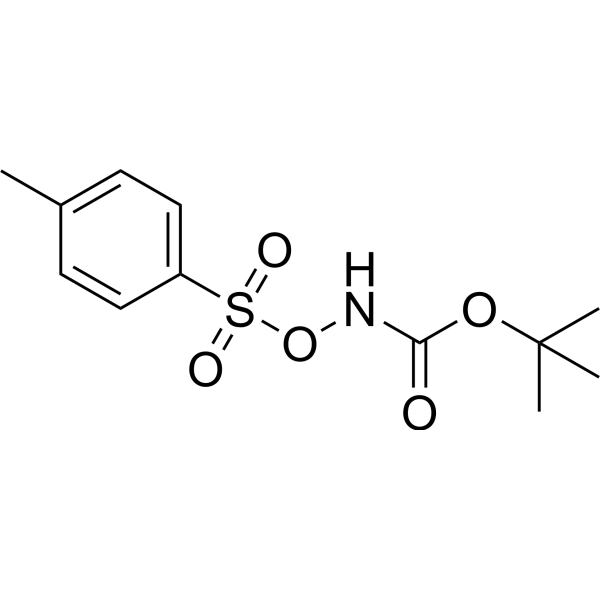
N-Boc-O-tosyl hydroxylamine is a safe and efficient nitrogen source for N-amination of aryl and alkyl amines. N-Boc-O-tosyl hydroxylamine promotes electrophilic N-amination of aryl amines and alkyl amines to generate β-Boc-protected aryl hydrazines and alkyl hydrazines .
|
-
-
- HY-P4545
-
|
|
Angiotensin Receptor
|
Others
|
|
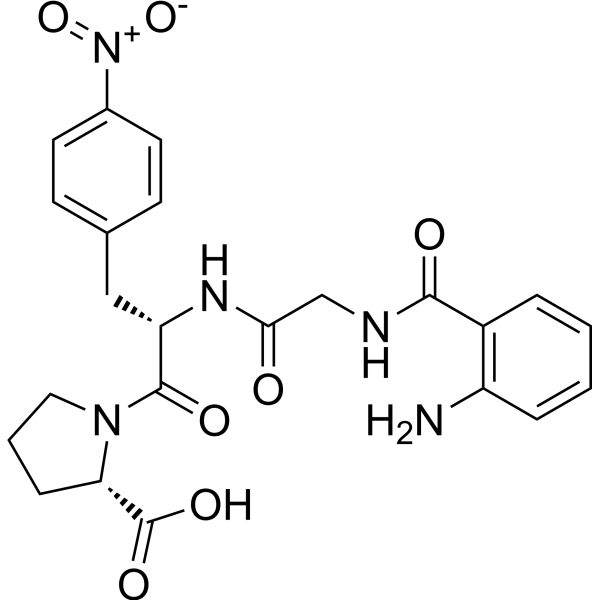
Abz-Gly-p-nitro-Phe-Pro-OH is the fluorescent substrate angiotensin I converting enzyme (ACE-I) with 355 nm excitation and 405 nm emission wavelengths .
|
-
-
- HY-157372
-
|
|
Bacterial
|
Others
|
|
Peptone Bacteriological is used as a medium material to provide nitrogen source and amino acid for bacterial growth .
|
-
-
- HY-P4561
-
|
|
Cathepsin
|
Others
|
|
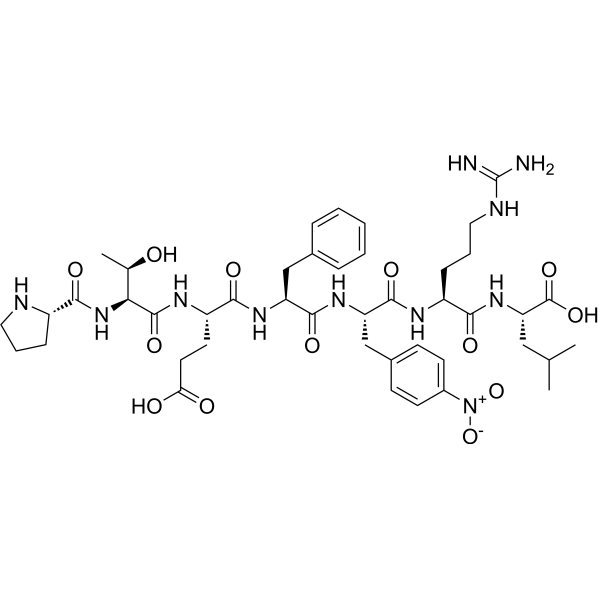
H-Pro-Thr-Glu-Phe-p-nitro-Phe-Arg-Leu-OH is a water-soluble polypeptide that can serve as a substrate for cathepsin D, pepsin and pepsinogen. H-Pro-Thr-Glu-Phe-p-nitro-Phe-Arg-Leu-OH has potential applications in biochemical analysis .
|
-
-
- HY-P4725
-
|
|
Fluorescent Dye
|
Others
|
|
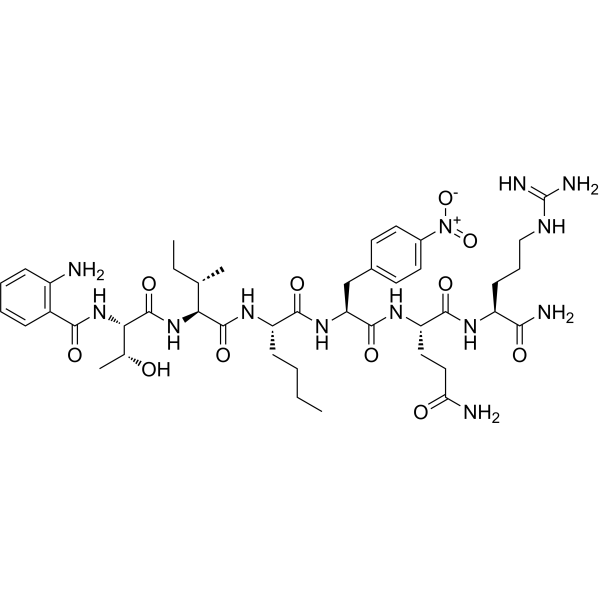
Abz-Thr-Ile-Nle-p-nitro-Phe-Gln-Arg-NH2 is a fluorogenic substrate, that can be used for the fluorescence screening assay .
|
-
-
- HY-B0504S5
-
|
NSC13123-15N
|
Isotope-Labeled Compounds
Endogenous Metabolite
iGluR
GABA Receptor
|
Metabolic Disease
Cancer
|
|
Creatinine- 15N (NSC13123- 15N) is the 15N-labeled Creatinine (HY-B0504). Creatinine (NSC13123) is an orally active, blood-brain barrier-permeable modulator of GABAA and NMDA receptors, with activities of antioxidation and metabolic regulation. Creatinine is generated via non-enzymatic conversion of creatine and phosphocreatine in muscle. Creatinine serum levels correlate with muscle mass, glomerular filtration rate, and extrarenal clearance, serving as an evaluation biomarker for renal function, muscle mass, and clinical outcomes, and used for perioperative renal risk assessment. In addition, Creatinine can induce specific Cryptococcus species to produce creatinine deiminase and act as their nitrogen source, while it can be secreted via renal tubules. Creatinine is widely used in research related to various diseases such as neurodegenerative diseases, psychiatric disorders, acute kidney injury, chronic kidney disease, and renal failure .
|
-

-
- HY-W008150R
-
|
α-Hydroxyisovaleric acid (Standard)
|
Reference Standards
Endogenous Metabolite
|
Metabolic Disease
|
|
2-Hydroxy-3-methylbutanoic acid (α-Hydroxyisovaleric acid) (Standard) is the analytical standard of 2-Hydroxy-3-methylbutanoic acid (HY-W008150). This product is intended for research and analytical applications. 2-Hydroxy-3-methylbutanoic acid is an α-hydroxy analogue of valine and a valine precursor that reduces urea excretion. 2-Hydroxy-3-methylbutanoic acid can promote the growth of chickens and rats, and is converted into valine in the body, participating in protein synthesis and maintaining nitrogen balance, thereby supporting animal growth and development. 2-Hydroxy-3-methylbutanoic acid has a more significant effect on the valine-deficient dietary model. 2-Hydroxy-3-methylbutanoic acid is mainly used in animal nutrition research to evaluate its potential application as a nitrogen source substitute in feed.
|
-

-
- HY-117293
-
|
|
Drug Intermediate
|
Others
|
|
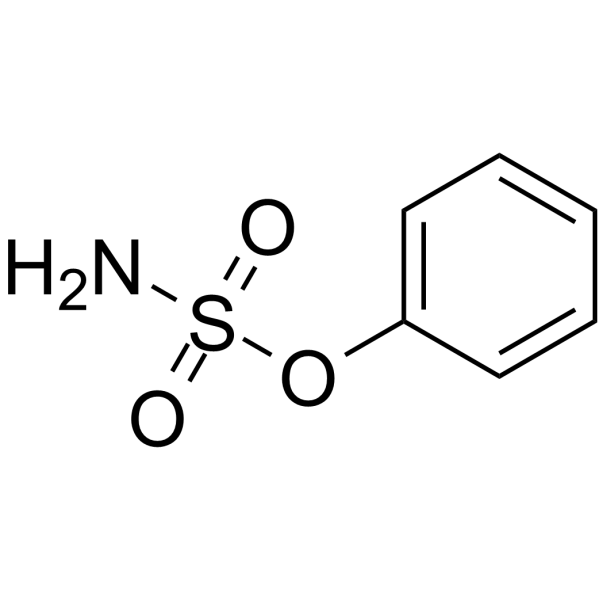
Phenyl sulfamate is a nitrogen source that can be used in the amination of intermolecular .
|
-
-
- HY-W794670
-
|
|
Aminopeptidase
|
Others
|
|
H-Ala-Pro-Ala-OH, tripeptide, is a substrate for Escherichia coli PepP (Xaa-Pro aminopeptidase). H-Ala-Pro-Ala-OH acts as a nitrogen source for wild-type Escherichia coli .
|
-

-
- HY-W002114
-
|
|
Bacterial
|
Infection
|
|
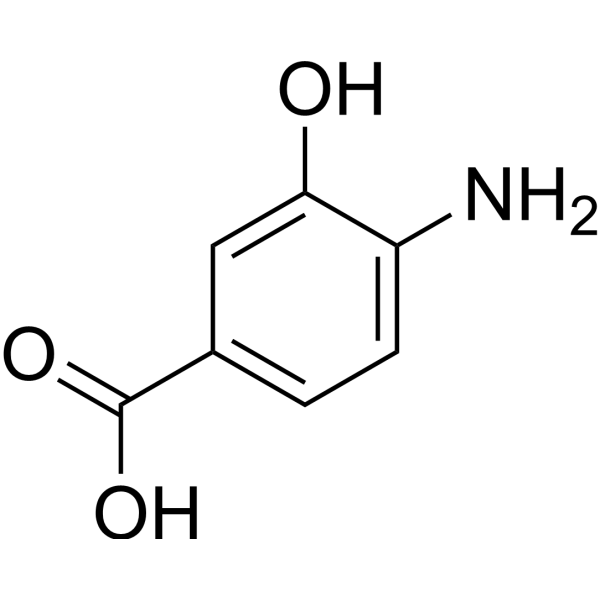
4-Amino-3-hydroxybenzoic acid is an aromatic substrate degradable by Bordetella sp. strain 10d. 4-Amino-3-hydroxybenzoic acid can serve as a carbon source, nitrogen source and energy source for the growth of Bordetella sp. strain 10d. 4-Amino-3-hydroxybenzoic acid acts as a substrate for 2-amino-5-carboxymuconate-6-semialdehyde deaminase and 4-amino-3-hydroxybenzoate 2,3-dioxygenase .
|
-
-
- HY-W145053
-
|
Sodium chloro(4-methylbenzenesulfonyl)azanide hydrate
|
Factor Xa
Bacterial
|
Infection
|
|
ChloraMine-T hydrate (Sodium chloro(4-methylbenzenesulfonyl)azanide (hydrate)) is a common reagent in various synthetic processes. It has been used as a reagent in aminohydroxylation and allylic amination reactions, a nitrogen source in aziridination reactions of alkenes and alkenes, and deprotection of sulfur groups in sulfur-containing compounds. It has been used as a reagent in the synthesis of factor Xa inhibitors. ChloraMine-T hydrate (Sodium chloro(4-methylbenzenesulfonyl)azanide (hydrate)) (0.2% w/v) is also an antimicrobial agent that kills Staphylococcus epidermidis, Staphylococcus aureus, Enterococcus faecalis, Escherichia coli, Proteus mirabilis, and Enterococcus cloacae.
|
-

-
- HY-P3170
-
|
|
Biochemical Assay Reagents
Bacterial
|
Infection
|
|
β-alanine-pyruvate transaminase is an enzyme. Dihydrouracil and dihydrothymine, as nitrogen sources, increase the activity of β-alanine-pyruvate transaminase in cultured B. cepacia cells. The activity of β-alanine-pyruvate transaminase can be measured by tracking the release of L-α-alanine during the reaction .
|
-

-
- HY-P4556
-
|
|
Biochemical Assay Reagents
|
Others
|
|
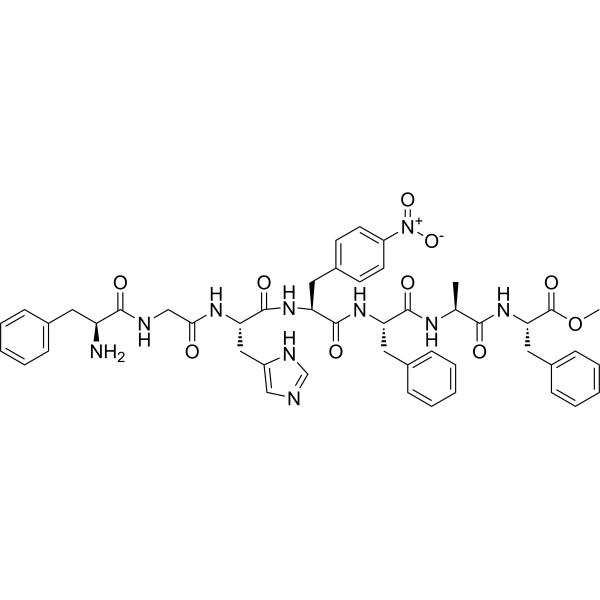
H-Phe-Gly-His-p-nitro-Phe-Phe-Ala-Phe-OMe is a polypeptide that can be hydrolyzed by Rennin (HY-P2810). H-Phe-Gly-His-p-nitro-Phe-Phe-Ala-Phe-OMe is commonly used as a biochemical reaction reagent .
|
-
-
- HY-W725504
-
|
|
Isotope-Labeled Compounds
Endogenous Metabolite
|
Metabolic Disease
|
|
2-Hydroxy-3-methylbutanoic acid-d7 is the deuterium labeled 2-Hydroxy-3-methylbutanoic acid (HY-W008150). 2-Hydroxy-3-methylbutanoic acid is an α-hydroxy analogue of valine and a valine precursor that reduces urea excretion. 2-Hydroxy-3-methylbutanoic acid can promote the growth of chickens and rats, and is converted into valine in the body, participating in protein synthesis and maintaining nitrogen balance, thereby supporting animal growth and development. 2-Hydroxy-3-methylbutanoic acid has a more significant effect on the valine-deficient dietary model. 2-Hydroxy-3-methylbutanoic acid is mainly used in animal nutrition research to evaluate its potential application as a nitrogen source substitute in feed .
|
-

| Cat. No. |
Product Name |
Type |
-
- HY-157372
-
|
|
Biochemical Assay Reagents
|
|
Peptone Bacteriological is used as a medium material to provide nitrogen source and amino acid for bacterial growth .
|
-
- HY-W002114
-
|
|
Biochemical Assay Reagents
|
|
4-Amino-3-hydroxybenzoic acid is an aromatic substrate degradable by Bordetella sp. strain 10d. 4-Amino-3-hydroxybenzoic acid can serve as a carbon source, nitrogen source and energy source for the growth of Bordetella sp. strain 10d. 4-Amino-3-hydroxybenzoic acid acts as a substrate for 2-amino-5-carboxymuconate-6-semialdehyde deaminase and 4-amino-3-hydroxybenzoate 2,3-dioxygenase .
|
| Cat. No. |
Product Name |
Target |
Research Area |
-
- HY-P4545
-
|
|
Angiotensin Receptor
|
Others
|
|
Abz-Gly-p-nitro-Phe-Pro-OH is the fluorescent substrate angiotensin I converting enzyme (ACE-I) with 355 nm excitation and 405 nm emission wavelengths .
|
-
- HY-P4561
-
|
|
Cathepsin
|
Others
|
|
H-Pro-Thr-Glu-Phe-p-nitro-Phe-Arg-Leu-OH is a water-soluble polypeptide that can serve as a substrate for cathepsin D, pepsin and pepsinogen. H-Pro-Thr-Glu-Phe-p-nitro-Phe-Arg-Leu-OH has potential applications in biochemical analysis .
|
-
- HY-P4725
-
|
|
Fluorescent Dye
|
Others
|
|
Abz-Thr-Ile-Nle-p-nitro-Phe-Gln-Arg-NH2 is a fluorogenic substrate, that can be used for the fluorescence screening assay .
|
-
- HY-W794670
-
|
|
Aminopeptidase
|
Others
|
|
H-Ala-Pro-Ala-OH, tripeptide, is a substrate for Escherichia coli PepP (Xaa-Pro aminopeptidase). H-Ala-Pro-Ala-OH acts as a nitrogen source for wild-type Escherichia coli .
|
-
- HY-P4556
-
|
|
Biochemical Assay Reagents
|
Others
|
|
H-Phe-Gly-His-p-nitro-Phe-Phe-Ala-Phe-OMe is a polypeptide that can be hydrolyzed by Rennin (HY-P2810). H-Phe-Gly-His-p-nitro-Phe-Phe-Ala-Phe-OMe is commonly used as a biochemical reaction reagent .
|
| Cat. No. |
Product Name |
Category |
Target |
Chemical Structure |
-
- HY-B0504
-
|
NSC13123
|
Infection
Structural Classification
Natural Products
Classification of Application Fields
Disease markers
Endocrine diseases
Metabolic Disease
Nervous System Disorder
Endogenous metabolite
Disease Research Fields
Source Classification
|
Endogenous Metabolite
GABA Receptor
iGluR
|
|
Creatinine (NSC13123) is an orally active, blood-brain barrier-permeable modulator of GABAA and NMDA receptors, with activities of antioxidation and metabolic regulation. Creatinine is generated via non-enzymatic conversion of creatine and phosphocreatine in muscle. Creatinine serum levels correlate with muscle mass, glomerular filtration rate, and extrarenal clearance, serving as an evaluation biomarker for renal function, muscle mass, and clinical outcomes, and used for perioperative renal risk assessment. In addition, Creatinine can induce specific Cryptococcus species to produce creatinine deiminase and act as their nitrogen source, while it can be secreted via renal tubules. Creatinine is widely used in research related to various diseases such as neurodegenerative diseases, psychiatric disorders, acute kidney injury, chronic kidney disease, and renal failure .
|
-
-
- HY-W008150
-
-
-
- HY-B0504R
-
|
NSC13123 (Standard)
|
Infection
Structural Classification
Natural Products
Microorganisms
Disease markers
Endocrine diseases
Nervous System Disorder
Endogenous metabolite
Source Classification
|
Reference Standards
Endogenous Metabolite
iGluR
GABA Receptor
|
|
Creatinine (Standard) is the analytical standard of Creatinine. This product is intended for research and analytical applications. Creatinine (NSC13123) is an orally active, blood-brain barrier-permeable modulator of GABAA and NMDA receptors, with activities of antioxidation and metabolic regulation. Creatinine is generated via non-enzymatic conversion of creatine and phosphocreatine in muscle. Creatinine serum levels correlate with muscle mass, glomerular filtration rate, and extrarenal clearance, serving as an evaluation biomarker for renal function, muscle mass, and clinical outcomes, and used for perioperative renal risk assessment. In addition, Creatinine can induce specific Cryptococcus species to produce creatinine deiminase and act as their nitrogen source, while it can be secreted via renal tubules. Creatinine is widely used in research related to various diseases such as neurodegenerative diseases, psychiatric disorders, acute kidney injury, chronic kidney disease, and renal failure .
|
-
-
- HY-W010378
-
-
-
- HY-W008150R
-
|
α-Hydroxyisovaleric acid (Standard)
|
Structural Classification
Ketones, Aldehydes, Acids
Disease markers
Endocrine diseases
Nervous System Disorder
Endogenous metabolite
Source Classification
|
Reference Standards
Endogenous Metabolite
|
|
2-Hydroxy-3-methylbutanoic acid (α-Hydroxyisovaleric acid) (Standard) is the analytical standard of 2-Hydroxy-3-methylbutanoic acid (HY-W008150). This product is intended for research and analytical applications. 2-Hydroxy-3-methylbutanoic acid is an α-hydroxy analogue of valine and a valine precursor that reduces urea excretion. 2-Hydroxy-3-methylbutanoic acid can promote the growth of chickens and rats, and is converted into valine in the body, participating in protein synthesis and maintaining nitrogen balance, thereby supporting animal growth and development. 2-Hydroxy-3-methylbutanoic acid has a more significant effect on the valine-deficient dietary model. 2-Hydroxy-3-methylbutanoic acid is mainly used in animal nutrition research to evaluate its potential application as a nitrogen source substitute in feed.
|
-
| Cat. No. |
Product Name |
Chemical Structure |
-
- HY-B0504S
-
5 Publications Verification
|
|
Creatinine-d3 is a deuterium labeled Creatinine. Creatinine (NSC13123) is an orally active, blood-brain barrier-permeable modulator of GABAA and NMDA receptors, with activities of antioxidation and metabolic regulation. Creatinine is generated via non-enzymatic conversion of creatine and phosphocreatine in muscle. Creatinine serum levels correlate with muscle mass, glomerular filtration rate, and extrarenal clearance, serving as an evaluation biomarker for renal function, muscle mass, and clinical outcomes, and used for perioperative renal risk assessment. In addition, Creatinine can induce specific Cryptococcus species to produce creatinine deiminase and act as their nitrogen source, while it can be secreted via renal tubules. Creatinine is widely used in research related to various diseases such as neurodegenerative diseases, psychiatric disorders, acute kidney injury, chronic kidney disease, and renal failure .
|
-
-
- HY-B0504S2
-
|
|
|
Creatinine-d5 is the deuterium labeled Creatinine. Creatinine (NSC13123) is an orally active, blood-brain barrier-permeable modulator of GABAA and NMDA receptors, with activities of antioxidation and metabolic regulation. Creatinine is generated via non-enzymatic conversion of creatine and phosphocreatine in muscle. Creatinine serum levels correlate with muscle mass, glomerular filtration rate, and extrarenal clearance, serving as an evaluation biomarker for renal function, muscle mass, and clinical outcomes, and used for perioperative renal risk assessment. In addition, Creatinine can induce specific Cryptococcus species to produce creatinine deiminase and act as their nitrogen source, while it can be secreted via renal tubules. Creatinine is widely used in research related to various diseases such as neurodegenerative diseases, psychiatric disorders, acute kidney injury, chronic kidney disease, and renal failure .
|
-
-
- HY-B0504S1
-
|
|
|
Creatinine- 13C is the 13C-labeled Creatinine. Creatinine (NSC13123) is an orally active, blood-brain barrier-permeable modulator of GABAA and NMDA receptors, with activities of antioxidation and metabolic regulation. Creatinine is generated via non-enzymatic conversion of creatine and phosphocreatine in muscle. Creatinine serum levels correlate with muscle mass, glomerular filtration rate, and extrarenal clearance, serving as an evaluation biomarker for renal function, muscle mass, and clinical outcomes, and used for perioperative renal risk assessment. In addition, Creatinine can induce specific Cryptococcus species to produce creatinine deiminase and act as their nitrogen source, while it can be secreted via renal tubules. Creatinine is widely used in research related to various diseases such as neurodegenerative diseases, psychiatric disorders, acute kidney injury, chronic kidney disease, and renal failure .
|
-
-
- HY-B0504S5
-
|
|
|
Creatinine- 15N (NSC13123- 15N) is the 15N-labeled Creatinine (HY-B0504). Creatinine (NSC13123) is an orally active, blood-brain barrier-permeable modulator of GABAA and NMDA receptors, with activities of antioxidation and metabolic regulation. Creatinine is generated via non-enzymatic conversion of creatine and phosphocreatine in muscle. Creatinine serum levels correlate with muscle mass, glomerular filtration rate, and extrarenal clearance, serving as an evaluation biomarker for renal function, muscle mass, and clinical outcomes, and used for perioperative renal risk assessment. In addition, Creatinine can induce specific Cryptococcus species to produce creatinine deiminase and act as their nitrogen source, while it can be secreted via renal tubules. Creatinine is widely used in research related to various diseases such as neurodegenerative diseases, psychiatric disorders, acute kidney injury, chronic kidney disease, and renal failure .
|
-
-
- HY-W725504
-
|
|
|
2-Hydroxy-3-methylbutanoic acid-d7 is the deuterium labeled 2-Hydroxy-3-methylbutanoic acid (HY-W008150). 2-Hydroxy-3-methylbutanoic acid is an α-hydroxy analogue of valine and a valine precursor that reduces urea excretion. 2-Hydroxy-3-methylbutanoic acid can promote the growth of chickens and rats, and is converted into valine in the body, participating in protein synthesis and maintaining nitrogen balance, thereby supporting animal growth and development. 2-Hydroxy-3-methylbutanoic acid has a more significant effect on the valine-deficient dietary model. 2-Hydroxy-3-methylbutanoic acid is mainly used in animal nutrition research to evaluate its potential application as a nitrogen source substitute in feed .
|
-
Your information is safe with us. * Required Fields.
Inquiry Information
- Product Name:
- Cat. No.:
- Quantity:
- MCE Japan Authorized Agent:








