1. Search Result
Search Result
Results for "

overactive detrusor

" in MedChemExpress (MCE) Product Catalog:

14

Inhibitors & Agonists

1

Isotope-Labeled Compounds

Cat. No. Product Name Target Research Areas Chemical Structure
  • HY-76569
    Desfesoterodine
    1 Publications Verification

    PNU-200577; 5-Hydroxymethyl Tolterodine

    mAChR Neurological Disease Cancer
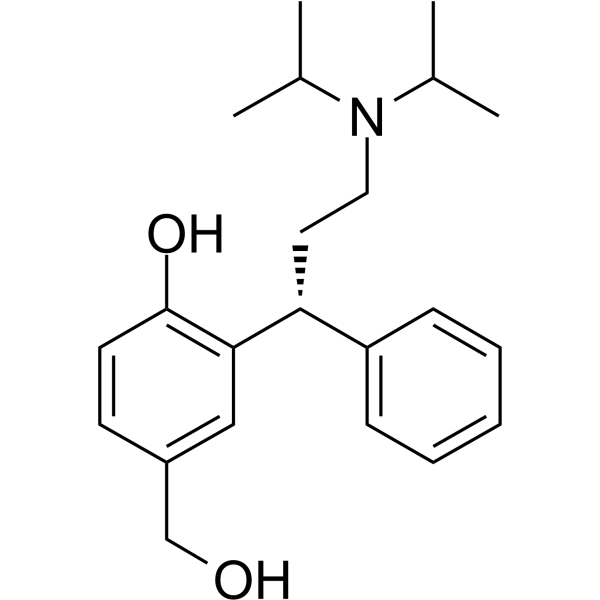
    Desfesoterodine (PNU-200577) is a potent and selective muscarinic receptor (mAChR) antagonist with a KB and a pA2 of 0.84 nM and 9.14, respectively . Desfesoterodine is a major pharmacologically active metabolite of Tolterodine (PNU-200583; HY-A0024) and Fesoterodine (HY-70053) . Desfesoterodine improves cerebral infarction induced detrusor overactivity in rats .
    Desfesoterodine
  • HY-B0549A

    Rec-7-0040; DW61

    Calcium Channel Adenosine Receptor mAChR Dopamine Receptor Adrenergic Receptor Cardiovascular Disease Infection Neurological Disease Cancer
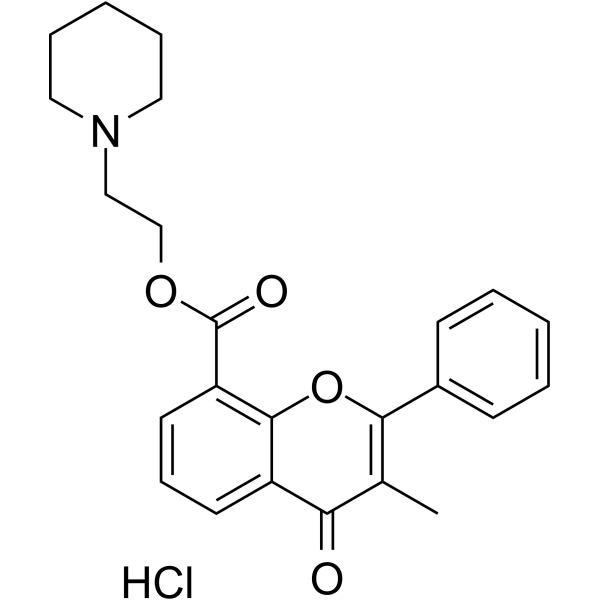
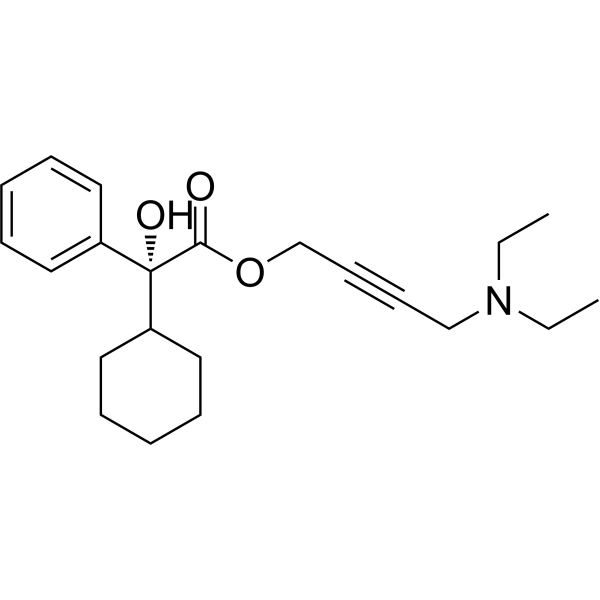
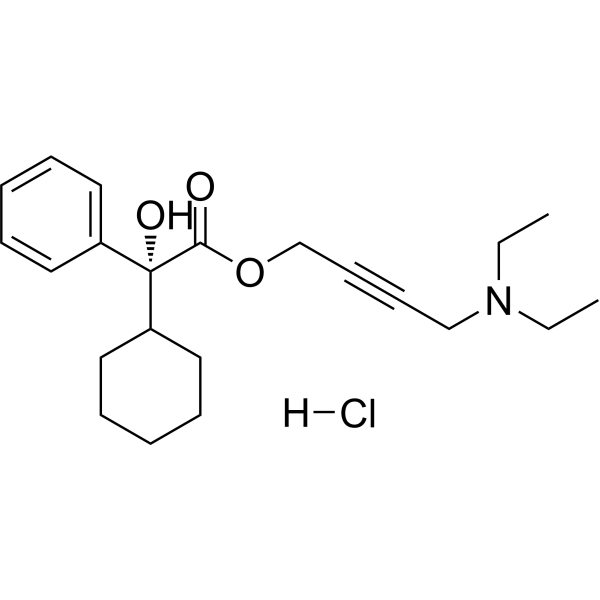
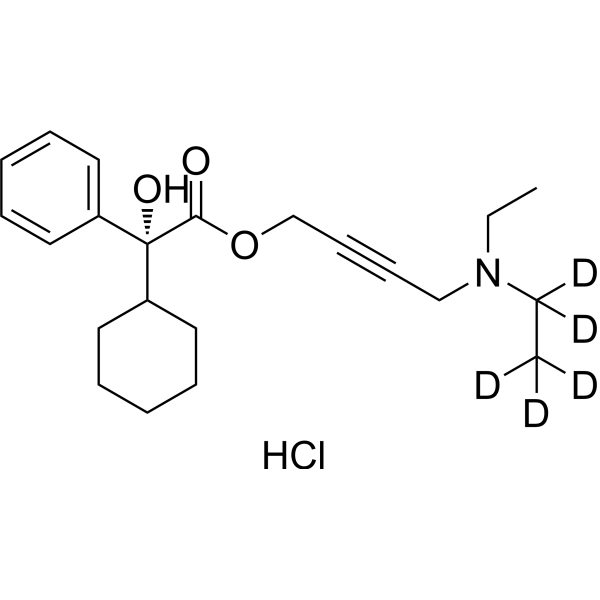
    Flavoxate hydrochloride (Rec-7-0040; DW61) is an orally active L-type Ca 2+ channel inhibitor and antispasmodic. Flavoxate hydrochloride inhibits cyclic adenosine monophosphate production by blocking voltage-dependent inward Ba 2+ currents, regulating the brainstem micturition center, and stimulating G protein-coupled receptors. Consequently, Flavoxate hydrochloride induces relaxation of bladder smooth muscle and inhibits isovolumetric rhythmic contractions. Flavoxate hydrochloride effectively increases bladder capacity and alleviates symptoms of urgent urination frequency and pollakiuria caused by overactive bladder. Flavoxate hydrochloride can be used in research on overactive bladder and related voiding dysfunctions .
    Flavoxate hydrochloride
  • HY-15574
    Piboserod
    4 Publications Verification

    SB-207266

    5-HT Receptor Cardiovascular Disease
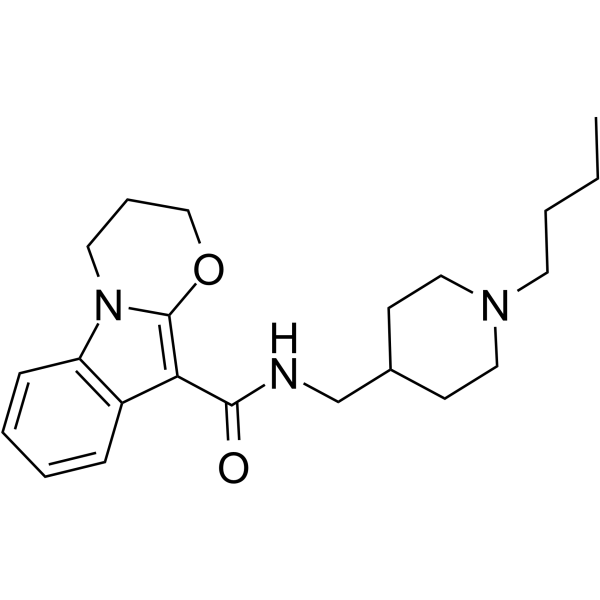
    Piboserod is an orally available selective antagonist of the 5-HT4 receptor, with a Ki value of approximately 0.1 nM for human 5-HT4 receptors. Piboserod can competitively bind to the 5-HT4 receptor and block the activation of the 5-HT4 receptor. Piboserod can inhibit the enhancing effect of 5-HT on the nerve-mediated contraction response of the human bladder detrusor muscle. Piboserod is mainly used in the research of urinary system diseases (such as overactive bladder) and cardiovascular diseases (such as chronic heart failure) .
    Piboserod
  • HY-109532

    Ganirest

    GnRH Receptor Metabolic Disease
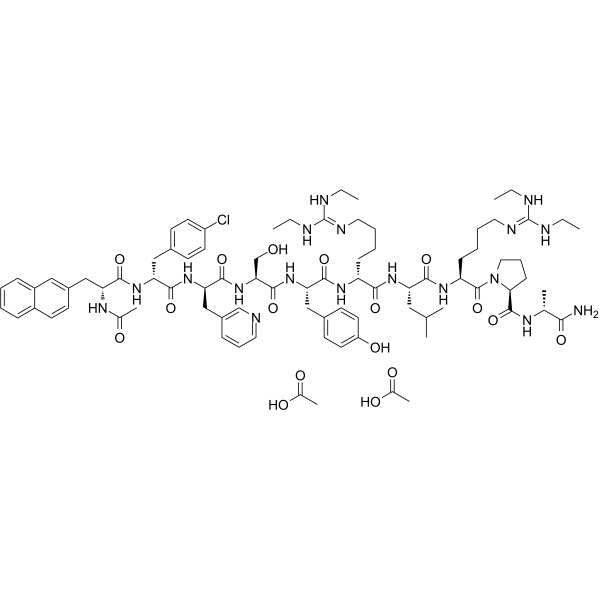
    Ganirelix acetate (Ganirest) is a competitive and selective gonadotropin-releasing hormone (GnRH) antagonist. Ganirelix acetate blocks endogenous GnRH-induced release of luteinizing hormone (LH) and follicle-stimulating hormone. Ganirelix acetate antagonizes Prostaglandin E2 (HY-101952)-induced detrusor overactivity and enhances Carbachol (HY-B1208)-induced detrusor contraction. Ganirelix acetate is applicable to research related to female infertility and detrusor overactivity .
    Ganirelix acetate
  • HY-14825A

    SVT-40776 D-tartrate

    mAChR Inflammation/Immunology
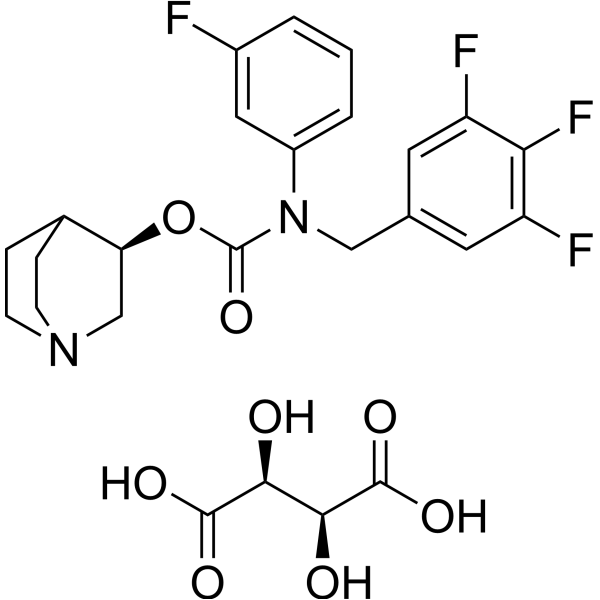
    Tarafenacin (SVT-40776) (D-tartrate) is an orally active, selective M3 muscarinic receptor (M3 muscarinic receptor) antagonist with 203-fold selectivity over the M2 muscarinic receptor. Tarafenacin (D-tartrate) does not affect atrial contraction, arterial blood pressure or arterial pressure at high doses. Tarafenacin (D-tartrate) can be used in the research of overactive bladder .
    Tarafenacin D-tartrate
  • HY-106415

    Calcium Channel Neurological Disease
    Terflavoxate is a flavone derivative with spasmolytic properties. Terflavoxate has Ca 2+-antagonistic effect is mainly responsible for Terflavoxate smooth muscle relaxant properties. Terflavoxate has the potential for overactive detrusor research .
    Terflavoxate
  • HY-76569R

    PNU-200577 (Standard); 5-Hydroxymethyl Tolterodine (Standard)

    Reference Standards mAChR Neurological Disease
    Desfesoterodine (Standard) is the analytical standard of Desfesoterodine. This product is intended for research and analytical applications. Desfesoterodine (PNU-200577) is a potent and selective muscarinic receptor (mAChR) antagonist with a KB and a pA2 of 0.84 nM and 9.14, respectively . Desfesoterodine is a major pharmacologically active metabolite of Tolterodine (PNU-200583; HY-A0024) and Fesoterodine (HY-70053) . Desfesoterodine improves cerebral infarction induced detrusor overactivity in rats .
    Desfesoterodine (Standard)
  • HY-19228

    mAChR Calcium Channel Neurological Disease Metabolic Disease
    FK 584 is a potent detrusor muscle contraction inhibitor. FK 584 possesses potent antimuscarinic activity and weak calcium channel blocking activity. FK 584 has demonstrated potent detrusor muscle inhibitory activity in various experimental models with a manageable risk of mydriasis. FK 584 can be used to study overactive bladder (OAB).
    FK 584
  • HY-116408

    mAChR Neurological Disease
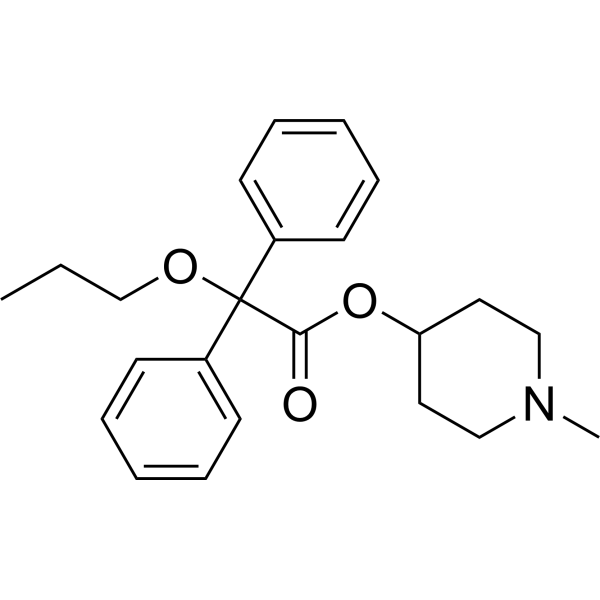
    Propiverine is a potent antimuscarinic agent. Propiverine inhibits cellular calcium influx, thereby diminishing muscle spasm. Propiverine has neurotropic and musculotropic effects on the urinary bladder smooth muscle. Propiverine can used for overactive bladder (OAB) research .
    Propiverine
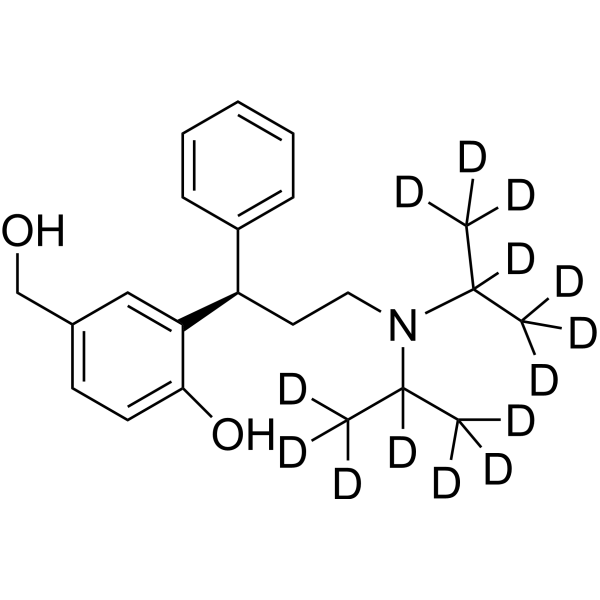
  • HY-76569S1

    PNU-200577-d14; 5-Hydroxymethyl Tolterodine-d14

    mAChR Isotope-Labeled Compounds Neurological Disease
    (R)-Hydroxytolterodine-d14 is deuterated labeled Desfesoterodine (HY-76569). Desfesoterodine (PNU-200577) is a potent and selective muscarinic receptor (mAChR) antagonist with a KB and a pA2 of 0.84 nM and 9.14, respectively . Desfesoterodine is a major pharmacologically active metabolite of Tolterodine (PNU-200583; HY-A0024) and Fesoterodine (HY-70053) . Desfesoterodine improves cerebral infarction induced detrusor overactivity in rats .
    (R)-Hydroxytolterodine-d14
  • HY-15574R

    SB-207266 (Standard)

    5-HT Receptor Reference Standards Cardiovascular Disease
    Piboserod (Standard) is the analytical standard of Piboserod. This product is intended for research and analytical applications. Piboserod is an orally available selective antagonist of the 5-HT4 receptor, with a Ki value of approximately 0.1 nM for human 5-HT4 receptors. Piboserod can competitively bind to the 5-HT4 receptor and block the activation of the 5-HT4 receptor. Piboserod can inhibit the enhancing effect of 5-HT on the nerve-mediated contraction response of the human bladder detrusor muscle. Piboserod is mainly used in the research of urinary system diseases (such as overactive bladder) and cardiovascular diseases (such as chronic heart failure) .
    Piboserod (Standard)
  • HY-182513

    Prostaglandin Receptor Others Inflammation/Immunology
    ONO-8539 is an orally active prostanoid EP1 receptor antagonist with competitive, insurmountable binding and slow receptor dissociation for long-duration inhibition. ONO-8539 modulates afferent nerve function related to bladder activity, inhibits detrusor overactivity-related contractions, decreases nonvoiding contractions and voiding duration, and increases uroflow rate with ATP (HY-B2176)-induced detrusor overactivity. ONO-8539 attenuates acid-induced heartburn symptoms, extends time to first heartburn sensation, and prevents primary hypersensitivity after distal esophageal acidification. ONO-8539 can be used for the research of overactive bladder and gastroesophageal reflux disease .
    ONO-8539
  • HY-14825

    SVT-40776

    mAChR Inflammation/Immunology
    Tarafenacin (SVT-40776) is an orally active, selective M3 muscarinic receptor (M3 muscarinic receptor) antagonist with 203-fold selectivity over the M2 muscarinic receptor. Tarafenacin does not affect atrial contraction, arterial blood pressure or arterial pressure at high doses. Tarafenacin can be used in the research of overactive bladder .
    Tarafenacin
  • HY-182599

    Calcium Channel mAChR Neurological Disease
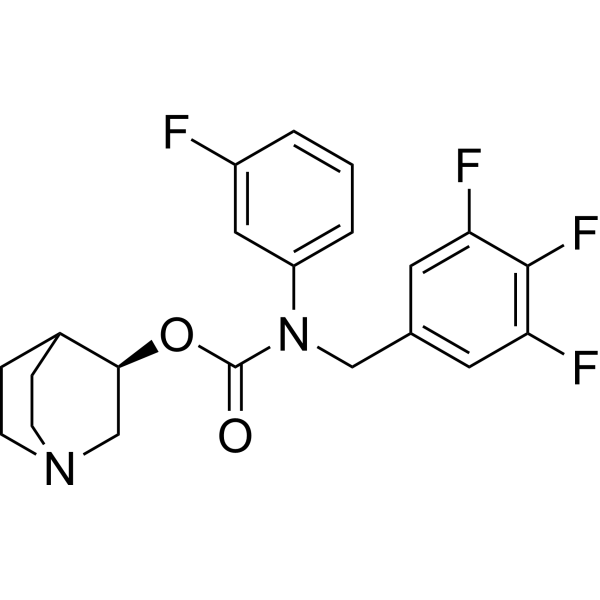
    RCC-36 hydrochloride is an L-type calcium channel inhibitor and competitive muscarinic receptor antagonist. RCC-36 hydrochloride inhibits L-type calcium currents in voltage- and concentration-dependent fashion with no effect on cardiac K + currents. RCC-36 hydrochloride suppresses maximum acetylcholine-induced contractile responses, inhibits detrusor muscle contractions induced by potassium chloride, calcium chloride, and electric field stimulation, including atropine-resistant contractions. RCC-36 hydrochloride can be used for the research of urinary frequency, urinary incontinence, and bladder overactivity .
    RCC-36 hydrochloride

Inquiry Online

Your information is safe with us. * Required Fields.

Salutation


Country or Region *

Applicant Name *


Organization Name *

Department *


Email Address *


Product Name *

Cat. No.


Requested quantity *

Phone Number *


Remarks

Inquiry Online

Inquiry Information

Product Name:
Cat. No.:
Quantity:
MCE Japan Authorized Agent:

