



Tarafenacin
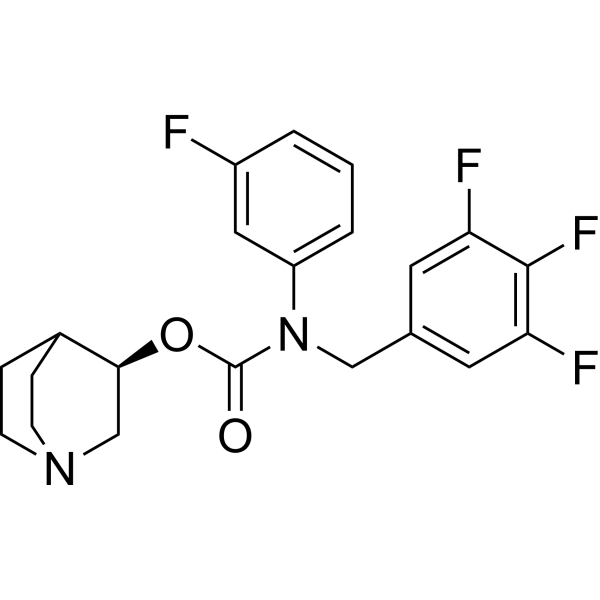
Tarafenacin (SVT-40776) is an orally active, selective M3 muscarinic receptor (M3 muscarinic receptor) antagonist with 203-fold selectivity over the M2 muscarinic receptor. Tarafenacin does not affect atrial contraction, arterial blood pressure or arterial pressure at high doses. Tarafenacin can be used in the research of overactive bladder.
Nos produits utilisent uniquement pour la recherche. Nous ne vendons pas aux patients.
- CAS No.: 385367-47-5
- Formule: C21H20F4N2O2
- Masse moléculaire:408.39
-
Stockage:
Please store the product under the recommended conditions in the Certificate of Analysis.

To place orders, for customer services and technical support, please contact: MedChemExpress USA
Tel: 609-228-6898 E-mail: [email protected] [email protected]


-
 Activité biologique
-
Chemical Information
- Pureté et documentation
- Références
-
 Help & FAQs


-
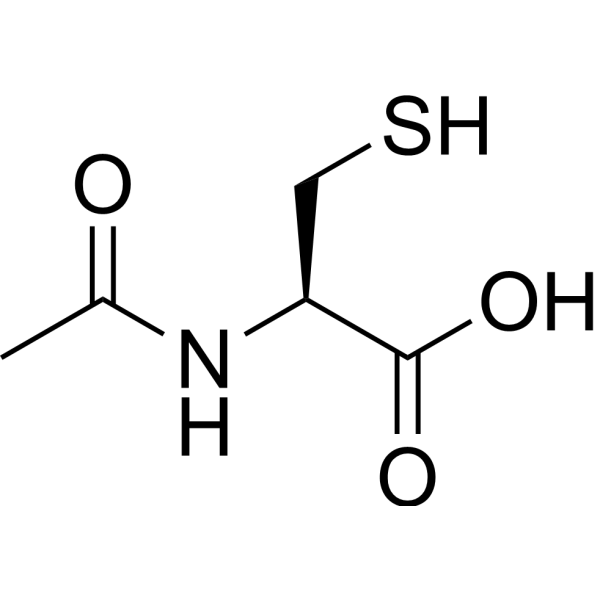
HY-B0215
AcetylcysteineMucolytic Agent -
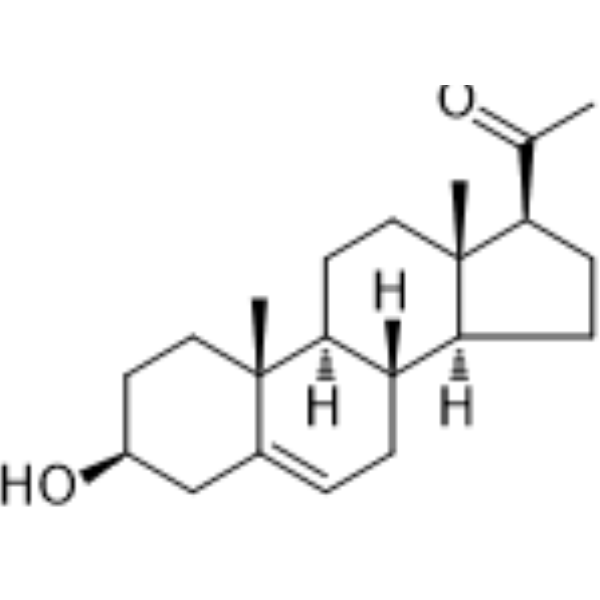
HY-B0151
PregnenoloneCB1 Inhibitor -
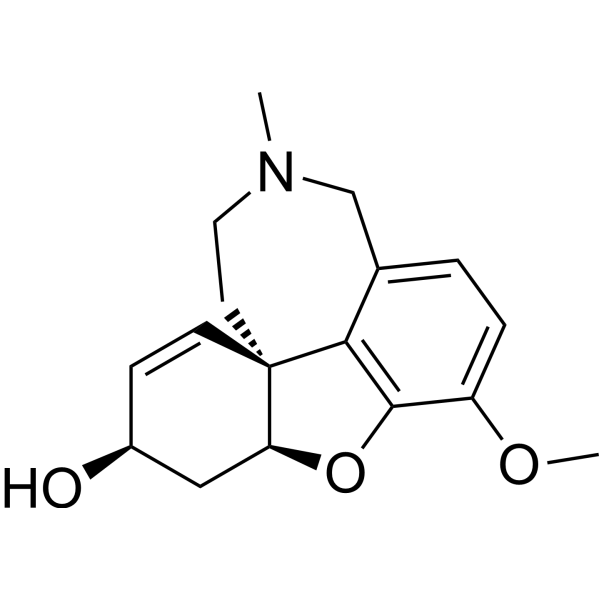
HY-76299
GalanthamineCholinesterase (ChE) Inhibitor -
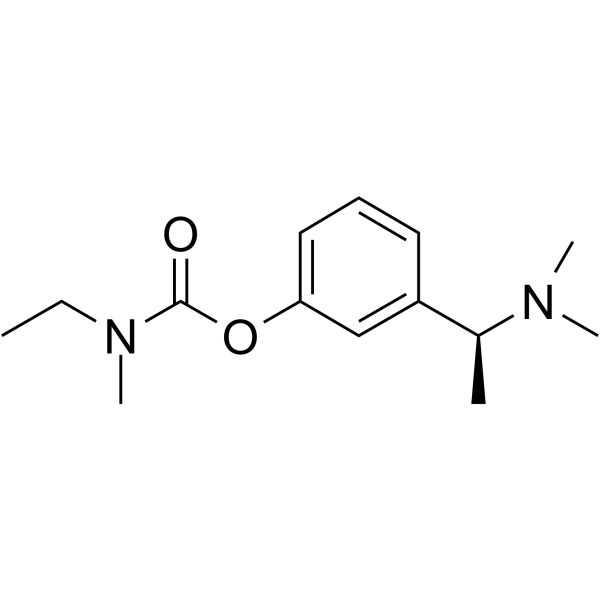
HY-17368
RivastigmineCholinesterase Inhibitor -

HY-B0215R
Acetylcysteine (Standard)Mucolytic Agent -
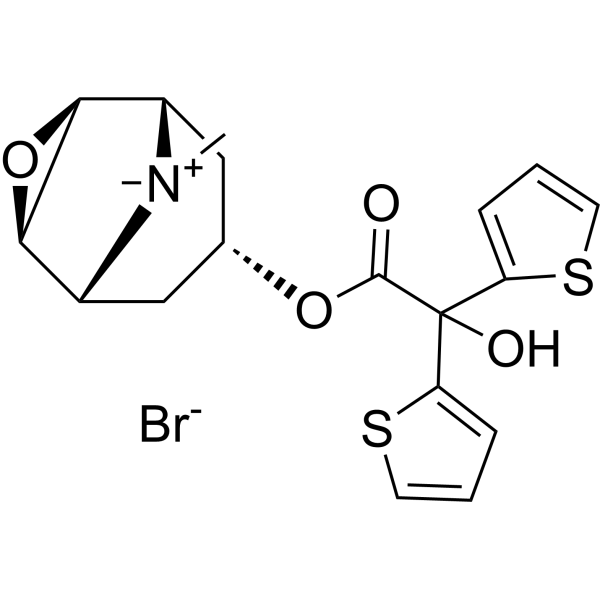
HY-17360
Tiotropium BromidemAChR Antagonist -
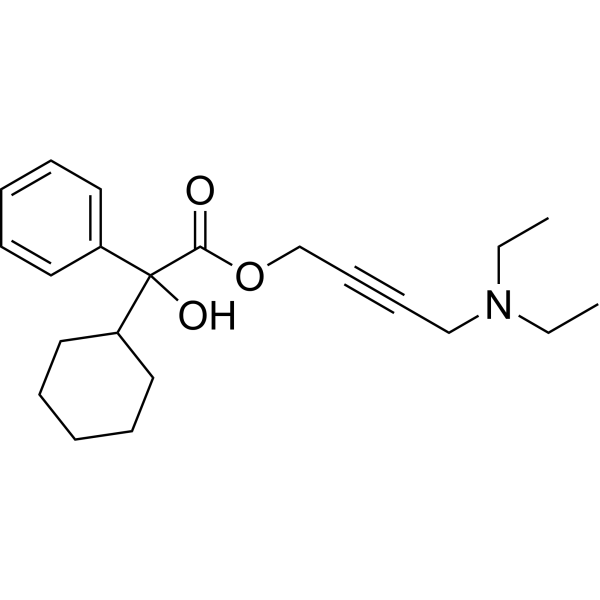
HY-B0267
OxybutyninmAChR Antagonist -
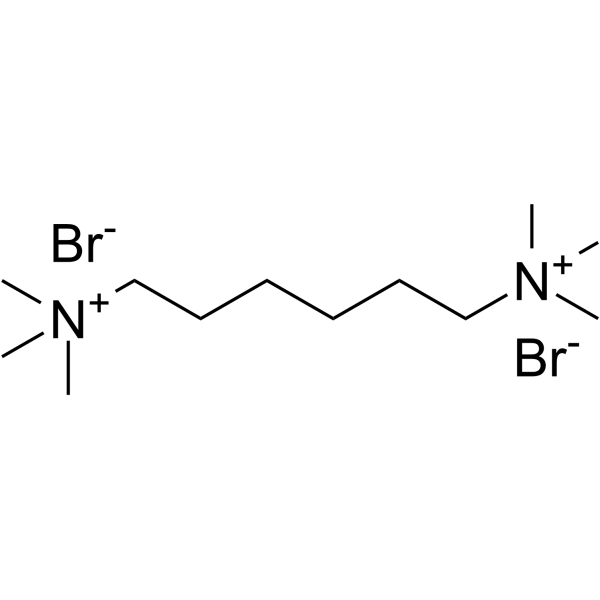
HY-B0569
Hexamethonium BromidenAChR Antagonist -
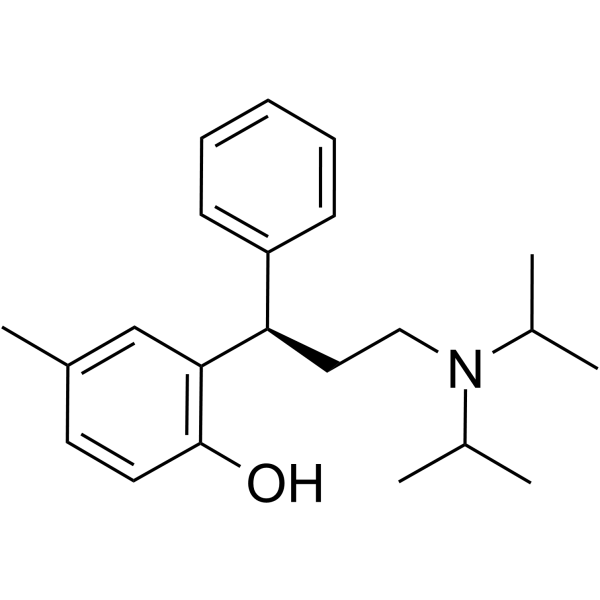
HY-A0024
TolterodinemAChR Inhibitor -
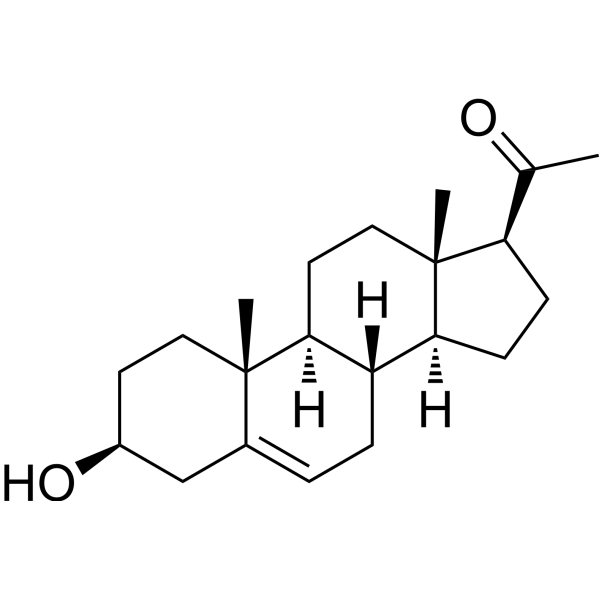
HY-B0151R
Pregnenolone (Standard) -
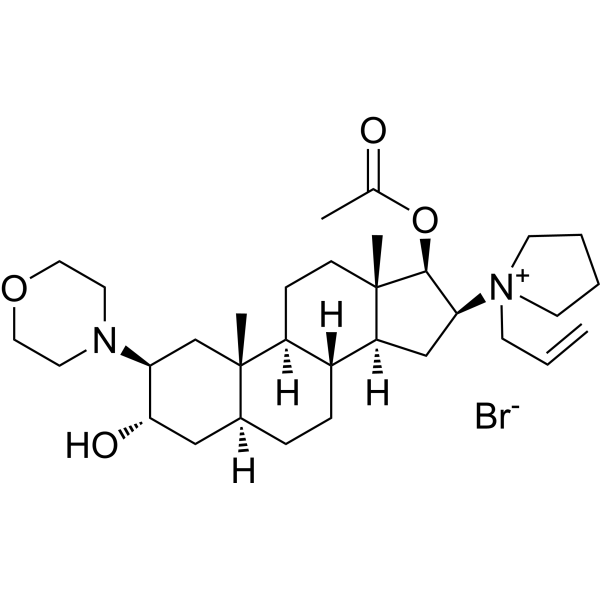
HY-17440
Rocuronium BromideMuscle Relaxant -
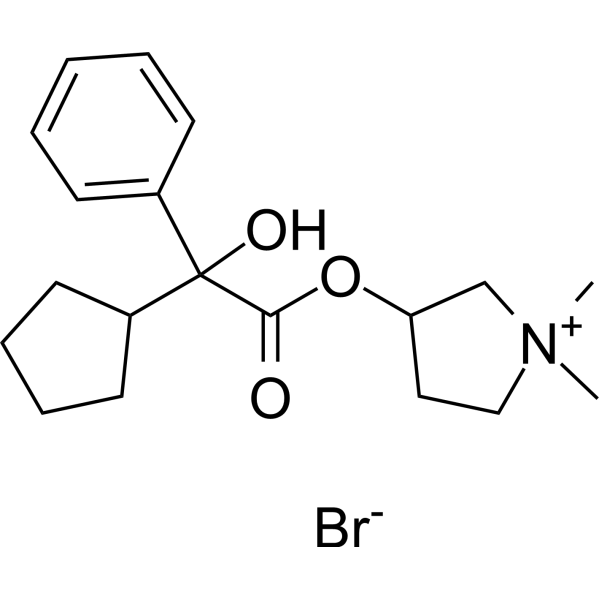
HY-17465
GlycopyrrolateMuscarinic Receptor Antagonist


Activité biologique
Description
IC50 & Target
|
mAChR3 0.19 nM (Ki) |
Cellular Effect
|
Cell Line

|
Type | Value | Description | References |
|---|---|---|---|---|
| CHO-K1 | IC50 |
0.9 nM
Compound: 4q
|
Displacement of [3H]NMS from human muscarinic M1 receptor expressed in CHO-K1 cells after 1 hr by scintillation counting
Displacement of [3H]NMS from human muscarinic M1 receptor expressed in CHO-K1 cells after 1 hr by scintillation counting
|
[PMID: 21524581] |
| CHO-K1 | IC50 |
1.5 nM
Compound: 4q
|
Displacement of [3H]NMS from human muscarinic M3 receptor expressed in CHO-K1 cells after 1 hr by scintillation counting
Displacement of [3H]NMS from human muscarinic M3 receptor expressed in CHO-K1 cells after 1 hr by scintillation counting
|
[PMID: 21524581] |
| CHO-K1 | IC50 |
97.3 nM
Compound: 4q
|
Displacement of [3H]NMS from human muscarinic M2 receptor expressed in CHO-K1 cells after 1 hr by scintillation counting
Displacement of [3H]NMS from human muscarinic M2 receptor expressed in CHO-K1 cells after 1 hr by scintillation counting
|
[PMID: 21524581] |
In Vitro
Tarafenacin (3-1000 nmol/L; 60 min) potently inhibits carbachol-induced contractions in mouse isolated urinary bladder detrusor smooth muscle[1].
Tarafenacin (0.1-10 μmol/L; 60 min) inhibits Carbachol (HY-B1208)-induced negative chronotropism in mouse isolated atrial tissue, exhibiting a 199-fold functional selectivity for mouse urinary bladder over atrial tissue[1].
Tarafenacin (20 min) potently inhibits Carbachol-induced inositol phosphate accumulation in mouse bladder smooth muscle with a Ki of 0.19 nM, and shows 23-fold greater selectivity over mouse salivary glands[2].
MedChemExpress (MCE) has not independently confirmed the accuracy of these methods. They are for reference only. .
In Vivo
MedChemExpress (MCE) has not independently confirmed the accuracy of these methods. They are for reference only.
-
Animal Model:DH female guinea pigs (250-300 g)[1]
-
Dosage:1-3000 nmol/kg (Log dose)
-
Administration:i.v.; cumulative bolus; 15 min between doses
-
Result:Inhibited spontaneous bladder contractions in a dose-dependent manner, with an ED25 of 17.1 nmol/kg.
Did not affect arterial blood pressure at tested doses, resulting in a bladder versus vascular selectivity of more than 175-fold.
Essai clinique
| NCT Number | Sponsor | Condition | Start Date |
Phase
|
|---|---|---|---|---|
| NCT01329991 | Plexxikon| | 2011-05 | PHASE1 |


Chemical Information
-
CAS No. 385367-47-5
-
Masse moléculaire 408.39
-
Formule C21H20F4N2O2
-
SMILES
O=C(O[C@H]1CN2CCC1CC2)N(C3=CC=CC(F)=C3)CC4=CC(F)=C(F)C(F)=C4
-
Synonyms
SVT-40776
-
Livraison
Room temperature in continental US; may vary elsewhere.
-
Stockage
Please store the product under the recommended conditions in the Certificate of Analysis.


Pureté et documentation
Références
[1]. Salcedo C, et al. In vivo and in vitro pharmacological characterization of SVT-40776, a novel M3 muscarinic receptor antagonist, for the treatment of overactive bladder. Br J Pharmacol. 2009 Mar;156(5):807-17. [Content Brief]
[2]. Balsa D, et al. FUNCTIONAL BLADDER SELECTIVITY OF SVT-40776: A COMPARATIVE
[3]. Huang X, et al. Microscopic binding of M5 muscarinic acetylcholine receptor with antagonists by homology modeling, molecular docking, and molecular dynamics simulation. J Phys Chem B. 2012 Jan 12;116(1):532-41. [Content Brief]

Calculators
Concentration (start) × Volume (start) = Concentration (final) × Volume (final)


Tarafenacin Related Classifications
HY-14825 Related Classifications
 Powered by Bioz
Keywords
- Tarafenacin
- 385367-47-5
- SVT-40776
- SVT40776
- SVT 40776
- mAChR
- M3 muscarinic receptor
- detrusor contractile activity
- bladder smooth muscle
- M2 muscarinic receptors
- inositol phosphate accumulation
- overactive bladder syndrome
- urinary tissue
- human M5 mAChR
- salivary gland M3 receptors
- cardiac tissue
- Inhibitor
- inhibitor
- inhibit