



Flavoxate hydrochloride

Based on 1 Customer Validation
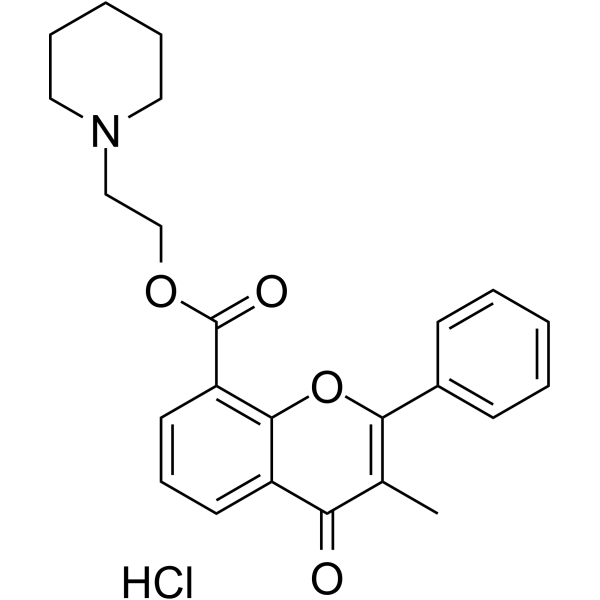
Flavoxate hydrochloride (Rec-7-0040; DW61) is an orally active L-type Ca2+ channel inhibitor and antispasmodic. Flavoxate hydrochloride inhibits cyclic adenosine monophosphate production by blocking voltage-dependent inward Ba2+ currents, regulating the brainstem micturition center, and stimulating G protein-coupled receptors. Consequently, Flavoxate hydrochloride induces relaxation of bladder smooth muscle and inhibits isovolumetric rhythmic contractions. Flavoxate hydrochloride effectively increases bladder capacity and alleviates symptoms of urgent urination frequency and pollakiuria caused by overactive bladder. Flavoxate hydrochloride can be used in research on overactive bladder and related voiding dysfunctions.
For research use only. We do not sell to patients.
- Purity : 99.70%
- CAS No.: 3717-88-2
- Formula: C24H26ClNO4
- Molecular Weight:427.92
-
Storage:
4°C, sealed storage, away from moisture
* In solvent : -80°C, 6 months; -20°C, 1 month (sealed storage, away from moisture)

To place orders, for customer services and technical support, please contact: MedChemExpress USA
Tel: 609-228-6898 E-mail: [email protected] [email protected]


-
 Biological Activity
-
Chemical Information
-
Solvent & Solubility
- Protocols
- Purity & Documentation
- References
-
 Help & FAQs


-
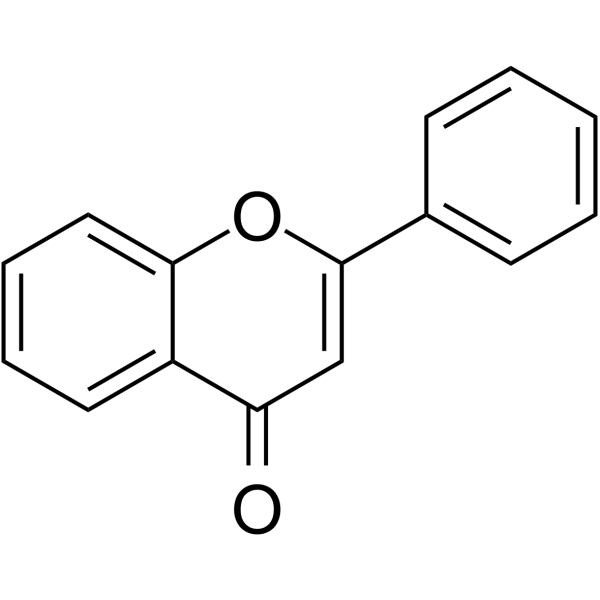
HY-N2424
FlavoneApoptosis Inducer -
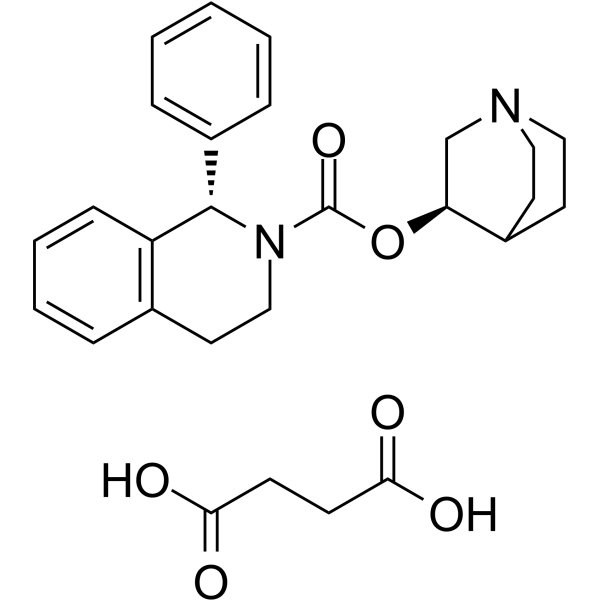
HY-A0002
Solifenacin SuccinateMuscarinic Receptor Antagonist -

HY-B0549AR
Flavoxate hydrochloride (Standard)PDE Inhibitor -
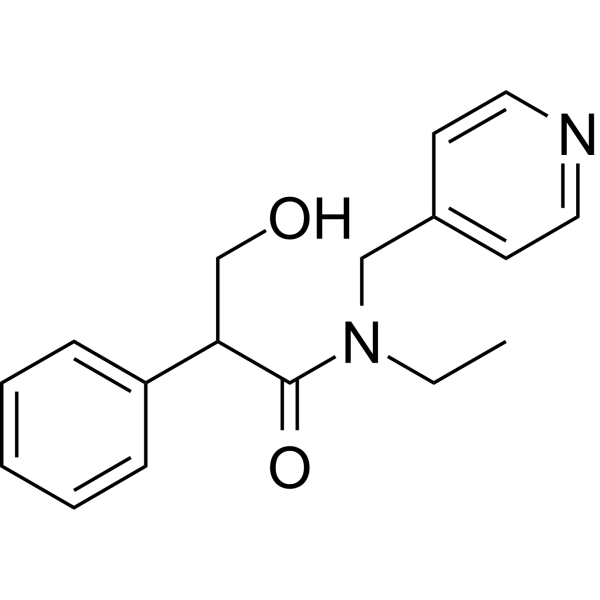
HY-B0321
TropicamidemAChR M4 Antagonist -
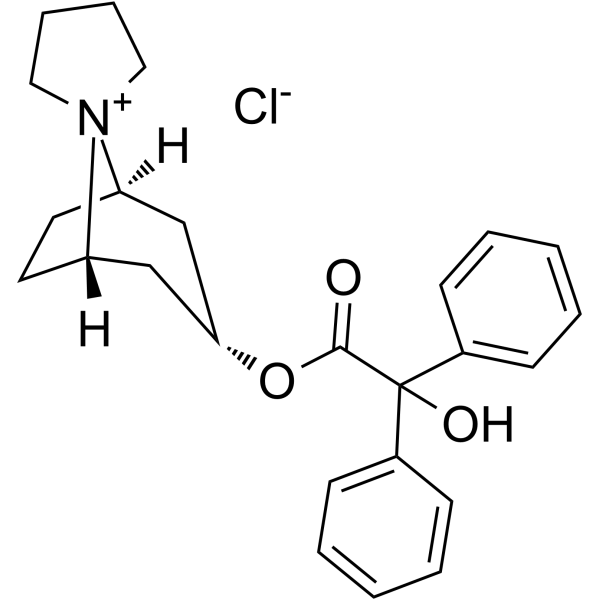
HY-B0461
Trospium chloridemAChR Inhibitor -
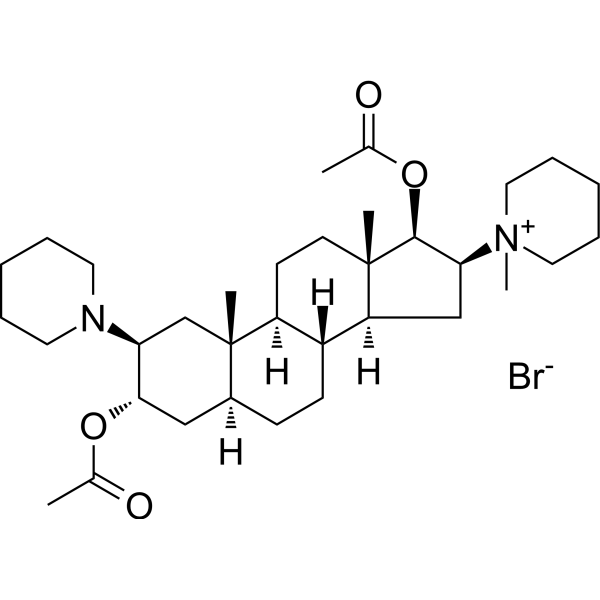
HY-B0118A
Vecuronium bromideNeuromuscular Blocking Agent -

HY-B0461R
Trospium chloride (Standard)mAChR Inhibitor -
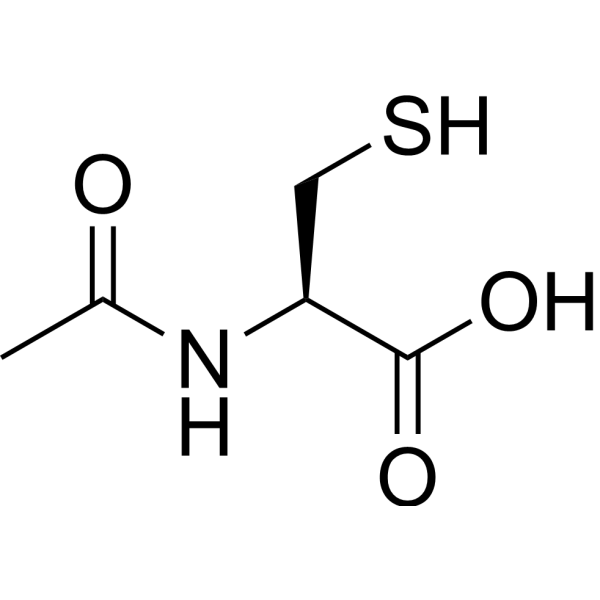
HY-B0215
AcetylcysteineMucolytic Agent -
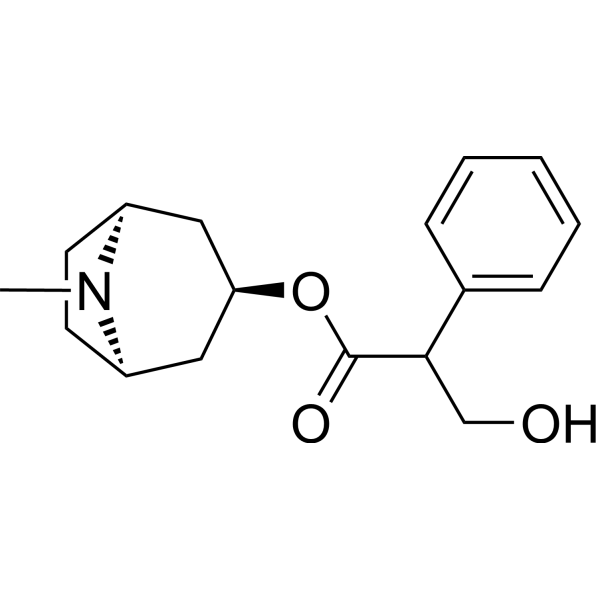
HY-B1205
AtropinemAChR Antagonist -
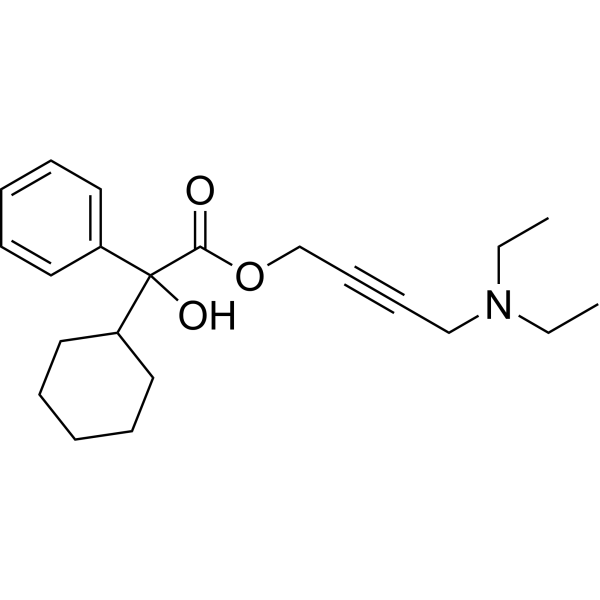
HY-B0267
OxybutyninmAChR Antagonist -
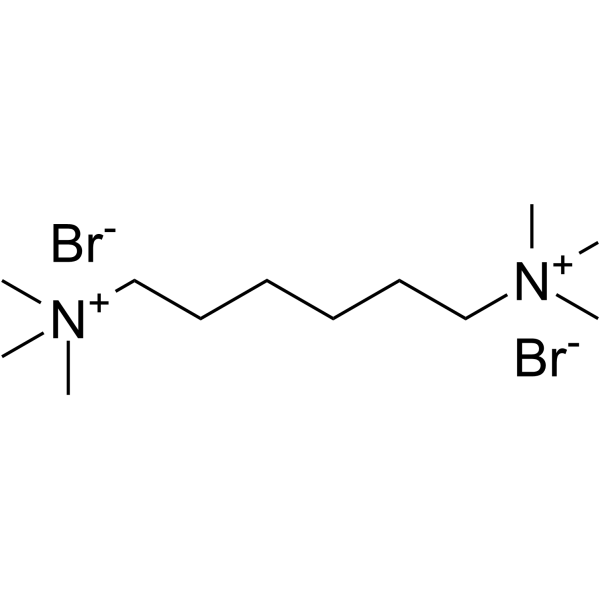
HY-B0569
Hexamethonium BromidenAChR Antagonist -
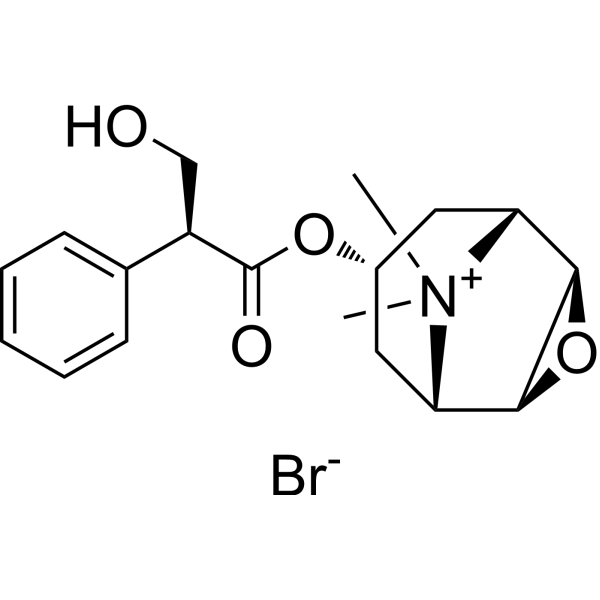
HY-B0344
Methscopolamine bromidemAChR Antagonist
All Calcium Channel Isoforms
MoreAll Adenosine Receptor Isoforms
MoreAll Dopamine Receptor Isoforms
MoreAll Adrenergic Receptor Isoforms
More

Biological Activity
Description
IC50 & Target
|
L-type calcium channel |
Cellular Effect
|
Cell Line

|
Type | Value | Description | References |
|---|---|---|---|---|
| KB | ED50 |
>100 μg/mL
Compound: NSC-114649
|
Cytotoxicity against human KB cells
Cytotoxicity against human KB cells
|
[PMID: 469554] |
In Vitro
Flavoxate hydrochloride (100 nM-30 μM) causes concentration-dependent relaxation of K+-precontracted human detrusor muscle strips, with an IC50 of 2 μM[1].
Flavoxate hydrochloride (10-30 μM; 5 minutes) inhibits voltage-dependent, nifedipine-sensitive Ba2+ currents (L-type Ca2+ channel currents) in freshly isolated human detrusor myocytes in a voltage- and concentration-dependent manner, with a Ki value of 10 μM at a holding potential of -60 mV and 56 μM at a holding potential of -90 mV[1].
Flavoxate hydrochloride (1-30 μM; 22°C, 30°C, 37°C) inhibits voltage-dependent inward Ba2+ currents through L-type Ca2+ channels in human detrusor muscle cells in a concentration-dependent and temperature-sensitive manner, with enhanced efficacy at higher temperatures (Ki=10.3 μM at 22°C, Ki=5.1 μM at 30°C, Ki=4.6 μM at 37°C), and shifts the steady-state inactivation curve leftward at 30°C[2].
Flavoxate hydrochloride (10-8-10-5 M; 15 min) concentration-dependently inhibits cAMP production in membrane preparations from rat striatum and cerebral cortex via pertussis toxin-sensitive G1-coupled receptors; its inhibitory effect at 10-6 M is completely reversed by combined treatment with any two of adenosine A1, dopamine D2, or adrenergic α2 receptor antagonists[3].
Flavoxate hydrochloride (10-8-10-4 M) binds to rat adenosine A1, adrenergic α2, dopamine D2, and muscarinic M2 receptors with Ki values in the micromolar to submicromolar range, but shows negligible affinity for many other neurotransmitter receptors[3].
MedChemExpress (MCE) has not independently confirmed the accuracy of these methods. They are for reference only. Further protocols information, click here.
In Vivo
MedChemExpress (MCE) has not independently confirmed the accuracy of these methods. They are for reference only.
-
Animal Model:Sprague-Dawley (female, 170-250 g, urethane-anesthetized, isovolumetric rhythmic bladder contractions induced by bladder distension)[3]
-
Dosage:3 mg/kg
-
Administration:i.v.; single dose
-
Result:Completely abolished rhythmic bladder contractions, increasing the maximal intercontraction interval from a baseline of 1.07 min to 7.20 min in vehicle-pretreated rats.
Failed to inhibit rhythmic bladder contractions, with the maximal intercontraction interval only increasing to 1.77 min from a baseline of 1.10 min in PTX-pretreated rats.


Chemical Information
-
CAS No. 3717-88-2
-
Appearance Solid
-
Molecular Weight 427.92
-
Formula C24H26ClNO4
-
Color White to off-white
-
SMILES
O=C(C1=C2C(C(C(C)=C(C3=CC=CC=C3)O2)=O)=CC=C1)OCCN4CCCCC4.Cl
-
Synonyms
Rec-7-0040; DW61
-
Shipping
Room temperature in continental US; may vary elsewhere.
-
Storage
4°C, sealed storage, away from moisture
* In solvent : -80°C, 6 months; -20°C, 1 month (sealed storage, away from moisture)


Solvent & Solubility
In Vitro:
H2O : 5 mg/mL (11.68 mM; Need ultrasonic)
DMSO : 3.33 mg/mL (7.78 mM; Need ultrasonic; Hygroscopic DMSO has a significant impact on the solubility of product, please use newly opened DMSO)
Please refer to the solubility information to select the appropriate solvent. Once prepared, please aliquot and store the solution to prevent product inactivation from repeated freeze-thaw cycles.
Storage method and period of stock solution: -80°C, 6 months; -20°C, 1 month (sealed storage, away from moisture). When stored at -80°C, please use it within 6 months. When stored at -20°C, please use it within 1 month.
* Note: If you choose water as the stock solution, please dilute it to the working solution, then filter and sterilize it with a 0.22 μm filter before use.
Please refer to the solubility information to select the appropriate solvent. Once prepared, please aliquot and store the solution to prevent product inactivation from repeated freeze-thaw cycles.
Storage method and period of stock solution: -80°C, 6 months; -20°C, 1 month (sealed storage, away from moisture). When stored at -80°C, please use it within 6 months. When stored at -20°C, please use it within 1 month.
* Note: If you choose water as the stock solution, please dilute it to the working solution, then filter and sterilize it with a 0.22 μm filter before use.
Concentration (start) × Volume (start) = Concentration (final) × Volume (final)

Protocols
-
Ca2+ Staining Technique
Ca2+ staining is an experimental technique that utilizes specific fluorescent probes (such as Fluo-4 AM, Fura-2, etc.) to qualitatively or quantitatively detect dynamic changes in intracellular Ca2+ concentrations; this is achieved by monitoring the changes in fluorescent signals generated when these probes bind to free intracellular calcium ions. The underlying principle relies primarily on the presence of chelating groups within the probe's molecular structure that possess high affinity for calcium ions.


Purity & Documentation
-
Data Sheet (278 KB)
-
SDS (393 KB)
- English - EN (393 KB)
- Français - FR (393 KB)
- Deutsch - DE (393 KB)
- Norwegian - NO (393 KB)
- Español - ES (393 KB)
- Swedish - SV (393 KB)
- Italian - IT (393 KB)
- Korean - KR (393 KB)
- Portuguese - PT (393 KB)
-
Handling Instructions (2659 KB)
References
[1]. Tomoda T, et al. The effects of flavoxate hydrochloride on voltage-dependent L-type Ca2+ currents in human urinary bladder. Br J Pharmacol. 2005;146(1):25-32. [Content Brief]
[2]. Tomoda T, et al. Effects of flavoxate hydrochloride on voltage-dependent Ba2+ currents in human detrusor myocytes at different experimental temperatures. Naunyn Schmiedebergs Arch Pharmacol. 2007;376(3):195-203. [Content Brief]
[3]. Oka M, et al. Brain pertussis toxin-sensitive G proteins are involved in the flavoxate hydrochloride-induced suppression of the micturition reflex in rats. Brain Res. 1996;727(1-2):91-98. [Content Brief]


Complete Stock Solution Preparation Table
Please refer to the solubility information to select the appropriate solvent. Once prepared, please aliquot and store the solution to prevent product inactivation from repeated freeze-thaw cycles.
Storage method and period of stock solution: -80°C, 6 months; -20°C, 1 month (sealed storage, away from moisture). When stored at -80°C, please use it within 6 months. When stored at -20°C, please use it within 1 month.
| Optional Solvent | Concentration Solvent Mass | 1 mg | 5 mg | 10 mg | 25 mg |
|---|---|---|---|---|---|
| DMSO / H2O | 1 mM | 2.3369 mL | 11.6844 mL | 23.3689 mL | 58.4221 mL |
| 5 mM | 0.4674 mL | 2.3369 mL | 4.6738 mL | 11.6844 mL | |
| H2O | 10 mM | 0.2337 mL | 1.1684 mL | 2.3369 mL | 5.8422 mL |
* Note: If you choose water as the stock solution, please dilute it to the working solution, then filter and sterilize it with a 0.22 μm filter before use.


Flavoxate hydrochloride Related Classifications
HY-B0549A Related Classifications
 Powered by Bioz
Keywords
- Flavoxate
- 3717-88-2
- Rec-7-0040
- DW61
- DW61
- DW 61
- DW-61
- Calcium Channel
- Adenosine Receptor
- mAChR
- Dopamine Receptor
- Adrenergic Receptor
- human urinary bladder smooth muscle
- dopamine D 2 receptors
- L-type Ca 2+ channel
- adenosine A 1 receptors
- human detrusor myocytes
- adrenergic α 2 receptors
- rat isovolumetric rhythmic bladder contractions
- muscarinic M 2 receptors
- overactive bladder
- pertussis toxin-sensitive G proteins
- Inhibitor
- inhibitor
- inhibit