



Oxybutynin

Based on 1 Customer Validation
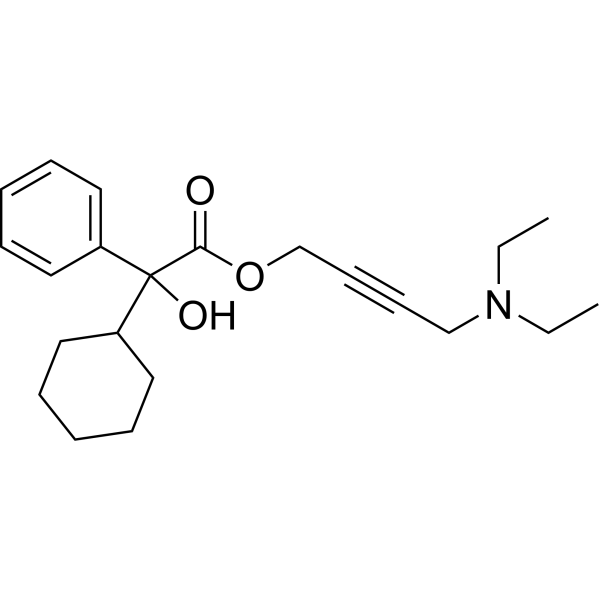
Oxybutynin is an anticholinergic agent, which inhibits vascular Kv channels in a concentration-dependent manner, with an IC50 of 11.51 μM. Oxybutynin is a click chemistry reagent, it contains an Alkyne group and can undergo copper-catalyzed azide-alkyne cycloaddition (CuAAc) with molecules containing Azide groups.
Nur für Forschungszwecke. Wir verkaufen nicht an Patienten.
- Reinheit : 99.86%
- CAS. Nr.: 5633-20-5
- Formel: C22H31NO3
- Molecular Weight:357.49
-
Speicherung:Powder -20°C, 3 years , 4°C, 2 years ; In solvent -80°C, 2 years , -20°C, 1 year

To place orders, for customer services and technical support, please contact: MedChemExpress USA
Tel: 609-228-6898 E-mail: [email protected] [email protected]


-
 Biologische Aktivität
-
Chemical Information
-
Lösungsmittel & Löslichkeit
- Protokoll
- Reinheit & Dokumentation
- Verweise
-
 Help & FAQs


-
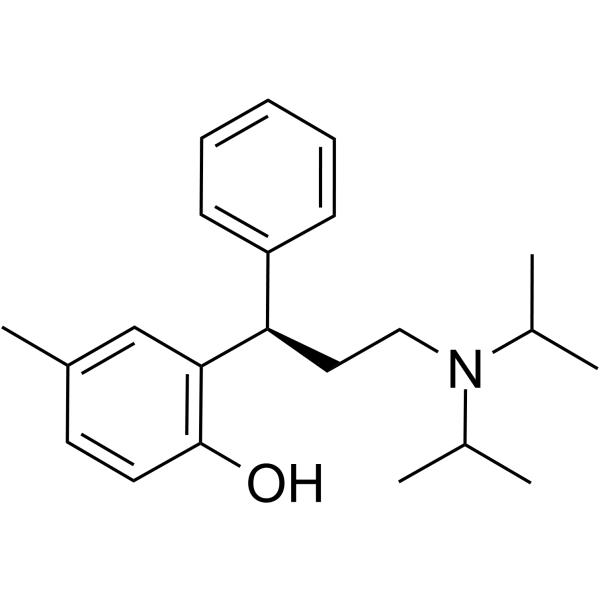
HY-A0024
TolterodinemAChR Inhibitor -
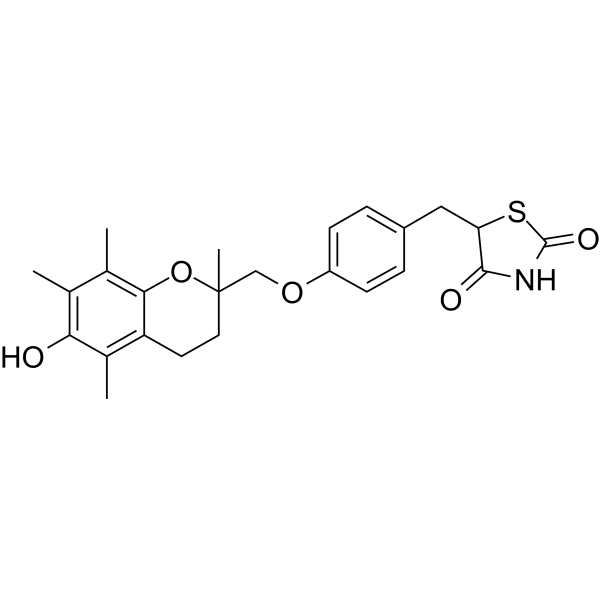
HY-50935
TroglitazonePPARγ Agonist -
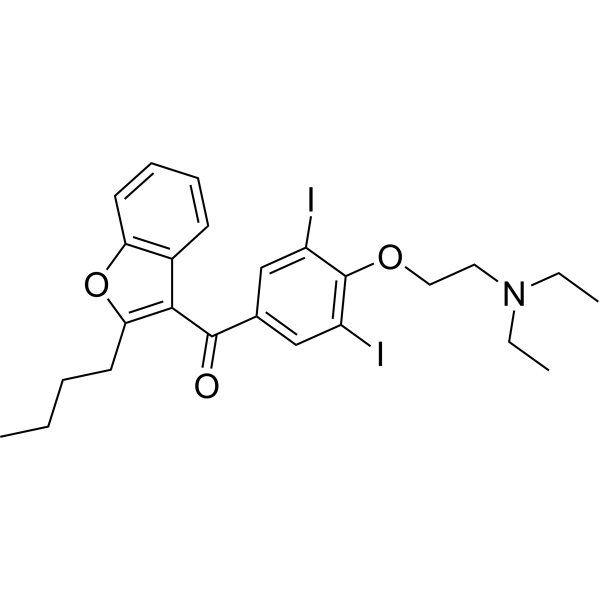
HY-14187
AmiodaroneAntiarrhythmic Compound -
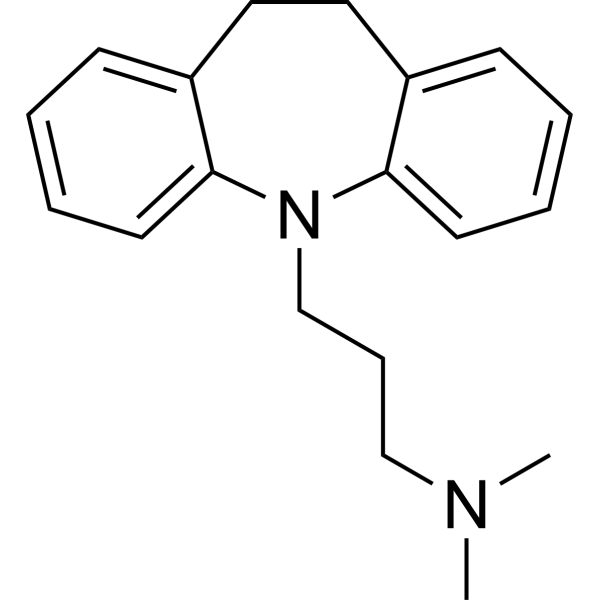
HY-B1490A
ImipramineAntidepressant -
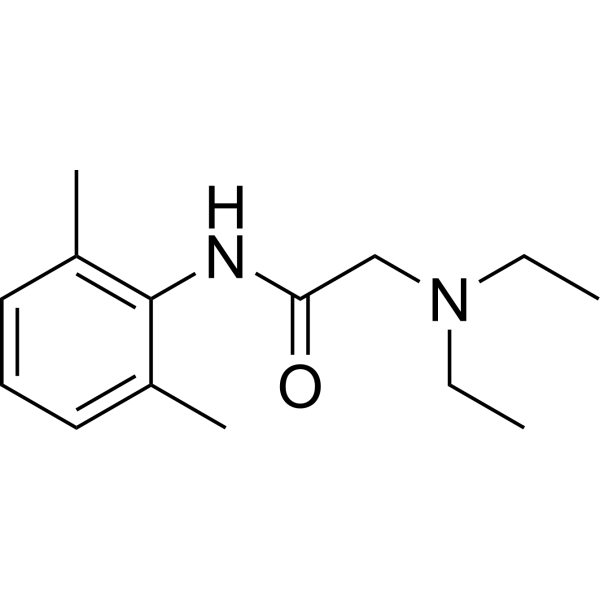
HY-B0185
LidocaineNa+ Channel Blocker -
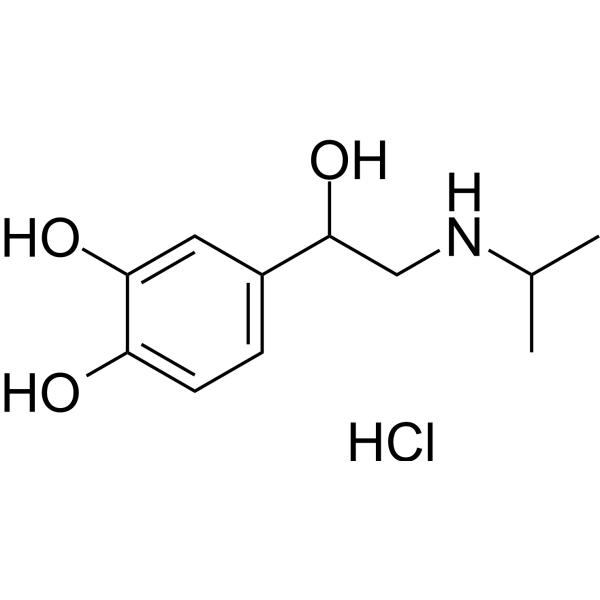
HY-B0468
Isoprenaline hydrochlorideβ-adrenoceptor Agonist -
HY-B0303
DiphenhydramineAntihistamine -
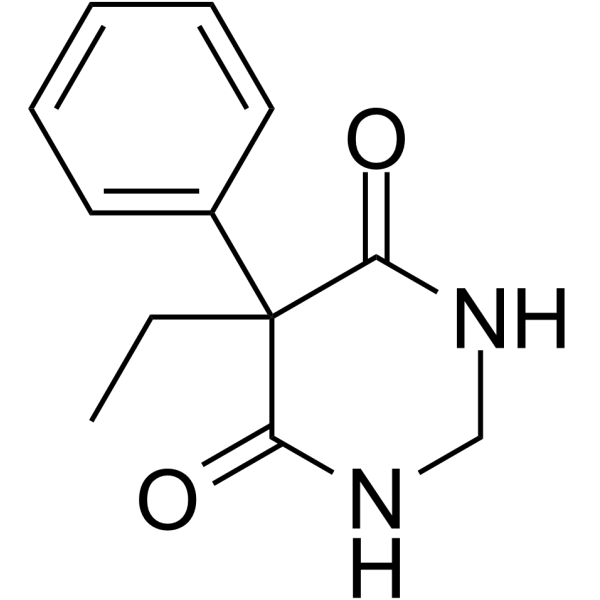
HY-B0339
PrimidoneTRPM3 Inhibitor -
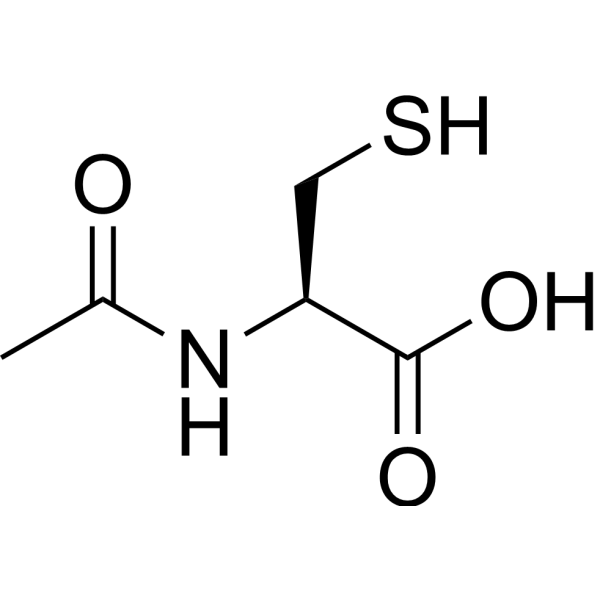
HY-B0215
AcetylcysteineMucolytic Agent -

HY-B0267R
Oxybutynin (Standard)mAChR Antagonist -
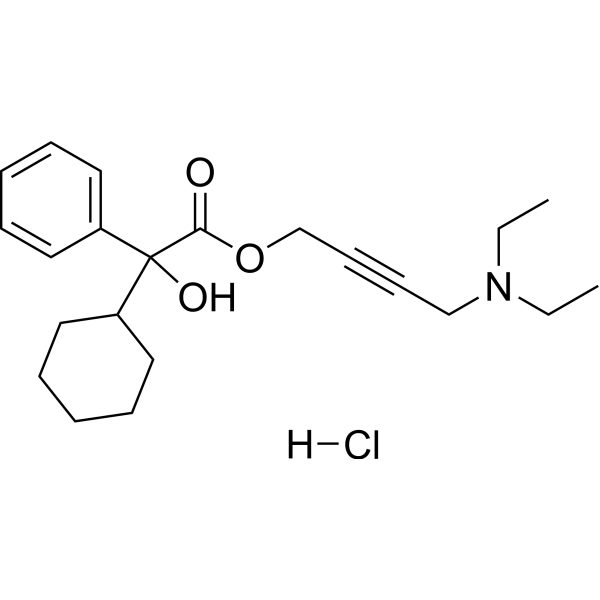
HY-B0267A
Oxybutynin chloridemAChR Antagonist -
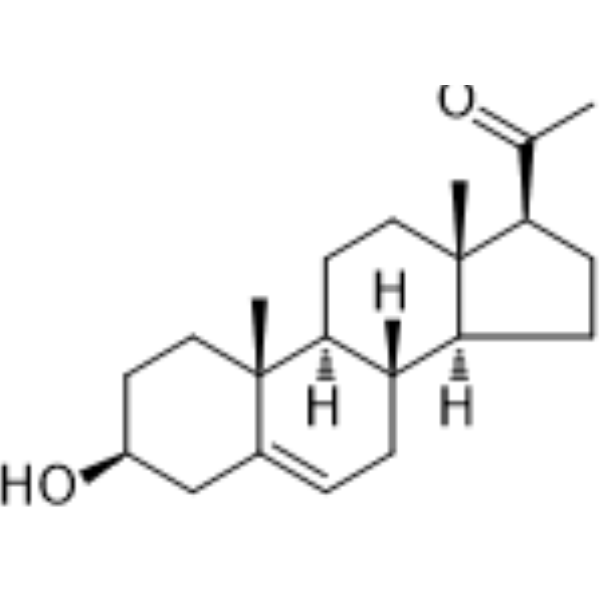
HY-B0151
PregnenoloneCB1 Inhibitor


Biologische Aktivität
Beschreibung
Cellular Effect
|
Cell Line

|
Type | Value | Description | References |
|---|---|---|---|---|
| Ventricular myocyte | IC50 |
16.1 μM
Compound: Oxybutynin
|
Inhibition of L-type calcium channel measured using whole-cell patch clamp in guinea pig ventricular myocytes
Inhibition of L-type calcium channel measured using whole-cell patch clamp in guinea pig ventricular myocytes
|
[PMID: 22761000] |
In Vitro
Oxybutynin (0.1, 0.3, 1, 3, 10, 30, 100 μM; 200 ms) inhibits vascular Kv channels in a concentration-dependent manner independent of anticholinergic effect in coronary arterial smooth muscle cells[1].
MedChemExpress (MCE) has not independently confirmed the accuracy of these methods. They are for reference only.
-
Cell Line:Coronary arterial smooth muscle cells (from male New Zealand White rabbits)
-
Concentration:10 μM
-
Incubation Time:200 ms
-
Result:Rapidly inhibited the Kv current within 2 min and reduced the Kv current by 44% at +60 Mv.
Inhibited the Kv current by changing the gating properties of Kv channels.
-
Cell Line:Coronary arterial smooth muscle cells (from male New Zealand White rabbits)
-
Concentration:0.1, 0.3, 1, 3, 10, 30, 100 μM
-
Incubation Time:200 ms
-
Result:Reduced the Kv current amplitude in a concentration-dependent manner, with an IC50 value of 11.51 μM.
In Vivo
MedChemExpress (MCE) has not independently confirmed the accuracy of these methods. They are for reference only.
-
Animal Model:Male ddY strain mice (9 to 13-week-old)[2].
-
Dosage:27.2 mg/kg (76.1 µmol/kg)
-
Administration:Oral administration; single.
-
Result:Significant increased Kd values for specific [3H]NMS binding in mouse bladder with values of 54.7% and 40.6% when at 0.5 and 2 hours, respectively.
Significant increased Kd values for specific [3H]NMS binding in mouse cerebral cortex with values of 120% and 71.2% when at 0.5 and 2 hours, respectively.


Chemical Information
-
CAS. Nr. 5633-20-5
-
Appearance Solid
-
Molecular Weight 357.49
-
Formel C22H31NO3
-
Color White to off-white
-
SMILES
O=C(C(O)(C1=CC=CC=C1)C2CCCCC2)OCC#CCN(CC)CC
-
Versand
Room temperature in continental US; may vary elsewhere.
-
Speicherung
Powder -20°C 3 years 4°C 2 years In solvent -80°C 2 years -20°C 1 year


Lösungsmittel & Löslichkeit
In Vitro:
DMSO : 100 mg/mL (279.73 mM; Need ultrasonic; Hygroscopic DMSO has a significant impact on the solubility of product, please use newly opened DMSO)
H2O : ≥ 50 mg/mL (139.86 mM)
* "≥" means soluble, but saturation unknown.
Please refer to the solubility information to select the appropriate solvent. Once prepared, please aliquot and store the solution to prevent product inactivation from repeated freeze-thaw cycles.
Storage method and period of stock solution: -80°C, 2 years; -20°C, 1 year. When stored at -80°C, please use it within 2 years. When stored at -20°C, please use it within 1 year.
* Note: If you choose water as the stock solution, please dilute it to the working solution, then filter and sterilize it with a 0.22 μm filter before use.
Please refer to the solubility information to select the appropriate solvent. Once prepared, please aliquot and store the solution to prevent product inactivation from repeated freeze-thaw cycles.
Storage method and period of stock solution: -80°C, 2 years; -20°C, 1 year. When stored at -80°C, please use it within 2 years. When stored at -20°C, please use it within 1 year.
* Note: If you choose water as the stock solution, please dilute it to the working solution, then filter and sterilize it with a 0.22 μm filter before use.
Konzentration (Stammlösung) × Volumen (Stammlösung) = Konzentration (Ziellösung) × Volumen (Ziellösung)
In Vivo:
Select the appropriate dissolution method based on your experimental animal and administration route.
- For the following dissolution methods, please ensure to first prepare a clear stock solution using an In Vitro approach and then sequentially add co-solvents:
- To ensure reliable experimental results, the clarified stock solution can be appropriately stored based on storage conditions. As for the working solution for In Vivo experiments, it is recommended to prepare freshly and use it on the same day.
- The percentages shown for the solvents indicate their volumetric ratio in the final prepared solution. If precipitation or phase separation occurs during preparation, heat and/or sonication can be used to aid dissolution.
Add each solvent one by one: 10% DMSO 40% PEG300 5% Tween-80 45% Saline
Solubility: 2.08 mg/mL (5.82 mM); Suspended solution; Need ultrasonic
This protocol yields a suspended solution of 2.08 mg/mL. Suspended solution can be used for oral and intraperitoneal injection.
Taking 1 mL working solution as an example, add 100 μL DMSO stock solution (20.8 mg/mL) to 400 μL PEG300, and mix evenly; then add 50 μL Tween-80 and mix evenly; then add 450 μL Saline to adjust the volume to 1 mL.
Preparation of Saline: Dissolve 0.9 g sodium chloride in ddH₂O and dilute to 100 mL to obtain a clear Saline solution.
Add each solvent one by one: 10% DMSO 90% (20% SBE-β-CD in Saline)
Solubility: ≥ 2.08 mg/mL (5.82 mM); Clear solution
This protocol yields a clear solution of ≥ 2.08 mg/mL (saturation unknown).
Taking 1 mL working solution as an example, add 100 μL DMSO stock solution (20.8 mg/mL) to 900 μL 20% SBE-β-CD in Saline, and mix evenly.
Preparation of 20% SBE-β-CD in Saline (4°C, storage for one week): 2 g SBE-β-CD powder is dissolved in 10 mL Saline, completely dissolve until clear.
In Vivo Dissolution Calculator
Please enter the basic information of animal experiments:
-
-
-
-
Recommended: Prepare an additional quantity of animals to account for potential losses during experiments.
Working solution concentration: 0.22 mg/mL
This product has good water solubility, please refer to the measured solubility data in water/PBS/Saline for details.


Reinheit & Dokumentation
-
Data Sheet (276 KB)
-
SDS (396 KB)
- English - EN (396 KB)
- Français - FR (396 KB)
- Deutsch - DE (396 KB)
- Norwegian - NO (396 KB)
- Español - ES (396 KB)
- Swedish - SV (396 KB)
- Italian - IT (396 KB)
- Korean - KR (396 KB)
- Portuguese - PT (396 KB)
-
Handling Instructions (2659 KB)
Verweise
[1]. Li H, et al. The anticholinergic drug oxybutynin inhibits voltage-dependent K+ channels in coronary arterial smooth muscle cells. Clin Exp Pharmacol Physiol. 2019 Nov;46(11):1030-1036. [Content Brief]
[2]. Oki T, et al. Comparative evaluation of central muscarinic receptor binding activity by oxybutynin, tolterodine and darifenacin used to treat overactive bladder. J Urol. 2007 Feb;177(2):766-70. [Content Brief]


Complete Stock Solution Preparation Table
Please refer to the solubility information to select the appropriate solvent. Once prepared, please aliquot and store the solution to prevent product inactivation from repeated freeze-thaw cycles.
Storage method and period of stock solution: -80°C, 2 years; -20°C, 1 year. When stored at -80°C, please use it within 2 years. When stored at -20°C, please use it within 1 year.
| Optional Solvent | Concentration Solvent Mass | 1 mg | 5 mg | 10 mg | 25 mg |
|---|---|---|---|---|---|
| H2O / DMSO | 1 mM | 2.7973 mL | 13.9864 mL | 27.9728 mL | 69.9320 mL |
| 5 mM | 0.5595 mL | 2.7973 mL | 5.5946 mL | 13.9864 mL | |
| 10 mM | 0.2797 mL | 1.3986 mL | 2.7973 mL | 6.9932 mL | |
| 15 mM | 0.1865 mL | 0.9324 mL | 1.8649 mL | 4.6621 mL | |
| 20 mM | 0.1399 mL | 0.6993 mL | 1.3986 mL | 3.4966 mL | |
| 25 mM | 0.1119 mL | 0.5595 mL | 1.1189 mL | 2.7973 mL | |
| 30 mM | 0.0932 mL | 0.4662 mL | 0.9324 mL | 2.3311 mL | |
| 40 mM | 0.0699 mL | 0.3497 mL | 0.6993 mL | 1.7483 mL | |
| 50 mM | 0.0559 mL | 0.2797 mL | 0.5595 mL | 1.3986 mL | |
| 60 mM | 0.0466 mL | 0.2331 mL | 0.4662 mL | 1.1655 mL | |
| 80 mM | 0.0350 mL | 0.1748 mL | 0.3497 mL | 0.8742 mL | |
| 100 mM | 0.0280 mL | 0.1399 mL | 0.2797 mL | 0.6993 mL |
* Note: If you choose water as the stock solution, please dilute it to the working solution, then filter and sterilize it with a 0.22 μm filter before use.


Oxybutynin Related Classifications
HY-B0267 Related Classifications
 Powered by Bioz