Search Result
Results for "
primary alcohols
" in MedChemExpress (MCE) Product Catalog:
1
Biochemical Assay Reagents
7
Isotope-Labeled Compounds
| Cat. No. |
Product Name |
Target |
Research Areas |
Chemical Structure |
-
- HY-W001187
-
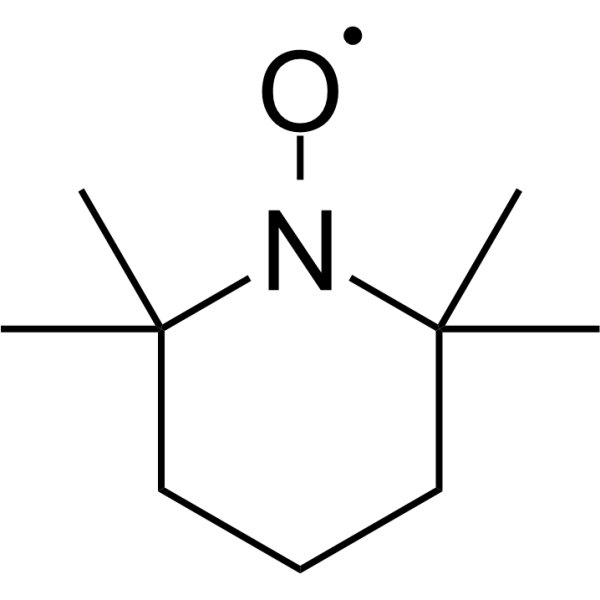
Tempo
Maximum Cited Publications
13 Publications Verification
|
Mitochondrial Metabolism
DNA/RNA Synthesis
Reactive Oxygen Species (ROS)
|
Cancer
|
|
Tempo is a nitric oxide radical and a selective scavenger of ROS in mitochondria. Tempo is also an organocatalyst that disproportionates superoxide and oxidizes primary alcohols to aldehydes in a catalytic cycle. Tempo has mutagenic and antioxidant effects and can induceDNA strand breaks. Tempo also exerts cytotoxic and mutagenic properties in mouse lymphoma cells .
|
-
-
- HY-W032022
-
-
-
- HY-134094
-
-
-
- HY-107744
-
-
-
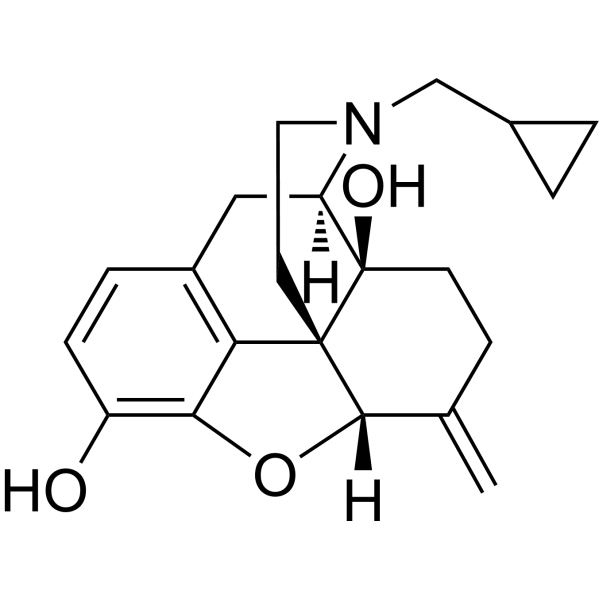
- HY-N6662
-
-
-
- HY-W002199
-
|
6:2 FTOH; 1H,1H,2H,2H-Perfluoro-1-octanol; 2-(Perfluorohexyl)ethanol
|
Bacterial
Apoptosis
ERK
TNF Receptor
|
Infection
Neurological Disease
|
|
6:2 Fluorotelomer alcohol (6:2 FTOH) is an orally active, blood-brain barrier-permeable modulator of cyclin D1 and ETS1. 6:2 Fluorotelomer alcohol downregulates cyclin D1 expression, upregulates ETS1 via the TNF-α/ERK 1/2 pathway, impairs mitochondrial membrane potential and respiratory function, increases reactive oxygen species levels, disrupts calcium homeostasis and activates endoplasmic reticulum stress markers, and induces cell proliferation inhibition and endothelial-mesenchymal transition. Furthermore, 6:2 Fluorotelomer alcohol induces morphological abnormalities in zebrafish embryos and liver developmental damage, while disrupting the brain immune microenvironment in mice, causing systemic toxicity and delayed pup maturation in CD-1 mice. 6:2 Fluorotelomer alcohol also induces cortical neuron apoptosis, glial cell activation, synaptic abnormalities, colonic barrier damage, intestinal dysbiosis and autism spectrum disorder-like symptoms in mice. 6:2 Fluorotelomer alcohol shows no mutagenic, clastogenic, primary skin/eye irritation or skin sensitizing effects, exhibits no selective reproductive toxicity in CD-1 mice, and is classified as GHS Category 4 for acute oral toxicity. 6:2 Fluorotelomer alcohol can be used in studies of neurodevelopmental disorders and autism spectrum disorders .
|
-
-
- HY-N1867
-
|
|
PPAR
|
Metabolic Disease
|
|
trans-Cinnamyl alcohol is a trans-isomer of Cinnamyl alcohol. Cinnamyl Alcohol is an active component from chestnut flower, inhibits increased PPARγ expression, with anti-obesity activity. trans-Cinnamyl alcohol, belongs to the class of organic compounds known as cinnamyl alcohols, is a primary metabolite .
|
-
-
- HY-P2910
-
|
GOase
|
Endogenous Metabolite
|
Others
|
|
Galactose Oxidase, Dactylium dendroides (GOase) from fungus is often used in biochemical studies. Galactose oxidase is a type II copper metalloenzyme, and it containing a single polypeptide. Galactose oxidase catalyzes two-electron oxidation of primary alcohols to their corresponding aldehydes, coupling with the reduction of dioxygen to hydrogen peroxide .
|
-
-
- HY-W142618
-
|
|
Biochemical Assay Reagents
|
Others
|
|
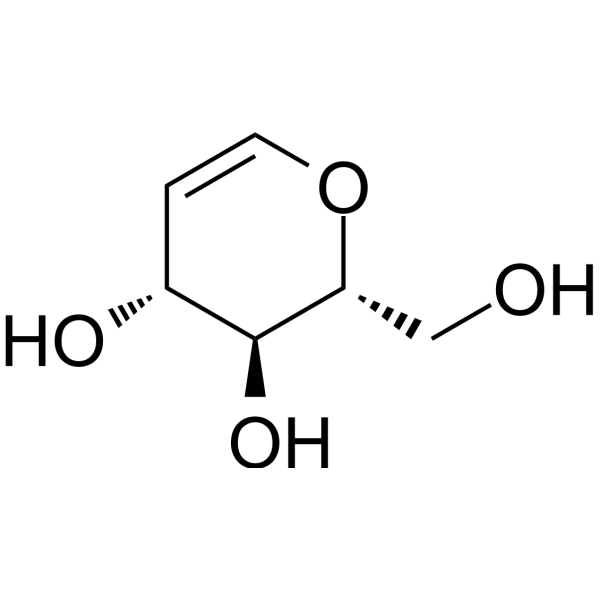
D-Glucal is an organic compound belonging to the family of aldoses, which are monosaccharides containing an aldehyde functional group. It has a six-carbon structure and is derived from glucose by oxidation of the primary alcohol group at carbon 1 to an aldehyde group. D-Glucal is a white crystalline solid that is soluble in water and has a sweet taste. It is an important intermediate in the chemical synthesis of a wide variety of compounds, including pharmaceuticals, agrochemicals, and natural products. D-Glucal can be converted into other carbohydrate derivatives such as glycosides, glycoconjugates and amino sugars. It also plays a role in the study of carbohydrate chemistry, where it is used as a chiral building block for the synthesis of complex structures.
|
-
-
- HY-W019095
-
-
-
- HY-134094R
-
|
|
Herbicide
Reference Standards
|
Inflammation/Immunology
|
|
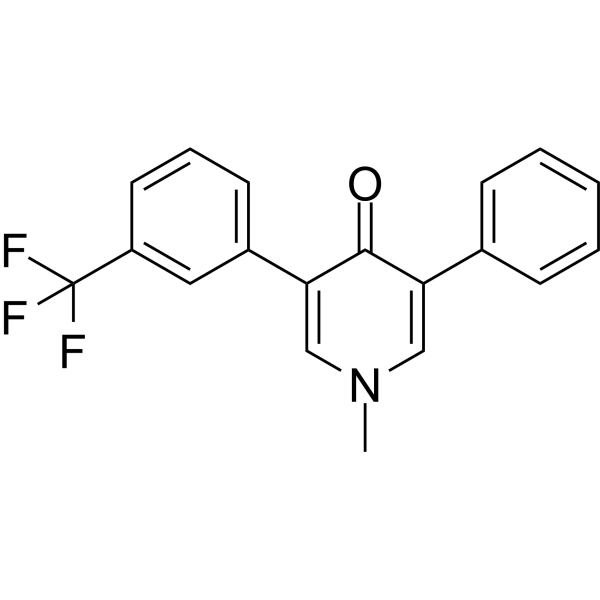
Fluridone (Standard) is the analytical standard of Fluridone. This product is intended for research and analytical applications. Fluridone is a herbicide, particularly to eliminate aquatic plant growth in water reservoirs and irrigation channels. Fluridone is a potent Abscisic acid (ABA) biosynthesis inhibitor, and has anti-inflammatory effects .
|
-
-
- HY-W032022S
-
|
|
Isotope-Labeled Compounds
Mitochondrial Metabolism
|
Others
|
|
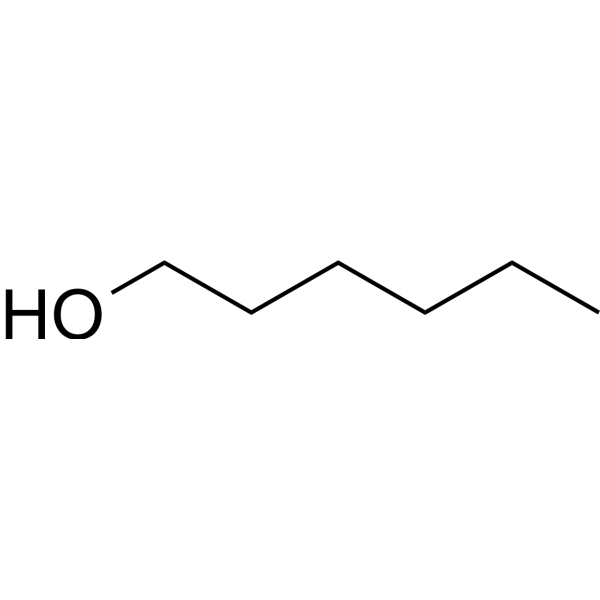
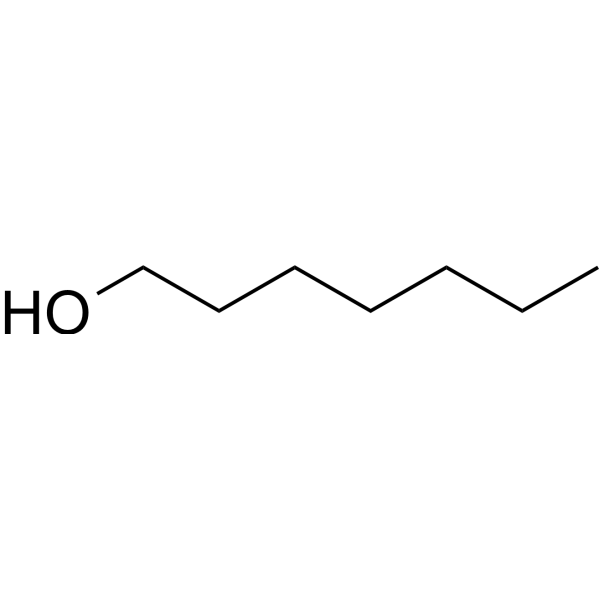
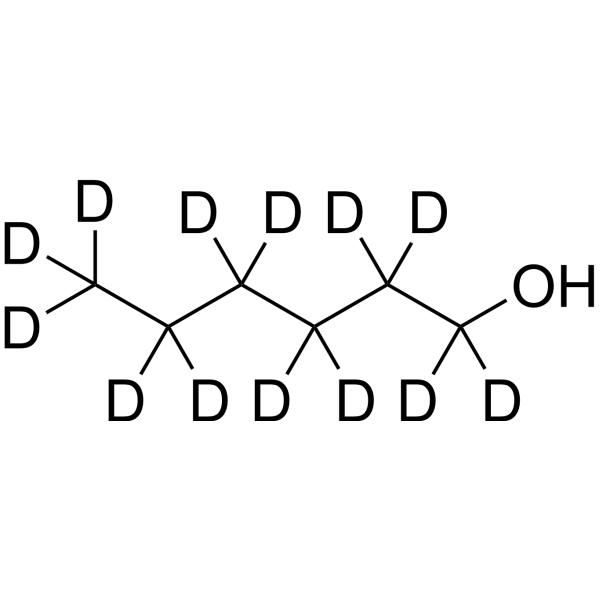
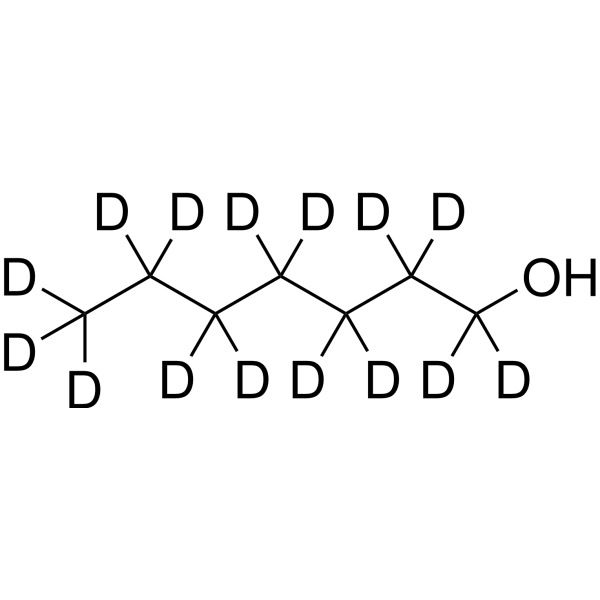
1-Hexanol-d13 is the deuterium labeled 1-Hexanol . 1-Hexanol, a primary alcohol, is a surfactant that can be employed in industrial processes to enhance interfacial properties . 1-Hexanol uncouples mitochondrial respiration by a non-protonophoric mechanism .
|
-
-
- HY-W032022S1
-
|
|
Isotope-Labeled Compounds
Mitochondrial Metabolism
|
Others
|
|
1-Hexanol-d11 is the deuterium labeled 1-Hexanol . 1-Hexanol, a primary alcohol, is a surfactant that can be employed in industrial processes to enhance interfacial properties . 1-Hexanol uncouples mitochondrial respiration by a non-protonophoric mechanism .
|
-
-
- HY-W001187S
-
|
|
DNA/RNA Synthesis
Mitochondrial Metabolism
Reactive Oxygen Species (ROS)
|
Cancer
|
|
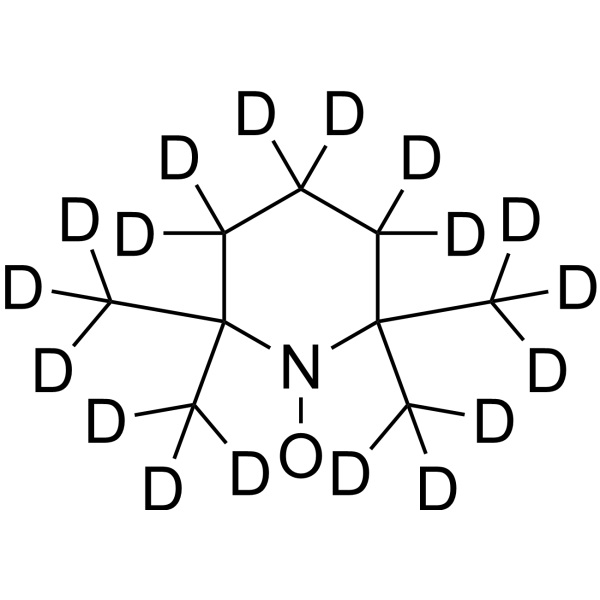
Tempo-d18 is the deuterium labeled Tempo . Tempo is a classic nitroxide radical and is a selective scavenger of ROS that dismutases superoxide in the catalytic cycle. Tempo induces DNA-strand breakage. Tempo can be used as an organocatalyst for the oxidation of primary alcohols to aldehydes. Tempo has mutagenic and antioxidant effects .
|
-
-
- HY-135801
-
|
|
Drug Intermediate
|
Metabolic Disease
|
|
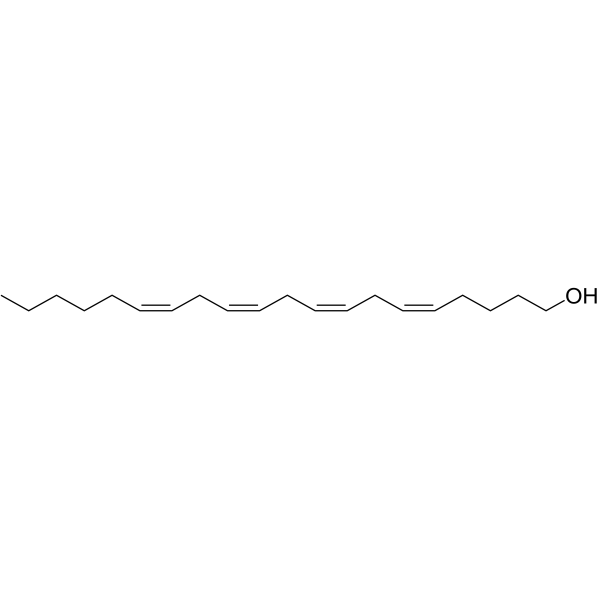
Arachidonyl alcohol is a long-chain primary fatty alcohol. Arachidonyl alcohol is used as a substrate for the production of several ether lipids possessing beneficial functions .
|
-
-
- HY-W032022R
-
|
|
Reference Standards
Mitochondrial Metabolism
|
Others
|
|
1-Hexanol (Standard) is the analytical standard of 1-Hexanol. This product is intended for research and analytical applications. 1-Hexanol, a primary alcohol, is a surfactant that can be employed in industrial processes to enhance interfacial properties . 1-Hexanol uncouples mitochondrial respiration by a non-protonophoric mechanism .
|
-
-
- HY-W004296
-
|
|
Environmental Pollutants
Bacterial
|
Infection
|
|
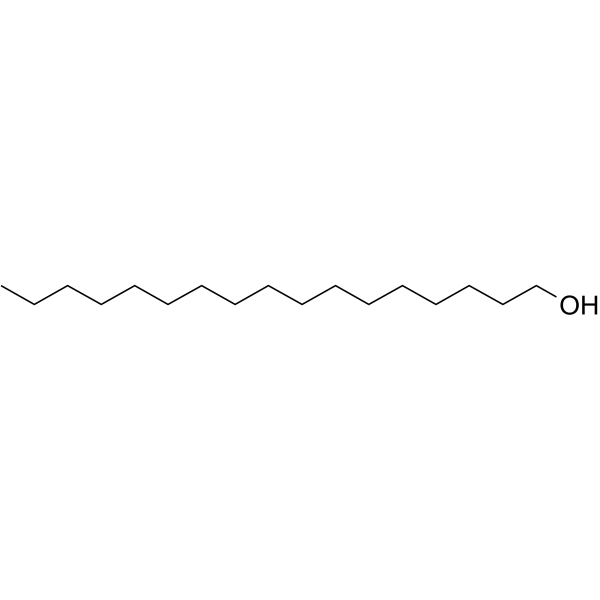
1-Heptadecanol is a long-chain primary alcohol and antibacterial agent. 1-Heptadecanol can be isolated from Solena amplexicaulis. 1-Heptadecanol exhibits antibacterial activity against Salmonella gallinarum with a minimum inhibitory concentration (MIC) of 15.08 μg/mL. 1-Heptadecanol can be used in the research of dandruff caused by Malassezia furfur .
|
-
-
- HY-W001187R
-
|
|
Mitochondrial Metabolism
DNA/RNA Synthesis
Reactive Oxygen Species (ROS)
Reference Standards
|
Cancer
|
|
Tempo (Standard) is the analytical standard of Tempo. This product is intended for research and analytical applications. Tempo is a nitric oxide radical and a selective scavenger of ROS in mitochondria. Tempo is also an organocatalyst that disproportionates superoxide and oxidizes primary alcohols to aldehydes in a catalytic cycle. Tempo has mutagenic and antioxidant effects and can induceDNA strand breaks. Tempo also exerts cytotoxic and mutagenic properties in mouse lymphoma cells [4].
|
-
-
- HY-33914
-
|
|
Drug Metabolite
|
Metabolic Disease
|
|
4-Hydroxymethylpyrazole is the primary metabolite of Fomepizole (HY-B0876) produced through hepatic oxidative metabolism. 4-Hydroxymethylpyrazole exhibits a plasma concentration that is positively correlated with the administered dosage of Fomepizole, and it demonstrates a relatively short half-life. 4-Hydroxymethylpyrazole demonstrates inhibitory effects on alcohol dehydrogenase (ADH) in both humans and monkeys, but its inhibition constant is significantly higher than that of Fomepizole, rendering its in vivo impact negligible .
|
-
-
- HY-N1867R
-
|
|
Reference Standards
PPAR
|
Metabolic Disease
|
|
trans-Cinnamyl alcohol is a trans-isomer of Cinnamyl alcohol. Cinnamyl Alcohol is an active component from chestnut flower, inhibits increased PPARγ expression, with anti-obesity activity. trans-Cinnamyl alcohol, belongs to the class of organic compounds known as cinnamyl alcohols, is a primary metabolite .
|
-
-
- HY-134860
-
-
-
- HY-W032022S3
-
|
|
Mitochondrial Metabolism
|
Others
|
|
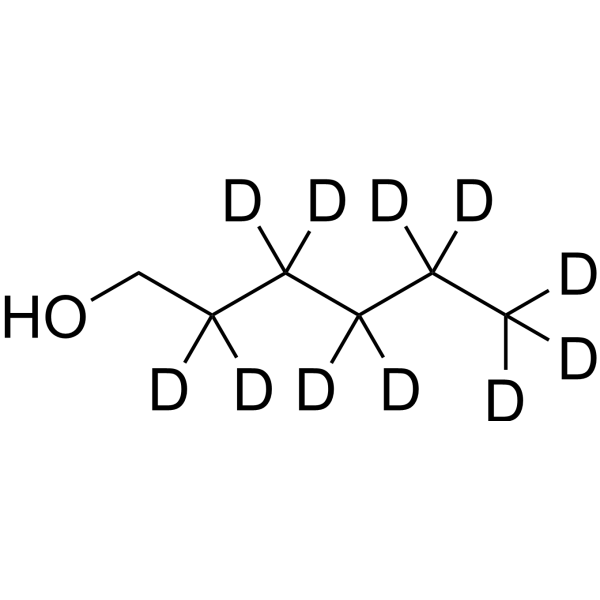
1-Hexanol-d5 is the deuterium labeled 1-Hexanol . 1-Hexanol, a primary alcohol, is a surfactant that can be employed in industrial processes to enhance interfacial properties . 1-Hexanol uncouples mitochondrial respiration by a non-protonophoric mechanism .
|
-
-
- HY-W032022S2
-
|
|
Isotope-Labeled Compounds
Mitochondrial Metabolism
|
Others
|
|
1-Hexanol-d3 is the deuterium labeled 1-Hexanol . 1-Hexanol, a primary alcohol, is a surfactant that can be employed in industrial processes to enhance interfacial properties . 1-Hexanol uncouples mitochondrial respiration by a non-protonophoric mechanism .
|
-
-
- HY-167663
-
|
|
5-HT Receptor
|
Neurological Disease
|
|
Ebalzotan is a 5-HT1A receptor agonist with activity in the study of depression. Ebalzotan can serve as a precursor to important active pharmaceutical ingredients. The synthesis of Ebalzotan involves a multi-enzyme catalyzed reduction reaction to obtain saturated primary or secondary alcohols in high yields and high enantioselectivity .
|
-
-
- HY-W032022S4
-
|
|
Isotope-Labeled Compounds
Mitochondrial Metabolism
|
Others
|
|
1-Hexanol-d2 is deuterated labeled 1-Hexanol (HY-W032022). 1-Hexanol, a primary alcohol, is a surfactant that can be employed in industrial processes to enhance interfacial properties . 1-Hexanol uncouples mitochondrial respiration by a non-protonophoric mechanism .
|
-
-
- HY-167663A
-
|
|
5-HT Receptor
|
Neurological Disease
|
|
(S)-Ebalzotan is the S-form of Ebalzotan (HY-167663). Ebalzotan is a 5-HT1A receptor agonist with activity in the study of depression. Ebalzotan can serve as a precursor to important active pharmaceutical ingredients. The synthesis of Ebalzotan involves a multi-enzyme catalyzed reduction reaction to obtain saturated primary or secondary alcohols in high yields and high enantioselectivity .
|
-
-
- HY-W800618
-
|
|
ADC Linker
|
Others
|
|
NH2-PEG3-Val-Cit-PAB-OH is a cleavable ADC linker featuring a primary amine, a hydrophilic PEG spacer, a Val-Cit dipeptide, and a PAB group. The benzylic alcohol on the PAB can be used to attach with reactive groups such as PNP for conjugation with drug payloads. The primary amine is free to perform a wide variety of reactions such as coupling with carboxylic acids, reductive aminations with ketones or aldehydes, or other more specialized uses such as in SNAr reactions or heterocyclic chemistry. The Val-Cit dipeptide is cleaved by cellular proteases within the cell to allow for efficient payload delivery via an elimination mechanism within the PAB structure.
|
-
-
- HY-W800617
-
|
|
ADC Linker
|
Cancer
|
|
NH2-PEG1-Val-Cit-PAB-OH is a cleavable ADC linker intermediate featuring a primary amine, a hydrophilic PEG spacer, a Val-Cit dipeptide, and a PAB group. The benzylic alcohol on the PAB can be used to attach with reactive groups such as PNP for conjugation with drug payloads. The primary amine is free to perform a wide variety of reactions such as coupling with carboxylic acids, reductive aminations with ketones or aldehydes, or other more specialized uses such as in SNAr reactions or heterocyclic chemistry. The Val-Cit dipeptide is cleaved by cellular proteases within the cell to allow for efficient payload delivery via an elimination mechanism within the PAB structure.
|
-
-
- HY-W800619
-
|
|
ADC Linker
|
Others
|
|
NH2-PEG4-Val-Cit-PAB-OH is a cleavable ADC linker featuring a primary amine, a hydrophilic PEG spacer, a Val-Cit dipeptide, and a PAB group. The benzylic alcohol on the PAB can be used to attach with reactive groups such as PNP for conjugation with drug payloads. The primary amine is free to perform a wide variety of reactions such as coupling with carboxylic acids, reductive aminations with ketones or aldehydes, or other more specialized uses such as in SNAr reactions or heterocyclic chemistry. The Val-Cit dipeptide is cleaved by cellular proteases within the cell to allow for efficient payload delivery via an elimination mechanism within the PAB structure.
|
-
-
- HY-W800620
-
|
|
ADC Linker
|
Others
|
|
NH2-PEG6-Val-Cit-PAB-OH is a cleavable ADC linker featuring a primary amine, a hydrophilic PEG spacer, a Val-Cit dipeptide, and a PAB group. The benzylic alcohol on the PAB can be used to attach with reactive groups such as PNP for conjugation with drug payloads. The primary amine is free to perform a wide variety of reactions such as coupling with carboxylic acids, reductive aminations with ketones or aldehydes, or other more specialized uses such as in SNAr reactions or heterocyclic chemistry. The Val-Cit dipeptide is cleaved by cellular proteases within the cell to allow for efficient payload delivery via an elimination mechanism within the PAB structure.
|
-
-
- HY-W800622
-
|
|
ADC Linker
|
Cancer
|
|
Fmoc-PEG4-Val-Cit-PAB-OH is an enzyme-cleavable ADC linker featuring a Boc-protected amine, a hydrophilic PEG spacer, and a Val-Cit-PAB dipeptide. The benzylic alcohol on the PAB can be used to attach with reactive groups such as PNP for conjugation with drug payloads. The Fmoc protecting group may be removed with piperidine to reveal a primary amine which may be used in coupling reactions to form amides. The Val-Cit-PAB is cleaved by cellular proteases for efficient release of payloads to the cell.
|
-
-
- HY-W800625
-
|
|
ADC Linker
|
Cancer
|
|
Boc-PEG4-Val-Cit-PAB-OH is an enzyme-cleavable ADC linker featuring a Boc-protected amine, a hydrophilic PEG spacer, and a Val-Cit-PAB dipeptide. The benzylic alcohol on the PAB can be used to attach with reactive groups such as PNP for conjugation with drug payloads. The Boc protecting group may be removed with acid to reveal a primary amine which may be used in coupling reactions to form amides. The Val-Cit-PAB is cleaved by cellular proteases for efficient release of payloads to the cell.
|
-
-
- HY-W800621
-
|
|
ADC Linker
|
Cancer
|
|
Fmoc-PEG2-Val-Cit-PAB-OH is an enzyme-cleavable ADC linker featuring a Boc-protected amine, a hydrophilic PEG spacer, and a Val-Cit-PAB dipeptide. The benzylic alcohol on the PAB can be used to attach with reactive groups such as PNP for conjugation with drug payloads. The Fmoc protecting group may be removed with piperidine to reveal a primary amine for use in coupling reactions to form amides. The Val-Cit-PAB is cleaved by cellular proteases for efficient release of payloads to the cell.
|
-
-
- HY-W800623
-
|
|
ADC Linker
|
Cancer
|
|
Fmoc-PEG6-Val-Cit-PAB-OH is an enzyme-cleavable ADC linker featuring a Boc-protected amine, a hydrophilic PEG spacer, and a Val-Cit-PAB dipeptide. The benzylic alcohol on the PAB can be used to attach with reactive groups such as PNP for conjugation with drug payloads. The Fmoc protecting group may be removed with piperidine to reveal a primary amine which may be used in coupling reactions to form amides. The Val-Cit-PAB is cleaved by cellular proteases for efficient release of payloads to the cell.
|
-
-
- HY-W800624
-
|
|
ADC Linker
|
Cancer
|
|
Boc-PEG2-Val-Cit-PAB-OH is an enzyme-cleavable ADC linker featuring a Boc-protected amine, a hydrophilic PEG spacer, and a Val-Cit-PAB dipeptide. The benzylic alcohol on the PAB can be used to attach with reactive groups such as PNP for conjugation with drug payloads. The Boc protecting group may be removed with acid to reveal a primary amine which may be used in coupling reactions to form amides. The Val-Cit-PAB is cleaved by cellular proteases for efficient release of payloads to the cell.
|
-
-
- HY-107744R
-
-
-
- HY-172719
-
|
|
Biochemical Assay Reagents
|
Others
|
|
Fmoc-PEG9-alcohol is a heterobifunctional PEG linker featuring a Fmoc-protected primary amine and an alcohol group. The hydroxy group is a versatile functionality while the Fmoc protecting group can be removed with base to reveal a primary amine.
|
-
-
- HY-W590572
-
|
|
Biochemical Assay Reagents
|
Others
|
|
N-Butyroyl Phytosphingosine is a lipid molecule featuring an amide, a primary alcohol, two secondary alcohols and a C18 chain.
|
-
-
- HY-N6662S
-
|
|
Isotope-Labeled Compounds
Endogenous Metabolite
|
Others
|
|
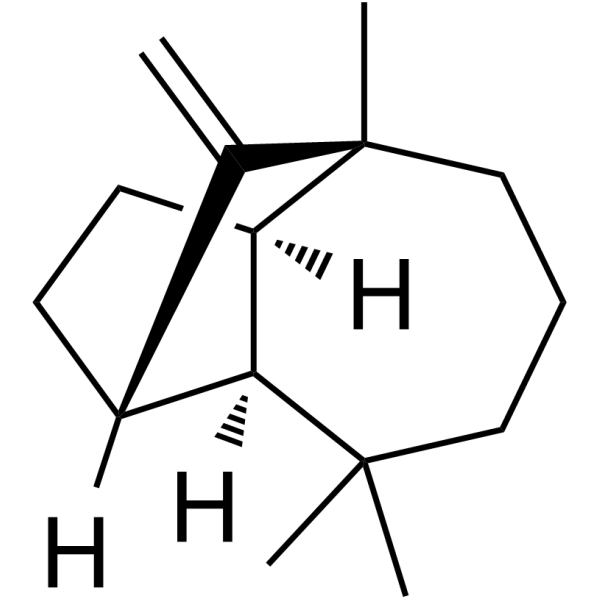
(+)-Longifolene- 13C,d2 is the 13C- and deuterium labeled (+)-Longifolene (HY-N6662). (+)-Longifolene is a sesquiterpenoid and a metabolite in rabbits. (+)-Longifolen is converted to primary, secondary or tertiary alcohols in rabbits, among which the primary alcohol is predominant .
|
-
-
- HY-W591335
-
|
Biotin-PEG5-alcohol
|
Biochemical Assay Reagents
|
Others
|
|
Biotin-PEG5-OH (Biotin-PEG5-alcohol) is a biotinylation reagent containing a primary hydroxyl that can be derivatized. The PEG spacer provides greater solubility to labeled molecules compared to reagents having only hydrocarbon spacers.
|
-
-
- HY-P2756B
-
|
|
Biochemical Assay Reagents
|
Metabolic Disease
|
|
Alcohol Oxidase, Pichia pastoris (EC 1.1.3.13) is a redox enzyme that acts on the CH-OH group in donor molecules and uses oxygen as an acceptor. The two substrates of Alcohol Oxidase, Pichia pastoris (EC 1.1.3.13) are primary alcohols and O2, while its two products are aldehydes and H2O2.
|
-
-
- HY-P2756A
-
|
|
Biochemical Assay Reagents
|
Metabolic Disease
|
|
Alcohol oxidase, Hansenula sp. (EC 1.1.3.13) is a redox enzyme that acts on the CH-OH group in donor molecules and uses oxygen as an acceptor. The two substrates of Alcohol Oxidase, Hansenula sp. (EC 1.1.3.13) are primary alcohols and O2, while its two products are aldehydes and H2O2.
|
-
-
- HY-W800728
-
|
|
Biochemical Assay Reagents
|
Others
|
|
1,1'-[2-(Hydroxymethyl)-1,3-propanediyl] dilinoleate is a lipid molecule featuring two linoleic acids and a primary alcohol. Compounds such as this may be used as intermediates in building lipids for use in lipid nanoparticles.
|
-
-
- HY-W190904
-
|
|
Biochemical Assay Reagents
|
Others
|
|
2-Amino-1,3-bis(tert-butyldimethylsilanoxy)propane has a TBDMS, acid labile protecting group. TBDMS is used for the protection of alcohol groups. The primary amine is able to react with carboxylic acids, active NHS esters and other carbonyl compounds.
|
-
-
- HY-W800751
-
|
|
Biochemical Assay Reagents
|
Others
|
|
(9Z,12Z)-3-(4,4-bis(octyloxy)butanoyloxy)-2-(hydroxymethyl)propyl octadeca-9,12-dienoate is a lipid component featuring a linoleic fatty acid, a primary alcohol, and a symmetrical aliphatic acetal.
|
-
-
- HY-33914R
-
|
|
Drug Metabolite
Reference Standards
|
Metabolic Disease
|
|
4-Hydroxymethylpyrazole (Standard) is an analytical standard for 4-Hydroxymethylpyrazole (HY-33914). This product is intended for research and analytical applications. 4-Hydroxymethylpyrazole is the primary metabolite of fomepizole (HY-B0876) via hepatic oxidative metabolism. 4-Hydroxymethylpyrazole exhibits a plasma concentration that is positively correlated with the administered dosage of Fomepizole, and it demonstrates a relatively short half-life. 4-Hydroxymethylpyrazole inhibits alcohol dehydrogenase (ADH) in humans and monkeys, but the inhibition constant is much higher than that of fomepizole and is therefore negligible in vivo
|
-
-
- HY-W004296R
-
|
|
Bacterial
Reference Standards
|
Infection
|
|
1-Heptadecanol (Standard) is the analytical standard of 1-Heptadecanol (HY-W004296). This product is intended for research and analytical applications. 1-Heptadecanol is a long-chain primary alcohol and antibacterial agent. 1-Heptadecanol can be isolated from Solena amplexicaulis. 1-Heptadecanol exhibits antibacterial activity against Salmonella gallinarum with a minimum inhibitory concentration (MIC) of 15.08 μg/mL. 1-Heptadecanol can be used in the research of dandruff caused by Malassezia furfur .
|
-
| Cat. No. |
Product Name |
Type |
-
- HY-W591335
-
|
Biotin-PEG5-alcohol
|
Fluorescent Dyes
|
|
Biotin-PEG5-OH (Biotin-PEG5-alcohol) is a biotinylation reagent containing a primary hydroxyl that can be derivatized. The PEG spacer provides greater solubility to labeled molecules compared to reagents having only hydrocarbon spacers.
|
| Cat. No. |
Product Name |
Type |
-
- HY-W142618
-
|
|
Biochemical Assay Reagents
|
|
D-Glucal is an organic compound belonging to the family of aldoses, which are monosaccharides containing an aldehyde functional group. It has a six-carbon structure and is derived from glucose by oxidation of the primary alcohol group at carbon 1 to an aldehyde group. D-Glucal is a white crystalline solid that is soluble in water and has a sweet taste. It is an important intermediate in the chemical synthesis of a wide variety of compounds, including pharmaceuticals, agrochemicals, and natural products. D-Glucal can be converted into other carbohydrate derivatives such as glycosides, glycoconjugates and amino sugars. It also plays a role in the study of carbohydrate chemistry, where it is used as a chiral building block for the synthesis of complex structures.
|
| Cat. No. |
Product Name |
Category |
Target |
Chemical Structure |
| Cat. No. |
Product Name |
Chemical Structure |
-
- HY-W032022S
-
|
|
|
1-Hexanol-d13 is the deuterium labeled 1-Hexanol . 1-Hexanol, a primary alcohol, is a surfactant that can be employed in industrial processes to enhance interfacial properties . 1-Hexanol uncouples mitochondrial respiration by a non-protonophoric mechanism .
|
-
-
- HY-W032022S1
-
|
|
|
1-Hexanol-d11 is the deuterium labeled 1-Hexanol . 1-Hexanol, a primary alcohol, is a surfactant that can be employed in industrial processes to enhance interfacial properties . 1-Hexanol uncouples mitochondrial respiration by a non-protonophoric mechanism .
|
-
-
- HY-W001187S
-
|
|
|
Tempo-d18 is the deuterium labeled Tempo . Tempo is a classic nitroxide radical and is a selective scavenger of ROS that dismutases superoxide in the catalytic cycle. Tempo induces DNA-strand breakage. Tempo can be used as an organocatalyst for the oxidation of primary alcohols to aldehydes. Tempo has mutagenic and antioxidant effects .
|
-
-
- HY-W032022S3
-
|
|
|
1-Hexanol-d5 is the deuterium labeled 1-Hexanol . 1-Hexanol, a primary alcohol, is a surfactant that can be employed in industrial processes to enhance interfacial properties . 1-Hexanol uncouples mitochondrial respiration by a non-protonophoric mechanism .
|
-
-
- HY-W032022S2
-
|
|
|
1-Hexanol-d3 is the deuterium labeled 1-Hexanol . 1-Hexanol, a primary alcohol, is a surfactant that can be employed in industrial processes to enhance interfacial properties . 1-Hexanol uncouples mitochondrial respiration by a non-protonophoric mechanism .
|
-
-
- HY-W032022S4
-
|
|
|
1-Hexanol-d2 is deuterated labeled 1-Hexanol (HY-W032022). 1-Hexanol, a primary alcohol, is a surfactant that can be employed in industrial processes to enhance interfacial properties . 1-Hexanol uncouples mitochondrial respiration by a non-protonophoric mechanism .
|
-
-
- HY-N6662S
-
|
|
|
(+)-Longifolene- 13C,d2 is the 13C- and deuterium labeled (+)-Longifolene (HY-N6662). (+)-Longifolene is a sesquiterpenoid and a metabolite in rabbits. (+)-Longifolen is converted to primary, secondary or tertiary alcohols in rabbits, among which the primary alcohol is predominant .
|
-
Your information is safe with us. * Required Fields.
Inquiry Information
- Product Name:
- Cat. No.:
- Quantity:
- MCE Japan Authorized Agent:

