



Rosaceae
-
- Malus pumila Mill. (16)
- Sanguisorba officinalis Linn. (16)
- Eriobotrya japonica (Thunb.) Lindl. (14)
- Rosa rugosa Thunb. (13)
- Crataegus pinnatifida Bge. (11)
- Fragaria × ananassa Duch. (11)
- Amygdalus persica L. (10)
- Spiraea japonica (9)
- Agrimonia pilosa Ledeb. (8)
- Potentilla anserina Linn. (7)
- Prunus persica L. (6)
- Rosa multifoloraThunb (6)
- Armeniaca vulgaris Lam. (4)
- Aronia melanocarpa (4)
- Crataegus monogyna Jacq. (4)
- Prunus armeniaca L. (4)
- Pseudocydonia sinensis (Thouin) C. K. Schneid. (4)
- Rubus chingii Hu (4)
- Rubus corchorifolius Linn. f. (4)
- Rubus idaeus Linn. (4)
- Duchesnea indica (Andr.) Focke (3)
- Exochorda racemosa (Lindl.) Rehd. (3)
- Prunus avium (3)
- Prunus humilis (Bge.) Sok. (3)
- Prunus mume Siebold & Zucc. (3)
- Prunus salicina Lindl. (3)
- Rosa laevigata Michx. (3)
- Rosa roxburghii Tratt. (3)
- Cerasus cerasoides (2)
- Cerasus yedoensis (Mats.) Yü et Li (2)
- Malus sieversii (2)
- Potentilla chinensis Ser. (2)
- Potentilla L. (2)
- Prunus jamasakura (Siebold ex Koidz.) X.R.Wang & C.B.Shang (2)
- Prunus spinosa L. (2)
- Prunus domestica L. (2)
- Pygeum topengiiMerr. (2)
- Pyracantha fortuneana (Maxim.) H.L.Li (2)
- Pyrus bretschneideri Rehder (2)
- Rosa canina Gremli ex Christ (2)
- Rosa centifolia L. (2)
- Rubus arcticus L. (2)
- Rubus suavissimus S. Lee (2)
- Rubus ulmifolius Schott (2)
- Spiraea salicifolia L. (2)
- Acaena pinnatifida Ruiz & Pav. (1)
- Alchemilla japonica Nakai (1)
- Alchemilla speciosa Buser (1)
- Aruncus sylvester Kostel. (1)
- Bog bilberry Vaccinium uliginosum L. (1)
- Crataegus laevigata (Poir.) DC. (1)
- Dichotomanthes tristaniicarpa Kurz (1)
- Fragaria nubicola (Hook. f.) Lindl. ex Lacaita (1)
- Geum japonicum Thunb. (1)
- Photinia serratifolia (Desf.) Kalkman (1)
- Physocarpus intermedius (Rydb.) C. K. Schneid. (1)
- Potentilla argentea L. (1)
- Prunus cerasus L. (1)
- Prunus davidiana (Carrière) Franch. (1)
- Prunus laurocerasus L. (1)
- Prunus mahaleb L. (1)
- Prunus pseudocerasus (Lindl.) G. Don (1)
- Prunus ssiori F. Schmidt (1)
- Prunus tomentosa Thunb. (1)
- Prunus zippeliana Miq. (1)
- Pyracantha crenulata (D. Don) Roem. (1)
- Pyracantha koidzumii (Hayata) Rehd. (1)
- Pyrus calleryana Decne. (1)
- Pyrus pashia Buch.-Ham. ex D. Don (1)
- Pyrus ussuriensis Maxim. (1)
- Rosa banksiae Aiton (1)
- Rosa cymosa (L.) Tratt. (1)
- Rosa damascena Mill. (1)
- Rosa davurica Pall. (1)
- Rosa foetida Herrm. (1)
- Rosa hugonis Hemsl. (1)
- Rosa rubiginosa L. (1)
- Rubus allegheniensis Porter (1)
- Rubus ellipticus Smith (1)
- Rubus parvifolius L. (1)
- Rubus xanthocarpus Bureau & Franch. (1)
- Sorbaria sorbifolia (L.) A. Braun (1)
- Sorbus alnifolia (Sieb. et Zucc.) K. Koch (1)
- Sorbus aucuparia Poir. (1)
- Sorbus commixta Hedl. (1)
- Sorbus pohuashanensis (Hance) Hedl. (1)
- Spiraea thunbergii Siebold ex Blume (1)
-
Rosaceae (267)

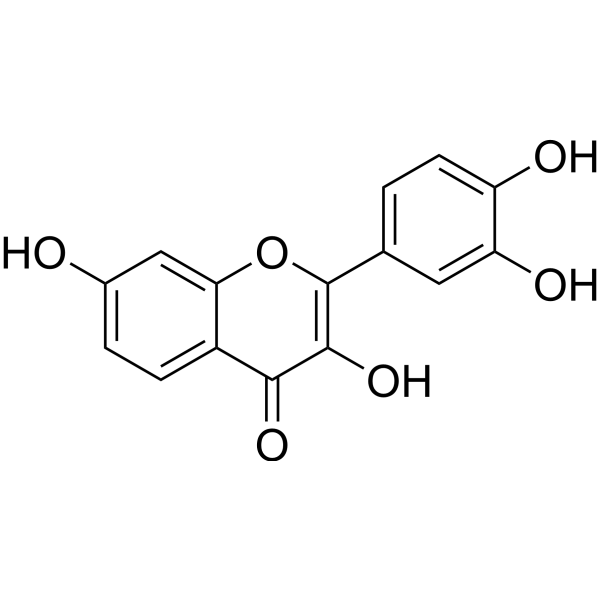
- Formel: C15H10O6
- Molecular Weight: 286.24
Fisetin is a natural flavonol found in many fruits and vegetables with various benefits, such as antioxidant, anticancer, neuroprotection effects.
![Benzo[a]pyrene](https://file.medchemexpress.com/product_pic/hy-107377.gif "Click to View Benzo[a]pyrene Product Detail")
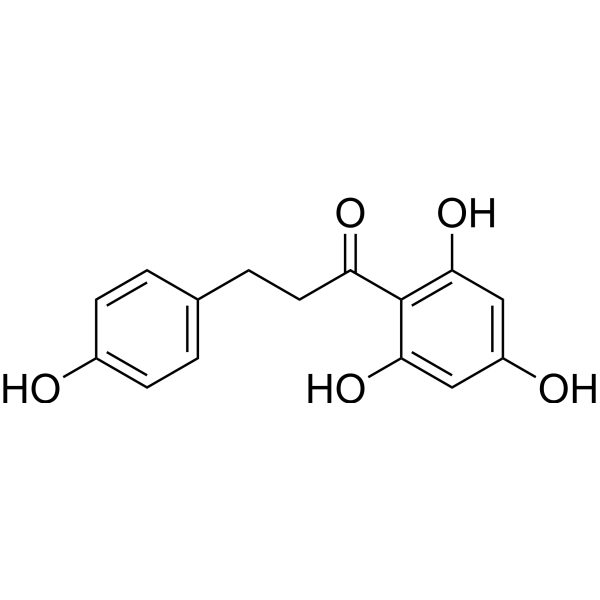
- Formel: C15H14O5
- Molecular Weight: 274.27
Phloretin (NSC 407292; RJC 02792) is a flavonoid extracted from Malus pumila Mill.,has anti-inflammatory activities. Phloridzin is a specific,competitive and orally active inhibitor of sodium/glucose cotransporters in the intestine (SGLT1) and kidney (SGLT2). Phloretin inhibits Yeast-made GLUT1 as well as Human erythrocyte GLUT1 with IC50values of 49 μM and 61 μM,respectively.Phloretin has the potential for the treatment of rheumatoid arthritis (RA) and allergic airway inflammation.
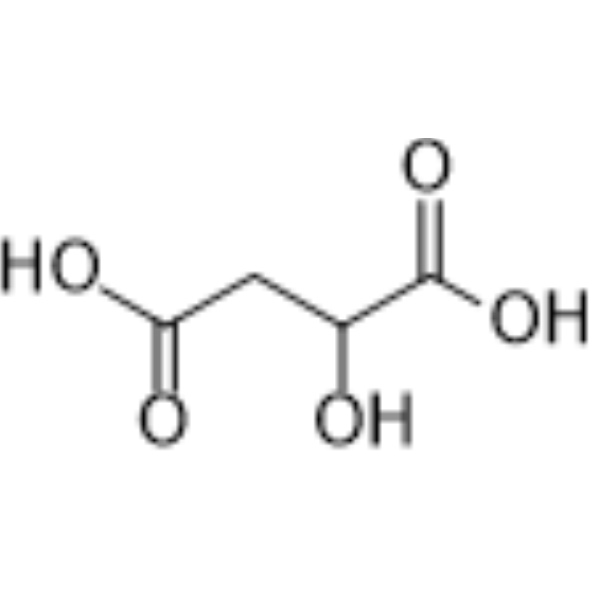
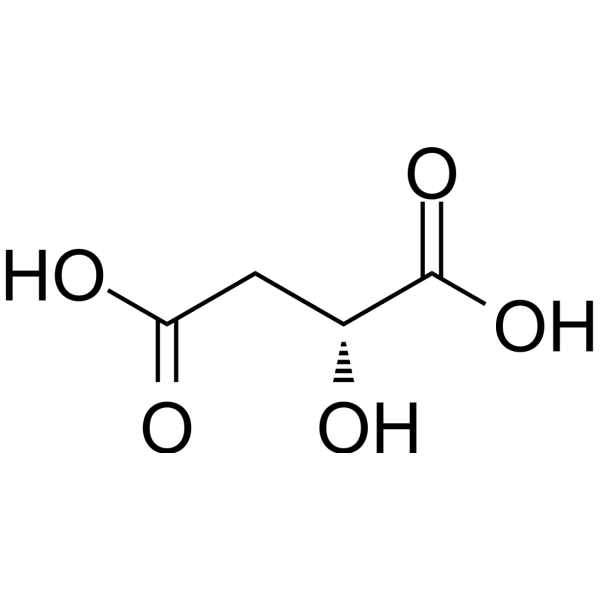
- Formel: C4H6O5
- Molecular Weight: 134.09
Malic acid (Hydroxybutanedioic acid) is a dicarboxylic acid that occurs naturally in fruits like apples and pears with oral activities. Malic acid plays a role in many sour or tangy foods. Malic acid is an intermediate in the citric acid cycle.
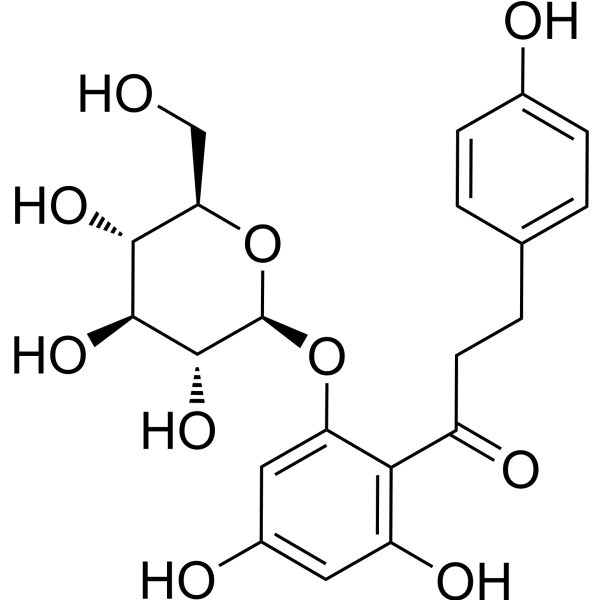
- Formel: C21H24O10
- Molecular Weight: 436.41
Phlorizin (Floridzin) is an orally active non-selective sodium-glucose cotransporter (SGLT) inhibitor, with an IC50 of 0.04 μM and a Ki of 39 nM against hSGLT2, and an IC50 of 0.17 μM and a Ki of 0.31 μM against hSGLT1. Phlorizin promotes GLUT4 translocation, inhibits gluconeogenesis and promotes glycogen synthesis by activating the PI3K/Akt/mTOR pathway. Phlorizin reduces DNA damage and apoptosis (apoptosis) by inhibiting the NF-κB inflammatory pathway. Phlorizin induces apoptosis via activating the Caspase pathway by antagonizing the JAK/STAT3 and PCK pathways. Phlorizin also exhibits antibacterial, anti-inflammatory and neuroprotective activities.

- Formel: C20H30O4
- Molecular Weight: 334.46
Dihexyl phthalate is an orally active phthalate ester (PAEs) widely used as a plasticizer, and it acts as an environmental endocrine disruptor. Dihexyl phthalate exhibits endocrine-disrupting and reproductive toxic properties, induces oxidative stress and inflammation, and ultimately causes apoptosis and damage to reproductive organs such as the testes. Dihexyl phthalate can be used in studies related to developmental toxicity, embryonic lethality, teratogenicity, and abnormal development of the male reproductive system.

- Formel: C7H12O2
- Molecular Weight: 128.17
Prenyl acetate is an insecticide. At low concentrations, prenyl acetate exhibits an attractant effect on worker ants of the red imported fire ant, and it elicits strong antennal electroantennogram (EAG) responses in all castes of the red imported fire ant. Prenyl acetate shows low toxicity to mammals. It can be used in research related to the control of the red imported fire ant (Solenopsis invicta) .

- Formel: C35H56O8
- Molecular Weight: 604.81
Ziyuglycoside II (Standard) is the analytical standard of Ziyuglycoside II. This product is intended for research and analytical applications. Ziyuglycoside II is a triterpenoid saponin compound extracted from Sanguisorba officinalis L.. Ziyuglycoside II induces reactive oxygen species (ROS) production and apoptosis. Anti-inflammation and anti-cancer effect.
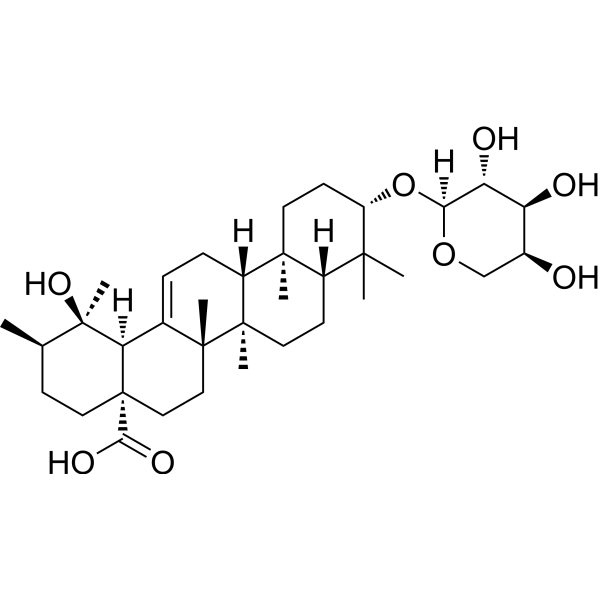
- Formel: C35H56O8
- Molecular Weight: 604.81
Ziyuglycoside II is a triterpenoid saponin compound extracted from Sanguisorba officinalis L.. Ziyuglycoside II induces reactive oxygen species (ROS) production and apoptosis. Anti-inflammation and anti-cancer effect.
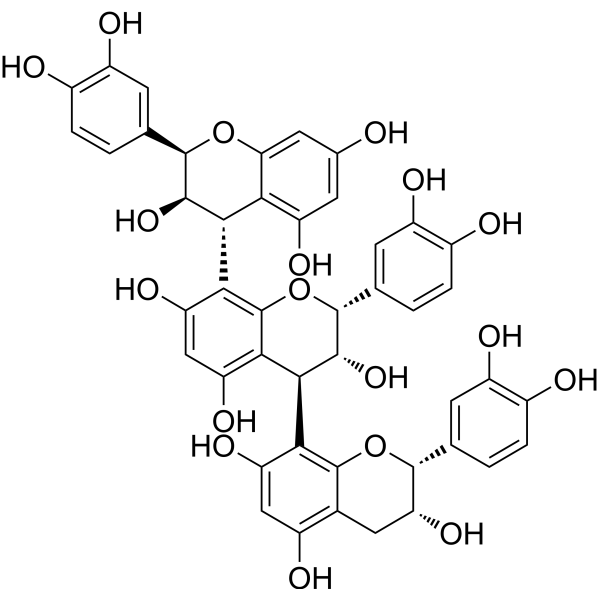
- Formel: C45H38O18
- Molecular Weight: 866.77
Procyanidin C1 (PCC1), a natural polyphenol with oral activity, causes DNA damage, cell cycle arrest and induces apoptosis. Procyanidin C1 decreases the level of Bcl-2, but enhances BAX, caspase 3 and 9 expression in cancer cells. Procyanidin C1 shows senotherapeutic activity and increases lifespan in mice.
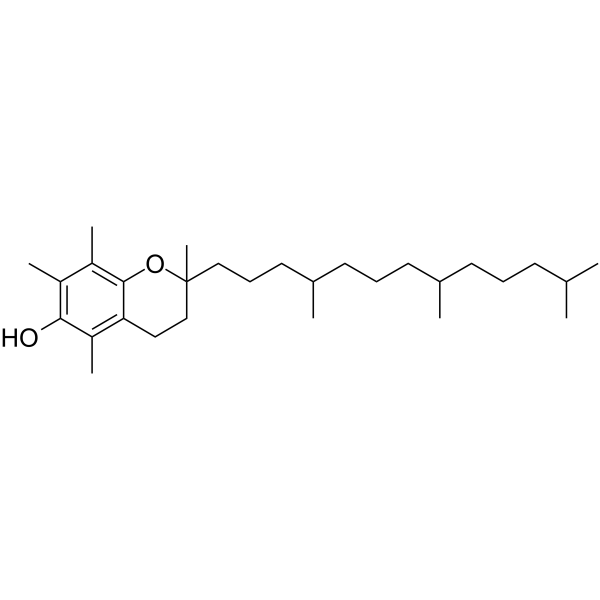
- Formel: C29H50O2
- Molecular Weight: 430.71
DL-alpha-Tocopherol is a synthetic vitamin E, with antioxidation effect. DL-alpha-Tocopherol protects human skin fibroblasts against the cytotoxic effect of UVB.
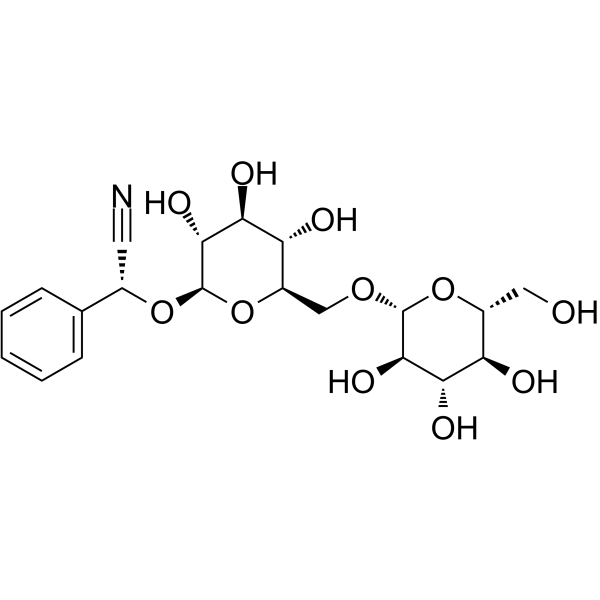
- Formel: C20H27NO11
- Molecular Weight: 457.43
Amygdalin is a plant glucoside isolated from the stones of rosaceous fruits, such as apricots, peaches, almond, cherries, and plums.
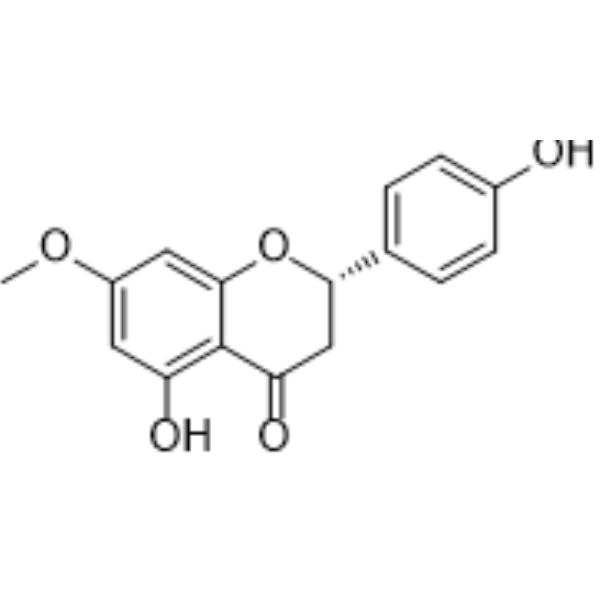
- Formel: C16H14O5
- Molecular Weight: 286.28
Sakuranetin is a cherry flavonoid phytoalexin, shows strong antifungal activity. Sakuranetin has anti-inflammatory and antioxidative activities. Sakuranetin ameliorates LPS-induced acute lung injury.
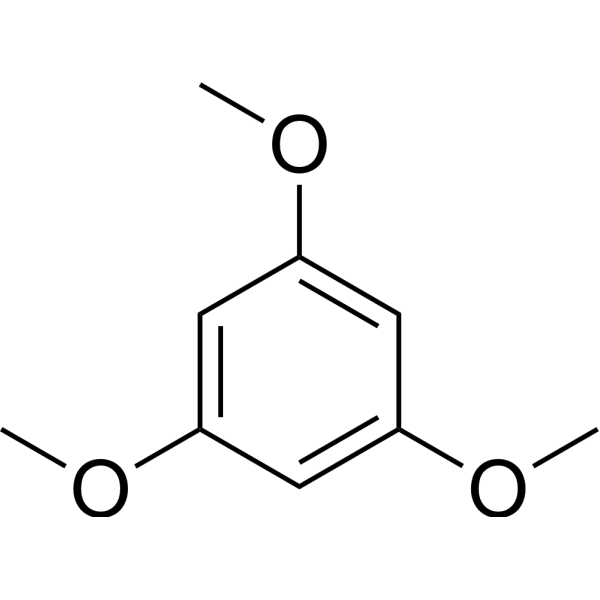
- Formel: C9H12O3
- Molecular Weight: 168.19
1,3,5-Trimethoxybenzene (TRIMETHYL PHLOROGLUCINOL) is an electrophilic substitution reaction substrate targeting free chlorine (Cl+) and free bromine (Br+). 1,3,5-Trimethoxybenzene has highly selective electrophilic addition characteristics. By capturing halogens, it undergoes specific substitution reactions to generate stable halogenated products. 1,3,5-Trimethoxybenzene can not only quench residual oxidants, but also quantify the halogen concentration by detecting the product without affecting the stability of redox-sensitive disinfection byproducts (DBPs). 1,3,5-Trimethoxybenzene is mainly used in water quality testing and quantitative analysis of free chlorine/bromine in water. At the same time, in phytochemistry, it is a key component of rose fragrance and participates in the study of pollination attraction mechanism.
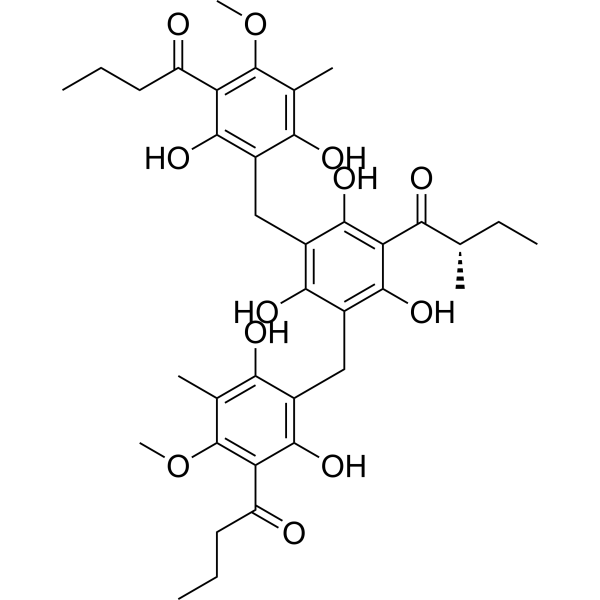
- Formel: C37H46O12
- Molecular Weight: 682.75
Agrimol B, a polyphenol, is an orally active and potent SIRT1 activator. Agrimol B shows anti-adipogenic and anticancer activity. Agrimol B shows antibacterial activity against plant pathogens. Agrimol B dramatically inhibits 3T3-L1 adipocyte differentiation by reducing PPARγ, C/EBPα, FAS, UCP-1, and apoE expression. The action of Agrimol B on the cancer cells is likely derived from its effect on c-MYC, SKP2 and p27.
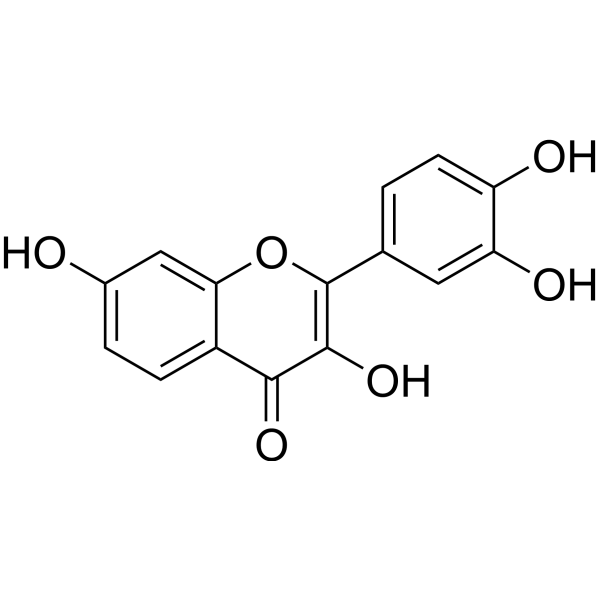
- Formel: C15H10O6
- Molecular Weight: 286.24
Fisetin (Standard) is the analytical standard of Fisetin. This product is intended for research and analytical applications. Fisetin is a natural flavonol found in many fruits and vegetables with various benefits, such as antioxidant, anticancer, neuroprotection effects.
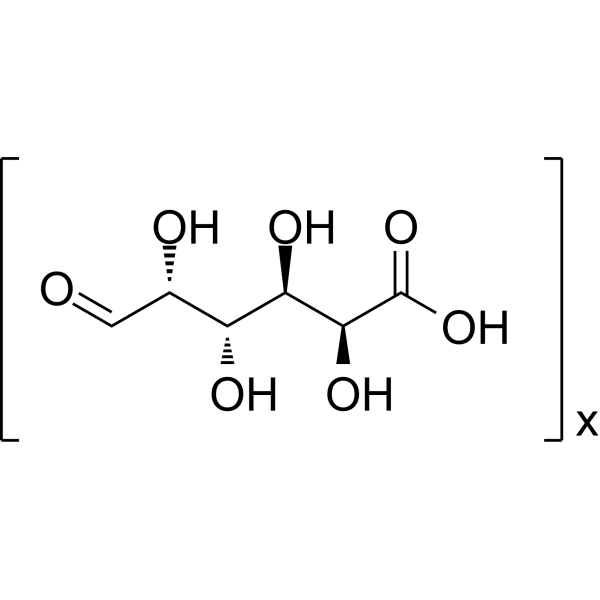
- Formel: (C6H10O7)x
Polygalacturonic acid (Galacturonic acid polymer) is transparent colloid, is a major component of the cell wall. Polygalacturonic acid can be used to prepare silver nanoparticles (AgNPs), as an antioxidant and anti-inflammatory that protect cells from destructive effect of elevated ROS and accelerate wound healing. Polygalacturonic acid nanoparticles also displays anti-bacterial activity.
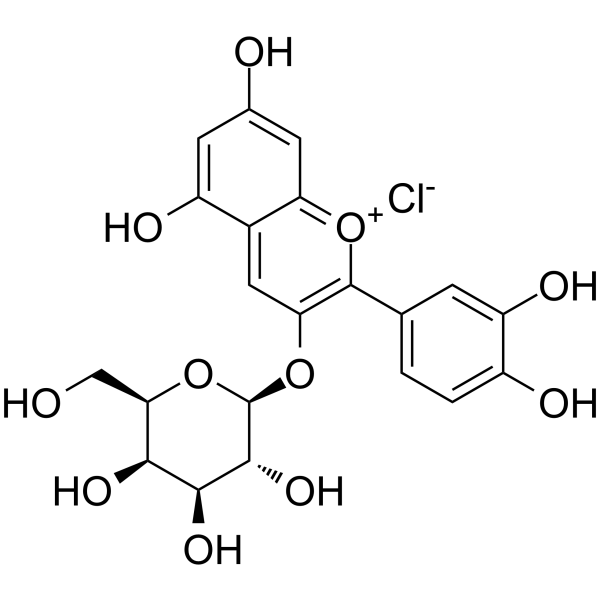
- Formel: C21H21ClO11
- Molecular Weight: 484.84
Cyanidin-3-O-galactoside chloride (Ideain chloride) is a component from extract peel of hawthorn fruit (EPHF) with the value of 179.4 mg/g. EPHF exhibits strong AChE inhibitory activity.
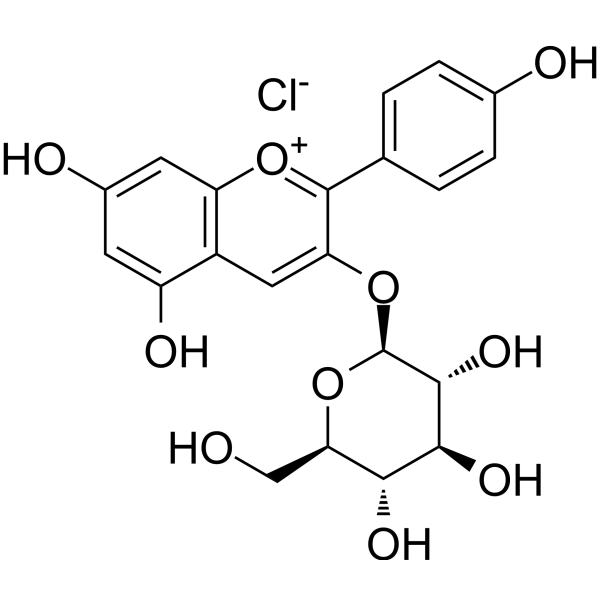
- Formel: C21H21ClO10
- Molecular Weight: 468.84
Callistephin (Pelargonidin 3-O-glucoside) chloride is an anthocyanin. Callistephin chloride regulates the expression of inflammatory (reducing iNOS/TNF-α/COX-2) and apoptosis-related proteins by inhibiting p38 phosphorylation, and enhances the protective effect of Isoflurane (HY-A0134) on microglial cell damage. Callistephin chloride significantly reduces ROS levels, eliminates DPPH free radicals, protects retinal pigment epithelial cells, and inhibits lipid peroxidation. Callistephin chloride can alleviate glutamate excitotoxicity, reduce neuronal apoptosis, and protect cerebellar granule neurons. Callistephin chloride can inhibit the proliferation and metastasis of breast cancer cells by inducing apoptosis.



