



1,3,5-Trimethoxybenzene
Based on 1 publication(s) in Google Scholar
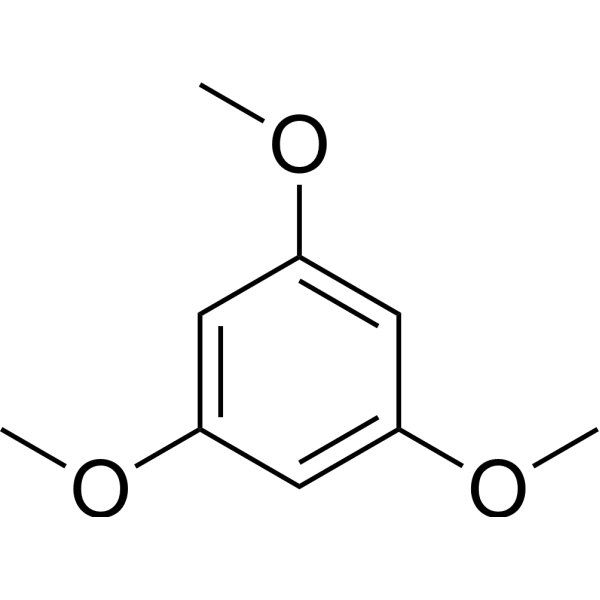
1,3,5-Trimethoxybenzene (TRIMETHYL PHLOROGLUCINOL) is an electrophilic substitution reaction substrate targeting free chlorine (Cl+) and free bromine (Br+). 1,3,5-Trimethoxybenzene has highly selective electrophilic addition characteristics. By capturing halogens, it undergoes specific substitution reactions to generate stable halogenated products. 1,3,5-Trimethoxybenzene can not only quench residual oxidants, but also quantify the halogen concentration by detecting the product without affecting the stability of redox-sensitive disinfection byproducts (DBPs). 1,3,5-Trimethoxybenzene is mainly used in water quality testing and quantitative analysis of free chlorine/bromine in water. At the same time, in phytochemistry, it is a key component of rose fragrance and participates in the study of pollination attraction mechanism.
For research use only. We do not sell to patients.
- Purity : 99.61%
- CAS No.: 621-23-8
- Formula: C9H12O3
- Molecular Weight:168.19
-
Storage:Powder -20°C, 3 years , 4°C, 2 years ; In solvent -80°C, 6 months , -20°C, 1 month

To place orders, for customer services and technical support, please contact: MedChemExpress USA
Tel: 609-228-6898 E-mail: [email protected] [email protected]


-
 Biological Activity
-
Chemical Information
-
Solvent & Solubility
- Purity & Documentation
- References
-
 Help & FAQs


-

HY-Y0678R
1,3,5-Trimethoxybenzene (Standard) -
HY-34487
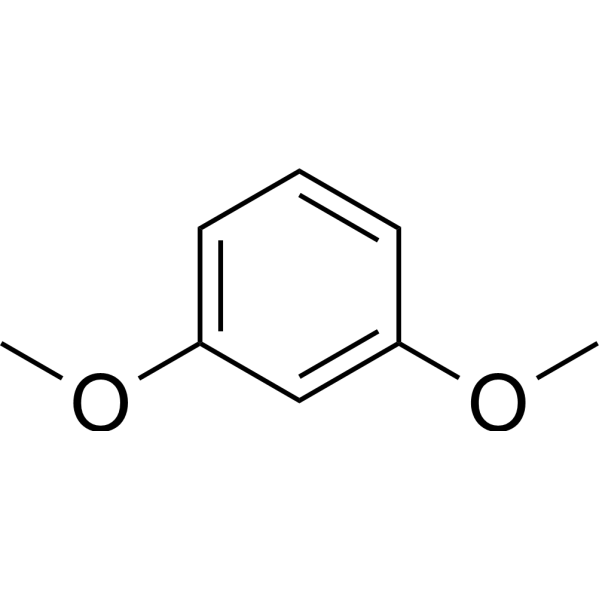
1,3-Dimethoxybenzene -

HY-Y1207
Ethoxybenzene -
HY-103609
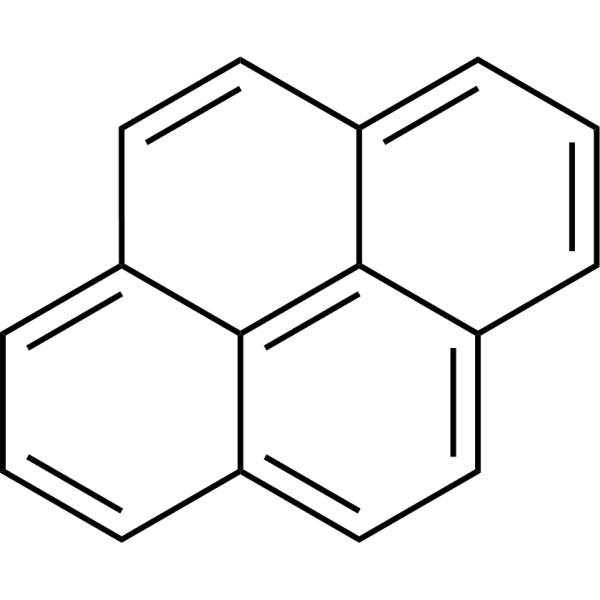
Pyrene -

HY-W017087
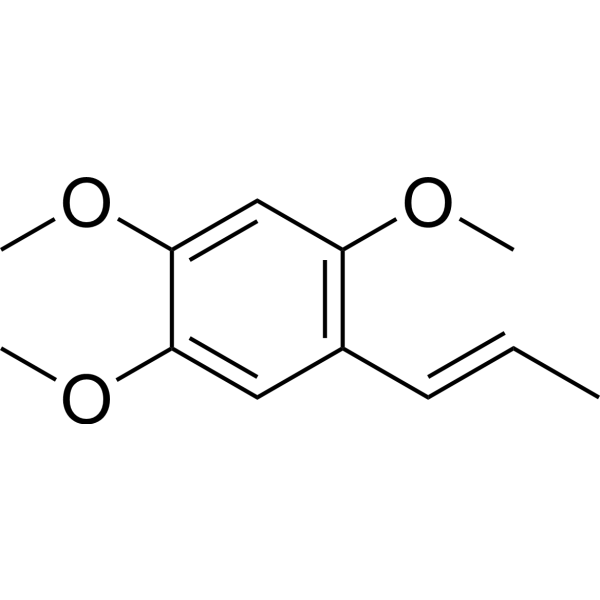
1,2,4-Trimethoxybenzene -
HY-N0700
alpha-Asarone -
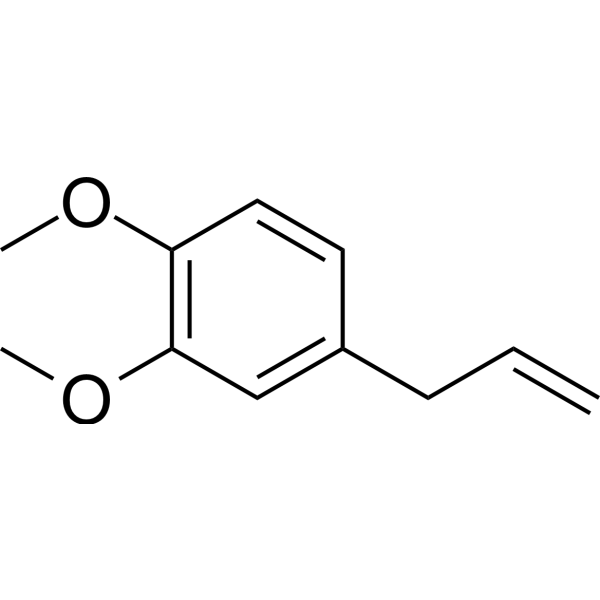
HY-N6996
Methyl Eugenol -
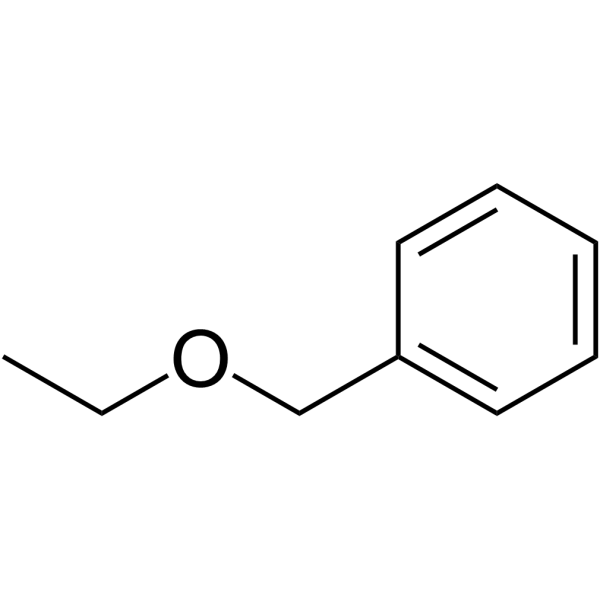
HY-W017613
(Ethoxymethyl)benzene -
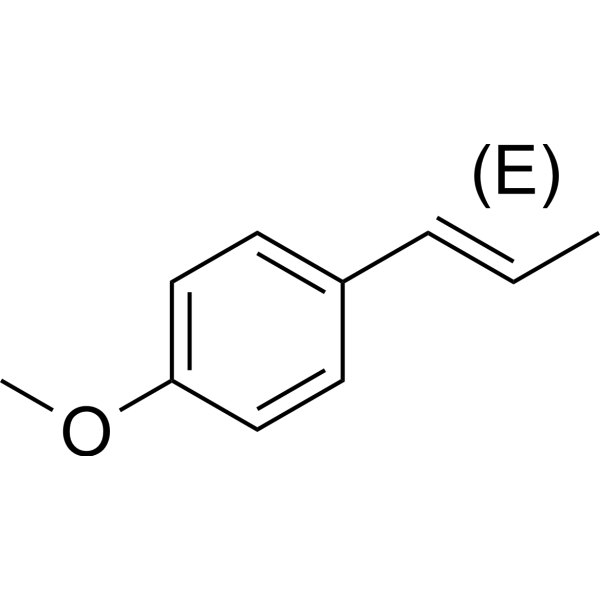
HY-N0367
Trans-Anethole -
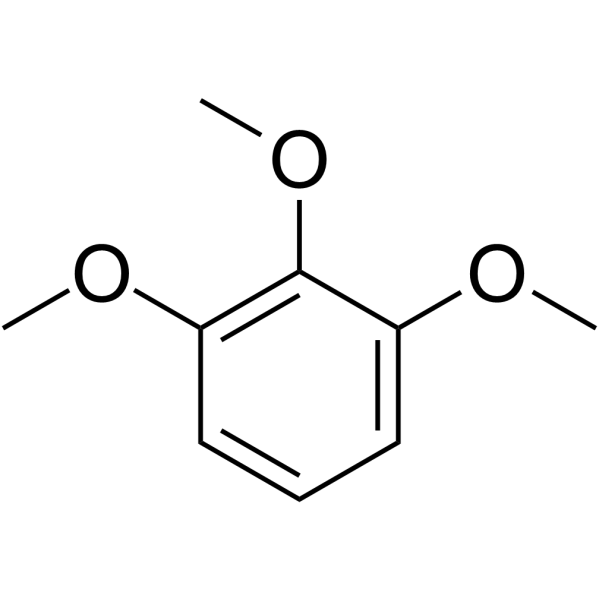
HY-W017092
1,2,3-Trimethoxybenzene -
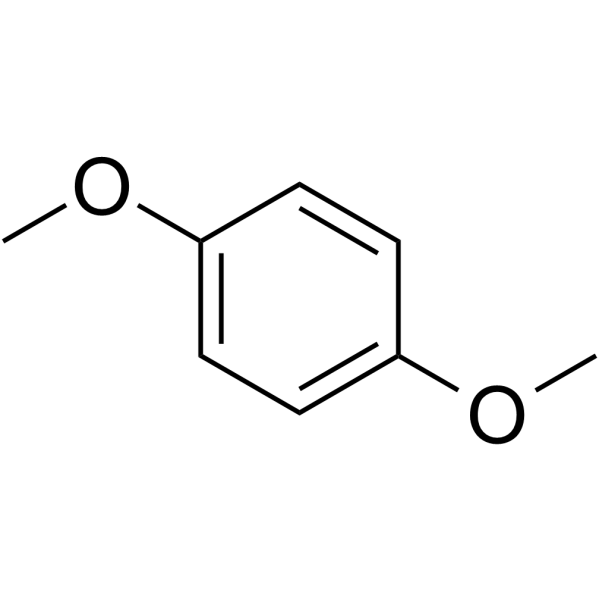
HY-W015780
1,4-Dimethoxybenzene -

HY-34487R
1,3-Dimethoxybenzene (Standard)
Publications Citing Use of MedChemExpress (MCE) 1,3,5-Trimethoxybenzene
More

Biological Activity
Description
In Vitro
1,3,5-Trimethoxybenzene (360 μM; 5 min) can react with free chlorine/bromine to generate single halogenated products (Cl-TMB/Br-TMB). 1,3,5-Trimethoxybenzene can quench the residual halogen through a specific substitution reaction and quantitatively detect it[2.
1,3,5-Trimethoxybenzene (252 μM; 6 min) can effectively quench the chlorination reaction, and the quenching effect is not significantly different from that of sodium thiosulfate[2].
MedChemExpress (MCE) has not independently confirmed the accuracy of these methods. They are for reference only.


Chemical Information
-
CAS No. 621-23-8
-
Appearance Solid
-
Molecular Weight 168.19
-
Formula C9H12O3
-
Color White to light brown
-
SMILES
COC1=CC(OC)=CC(OC)=C1
-
Synonyms
TRIMETHYL PHLOROGLUCINOL
-
Initial Source
-
Shipping
Room temperature in continental US; may vary elsewhere.
-
Storage
Powder -20°C 3 years 4°C 2 years In solvent -80°C 6 months -20°C 1 month


Publications (1)
-
Journal Impact Factor
-
Most Recent
-
Anal Chem
Optimized 13C qNMR for Complex Mixtures through Relaxation Engineering and Signal-to-Noise Efficiency Metrics. [Abstract]2025 Dec 2;97(47):26167-26174. PMID: 41251526


Solvent & Solubility
In Vitro:
DMSO : 100 mg/mL (594.57 mM; Need ultrasonic; Hygroscopic DMSO has a significant impact on the solubility of product, please use newly opened DMSO)
Please refer to the solubility information to select the appropriate solvent. Once prepared, please aliquot and store the solution to prevent product inactivation from repeated freeze-thaw cycles.
Storage method and period of stock solution: -80°C, 6 months; -20°C, 1 month. When stored at -80°C, please use it within 6 months. When stored at -20°C, please use it within 1 month.
Please refer to the solubility information to select the appropriate solvent. Once prepared, please aliquot and store the solution to prevent product inactivation from repeated freeze-thaw cycles.
Storage method and period of stock solution: -80°C, 6 months; -20°C, 1 month. When stored at -80°C, please use it within 6 months. When stored at -20°C, please use it within 1 month.
Concentration (start) × Volume (start) = Concentration (final) × Volume (final)
In Vivo:
Select the appropriate dissolution method based on your experimental animal and administration route.
- For the following dissolution methods, please ensure to first prepare a clear stock solution using an In Vitro approach and then sequentially add co-solvents:
- To ensure reliable experimental results, the clarified stock solution can be appropriately stored based on storage conditions. As for the working solution for In Vivo experiments, it is recommended to prepare freshly and use it on the same day.
- The percentages shown for the solvents indicate their volumetric ratio in the final prepared solution. If precipitation or phase separation occurs during preparation, heat and/or sonication can be used to aid dissolution.
Add each solvent one by one: 10% DMSO 40% PEG300 5% Tween-80 45% Saline
Solubility: ≥ 2.5 mg/mL (14.86 mM); Clear solution
This protocol yields a clear solution of ≥ 2.5 mg/mL (saturation unknown).
Taking 1 mL working solution as an example, add 100 μL DMSO stock solution (25.0 mg/mL) to 400 μL PEG300, and mix evenly; then add 50 μL Tween-80 and mix evenly; then add 450 μL Saline to adjust the volume to 1 mL.
Preparation of Saline: Dissolve 0.9 g sodium chloride in ddH₂O and dilute to 100 mL to obtain a clear Saline solution.
Add each solvent one by one: 10% DMSO 90% (20% SBE-β-CD in Saline)
Solubility: ≥ 2.5 mg/mL (14.86 mM); Clear solution
This protocol yields a clear solution of ≥ 2.5 mg/mL (saturation unknown).
Taking 1 mL working solution as an example, add 100 μL DMSO stock solution (25.0 mg/mL) to 900 μL 20% SBE-β-CD in Saline, and mix evenly.
Preparation of 20% SBE-β-CD in Saline (4°C, storage for one week): 2 g SBE-β-CD powder is dissolved in 10 mL Saline, completely dissolve until clear.
In Vivo Dissolution Calculator
Please enter the basic information of animal experiments:
-
-
-
-
Recommended: Prepare an additional quantity of animals to account for potential losses during experiments.
Please enter your animal formula composition:
-
%DMSO +
Recommended: Keep the proportion of DMSO in working solution below 2% if your animal is weak.
-
%+
-
+%Tween-80 + +
-
%Saline +
The co-solvents required include: DMSO, . All of co-solvents are available by MedChemExpress (MCE). , Tween 80. All of co-solvents are available by MedChemExpress (MCE).
Working solution concentration: 0.22 mg/mL
Method for preparing stock solution: mg drug dissolved in μL DMSO. Stock solution concentration: mg/mL.
1. Take μL DMSO stock solution;
2. Add μL .
μL , mix evenly;
3. Then add μL Tween 80, mix evenly;
4. Then add μL
Please ensure that the stock solution in the first step is dissolved to a clear state, and add co-solvents in sequence. You can use ultrasonic heating (ultrasonic cleaner, recommended frequency 20-40 kHz), vortexing, etc. to assist dissolution.


Purity & Documentation
-
Data Sheet (275 KB)
-
SDS (393 KB)
- English - EN (393 KB)
- Français - FR (393 KB)
- Deutsch - DE (393 KB)
- Norwegian - NO (393 KB)
- Español - ES (393 KB)
- Swedish - SV (393 KB)
- Italian - IT (393 KB)
- Korean - KR (393 KB)
- Portuguese - PT (393 KB)
-
Handling Instructions (2659 KB)
References


Complete Stock Solution Preparation Table
Please refer to the solubility information to select the appropriate solvent. Once prepared, please aliquot and store the solution to prevent product inactivation from repeated freeze-thaw cycles.
Storage method and period of stock solution: -80°C, 6 months; -20°C, 1 month. When stored at -80°C, please use it within 6 months. When stored at -20°C, please use it within 1 month.
| Optional Solvent | Concentration Solvent Mass | 1 mg | 5 mg | 10 mg | 25 mg |
|---|---|---|---|---|---|
| DMSO | 1 mM | 5.9457 mL | 29.7283 mL | 59.4566 mL | 148.6414 mL |
| 5 mM | 1.1891 mL | 5.9457 mL | 11.8913 mL | 29.7283 mL | |
| 10 mM | 0.5946 mL | 2.9728 mL | 5.9457 mL | 14.8641 mL | |
| 15 mM | 0.3964 mL | 1.9819 mL | 3.9638 mL | 9.9094 mL | |
| 20 mM | 0.2973 mL | 1.4864 mL | 2.9728 mL | 7.4321 mL | |
| 25 mM | 0.2378 mL | 1.1891 mL | 2.3783 mL | 5.9457 mL | |
| 30 mM | 0.1982 mL | 0.9909 mL | 1.9819 mL | 4.9547 mL | |
| 40 mM | 0.1486 mL | 0.7432 mL | 1.4864 mL | 3.7160 mL | |
| 50 mM | 0.1189 mL | 0.5946 mL | 1.1891 mL | 2.9728 mL | |
| 60 mM | 0.0991 mL | 0.4955 mL | 0.9909 mL | 2.4774 mL | |
| 80 mM | 0.0743 mL | 0.3716 mL | 0.7432 mL | 1.8580 mL | |
| 100 mM | 0.0595 mL | 0.2973 mL | 0.5946 mL | 1.4864 mL |


1,3,5-Trimethoxybenzene Related Classifications
HY-Y0678 Related Classifications
 Powered by Bioz