



Rosa rugosa Thunb.
Alias: Rose
-
Rosa rugosa Thunb. (13)

- 1
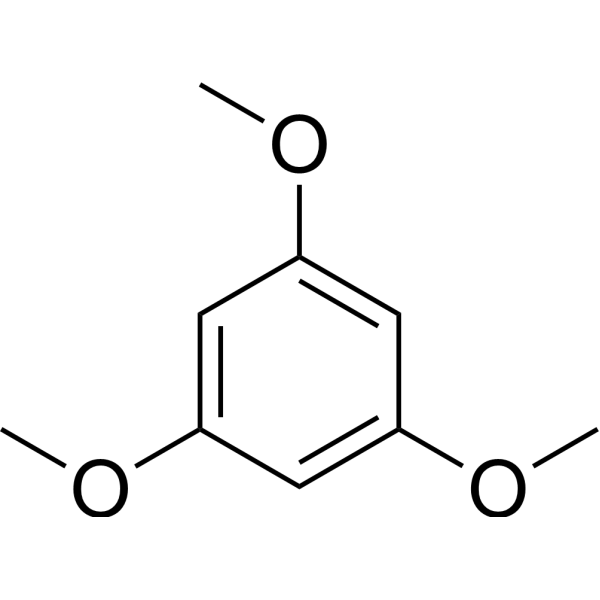
- Formule: C9H12O3
- Masse moléculaire: 168.19
1,3,5-Trimethoxybenzene (TRIMETHYL PHLOROGLUCINOL) is an electrophilic substitution reaction substrate targeting free chlorine (Cl+) and free bromine (Br+). 1,3,5-Trimethoxybenzene has highly selective electrophilic addition characteristics. By capturing halogens, it undergoes specific substitution reactions to generate stable halogenated products. 1,3,5-Trimethoxybenzene can not only quench residual oxidants, but also quantify the halogen concentration by detecting the product without affecting the stability of redox-sensitive disinfection byproducts (DBPs). 1,3,5-Trimethoxybenzene is mainly used in water quality testing and quantitative analysis of free chlorine/bromine in water. At the same time, in phytochemistry, it is a key component of rose fragrance and participates in the study of pollination attraction mechanism.
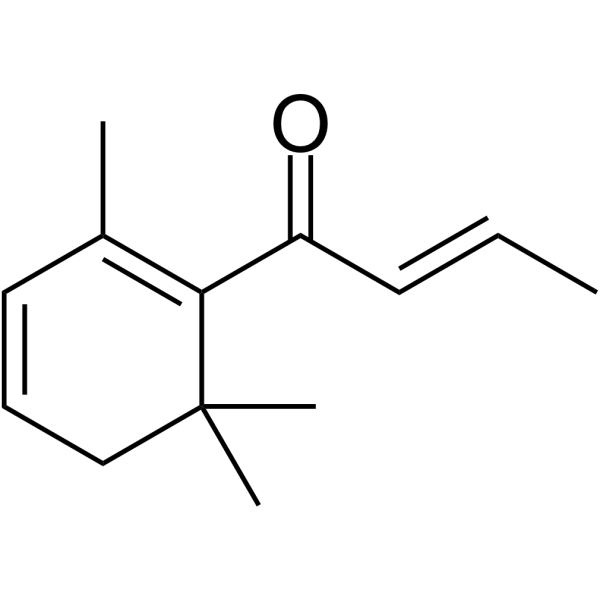
- Formule: C13H18O
- Masse moléculaire: 190.29
Damascenone ((E/Z)-Damascenone) is an active compound of Epipremnum pinnatum with anti-inflammatory activity. Damascenone is a mixture complex of E-isomer-Damascenone and Z-isomer Damascenone.
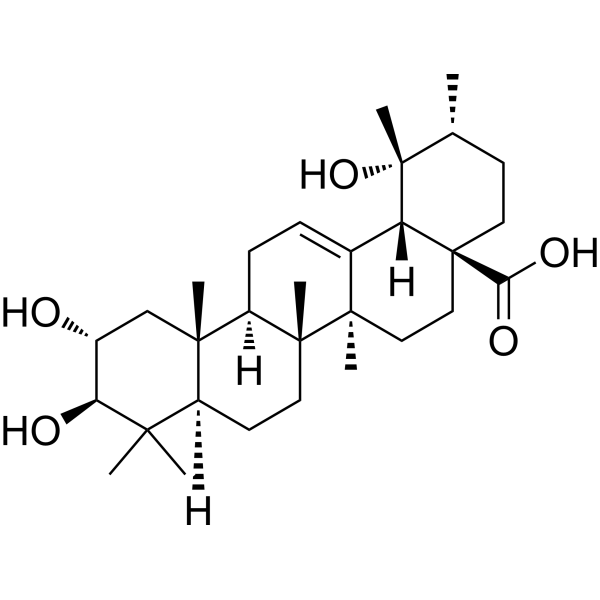
- Formule: C30H48O5
- Masse moléculaire: 488.70
Tormentic acid, a triterpene isolated from Rosa rugosa, exerts anti-inflammatory, antihyperlipidemic, and anti-atherogenic properties.

- Formule: C13H18O
- Masse moléculaire: 190.28
Damascenone (Standard) is the analytical standard of Damascenone. This product is intended for research and analytical applications. Damascenone ((E/Z)-Damascenone) is an active compound of Epipremnum pinnatum with anti-inflammatory activity. Damascenone is a mixture complex of E-isomer-Damascenone and Z-isomer Damascenone.


- Formule: C53H86O21
- Masse moléculaire: 1059.24
Pastuchoside E is a triterpenoid saponin found in the leaves of Hedera pastuchowii. Terpenes, also known as isoprene compounds, are the most numerous and structurally diverse natural products found in many plants. Terpenes can be used to treat cancer, malaria, inflammation, and various infectious diseases.

- Formule: C10H20O
- Masse moléculaire: 156.27
3,5-Dimethyl-4-octanone volatile compound found in Lippia alba. 3,5-Dimethyl-4-octanone has potential antifungal activity and can be used for the research of infection.

- Formule: C10H22
- Masse moléculaire: 142.28
4,5-Dimethyloctane is a product from n-pentane/iso-butane coupling.

- Formule: C30H48O5
- Masse moléculaire: 488.70
Tormentic acid (Standard) is the analytical standard of Tormentic acid. This product is intended for research and analytical applications. Tormentic acid, a triterpene isolated from Rosa rugosa, exerts anti-inflammatory, antihyperlipidemic, and anti-atherogenic properties.
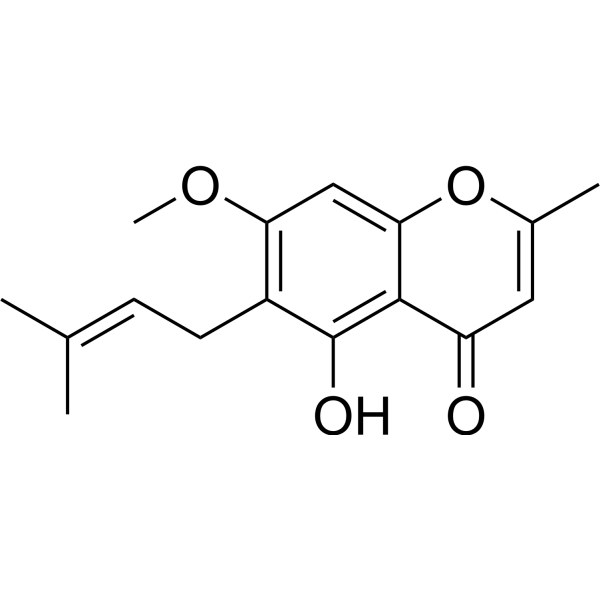
- Formule: C16H18O4
- Masse moléculaire: 274.31
Peucenin 7-O-methyl ether is a natural product that can be isolated from the flowers of Rosa rugosa.

- Formule: C9H12O3
- Masse moléculaire: 168.19
1,3,5-Trimethoxybenzene (TRIMETHYL PHLOROGLUCINOL) is an electrophilic substitution reaction substrate targeting free chlorine (Cl+) and free bromine (Br+). 1,3,5-Trimethoxybenzene has highly selective electrophilic addition characteristics. By capturing halogens, it undergoes specific substitution reactions to generate stable halogenated products. 1,3,5-Trimethoxybenzene can not only quench residual oxidants, but also quantify the halogen concentration by detecting the product without affecting the stability of redox-sensitive disinfection byproducts (DBPs). 1,3,5-Trimethoxybenzene is mainly used in water quality testing and quantitative analysis of free chlorine/bromine in water. At the same time, in phytochemistry, it is a key component of rose fragrance and participates in the study of pollination attraction mechanism.

- Formule: C19H30O7
- Masse moléculaire: 370.44
(6R,9R)-3-Oxo-α-ionol glucoside is a natural product.
- 1



