



Sakuranetin
Based on 9 publication(s) in Google Scholar
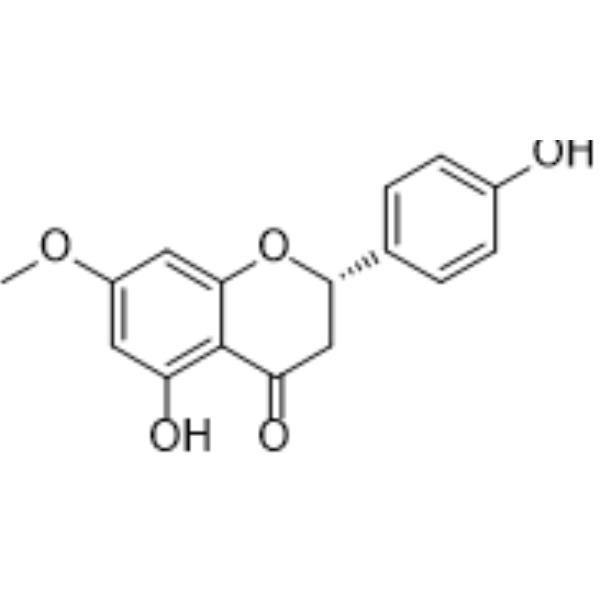
Sakuranetin is a cherry flavonoid phytoalexin, shows strong antifungal activity. Sakuranetin has anti-inflammatory and antioxidative activities. Sakuranetin ameliorates LPS-induced acute lung injury.
Nur für Forschungszwecke. Wir verkaufen nicht an Patienten.
- Reinheit : 99.94%
- CAS. Nr.: 2957-21-3
- Formel: C16H14O5
- Molecular Weight:286.28
-
Speicherung:Powder -20°C, 3 years , 4°C, 2 years ; In solvent -80°C, 2 years , -20°C, 1 year

To place orders, for customer services and technical support, please contact: MedChemExpress USA
Tel: 609-228-6898 E-mail: [email protected] [email protected]


-
 Biologische Aktivität
-
Chemical Information
-
Lösungsmittel & Löslichkeit
- Protokoll
- Reinheit & Dokumentation
- Verweise
-
 Help & FAQs


-
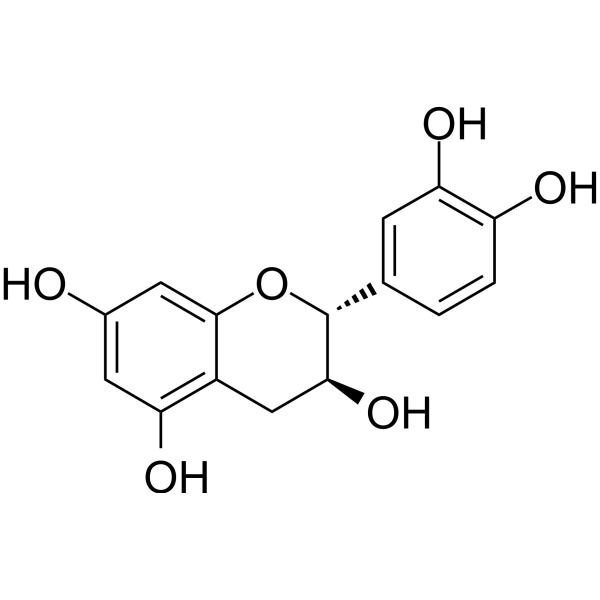
HY-N0898
CatechinCOX-1 Inhibitor -
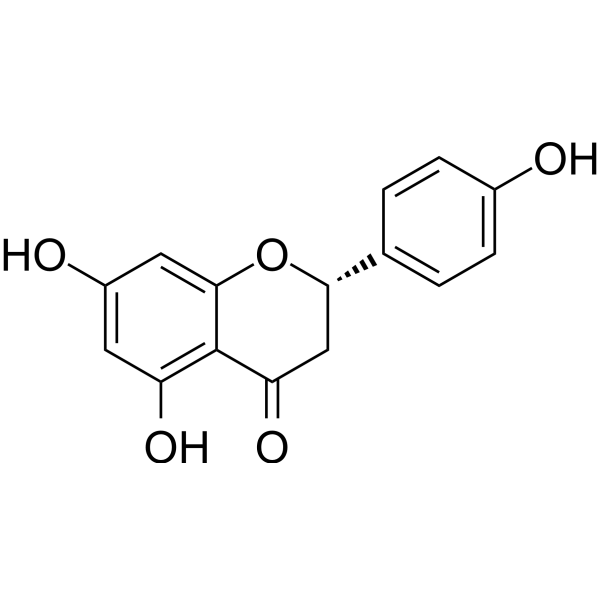
HY-N0100
NaringeninFlavonoid -
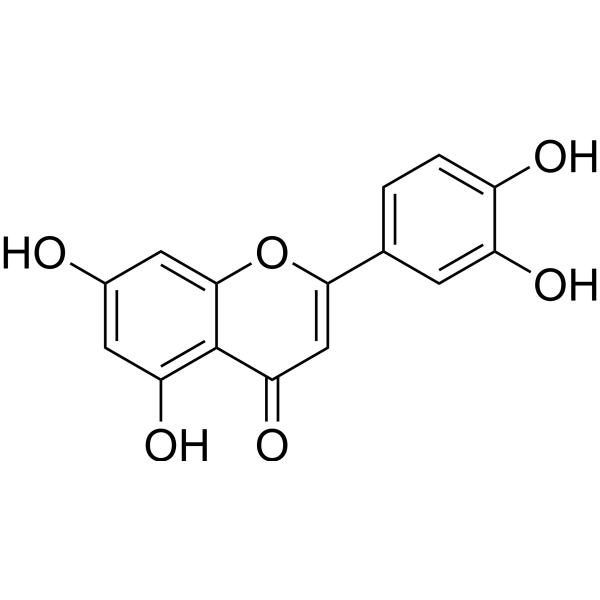
HY-N0162
LuteolinNrf2 Inhibitor -
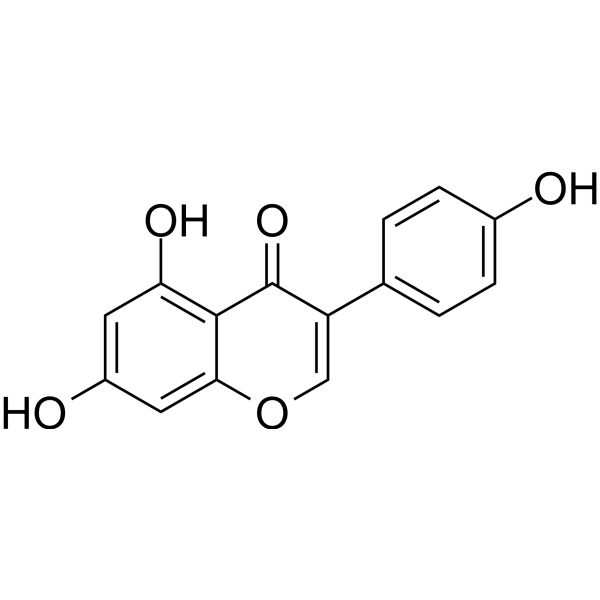
HY-14596
GenisteinAutophagy Inducer -
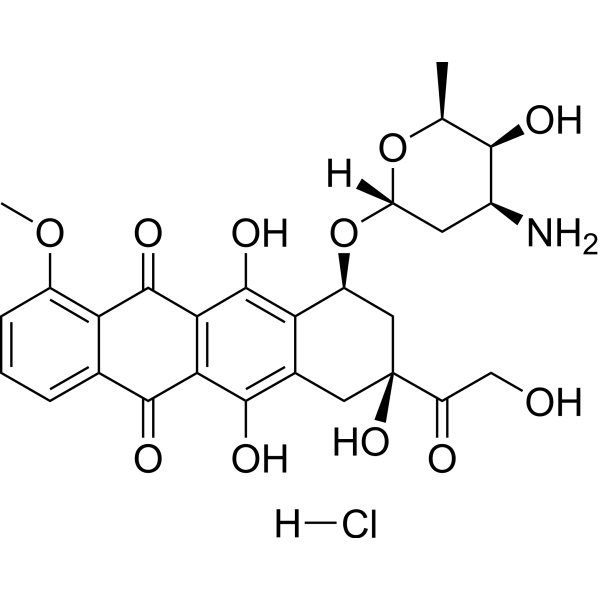
HY-15142
Doxorubicin hydrochlorideTopoisomerase Inhibitor -
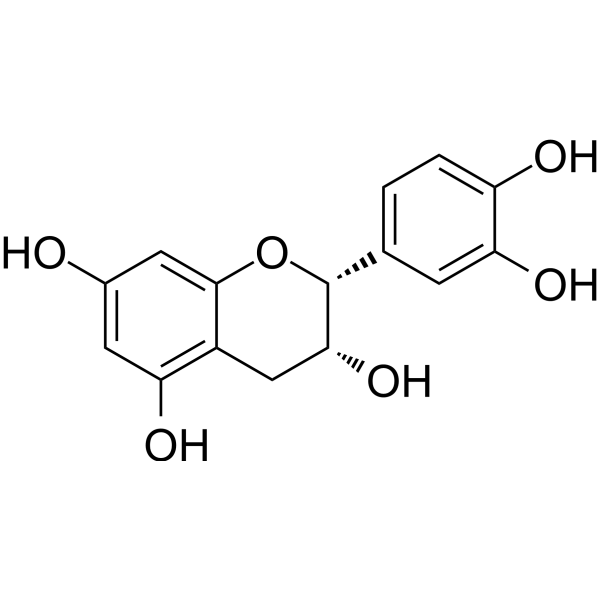
HY-N0001
(-)-EpicatechinCOX Inhibitor -
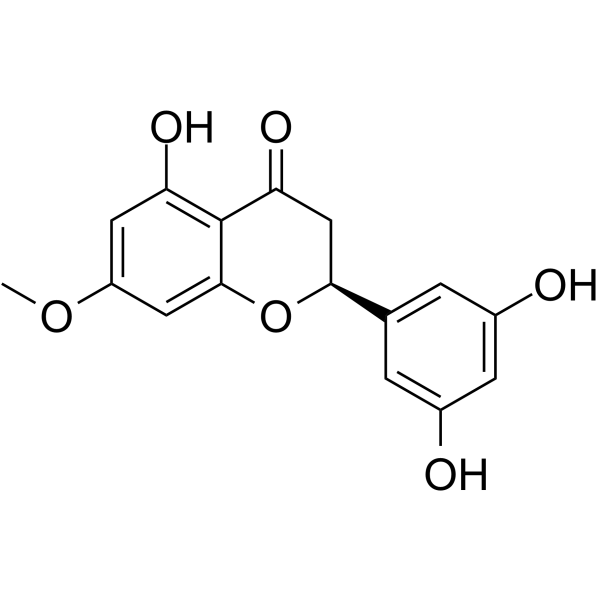
HY-N2358
Blumeatin -

HY-N3006R
Sakuranetin (Standard)Fungal Inhibitor -
HY-N7128
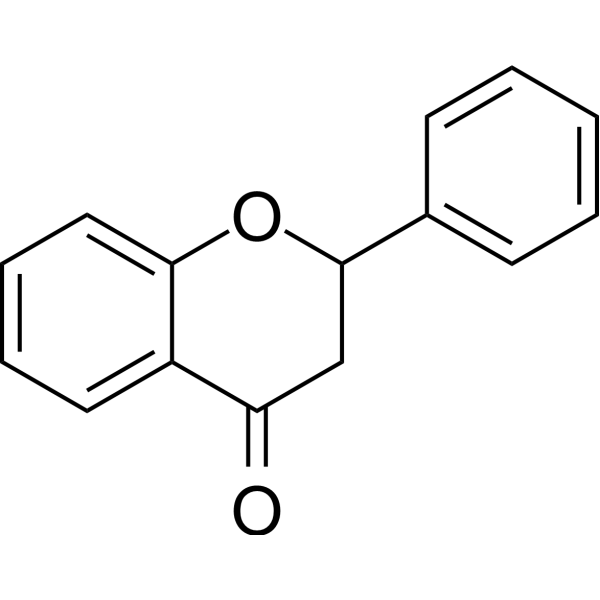
FlavanoneFlavones -

HY-N7128R
Flavanone (Standard)Flavones
Publications Citing Use of MedChemExpress (MCE) Sakuranetin
More- Food Chem. 2025 Dec 30:497:146992. [Abstract]
- Food Chem. 2025 Oct 15:489:144992. [Abstract]
- Antioxidants (Basel). 2022 Nov 7;11(11):2197. [Abstract]
- J Agric Food Chem. 2025 Oct 15;73(41):26087-26100. [Abstract]
- Ind Crops Prod. 2025 Dec 11;239:122458.
- Int Immunopharmacol. 2026 May 15:177:116542. [Abstract]
- Int Immunopharmacol. 2025 Sep 3:165:115460. [Abstract]
- Nanomedicine. 2026 Sep 17:103021.
- Biomed Pharmacother. 2024 Feb:171:116194. [Abstract]
 Customer Validation & Images

-
IHC

-
WB

-
ELISA

-
Flow Cytometry

-
RT-PCR


Biologische Aktivität
Beschreibung
Cellular Effect
|
Cell Line

|
Type | Value | Description | References |
|---|---|---|---|---|
| HEK-293T | IC50 |
3.6 μM
Compound: 32
|
Inhibition of human TAS2R31 receptor expressed in HEK293T cells overexpressing chimeric G-protein alpha-subunit
Inhibition of human TAS2R31 receptor expressed in HEK293T cells overexpressing chimeric G-protein alpha-subunit
|
[PMID: 21650152] |
| KB | ED50 |
10 μg/mL
Compound: Sakuranetin
|
Cytotoxicity against human KB cells after 72 hrs
Cytotoxicity against human KB cells after 72 hrs
|
[PMID: 8158163] |
| L5178Y | IC50 |
≥11.3 μM
Compound: 14
|
Cytotoxicity against multi-drug resistant mouse L5178Y cells transfected with ABCB1 gene assessed as inhibition of cell growth incubated for 24 hrs by MTT assay
Cytotoxicity against multi-drug resistant mouse L5178Y cells transfected with ABCB1 gene assessed as inhibition of cell growth incubated for 24 hrs by MTT assay
|
[PMID: 33038666] |
| L5178Y | IC50 |
≥11.3 μM
Compound: 14
|
Cytotoxicity against parental mouse L5178Y cells assessed as inhibition of cell growth incubated for 24 hrs by MTT assay
Cytotoxicity against parental mouse L5178Y cells assessed as inhibition of cell growth incubated for 24 hrs by MTT assay
|
[PMID: 33038666] |
| RAW264.7 | CC50 |
>100 μM
Compound: 8
|
Cytotoxicity against mouse RAW264.7 cells assessed as reduction in cell viability after 3 hrs by alamar blue assay
Cytotoxicity against mouse RAW264.7 cells assessed as reduction in cell viability after 3 hrs by alamar blue assay
|
[PMID: 22148193] |
| RAW264.7 | IC50 |
19.55 μM
Compound: 8
|
Inhibition of iNOS-mediated NO production in LPS-stimulated mouse RAW264.7 cells after 24 hrs by Griess reagent method
Inhibition of iNOS-mediated NO production in LPS-stimulated mouse RAW264.7 cells after 24 hrs by Griess reagent method
|
[PMID: 22148193] |
| RAW264.7 | IC50 |
21.6 μM
Compound: 27
|
Antiinflammatory activity in mouse RAW264.7 assessed as inhibition of LPS-induced NO production preincubated for 30 mins followed by LPS stimulation measured after 24 hrs by Griess reagent based assay
Antiinflammatory activity in mouse RAW264.7 assessed as inhibition of LPS-induced NO production preincubated for 30 mins followed by LPS stimulation measured after 24 hrs by Griess reagent based assay
|
[PMID: 33939429] |
In Vitro
Sakuranetin (0.1 and 0.3 mM, 0-5 days post inoculation) inhibits fungal mycelium growth in potato dextrose agar[1].
Sakuranetin (0-100 μg/mL, 48 h) inhibits influenza B/Lee/40 virus replication in MDCK cells[3].
Sakuranetin (30 μM, 48 or 72 h) induces melanin synthesis, and increases the expression of Tyr, TRP1, and TRP2 in B16 melanoma cells[4].
Sakuranetin (30 μM, 12-48 h) inhibits phosphorylation of ERK and AKT in B16 melanoma cells[4].
MedChemExpress (MCE) has not independently confirmed the accuracy of these methods. They are for reference only.
In Vivo
Sakuranetin (20 mg/kg, intratracheal instillation) attenuates airway hyperresponsiveness and inflammation in Ovalbumin induced asthma murine model[5].
MedChemExpress (MCE) has not independently confirmed the accuracy of these methods. They are for reference only.
-
Animal Model:Acute lung inflammation mice model induced by LPS (5 mg/kg)[2]
-
Dosage:20 mg/kg
-
Administration:intratracheal instillation, 10 μL
-
Result:Reduced respiratory system elastance.
Decreased LPS-induced blood and pulmonary leukocytes.
Reduced proinflammatory cytokines, markers of M1- and M2-like macrophages, and activation of NF-κB in lung tissue.


Chemical Information
-
CAS. Nr. 2957-21-3
-
Appearance Solid
-
Molecular Weight 286.28
-
Formel C16H14O5
-
Color White to off-white
-
SMILES
O=C1C2=C(O)C=C(OC)C=C2O[C@H](C3=CC=C(O)C=C3)C1
-
Structure Classification
-
Initial Source
-
Versand
Room temperature in continental US; may vary elsewhere.
-
Speicherung
Powder -20°C 3 years 4°C 2 years In solvent -80°C 2 years -20°C 1 year


Publications (9)
-
Journal Impact Factor
-
Most Recent
-
Food Chem
Effects of sun drying combined with baking processes on the flavor quality of Chongqing Tuocha raw tea. [Abstract]2025 Dec 30:497:146992. PMID: 41285060 -
Food Chem
Flavonoid-mediated metabolic underpinning quality variation in red bud-sport pear mutants. [Abstract]2025 Oct 15:489:144992. PMID: 40466530 -
Antioxidants (Basel)
Structural Requirements for the Neuroprotective and Anti-Inflammatory Activities of the Flavanone Sterubin. [Abstract]2022 Nov 7;11(11):2197. PMID: 36358569 -
J Agric Food Chem
Inducible Sesquiterpene Synthase and a Phenylpropanoid Phytoalexin of Eggplants (Solanum melongena) Synergistically Promote Nonhost Resistance against Phytophthora infestans. [Abstract]2025 Oct 15;73(41):26087-26100. PMID: 41032367 -
-
Int Immunopharmacol
Sakuranetin ameliorates joint inflammation and bone erosion in rheumatoid arthritis by suppressing NLRP3 inflammasome-mediated inflammatory signaling. [Abstract]2026 May 15:177:116542. PMID: 41864012
Sakuranetin purchased from MedChemExpress. Usage Cited in: Int Immunopharmacol. 2026 May 15:177:116542. [Abstract]
Representative immunohistochemical staining for IL-1β in ankle joints treated with Sakuranetin (Sak) (10, 25, 50 mg/kg, p.o.).
Sakuranetin purchased from MedChemExpress. Usage Cited in: Int Immunopharmacol. 2026 May 15:177:116542. [Abstract]
Quantification of the osteoclast differentiation-related proteins NFATc1 and MMP-9 treated with Sakuranetin (Sak) (0, 10, 30, 60 μM).
Sakuranetin purchased from MedChemExpress. Usage Cited in: Int Immunopharmacol. 2026 May 15:177:116542. [Abstract]
IL-1β levels in the culture supernatants of both cell types were quantified by ELISA treated with Sakuranetin (Sak) (0, 10, 30, 60 μM).
Sakuranetin purchased from MedChemExpress. Usage Cited in: Int Immunopharmacol. 2026 May 15:177:116542. [Abstract]
Flow cytometric analysis of ASC speck fluorescence intensity and the percentage of ASC speck-positive cells treated with Sakuranetin (Sak) (60 μM).
Sakuranetin purchased from MedChemExpress. Usage Cited in: Int Immunopharmacol. 2026 May 15:177:116542. [Abstract]
The expression levels of mRNA for NLRP3 inflammasome components were analyzed in BMDMs treated with LPS, with or without varying concentrations of Sakuranetin (Sak) (0, 10, 30, 60 μM).

Sakuranetin purchased from MedChemExpress. Usage Cited in: Int Immunopharmacol. 2026 May 15:177:116542. [Abstract]
Immunofluorescence analysis was conducted to assess p65 nuclear translocation in BMDMs treated with LPS, with or without the specified concentrations of Sakuranetin (Sak) (60 μM).
-
Int Immunopharmacol
Sakuranetin inhibits osteoclastogenesis and rescues the ovariectomy-induced bone loss by blocking PI3K/AKT and NF-κB signaling pathway. [Abstract]2025 Sep 3:165:115460. PMID: 40907333 -
-
Biomed Pharmacother
Sakuranetin reduces inflammation and chondrocyte dysfunction in osteoarthritis by inhibiting the PI3K/AKT/NF-κB pathway. [Abstract]2024 Feb:171:116194. PMID: 38262147


Lösungsmittel & Löslichkeit
In Vitro:
DMSO : ≥ 125 mg/mL (436.64 mM; Hygroscopic DMSO has a significant impact on the solubility of product, please use newly opened DMSO)
* "≥" means soluble, but saturation unknown.
Please refer to the solubility information to select the appropriate solvent. Once prepared, please aliquot and store the solution to prevent product inactivation from repeated freeze-thaw cycles.
Storage method and period of stock solution: -80°C, 2 years; -20°C, 1 year. When stored at -80°C, please use it within 2 years. When stored at -20°C, please use it within 1 year.
Please refer to the solubility information to select the appropriate solvent. Once prepared, please aliquot and store the solution to prevent product inactivation from repeated freeze-thaw cycles.
Storage method and period of stock solution: -80°C, 2 years; -20°C, 1 year. When stored at -80°C, please use it within 2 years. When stored at -20°C, please use it within 1 year.
Konzentration (Stammlösung) × Volumen (Stammlösung) = Konzentration (Ziellösung) × Volumen (Ziellösung)
In Vivo:
Select the appropriate dissolution method based on your experimental animal and administration route.
- For the following dissolution methods, please ensure to first prepare a clear stock solution using an In Vitro approach and then sequentially add co-solvents:
- To ensure reliable experimental results, the clarified stock solution can be appropriately stored based on storage conditions. As for the working solution for In Vivo experiments, it is recommended to prepare freshly and use it on the same day.
- The percentages shown for the solvents indicate their volumetric ratio in the final prepared solution. If precipitation or phase separation occurs during preparation, heat and/or sonication can be used to aid dissolution.
Add each solvent one by one: 10% DMSO 40% PEG300 5% Tween-80 45% Saline
Solubility: ≥ 2.08 mg/mL (7.27 mM); Clear solution
This protocol yields a clear solution of ≥ 2.08 mg/mL (saturation unknown).
Taking 1 mL working solution as an example, add 100 μL DMSO stock solution (20.8 mg/mL) to 400 μL PEG300, and mix evenly; then add 50 μL Tween-80 and mix evenly; then add 450 μL Saline to adjust the volume to 1 mL.
Preparation of Saline: Dissolve 0.9 g sodium chloride in ddH₂O and dilute to 100 mL to obtain a clear Saline solution.
Add each solvent one by one: 10% DMSO 90% (20% SBE-β-CD in Saline)
Solubility: ≥ 2.08 mg/mL (7.27 mM); Clear solution
This protocol yields a clear solution of ≥ 2.08 mg/mL (saturation unknown).
Taking 1 mL working solution as an example, add 100 μL DMSO stock solution (20.8 mg/mL) to 900 μL 20% SBE-β-CD in Saline, and mix evenly.
Preparation of 20% SBE-β-CD in Saline (4°C, storage for one week): 2 g SBE-β-CD powder is dissolved in 10 mL Saline, completely dissolve until clear.
In Vivo Dissolution Calculator
Please enter the basic information of animal experiments:
-
-
-
-
Recommended: Prepare an additional quantity of animals to account for potential losses during experiments.
Please enter your animal formula composition:
-
%DMSO +
Recommended: Keep the proportion of DMSO in working solution below 2% if your animal is weak.
-
%+
-
+%Tween-80 + +
-
%Saline +
The co-solvents required include: DMSO, . All of co-solvents are available by MedChemExpress (MCE). , Tween 80. All of co-solvents are available by MedChemExpress (MCE).
Working solution concentration: 0.22 mg/mL
Method for preparing stock solution: mg drug dissolved in μL DMSO. Stock solution concentration: mg/mL.
1. Take μL DMSO stock solution;
2. Add μL .
μL , mix evenly;
3. Then add μL Tween 80, mix evenly;
4. Then add μL
Please ensure that the stock solution in the first step is dissolved to a clear state, and add co-solvents in sequence. You can use ultrasonic heating (ultrasonic cleaner, recommended frequency 20-40 kHz), vortexing, etc. to assist dissolution.


Reinheit & Dokumentation
-
Data Sheet (275 KB)
-
SDS (393 KB)
- English - EN (393 KB)
- Français - FR (393 KB)
- Deutsch - DE (393 KB)
- Norwegian - NO (393 KB)
- Español - ES (393 KB)
- Swedish - SV (393 KB)
- Italian - IT (393 KB)
- Korean - KR (393 KB)
- Portuguese - PT (393 KB)
-
Handling Instructions (2659 KB)
Verweise
[1]. Hasegawa M, et al. Analysis on blast fungus-responsive characters of a flavonoid phytoalexin sakuranetin; accumulation in infected rice leaves, antifungal activity and detoxification by fungus. Molecules. 2014 Aug 4;19(8):11404-18. [Content Brief]
[2]. Bittencourt-Mernak MI, et al. Prophylactic and therapeutic treatment with the flavonone sakuranetin ameliorates LPS-induced acute lung injury. Am J Physiol Lung Cell Mol Physiol. 2017 Feb 1;312(2):L217-L230. [Content Brief]
[3]. Kwon DH, et al. Suppression of influenza B virus replication by sakuranetin and mode of its action. Phytother Res. 2018 Dec;32(12):2475-2479. [Content Brief]
[4]. Drira R, et al. Sakuranetin Induces Melanogenesis in B16BL6 Melanoma Cells through Inhibition of ERK and PI3K/AKT Signaling Pathways. Phytother Res. 2016 Jun;30(6):997-1002. [Content Brief]
[5]. Toledo AC, et al. Flavonone treatment reverses airway inflammation and remodelling in an asthma murine model. Br J Pharmacol. 2013 Apr;168(7):1736-49. [Content Brief]


Complete Stock Solution Preparation Table
Please refer to the solubility information to select the appropriate solvent. Once prepared, please aliquot and store the solution to prevent product inactivation from repeated freeze-thaw cycles.
Storage method and period of stock solution: -80°C, 2 years; -20°C, 1 year. When stored at -80°C, please use it within 2 years. When stored at -20°C, please use it within 1 year.
| Optional Solvent | Concentration Solvent Mass | 1 mg | 5 mg | 10 mg | 25 mg |
|---|---|---|---|---|---|
| DMSO | 1 mM | 3.4931 mL | 17.4654 mL | 34.9308 mL | 87.3271 mL |
| 5 mM | 0.6986 mL | 3.4931 mL | 6.9862 mL | 17.4654 mL | |
| 10 mM | 0.3493 mL | 1.7465 mL | 3.4931 mL | 8.7327 mL | |
| 15 mM | 0.2329 mL | 1.1644 mL | 2.3287 mL | 5.8218 mL | |
| 20 mM | 0.1747 mL | 0.8733 mL | 1.7465 mL | 4.3664 mL | |
| 25 mM | 0.1397 mL | 0.6986 mL | 1.3972 mL | 3.4931 mL | |
| 30 mM | 0.1164 mL | 0.5822 mL | 1.1644 mL | 2.9109 mL | |
| 40 mM | 0.0873 mL | 0.4366 mL | 0.8733 mL | 2.1832 mL | |
| 50 mM | 0.0699 mL | 0.3493 mL | 0.6986 mL | 1.7465 mL | |
| 60 mM | 0.0582 mL | 0.2911 mL | 0.5822 mL | 1.4555 mL | |
| 80 mM | 0.0437 mL | 0.2183 mL | 0.4366 mL | 1.0916 mL | |
| 100 mM | 0.0349 mL | 0.1747 mL | 0.3493 mL | 0.8733 mL |


Sakuranetin Related Classifications
HY-N3006 Related Classifications
 Powered by Bioz