



Malus pumila Mill.
Alias: apple
-
Malus pumila Mill. (17)

- 1
![Benzo[a]pyrene](https://file.medchemexpress.com/product_pic/hy-107377.gif "Click to View Benzo[a]pyrene Product Detail")
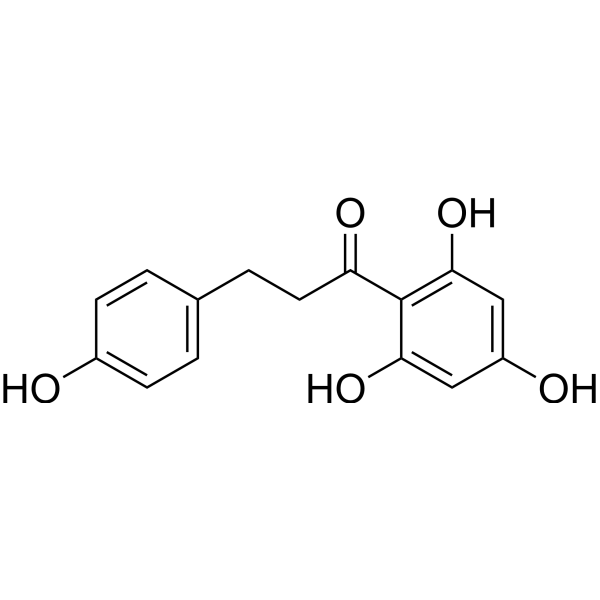
- Formula: C15H14O5
- Molecular Weight: 274.27
Phloretin (NSC 407292; RJC 02792) is a flavonoid extracted from Malus pumila Mill.,has anti-inflammatory activities. Phloridzin is a specific,competitive and orally active inhibitor of sodium/glucose cotransporters in the intestine (SGLT1) and kidney (SGLT2). Phloretin inhibits Yeast-made GLUT1 as well as Human erythrocyte GLUT1 with IC50values of 49 μM and 61 μM,respectively.Phloretin has the potential for the treatment of rheumatoid arthritis (RA) and allergic airway inflammation.
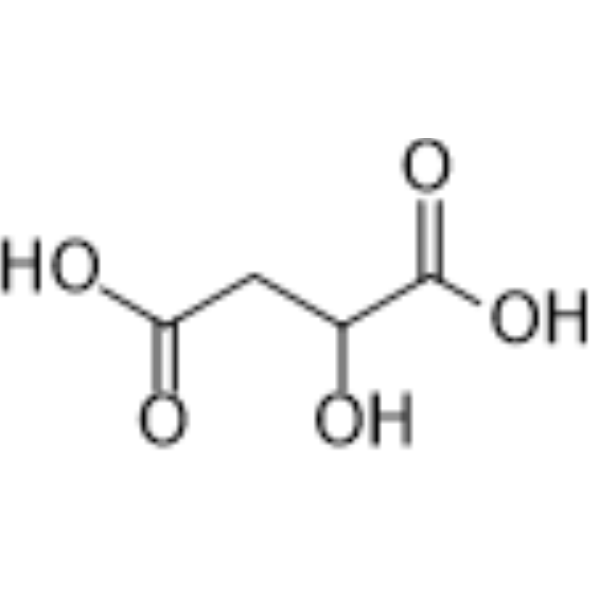
- Formula: C4H6O5
- Molecular Weight: 134.09
Malic acid (Hydroxybutanedioic acid) is a dicarboxylic acid that occurs naturally in fruits like apples and pears with oral activities. Malic acid plays a role in many sour or tangy foods. Malic acid is an intermediate in the citric acid cycle.
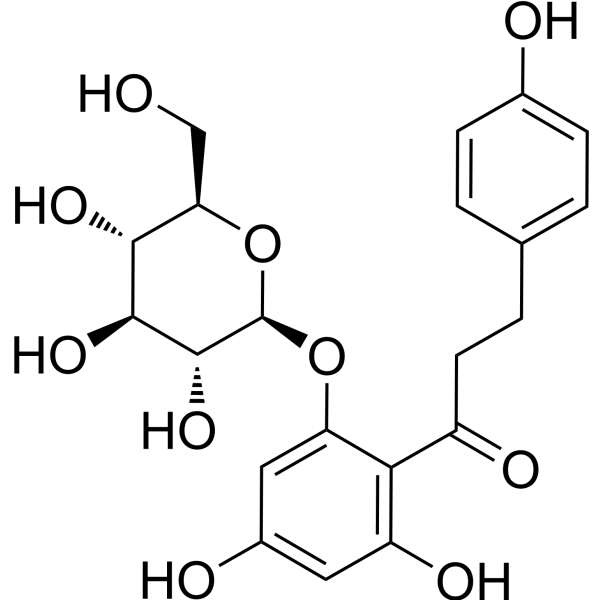
- Formula: C21H24O10
- Molecular Weight: 436.41
Phlorizin (Floridzin) is an orally active non-selective sodium-glucose cotransporter (SGLT) inhibitor, with an IC50 of 0.04 μM and a Ki of 39 nM against hSGLT2, and an IC50 of 0.17 μM and a Ki of 0.31 μM against hSGLT1. Phlorizin promotes GLUT4 translocation, inhibits gluconeogenesis and promotes glycogen synthesis by activating the PI3K/Akt/mTOR pathway. Phlorizin reduces DNA damage and apoptosis (apoptosis) by inhibiting the NF-κB inflammatory pathway. Phlorizin induces apoptosis via activating the Caspase pathway by antagonizing the JAK/STAT3 and PCK pathways. Phlorizin also exhibits antibacterial, anti-inflammatory and neuroprotective activities.
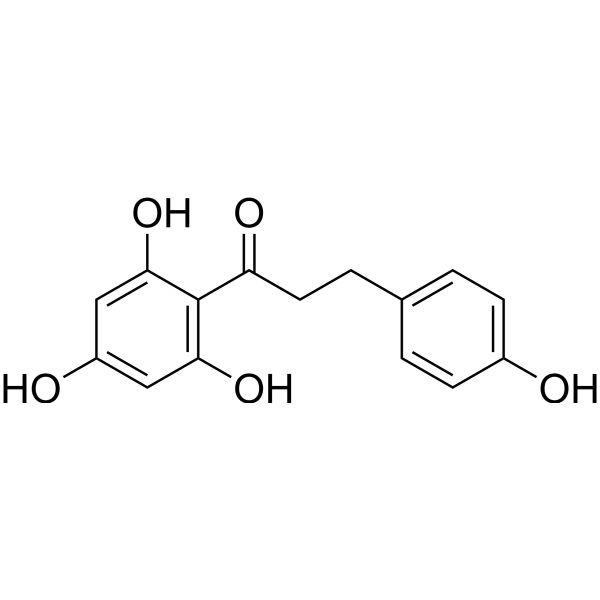
- Formula: C₁₅H₁₄O₅
- Molecular Weight: 274.27
Phloretin (Standard) is the analytical standard of Phloretin. This product is intended for research and analytical applications. Phloretin (NSC 407292; RJC 02792) is a flavonoid extracted from Malus pumila Mill., has anti-inflammatory activities. Phloridzin is a specific, competitive and orally active inhibitor of sodium/glucose cotransporters in the intestine (SGLT1) and kidney (SGLT2). Phloretin inhibits Yeast-made GLUT1 as well as Human erythrocyte GLUT1 with IC50values of 49 μM and 61 μM, respectively.Phloretin has the potential for the treatment of rheumatoid arthritis (RA) and allergic airway inflammation.


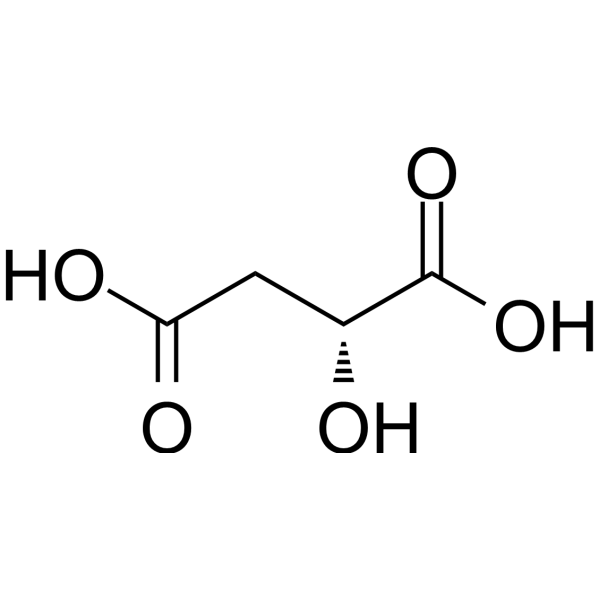
- Formula: C4H6O5
- Molecular Weight: 134.09
D-(+)-Malic acid (Standard) is the analytical standard of D-(+)-Malic acid. This product is intended for research and analytical applications. D-(+)-Malic acid (D-Malic acid), an active enantiomer of Malic acid, is a competitive inhibitor of L(--)malic acid transport.
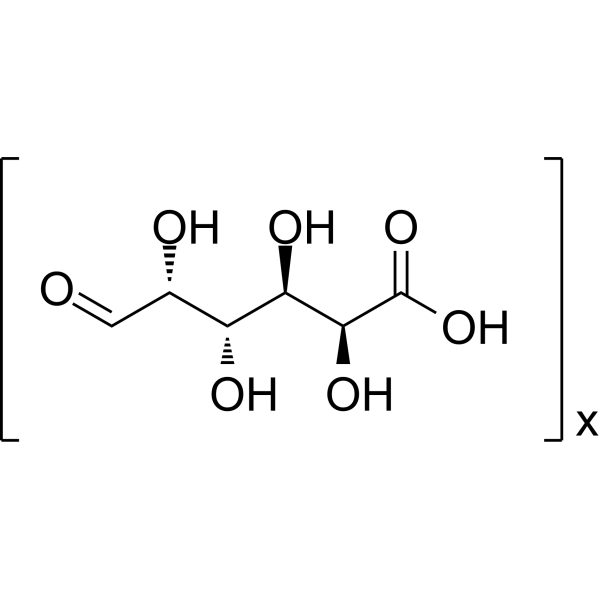
- Formula: (C6H10O7)x
Polygalacturonic acid (Galacturonic acid polymer) is transparent colloid, is a major component of the cell wall. Polygalacturonic acid can be used to prepare silver nanoparticles (AgNPs), as an antioxidant and anti-inflammatory that protect cells from destructive effect of elevated ROS and accelerate wound healing. Polygalacturonic acid nanoparticles also displays anti-bacterial activity.
Pectin is a heteropolysaccharide, derived from the cell wall of higher plants. Pectin involves in the formation of nanoparticles as a delivery vehicle of agents. Pectin is also an adsorbent, a broad-spectrum antimicrobial agent that binds to bacteria toxins and other irritants in the intestinal mucosa, relieves irritated mucosa.

- Formula: C₄H₆O₅
- Molecular Weight: 134.09
Malic acid (Standard) is the analytical standard of Malic acid. This product is intended for research and analytical applications. Malic acid (Hydroxybutanedioic acid) is a dicarboxylic acid that is naturally found in fruits such as apples and pears. It plays a role in many sour or tart foods.
![Benzo[a]pyrene (Standard)](https://file.medchemexpress.com/product_pic/hy-107377r.gif "Click to View Benzo[a]pyrene (Standard) Product Detail")
- Formula: C₂₀H₁₂
- Molecular Weight: 252.31
Benzo[a]pyrene (Standard) is the analytical standard of Benzo[a]pyrene. This product is intended for research and analytical applications. Benzo[a]pyrene shows lung carcinogenicity in animal models, and it is frequently used in chemoprevention studies.
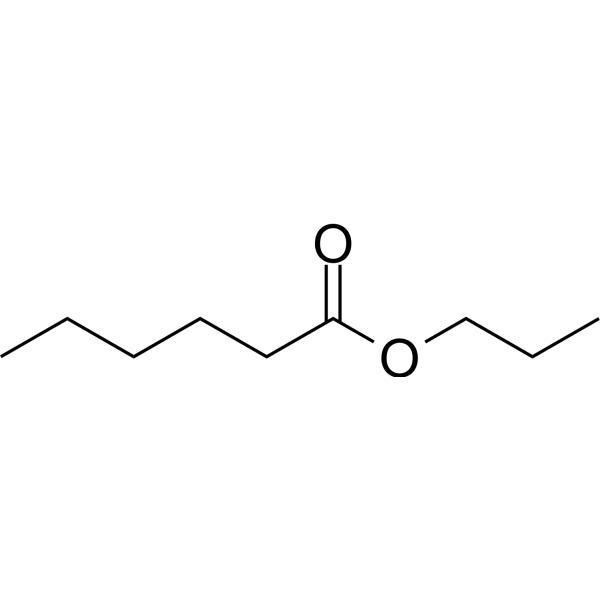
- Formula: C9H18O2
- Molecular Weight: 158.24
Propyl hexanoate is an ester compound obtained by the reaction of propanol and hexanoic acid. It has a fruity aroma and is commonly used as a flavoring agent in various foods such as baked goods, beverages and desserts. Propyl hexanoate is also used as a fragrance ingredient in the production of perfume and personal care products. Furthermore, it has applications in industrial settings, for example in the production of solvents and plasticizers.

- Formula: C11H22O6
- Molecular Weight: 250.29
2-Methylbutyl β-D-glucopyranoside is a glycoside in apple fruit. 2-Methylbutyl β-D-glucopyranoside serves as an aroma precursor that can be enzymatically hydrolyzed to release volatile 2-methylbutanol. 2-Methylbutyl β-D-glucopyranoside is promising for research of food flavor chemistry.


- Formula: C21H24O12
- Molecular Weight: 468.41
POPi (phloridzin oxidation product i) is a colorless oxidation product of phloridzin catalyzed by the apple polyphenol oxidase with DPPH radicalscavenging activity. POPi can be utilized in antioxidant research.

- Formula: C21H24O10
- Molecular Weight: 436.41
Phlorizin (Floridzin) (Standard) is the analytical standard of Phlorizin. This product is intended for research and analytical applications. Phlorizin is an orally active non-selective sodium-glucose cotransporter (SGLT) inhibitor, with an IC50 of 0.04 μM and a Ki of 39 nM against hSGLT2, and an IC50 of 0.17 μM and a Ki of 0.31 μM against hSGLT1. Phlorizin promotes GLUT4 translocation, inhibits gluconeogenesis and promotes glycogen synthesis by activating the PI3K/Akt/mTOR pathway. Phlorizin reduces DNA damage and apoptosis (apoptosis) by inhibiting the NF-κB inflammatory pathway. Phlorizin induces apoptosis via activating the Caspase pathway by antagonizing the JAK/STAT3 and PCK pathways. Phlorizin also exhibits antibacterial, anti-inflammatory and neuroprotective activities.
- 1



