



Centrinone-B
Based on 9 publication(s) in Google Scholar
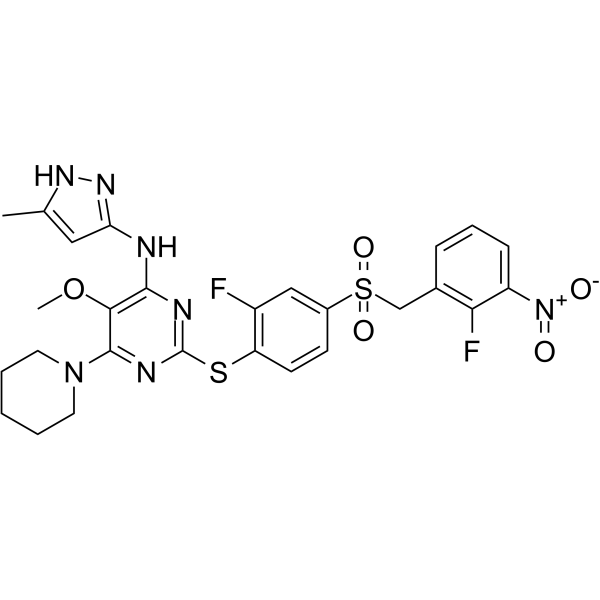
Centrinone-B (LCR-323) is a potent and highly selective PLK4 inhibitor, with a Ki of 0.59 nM.
Nos produits utilisent uniquement pour la recherche. Nous ne vendons pas aux patients.
- Pureté : 98.01%
- CAS No.: 1798871-31-4
- Formule: C27H27F2N7O5S2
- Masse moléculaire:631.67
-
Stockage:Powder -20°C, 3 years , 4°C, 2 years ; In solvent -80°C, 2 years , -20°C, 1 year

To place orders, for customer services and technical support, please contact: MedChemExpress USA
Tel: 609-228-6898 E-mail: [email protected] [email protected]


-
 Activité biologique
-
Chemical Information
-
Solvant et solubilité
- Pureté et documentation
- Références
-
 Help & FAQs


-
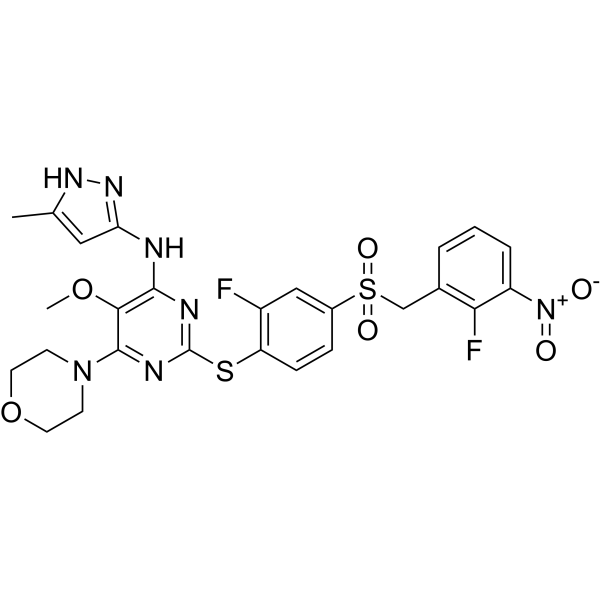
HY-18682
CentrinonePLK4 Inhibitor -
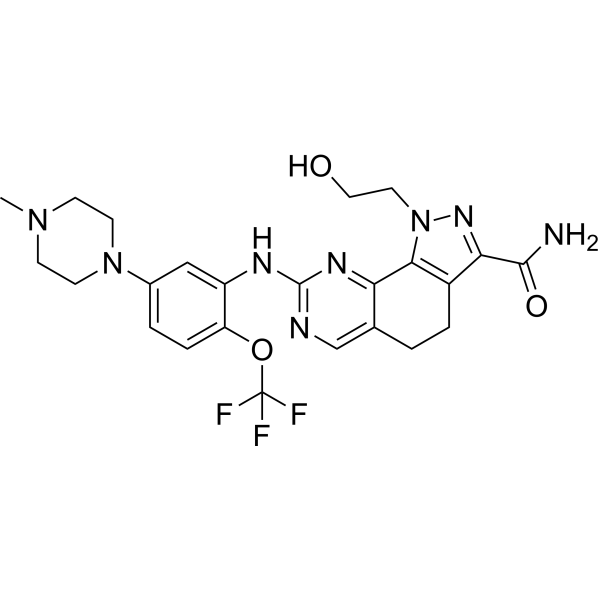
HY-15828
OnvansertibPLK1 Inhibitor -
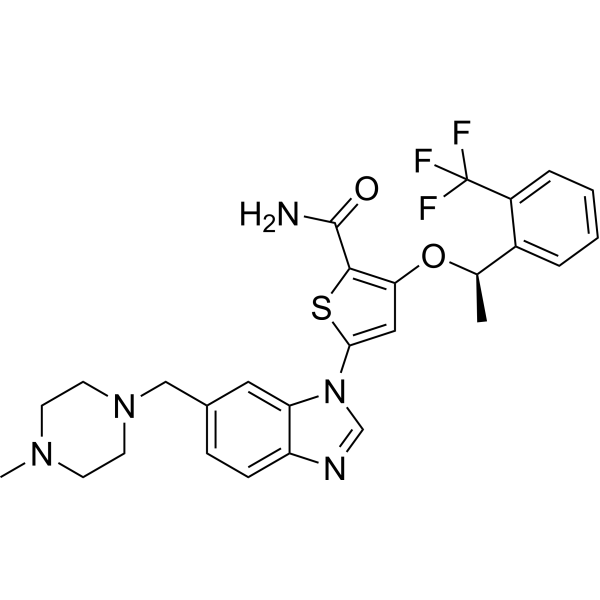
HY-50877
GSK461364PLK1 Inhibitor -
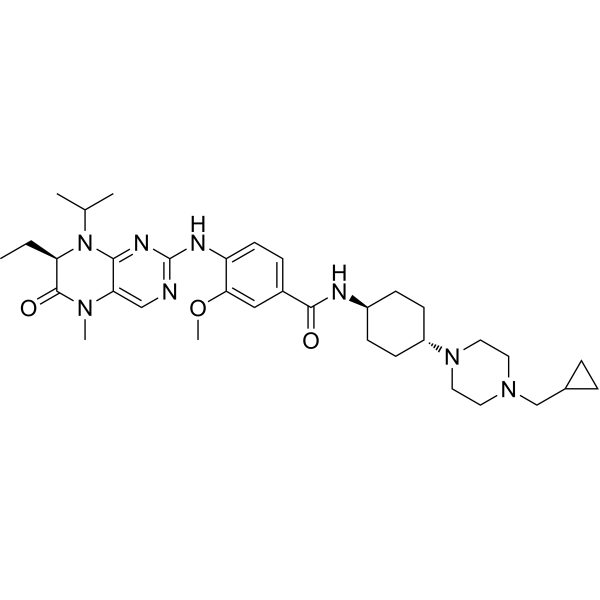
HY-12137
VolasertibPLK1 Inhibitor -
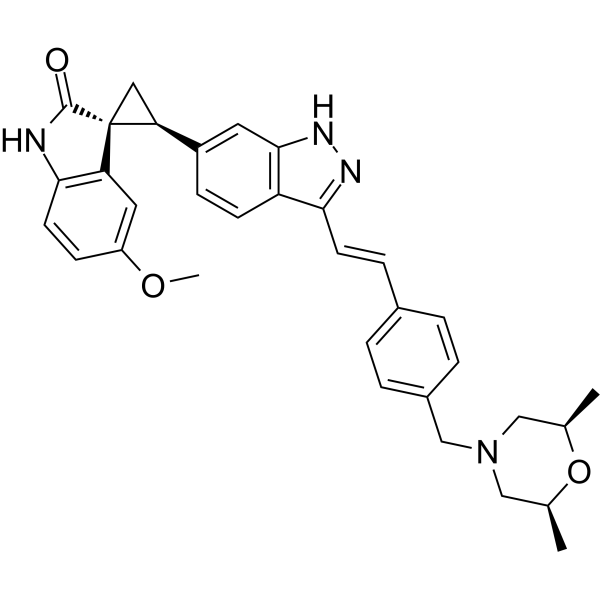
HY-12300
OcifisertibPLK4 Inhibitor -
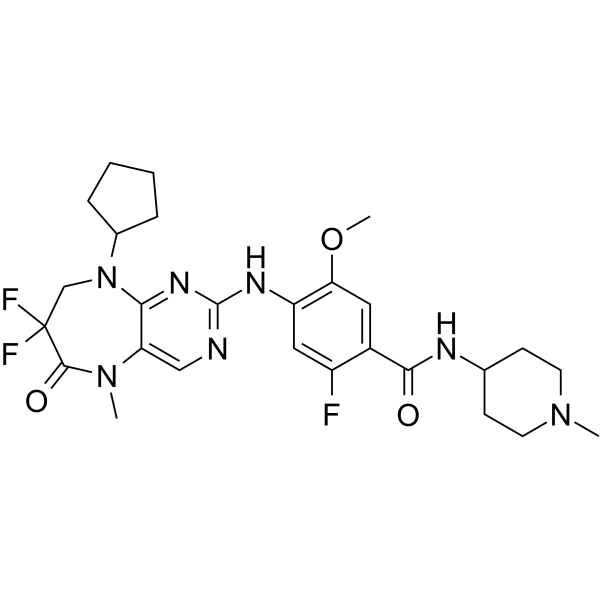
HY-15160
TAK-960PLK1 Inhibitor -
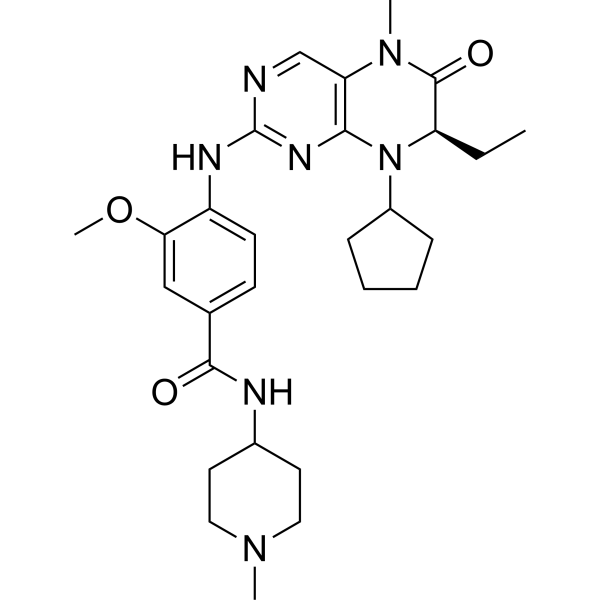
HY-50698
BI 2536PLK1 Inhibitor -
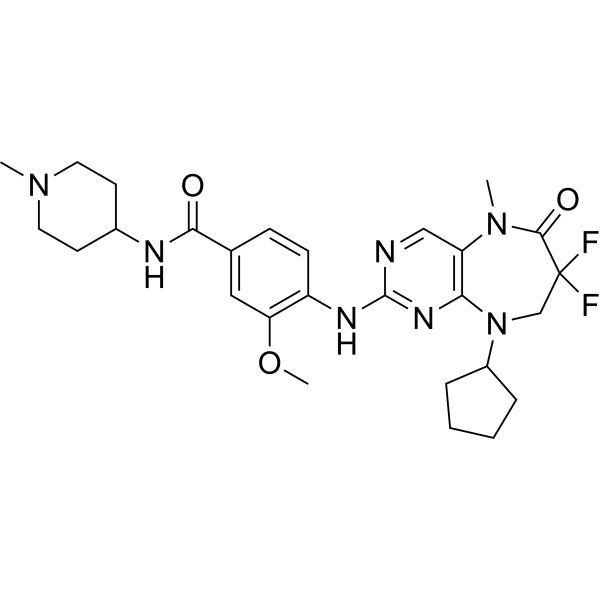
HY-15161
Ro3280PLK1 Inhibitor -
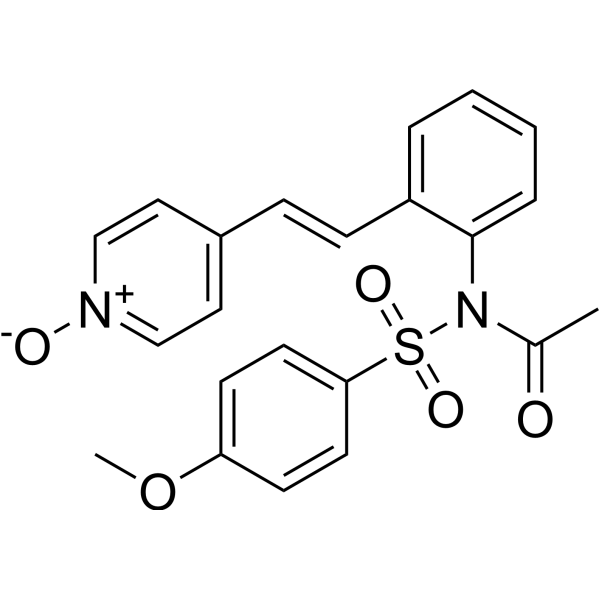
HY-12045
HMN-214PLK1 Inhibitor -
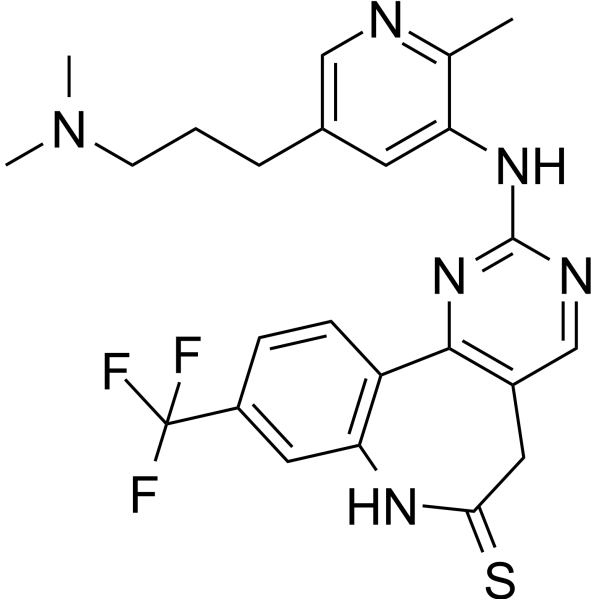
HY-15155
MLN0905PLK1 Inhibitor -
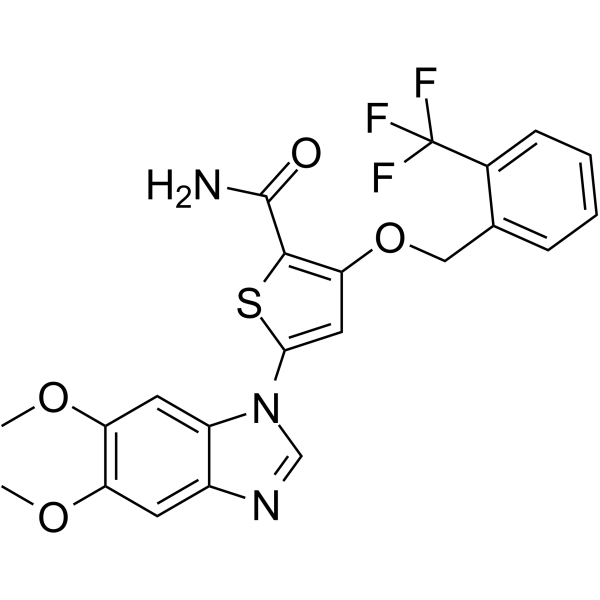
HY-11003
GW843682XPLK Inhibitor -
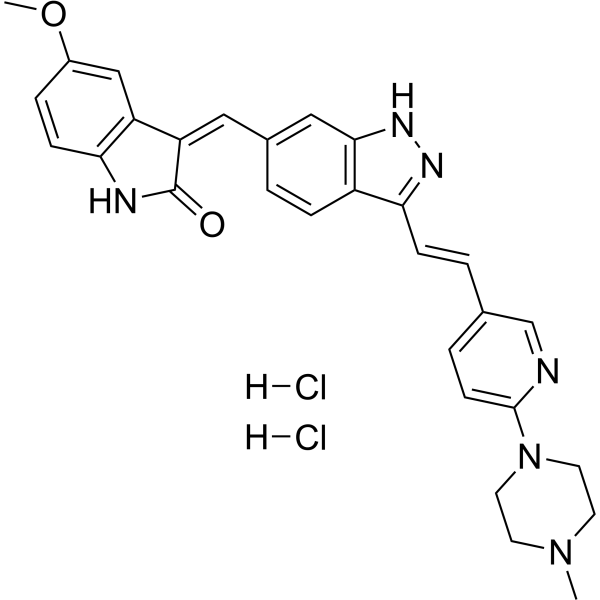
HY-132135
(1E)-CFI-400437 dihydrochloridePLK4 Inhibitor
Publications Citing Use of MedChemExpress (MCE) Centrinone-B
More- Nat Commun. 2026 Jun 13. [Abstract]
- Proc Natl Acad Sci U S A. 2020 Feb 25;117(8):4310-4319. [Abstract]
- EMBO J. 2021 May 17;40(10):e106798. [Abstract]
- EMBO Rep. 2021 Mar 3;22(3):e51094. [Abstract]
- Open Biol. 2024 Oct;14(10):240126. [Abstract]
- Prostate. 2022 Jun;82(9):957-969. [Abstract]
- Res Sq. 2025 Jul 29:rs.3.rs-7014295. [Abstract]
- bioRxiv. 2025 Feb 17.
- Georg-August-Universität Göttingen. 2020 Feb.
 Customer Validation & Images

-
Cell Imaging/Staining
-
WB
-
IF


Activité biologique
Description
IC50 & Target
[1]|
PLK4 0.59 nM (Ki) |
PLK4 (G95L) 497.53 nM (Ki) |
Aurora A 1239 nM (Ki) |
Aurora B 5597.14 nM (Ki) |
In Vitro
Centrinone-B (LCR-323) is a potent and highly selective PLK4 inhibitor, with a Ki of 0.59 nM. Centrinone-B slightly binds to Aurora A and Aurora B, with Kis of 1239 nM and 5597.14 nM. Centrinone-B (LCR-323) exhibits >1000-fold selectivity for Plk4 over Aurora A/B in vitro and does not affect cellular Aurora A or B substrate phosphorylation at concentrations that deplete centrosomes[1]. Centrinone-B (LCR-323) (0-200 nM) significantly decreases cell viability of PLK4-centriole conjunction melanoma cell lines except p53 mutant SK-MEL-28, and this effect is via inhibition of PLK4. Inhibition of PLK4 by Centrinone-B (LCR-323) also induces apoptosis in human melanoma cell lines[2].
MedChemExpress (MCE) has not independently confirmed the accuracy of these methods. They are for reference only.


Chemical Information
-
CAS No. 1798871-31-4
-
Appearance Solid
-
Masse moléculaire 631.67
-
Formule C27H27F2N7O5S2
-
Color Light yellow to yellow
-
SMILES
FC(C([N+]([O-])=O)=CC=C1)=C1CS(C2=CC(F)=C(SC3=NC(NC4=NNC(C)=C4)=C(OC)C(N5CCCCC5)=N3)C=C2)(=O)=O
-
Synonyms
LCR-323
-
Livraison
Room temperature in continental US; may vary elsewhere.
-
Stockage
Powder -20°C 3 years 4°C 2 years In solvent -80°C 2 years -20°C 1 year


Publications (9)
-
Journal Impact Factor
-
Most Recent
-
Nat Commun
The PLK4 inhibitor RP-1664 demonstrates potent efficacy in neuroblastoma preclinical models through a dual mechanism of sensitivity. [Abstract]2026 Jun 13. PMID: 42288516 -
Proc Natl Acad Sci U S A
2020 Feb 25;117(8):4310-4319. PMID: 32041868 -
EMBO J
Centrosome-mediated microtubule remodeling during axon formation in human iPSC-derived neurons. [Abstract]2021 May 17;40(10):e106798. PMID: 33835529
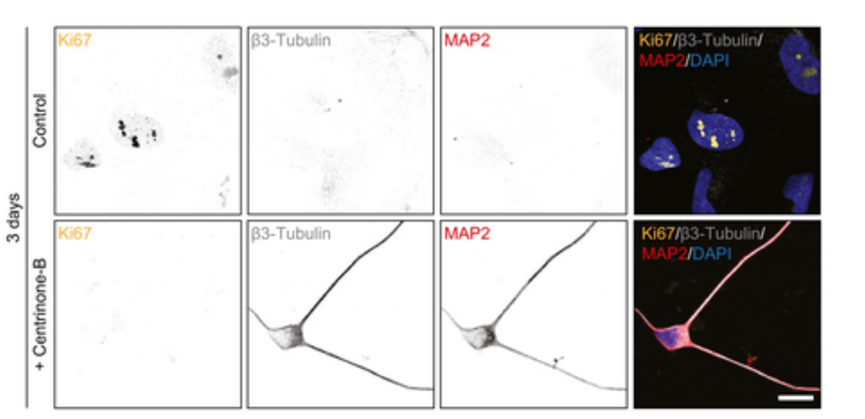
Centrinone-B purchased from MedChemExpress. Usage Cited in: EMBO J. 2021 May 17;40(10):e106798. [Abstract]
Typical examples of human iPSC‐derived NSCs/neurons (day 3) with 0 (control) or 3 days Centrinone-B treatment, and immunostained for Ki67, β3‐tubulin and MAP2.
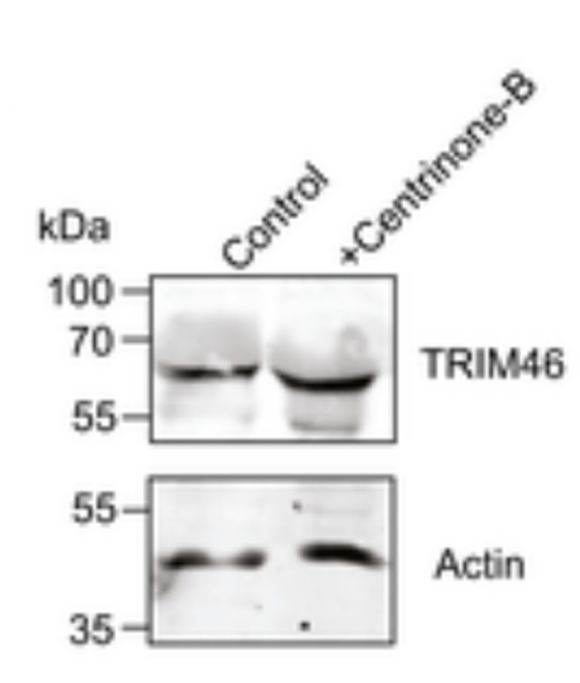
Centrinone-B purchased from MedChemExpress. Usage Cited in: EMBO J. 2021 May 17;40(10):e106798. [Abstract]
Western blot of cell lysates from human iPSC-derived control neurons or Centrinone-B-treated neurons stained for TRIM46 and Actin.
-
EMBO Rep
2021 Mar 3;22(3):e51094. PMID: 33559938
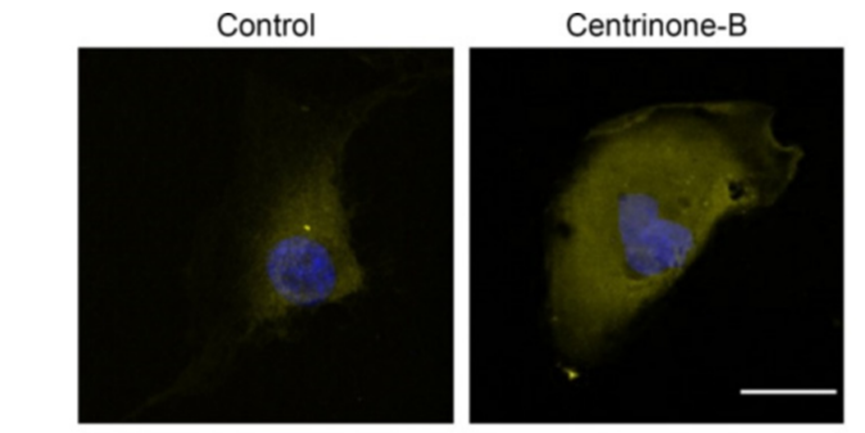
Centrinone-B purchased from MedChemExpress. Usage Cited in: EMBO Rep. 2021 Mar 3;22(3):e51094. [Abstract]
Representative immunofluorescent staining of γ‐tubulin (yellow) and DAPI (blue) in control and Centrinone-B (500 nM, 7 days)-treated hRPEs.
-
Open Biol
2024 Oct;14(10):240126. PMID: 39378986 -
Prostate
PLK4 is upregulated in prostate cancer and its inhibition reduces centrosome amplification and causes senescence. [Abstract]2022 Jun;82(9):957-969. PMID: 35333404 -
Res Sq
The PLK4 inhibitor RP-1664 demonstrates potent single-agent efficacy in neuroblastoma models through a dual mechanism of sensitivity. [Abstract]2025 Jul 29:rs.3.rs-7014295. PMID: 40766251 -
-


Solvant et solubilité
In Vitro:
DMSO : 25 mg/mL (39.58 mM; Need ultrasonic; Hygroscopic DMSO has a significant impact on the solubility of product, please use newly opened DMSO)
Please refer to the solubility information to select the appropriate solvent. Once prepared, please aliquot and store the solution to prevent product inactivation from repeated freeze-thaw cycles.
Storage method and period of stock solution: -80°C, 2 years; -20°C, 1 year. When stored at -80°C, please use it within 2 years. When stored at -20°C, please use it within 1 year.
Please refer to the solubility information to select the appropriate solvent. Once prepared, please aliquot and store the solution to prevent product inactivation from repeated freeze-thaw cycles.
Storage method and period of stock solution: -80°C, 2 years; -20°C, 1 year. When stored at -80°C, please use it within 2 years. When stored at -20°C, please use it within 1 year.
Concentration (start) × Volume (start) = Concentration (final) × Volume (final)
In Vivo:
Select the appropriate dissolution method based on your experimental animal and administration route.
- For the following dissolution methods, please ensure to first prepare a clear stock solution using an In Vitro approach and then sequentially add co-solvents:
- To ensure reliable experimental results, the clarified stock solution can be appropriately stored based on storage conditions. As for the working solution for In Vivo experiments, it is recommended to prepare freshly and use it on the same day.
- The percentages shown for the solvents indicate their volumetric ratio in the final prepared solution. If precipitation or phase separation occurs during preparation, heat and/or sonication can be used to aid dissolution.
Add each solvent one by one: 10% DMSO 90% (20% SBE-β-CD in Saline)
Solubility: 2.5 mg/mL (3.96 mM); Suspended solution; Need ultrasonic
This protocol yields a suspended solution of 2.5 mg/mL. Suspended solution can be used for oral and intraperitoneal injection.
Taking 1 mL working solution as an example, add 100 μL DMSO stock solution (25.0 mg/mL) to 900 μL 20% SBE-β-CD in Saline, and mix evenly.
Preparation of 20% SBE-β-CD in Saline (4°C, storage for one week): 2 g SBE-β-CD powder is dissolved in 10 mL Saline, completely dissolve until clear.
In Vivo Dissolution Calculator
Please enter the basic information of animal experiments:
-
-
-
-
Recommended: Prepare an additional quantity of animals to account for potential losses during experiments.
Please enter your animal formula composition:
-
%DMSO +
Recommended: Keep the proportion of DMSO in working solution below 2% if your animal is weak.
-
%+
-
+%Tween-80 + +
-
%Saline +
The co-solvents required include: DMSO, . All of co-solvents are available by MedChemExpress (MCE). , Tween 80. All of co-solvents are available by MedChemExpress (MCE).
Working solution concentration: 0.22 mg/mL
Method for preparing stock solution: mg drug dissolved in μL DMSO. Stock solution concentration: mg/mL.
1. Take μL DMSO stock solution;
2. Add μL .
μL , mix evenly;
3. Then add μL Tween 80, mix evenly;
4. Then add μL
Please ensure that the stock solution in the first step is dissolved to a clear state, and add co-solvents in sequence. You can use ultrasonic heating (ultrasonic cleaner, recommended frequency 20-40 kHz), vortexing, etc. to assist dissolution.


Pureté et documentation
-
Fiche technique (277 KB)
-
SDS (393 KB)
- English - EN (393 KB)
- Français - FR (393 KB)
- Deutsch - DE (393 KB)
- Norwegian - NO (393 KB)
- Español - ES (393 KB)
- Swedish - SV (393 KB)
- Italian - IT (393 KB)
- Korean - KR (393 KB)
- Portuguese - PT (393 KB)
-
Instruction de manipulation (2659 KB)
Références
[1]. Wong YL, et al. Cell biology. Reversible centriole depletion with an inhibitor of Polo-like kinase 4. Science. 2015 Jun 5;348(6239):1155-60. [Content Brief]
[2]. Denu RA, et al. Centriole Overduplication is the Predominant Mechanism Leading to Centrosome Amplification in Melanoma. Mol Cancer Res. 2018 Jan 12. [Content Brief]


Complete Stock Solution Preparation Table
Please refer to the solubility information to select the appropriate solvent. Once prepared, please aliquot and store the solution to prevent product inactivation from repeated freeze-thaw cycles.
Storage method and period of stock solution: -80°C, 2 years; -20°C, 1 year. When stored at -80°C, please use it within 2 years. When stored at -20°C, please use it within 1 year.
| Optional Solvent | Concentration Solvent Mass | 1 mg | 5 mg | 10 mg | 25 mg |
|---|---|---|---|---|---|
| DMSO | 1 mM | 1.5831 mL | 7.9155 mL | 15.8311 mL | 39.5776 mL |
| 5 mM | 0.3166 mL | 1.5831 mL | 3.1662 mL | 7.9155 mL | |
| 10 mM | 0.1583 mL | 0.7916 mL | 1.5831 mL | 3.9578 mL | |
| 15 mM | 0.1055 mL | 0.5277 mL | 1.0554 mL | 2.6385 mL | |
| 20 mM | 0.0792 mL | 0.3958 mL | 0.7916 mL | 1.9789 mL | |
| 25 mM | 0.0633 mL | 0.3166 mL | 0.6332 mL | 1.5831 mL | |
| 30 mM | 0.0528 mL | 0.2639 mL | 0.5277 mL | 1.3193 mL |


Centrinone-B Related Classifications
HY-18683 Related Classifications
 Powered by Bioz