



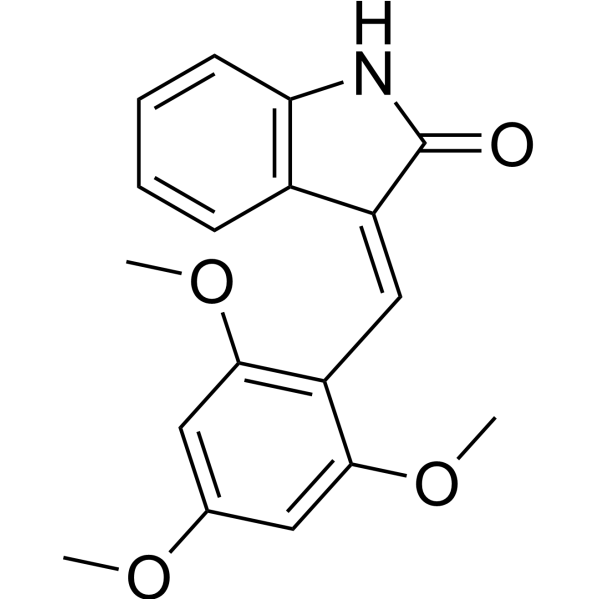
IC261
Based on 4 publication(s) in Google Scholar
IC261 is a selective, ATP-competitive CK1 inhibitor, with IC50s of 1 μM, 1 μM, 16 μM for Ckiδ, Ckiε and Ckiα1, respectively.
For research use only. We do not sell to patients.
- Purity : 99.63%
- CAS No.: 186611-52-9
- Formula: C18H17NO4
- Molecular Weight:311.33
-
Storage:Powder -20°C, 3 years , 4°C, 2 years ; In solvent -80°C, 2 years , -20°C, 1 year

To place orders, for customer services and technical support, please contact: MedChemExpress USA
Tel: 609-228-6898 E-mail: [email protected] [email protected]


-
 Biological Activity
-
Chemical Information
-
Solvent & Solubility
- Purity & Documentation
- References
-
 Help & FAQs


-
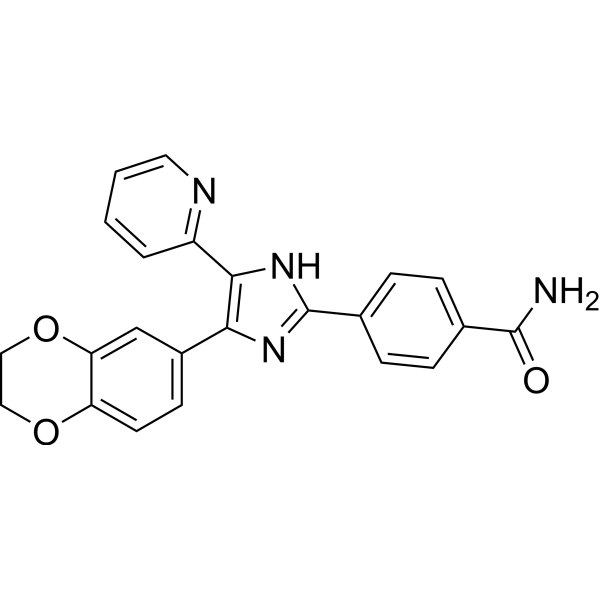
HY-10324
D4476CK1 Inhibitor -
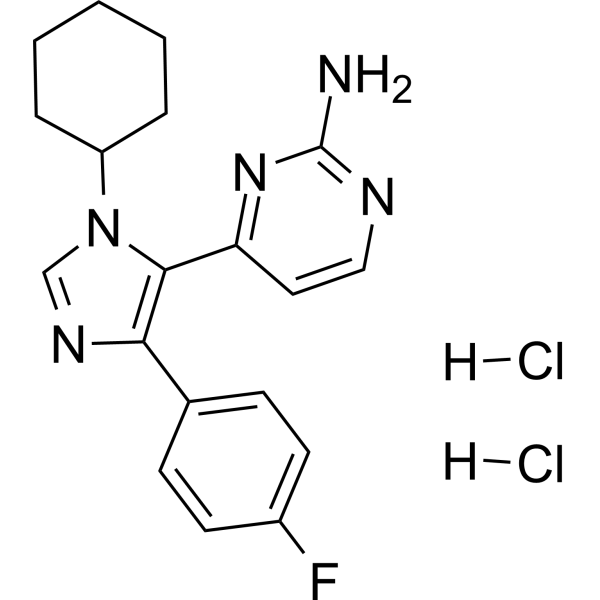
HY-15490
PF-670462 dihydrochlorideCasein Kinase Inhibitor -
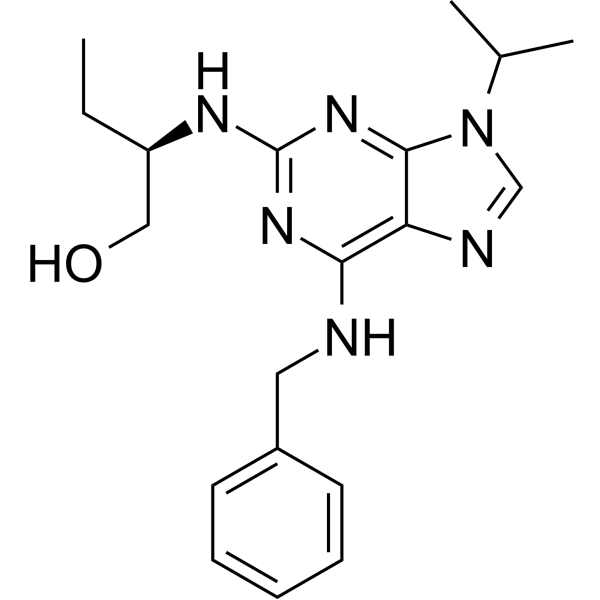
HY-30237
(R)-RoscovitineCDKs Inhibitor -

HY-10219
RapamycinmTOR Inhibitor -
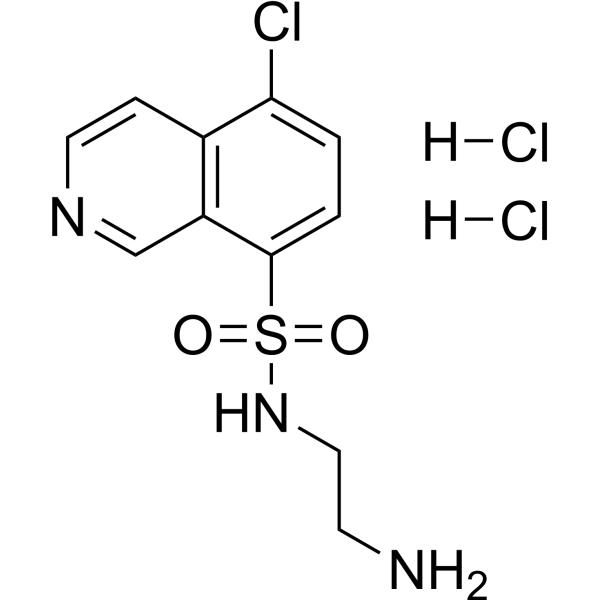
HY-W011109
CKI-7CK1 Inhibitor -
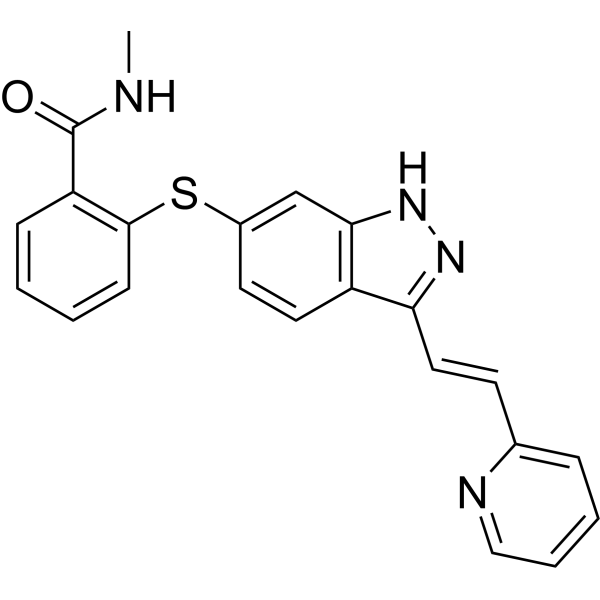
HY-10065
AxitinibTyrosine Kinase Inhibitor -
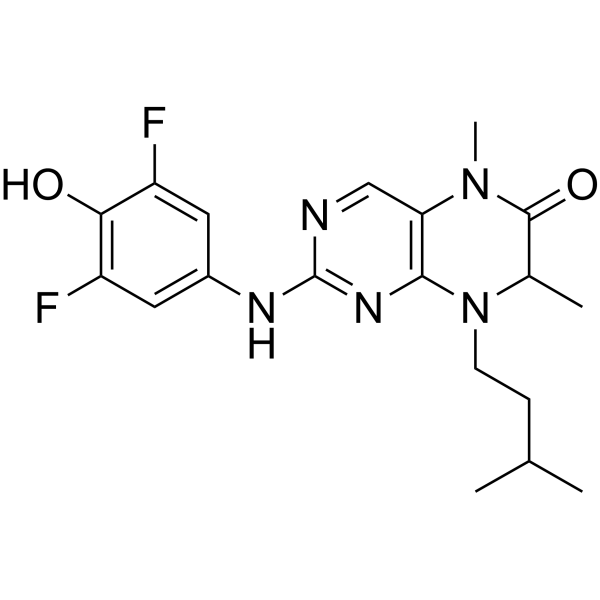
HY-10510
BI-D1870RSK Inhibitor -
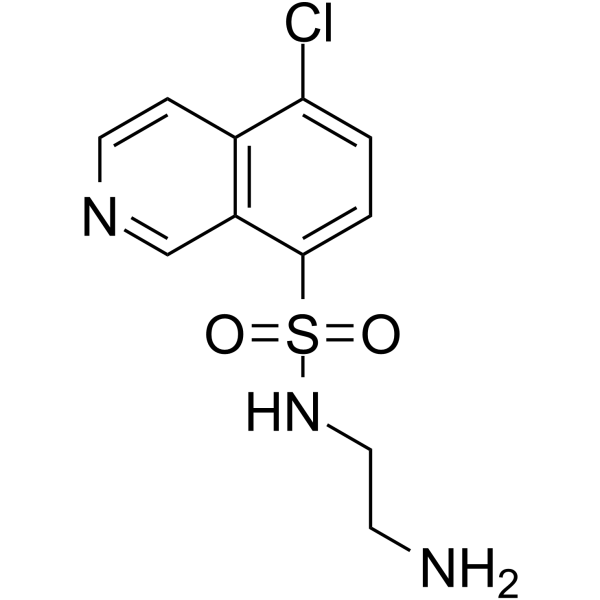
HY-133028
CKI-7 free baseCK1 Inhibitor -
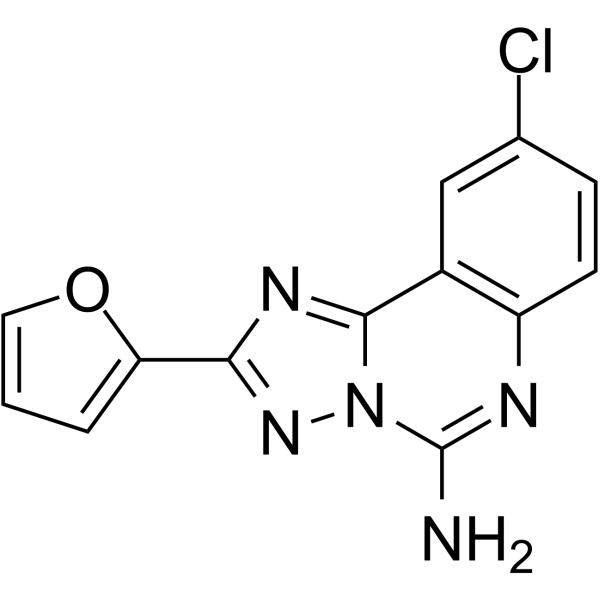
HY-100678
CGS 15943Adenosine Receptor Antagonist -
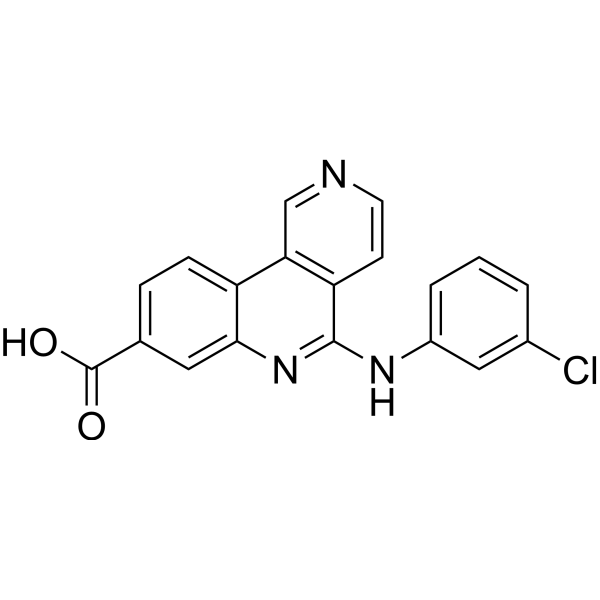
HY-50855
SilmitasertibCasein Kinase 2 Inhibitor -
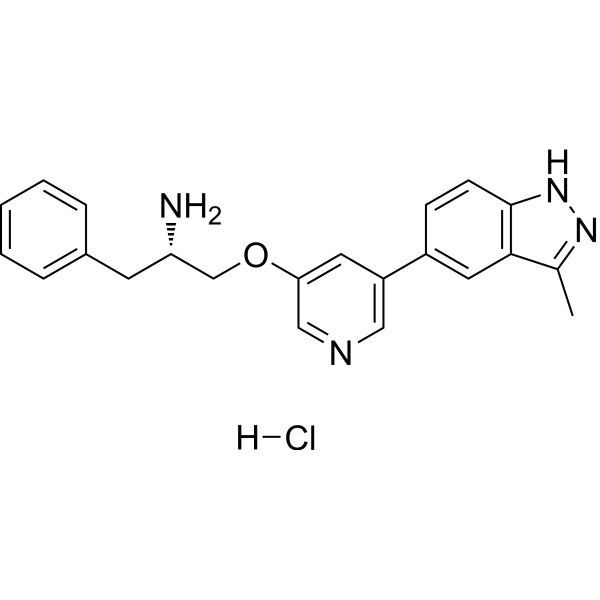
HY-13254A
A-674563 hydrochlorideAkt1 Inhibitor -
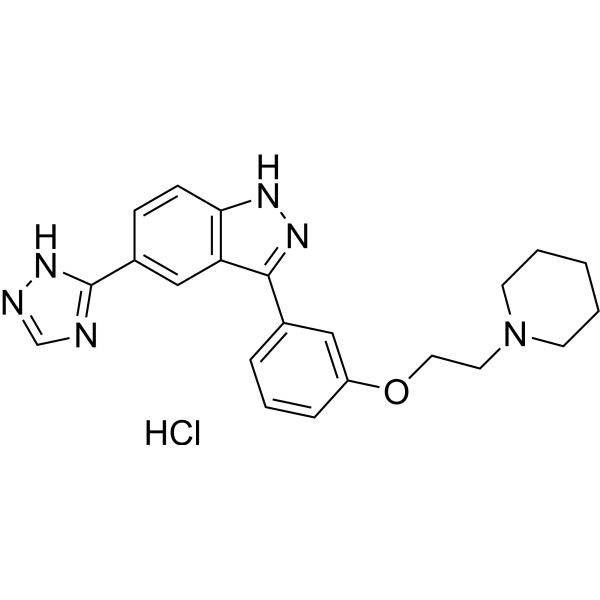
HY-13022
CC-401 hydrochlorideJNK Inhibitor
Publications Citing Use of MedChemExpress (MCE) IC261
More Customer Validation & Images

-
WB



Biological Activity
Description
IC50 & Target
[1]|
CK1δ 1 μM (IC50) |
CK1α1 16 μM (IC50) |
In Vitro
IC261 is a selective, ATP-competitive CK1 inhibitor, with IC50s of 1 μM, 1 μM, 16 μM for Ckiδ, Ckiε and Ckiα1, respectively. IC261 is less active on PKA, p34cdc2, and p55fyn (IC50s > 100 μM)[1]. IC261 induces mitotic arrest, spindle defects and centrosome amplification in AC1-M88 cells. IC261 (1?μM) increases G2/M cells after 12?h, and causes cell death at 24 h in AC1-M88 cells. IC261 (1?μM) also induces apoptosis in the extravillous trophoblast hybrid cells[2]. IC261 (1.25 μM) suppresses the proliferation of several pancreatic tumour cell lines, including ASPC-1, BxPc3, Capan-1, Colo357, MiaPaCa-2, Panc1, Panc89, PancTu-1 and PancTu-2 cells. IC261 (1.25 μM) specifically enhances CD95-mediated apoptosis of pancreatic tumour cells[3].
MedChemExpress (MCE) has not independently confirmed the accuracy of these methods. They are for reference only.
In Vivo
MedChemExpress (MCE) has not independently confirmed the accuracy of these methods. They are for reference only.


Chemical Information
-
CAS No. 186611-52-9
-
Appearance Solid
-
Molecular Weight 311.33
-
Formula C18H17NO4
-
Color Light yellow to yellow
-
SMILES
O=C1NC2=C(C=CC=C2)/C1=C\C3=C(OC)C=C(OC)C=C3OC
-
Shipping
Room temperature in continental US; may vary elsewhere.
-
Storage
Powder -20°C 3 years 4°C 2 years In solvent -80°C 2 years -20°C 1 year


Publications (4)
-
Journal Impact Factor
-
Most Recent
-
Int J Biol Sci
IC261, a specific inhibitor of CK1δ/ε, promotes aerobic glycolysis through p53-dependent mechanisms in colon cancer. [Abstract]2020 Jan 17;16(5):882-892. PMID: 32071557
IC261 purchased from MedChemExpress. Usage Cited in: Int J Biol Sci. 2020 Jan 17;16(5):882-892. [Abstract]
The expression of cleaved caspase-3 of RKO and HCT116 induced by IC261 is detected by using Western blotting (*p<0.05, **p<0.01 vs 0 nM group).
-
Molecules
A Rationale for Drug Design Provided by Co-Crystal Structure of IC261 in Complex with Tubulin. [Abstract]2021 Feb 10;26(4):946. PMID: 33579052 -
Transl Stroke Res
rs2253820 Variant Controls Blood Pressure Dip After Stroke by Increasing CLOCK-BMAL1 Expression. [Abstract]2023 Aug;14(4):472-489. PMID: 35870088 -
Vet Microbiol
Phosphorylation of T425 and methylation of R426 synergistically regulate IBDV VP1 function and viral replication. [Abstract]2026 Feb:313:110871. PMID: 41506171


Solvent & Solubility
In Vitro:
DMSO : ≥ 100 mg/mL (321.20 mM; Hygroscopic DMSO has a significant impact on the solubility of product, please use newly opened DMSO)
* "≥" means soluble, but saturation unknown.
Please refer to the solubility information to select the appropriate solvent. Once prepared, please aliquot and store the solution to prevent product inactivation from repeated freeze-thaw cycles.
Storage method and period of stock solution: -80°C, 2 years; -20°C, 1 year. When stored at -80°C, please use it within 2 years. When stored at -20°C, please use it within 1 year.
Please refer to the solubility information to select the appropriate solvent. Once prepared, please aliquot and store the solution to prevent product inactivation from repeated freeze-thaw cycles.
Storage method and period of stock solution: -80°C, 2 years; -20°C, 1 year. When stored at -80°C, please use it within 2 years. When stored at -20°C, please use it within 1 year.
Concentration (start) × Volume (start) = Concentration (final) × Volume (final)
In Vivo:
Select the appropriate dissolution method based on your experimental animal and administration route.
- For the following dissolution methods, please ensure to first prepare a clear stock solution using an In Vitro approach and then sequentially add co-solvents:
- To ensure reliable experimental results, the clarified stock solution can be appropriately stored based on storage conditions. As for the working solution for In Vivo experiments, it is recommended to prepare freshly and use it on the same day.
- The percentages shown for the solvents indicate their volumetric ratio in the final prepared solution. If precipitation or phase separation occurs during preparation, heat and/or sonication can be used to aid dissolution.
Add each solvent one by one: 10% DMSO 40% PEG300 5% Tween-80 45% Saline
Solubility: ≥ 2.5 mg/mL (8.03 mM); Clear solution
This protocol yields a clear solution of ≥ 2.5 mg/mL (saturation unknown).
Taking 1 mL working solution as an example, add 100 μL DMSO stock solution (25.0 mg/mL) to 400 μL PEG300, and mix evenly; then add 50 μL Tween-80 and mix evenly; then add 450 μL Saline to adjust the volume to 1 mL.
Preparation of Saline: Dissolve 0.9 g sodium chloride in ddH₂O and dilute to 100 mL to obtain a clear Saline solution.
In Vivo Dissolution Calculator
Please enter the basic information of animal experiments:
-
-
-
-
Recommended: Prepare an additional quantity of animals to account for potential losses during experiments.
Please enter your animal formula composition:
-
%DMSO +
Recommended: Keep the proportion of DMSO in working solution below 2% if your animal is weak.
-
%+
-
+%Tween-80 + +
-
%Saline +
The co-solvents required include: DMSO, . All of co-solvents are available by MedChemExpress (MCE). , Tween 80. All of co-solvents are available by MedChemExpress (MCE).
Working solution concentration: 0.22 mg/mL
Method for preparing stock solution: mg drug dissolved in μL DMSO. Stock solution concentration: mg/mL.
1. Take μL DMSO stock solution;
2. Add μL .
μL , mix evenly;
3. Then add μL Tween 80, mix evenly;
4. Then add μL
Please ensure that the stock solution in the first step is dissolved to a clear state, and add co-solvents in sequence. You can use ultrasonic heating (ultrasonic cleaner, recommended frequency 20-40 kHz), vortexing, etc. to assist dissolution.


Purity & Documentation
-
Data Sheet (288 KB)
-
SDS (393 KB)
- English - EN (393 KB)
- Français - FR (393 KB)
- Deutsch - DE (393 KB)
- Norwegian - NO (393 KB)
- Español - ES (393 KB)
- Swedish - SV (393 KB)
- Italian - IT (393 KB)
- Korean - KR (393 KB)
- Portuguese - PT (393 KB)
-
Handling Instructions (2659 KB)
References
[1]. Mashhoon N, et al. Crystal structure of a conformation-selective casein kinase-1 inhibitor. J Biol Chem. 2000 Jun 30;275(26):20052-60. [Content Brief]
[2]. Stöter M, et al. Inhibition of casein kinase I delta alters mitotic spindle formation and induces apoptosis in trophoblast cells. Oncogene. 2005 Dec 1;24(54):7964-75. [Content Brief]
[3]. Brockschmidt C, et al. Anti-apoptotic and growth-stimulatory functions of CK1 delta and epsilon in ductal adenocarcinoma of the pancreas are inhibited by IC261 in vitro and in vivo. Gut. 2008 Jun;57(6):799-806. [Content Brief]


Complete Stock Solution Preparation Table
Please refer to the solubility information to select the appropriate solvent. Once prepared, please aliquot and store the solution to prevent product inactivation from repeated freeze-thaw cycles.
Storage method and period of stock solution: -80°C, 2 years; -20°C, 1 year. When stored at -80°C, please use it within 2 years. When stored at -20°C, please use it within 1 year.
| Optional Solvent | Concentration Solvent Mass | 1 mg | 5 mg | 10 mg | 25 mg |
|---|---|---|---|---|---|
| DMSO | 1 mM | 3.2120 mL | 16.0601 mL | 32.1203 mL | 80.3006 mL |
| 5 mM | 0.6424 mL | 3.2120 mL | 6.4241 mL | 16.0601 mL | |
| 10 mM | 0.3212 mL | 1.6060 mL | 3.2120 mL | 8.0301 mL | |
| 15 mM | 0.2141 mL | 1.0707 mL | 2.1414 mL | 5.3534 mL | |
| 20 mM | 0.1606 mL | 0.8030 mL | 1.6060 mL | 4.0150 mL | |
| 25 mM | 0.1285 mL | 0.6424 mL | 1.2848 mL | 3.2120 mL | |
| 30 mM | 0.1071 mL | 0.5353 mL | 1.0707 mL | 2.6767 mL | |
| 40 mM | 0.0803 mL | 0.4015 mL | 0.8030 mL | 2.0075 mL | |
| 50 mM | 0.0642 mL | 0.3212 mL | 0.6424 mL | 1.6060 mL | |
| 60 mM | 0.0535 mL | 0.2677 mL | 0.5353 mL | 1.3383 mL | |
| 80 mM | 0.0402 mL | 0.2008 mL | 0.4015 mL | 1.0038 mL | |
| 100 mM | 0.0321 mL | 0.1606 mL | 0.3212 mL | 0.8030 mL |


IC261 Related Classifications
HY-12774 Related Classifications
 Powered by Bioz