Infection
-
Infection Related Products (18819)
Related Products (18819)

-
Antibodies (22)
-
Ronidazole (Standard)
 0 Images
Ronidazole (Standard) is the analytical standard of Ronidazole. This product is intended for research and analytical applications. Ronidazole is a potent and orally active antiprotozoal and anti-microbial agent. Ronidazole acts as a veterinary agent against Tritrichomonas foetus?in cats models. Ronidazole can be used the research of forhistomoniasis?and?swine?dysentery.
-
Antibacterial agent 268
 0 Images
Antibacterial agent 268 (Compound 10e) is an antibacterial agent with antimycobacterial properties. Antibacterial agent 268 shows high anti-bacterial properties at sub-micromolar values (MIC=0.44-0.07 μM).
-
2,4-Dichlorothieno[3,2-d]pyrimidine
![2,4-Dichlorothieno[3,2-d]pyrimidine](https://file.medchemexpress.com/product_pic/hy-20176.gif "Click to View 2,4-Dichlorothieno[3,2-d]pyrimidine Product Detail") 0 ImagesCat. No.: HY-20176CAS No.: 16234-14-3
0 ImagesCat. No.: HY-20176CAS No.: 16234-14-32,4-Dichlorothieno[3,2-d]pyrimidine is a thienopyrimidine scaffold and a key synthetic precursor, which is widely used for constructing 4-arylthieno[3,2-d]pyrimidine compounds. 2,4-Dichlorothieno[3,2-d]pyrimidine serves for the development of 4-arylthieno[3,2-d]pyrimidine-based human adenosine A2a receptor antagonists, as well as thienopyrimidine-based PI3K-α inhibitors. In addition, 2,4-Dichlorothieno[3,2-d]pyrimidine has potential application value in studies related to whipworm disease.
-
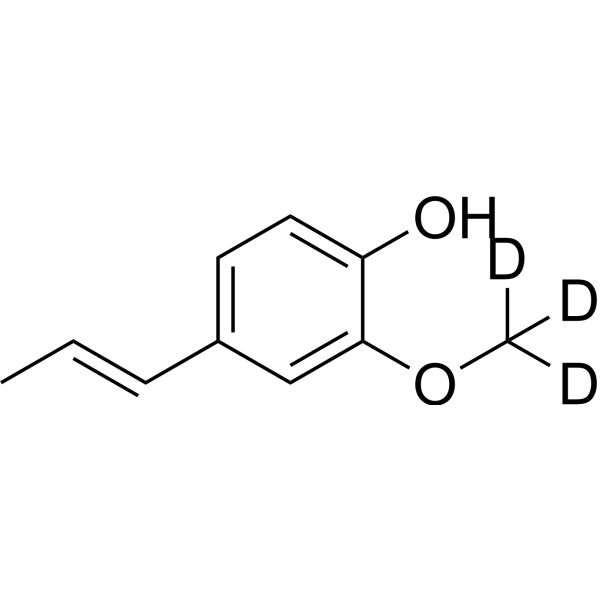
Isoeugenol-d3
 0 ImagesCat. No.: HY-N1952SSynonyms: iso-Eugenol-d3
Isoeugenol-d3 is deuterated labeled Isoeugenol (HY-N1952). Isoeugenol is an essential oil constituent of nutmeg, clove, and cinnamon. Isoeugenol inhibits growth of Escherichia coli and Listeria innocua with MICs of 0.6 mg/mL and 1 mg/mL, respectively.
-
D-Phenylalanine (Standard)
 0 Images
D-Phenylalanine (Standard) is the analytical standard of D-Phenylalanine. This product is intended for research and analytical applications. D-Phenylalanine is the synthetic dextro isomer of phenylalanine. D-Phenylalanine inhibits biofilm development of Pseudoalteromonas sp. SC2014.
-
Thujopsene
 0 ImagesCat. No.: HY-W587878CAS No.: 470-40-6
Thujopsene is the inhibitor for cytochrome P450, that inhibits CYP2B6, CYP3A4, CYP2C19, CYP2C8, CYP2C9 with IC50s of 1.3, 12.6, 13.6, 29.8, and 44.9 μM, respectively. Thujopsene binds to PKM2, inhibits the metabolism pathway of cancer cell, induces apoptosis in MKN45, thereby exhibiting antitumor efficacy. Thujopsene exhibits anti-termite and antifungal activities through autoxidation.
-
2-(p-Tolyl)propanoic acid
 0 ImagesCat. No.: HY-W039699CAS No.: 938-94-3Synonyms: 2-(4-Methylphenyl)propionic acid
2-(p-Tolyl) propanoic acid (2-(4-methylphenyl) propionic acid) acts as an Antimicrobial agent intermediate. 2-(p-Tolyl) propanoic acid inhibits COX-1 and COX-2 enzymes, with IC50 values of 38.23 μM and 64.30 μM, respectively. 2-(p-Tolyl) propanoic acid is applicable to research on E. coli, Enterococcus faecalis, Listeria monocytogenes, and Staphylococcus aureus.
-
Anti-Mouse CD8α Antibody (YTS169.4)
 0 ImagesCat. No.: HY-P991112Purity: 98.99%
Anti-Mouse CD8α Antibody (YTS169.4) is an IgG2 monoclonal antibody targeting mouse CD8α. Anti-Mouse CD8α Antibody (YTS169.4) rapidly depletes or downregulates CD8+ T cells in the spleens of Biozzi AB/H mice. Anti-Mouse CD8α Antibody (YTS169.4) is applicable to research related to hepatitis B virus infection. Recommended isotype control: Rat IgG2b kappa, Isotype Control (HY-P990682).
-
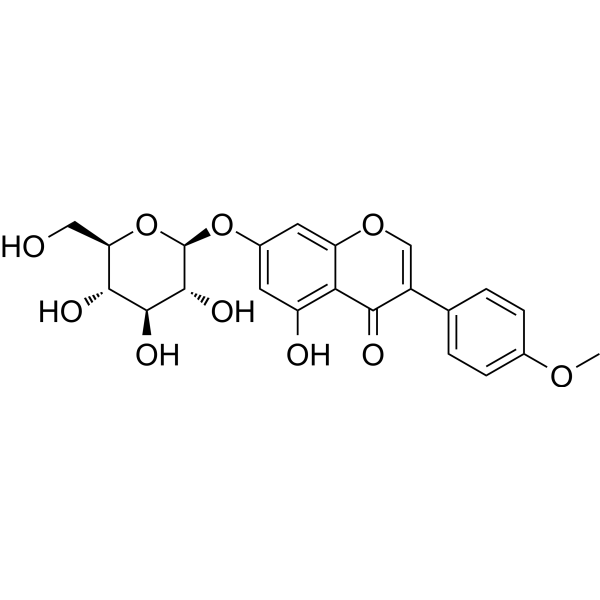
Sissotrin
 0 Images
Sissotrin (Biochanin A 7-glucoside; Sissonin) is an orally active isoflavone glycoside natural product found in Leguminosae plants, with weak antibacterial activity. Sissotrin exacerbates the increase in blood glucose after glucose loading. Sissotrin is used in studies related to glucose metabolism.
-
Desfuroylceftiofur
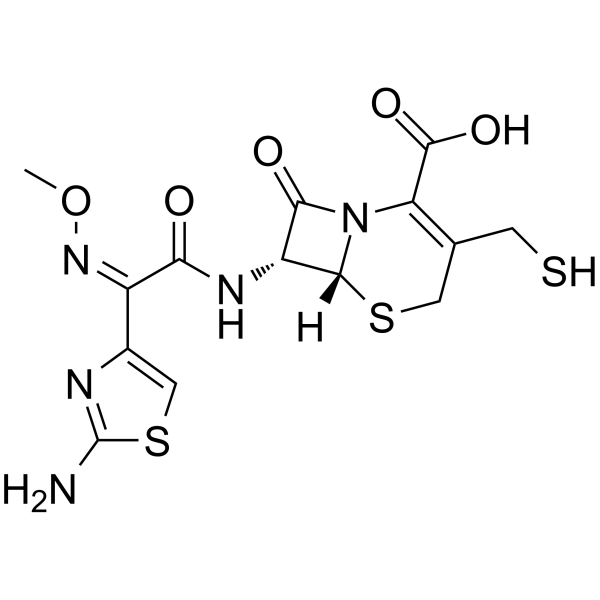 0 ImagesCat. No.: HY-126818CAS No.: 120882-22-6
Desfuroylceftiofur is an antibacterial agent and the active metabolite of Ceftiofur sodium (HY-B0898) with an intact β-lactam ring. Desfuroylceftiofur exhibits inhibitory activity against Gram-negative and Gram-positive pathogenic bacteria of veterinary interest in vitro. Desfuroylceftiofur can be used in the research of bovine respiratory disease, porcine respiratory disease, equine lymphadenitis, bovine mastitis, turkey colibacillosis, suppurative arthritis and respiratory infections.
-
Anti-Rat CD8α Antibody (OX-8)
 0 ImagesCat. No.: HY-P990126
Anti-Rat CD8α Antibody (OX-8) is an anti-rat CD8α IgG1 monoclonal antibody. Anti-Rat CD8α Antibody (OX-8) can deplete CD8+ T cells. Anti-Rat CD8α Antibody (OX-8) can enhance airway remodeling. Anti-Rat CD8α Antibody (OX-8) can be used for researches on allergic conditions and infections such as RHV-rn1 virus infection and asthma.
-
2'-Deoxyuridine (Standard)
 0 Images
2'-Deoxyuridine (Standard) is the analytical standard of 2'-Deoxyuridine. This product is intended for research and analytical applications. 2’-deoxyuridine is a brain-penetrant pyrimidines nucleotide that is associated with nervous system diseases. 2'-Deoxyuridine could increase chromosome breakage and results in a decreased thymidylate synthetase activity. 2'-Deoxyuridine is a precursor in the synthesis of Edoxudine (HY-B1011) and also an analogue of 5-ethynyl-2'-deoxyuridine, EdU (HY-118411). 2’-deoxyuridine reduces microglial activation and improve oxidative stress damage by modulating glycolytic metabolism on the Aβ25-35-induced brain injury, which is promising for research of Alzheimer’s disease (AD). In Vitro:The interaction between the 2-deoxyuridine and the column increases the duration of retention of 2-deoxyuridine.
Gradient elution with sodium acetate buffer-ACN eluent on two ZIC-HILIC homemade columns separates 2-deoxyuridine in under 9 min.
In Vivo:2'-Deoxyuridine (34.42 ng/mL, gavage, 15 min) passes the blood-brain barrier (BBB) to enter the hippocampus of mice brain. 2'-Deoxyuridine (20 mg/kg, gavage, daily for 4 weeks) improves cognition and memory loss and attenuates the damage to the hippocampus in Aβ25-35-induced mice model.
-
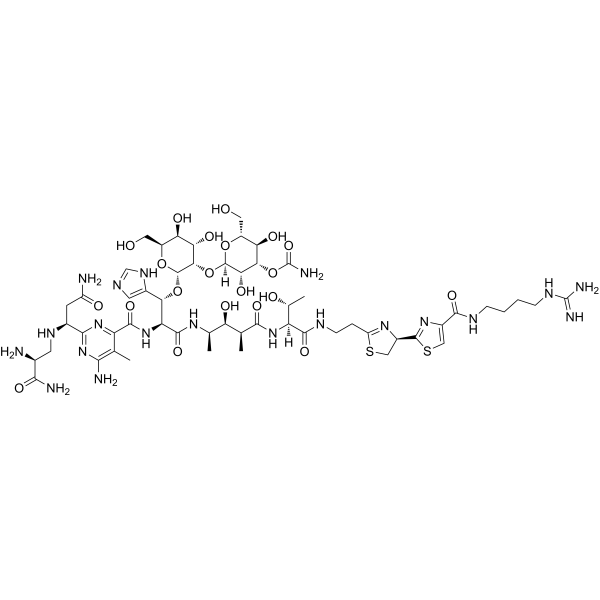
Phleomycin D1
 0 ImagesSynonyms: PLM D1
Phleomycin D1 (PLM D1), a glycopeptide antibiotic, is a member of the Bleomycin/Phleomycin family. Phleomycin D1 causes cell death by binding and cleaving DNA. Phleomycin D1 induces cell cycle arrest at S phase.
-
Maleic acid (Standard)
 0 Images
Maleic Acid (Standard) is the analytical standard of Maleic Acid. This product is intended for research and analytical applications. Maleic Acid is a Glutamate Decarboxylase (GAD) inhibitor of E. coli and L. monocytogenes. IC50 & Target: GAD. In Vitro: The MICs of WT 10403S for the acids (e.g., Maleic Acid) are 34 mM, 25 mM, 31 mM and 30 mM which correspond to pH values prior to growth of 4.84, 5.14, 5.32 and 5.02 respectively. Of all compounds tested, Maleic Acid is the least inhibitory despite acting at a lower pH (4.84). The most acid resistant (10403S) and the weakest (EGD-e) strain are challenged with 8.6 mM and 4.3 mM of each organic acid at pH 3 and 3.3 respectively. On both strains, Maleic Acid is the most bactericidal.
-
Montmorillonite
 0 Images
Montmorillonite is a calcium-based 2:1 layered silicate clay mineral with excellent adsorption capacity, which can adsorb and immobilize a variety of substances, such as organic compounds, metal ions, and bacteria. Montmorillonite can serve as a nanoparticle carrier for research on functional nanocomposites for multiple scenarios, such as biomedical applications and food additives. Montmorillonite is also applicable to research related to wastewater treatment.
-
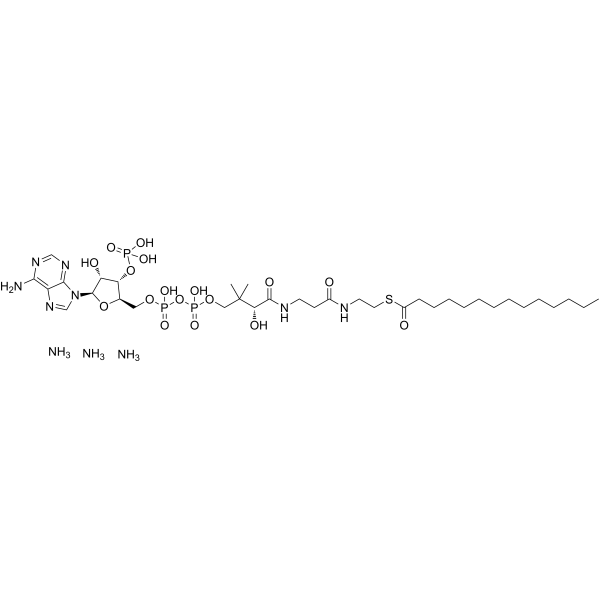
Myristoyl coenzyme A triammonium
 0 ImagesSynonyms: 14:0 Coenzyme A triammonium; S-Tetradecanoate-CoA triammonium; S-Tetradecanoate-coenzyme A triammonium
Myristoyl coenzyme A triammonium (14:0 Coenzyme A) is a myristoylated coenzyme A (CoA). Myristoylation is an essential process in viruses and is generally controlled by N-myristoyltransferase (NMT). And NMT is more active in colon epithelial tumors than in normal cells. Reduced Ccoenzyme A (CoA) is known to be a key regulator of NMT activity, whereas oxidized CoA does not allow NMT to promote myristoylation. Myristoyl coenzyme A blocks the demyristoylation process and has potential anticancer and antiviral mechanisms.
-
Adenosine monophosphate-d12 dilithium
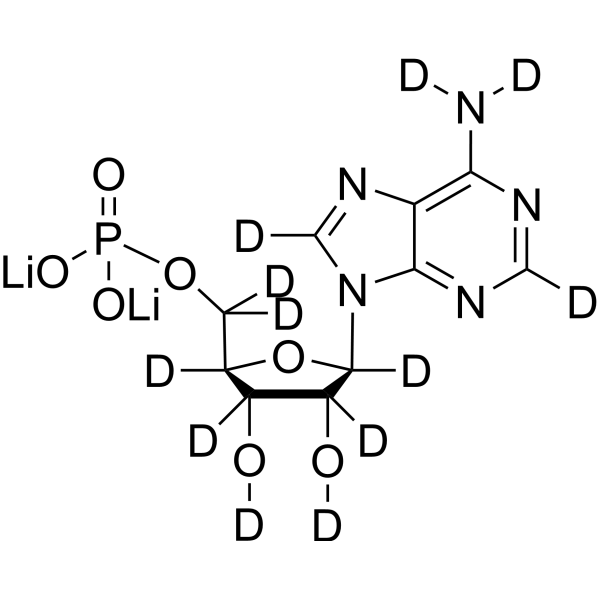 0 ImagesCat. No.: HY-A0181S2Synonyms: AMP-d12 dilithium
Adenosine monophosphate-d12 (AMP-d12) dilithium is deuterium labeled Adenosine monophosphate (HY-A0181). Adenosine monophosphate is an adenosine A1 receptor agonist. Adenosine monophosphate has significant antiviral activity against HSV-1 and HSV-2. Adenosine monophosphate is a key cellular metabolite regulating energy homeostasis and signal transduction.
-
Cefoperazone sodium salt (Standard)
 0 ImagesSynonyms: CP 52640-2 (Standard)
Cefoperazone (sodium salt) (Standard) is the analytical standard of Cefoperazone (sodium salt). This product is intended for research and analytical applications. Cefoperazone sodium salt (CP 52640-2), a semisynthetic cephalosporin, has a broad spectrum of antibacterial activity.