



Pirlindole

Based on 1 Customer Validation
Pirlindole is an orally active, selective and reversible MAO-A inhibitor with an IC50 value of 250 nM. Pirlindole inhibits genomic replication of Enterovirus species B and D, and exhibits moderate activity against enterovirus species A. Pirlindole inhibits MAO-A-mediated monoamine metabolism, promotes adult hippocampal neurogenesis, rescues stress-induced dendritic atrophy of hippocampal granule neurons, reverses behavioral effects associated with chronic mild stress, and also possesses anticonvulsant, analgesic, local anesthetic, hypotensive, antiplatelet aggregation and antispasmodic activities. Pirlindole shows no detectable mutagenic, clastogenic or carcinogenic properties. Pirlindole can be used in research related to depression and enterovirus infections.
For research use only. We do not sell to patients.
- Purity : 98.90%
- CAS No.: 60762-57-4
- Formula: C15H18N2
- Molecular Weight:226.32
-
Storage:
-20°C, sealed storage, away from moisture
* In solvent : -80°C, 6 months; -20°C, 1 month (sealed storage, away from moisture)

To place orders, for customer services and technical support, please contact: MedChemExpress USA
Tel: 609-228-6898 E-mail: [email protected] [email protected]


-
 Biological Activity
-
Chemical Information
-
Solvent & Solubility
- Protocols
- Purity & Documentation
- References
-
 Help & FAQs


-

HY-100679R
Pirlindole (Standard)Reference Standard -
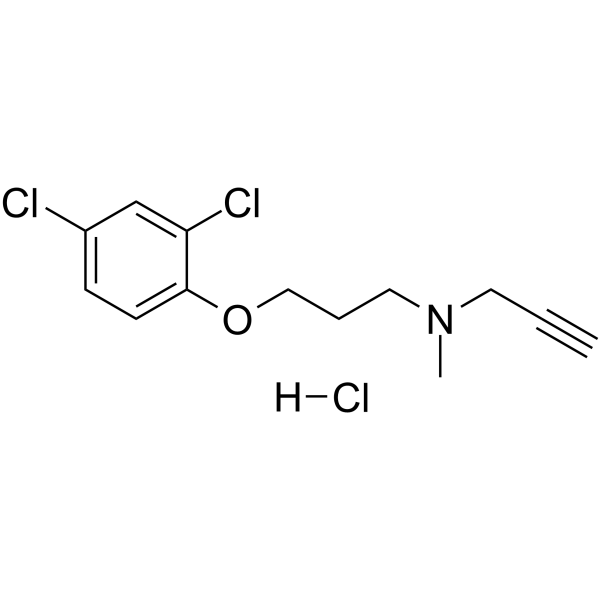
HY-14197A
Clorgyline hydrochlorideMAO-A Inhibitor -
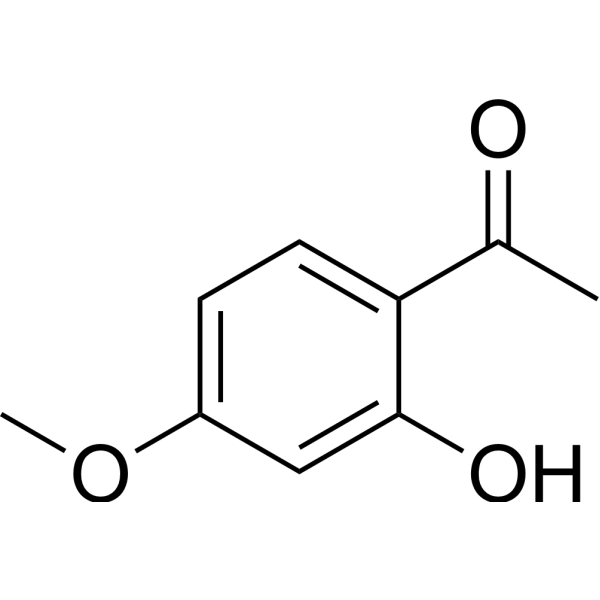
HY-N0159
PaeonolAutophagy Inducer -
HY-Y0882
Hydroxylamine hydrochlorideMAO Inhibitor -
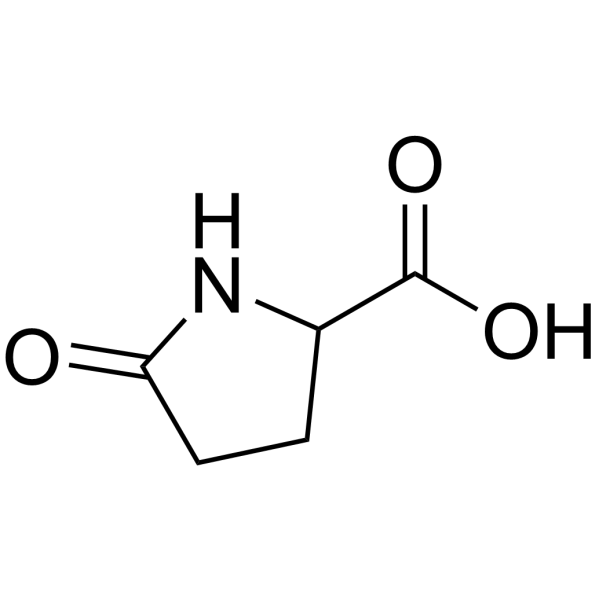
HY-W012738
DL-Pyroglutamic acidHepatitis B Inactivator -
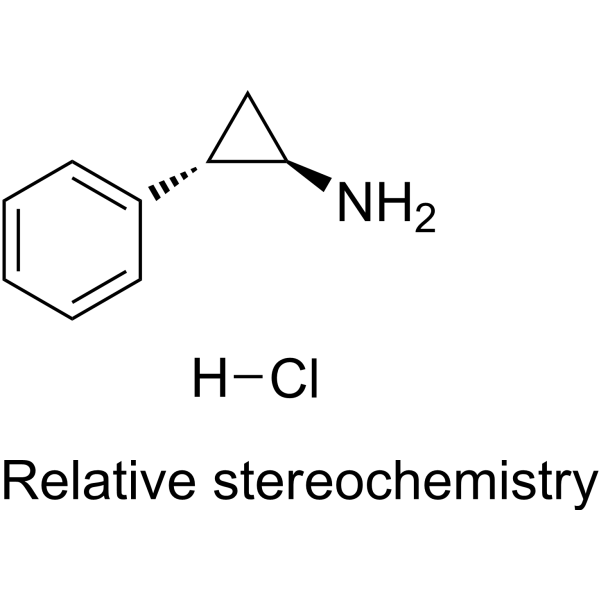
HY-17447A
Tranylcypromine hydrochlorideLSD1/MAO Inhibitor -
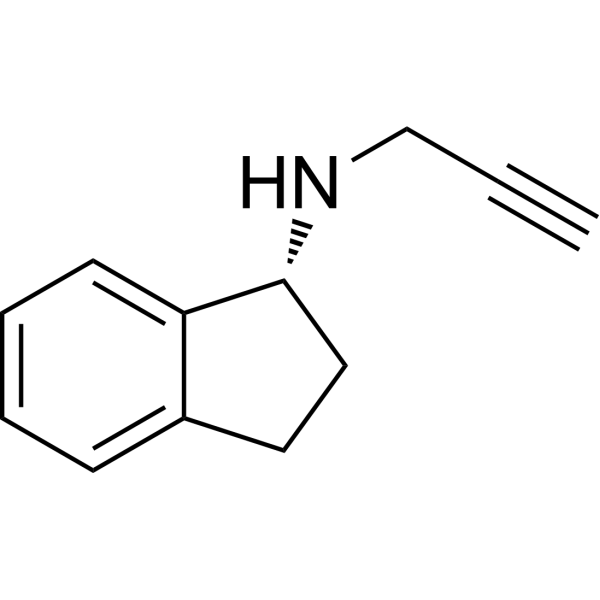
HY-14605A
RasagilineMAO Inhibitor -
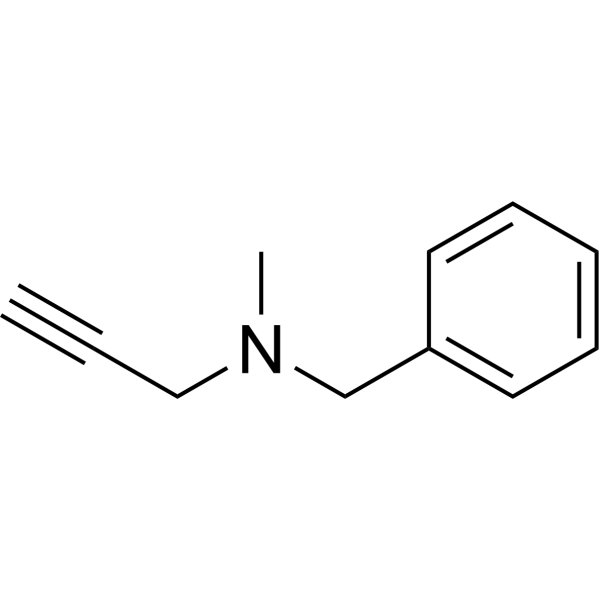
HY-A0091A
PargylineMonoamine Oxidase Inhibitor -
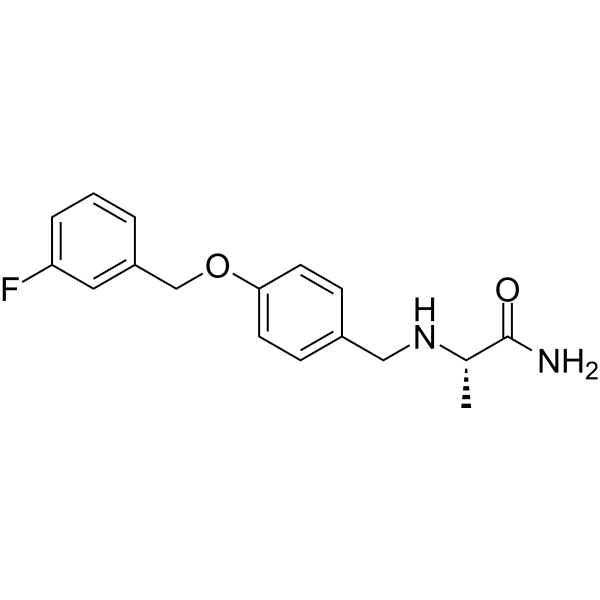
HY-70057
SafinamideMAO-B Inhibitor -
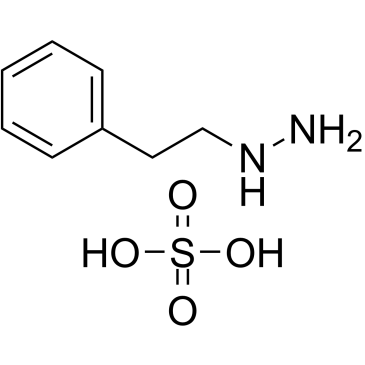
HY-B1018A
Phenelzine sulfateMAO Inhibitor -

HY-N0159R
Paeonol (Standard)Autophagy Inducer -
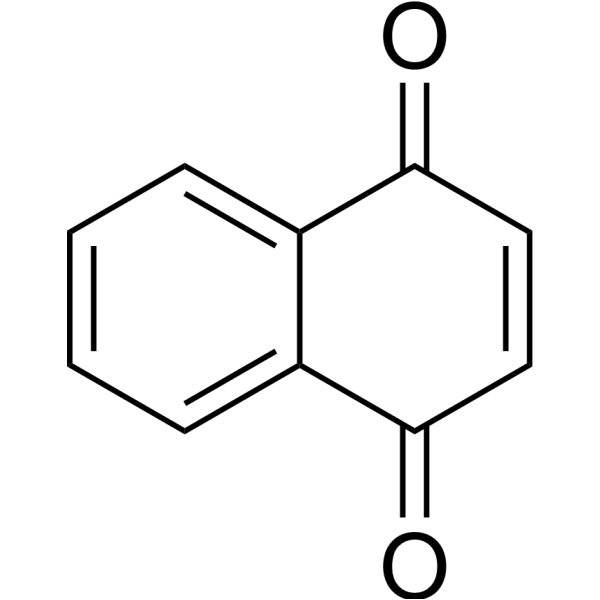
HY-W015490
1,4-NaphthoquinoneMAO-A/B Inhibitor


Biological Activity
Description
IC50 & Target
|
MAO-A 250 nM (IC50) |
Cellular Effect
|
Cell Line

|
Type | Value | Description | References |
|---|---|---|---|---|
| HeLa | IC50 |
33 μM
Compound: 3.1
|
Inhibition of Gal4-fused TEAD2 (unknown origin) interaction with YAP expressed in human HeLa cells assessed as basal transcriptional activity level after 6 hrs by nanoluciferase reporter gene assay
Inhibition of Gal4-fused TEAD2 (unknown origin) interaction with YAP expressed in human HeLa cells assessed as basal transcriptional activity level after 6 hrs by nanoluciferase reporter gene assay
|
[PMID: 30640473] |
| HeLa | IC50 |
36 μM
Compound: 3.1
|
Inhibition of Gal4-fused TEAD4 (unknown origin) interaction with YAP expressed in human HeLa cells assessed as basal transcriptional activity level after 6 hrs by nanoluciferase reporter gene assay
Inhibition of Gal4-fused TEAD4 (unknown origin) interaction with YAP expressed in human HeLa cells assessed as basal transcriptional activity level after 6 hrs by nanoluciferase reporter gene assay
|
[PMID: 30640473] |
| HeLa | IC50 |
40 μM
Compound: 3.1
|
Inhibition of Gal4-fused TEAD1 (unknown origin) interaction with YAP expressed in human HeLa cells assessed as basal transcriptional activity level after 6 hrs by nanoluciferase reporter gene assay
Inhibition of Gal4-fused TEAD1 (unknown origin) interaction with YAP expressed in human HeLa cells assessed as basal transcriptional activity level after 6 hrs by nanoluciferase reporter gene assay
|
[PMID: 30640473] |
| HeLa | IC50 |
44 μM
Compound: 3.1
|
Inhibition of Gal4-fused TEAD3 (unknown origin) interaction with YAP expressed in human HeLa cells assessed as basal transcriptional activity level after 6 hrs by nanoluciferase reporter gene assay
Inhibition of Gal4-fused TEAD3 (unknown origin) interaction with YAP expressed in human HeLa cells assessed as basal transcriptional activity level after 6 hrs by nanoluciferase reporter gene assay
|
[PMID: 30640473] |
| HeLa | IC50 |
70 μM
Compound: 3.1
|
Inhibition of TEAD (unknown origin) expressed in human HeLa cells after 6 hrs by nanoluciferase reporter gene assay
Inhibition of TEAD (unknown origin) expressed in human HeLa cells after 6 hrs by nanoluciferase reporter gene assay
|
[PMID: 30640473] |
| VSMC | EC50 |
1.5 μM
Compound: 3.1
|
Antiproliferative activity against human VSMC assessed as reduction in EdU incorporation after 18 hrs by Hoechst 33342 staining-based fluorescence assay
Antiproliferative activity against human VSMC assessed as reduction in EdU incorporation after 18 hrs by Hoechst 33342 staining-based fluorescence assay
|
[PMID: 30640473] |
| VSMC | EC50 |
10 μM
Compound: 3.1
|
Antiproliferative activity against rat VSMC assessed as reduction in EdU incorporation after 18 hrs by Hoechst 33342 staining-based fluorescence assay
Antiproliferative activity against rat VSMC assessed as reduction in EdU incorporation after 18 hrs by Hoechst 33342 staining-based fluorescence assay
|
[PMID: 30640473] |
In Vitro
Pirlindole selectively inhibits MAO-A in rat brain with an IC50 value of 250 nM, and its inhibitory potency against MAO-B in rat brain and heart is more than 200-fold lower[3].
Pirlindole (0.1 nM-34 μM) slightly increases electrically stimulated dopamine release at concentrations of 0.1-10 nM, and doubles electrically induced norepinephrine and serotonin release at concentrations of 4.5 μM and 34 μM, respectively, in rat cortical slices[3].
Pirlindole (3 μg/mL) prolongs the refractory period of electrically stimulated rabbit atrial contractions[3].
Pirlindole (Up to 0.5 mg per plate) shows no mutagenic activity in the Ames test using Salmonella typhimurium strains TA 98, TA 1537, TA 100, and TA 1535, with or without metabolic activation[3].
Pirlindole (10 μM) potently inhibits CV-B3 replication in HeLa R19 cells, as evidenced by a significant reduction in GFP fluorescence intensity and extremely low cytotoxicity[4].
Pirlindole (0.3-30 μM; 8 h postinfection) inhibits the replication of CV-B3 in BGM cells and EV-D68 in HeLa R19 cells, exhibits moderate activity against EV-A71, and shows no activity against EV-C, rhinoviruses or EMCV[4].
MedChemExpress (MCE) has not independently confirmed the accuracy of these methods. They are for reference only. Further protocols information, click here.
In Vivo
Pirlindole (5-25 mg/kg; i.p.; single acute administration or twice daily for 14 consecutive days) significantly reduces the immobility time of mice in the forced swimming test, with efficacy comparable to that of standard antidepressants[3].
Pirlindole (10 mg/kg; intraperitoneal injection; once daily for 5 consecutive days) enhances electrical self-stimulation behavior in rats with hypofunction of the reward system induced by internal capsule injury[3].
Pirlindole (administered via i.p. or p.o. at 1-50 mg/kg) antagonizes reserpine (HY-N0480)-induced ptosis and hypothermia, as well as tetrabenazine (HY-B0590)-induced ptosis in mice[3].
Pirlindole (10-25 mg/kg; p.o.) antagonizes the sedative effect induced by Diazepam[3].
MedChemExpress (MCE) has not independently confirmed the accuracy of these methods. They are for reference only.
-
Animal Model:Wistar (male, 2 months old, 300-400 g, chronic mild stress model)[1]
-
Dosage:5 mg/kg; 15 mg/kg; 30 mg/kg
-
Administration:i.p.; daily; 21 days
-
Result:Significantly reversed stress-induced anhedonia at 5 mg/kg (P=0.001 vs vehicle-treated stressed rats).
Significantly decreased immobility time at 5 mg/kg and 15 mg/kg (P<0.001 for both doses vs vehicle-treated stressed rats).
Increased latency to immobility at 5 mg/kg (P=0.043 vs vehicle-treated stressed rats) and 15 mg/kg (P<0.001 vs vehicle-treated stressed rats).
Significantly increased adult neurogenesis (percentage of BrdU-positive cells co-labeled with PSA-NCAM) in the hippocampal subgranular zone at 5 mg/kg (P=0.035), 15 mg/kg (P=0.005), and 30 mg/kg (P=0.005) compared to vehicle-treated stressed rats.
Significantly reversed stress-induced reduction in total dendritic length of hippocampal granule neurons at 30 mg/kg (P=0.040 vs vehicle-treated stressed rats).


Chemical Information
-
CAS No. 60762-57-4
-
Appearance Solid
-
Molecular Weight 226.32
-
Formula C15H18N2
-
Color Off-white to light yellow
-
SMILES
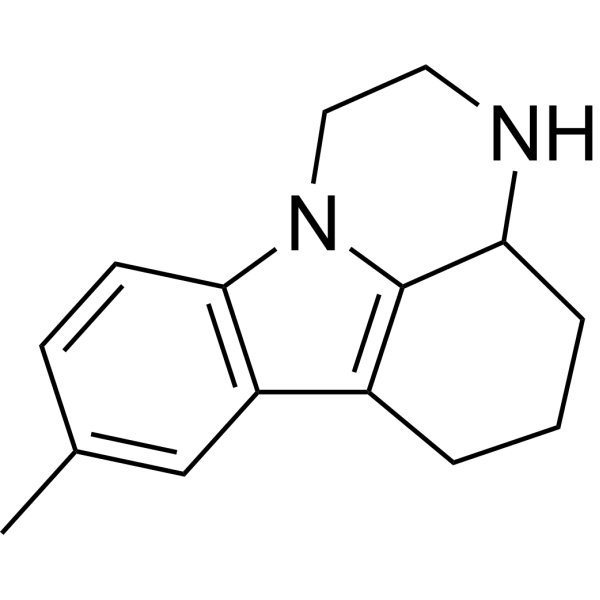
CC1=CC2=C(C=C1)N3C4=C2CCCC4NCC3
-
Shipping
Room temperature in continental US; may vary elsewhere.
-
Storage
-20°C, sealed storage, away from moisture
* In solvent : -80°C, 6 months; -20°C, 1 month (sealed storage, away from moisture)


Solvent & Solubility
In Vitro:
DMSO : ≥ 5 mg/mL (22.09 mM; Hygroscopic DMSO has a significant impact on the solubility of product, please use newly opened DMSO)
* "≥" means soluble, but saturation unknown.
Please refer to the solubility information to select the appropriate solvent. Once prepared, please aliquot and store the solution to prevent product inactivation from repeated freeze-thaw cycles.
Storage method and period of stock solution: -80°C, 6 months; -20°C, 1 month (sealed storage, away from moisture). When stored at -80°C, please use it within 6 months. When stored at -20°C, please use it within 1 month.
Please refer to the solubility information to select the appropriate solvent. Once prepared, please aliquot and store the solution to prevent product inactivation from repeated freeze-thaw cycles.
Storage method and period of stock solution: -80°C, 6 months; -20°C, 1 month (sealed storage, away from moisture). When stored at -80°C, please use it within 6 months. When stored at -20°C, please use it within 1 month.
Concentration (start) × Volume (start) = Concentration (final) × Volume (final)
In Vivo:
Select the appropriate dissolution method based on your experimental animal and administration route.
- For the following dissolution methods, please ensure to first prepare a clear stock solution using an In Vitro approach and then sequentially add co-solvents:
- To ensure reliable experimental results, the clarified stock solution can be appropriately stored based on storage conditions. As for the working solution for In Vivo experiments, it is recommended to prepare freshly and use it on the same day.
- The percentages shown for the solvents indicate their volumetric ratio in the final prepared solution. If precipitation or phase separation occurs during preparation, heat and/or sonication can be used to aid dissolution.
Add each solvent one by one: 10% DMSO 40% PEG300 5% Tween-80 45% Saline
Solubility: ≥ 0.5 mg/mL (2.21 mM); Clear solution
This protocol yields a clear solution of ≥ 0.5 mg/mL (saturation unknown).
Taking 1 mL working solution as an example, add 100 μL DMSO stock solution (5.0 mg/mL) to 400 μL PEG300, and mix evenly; then add 50 μL Tween-80 and mix evenly; then add 450 μL Saline to adjust the volume to 1 mL.
Preparation of Saline: Dissolve 0.9 g sodium chloride in ddH₂O and dilute to 100 mL to obtain a clear Saline solution.
Add each solvent one by one: 10% DMSO 90% (20% SBE-β-CD in Saline)
Solubility: ≥ 0.5 mg/mL (2.21 mM); Clear solution
This protocol yields a clear solution of ≥ 0.5 mg/mL (saturation unknown).
Taking 1 mL working solution as an example, add 100 μL DMSO stock solution (5.0 mg/mL) to 900 μL 20% SBE-β-CD in Saline, and mix evenly.
Preparation of 20% SBE-β-CD in Saline (4°C, storage for one week): 2 g SBE-β-CD powder is dissolved in 10 mL Saline, completely dissolve until clear.
In Vivo Dissolution Calculator
Please enter the basic information of animal experiments:
-
-
-
-
Recommended: Prepare an additional quantity of animals to account for potential losses during experiments.
Please enter your animal formula composition:
-
%DMSO +
Recommended: Keep the proportion of DMSO in working solution below 2% if your animal is weak.
-
%+
-
+%Tween-80 + +
-
%Saline +
The co-solvents required include: DMSO, . All of co-solvents are available by MedChemExpress (MCE). , Tween 80. All of co-solvents are available by MedChemExpress (MCE).
Working solution concentration: 0.22 mg/mL
Method for preparing stock solution: mg drug dissolved in μL DMSO. Stock solution concentration: mg/mL. * In solvent : -80°C, 6 months; -20°C, 1 month (sealed storage, away from moisture)
1. Take μL DMSO stock solution;
2. Add μL .
μL , mix evenly;
3. Then add μL Tween 80, mix evenly;
4. Then add μL
Please ensure that the stock solution in the first step is dissolved to a clear state, and add co-solvents in sequence. You can use ultrasonic heating (ultrasonic cleaner, recommended frequency 20-40 kHz), vortexing, etc. to assist dissolution.

Protocols
-
SH-SY5Y neuronal-like differentiation
SH-SY5Y neuronal-like differentiation uses defined culture conditions to shift proliferative human neuroblastoma cells toward a neuron-like state, mainly assessed by reduced proliferation, neurite extension, neuronal-marker expression, and, in some protocols, increased dependence on neurotrophic support. Retinoic acid (RA) is commonly used for the first differentiation phase, and sequential RA followed by brain-derived neurotrophic factor (BDNF) in serum-free medium is a well-characterized approach for generating neuron-like SH-SY5Y cultures with extensive neurite outgrowth. The primary readouts are morphology-based neurite outgrowth and marker-based confirmation using proteins such as βIII-tubulin, MAP2, GAP43, synaptophysin, NeuN, NSE, TH, or related neuronal/synaptic markers, depending on the study endpoint.
-
Cell differentiation
Cell differentiation refers to the process in which cells of the same origin gradually produce cell groups with different morphological structure and functional characteristics.
-
Cerebellar Granule Neuron Culture
Cerebellar granule neuron culture is a primary neuronal culture method in which postnatal rodent cerebella are dissected, meninges are removed, tissue is enzymatically and mechanically dissociated, and neurons are plated on poly-cation-coated surfaces in medium that supports neuronal attachment, maturation, neurite-network formation, and biochemical or imaging analysis. Cultured CGNs are used to study neuronal development, survival, apoptosis, differentiation, neurotransmitter release, and toxin-sensitive synaptic proteins; mature cultures develop dense neuritic networks, neuronal activity, glutamate release, and neuronal marker expression. A common survival paradigm uses depolarizing extracellular potassium: CGNs maintained in high potassium medium survive and differentiate, whereas switching mature cultures from 25 mM KCl to 5 mM KCl induces apoptotic death that can be used as a readout of activity-dependent neuronal survival.
-
Genotoxicity/Mutagenicity Study
The bacterial reverse mutation assay detects point mutations that restore amino-acid prototrophy in auxotrophic Salmonella typhimurium or Escherichia coli tester strains; after exposure to a test article, mutagenic activity is read out as an increased number of revertant colonies on minimal agar compared with the vehicle control. The assay uses tester strains with different mutation targets so that base-substitution and frameshift mutagens can be detected, and testing is performed with and without exogenous mammalian metabolic activation because some chemicals require biotransformation to become mutagenic.


Purity & Documentation
-
Data Sheet (285 KB)
-
SDS (252 KB)
- English - EN (252 KB)
- Français - FR (252 KB)
- Deutsch - DE (252 KB)
- Norwegian - NO (252 KB)
- Español - ES (252 KB)
- Swedish - SV (252 KB)
- Italian - IT (252 KB)
- Korean - KR (252 KB)
- Portuguese - PT (252 KB)
-
Handling Instructions (2659 KB)
References
[1]. Morais M, et al. The effects of chronic stress on hippocampal adult neurogenesis and dendritic plasticity are reversed by selective MAO-A inhibition. Journal of psychopharmacology (Oxford, England). 2014 Dec;28(12):1178-83. [Content Brief]
[2]. Macedo A, et al. Pirlindole in the treatment of depression: a meta-analysis. Clinical drug investigation. 2011;31(1):61-71. [Content Brief]
[3]. Bruhwyler J, et al. Pirlindole: a selective reversible inhibitor of monoamine oxidase A. A review of its preclinical properties. Pharmacological research. 1997 Jul;36(1):23-33. [Content Brief]
[4]. Ulferts R, et al. Screening of a Library of FDA-Approved Drugs Identifies Several Enterovirus Replication Inhibitors That Target Viral Protein 2C. Antimicrobial agents and chemotherapy. 2016 May;60(5):2627-38. [Content Brief]


Complete Stock Solution Preparation Table
Please refer to the solubility information to select the appropriate solvent. Once prepared, please aliquot and store the solution to prevent product inactivation from repeated freeze-thaw cycles.
Storage method and period of stock solution: -80°C, 6 months; -20°C, 1 month (sealed storage, away from moisture). When stored at -80°C, please use it within 6 months. When stored at -20°C, please use it within 1 month.
| Optional Solvent | Concentration Solvent Mass | 1 mg | 5 mg | 10 mg | 25 mg |
|---|---|---|---|---|---|
| DMSO | 1 mM | 4.4185 mL | 22.0926 mL | 44.1852 mL | 110.4631 mL |
| 5 mM | 0.8837 mL | 4.4185 mL | 8.8370 mL | 22.0926 mL | |
| 10 mM | 0.4419 mL | 2.2093 mL | 4.4185 mL | 11.0463 mL | |
| 15 mM | 0.2946 mL | 1.4728 mL | 2.9457 mL | 7.3642 mL | |
| 20 mM | 0.2209 mL | 1.1046 mL | 2.2093 mL | 5.5232 mL |


Pirlindole Related Classifications
HY-100679 Related Classifications
 Powered by Bioz
Keywords
- Pirlindole
- 60762-57-4
- Monoamine Oxidase
- Enterovirus
- monoamine oxidase subtype A
- Coxsackievirus B3 viral protein 2C
- BGM cells
- hippocampal adult neurogenesis
- noradrenaline reuptake transporters
- HeLa R19 cells
- enterovirus species B
- Salmonella typhimurium
- serotonin reuptake transporters
- enterovirus species D
- Inhibitor
- inhibitor
- inhibit