



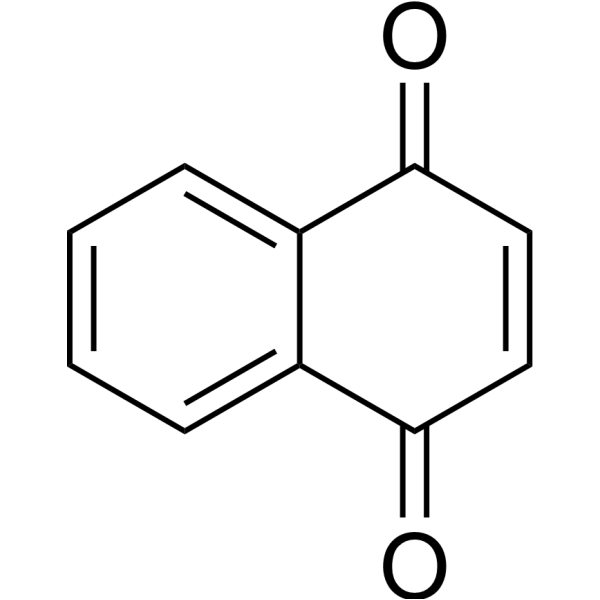
1,4-Naphthoquinone
Based on 3 publication(s) in Google Scholar
1,4-Naphthoquinone is an inhibitor with broad-spectrum inhibitory activity targeting DNA polymerase, NF-κB and monoamine oxidase (MAO-A/B), with antibacterial and anti-biofilm efficacy. 1,4-Naphthoquinone is a competitive inhibitor of MAO-B (Ki=1.4 μM) and a non-competitive inhibitor of MAO-A (Ki=7.7 μM). 1,4-Naphthoquinone inhibits DNA polymerase pol α, β, γ, δ, ε, λ with IC50 ranging from 5.57-128 μM. 1,4-Naphthoquinone inhibits tumor cell proliferation, induces apoptosis and necrosis, and has anti-angiogenic and anti-inflammatory activities by inducing oxidative stress, depleting glutathione (GSH), inhibiting DNA polymerase-mediated DNA synthesis and blocking NF-κB nuclear translocation. 1,4-Naphthoquinone can be used in anti-bacterial , anti-tumor and anti-inflammatory studies, including inhibition of melanoma and colon cancer cell growth and endothelial cell function, as well as LPS-induced inflammation models.
For research use only. We do not sell to patients.
- Purity : 99.55%
- CAS No.: 130-15-4
- Formula: C10H6O2
- Molecular Weight:158.16
-
Storage:Powder -20°C, 3 years , 4°C, 2 years ; In solvent -80°C, 6 months , -20°C, 1 month

To place orders, for customer services and technical support, please contact: MedChemExpress USA
Tel: 609-228-6898 E-mail: [email protected] [email protected]


-
 Biological Activity
-
Chemical Information
-
Solvent & Solubility
- Purity & Documentation
- References
-
 Help & FAQs


-
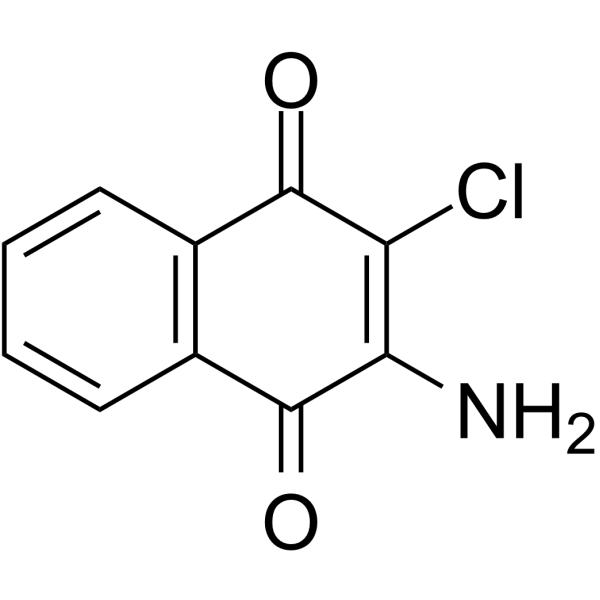
HY-121632
Quinoclamine -
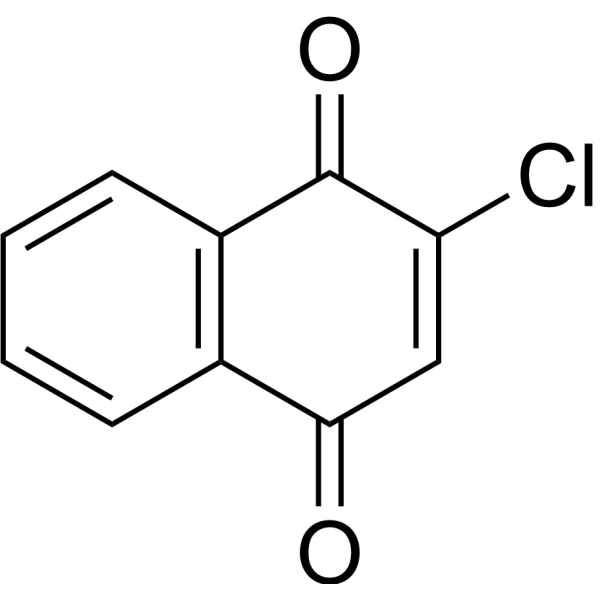
HY-115243
2-Chloro-1,4-naphthoquinone -
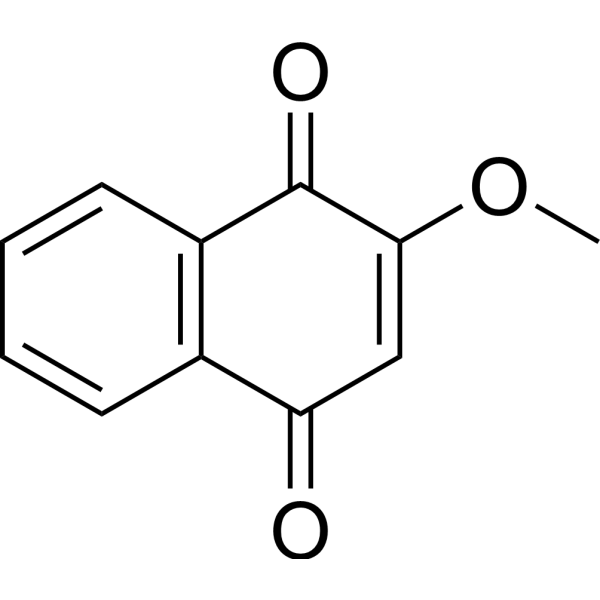
HY-N7116
Lawsone methyl ether -

HY-W585943
6-Methyl-1,4-naphthoquinone -

HY-W015490R
1,4-Naphthoquinone (Standard) -
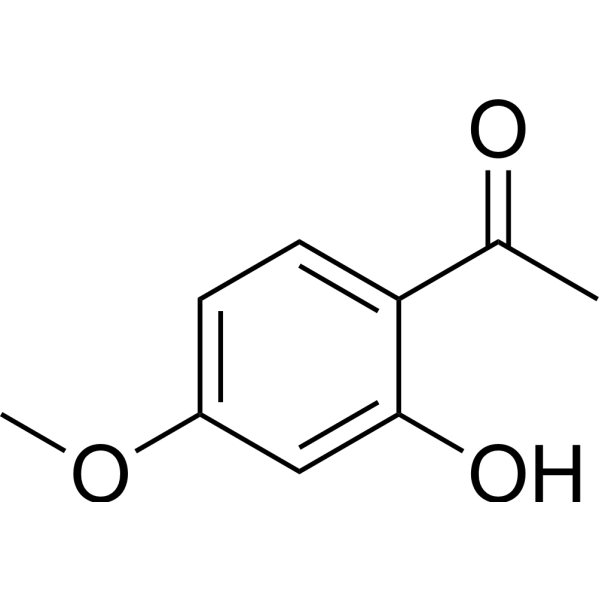
HY-N0159
Paeonol -
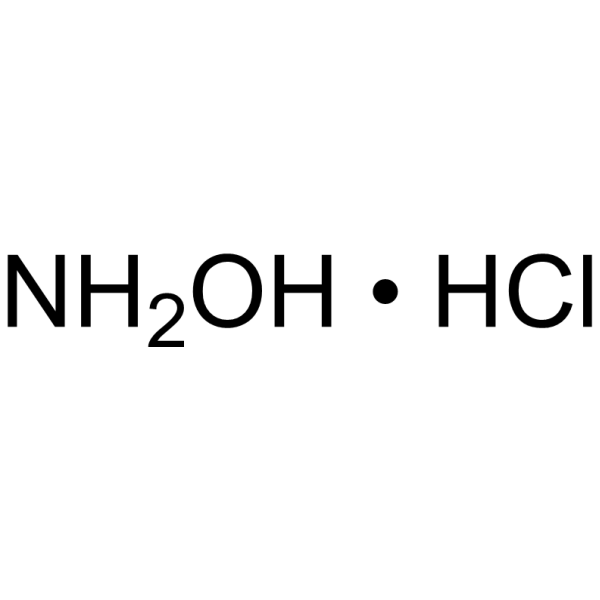
HY-Y0882
Hydroxylamine hydrochloride -
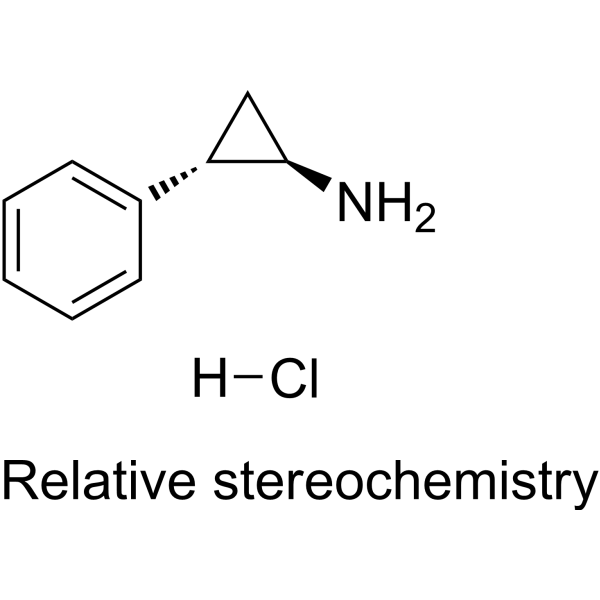
HY-17447A
Tranylcypromine hydrochloride -
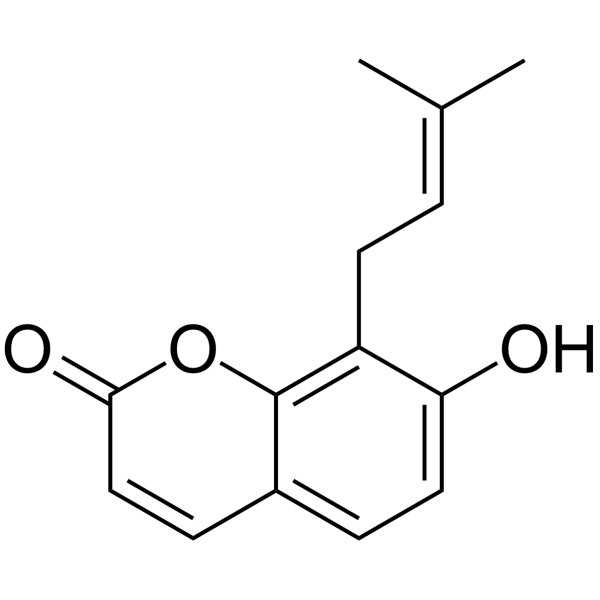
HY-N2554
Osthenol -
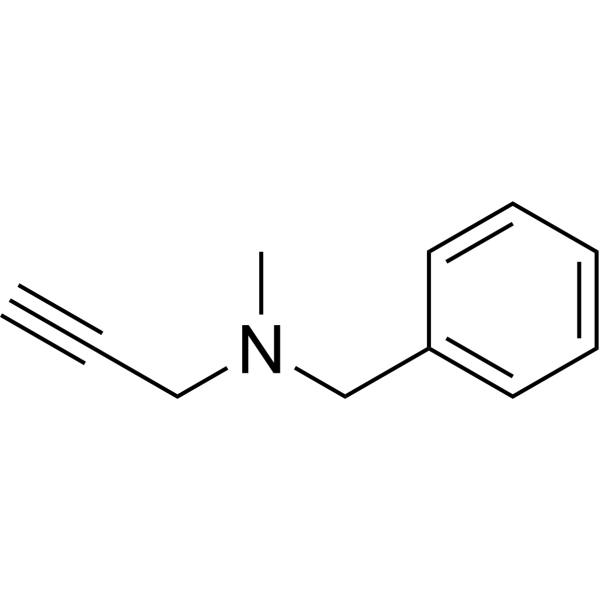
HY-A0091A
Pargyline -

HY-N0159R
Paeonol (Standard)
Publications Citing Use of MedChemExpress (MCE) 1,4-Naphthoquinone
MoreAll DNA/RNA Synthesis Isoforms
More

Biological Activity
Description
IC50 & Target
[4]|
DNA Polymerase |
MAO-A 7.7 μM (Ki) |
MAO-B 1.4 μM (Ki) |
Calf pol α 8.3 μM (IC50) |
Rat pol β 189 μM (IC50) |
Human pol γ 105 μM (IC50) |
Human pol δ 94.8 μM (IC50) |
Human pol ε 92.1 μM (IC50) |
Human pol λ 86.4 μM (IC50) |
Cellular Effect
|
Cell Line

|
Type | Value | Description | References |
|---|---|---|---|---|
| A2780 | IC50 |
2.3 μM
Compound: 11
|
Antiproliferative activity against human A2780 cells after 2 days by alamar-blue assay
Antiproliferative activity against human A2780 cells after 2 days by alamar-blue assay
|
[PMID: 19028102] |
| A549 | IC50 |
>20 μM
Compound: 6
|
Cytotoxicity against human A549 cells assessed as cell growth inhibition after 48 hrs by MTT assay
Cytotoxicity against human A549 cells assessed as cell growth inhibition after 48 hrs by MTT assay
|
[PMID: 31999451] |
| A549 | IC50 |
>63.2 μM
Compound: 1,4 Naphtoquinone
|
Cytotoxicity was measured against neoplastic cultured A-549 cells of human lung carcinoma.
Cytotoxicity was measured against neoplastic cultured A-549 cells of human lung carcinoma.
|
10.1016/0960-894X(96)00326-5 |
| AGS | IC50 |
2.5 μM
Compound: Naphthazarin
|
Cytotoxicity against human AGS cells incubated for 24 hrs by MTS assay
Cytotoxicity against human AGS cells incubated for 24 hrs by MTS assay
|
[PMID: 38458106] |
| DU-145 | IC50 |
10.89 μM
Compound: 1,4-Naphthoquinone
|
Cytotoxicity against human DU145 cells assessed as growth inhibition after 72 hrs by MTS assay
Cytotoxicity against human DU145 cells assessed as growth inhibition after 72 hrs by MTS assay
|
[PMID: 23791367] |
| HCT-116 | IC50 |
17.08 μM
Compound: 6
|
Cytotoxicity against human HCT116 cells assessed as cell growth inhibition after 48 hrs by MTT assay
Cytotoxicity against human HCT116 cells assessed as cell growth inhibition after 48 hrs by MTT assay
|
[PMID: 31999451] |
| HeLa | IC50 |
8.45 μM
Compound: 11
|
Inhibition of histidine-tagged mouse MKP1 catalytic domain expressed in human Hela cells
Inhibition of histidine-tagged mouse MKP1 catalytic domain expressed in human Hela cells
|
[PMID: 19028102] |
| HepG2 | IC50 |
>20 μM
Compound: 6
|
Cytotoxicity against human HepG2 cells assessed as cell growth inhibition after 48 hrs by MTT assay
Cytotoxicity against human HepG2 cells assessed as cell growth inhibition after 48 hrs by MTT assay
|
[PMID: 31999451] |
| HepG2 | IC50 |
15.89 μM
Compound: NQ
|
Cytotoxicity against Homo sapiens (human) HepG2 cells assessed as reduction of cell survival after 48 hr by MTT assay
Cytotoxicity against Homo sapiens (human) HepG2 cells assessed as reduction of cell survival after 48 hr by MTT assay
|
10.1007/s00044-012-0150-7 |
| HT-29 | IC50 |
>63.2 μM
Compound: 1,4 Naphtoquinone
|
Cytotoxicity was measured against neoplastic cultured HT-29 cells of human colon carcinoma.
Cytotoxicity was measured against neoplastic cultured HT-29 cells of human colon carcinoma.
|
10.1016/0960-894X(96)00326-5 |
| HT-29 | IC50 |
12.76 μM
Compound: 1,4-Naphthoquinone
|
Cytotoxicity against human HT-29 cells assessed as growth inhibition after 72 hrs by MTS assay
Cytotoxicity against human HT-29 cells assessed as growth inhibition after 72 hrs by MTS assay
|
[PMID: 23791367] |
| MCF7 | IC50 |
16.92 μM
Compound: NQ
|
Cytotoxicity against Homo sapiens (human) MCF7 cells assessed as reduction of cell survival after 48 hr by MTT assay
Cytotoxicity against Homo sapiens (human) MCF7 cells assessed as reduction of cell survival after 48 hr by MTT assay
|
10.1007/s00044-012-0150-7 |
| MDA-MB-231 | IC50 |
4.48 μM
Compound: 1,4-Naphthoquinone
|
Cytotoxicity against human MDA-MB-231 cells assessed as growth inhibition after 72 hrs by MTS assay
Cytotoxicity against human MDA-MB-231 cells assessed as growth inhibition after 72 hrs by MTS assay
|
[PMID: 23791367] |
| MG-63 | IC50 |
>25 μM
Compound: NQ
|
Cytotoxicity against Homo sapiens (human) MG63 cells assessed as reduction of cell survival after 48 hr by MTT assay
Cytotoxicity against Homo sapiens (human) MG63 cells assessed as reduction of cell survival after 48 hr by MTT assay
|
10.1007/s00044-012-0150-7 |
| P388 | IC50 |
>63.2 μM
Compound: 1,4 Naphtoquinone
|
Cytotoxicity was measured against neoplastic cultured P-388 cells of murine leukemia.
Cytotoxicity was measured against neoplastic cultured P-388 cells of murine leukemia.
|
10.1016/0960-894X(96)00326-5 |
| SK-MEL-28 | IC50 |
>63.2 μM
Compound: 1,4 Naphtoquinone
|
Cytotoxicity was measured against neoplastic cultured MEL-28 cells of malign human melanoma.
Cytotoxicity was measured against neoplastic cultured MEL-28 cells of malign human melanoma.
|
10.1016/0960-894X(96)00326-5 |
| SK-OV-3 | IC50 |
16.27 μM
Compound: 6
|
Cytotoxicity against human SKOV3 cells assessed as cell growth inhibition after 48 hrs by MTT assay
Cytotoxicity against human SKOV3 cells assessed as cell growth inhibition after 48 hrs by MTT assay
|
[PMID: 31999451] |
| Vero | IC50 |
1.2 μg/mL
Compound: 1
|
Cytotoxicity against Vero cells after 48 hrs by XTT method
Cytotoxicity against Vero cells after 48 hrs by XTT method
|
[PMID: 17888665] |
In Vitro
1,4-Naphthoquinone (5-20 μM; 1-48 h) dose-dependently reduces cell viability, induces oxidative stress (GSH depletion, ROS elevation) and DNA damage in B16F1 melanoma cells[1].
1,4-Naphthoquinone (1-100 μM; 24-72 h) inhibits proliferation of human colon cancer cells (HCT116) and vascular endothelial cells (HUVEC), blocks HUVEC tube formation and inhibits their migration, and the LD50 for HCT116 is approximately 4.5 μM[2].
1,4-Naphthoquinone (10 μM; 0.5-24 h) significantly inhibits LPS (100 ng/mL)-induced TNF-α secretion and NF-κB nuclear translocation in RAW264.7 macrophages, showing anti-inflammatory activity[3].
1,4-Naphthoquinone increases the permeability of the outer and inner membranes of Chromobacterium violaceum, inhibits biofilm formation, and produce a 25 mm inhibition zone. The minimum inhibitory concentration against Chromobacterium violaceum is 405 μM[4].
MedChemExpress (MCE) has not independently confirmed the accuracy of these methods. They are for reference only.
-
Cell Line:B16F1 melanoma cells
-
Concentration:5, 10, 15, 20 μM
-
Incubation Time:1, 24, 48 hours (MTT assay); 1 hour (LDH, GSH, ROS); 15 days (clonogenic assay); 24 hours (DNA ladder, Annexin V/PI)
-
Result:Cell Viability: MTT assay showed dose-dependent reduction with IC50 values of 7.8 μM (1 hour), 7.2 μM (24 hours), and 5.6 μM (48 hours).
Oxidative Stress: GSH levels decreased by 12-77% at 5-20 μM, and ROS generation increased ~4.5-fold at 10 μM, measured by DCFH-DA fluorescence.
Cell Death: Annexin V/PI staining revealed increased late apoptosis/necrosis (65-98% at 20 μM for 24 hours), with DNA ladder formation indicating apoptotic DNA fragmentation.
Clonogenic Survival: Surviving fraction reduced to 0.14 at 20 μM, indicating suppressed colony formation.
In Vivo
1,4-Naphthoquinone (20 mg/kg; intraperitoneal injection; single dose) inhibits the increase in serum TNF-α levels induced by LPS in a mouse acute inflammation model[3].
MedChemExpress (MCE) has not independently confirmed the accuracy of these methods. They are for reference only.


Chemical Information
-
CAS No. 130-15-4
-
Appearance Solid
-
Molecular Weight 158.16
-
Formula C10H6O2
-
Color Light yellow to yellow
-
SMILES
O=C1C=CC(C2=C1C=CC=C2)=O
-
Shipping
Room temperature in continental US; may vary elsewhere.
-
Storage
Powder -20°C 3 years 4°C 2 years In solvent -80°C 6 months -20°C 1 month


Publications (3)
-
Journal Impact Factor
-
Most Recent
-
Int J Biol Macromol
Identification of Vitamin K3 and its analogues as covalent inhibitors of SARS-CoV-2 3CLpro. [Abstract]2021 Jul 31:183:182-192. PMID: 33901557 -
Free Radic Biol Med
Novel therapeutic approach for psoriasis: Upregulating FcRn to inhibit ferroptosis and alleviate lesional skin. [Abstract]2024 Nov 1:224:797-808. PMID: 39270944 -
Cell Immunol
Damage-induced NAD release activates intestinal CD4+ and CD8+ T cell via P2X7R signaling. [Abstract]2023 Mar:385:104677. PMID: 36746070


Solvent & Solubility
In Vitro:
DMSO : 100 mg/mL (632.27 mM; Need ultrasonic; Hygroscopic DMSO has a significant impact on the solubility of product, please use newly opened DMSO)
H2O : < 0.1 mg/mL (insoluble)
Please refer to the solubility information to select the appropriate solvent. Once prepared, please aliquot and store the solution to prevent product inactivation from repeated freeze-thaw cycles.
Storage method and period of stock solution: -80°C, 6 months; -20°C, 1 month. When stored at -80°C, please use it within 6 months. When stored at -20°C, please use it within 1 month.
Please refer to the solubility information to select the appropriate solvent. Once prepared, please aliquot and store the solution to prevent product inactivation from repeated freeze-thaw cycles.
Storage method and period of stock solution: -80°C, 6 months; -20°C, 1 month. When stored at -80°C, please use it within 6 months. When stored at -20°C, please use it within 1 month.
Concentration (start) × Volume (start) = Concentration (final) × Volume (final)
In Vivo:
Select the appropriate dissolution method based on your experimental animal and administration route.
- For the following dissolution methods, please ensure to first prepare a clear stock solution using an In Vitro approach and then sequentially add co-solvents:
- To ensure reliable experimental results, the clarified stock solution can be appropriately stored based on storage conditions. As for the working solution for In Vivo experiments, it is recommended to prepare freshly and use it on the same day.
- The percentages shown for the solvents indicate their volumetric ratio in the final prepared solution. If precipitation or phase separation occurs during preparation, heat and/or sonication can be used to aid dissolution.
Add each solvent one by one: 10% DMSO 40% PEG300 5% Tween-80 45% Saline
Solubility: 2.5 mg/mL (15.81 mM); Clear solution; Need ultrasonic
This protocol yields a clear solution of 2.5 mg/mL.
Taking 1 mL working solution as an example, add 100 μL DMSO stock solution (25.0 mg/mL) to 400 μL PEG300, and mix evenly; then add 50 μL Tween-80 and mix evenly; then add 450 μL Saline to adjust the volume to 1 mL.
Preparation of Saline: Dissolve 0.9 g sodium chloride in ddH₂O and dilute to 100 mL to obtain a clear Saline solution.
Add each solvent one by one: 10% DMSO 90% (20% SBE-β-CD in Saline)
Solubility: 2.5 mg/mL (15.81 mM); Clear solution; Need ultrasonic
This protocol yields a clear solution of 2.5 mg/mL.
Taking 1 mL working solution as an example, add 100 μL DMSO stock solution (25.0 mg/mL) to 900 μL 20% SBE-β-CD in Saline, and mix evenly.
Preparation of 20% SBE-β-CD in Saline (4°C, storage for one week): 2 g SBE-β-CD powder is dissolved in 10 mL Saline, completely dissolve until clear.
In Vivo Dissolution Calculator
Please enter the basic information of animal experiments:
-
-
-
-
Recommended: Prepare an additional quantity of animals to account for potential losses during experiments.
Please enter your animal formula composition:
-
%DMSO +
Recommended: Keep the proportion of DMSO in working solution below 2% if your animal is weak.
-
%+
-
+%Tween-80 + +
-
%Saline +
The co-solvents required include: DMSO, . All of co-solvents are available by MedChemExpress (MCE). , Tween 80. All of co-solvents are available by MedChemExpress (MCE).
Working solution concentration: 0.22 mg/mL
Method for preparing stock solution: mg drug dissolved in μL DMSO. Stock solution concentration: mg/mL.
1. Take μL DMSO stock solution;
2. Add μL .
μL , mix evenly;
3. Then add μL Tween 80, mix evenly;
4. Then add μL
Please ensure that the stock solution in the first step is dissolved to a clear state, and add co-solvents in sequence. You can use ultrasonic heating (ultrasonic cleaner, recommended frequency 20-40 kHz), vortexing, etc. to assist dissolution.


Purity & Documentation
-
Data Sheet (294 KB)
-
SDS (789 KB)
- English - EN (789 KB)
- Français - FR (789 KB)
- Deutsch - DE (789 KB)
- Norwegian - NO (789 KB)
- Español - ES (789 KB)
- Swedish - SV (789 KB)
- Italian - IT (789 KB)
- Korean - KR (789 KB)
- Portuguese - PT (789 KB)
-
Handling Instructions (2659 KB)
References
[1]. Kumar MR, et al. Cytotoxic, genotoxic and oxidative stress induced by 1,4-naphthoquinone in B16F1 melanoma tumor cells. Toxicol In Vitro. 2009 Mar;23(2):242-50. [Content Brief]
[2]. Kayashima T, et al. 1,4-Naphthoquinone is a potent inhibitor of human cancer cell growth and angiogenesis. Cancer Lett. 2009 Jun 8;278(1):34-40. [Content Brief]
[3]. Kobayashi K, et al. Effects of quinone derivatives, such as 1,4-naphthoquinone, on DNA polymerase inhibition and anti-inflammatory action. Med Chem. 2011 Jan;7(1):37-44. [Content Brief]
[4]. Samreen, et al. Antibacterial and anti-biofilm efficacy of 1,4-naphthoquinone against Chromobacterium violaceum: an in vitro and in silico investigation. Arch Microbiol. 2024 Dec 7;207(1):11. [Content Brief]
[5]. Coelho Cerqueira E, et al. Molecular insights into human monoamine oxidase (MAO) inhibition by 1,4-naphthoquinone: evidences for menadione (vitamin K3) acting as a competitive and reversible inhibitor of MAO. Bioorg Med Chem. 2011 Dec 15;19(24):7416-24. [Content Brief]


Complete Stock Solution Preparation Table
Please refer to the solubility information to select the appropriate solvent. Once prepared, please aliquot and store the solution to prevent product inactivation from repeated freeze-thaw cycles.
Storage method and period of stock solution: -80°C, 6 months; -20°C, 1 month. When stored at -80°C, please use it within 6 months. When stored at -20°C, please use it within 1 month.
| Optional Solvent | Concentration Solvent Mass | 1 mg | 5 mg | 10 mg | 25 mg |
|---|---|---|---|---|---|
| DMSO | 1 mM | 6.3227 mL | 31.6136 mL | 63.2271 mL | 158.0678 mL |
| 5 mM | 1.2645 mL | 6.3227 mL | 12.6454 mL | 31.6136 mL | |
| 10 mM | 0.6323 mL | 3.1614 mL | 6.3227 mL | 15.8068 mL | |
| 15 mM | 0.4215 mL | 2.1076 mL | 4.2151 mL | 10.5379 mL | |
| 20 mM | 0.3161 mL | 1.5807 mL | 3.1614 mL | 7.9034 mL | |
| 25 mM | 0.2529 mL | 1.2645 mL | 2.5291 mL | 6.3227 mL | |
| 30 mM | 0.2108 mL | 1.0538 mL | 2.1076 mL | 5.2689 mL | |
| 40 mM | 0.1581 mL | 0.7903 mL | 1.5807 mL | 3.9517 mL | |
| 50 mM | 0.1265 mL | 0.6323 mL | 1.2645 mL | 3.1614 mL | |
| 60 mM | 0.1054 mL | 0.5269 mL | 1.0538 mL | 2.6345 mL | |
| 80 mM | 0.0790 mL | 0.3952 mL | 0.7903 mL | 1.9758 mL | |
| 100 mM | 0.0632 mL | 0.3161 mL | 0.6323 mL | 1.5807 mL |


1,4-Naphthoquinone Related Classifications
HY-W015490 Related Classifications
 Powered by Bioz